Feeds:
Posts
Comments

Archive for the ‘philosophy’ Category

The world is changing.

Fact is, it’s never stopped changing since it came into existence. But what I mean is it seems as if we are in one of those phases of major and multiple interconnected change.

You can think of it in terms of economics, of social structures, of ways of living and thinking – wherever you look, there’s major change underway.

As the eras change the transitions can be hard to pin down. But when you are living it, you can feel it and you can see the signs.

One of the clearest signs for me is the unsustainability of many of our current paths – whether it’s the world economic order driving faster and faster towards ever greater inequality and unfairness, or “growth” which consumes ever more of our limited resources and heats up our planet. Or whether it’s our system of health care which costs more every single year as it struggles to keep up with increasing demand from patients with more and more chronic, incurable diseases. Or, well, you fill in the blanks.

The second clearest sign for me is the increase in command and control systems as societies, governments and enterprises struggle to keep human beings acting as obedient cogs in the machines.

Paul Mason writes about this in today’s Guardian (and he has a book on the subject coming out soon). He takes the perspective of economics and politics and by standing back and seeing the trends over a long period of time he describes the changes from feudal societies to capitalism to our current era of – well, what to call it? – he calls it “post-capitalism”.

What does he mean by that? –

Postcapitalism is possible because of three major changes information technology has brought about in the past 25 years. First, it has reduced the need for work, blurred the edges between work and free time and loosened the relationship between work and wages. The coming wave of automation, currently stalled because our social infrastructure cannot bear the consequences, will hugely diminish the amount of work needed – not just to subsist but to provide a decent life for all. Second, information is corroding the market’s ability to form prices correctly. That is because markets are based on scarcity while information is abundant. The system’s defence mechanism is to form monopolies – the giant tech companies – on a scale not seen in the past 200 years, yet they cannot last. By building business models and share valuations based on the capture and privatisation of all socially produced information, such firms are constructing a fragile corporate edifice at odds with the most basic need of humanity, which is to use ideas freely.Third, we’re seeing the spontaneous rise of collaborative production: goods, services and organisations are appearing that no longer respond to the dictates of the market and the managerial hierarchy. The biggest information product in the world – wikipedia – is made by volunteers for free, abolishing the encyclopedia business and depriving the advertising industry of an estimated $3bn a year in revenue.

So the new information technologies are the game changer. I think this is true, but underlying those technologies is the greater discovery, which he talks a lot about in his article – networks.

The main contradiction today is between the possibility of free, abundant goods and information; and a system of monopolies, banks and governments trying to keep things private, scarce and commercial. Everything comes down to the struggle between the network and the hierarchy: between old forms of society moulded around capitalism and new forms of society that prefigure what comes next.

Let me highlight that phrase again – “Everything comes down to the struggle between the network and the hierarchy” – that’s it in a nutshell.

I think the change which is underway is a different kind of freedom from the one espoused by neoliberals – not the so called freedom of the individual to exist as if nobody else exists and to pursue their own selfish interests at all costs. Instead, it’s the freedom to collaborate and co-operate – to build effective informal networks to solve problems or to bring aobut change.

This is what is really exciting, because it’s the almost untold story of evolution – the most succesful species of life are those which develop the strongest collaborations. That was the message in “The Bond”, by Lynne McTaggart, and it was the message in “Global Brain” by Howard Bloom.

I think once you understand networks and the particular type of network found in all forms of life – the “complex adaptive system” – you realise that “command and control” management systems, “one size fits all” institutions, monopolies and the delusion of separateness are all about to hit the buffers.

Paul Mason does point out that things can go badly, just as he calls for a new utopian thinking, and as we look around it can seem the potential for disaster outweighs the potential for utopia – but, hey, I, for one, am up for making a contribution to the utopia scenario.

Only time will tell which way it’s going to go, but the key is – the world is changing and we, at this stage in history, can contribute positively to the direction it takes next.

The power of imagination will become critical. In an information society, no thought, debate or dream is wasted – whether conceived in a tent camp, prison cell or the table football space of a startup company.

Read Full Post »

What’s this flower doing?

No, it’s not a trick question. It’s pretty simple actually – it’s flowering. Because that’s what flowers do.

Isn’t it interesting that we have a verb for that?

What would be the equivalent verb to describe what YOU are doing?

Would you look for a “category” word – like human – and say you are humaning?

Would you look for a more specific category and say you are manning, or womanning?

Would you choose a role and say you are mothering, or fathering?

Or something related to your employment? Doctoring? Nursing? Teaching?

What if you went for something really specific? Something that only YOU in the whole universe is doing, has ever done, and ever will do? (That’s being the unique you that you are) What verb would you choose for that?

Would you turn your name into a verb? But that would only work if you don’t share your name with any other person, living or dead.

I don’t think there is a single verb to describe what you, uniquely, are doing – the closest I’d get would be to say I’m becoming me. (Because that’s a constant work in progress)

Let me return to the flower at the start of this post – it’s a “hollyhock”, or “rose trémière” as it’s called around here where I live. But it’s not just any rose, it’s the rose which lives here and which I see, and notice, every day. (A bit like the little prince’s rose)

“People where you live,” the little prince said, “grow five thousand roses in one garden… yet they don’t find what they’re looking for…

They don’t find it,” I answered.

And yet what they’re looking for could be found in a single rose, or a little water…”

Of course,” I answered.

And the little prince added, “But eyes are blind. You have to look with the heart.”

Read Full Post »

Out of our depth


“The current practice model in primary care is unsustainable. We question why young people would devote 11 years preparing for a career during which they will spend a substantial portion of their work days, as well as much of their personal time at nights, on form-filling, box-ticking, and other clerical tasks that do not utilize their training. Likewise, we question whether patients benefit when their physicians spend most of their work effort on such tasks. Primary care physician burnout threatens the quality of patient care, access, and cost-containment within the US health care system.”

I came across that passage recently in an article entitled “In Search of Joy in Practice“, published in the Annals of Family Medicine. In a strange kind of synchronicity, I read it the same day I read the reports of new guidelines for GPs in England which are intended to reduce the number of deaths from cancer. NICE, the English healthcare guideline factory, claimed –

There are 10,000 more deaths from cancer in the UK every year than the average in Europe as a result of diagnosis that may come too late for effective treatment. Half of those lives could be saved, the National Institute for Health and Care Excellence (Nice) said, if patients and their doctors used the guidance, which has taken three years to develop, on symptoms that could warn of one of 37 cancers. GPs will also be able to order more tests than at present, which should speed up a diagnosis.

Let’s set aside the arguments about whether or not earlier diagnosis of cancer does actually lead to “saving lives” which remains a contentious claim. This 378 page guideline which took a team of “experts” three years to put together gives GPs guidelines based on the symptoms which their patients might present to them. It argues throughout that with a “positive predictive value” of 3% or more, the presence of a particular symptoms should lead to the GP sending the patient for specific tests to exclude particular cancers.

I’m not a statistician but as I understand it a “positive predictive value” is pretty much the likelihood that what you are predicting will come true – in other words, it’s extremely unlikely that anyone with these particular symptoms has cancer.

But it’s not the statistics which bother me most about this guideline – it’s the fact that they have chosen to assume that symptoms are the signposts of disease – they aren’t. It just isn’t that simple. Maybe NICE isn’t aware of Kurt Kroenke’s extensive research on symptoms over the years (google him if you want to explore more). Time and again he has shown that symptoms are no such thing with from 30 – 85% of patients presenting with particular common symptoms never going on to demonstrate any related pathology at all.

Symptoms, used in some tick box fashion, are no substitute for a proper clinical history and examination. Interestingly, Kroenke has also shown that

about 75 percent of information useful in making a diagnosis comes from the patient’s history – the story you tell your doctor about what’s been going on. Another 10 to 15 percent comes from the physical examination. Tests provide the least useful source of information.

…yet the basis for this NICE claim about saving lives from earlier diagnosis of cancer, is based on GPs referring for more tests.

But let me get back to where I started with this post – which is the impact such a numbers-based, algorithmic bureaucracy has on professionalism and job satisfaction.

Honestly, when I read the details of this particular guideline I began to wonder if it was guidance for doctors who had skipped medical school – are there really doctors out there who don’t get suspicious when a patient presents with bleeding from the bowel, unexplained weight loss, change of bowel habit and loss of appetite? Yet, NICE claims this guidance will be of “educational value”! Seriously, only if you skipped medical school first time around!

We are drowning our doctors in numbers.

We need to return to the values of good, caring doctor-patient relationships based on continuity of care and sufficient time to do a proper quality job with each and every patient. Human being based values, not numbers based ones. Let’s build an NHS on those principles and see what happens to doctors’ job satisfaction, patients’ experience of health care, and individual lifetime experiences of health.

As the author of the text I quoted at the beginning of this post said – “the current practice model in primary care is unsustainable”. We need to change direction.


Read Full Post »

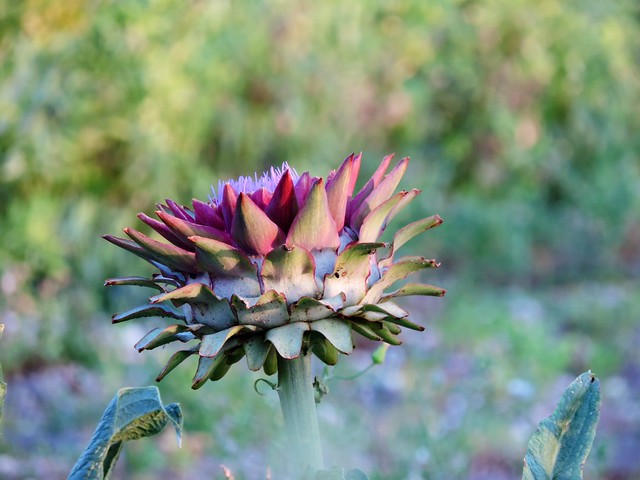
Artichoke bloom

Isn’t this just beautiful?

If you were going to invent a flower, do you think you’d ever come up with one which looks like this?

Aren’t the colours just gorgeous? And what a range of shape and form!

Maybe the main reason I keep this blog going is just to share the sheer pleasure, joy and amazement I experience pretty much every single day.

I hope you stumble across amazing things every day, and if there aren’t any in your neck of the woods today, feel free to browse through these posts and share some of mine.

(Just in case you’re wondering, by the way, this photo today is of an artichoke flower)

Read Full Post »

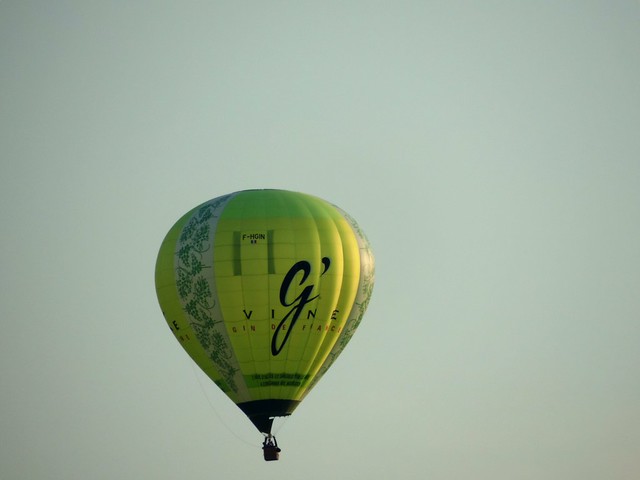
Montgolfière over Salles d'Angles

One of my favourite philosophical practices is the “view from on high” – or the French version of a “view from Sirius” (which isn’t just about seeing from above, but about encountering things as if for the first time).

Conceptually, its about taking an overview, seeing everything within its contexts. It’s about approaching something as a whole, rather than analysing its parts. (This latter is the distinct difference between the two sides of your brain, according to Iain McGilchrist – the right hemisphere allows an “analogical”, holistic approach to be taken, whilst the left facilitates a more “digital”, analytic and reductionist one)

We can do this literally, when we climb up to a vantage point, (or take a flight in a hot-air balloon or a plane), or we can do it cognitively, by reflecting at the end of a day, or by taking a pause, taking a few deep breaths, or slowing down to be able to actually perceive properly (instead of the world and our thoughts whooshing past at a hundred miles an hour!)
Hot air balloon

By the way, if you do get the chance to actually go up in a hot air balloon, I can recommend it. I’ve only done it once (for my 50th birthday) but it was one of the most amazing and special experiences of my life.

Read Full Post »

Clouds over the moon

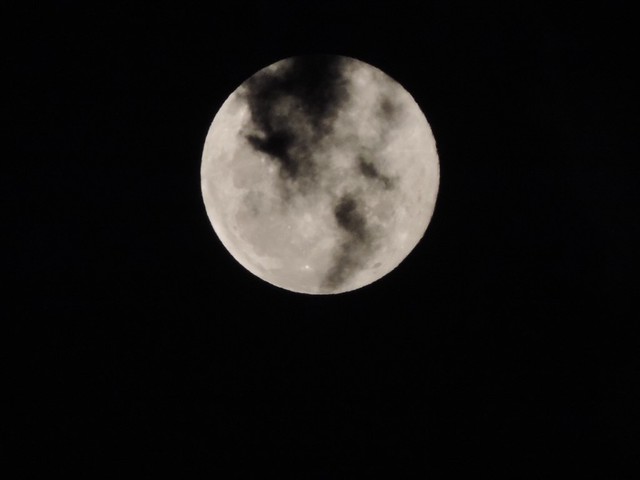
It was a full moon the other night, and there were storm clouds gathering.

You know how I say it’s good to do something different? Well, I decided to try and take some photos of the moonlight…….so, I had to wait till the moon was hidden –
Moon behind storm clouds

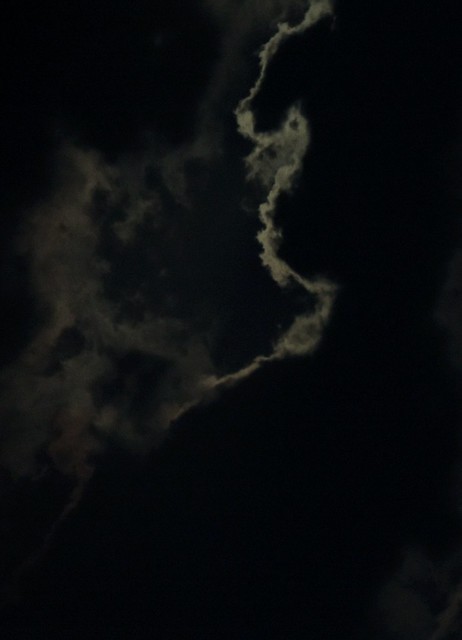
Completely hidden –

Moonlit silver linings

Ah….now, that’s nice! See, every cloud DOES have a silver lining!

Read Full Post »

It strikes me that the practice of Medicine (I’m specifically referring to the world of Medicine for humans here), begins and ends with a relationship between human beings.

I’ll just focus on the doctor-patient relationship here, because that’s how I spent my working life. But I suspect that much of what is relevant to this relationship is also true for other health care workers, and perhaps even in other areas of human life.

When I say the practice of Medicine begins and ends with a relationship between human beings, I mean that the whole, unique person who is the patient has to be understood, cared about and attended to, by the whole unique person who is the doctor. Both individuals are important. I think this is partly why there are no doctors who are the best doctors for everyone, and I think it explains how in a group General Practice, each of the doctors in the partnership will have a specific loyal cohort of patients who always seek a consultation with that one particular doctor.

I also think this means that the whole person must always be considered. Anything less is reduced, and anything reduced is less than human.

In this context, I recently read “A General Theory of Love”, by Drs Thomas Lewis, Fari Amini and Richard Lannon. [ISBN 978-0-375-70922-7]. This book describes the model of the triune brain, which you might have come across elsewhere. (My introduction to that model was Dan Seigel, and later, Rick Hanson). It’s the observation that we have three brain regions – the brain stem, which is responsible for survival, and is found even in reptiles (henceforth to be known as the “reptilian brain”), the limbic system, which is responsible for memory processing and emotions (called the “mammalian brain”, because all mammals have this part), and the neocortex, which is massively developed in humans and seems to give us the capacities for abstract thought, conscious decision making and rational analysis.

In “A General Theory of Love”, Thomas Lewis and his colleagues focus on the limbic system – they describe in detail how this part of the brain helps us to “feel” other people’s feelings. It’s the kind of phenomenon that others call “heart feelings”. Without this part we’d have the reptilian survival strategies or the cold, analytic distancing of the neocortex. Let me be really clear here – this is a simplification and human beings are a lot more complicated than that. But this is a useful simplification which clarifies certain truths about what it is to be a human being.

In this post, I want to just bring to your attention some of the points the authors make when taking this perspective on the practice of Medicine, because I think health care is in a dire and degenerating situation in the world.

The last century saw a two-part transformation in the practice of medicine. First, an illness beset the relationship between doctor and patient, then radical restructuring attached the residual integrity of that attenuated tie.

I think the illness and the radical restructuring they refer to developed from a general reductive de-humanising of health care. Iain McGilchrist has shown how a “left hemisphere approach” has come to dominate society and I find that explanation helpful. Lewis says

American medicine has come to rely on intellect as the agency of cure. The neocortical brain has enjoyed a meteoric ascendancy within medicine even as the limbic star has fallen into disfavour.

Whilst this focus is a little different, the basic point is actually the same. By coming to rely on data, figures, statistics and techniques, we have reduced the human-ness of medicine. We’ve increasingly denigrated the patient’s narrative, the individual’s subjective experience, and the place of heart felt caring.

The limbic brain has a crucial role to play in attachment, and Lewis describes attachment theory along with the physical and social consequences of disordered attachment incredibly clearly. And here’s one of the most important points in this book – the physical reality and hence importance of relationships, emotions and attachment –

Medicine has lost sight of this truth: attachment is physiology

The radical restructuring they refer to is seen throughout Western Medicine – its the rise of bureaucracy. We see it in the proliferation of protocols and guidelines, of the prioritisation of measurement – what others have referred to as “Taylorism 2.0” (the modern equivalent of Taylor’s “scientific management”) – at the expense of what cannot be measured – the lived experiences of the patients and the health care workers.

Good physicians have always known that the relationship heals. Indeed good doctors existed before any modern therapeutic instruments did…

For many years, the medical community hasn’t believed that anything substantive travels between doctor and patient unless it goes down a tube or through a syringe.

They neatly sum up their thesis with

medicine was once mammalian and is now reptilian

Corporations and organisations have taken the high ground imposing their limits, their rules and regulations on those who try to care.

A corporation has customers, not patients; it has fiscal relationships not limbic ones.

The use of terms “customers”, “clients” and “consumers” in the area of health care has always disturbed me. Now I think I understand more clearly why!

I concur with this conclusion –

Before it is safe to go back to the doctor, a mammal will have to be in charge. And before that can happen, our physicians will have to recapture their belief in the substantive nature of emotional life and the determination to fight for it.

I’m not sure I’ve heard any politician, manager or profession leader say this so clearly – the problems facing health care are not ones of efficiency, targets and “better” guidelines. The problem is we need to make health care more human.

We need Medicine based on love, care and attention….where the heart is the keystone.


Read Full Post »

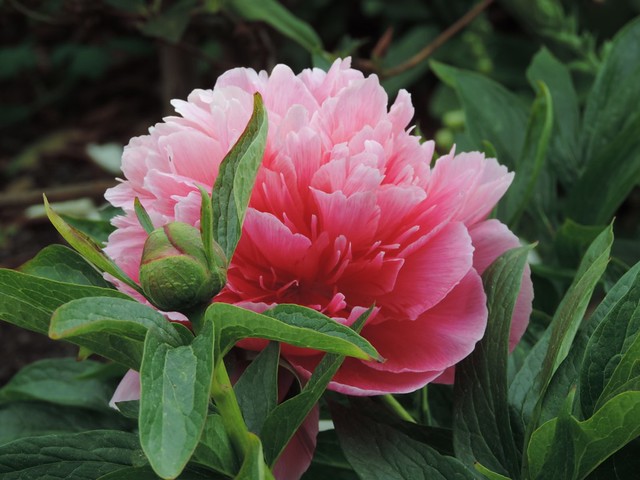
paeony

If you look at the header of this blog page, you’ll see the byline “becoming not being”.

I was inspired by the writings of the French philosopher, Giles Deleuze, when I began this blog. He emphasised the difference between “être” and “devenir”. Here’s why –

Really everything in this universe constantly changes. It’s just that some things change more slowly than others. All living creatures, however, change quickly and unceasingly. Maybe you realise that none of the billions of cells which make up your body live as long as you do? Some of your cells only live a few days, whilst others have a life expectancy of a few years. The biological truth is that your body now contains very few cells which were there ten years ago.

We are more than our physical bodies. Our thoughts, feelings and sensations are in constant motion and we process all that information unceasingly. Hopefully, we mature, develop and grow through our lives. Discovering more talents, learning more skills, developing our behaviour and maturing our personalities.

We are more than single beings in isolation as well. We are incredibly social creatures. We live our days in constant exchange with other humans, with other animals and with the wider natural environment in which we live. It’s difficult, indeed I’d say impossible, to understand a person in isolation. We have to see each individual in the contexts within which they live.

How do we hold all these changes together and have some sense of stability? How do I still recognise myself in the flux of all these changes?

Well, partly, we do that by telling stories. Each of us is a narrative self. When you meet someone, you introduce yourself by telling where you came from, where you are now, and maybe also, where you hope to go. In other words, you tell a simple story with a beginning, a middle, and, if not an end, then at least a potential plot direction!

All living organisms are like this. It’s just that we have evolved to a greater level of complexity than other creatures and we, we humans, are the storytelling species.

So, if we focus on “to be” (on “être”) then we reduce the subject to an object. We pin down just part of a person to a particular place and time and we then try to label and categorise them on the basis of a small set of features or characteristics.

I find it so much more satisfying to focus on “becoming” (on “devenir”). It’s slippier, it’s more complex, but it’s more alive. And, fundamentally, it’s a much better reflection of reality.

Try it for yourself – try focusing on becoming instead of being…..

Read Full Post »

one petal left

Starting from here, this photo above, we can move to either here –
poppy seeds

or here –
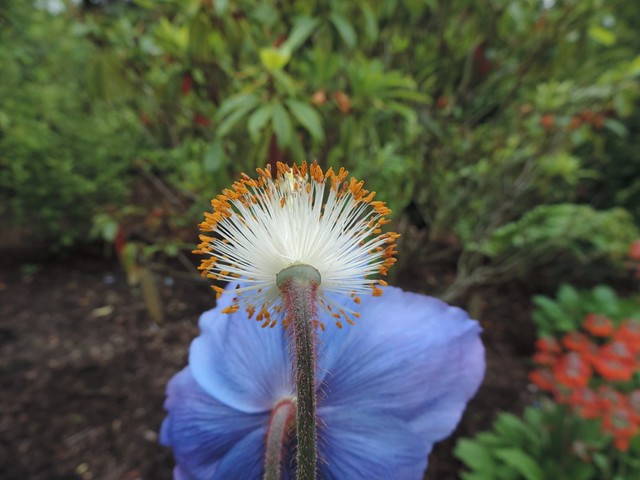
meconopsis

What comes first?

The seed or the flower?

What comes last?

The seed or the flower?

Looked at one way, the seed comes first, grows into the plant which unfurls its petals and reveals its new seeds, attracts the pollinators, then drops the petals, then disperses the seeds to start new plants. Looked at another way, we can start with the flower…..

So, what’s the plant doing? Seeding? Or flowering?

We know, of course, that the plant would not be the plant at all unless it was seeding AND flowering.

Gandhi was once asked “What’s your message?” and he replied

My life is my message

That’s true of all lives isn’t it? Every plant, every animal, every person…..

Read Full Post »

Yesterday was the summer solstice. Or to be more globally correct, the “northern solstice”.

I also know that if you live in Scotland, you’d know yesterday was “midsummer’s day” (Although I suspect you’ll have looked out the window and thought “What??!!”)

However, here in France, yesterday is known as the first day of summer. Either way, it was “the longest day”.

Just after the sun set on the longest day I took this photo from my garden. If you look carefully you can see the moon, Jupiter (just to the right of the moon), and Venus (a bit further to the right). In fact, Jupiter and Venus are moving closer together in the night sky and will converge completely on June 30th.

Were there any celebrations where you live this weekend? Or did you mark this day in some personal way?

I ask because a time like this offers a great opportunity to connect yourself more consciously to the rhythms of the Earth and our solar system.

Deliberately connecting to what is greater than you is a lovely way to develop your quality of your life.

Read Full Post »

« Newer Posts - Older Posts »