Feeds:
Posts
Comments

Archive for the ‘philosophy’ Category

In my A to Z of Becoming, one of the verbs beginning with “I” is “imagine”.

As it happens, I’ve chose “imagination” as my keyword for this year. Do you do that? Do you choose a “word for the year”? 

I think I have a very active, very well developed imagination. My feeling is that I used my ability to imagine every day at work as a doctor to help me understand my patients. For me, good medical practice is dependant on the ability to empathise. Without empathy there is a diminished level of understanding. In fact, the complete lack of empathy, resulting from a failure of imagination, as a cause of cruelty, was highlighted by the author Ian McEwan, and others, after 9/11.

Since retiring and moving to France, I’ve begun to experiment with writing fiction as another way to use my imagination. What startles me, and repeatedly surprises me, when I write fiction is how my imagination comes up with things I hadn’t expected. 

Maybe that shouldn’t surprise me because every night when we dream our imaginations are producing the unexpected, aren’t they?

That got me thinking…..is there an off switch for imagination?

Are we ever not using our imagination?

When we fear something, we are imagining whatever it is we fear. When we worry about something, we imagine whatever it is we are worrying about. When we experience something we bring our imaginations into the experience as we create the subjective experience for ourselves. When we remember something we re-create the memories using our imaginations. When we plan to make something happen, we use our imaginations to create the plan.

Actually, I think, there is no off switch for the imagination.

However, when we are on auto-pilot, when we are in zombie mode rather than in hero mode, we are not aware of the activity of our imagination, and we are not making conscious choices.

Those are the two key elements to moving from zombie to hero mode, I reckon –

First, become aware.

Second, choose what to do.

So, here’s two things about imagining to explore this week.

What are you currently using your imagination for? And, what are you going to choose to use your imagination for?

Read Full Post »

opening

As this little plant opens up, it collects the morning dew.

Opening……I was recently reading an interview with Richard Sennett where he was talking about co-operation, and one of the things he was discussing was the difference between “dialogue” and “dialectics”.

Although that latter word might seem strange to you, it’s what we do a lot. As we converse with one another we each set out our views or beliefs and the idea of a dialectic discussion is to try to find “the truth”, or to achieve a shared view. (It’s not exactly that, but that’s probably close enough for this post!)

He proposed what we need to do if we want to live together, is dialogue.

In dialectic conversations, opposing positions (thesis and antithesis) confront one another with the goal of resolving conflicts (as a synthesis).  “In dialectic[s]…the verbal play of opposites should gradually build up a synthesis…the aim is to come eventually to a common understanding. Skill in practicing dialectic[s] lies in detecting what might establish that common ground.” Dialogical conversation, on the other hand, is much more open ended, not necessarily seeking the goal of resolution. “Though no shared agreements may be reached, through the process of exchange people may become more aware of their own views and expand their understanding of one another.” There is an openness of exchange in dialogics that is captured by idioms like ‘bouncing ideas off each other,’ ‘thinking out loud,’ or ‘brainstorming.’ Because the exchange is not structured as assertion, defend, assertion, etc. one has the space to be inventive, creative, and wrong. The value of dialogical conversation then is not the resolution of conflicts, but is to create a greater understanding, empathy, and sociability between parties; in other words, the goal is exposure

So, in dialogue, he says, we seek to understand the other. We don’t refute or challenge what they say in order to deny it, or modify it to suit our own views or purposes, but instead we ask more about why the person thinks that, or says that, and in so doing we might not achieve a “consensus” but we do achieve an understanding. Build that in with tolerance and you have a way of living with difference. (Dialectics, he says, seeks elimination of difference)

I found that in consultations with patients it was important to understand not just what they were experiencing but what sense they were making of that experience. And that sense might have a religious or a political/social basis which I personally didn’t share, but if I was to do my job well, I didn’t need to replace the sense they were making of things with my own personal beliefs and values. Rather I needed to understand, as best I could, what was different about this person – what beliefs and values were important to them in helping them to make sense of their experience.

That process is a process of opening up. It involves asking open questions, not ones where I have an answer or two up my sleeve, and I’m just waiting to produce the “right” one.

So, here’s what I’m thinking……when we talk to someone else, how do we open up the conversation, rather than close it down?

How can we be open to difference, instead of trying to eliminate it?


Read Full Post »

The Atlantic

People crave certainty.

We want to know, for sure, what the results will be of our actions. We want to be able to predict what is going to happen in the world, and in our lives.

Don’t we?

Two examples spring to my mind.

1. The daily weather forecast.

Every day millions of people listen to, watch or read the weather forecast. We want to predict what the weather will be like tomorrow, in a few days time, next week or the week after even……

2. The focus on “outcomes”.

Knowing for sure the results of our actions – in Medicine, we want to know for sure what will happen if we have treatment X, and we want to know for sure what diseases we will get and what effects they will have on us. In Economics, we want to know for sure that if we introduce this particular policy then it will have the results we desire. In engineering we want to know for sure that the machines we make will consistently and reliably do the job we design them to do.

That’s how it is for us humans. We’re afraid. We know that none of us live for ever but that’s a terrible knowledge to have. We want power over the unpredictable. We want to control the present in order to control the future.

But does the world work like that? Is Life like that?

I don’t believe those who predict futures, but I’ll listen to what they have to say, and make some choices all the same. If the weather forecast says it’s going to pour with rain tomorrow but has a good chance of being sunny in a couple of days time, I might choose to put off my trip to the beach tomorrow, and, instead, to plan to go in a couple of days time.

But do you know what I find most satisfying of all?

To “seize the day”.

If I wake up tomorrow and the forecast is wrong…..there’s bright sunshine and clear blue skies, then it’s great to set off to the coast, and not wait for a “better day” a couple of days ahead.

And what about control – of diseases, of economies, of machines and so on? We don’t control any of that.

Look at that lighthouse in the image above.

Does it control the Atlantic Ocean?

Does it ensure that shipping will not hit rocks?

No, neither of those things.

It gives us the opportunity to be aware, and so let’s us make adaptive choices. (In the case of the lighthouse, to be aware of the rocky coast and to change direction)

But if the opposite of control and prediction is “out of control” and unpredictable, then I don’t know any human beings who can manage to live that way.

So, for me, it’s not about trying to be out of control or to relish unpredictability. Despite the fact that the delusions of control and fallibility of predictability will always be unsatisfying, disappointing or frustrating.

I do think there is another way.

The other way has something to do with awareness, with resilience, and with living in the present moment, but I think I’ll take the time to explore that in more detail in future posts.

Read Full Post »

Dragon

A few years ago I wondered why the twelve months of the year have the names they do, and around the same time I was thinking, for many of us, there is a lack of awareness of rhythm and ritual in our lives, so I put the two ideas together and came up with a theme for each month of the year.

I use the theme as a touchstone of a kind. It’s a reminder, a meditation focus, a thought to return to each day….

March, the month which is named after Mars, has become, for me, the month to focus on strength.

There are two aspects of that which have come up for me this year as I reflect on this theme.

The first has been prompted by my reading of an article by Richard Sennett about “open cities”. He focuses on the issues which arise from us trying to live together – as we do as human beings, clustering together and building huge cities. That reminds me of T S Eliot’s Choruses from the Rock –

When the Stranger says: “What is the meaning of this city?

Do you huddle close together because you love each other?”

What will you answer? “We all dwell together

To make money from each other”? or “This is a community”?

And the Stranger will depart and return to the desert.

О my soul, be prepared for the coming of the Stranger,

Be prepared for him who knows how to ask questions.

Before I wander too far off topic, one of the key points Richard Sennett makes is about boundaries and borders. He says

The boundary is an edge where things end; the border is an edge where difference groups interact. At borders, organisms become more inter-active, due to the meeting of different species or physical conditions; for instance, where the shoreline of a lake meets solid land is an active zone of exchange where organisms find and feed off other organisms. Not surprisingly, it is also at the borderline where the work of natural selection is the most intense. Whereas the boundary is a guarded territory, as established by prides of lions or packs of wolves. No transgression at the boundary: Keep Out! Which means the edge itself is dead.

That’s a pretty new idea for me, but I’ve long since known the importance of healthy borders. In thinking about health, we need healthy boundaries which are maintained by our immune systems, but we also need healthy borders where we meet and interact with what is “other”.

So, here’s the first thing I’m going to reflect on this month, the month of strength – how are my boundaries and how are my borders? How healthy are they, and how might I make them healthier?

I think the answers to those questions are unique for each of us, but if you are inspired by this, why not reflect on boundaries and borders in your own life? See what you come up with?

The second aspect which has come up for me is Seligman’s idea of strengths. If you’ve never done it, or it’s some time since you did it, go and take the free questionnaire on his site and find out what your own core strengths are.

Just as I reflected on the difference between positive and negative hope, I think we can build our strengths by paying attention to them – not by beating ourselves up over our weaknesses!

So, there you are – March – the month of strength. What does that mean for you?

Read Full Post »

Plant feet

In the A to Z of Becoming, I’ve reached the letter “H” again, and one verb which begins with “H” is “hope”.

So I’ve been thinking about hope, but recently I’ve also been thinking a lot about negativity and how frequently we come across people who are against something. There are so many “anti-s” about and I often wonder what exactly an “anti” would say they are “pro”. What are they for, as opposed to what are they against.

When I bring those thoughts to the action of hoping I can see that on many occasions people are practising a kind of “negative hope” – “I hope I don’t fail at….” “I hope I don’t miss my train”, “I hope I don’t…..” – it’s about fear.

And fear is used a lot to control people so we are often sold messages on the basis of what might be avoided, rather than what might be achieved.

The positive psychology movement grew out of the understanding that whatever we focus on gets bigger. So if you try to treat someone’s fear by focusing on reducing that fear, you still end up focusing on the problem, not the solution.

It might seem there is a subtle difference between hoping for something and hoping that the opposite does not happen, but I think that difference is significant, because the focus of the hope has an influence on us.

If we spend our lives hoping that this or that does not happen, then we are living from a standpoint of fear, and our behaviours become avoidance behaviours.

If we spend our lives actively hoping for this or that, then we can live engaged with the creative efforts which can lead us to the fulfilment of those hopes.

Maybe the universe really does conspire to bring about what we focus on…..and if that is true, then ask yourself what you hope for, not what you hope you can avoid.

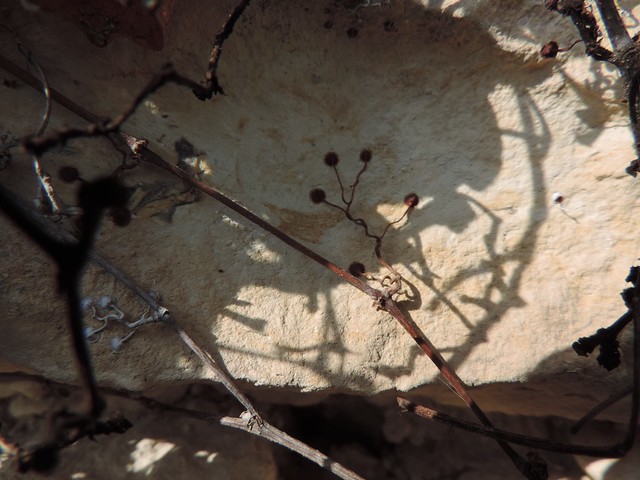
The vine in the photograph at the beginning of this post is actively seeking out and creating opportunities to grow. It is sending its out its tendrils to support itself in growing bigger, climbing higher, and spreading further. I like to see this as a positive behaviour focused on enriching and developing Life.


Read Full Post »

Seb

How do we perceive the world?

Do you think we are the passive observers of reality?

Or do we bring our prior values, beliefs and habits to the every day co-creation of reality?

I think it’s the latter.

I think we make our world, but we don’t make it from nothing. We co-create our world.

What I create changes the world you experience. What you create changes the world I experience.

Every day your experiences are unique.

Whatever you experience today, remember this will be the very first time you experience exactly this. And, remember too, that this will be the very last time you will experience exactly this. Today will not come back again.

Can you be aware of that?

As you live today can you notice, sometimes, what kind of world you are creating? Can you notice what kind of world we are creating?

Read Full Post »

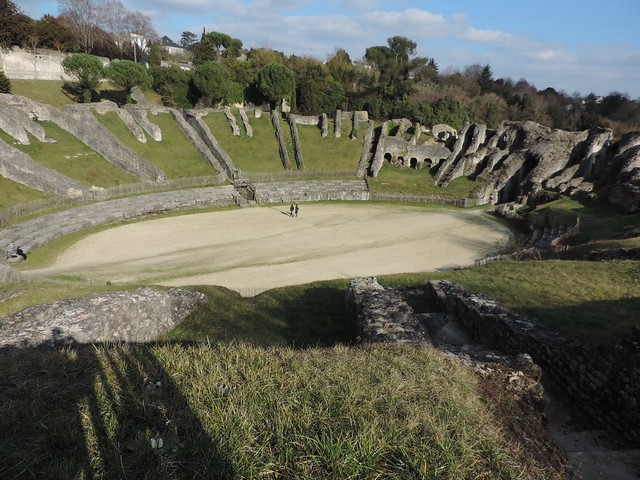
The amphitheatre

I call this blog “heroes not zombies” because I think so many of us go through much of our lives on autopilot. You know the kind of thing where you travel from home to work, or to a local shop or school, and when you get there you realise you’ve been thinking about something all the way and you actually have no recollection of any detail from the journey. Scary, huh?!

We easily create habits for ourselves, always sitting in the same seat, or taking the same route to town, or ordering the same drink in the same cafe…….not that habits are bad in themselves, but they do take the consciousness out of choosing. They are another way of slipping into autopilot.

We are controlled that way too. Our societies might claim to be free but they are based on mass markets, on global brands and services. We are “normalised” and “socialised” to “fit in”. Uniqueness isn’t encouraged.

In health care drugs are prescribed on the basis of research conducted on groups which is used to create protocols which patients are plugged into on the basis of a diagnostic label.

The Romans had a phrase for this – “bread and circuses”. They knew how to create a zombie society where citizens would conform. Two basic techniques – bread ie make sure people don’t go hungry, and circuses ie entertainment which provides distraction and absorption in what isn’t important. Using these two they could go a long way in the creation of a compliant populace.

Of course they used other techniques too – not least fear and violence – great control measures.

The amphitheatre I photographed above was a key venue for bringing all of that together – food, entertainment, fear and violence – all in one place!

What’s the modern equivalent? Industrial scale “food” production, highly processed, loaded with sugars and chemicals of no nutritional value, and mass media “entertainment” with a focus on “celebrities” and “reality TV”. Add on top plenty of scare stories to keep the population afraid and daily threats of violence through the mass media.

Seems to me the formula still works.

But there is an alternative. Every single one of us is an individual with a unique story to tell. That story makes sense of our lives, creates an awareness of who we are, and sets us in our unique contexts – of place, of family and of tradition. That story gives us the ability to hope, to imagine and to aspire. It gives us a direction. And YOU – yes, YOU – are THE hero of your story. You are the main protagonist. It’s you who chooses, you who accepts or avoids the challenges, you who grows and develops.

So there we have it. We don’t have to succumb. We don’t have to sign up to the zombie creation programme. We can be the heroes of our own stories, and, so, of our own lives.

How do we do that?

Well, you could start by taking a look around at the articles on this site. Check out the A to Z of Becoming posts for example. Read the posts on “story” or “narrative”. Or just come back periodically and read what you want to read.

Hopefully, you’ll be inspired.


Read Full Post »

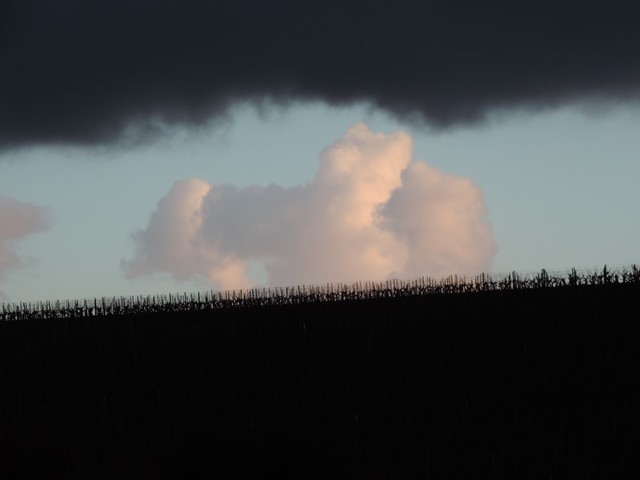
light and dark

There is something dramatic about rain clouds passing through.

But what really caught my eye here was the contrast – the contrast between the dark vineyard and the blue sky with the soft white clouds, and the contrast between that part of the sky and the dark, heavy, rain-laden cloud above it.

We need contrasts……bright, fine light and deep darkness too.

The rhythm of light and darkness experienced by us all grounds our very existence not in constancy and sameness, but in perpetual change and difference.

Vive la difference!

Read Full Post »

jet

In the A to Z of Becoming, one of the verbs starting with G, is GO!

Every day I look up into the sky and see a mass of jet trails as planes fly from south to north, north to south, and sometimes in other directions too! I often wonder where the people are going.

Where are you going to go this year?

Physically. Are you going to go back again to somewhere you’ve been before and visit it with fresh eyes? Are you going to go and explore somewhere you’ve never been? I love to travel. It always changes my world, gives me a chance to reflect from a completely different vantage point. I hope you can have that experience too.

I don’t think you need to go far to have that kind of experience, and I don’t think you necessarily have to make it a long visit. Even a day trip can be not only a pause, but a turning point.

Just choose somewhere different from where you usually live, and GO!

But thinking about this verb, “go”, brings up something else for me too. Not just travel and visiting different places, but doing what your heart longs for.

What does your heart long for? What are the dreams you have for this life? Have you started to listen to what your heart says? Have you started to give the universe the chance to make your dreams come true?

None of that is going to happen if you are just waiting…..waiting for the “right” time, the “right” opportunity, or until this or that other thing happens. It’s never going to happen unless you start.

So, make this week be the week you hear “GO!” – and you are off and running!

Read Full Post »

First cherry blossom

Well, well, well, look at that! The first cherry blossom of the year (the first I’ve seen anyway).

It might not actually be Spring yet, but it must be just around the corner.

I love the Spring. It feels like such a time of new beginnings, of renewal, of re-growth, of emergence and delicate but determined first steps towards a flourishing abundant expression of the Life Force.

Bon Printemps! (“prins” from ancient French for “premier” or “first” and “temps” for a time, or a season)

(for readers in the Southern hemisphere, enjoy your emerging autumn!)

Read Full Post »

« Newer Posts - Older Posts »