Feeds:
Posts
Comments

Archive for the ‘philosophy’ Category

José Mujica, Uruguay’s president acts very differently in power from most of the world’s leading politicians. He lives in a one bedroomed farmhouse instead of the Presidential palace, and gives away 90% of his monthly salary.

He is described as the world’s poorest President but he rejects that description preferring Seneca’s teaching about poverty – “It is not the man who has too little, but the man who craves more, that is poor.” He most refreshingly rails against hyperconsumption and waste pointing out that

We can almost recycle everything now. If we lived within our means – by being prudent – the 7 billion people in the world could have everything they needed. Global politics should be moving in that direction but we think as people and countries, not as a species.

This is such an important point which is almost never made by our politicians. Global population is doubling every few years and shows no sign of stopping. Just how is that sustainable? Can we keep growing the population by that much, and all keep pushing for “growth” (by which we mean great consumption and accumulation) and not hit a wall at some point? Isn’t the Earth finite?

But I especially like his last point there – that we think “as people and countries, not as a species”. We need to start living as if we are species, not isolated groups trying to beat each other, dominate each other, exploit each other.

Watch this for THE most coherent and convincing exposition of this case –

He also makes the excellent point about our enslavement to the market –

I’m just sick of the way things are. We’re in an age in which we can’t live without accepting the logic of the market,” he said. “Contemporary politics is all about short-term pragmatism. We have abandoned religion and philosophy … What we have left is the automatisation of doing what the market tells us.

Halévy says all this too in his publications. He challenges us to ask what’s the purpose of our current socio-economic system and who does it serve? Go on, ask yourself, read around a bit, and see what answers you come up with.

Both Halévy and Mujica focus on the need for quality instead of quantity. Halévy uses the term “frugality” and Mujica says “prudent” but neither are setting out the case for a worse life. Quite the opposite, they say we should concentrate on getting more quality from less consumption, and in so doing, create a sustainable way of life on this little planet.

Read Full Post »

For a long time there have been two broad views of the universe. Determinism and meaningless chance.

Most religious traditions have the idea of a Creator, of some super-natural spirit or force which is in control. There is comfort in this view, in that it helps to make sense of Life, and brings a feeling of there being some control over events (even if that control is in the hands of God, rather than of human beings).

With the rise of materialism and decline in religious beliefs, many feel that the universe is a heartless, meaningless place where we are all the repeated victims of chance. Of course, some who see the universe this way gain great comfort and security from humanistic principles ie that we are the masters of our own destiny.

In the second half of the 20th century a third view has arisen. Complexity science has allowed us to understand that chaos is absolutely not the same as randomness. Once you understand the principles of complex systems (networks and webs of interconnected parts which are all acting on each other), then you find that whilst the behaviour of chaos can be hard to discern, it allows us to see that everything holds together. Indeed, if you consider the “universe story” of energy, to the first atoms, the creation of stars and planets, to the first elements, the emergence of Life, and evolution of consciousness in human beings, you can see this other view appear – one which does not require an external “super-natural” controller, but isn’t random and meaningless either. There is a direction of travel in the universe story towards ever and ever greater complexity. As complex systems move to “far from their equilibrium” points into the chaos zone they can develop completely unpredictable levels of greater organisation and complexity (see the concept or “dissipative structures“)

I do think we are in the early days of this new paradigm, but, for me, it makes a lot more sense than the materialistic, nihilistic scientism which has dominated the last century and more, and doesn’t require me to believe in any super-natural beings. I’m very happy to know such a new paradigm is emerging because so much seems to be falling apart – the economic/financial system, social structures, the health of the planet and the health of human beings who consume ever more drugs to try and control ever more chronic disorders. We need new ways, different, more creative ways of understanding and organising our shared Life.

If you’ve read anything about this emerging paradigm, do let me know – I’m keen to read whatever I can get a hold of!

Read Full Post »

fern eclipse

David Suzuki, in ‘The Sacred Balance’, says

Many have believed in an animated, inhabited, sacred world surrounding them, the natural world that constitutes reality. These beliefs restore our sense of belonging, of being-with, which is threatened by our dividing, conquering brain;

Oh, this connects with so many other things I’ve read these last few months. That last phrase taking me back to ‘The Master and His Emissary‘ – “our dividing, conquering brain” – what a brilliant description of what our left hemisphere does! But it’s this sense of Life everywhere which really captures my imagination. Marc Halévy in ‘Ni hasard, ni nécessité’ writes about the concept of hylozoism….a term I had never encountered before. Look it up. I thought Halévy had invented it as a neologism – but he hadn’t. It’s a very, very old idea which, suddenly becomes very, very new and relevant now. It’s the idea that everything has life in it. He juxtaposes hylozoism to materialism and says

It reveals to us that all matter is alive, that all matter is an expression of life, that all matter is living. (my translation)

Without looking it up right now, I seem to recall Howard Bloom argues something similar in ‘The God Problem‘ too, where he makes the case that even neutrons demonstrate free will.

It seems that Life is everywhere, and that the Cosmos is where we belong, what we are part of, not apart from. Does it make you feel differently about our planet once you realise it isn’t a resource but a manifestation of a living universe

Read Full Post »

Marc Halévy describes three “incredible” leaps in the history of the universe –

The leap from light to matter

The leap from matter to Life

The leap from Life to thought

Reminds me of Thomas Berry and his “moments of grace” – from the forming of our solar system –

Such a moment occurred when the star out of which our solar system was born collapsed in enormous heat, scattering itself as fragments in the vast realms of space. In the center of this star the elements had been forming through a vast period of time until in the final heat of this explosion the hundred-some elements were present. Only then could the sun, our star, give shape to itself by gathering these fragments together with gravitational power and then leaving some nine spherical shapes sailing in elliptical paths around itself as planetary forms. At this moment Earth too could take shape; life could be evoked; intelligence in its human form became possible. This supernova event of a first or second generation star could be considered a cosmological moment of grace, a moment that determined the future possibilities of the solar system, Earth, and of every form of life that would ever appear on the Earth.

to the human moments –

when humans first were able to control fire; when spoken language was invented; when the first gardens were cultivated; when weaving and the shaping and firing of pottery were practiced; when writing and the alphabet were invented.

and right up to this present time –

So now, in this transition period into the 21st century, we are experiencing a moment of grace, but a moment that is different in its significance from any previous moment. For the first time the planet is being disturbed by humans in its geological structure and its biological functioning in a manner like the great cosmic forces that alter the geological and biological structures of the planet or like the glaciations. We are also altering the great classical civilizations as well as the indigenous tribal cultures that have dominated the spiritual and intellectual development of vast numbers of persons throughout these past 5,000 years. These civilizations and cultures have governed our sense of the sacred and established our basic norms of reality and value and designed the life disciplines of the peoples of Earth. We will never be able to function without these traditions. But these older traditions alone cannot fulfill the needs of the moment. Something new is happening. A new vision and a new energy are coming into being.

Does it feel like that to you? Does it feel like the old order is crumbling, and that we are about to take a new, “incredible” leap?

Read Full Post »

Snowtop in the clouds


What’s this blog all about?

BECOMING NOT BEING

You can see that phrase in the title banner, and its that phrase which kick started my writing of this blog.

Look at this photo I took this week. I think it captures the absolute essence of “becoming not being”.

Start wherever you want. At the top you can see the blue sky, whispy clouds kissing and caressing the surface of the snow covered mountain, or is the snow blowing up into whispy clouds in the sky? You can see the shadows of the clouds darkening the surface of the land, and you know, you just know, that those shadows, those clouds, and, yes, the borders of the snow, are constantly changing.

In fact, it’s quite hard to see the boundaries up there. Where does the land end, the cloud begin? Where does the blue sky end and the cloud begin?

Then as you come down further you see the land without snow…..the blues, the greys, the browns……all, forever, becoming not being.

Read Full Post »

the people we love, the place where we live.

That’s a quote from David Suzuki’s book, “The Sacred Balance”. It comes just after this paragraph –

Although we know who we are, where we come from, what we are for, we give that knowledge no weight; our culture tends to deny or conceal that insight, and so we are left alienated and afraid, believing the truth to be ‘objective’ instead of embodied (my italics). A world that is raw material, resources, dead matter to be made into things, has nothing sacred in it. So we cut down the sacred grove, lay it waste and declare that it does not matter, because it is only matter. Just so the slavers of an earlier century declared their merchandise to be incapable of ‘proper human feeling’. Just so generations of experimental animals have been sacrificed in the name of research. Pesticides poisoning the lakes and rivers, fish disappearing from the oceans, rain forests going up in smoke – this is the world we have spoken so powerfully into existence, and we will continue to live in it unless we change our tune, tell a different story.

What a powerful piece of writing!

Aren’t there so many important points in that one paragraph? How we fail to recognise the embodied nature of reality, and instead create the delusion of ‘objects’ and ‘objectivity’. And how from that one delusion we create a whole story of separateness and objectification which colours our relationships to others, to Nature, and, ultimately, to ourselves.

We DO know very well what matters most to us – and that is the people we love, and the place where we live.

Shall we just act from that knowledge? Test our choices against that truth?

How would life look then? What story would we be telling……a love story?

Read Full Post »

Our global financial/economic system consists of a network of computers programmed to trade to make money. The system has one goal – to make money. For what? For whom?

Manuel Castells writes in his analysis (in The Information Age) –

The outcome of the process of financial globalisation may be that we have created an Automaton at the core of our economies that is decisively conditioning our lives. Humankind’s nightmare of seeing our machines taking control of our world seems on the edge of becoming reality – not in the form of robots that eliminate jobs or government computers that police our lives, but as an electronically based system of financial transactions.

And, as Marc Havély writes in Prospective 2015 – 20125 (my translation)

the modern economy has only one goal – growth – to the detriment of human beings who are enslaved by work and consumption, and to the detriment of the biosphere which is plundered, polluted and destroyed bit by bit.

Isn’t it time we stopped and asked ourselves what our economic and political systems are for? What’s their function?

Is it the support of human happiness, wellbeing and thriving; the deepening of the human experience of meaning and purpose; the flourishing of Nature and all of Life; the furthering of the evolutionary development of the Universe?

Can we agree greater goals than accumulation of objects, consumption of resources, and a numbing of the experience of living?

Havély asks that we ask of our work or our purchases –

  • Is this excellent for my health, physical, moral and mental?
  • Is this excellent for Nature, for Life and for the Earth?
  • Does this add good value and richness to human beings as a whole?

Read Full Post »

DSCN0646


Two important characteristics of nature are uniqueness and change.

Every leaf is unique. The lifetime of every creature, every person on this planet is unique.

And that uniqueness cannot be captured, cannot be measured, cannot be fully described at any one particular point in a lifetime.

No story is complete.

Nothing is fully understood, and, as change never ceases, there is always more to unfold, always more to develop.

I love the wonder and awe which spring up from my heart in the face of uniqueness and change.

I love the humility that demands of me.

To know that I will never fully know means I always have more to discover. To know that nothing is ever “finished” means that every day is a new creation.

Read Full Post »

river flows


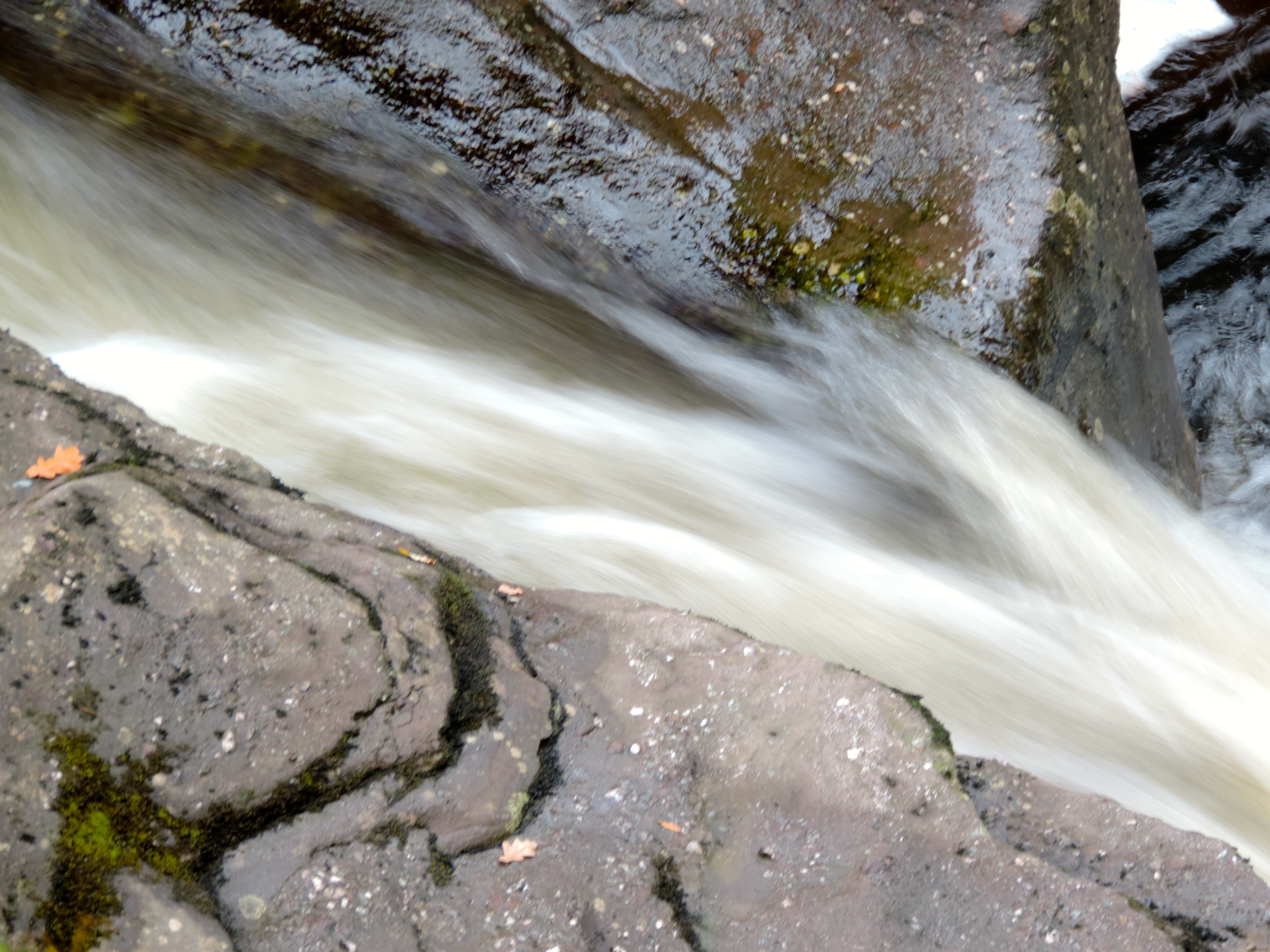
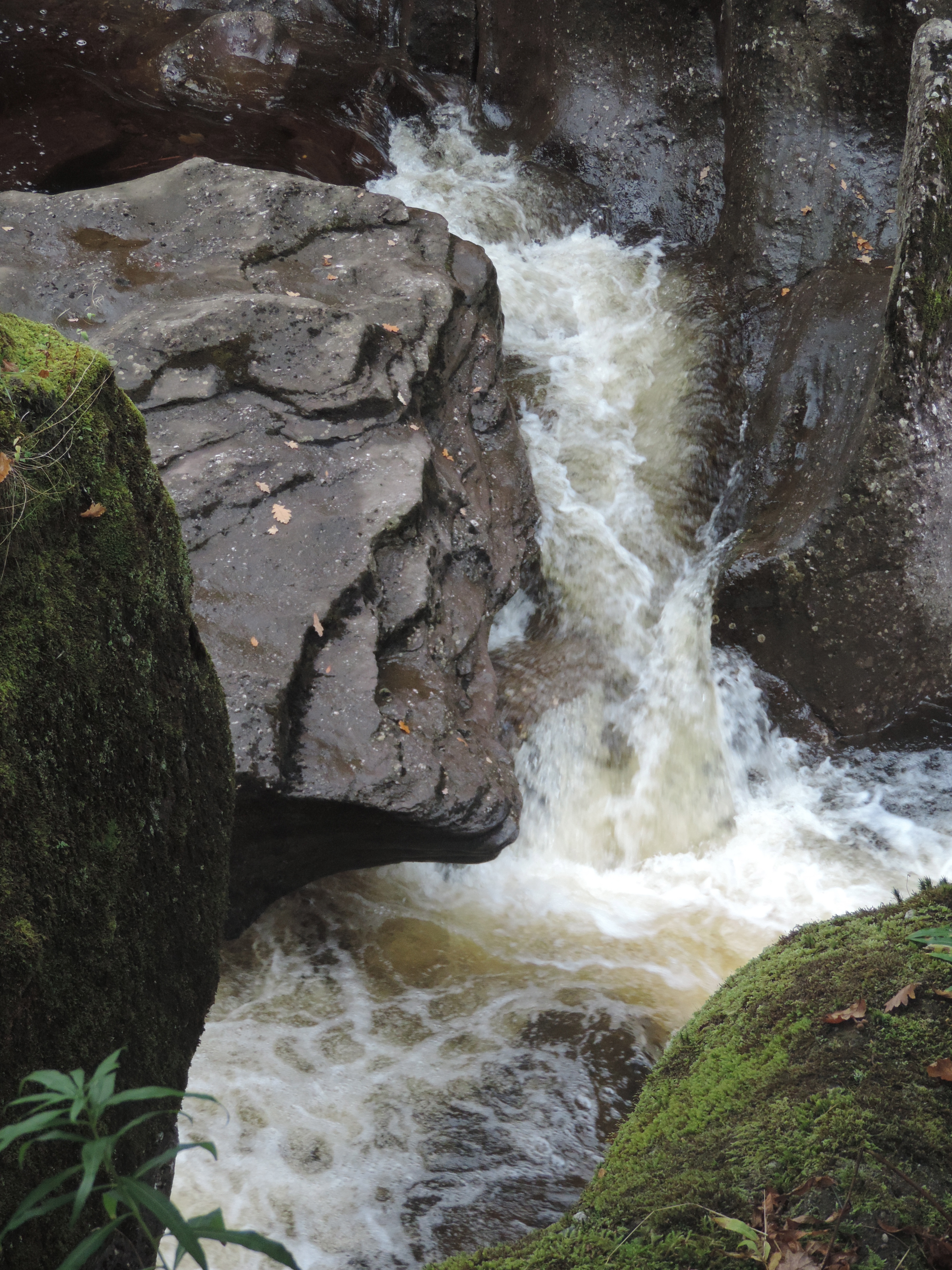
As the river flows over the rocks in the forest around the Bracklinn Falls I stand and wonder about the relationship between the rocks and the water.

I can see the rocks set the boundaries of the river and channel the direction of flow for the water, but I can also see how the water sculpts its own path leaving the rocks far from untouched as it pours down the hillside.

bracklinn


This got me thinking again about that continuous interplay of two essential forces in the universe – the diversity generators and conformity enforcers of Howard Bloom’s “Global Brain”.

That same idea is captured with a different set of metaphors in Thomas Berry’s fabulous “The Great Work”, where he talks of “wildness and discipline”.

I recently came across yet another set of metaphors for this process in David Wade’s “Crystal and Dragon“. In this latter book, David Wade describes the patterns of Nature (actually you could say of the Universe) and Culture which emerge from these two, apparently opposite, forces. Think of how a crystal forms, with a set of rules, which are strictly enforced in a disciplined way to produce the structure required to allow the growth of the crystal. Then think of the patterns of flow which emerge in the creation of clouds, waves and waterfalls. The former containing a certain predictability, and the latter retaining an apparently chaotic randomness. In one section of his book he compares Islamic art to Taoist art, the former known for its beautiful geometric patterns, and the latter for its freehand ink drawings of clouds, waves and water. Interesting then to think of the strict and detailed rules of Islam, and the Taoist focus on constant change, flow and uncontrollable nature of Life. In Chinese culture this force is represented by the Dragon.

So, the crystals of conformity enforcement and discipline, and the flowing Dragon of diversity generation and wildness……and what an astonishing Universe is produced in the process.


Read Full Post »

The forest becoming

If you go into the forest just now you’ll see how everything is connected.
You’ll see the trees shedding their leaves.
You’ll see fallen trees covered in moss.
And you’ll see all kinds of fungi pushing up from the forest floor.

Here’s one thought that occurred to me in the forest – where does the past go?

We often think of time as being like a river, the future rushing towards us as we stand in the present moment and watch it all flow by and into the past.
So, once it has passed, it’s gone. Right?

Except it often really doesn’t feel like that. So try this instead.

The past is always with us. The present grows from the undergrowth, from the forest floor, of the past. It’s always here. It’s what we are shaped by. (Well partly……we are also shaped by the present and even the future, but I’ll return to that another time)

We are changed because of this ever growing relationship between the present and the past. Can’t have the one without the other.

But here’s the other part which occurred to me. The past doesn’t stay the same. Just like this forest floor is changing minute by minute, so the past itself is changing, constantly being altered by the present.

So it doesn’t go somewhere. It’s always with us. And it’s always changing.

Beautiful.

Read Full Post »

« Newer Posts - Older Posts »