Feeds:
Posts
Comments

Archive for the ‘photography’ Category

In the second part of the A to Z of Becoming, S stands for Slow.

image

Slowing down allows you to notice more, experience more, savour more, enjoy more.

Our lives often seem to fly past at top speed, but that’s partly because we are on automatic pilot, or so keen to be somewhere else (in time or place) that our hearts and minds have already zipped ahead and the present passes us by almost unnoticed.

I’ve just moved to the Charente region of France, and here they have a snail as a kind of mascot. In fact, one of the nearby villages, Segonzac, is a part of the “Cittaslow” movement – a slow town.

Yesterday, I stopped in at a delightful little cafe in Cognac. They might serve expressos, but the whole experience is delightfully slow. Is that an oxymoron? A slow expresso? Anyway, I recommend it. Sit down, take your time, and slowly enjoy the whole experience!

Read Full Post »

where the house was

We shape this Earth we live on.

We make our unique marks, leave our personal traces, create the world anew every single day.

We co-create the world. Together, and with every other creature, element and force on this planet.

Through DNA, twisting with other strands, passing on characteristics, tendencies, possibilities……

Through the stories we tell, the thoughts we have, the songs we sing, the images we make……

Your time on this Earth is a singular time, a unique and special time, and you are the active player, dancer, maker.

See what a world has been created by our forebears.

See what a world we leave for the children yet to be born.

See what a world we make, you and I, today……

Read Full Post »

image


There is something magical about flying through clouds. They look so solid, but they’re not. It’s impossible to be sure about their edges….where does a cloud begin? Where does it end? Despite their absence of a solid nature they make pretty impressive shadows on the Earth below. And they are in a state of constant becoming, perpetual change.

I saw these particular ones above the Garonne as the plane was landing in Bordeaux carrying me to the next big chapter of Life.

Read Full Post »

Cold snap on the way in Scotland….maybe I’m like the geese I see flying South these last few days, because I too am heading South, swapping the views of the mountains for views of vineyards….

heading south

So, before I go, here are a couple of photos I took in years gone by from my Scottish windows –

DSC_0038.JPG

DSC_0053.JPG

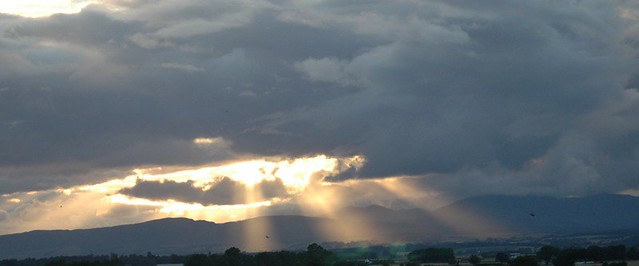
Rays of light

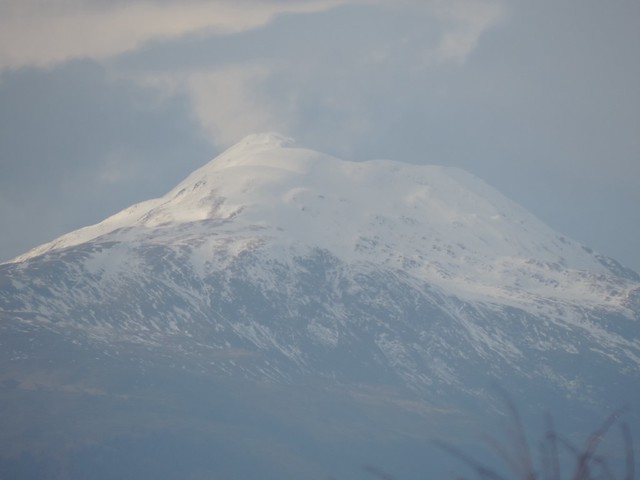
Ben Ledi

Read Full Post »

Jarnac

In my twelve monthly themes, November is the month for reflection.

As the year moves towards its end it can be helpful to take a month to focus on reflection before the hectic busy-ness of the holiday season in December begins.

It’s not necessarily a month for making decisions, plans or setting priorities. There will be time for all that soon. But it is good to just reflect, to think back over the year, month by month, or event by event, and just note it. I think it’s helpful to write about this in a notebook, and some people take a few minutes at the start or end of each day in November to write some reflections on the year.

Once you move into December, and onwards into the brand new year in January, this collection of reflections can be a valuable resource.


Read Full Post »

In the second part of the A to Z of Becoming, R stands for Relish.

Relish is an interesting verb. To relish something you need to be absorbed in it, to be captured by it, to be very present and aware so that you are fully experiencing it.

You might relish a simple food, like this bread or fruit……

plum and bread


Or you might relish a complete experience…..(this next photo shows table set for lunch at Jordans Wine Farm in South Africa. The style of the restaurant, the view through the window, the delicious food and wine, and the great company of dear friends…..all go towards making this an experience to relish


photo


Whatever you relish this week, one thing I guarantee will enhance the experience, is to slow down. Take your time……..


my new motto

This is my new motto (I saw it on a wall in a village in France) – translated into English it says “Gently in the morning, not too fast in the evening”.

So, find something to relish this week – sink into the experience, absorb yourself in it, savour it, enjoy it….RELISH it!

Read Full Post »

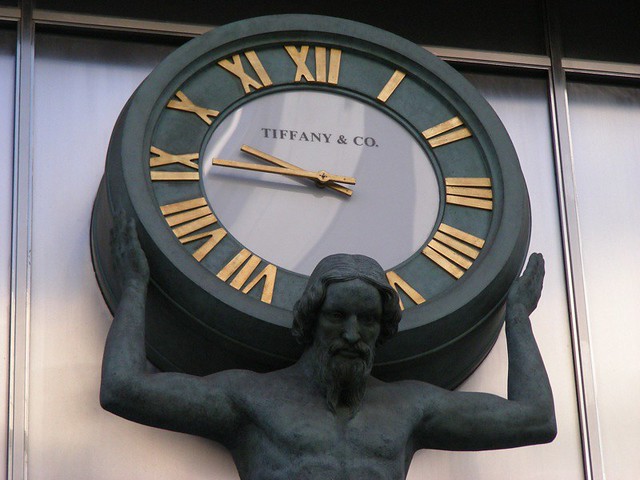
Tiffany time Ginza

Money, money, money……time to change?

Oxfam recently reported that the 85 richest people in the world own as much wealth as the poorest HALF of the population of the world.

Oxfam said that this elite group had seen their wealth collectively increase by $668m (£414m) a day in the 12 months to March 2014. It found that it would take the world’s richest man – Mexico’s Carlos Slim – 220 years to spend his $80bn fortune at a rate of $1m a day

The rate of inequality is increasing rapidly. Thomas Picketty, the French economist whose book “Capital” has taken the world of economics by storm, has shown that this trend is set to continue because the returns on capital are so much greater than the rate of growth in the economy.

Is this accumulation of wealth into the hands of so few healthy? Is it just? Is it fair? Is it acceptable?

The extent to which inequality causes harm was laid out very clearly a few years back in “The Spirit Level” by Richard Wilkinson and Kate Pickett (no relation to Picketty!). Their work showed strong correlations between the degree of equality in a country and the extent of a wide range of social and health problems.

What can we do about it?

The Oxfam report makes a number of suggestions

With an endorsement from Andy Haldane, chief economist at the Bank of England, the report said a 1.5% billionaire wealth tax would raise $74bn a year – enough to put every child in school and provide health care in the world’s poorest countries.

A billionaire tax? Is there the political will in the world to deliver that? What else does Oxfam suggest?

a clampdown on tax dodging; investment in universal, free health and education; a global deal to eradicate extreme poverty by 2030; shifting the tax burden from income and consumption to capital and wealth; ensuring adequate safety-nets for the poorest, including a minimum income guarantee; equal pay legislation and promote economic policies to give women a fair deal; and the introduction of minimum wages and moves towards a living wage for all workers.

Herman Daly, who worked for the World Bank from 1988 – 1994 suggests two very interesting measures to tackle this growing problem.

we need a serious monetary diet for the obese financial sector, specifically movement away from fractional reserve banking and towards a system of 100% reserve requirements. This would end the private banks’ alchemical privilege to create money out of nothing and lend it at interest. Every pound and dollar loaned would then be a pound or dollar that someone previously saved, restoring the classical balance between abstinence and investment.

Now, there’s a fascinating idea! That money should represent something REAL in the world! With all these elaborate “financial instruments” money and measures of economic “health” of countries is becoming increasingly detached from real activities, real use of resources and real people. Maybe such a proposal could begin to shift the balance back from capital to labour? He also suggests

a small tax on all financial trades would reduce speculative and computerised short term trading, as well as raising significant revenue

That latter idea is what others call “the Robin Hood tax“.

So, there’s an interesting selection of ideas – a billionaire tax, a move towards 100% reserve requirements and a financial transaction tax. Which political party is trumpeting these ideas? Which political party is prepared to put tackling inequality these ways at the heart of its manifesto for upcoming elections?

Anyone? Anyone?

Read Full Post »

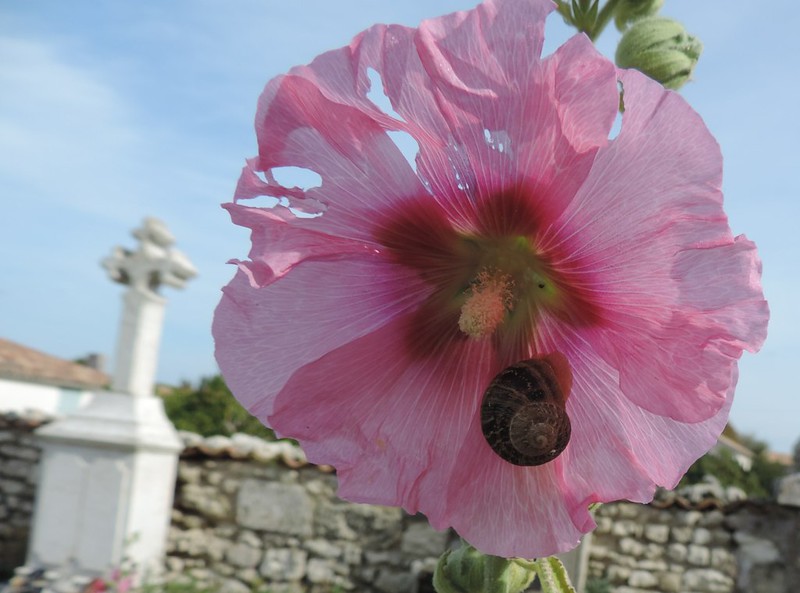
hollyhock

I recently stumbled across a reference to the paradigm of “relational science”. I hadn’t seen that term before but here are a list of characteristics of “relational science” with each one compared to its “Cartesian” counterpart.

  • PROCESS vs substance
  • BECOMING vs being
  • HOLISM vs atomism
  • RELATIONAL ANALYSIS vs either/or split analysis
  • MULTIPLE PERSPECTIVES vs dualistic objectivism/subjectivism split
  • COACTION vs split interaction
  • MULTIPLE FORMS OF DETERMINATION vs efficient/material causality

If you’d like to read about this in more detail google “Fundamental Concepts and Methods in Developmental Science: A Relational Perspective” – which is an article by Willis Overton and Richard Lerner. In that article the authors write –

As a derivation from these relational categories, the relational developmental systems paradigm characterizes the living organism as a spontaneously active, self-creating (autopoetic, enactive), self-organizing, and self-regulating nonlinear complex adaptive system. The system’s development occurs through its own embodied activities and actions operating in a lived world of physical and sociocultural objects, according to the principle of probabilistic epigenesis. This development leads, through positive and negative feedback loops created by the system’s action, to increasing system differentiation, integration, and complexity, directed toward adaptive ends.

Some of this language might be familiar to you from other posts I’ve written on this site, but I’ve never seen them pulled together as “relational science” or come across the concept of “relational developmental systems” before.

If change is the pervasive phenomenon which it seems to be, it makes much more sense to focus on process instead of arbitrarily separated parts. In terms of health, I think this means we need to understand the processes of repair, resilience and effective functioning of healthy organisms, not trap ourselves in the limited focus on pathological change within tissues or organs.

A focus on becoming instead of being also undermines the outcome based approaches to care which are so prevalent. Health is a dynamic, lived experiences, not a series of fixed states.

Multiple perspectives allow to understand illness much more fully – again, not limiting ourselves to the pathological changes within cells, tissues and organs, but taking on board the subjective phenomena of illness (pain, stiffness, breathlessness, dizziness, weakness etc), as well as the narrative of the person who is ill through which we make sense of the experience, and beyond all that, to situate the individual person’s illness within the contexts in which they live – their relationships, family, genes, work, social and environmental conditions etc.

Co-action shows that change comes about not least from the interactions between individuals. This knowledge gives us the opportunity to shift the perspective of health care from that of a doctor treating an object, to that of a doctor and a patient co-creating better health for an individual.

Last but not least, all of this thinking leads us to a consideration of the emergent nature of change in living organisms – which means we can never be completely certain how things are going to go in any individual situation. Something which, surely, should bring some healthy humility to the practice of Medicine.

You’ll see this is all entirely consistent with the features of complex adaptive systems, and of integral theory. And it is also utterly consistent with my blog byline of “becoming not being” which I first encountered in the study of Deleuze’s work.

I really think this “relational science” explains reality much better than the old, reductionist, mechanistic, linear paradigm which is still so prevalent.

Let me finish this post with a re-iteration of Overton and Lerner’s excellent summary –

the living organism as a spontaneously active, self-creating (autopoetic, enactive), self-organizing, and self-regulating nonlinear complex adaptive system


Read Full Post »

Autumn leaves

Hugs

heart in the keystone

I find Plato’s three “transcendentals” of Beautiful, Good and True a very fruitful concept to explore. When I first read about “integral theory” I was very taken by Ken Wilber’s four quadrants of the single-subjective, plural-subjective, single-objective and plural-subjective, and really liked the way the beautiful, the good and the true could be mapped onto that. (read a little more about that here)

Yesterday as I was looking through my photographs of autumn leaves I was enjoying finding the ones I considered to be the most beautiful.

The day before I was listening to a radio discussion about fairness. The concept of fairness seems to be innate, and the panel discussed a video of an experiment which seems to show how fairness is indeed innate in primates.

Last week I was struck again by the observation that most people seem to visit a doctor to make sense of something. In the Medical World, we refer to that making sense as ‘diagnosis’, and I’ve long since preferred to think of it as an understanding. Making sense of a pain, an itch, a dizziness, of anxiety or whatever, involves the co-creation of a credible story by the doctor and the patient working together.

As these three strands came together for me this morning, I got to thinking of the beautiful, the good and the true once more and two things occur to me.

Firstly, all three of these qualities are dynamic and relative. None of them are fixed. And none of them are universal at the level of the individual or particular. What is beautiful to me, might not be experienced as beautiful by you (on the other hand, we might agree!) And I don’t see beauty as a category either – at least, not as a yes or no kind of category – not as an either/or way of thinking. It’s not a box to tick.

Secondly, for me, I think the Good has a strong element of fairness. We tend to think of Justice as being about fairness, and it strikes me that I can ask myself how fair my judgements and actions are, as a way of considering how good they are. I do also think that the quality of integration is a key characteristic of all complex adaptive systems i.e. all living organisms, so an action or choice is better if it is more integrative (if it increases the mutually beneficial bonds between the well differentiated parts)

Thirdly, I see Truth as being about sense making. In some ways, the sense I make of my experience is the truth of it.

So, my current exploration of the beautiful, the good and the true, centres around wonder (émerveillement), fairness and integration, and sense-making.

I discover beauty through wonder. I am motivated to promote fairness and integration in the world. I make sense through the creation of narratives.

Read Full Post »

Untitled

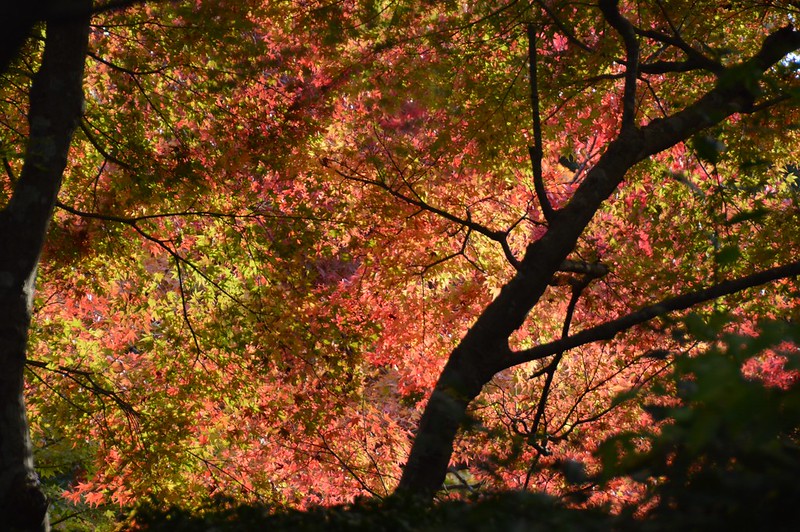
I’ve taken lots of photos of autumn leaves over the years, but this one remains one of my all time favourites. I thought about it today because with the sudden drop in temperature coupled with pretty wild gusts of wind over the last couple of days here in Scotland, there are autumn leaves covering the ground everywhere. So, just before they all go from the trees, I thought I’d share this spectacular burst of colour again.

This particular forest is in Kyoto where the autumn colours really are spectacular, but I wouldn’t be surprised if you could find similar spectacles near you.

I love the vibrancy of LIFE which shines through these leaves almost as if the glow is from within the leaves themselves…

Read Full Post »

« Newer Posts - Older Posts »