Feeds:
Posts
Comments

Archive for the ‘photography’ Category

Right through to the vieux port

Herman Daly, senior economist at the World Bank, 1988 – 1994, who is a Professor at the School of Public Policy, University of Maryland, writes in the current issue of “Resurgence” magazine, about the need for a steady-state economy. He argues that the current pursuit of growth is neither sustainable, nor sensible, pointing out that there has been no growth in the quantity of the physical material of the Earth since it was formed, but that it continues to grow, evolve and develop despite that. This is an interesting perspective. It shifts the agenda towards evolution and development rather than acquisition and consumption and challenges us to think about qualities not just quantities. I was particularly struck by his closing sentences though –

So, in closing, I will only mention what seems to me to be the deeper issue. Is Creation the purposeless, random consequence of multiplying infinitesimal probabilities by an infinite number of trials, as taught by the reigning paradigm of scientific materialism? I say Creation with a capital C advisedly, and certainly not in denial of the well established scientific facts of evolution. Rather it is in protest to the metaphysics of Naturalism that everything, including evolution (by random genetic mutations selected by a randomly changing environment), is ultimately happenstance. It is hard to imagine within such a worldview from where one would get the inspiration to care for Creation, which of course Naturalists would have to call by a different name – say, “Randomdom”. Imagine urging our fellow citizens to work hard and sacrifice to save “Randomdom”! Intellectual confusion is real, but the moral nihilism logically entailed by deterministic materialism (Naturalism), uncritically accepted by so many, is probably the bigger cause of environmental destruction.

It’s one of those strange synchronicities of life that the new issue of Resurgence came through my letter box two days after writing a post about connections which provoked a discussion about randomness in the universe.

And, just to complete the synchronicity experience, I was discussing medical practice with a friend and colleague this week, where we agreed that “co-creation” was the way to go. There is a shift in the way doctors and patients relate to each other, and maybe one of the best ways to understand that, and develop it, is to consider one of the characteristics of all living organisms (as seen through the lens of complex adaptive systems) – that is the characteristic of “co-evolution”.

Co-evolution is a term used to describe how every organism inextricably exists within a context or environment, and as it is an open, dynamic system, there is constant exchange of energy and information which produces complex patterns of linked changes. Think how a group of human beings settling to live in a particular part of the world begin to change the physical environment by living in it, and how the physical environment in which live influences the way they live.

Co-evolution is a creative process, and isn’t this the characteristic which runs right through the entire story of the universe? Isn’t it the story of Creation? Aren’t we the co-creators?
Read Full Post »

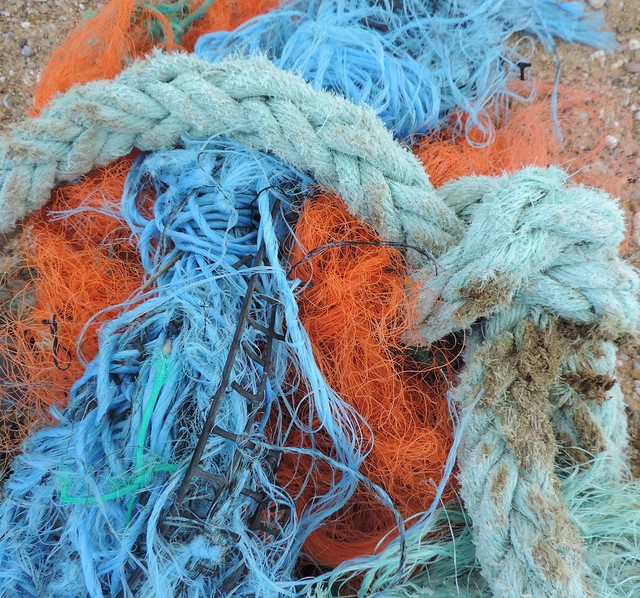
Old rope

Links

In the second part of the A to Z of Becoming, Q stands for the verb Quit.

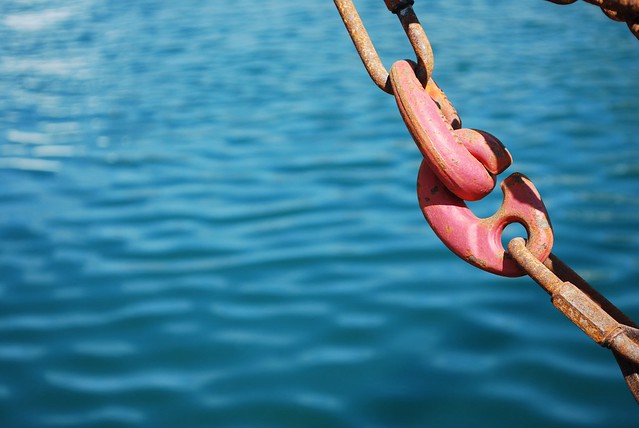
I think change is inevitable and constant, but there are forces of conservation and continuity to. We are creatures of habit. If you’ve ever been to a two or three day course or workshop I’m sure you’ll have noticed how many people choose to sit in exactly the same seat in the classroom, or lecture theatre, every single day. These habits develop so quickly. Habits can be helpful tools. They can bring us the experience of continuity and the security which comes with that. They can also free us up to make choices about other things, not feel we have to choose everything every time. But habits can be traps and constraints to. We can become quite easily entangled in our habits and they can then become ruts, stuck loops, chains even.

If we want to become consciously involved in change, then we need to be able to develop new patterns of behaving and living….new habits. If we want new habits we might have to create the space for them to exist, by stopping some current habits! That’s where the verb, to quit comes in.

It’s pretty tricky to stop a habit. It can be hard to quit something, and we often get the feeling that the more we focus on what we want to quit, the more tenaciously we hang on to it! So, one  good way to quit something is to replace it with something else. If you create a new habit, a new pattern of eating, or exercising, say, or a new pattern of thinking, then the current habits “naturally” get replaced.

So, I think sometimes, we do need to grasp the nettle and choose to stop something. Choose to quit. But other times we need to approach the issue of quitting rather more obliquely…focusing on the creation of new patterns to allow the old ones to fade away.

What do you think? Is there something you want to stop doing, stop saying, stop thinking? Are you going to decide to quit that pattern? Do you want to change direction? Go ahead then. Make the decision. But you might find you manage to quit more easily by replacing the behaviour with another one which you consciously, deliberately, and preferably, enthusiastically choose!

Red arrows Stirling

Read Full Post »

Celtic knots

I’ve always found Celtic knots attractive. I think they are both beautiful and fantastic symbols of important characteristics of reality – the indivisible inter-connectedness of everything, and the dynamic, flowing qualities of Nature.

Alan Watts, that great teacher of Zen principles, talks about the reality of inter-connectedness in one of his essays. He says –

interdependence and virtual identity with all other forms of life which the divisive and emboxing methods of our current way of thought prevent us from experiencing……….The so–called physical world and the so–called human body are a single process, differentiated only as the heart from the lungs or the head from the feet………..our intellectual and scientific “establishment” is, in general, still spellbound by the myth that human intelligence and feeling are a fluke of chance in an entirely mechanical and stupid universe—as if figs would grow on thistles or grapes on thorns………wouldn’t it be more reasonable to see the entire scheme of things as continuous with our own consciousness and the marvelous neural organization which, shall we say, sponsors it?
 I love that word he uses – “emboxing”. I’ve never seen that word before. Maybe he invented it, but it’s great. The way we label and classify after focusing on only certain aspects of any phenomenon separates and divides. It puts whatever we are looking at into a box. When we apply this technique to ourselves we divide ourselves from the Nature, from the Earth, and even from the Universe.
Dividing ourselves from Reality produces a dangerous delusion. As Watts says, “wouldn’t it be more reasonable to see the entire scheme of things as continuous with our own consciousness and the marvelous neural organization which, shall we say, sponsors it?”
I particularly like his reference to the human body – because if we really did understand ourselves as intimately and inextricably connected to the universe then maybe we’d stop classifying whatever is not “us” as “them” or “it”. Then we would have a chance to create a world which was more like the human body – made of well-differentiated parts which relate to each other in mutually beneficial ways – the reality of integration, not the delusion of division and separateness that seems to result in exploitation, plunder, killing and rape.

Read Full Post »

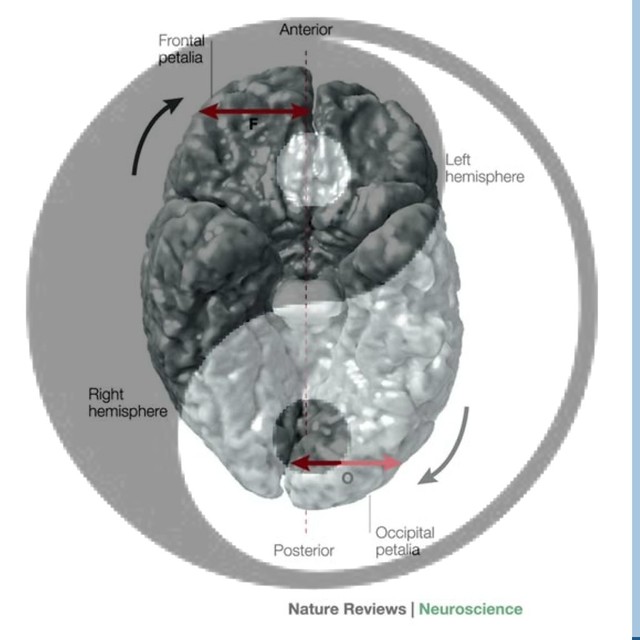
left hemi right hemi

In “The Secret Life of Pronouns”, the psychologist, James Pennebaker discusses two different kinds of thinker – categorical or dynamic. I hadn’t heard of this distinction before but in the briefest of nutshells –

A categorical thinker is someone who tends to focus on objects, things, and categories. The opposite end of this dimension are people who are more dynamic in their thinking. When thinking dynamically, people are describing action and changes

That sounds very familiar to me. In fact, its got a lot in common with Iain McGilchrist’s left and right hemisphere approaches to life. The left hemisphere RE-presents reality to itself, labelling, listing, naming, categorising. Whereas the right hemisphere focuses on what he calls “the between-ness”, connections, relationships, or the whole.

For the last few months, I’ve been sharing on this blog a series of posts under the title “The A to Z of Becoming” where I take one verb each week for you to think about, and play with. I deliberately chose verbs because I think it’s the “doing words”, the “action words” which determine the kind of life we experience. This is partly in tune with William Glasser’s Choice Theory, and partly with Deleuze’s focus on change, or difference, which provided me with the fundamental principle of this blog – “becoming not being”.

So, there is something insightful about this distinction, but, the way my mind works, I also find myself balking at the “two value” use of “or” – I SO much prefer “and”! (Which is something I picked up from the General Semanticists, before I even heard of Deleuze.

So, maybe now I can be more aware of when I am thinking categorically and when I’m thinking dynamically (and, yes, I DO have a preference!)

Read Full Post »

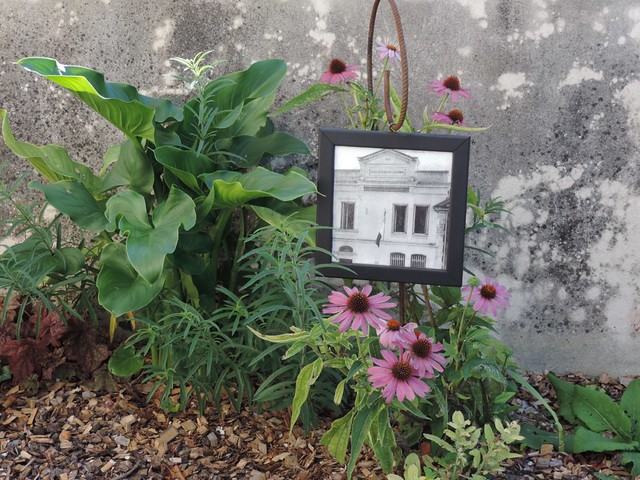
DSCN2353

Sometimes I like to share a photo with you just because it shows something I’ve never seen before, and I guess if it’s new to me, it might be new to some of you too!

I noticed this in the churchyard around the eglise in the little town of Segonzac in France. I’ve looked at it a lot and I still don’t really understand what it is.

At a level of simple description, it’s a black and white photograph of a post office, framed in a black frame which is hanging from a rusty metal stick. It seems to have been deliberately placed here, just in front of the wall of the church, and with some flowers planted in front of it.

I find it enormously appealing but what on earth is going on here? Why this particular photo? Why the post office? Why frame it and hang here in the churchyard? And are these particular flowers significant?

I’m just sure there’s a story here, but I don’t know what it is……

Read Full Post »

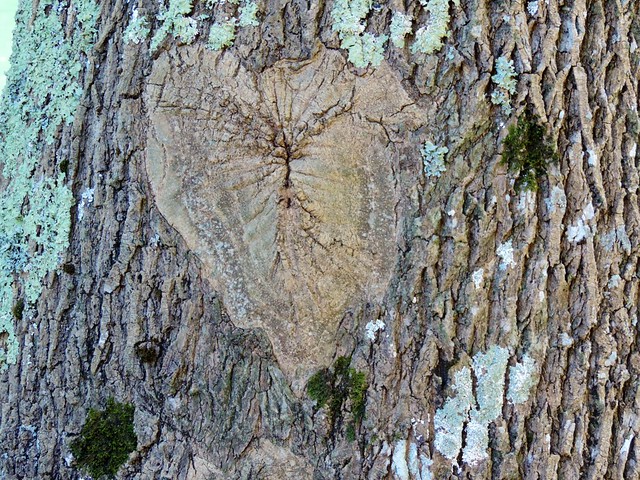
Tree heart

In the second part of the A to Z of Becoming, P stands for the verb “please”.

What I’m thinking is that it might be a good idea to explore “pleasing” this week. What do I mean by “pleasing”? Well, whatever pleases your heart.

I reckon there are two kinds of pleasing worth exploring – do something which pleases YOU – there is far too little self-compassion in this world. It’s not that we should all go about “just pleasing ourselves” and ignoring the rest of the world, nor, necessarily that we should be purely hedonistic and seeks lives of unending pleasure (fantasies, all those ideas!). Which is why I suggest that you ask your heart about your pleasing.

Maybe this week you could plan to something which would please you. Then do it. Then reflect on it later. How did it feel? What was it about what you did which pleased you?

Then, to keep a healthy balance, also think what you could do to please somebody else. Think of someone…..a relative, a friend, a neighbour, a workmate…..what could you this week which would please them? (Maybe you should ask them!) Then do it. Then reflect on it later? How did it feel? What was it about what you did which pleased them? And how did that please you?

With the verb to please, I’m thinking about how we increase the compassion in our lives – the self-compassion AND the compassion we show to others. One touchstone for that is “what pleases my heart?”

Read Full Post »

Autumn reflecting in the charente

Life can feel very full. If it is like a river, then that river can seem like it’s in full spate, rushing, rushing, rushing and very, very full.

So, in the midst of that, I find it helps, to choose to slow down for a bit, to stroll, wander, meander…..to see what catches my attention and to stop for a moment, gaze, listen, breathe.

The river in this photo is the Charente……which has a reputation for flowing slowly.

One of the features of life in France which surprises and delights me, is how the routine of closing all the shops on Sundays is still so common. In fact, in many towns, the shops will close not just on Sunday, but maybe on Monday too. When you’re not used it, it can catch you out, or frustrate you, but once you become used to it, and settle into it, it brings so many opportunities to slow down and create a healthy rhythm.

If your life has been flowing fast recently, choose a little slowness….just for a wee while. See how that feels.

Read Full Post »

As I was walking in a forest the other day I came across this –


new growth in the forest

I often feel a kind of thrill seeing new growth like this. It’s the emergence of Life on Earth. This little seedling might well grow up to be one of the great trees of this forest. How does it do that? How does this one little seed begin to sprout, begin to reach upwards through the decaying leaves on the forest floor, and seek out the sun, the air, and the rain?

And then a little further on, I find this tree….


tree

Don’t adjust your screen – it’s the right way up!

Look at these twists and curves and corners, as the tree reaches first this way, then another. Who could predict which way any of these branches would grow? Who could predict what this tree would look like today if they were seeing it back when it was one of those little seedlings pushing its way towards the light?

I see this everywhere.

I saw it every day with every patient I ever met. Who could have predicted how this person would be today, what life they would be living, and how they would be experiencing it?

Nobody.

That’s what gets me about the irrational arrogance of those who claim to know. Those who claim certainty. I am never convinced by those who claim they know what the results will be of a particular treatment for a particular individual. They can throw the term “evidence based” about as much as they like, but if they think that label gives them some magical ability to predict the future for individual human beings, then they are quite likely to be mistaken.

I don’t like the irrational arrogance of certainty in any area. I don’t like it in politics, matters of belief, wordview (religious, atheistic or scientistic), in economics, or any other human domain. Life is not predictable. Living organisms cannot be properly understood if represented as mere objects. All living forms are dynamic, open, complex systems. All are unique and together they are diverse. Commonalities matter, but so do differences.

If there is one thing I always doubt, it’s certainty.

But then, like Montaigne, I’m fond of saying “mais, que sais-je?” (“but what do I know?”)

Read Full Post »

Dandelion

I am currently reading a fascinating book entitled “The Secret Life of Pronouns” written by James Pennebaker, a psychologist who has studied the way we speak and write and how that relates to our personalities, to our illnesses and to our ability to heal wounds.

I was really struck by the section where he is discussing traumas and how people deal with them. He made the point that despite the fact that everyone experiences different traumas in their lives, most people neither become ill as a result, nor need specialist help.

That was one of those moments for me which is, on the one hand, and “aha!” moment, and on the other a moment of recognition/reaffirmation.

I think this observation applies to the whole of life and is fundamental when we think about health and health care but we’ve forgotten it.

Working as a doctor it’s easy to get the perspective that everyone gets ill and needs medical interventions, but that’s such a distortion of the reality of life. In fact, I’m reminded of what the Professor of Obstetrics said to my wife at her first antenatal visit. He said, “I see your husband is a medical student. Tell him that pregnancy and childbirth are normal experiences. As a medical student he will only see the situations where something goes wrong but for the great majority of women, things don’t go wrong.”

I was very grateful for that advice and it came back to me from time to time throughout my career. For most of us, for most of our lives, we are not thinking about our health, and we don’t need to seek specialist health advice. Of course I’m not denying the reality of morbidity and mortality. It’s also true that we will all experience illnesses and we will all, finally, die. It’s just that we have amazing adaptive abilities.

Take something like a flu epidemic. Only a minority of the people who are exposed to the virus will actually contract influenza. Only a minority for those who contract influenza will need specialist medical help. All of those who recover from influenza will do so because their body’s natural healing functions do what they are designed to do.

We do really forget that. There is no healing, other than that brought about by the body’s natural, adaptive, healing capacity. Yes, medical treatments can make the difference between life and death at times, it’s not that they are in any way irrelevant. But too often we think that healing is about medical treatment alone. It never is.

We humans have astonishing, natural, default abilities to deal with what comes along in life – whether that be mental traumas, physical traumas, infections etc. And when we do become sick, in every single instance we need our body’s self-organising, autopoietic abilities to do what they are designed to do.

Yes, if you are ill, you may well need specialist help, and please do seek it when you think you should. But don’t ever forget have the natural human ability to recover, to heal, and to be healthy.

Health is normal. Healing is normal. We should never forget that in all circumstances we should support and encourage those natural mechanisms.

Read Full Post »

I saw this on a gravestone the other day….


Heart, anchor and cross

….what caught my eye was that little collection of three symbols placed at the top.

A heart, an anchor and a cross.

It got me wondering why those three particular symbols for this person, and then it got me wondering which symbols I’d choose to have associated with me in this way – not necessarily as a literal gravestone symbols, but as personal symbols.

Which symbols, if any, would you choose? Which mean the most to you, and why?

Read Full Post »

« Newer Posts - Older Posts »