Feeds:
Posts
Comments

Archive for the ‘photography’ Category

shadow of an empty seat

No straight lines are to be found in the natural world……..Leonard Shlain has pointed out that the only apparently straight line in the natural world is that of the horizon, but of course that too turns out to be a section of a curve……..Straight lines are prevalent wherever the left hemisphere predominates. Iain McGilchrist. The Master and his Emissary

playing under the moon

By contrast the shape that is suggested by the processing of the right hemisphere is that of the circle, and its movement is characteristically ‘in the round’, the phrase we use to describe something that is seen as a whole, and in depth. Iain McGilchrist. The Master and his Emissary

Circular rainbow


So, if the left hemisphere prefers straight lines, and straight lines don’t really occur in nature, and the right hemisphere prefers to see things in the round, then why not go out this weekend, and see how many round shapes you can see? Strengthen seeing with your right hemisphere!

lily pond

through the round window

Read Full Post »

mitsudomo

Dan Siegel defines the mind as “an embodied process of regulation of energy and information flow”.

Flow is such an attractive and useful concept. If you’d like to read more about it start here.

I like Dan’s definition of the mind because he refuses to turn it into a measurable, objective entity. He describes it as a process – which seems so much more accurate to me. It is a continuous, dynamic, ever changing phenomenon. Not only is it a process however, it’s a process of regulation. He says it regulates energy and information flow.

I think this concept of the mind can be extrapolated to cover the whole organism. Whatever it is that self-regulates, self-defends, self-repairs (in my opinion we can usefully call it “the vital force”) is a process of regulation of energy, information AND materials. Because that’s how all our cells communicate and co-operate – by exchanging energy, information and materials.

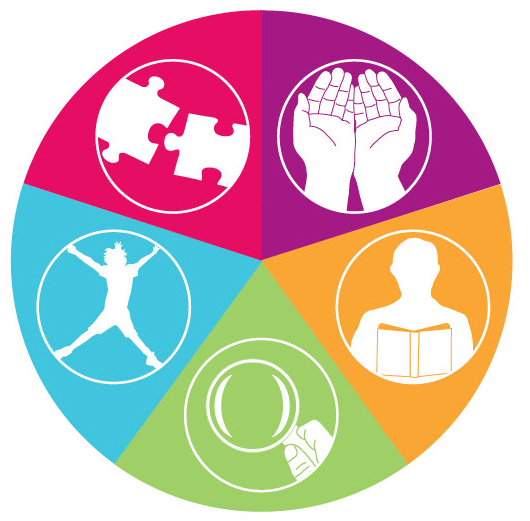
So, let’s just consider another of Dan’s concepts. He defines a healthy flow of regulation as having five qualities which he remembers with the acronym FACES.

  • Flexible
  • Adaptive
  • Coherent
  • Energised
  • Stable

A healthy organism has flexibility. Rigidity is one of the two main patterns of dis-order and dis-ease. It uses that flexibility to be adaptive. In other words, as the world changes around it, the healthy organism can change with it in an adaptive way, a way of helping the organism to not only survive, but to grow, to thrive. Healthy organisms are also coherent – all their parts and systems are working synergistically, in harmony with each other. In the absence of energy, organisms become, literally, lifeless. Energised is a key characteristic of all living organisms – you might also use the word vitality to describe the degree to which an organism is energised. Finally, there is stability. Not the stability of stasis, but the stability of coherence. You are you. You were you when you were 10 years old, and you are you now. Almost everything about you has changed between then and now but you still have a stable sense of self – you still know you are you and not someone else! Stability comes hand in hand with identity.

Read Full Post »

petanque


The Five Ways to Wellbeing…….as described in relation to mental health, are a good place to start if you want to increase your wellbeing.

..5 ways


  • Give
  • Keep learning
  • Take notice
  • Be active
  • Connect

This week, in the A to Z of Becoming, we’re at “J for Join”. Joining is one of the ways of connecting. We are not solitary creatures. We couldn’t survive the first few years of life without the care, support and attention of other people, and solitary confinement remains one of the worst forms of punishment which can be inflicted on a prisoner.

So, this week, ask yourself what have joined? Or what would you like to join?

My image at the top of this post was taken when I visited Cassis, in Southern France. Pretty much every town of any size in France has a “Boules” or “Pétanque” court where local people can meet and play together. I don’t know if towns have formal clubs for this activity like the bowling clubs you find in the UK, but even if they don’t, this is still an act of joining. This particular activity also lets you practice noticing and being active (and, maybe even learning!)

Maybe you would like to join with others in a shared activity such as a sport, a game, a pastime, or to celebrate shared beliefs?

Joining is SUCH an important quality of human life.

Read Full Post »

february love

Marc Halévy says in his “Petit traité du sens de la vie” that a human being is not “un animal social. Par contre, il est un animal communautaire”. What he means by that is that we are social in a very particular kind of way. We create important and significant bonds between other human beings. That’s how we live….each one of us with our own unique world constructed from our own unique set of relationships with significant others. I’ve read various estimates of the maximum size of such functioning groups – from 50 to 150. Certainly several thousand twitter followers, or facebook friends don’t represent these kinds of real life relationship groups.

He goes on to say that our “communitarian human” is undermined by the “mass society human”. We have societies based on nation states which deal with whole populations as if they are a single mass. In this mass, not only is the individual lost, but so is the individual’s human world of relationships (each of which, remember, is unique in its own right)

I think this takes the understanding of uniqueness, and what it is to be human, to a different level.

Lewis Hyde, in the superb, “The Gift”, deals with this issue from the perspective of the ego…

I find it useful to think of the ego complex as a thing that keeps expanding, not as something to be overcome or done away with. An ego has formed and hardened by the time most of us reach adolescence, but it is small, an ego-of-one. Then, if we fall in love, for example, the constellation of identity expands and the ego-of-one becomes an ego-of-two. The young lover, often to his own amazement, finds himself saying ‘we’ instead of ‘me.’ Each of us identifies with a wider and wider community as we mature, coming eventually to think and act with a group-ego (or, in most of these gift stories, a tribal ego), which speaks with the ‘we’ of kings and wise old people. Of course the larger it becomes, the less it feels like what we usually mean by ego. Not entirely, though: whether an adolescent is thinking of himself or a nation of itself, it still feels like egotism to anyone who is not included. There is still a boundary.

He goes on to argue that the relaxation of that boundary is where we begin to experience the connectedness of everything….begin to lose that sense of duality and separateness from the other.

I think this is helpful. The truth is it isn’t easy to feel that ALL human being are your fellow men and women. But you DO live every day with a number of relationships which are fundamental to the creation of your world. I don’t think this means we should restrict our interest and our compassion to those outside of our personal community but if we approach these relationships from a positive perspective, and understand that every single human being cannot be understood in isolation but only in the context of their own unique web of relationships, then we might find an increase in both love and understanding.

Just a thought…..

Read Full Post »

This undated handout and annotated image


Did you see this?

It’s a photograph of the oldest star in the Universe….or at least, the oldest one, the furthest away one, we’ve managed to see so far. It’s about 13 billion light years away and as the Universe is thought to be just over 13 billion years old, then the light from this star set off towards us just a few hundred thousand years after the Big Bang (of course, not everyone agrees there ever was a Big Bang, and we haven’t managed to see just that far back yet BUT let’s just take the theory for real for now)

In the beginning, we think the first element to appear in the universe was Hydrogen, and the strange thing is not only did the energy and subatomic particles which predated Hydrogen not just scatter everywhere, and fill the universe evenly, but Hydrogen particles were brought together in the first stars (like the one in this photo). These stars are giant furnaces, and in their cores they fused Hydrogen particles into Helium ones.

And then there were two. Two kinds of elements.

What happened next?

The bigger the stars, the greater the fusion capacity and the bigger the elements they could manufacture by connecting them up together.

Here’s a diagram illustrating the next steps

IMG_0564


Hydrogen fusion produces Helium; Helium fusion produces Carbon, Nitrogen and Oxygen; Carbon fusion produces Oxygen, Neon, Sodium and Magnesium; and so on with each level producing ever heavier elements…..Sulphur, Silicon, Phosphorus and all the other elements in the Periodic Table up to Iron.

Connecting elements together by fusion didn’t go any further than iron, and all the other natural elements in universe were produced by giant cosmological phenomena known as supernovae!

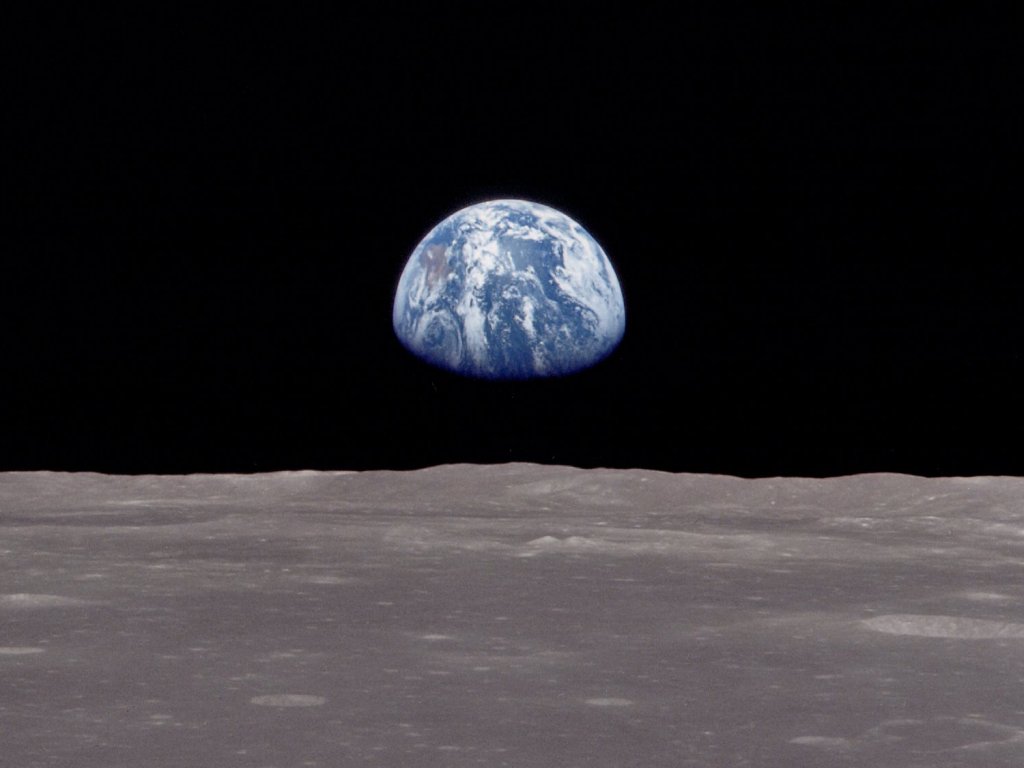
All of these elements scattered around the universe and the universe continued to connect them up, producing this –
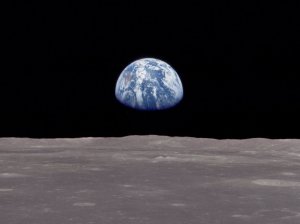
IMG_0534


….our Earth.

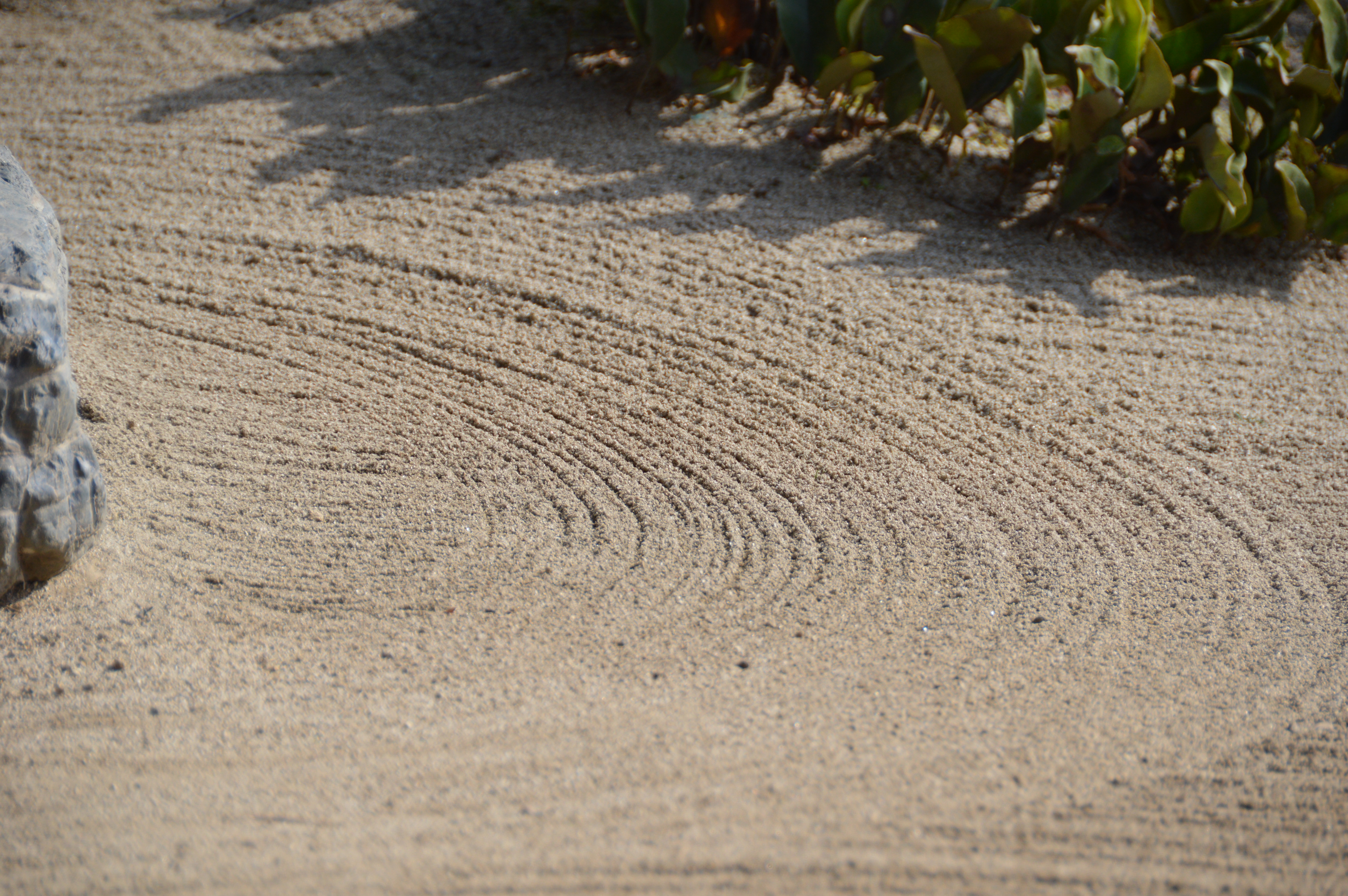
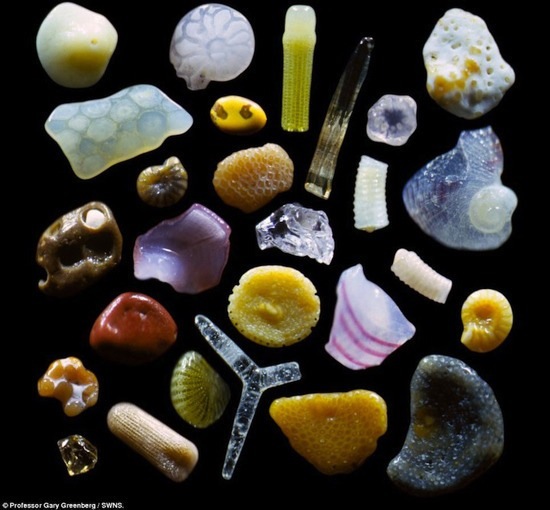
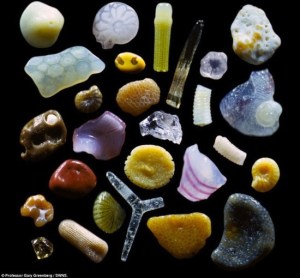
And the connecting didn’t end there. The universe continued connecting the different elements together to create beautiful structures, like sand particles…..

zen sand


…which when you look more closely look like this…
IMG_0503


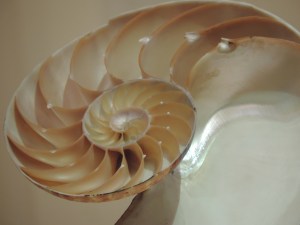
…and still the universe kept connecting everything to everything else to produce beautiful spirals of shells…
DSCN0692


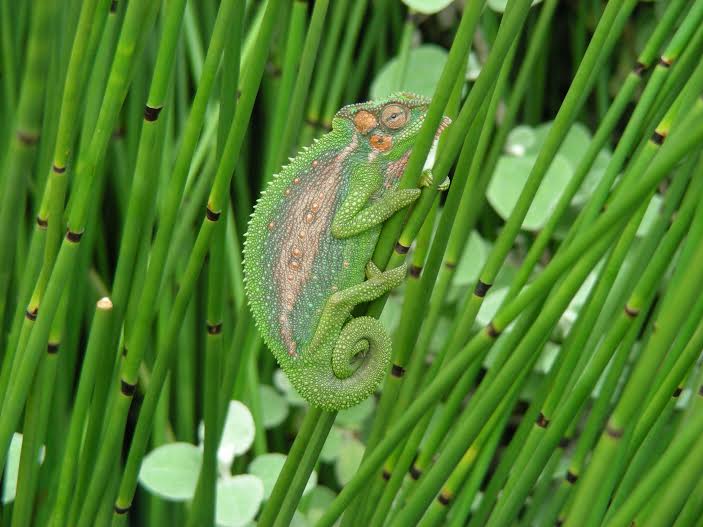
and…plants and creatures…..

unnamed-1


and, eventually…..

unnamed


My littlest grandchildren!

Just think! Over 6 billion human beings on this planet, the most complex, most connected phenomena the universe has ever created and every single one of us is unique – no two of us share the same DNA, the same fingerprints, the same irises, and certainly not the same two stories.

There IS a clear direction of travel in this story of the Universe – ever greater complexity, ever greater uniqueness, ever greater connectedness…….

I find that pretty thrilling actually!

Read Full Post »

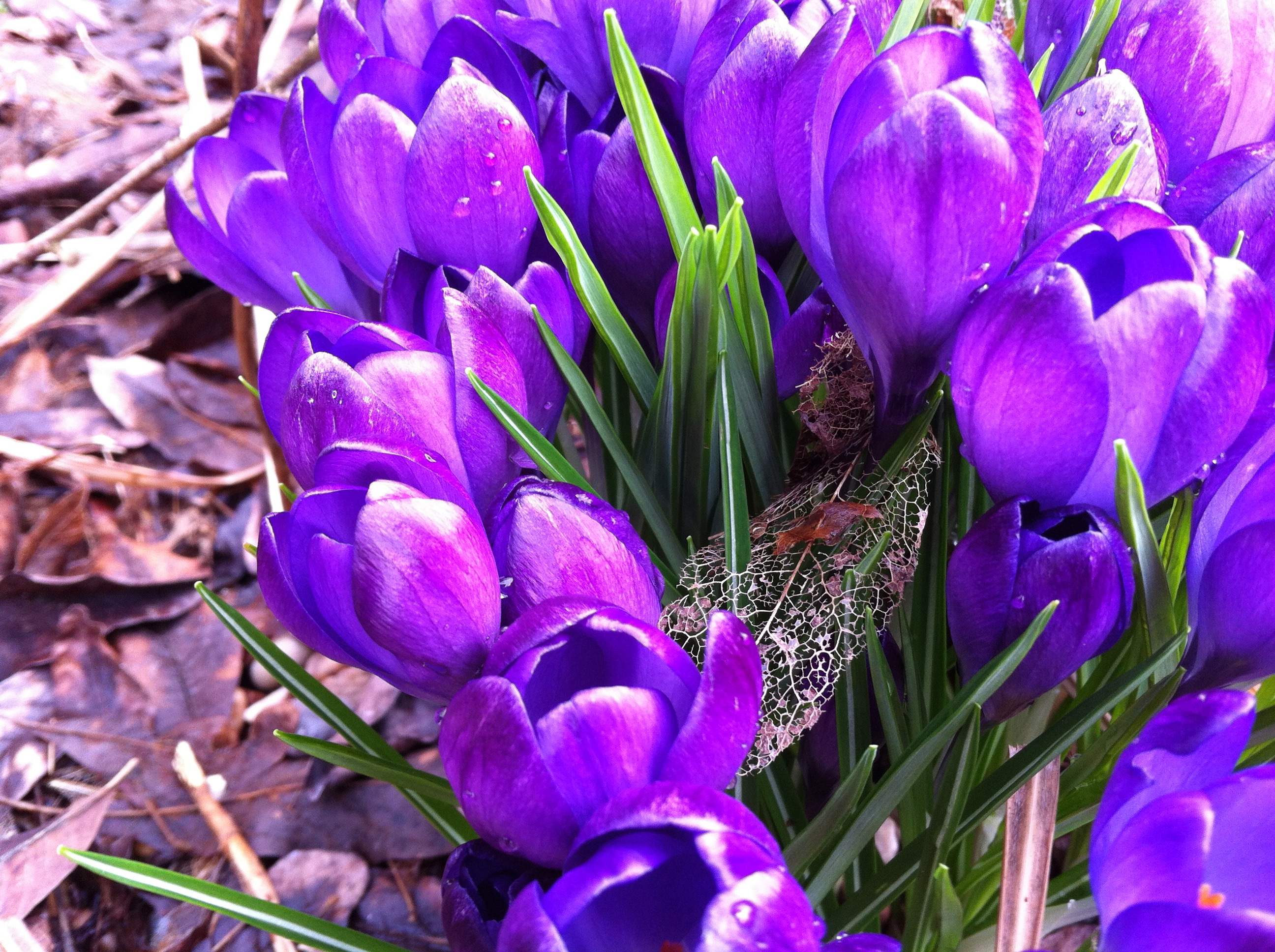
IMG_1522


The splash of gorgeous crocus colour caught my attention in the garden as I looked out through my consulting room window, but when I went outside to photograph some of them I was immediately struck by the fragile skeleton of the leaf in their midst.

What a lovely reminder of the cycles of life

Read Full Post »

Ian McEwan wrote, after 9/11, that one of the crimes of the terrorists was a failure of imagination

If the hijackers had been able to imagine themselves into the thoughts and feelings of the passengers, they would have been unable to proceed. It is hard to be cruel once you permit yourself to enter the mind of your victim. Imagining what it is like to be someone other than yourself is at the core of our humanity. It is the essence of compassion, and it is the beginning of morality.

This touched me deeply when I read it. I think this is the key way I use imagination on a daily basis. I don’t know any other way to understand what patients tell me other than by trying to imagine what it is they are experiencing. I don’t think all of empathy or compassion can be explained as the use of the imagination (mirror neurones, being present, being non-judgemental are all other elements) BUT I do think it’s an essential element. Imagination is my everyday working tool.

We imagine in order to create our world of course. If we imagine that the universe is a cold, hostile place, where it’s every man for himself and dog eat dog, then we will have a particular experience of life….we will create for ourselves a particular kind of world. If we imagine that in the universe we are all connected, and that there is a purpose to existence, then we’ll create quite a different kind of world for ourselves.

IMG_0534

To imagine is to create.

Watch any little children playing. My youngest grand-daughter looks at a cardboard box and sees a palace, or a jungle, or……….

IMG_1519


….an ambulance!

When was the last time you sat down with some blank paper, some crayons, paints, glue and coloured papers, and just let your imagination flow?

What might you imagine this week?

Read Full Post »

Did you ever wonder why March is called March?

It’s named after Mars, the God of War….the idea of war which brings peace and stability. He was also an agricultural guardian. Wikipedia describes his essential nature as follows –

Virility as a kind of life force (vis) or virtue (virtus) is an essential characteristic of Mars. As an agricultural guardian, he directs his energies toward creating conditions that allow crops to grow, which may include warding off hostile forces of nature. As an embodiment of masculine aggression, he is the force that drives wars – but ideally, war that delivers a secure peace.

(also in that wikipedia entry is a surprisingly large list of different Celtic gods associated with Mars!)

In my 12 monthly themes, March is the month of strength and assertiveness. It’s interesting that March comes immediately after February, which is the month of Love. One of the key myths surrounding Mars is the story Mars and Venus……and interesting coupling of love and war!

Venus_and_Mars

Most of my life, I’ve lived in the presence of a castle (Apart from 4 years in Ayrshire, I’ve lived in either Stirling or Edinburgh), and these ancient castles embody for me the quality of Mars – there is something strong, constant, assertive and stable about them, especially as both Stirling and Edinburgh castles are built high on rocky outcrops.

I’m always keen to consider the positive aspects around me, and as I think of Mars, I think of strength and assertiveness. We need clear boundaries. We need to be able to say “no” when it is appropriate, and we need the strength which gives us both healthy defences and the resilience we need to stay well.

So, here’s my focus for this month. How do you build the strength of your vital force so you can be resilient, healthy and flourishing?

Stirling Castle and Wallace Monument

edinburgh

Read Full Post »

wish

I don’t know how this works. Seriously. I don’t. You could claim it’s about coincidence but when it happens it seems much more significant that a random juxtaposition of events.

Here’s what’s happened. First off, I’m writing a weekly series of blog posts entitled “The A to Z of Becoming” where I’m writing about one verb each Sunday. This week I reached “H” so wrote about HOPE.

Secondly, I’ve subscribed to a bimonthly magazine called “Resurgence” for many, many years, and the March/April issue arrived the day before yesterday. I popped it in my bag to read on the train on the way to work on Monday morning.

So, imagine my surprise when I opened “Resurgence” at a seemingly random place and saw the article “Seeing with New Eyes” by Chris Johnstone. Right in the middle of the page, in a large “pull quote” is

Active Hope is a practice, like t’ai chi or gardening.

“Active Hope”?

Johnstone says there are two meanings of hope (and I didn’t think of that when I wrote my post on Sunday) – the first referring to “hopefulness, where our preferred outcome seems reasonably likely”, and the second refers to desire. I like that. Makes sense to me. The first meaning precipitates us into hopelessness where our preferred outcome seems highly unlikely, but the second can set us off in pursuit of our goal.

Then, what about this for a heroes not zombies idea……..?

Passive hope involves waiting for external agencies to create the future we desire. Active Hope is about becoming active participants in the story of bringing about what we hope for.

Active Hope – the deliberate choice to move in the direction of how we want to change.

Read Full Post »

Snowdrops Edith Shiffert

This week, I’m reflecting on the place of hope in life.
This little Haiku by Edith Shiffert seemed very appropriate and seeing snowdrops bursting out all around at the moment brought these lines back to my mind.


Read Full Post »

« Newer Posts - Older Posts »