Feeds:
Posts
Comments

Archive for the ‘photography’ Category

waterfall

Flow is one of my favourite verbs.

As with all words, there are various nuances, or aspects to it.

Maybe you see this word and think “Go with the flow” – as in, don’t resist, don’t fight, don’t challenge, just go along with everyone else. (but look what water can do, just by flowing over rock…..)

water and rock

Of maybe you hear it as a call to relax, take it easy, tune in to the effortless.

feather heart

But those aren’t what I think of when I think of flow – instead I think of Czikszentmihalyi, the positive psychology pioneer, who researched “flow experiences” and published them in his book of that name. He was referring to those times when it feels as if everything is flowing beautifully, everything is coherent….it’s a peak experience, and he found that it was most likely to occur when we are in the process of achieving some challenge we’ve set ourselves. So it often involves a lot of effort to develop the necessary skills, and then as we use those skills, in what can appear an almost effortless way, we have that feeling of complete harmony.

I also like the ideas of flow which emerge when you think about how water behaves. In fact, I like that so much I did a whole photographic project on it and turned it into a book and a website – come and see here.

Read Full Post »

There are three kinds of “attractors” described by complexity science. An attractor is a kind of local organiser, producing distinct forms from the patterning of energy flows.

Here are three photos of mine which will help you see these three common patterns. First up, the “point attractor” which creates spirals or whirlpools, organising the local region around a single point.

photo

Secondly, here’s a “loop attractor” pattern, where there are two points of organisation close to each other. This creates a pattern of alternating zones, or states, figures of 8, or “infinity loops”.

Bark marks

Thirdly, there are “strange” or “chaos” attractors where it is hard to see any distinct pattern but the region is being organised around multiple, interacting points.

amazing detail on stone


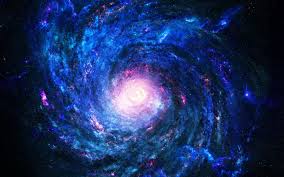
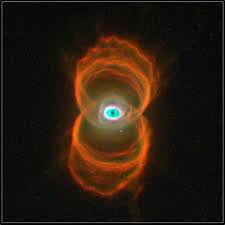
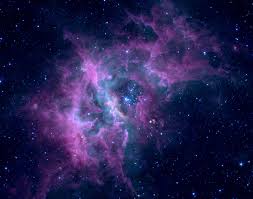
Similar patterns can be seen throughout the universe, from the microscopic to the cosmic level. Here are three astronomical photos showing large scale attractor patterns (I didn’t take these ones!).

A beautiful, point attractor, spiral.

images-1


A fascinating loop attractor….

images


And, finally, a strange attractor pattern….

images-2


I think we see these patterns in disease as well, from situations where everything gets stuck, going round and round the same restricted path, to those alternating, or flip-flopping states, like highs and lows, and, then thirdly, the chaos patterns where there is such a level of dis-integration that everything feels a mess, feels chaotic.

I wonder if you can see any of these fundamental patterns in your world?

Read Full Post »

zen garden

pool of resonance


What’s the difference between these two kinds of waves?

Yes, the sand waves aren’t moving, they just look like ripples. But if you see timelapse photography of desert sand dunes you can see great waves of sand moving just like the waves which crash onto the beach.

Except, even there, there is a huge difference.

What’s the difference?

It’s a difference between matter and energy. The sand waves are made of particles which stick, or move, together. Waves in water, however, might look like lines of water molecules all moving forwards together…..but they aren’t. Waves in water are energy waves. As the energy passes through the water it pushes the water molecule up and down again (in a kind of cyclical motion). In other words, the wave which moves forward is continuously made up from one group of molecules after another.

A bit mind boggling, huh? But you can see what happens if you see some seaweed (or a rubber duck) on the surface of the sea…..as the wave arrives, the duck rises up, as it passes onwards, the duck sinks down again, waiting for the next wave to arrive…..same thing is happening with the water molecules.

What interests me about this is that I think WE are like the waves in the water much more than we are like the waves in the sand. We emerge out of everything which is, as the energy or life force of the universe surges through us, lifting us up into the world, then we disappear again, back into everything which is.

Read Full Post »

young Japanese couple

In my monthly themes, February is the month of love. It was, therefore, serendipitous that, on the train, on my way to work this morning, I read about the four different words the Ancient Greeks had for love.

Eros, for physical love, sensual love, the love we feel in our bodies.

Storge, for affectionate love, the love we feel in our hearts.

Philia, mental, or intellectual love, the love we feel in our heads.

Agape, unconditional love, the love we feel in our souls.

It’s nice to take these four concepts and relate them to the four elements – Earth (body), Fire (heart), Water (head), Air (soul)

So, here’s a great exploration for you this month, the month of love – reflect each day and maybe write in your journal, or take a photo, or sketch a drawing, paint, or make a playlist of music which captures, or at least suggests, for YOU, the sensuality of the love you feel with your body, the affection which is heart felt, the conscious love of your thoughts and your intellect, or the times when you feel that soul connection with a person, a place, or some other….

By the end of the month, you’ll have a wonderful collection of memories and inspirations which connect you to the essential Earth, Fire, Water and Air of Life and Love.

Read Full Post »

red arrow

In the A – Z of Becoming, the fifth verb, is EXPLORE.

Targets, goals and plans……how do you set off into the future? Do you set yourself some targets or goals? Do you draw up a detailed plan? Or do you decide what or where you would like to go and explore?

What’s the difference?

Well, think of taking a walk over the hills. You can either work out in advance where to start from, where to finish, and which particular path on the map you will follow. Or you can decide where to start, but then decide which particular paths to take, and where you would like to go, once you are there.

Or think of going to a gallery. Maybe you hear about a particular work of art (Rodin’s The Kiss has been on display in the Galleries of Scotland in Edinburgh in recent weeks) and you decide to go and see it. So you plan your trip, go to the gallery, ask at the door where the particular work of art is being displayed and then follow the floor plan to go and see the work you want to see. Or instead you can decide to go the gallery for a few hours and wander around…..explore the rooms you’ve never been in before, see the works of art you’ve never seen before, or stumble over some old familiar works you haven’t seen for years.

For my next holiday in France, I’ve booked a flight, and a hire car. But that’s all. We’re going to explore an area we’re not familiar with, and might find our way into some neighbouring areas to see some old friends, some previously visited towns. I like these explorations. You can’t predict what you might find.

Exploring isn’t the only way to encounter life, but it is a different way. It maximises serendipity, surprise and wonder.

What, or where, might you begin to explore this week?

Read Full Post »

education


What’s education about? Qualifications? Marks? Something you do until you are 16, or 18, or 20 something?  I think it’s an ongoing, constant, way of living.

becoming educated, not being educated

Read Full Post »

colorsplash rainbow nelson mandela


Fear drains the colour from our world, hope paints it back.

Fear is used in such a controlling way in our world…..it’s the major tool used to produce conformity, uniformity, compliance, and obedience. Yet no life can be lived without hope.

Every day that’s my job….to help dispel fear, and instill hope.

Read Full Post »

Swan cruising

Goldie Hawn said in an interview the other day

There’s so much left. You know if you lose wonder, you’ve lost everything, so I can’t tell you what I’m going to be wondrous about tomorrow, but I live now, and what I’m living right now is the world of wellness, helping as much as I can, being the voice and the creator of more applications and more ways to access happiness.

Yes! Wonder, or the “emerveillement du quotidien” gives daily life a constant quality. And “living right now” is the only way to really live.

Goldie was talking at the World Economic Forum about her MindUp project – a programme her Foundation has created based on mindfulness practices and positive psychology. I like her emphasis on neurobiology and her focus on children and schools.

Read Full Post »

In the A – Z of Becoming, the fourth verb, D, is for Dream.

Sleeping baby on hoarding

I took this photo some years ago in the Ginza district of Tokyo. I think it captures two ideas about dreaming.

The first is that when we think of dreaming, partly what we think of is what we do when we are asleep. What did you dream last night? Can you remember? Nobody understands what night time dreaming is about, but for many years psychoanalysts and others have found that dreams can be a rich source of insights into the unconscious mind. If you want to explore what lies within your own dreams, you’re going to have to start improving your ability to remember them. The best way I know of doing that is to keep a notepad beside your bed with a pencil or pen beside it and when you wake up, immediately write down what you can remember from the dreams you’ve been having that night. I’m sure you’ll have had the experience of waking up in the midst of some vivid or powerful dream, only to find all trace of it disappears when you have your first thought about the day you’ve woken up into. I think there is also some mileage in setting your intention. Before you go to sleep, your last thought can be “let me dream tonight, and let me remember tonight’s dreams when I wake tomorrow”. Many people say setting such an intention, coupled with having the notebook ready for when you wake, gives you an increased chance of capturing those dreams. As with so many other thoughts and behaviours, the more you do it, the more easily you’ll do it, so even if the first few mornings you find you still can’t remember anything, persist. Once it becomes established, it becomes more useful.

The second is the kind of dreaming we do when awake, and I don’t particularly mean free-floating day dreaming, I mean consciously dreaming. The fact this construction company in Tokyo chose to print an image of a sleeping baby, cleverly hints at that other kind of dreaming….the kind which is part of the creative process. Dreams which become plans, blueprints, goals, projects…..dreams which become paintings, poems, stories and songs. Dreams of where we want to go, what we want to see and do.

Allow yourself this week to become aware of both these kinds of dreams. Maybe you can note some of them down in your notebook….in your dream journal? Maybe you’d like to have two dream journals, one for the dreams of sleep, and one for you conscious dreams, or maybe, and I prefer this option, the one journal for ALL your dreams……after all, you might find that the one kind of dream becomes entangled in the other kind, and something quite surprising might emerge.

Read Full Post »

It’s Burns Night tonight, but I’d like to share the opening verse of a poem by another old Scottish poet, Thomas Campbell. From his, ‘The Pleasures of Hope’…..

At summer eve, when Heav’n’s ethereal bow
Spans with bright arch the glittering hills below,
Why to yon mountain turns the musing eye,
Whose sunbright summit mingles with the sky?
Why do those cliffs of shadowy tint appear
More sweet than all the landscape smiling near?—
‘Tis Distance lends enchantment to the view,
And robes the mountain in its azure hue.

first thing this morning


Although this turns around the French idea of the “view from on high“, in some ways, it’s the same idea. How often does it seem that it’s the distant mountains which catch our eye when we look at a landscape? I know that’s what catches my eye first. Every single day I look out of one of the windows of my flat and look for Ben Ledi. Unless there is mist, or the clouds have come down in front of it, it’s Ben Ledi I see first.

I like this idea of Campbell’s that the ‘distance lends enchantment to the view’, and I think our everyday often lacks enchantment, so maybe here’s an easy way to increase it…..look to hills, folks!

Read Full Post »

« Newer Posts - Older Posts »