Feeds:
Posts
Comments

Archive for the ‘photography’ Category

floating petals

I came across this statement the other day

You can’t direct a living organism, you can only disturb it.

I think this is such an important truth, yet we lose sight of it all the time in health care.

Our current reductionist, mechanistic model of living organisms has resulted in our unsustainable version of health care, based on the premise that diseases are entities which can be defined, isolated, attacked and removed, using “evidence based” interventions which are certain to produce the outcomes demonstrated in clinical trials.

Life, of course, isn’t like that. The intended “outcomes” are difficult to achieve, impossible to predict in individuals, and turn out not to be the end of the story when life carries on.

Why is that?

One reason, it strikes me, is because you can’t “direct a living organism”. You can’t control a living organism. People aren’t like cars. Living beings contain many, many parts (cells which work together to create tissues, organs and networks), but those parts relate to each other in non-linear ways.

Simply, that means that doing X to Y will not predictably produce Z.

The failure to remember that leads to polypharmacy where each “evidence based” drug is prescribed to direct a part of the living organism – the heart, the brain, the lungs, the stomach etc – but when that part changes under the influence of the drug, it’s relationship to the other parts changes – unpredictably (and the drug, which is not specific to the part it is trying to direct, produces changes in many other parts at the same time)

If we remember that we can only “disturb” a living organism, not “direct” it, then we are called to be more humble, less certain (and so more aware, more reflective at every stage), and more holistic.  We are called to constantly return to the focus on the person, on this unique individual we are caring for, and to assess, with them, how life is changing as a result of this “disturbance”.

We can’t control individuals. But we can disturb them, and then ask with them, how is life now? What direction is life taking?

Read Full Post »

sunset


Thoreau writes, in Walden –

I learned this at least, by my experiment; that if one advances confidently in the direction of his dreams, and endeavors to live the life which he has imagined, he will meet with a success unimagined in common hours.

There’s a lot in that sentence. Does it inspire you? If it does, what does it inspire you to do?

It inspires me to become more aware of my dreams (and to try to distinguish my dreams from the dreams I’ve acquired). It inspires me to experiment, to see whether or not I’m surprised by how well those dreams can be realised if I take action – if I choose to “advance” in the direction of my dreams.

Read Full Post »

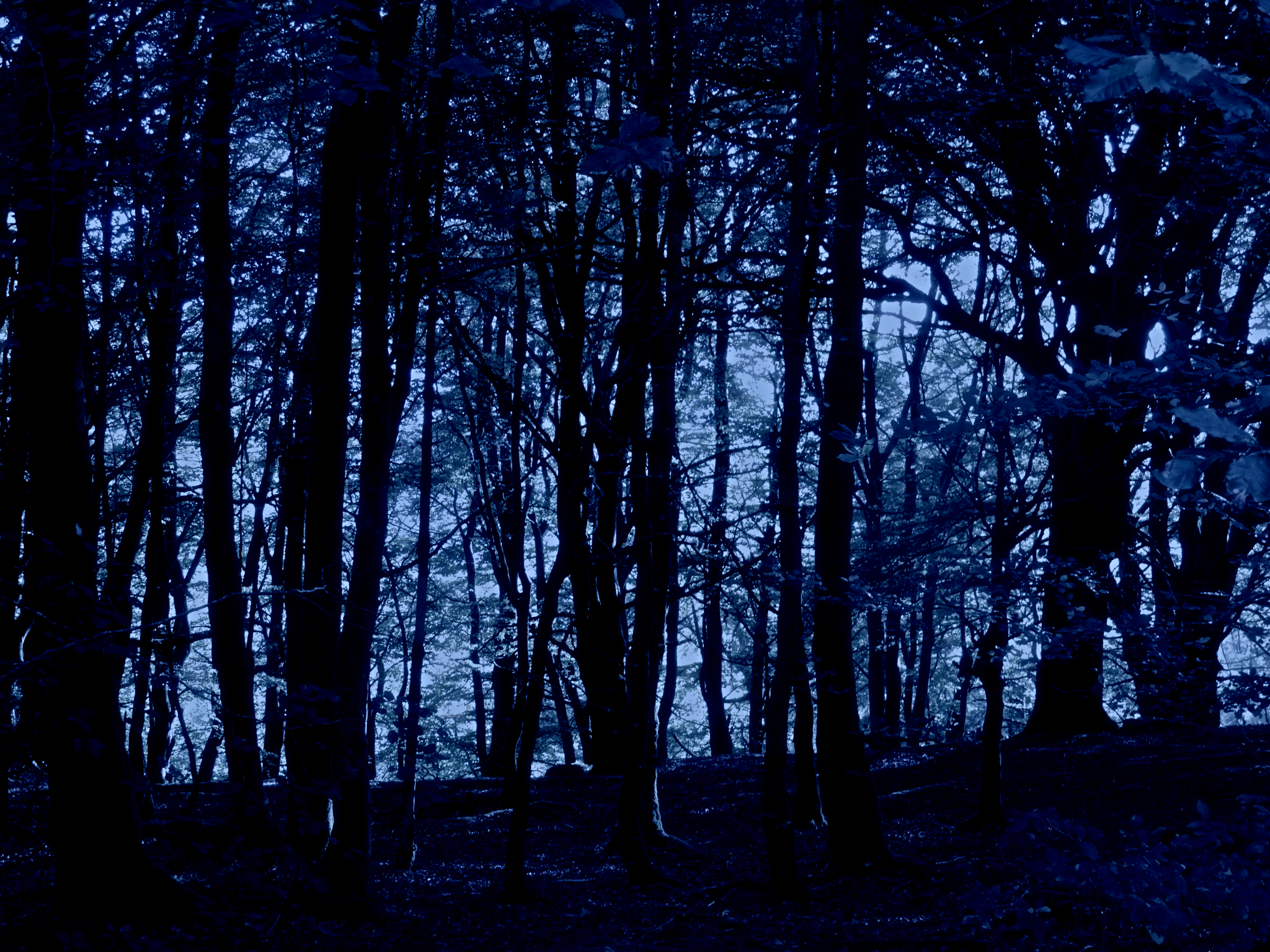
moonlit forest


James Hollis, in his “Creating a Life” says

As powerful as the will is, as urgent and insistent the élan vital, the imagination creates the world in which we live. The only question is: whose imagination, whose images, whose myth are we living in the course of that which we call our life?

I couldn’t agree more. Imagination is one of our most powerful qualities. We need imagination to see the possible. We need it so see the invisible. We need it to create. We need it to put ourselves into the shoes of others (and without that, where is compassion?). We need it for hope.

But imagination also allows us to fear – and how often is fear used now to control us?

So whose imagination are you living?


Read Full Post »

Untitled

I know the colour of November will depend on where you live, but here’s the image I have on my calendar this month (I make my own calendar every year). When I turned the page from October to November on Friday I had one of those intake of breath moments. This image has done that for me since the day I took it. It looks like the fiery power of LIFE just radiates from this forest.
What’s the colour of November where you live?

Read Full Post »

I read a lot about “complex adaptive systems“, and so a lot about “complexity science”. I think this gives me a set of concepts to create a framework for myself which helps me understand life. I think it gives me a language with which to think and communicate, but the trouble is the word “complex”. When people hear that word they think of “complicated” – which isn’t the same thing at all.

What’s the difference?

A machine can be complicated. A machine is constructed from parts, each of which can be understood separately. A machine can be understood by examining the parts and how they interact with each other. You can take it to pieces and build it back up to be the same machine. You can predict how the machine will behave….what it will do. The more parts a machine has, and the more connections there are between the parts, the more complicated it is. That means it is harder to understand. But it can be understood.

A living organism is not complicated. It’s complex. A living organism might have billions of parts (cells, for example), but there are two distinct features about how they interact – they are all “agents” – that is every single part affects, and is affected by, other parts; and the nature of the interaction is “non-linear” – that means you can’t add one part to another and predict what the result will be…..a small change at the beginning, can produce enormous differences in how the organism as a whole changes – think of the “butterfly effect”.

Once you grasp the basically simple concepts which underpin this idea of “complex systems”, then you can look at everything from living organisms, to ecosystems, forests, organisations, communities or institutions from this perspective. I think it’s amazing what such a perspective reveals.

One paper I read recently looked at understanding leadership from the complex adaptive system perspective. The author, Kowch, highlights three characteristic of organisations which learn, adapt and grow. Each of these characteristics is worth thinking about because the less your organisation has of these, the less healthy it will be, the less likely it will thrive, or even survive in these rapidly changing times.

  1. Diversity – Nature loves diversity. The more conformity and uniformity in a system, the less adaptable it is. Monoculture might produce large quantities of something for a while, but, ultimately, it becomes vulnerable. Yet, command and control seems to be the preferred management method. Great effort is put into achieving conformity and uniformity. With globalisation, and the power of oligopolies, differences are often seen as problems to be removed.
  2. Specialisation – nobody can do everything. Although Darwinists have pushed the idea that evolution occurs through a “survival of the fittest”, with a perspective of continuous competition and warfare, in fact, others argue that its the ability to co-operate which has allowed human beings to develop as a species. Co-operation involves both good relationships (integrative relationships ie where the relationship is mutually enhancing for all the individuals involved), and specialisation – some develop a lot of skill in one area, whilst others in quite a separate area.
  3. Redundancy – this means duplication, or having “more” than it seems the organism “needs”. In organisational terms, if all the staff are fully employed, fully scheduled, each in their own specialist area, then when something changes (such as sickness, increase in demand etc) then there is no way to cope with that – there’s nobody to cover, and there’s no ability to meet the change in demand.

So, what does your organisation look like? How’s it doing in terms of diversity, specialisation and redundancy? How healthy and adaptable do you think your organisation is?

floribundance


Read Full Post »

The local robin

This robin isn’t any robin. This is THE robin whose territory includes the bush which grows right in front of the space where I park my car at home.

I’ve often tried to capture a photo of him, but he is camera shy and disappears too quickly for me. But this time…..oh, isn’t he wonderful?!

If one does not become the eccentric, unique, one-of-a-kind person he or she was meant to be, then a violation of some large purpose of the cosmos has occured. James Hollis

Every one of us is a one-off. Every one of us is unique. My local robin reminds me of that.

Read Full Post »

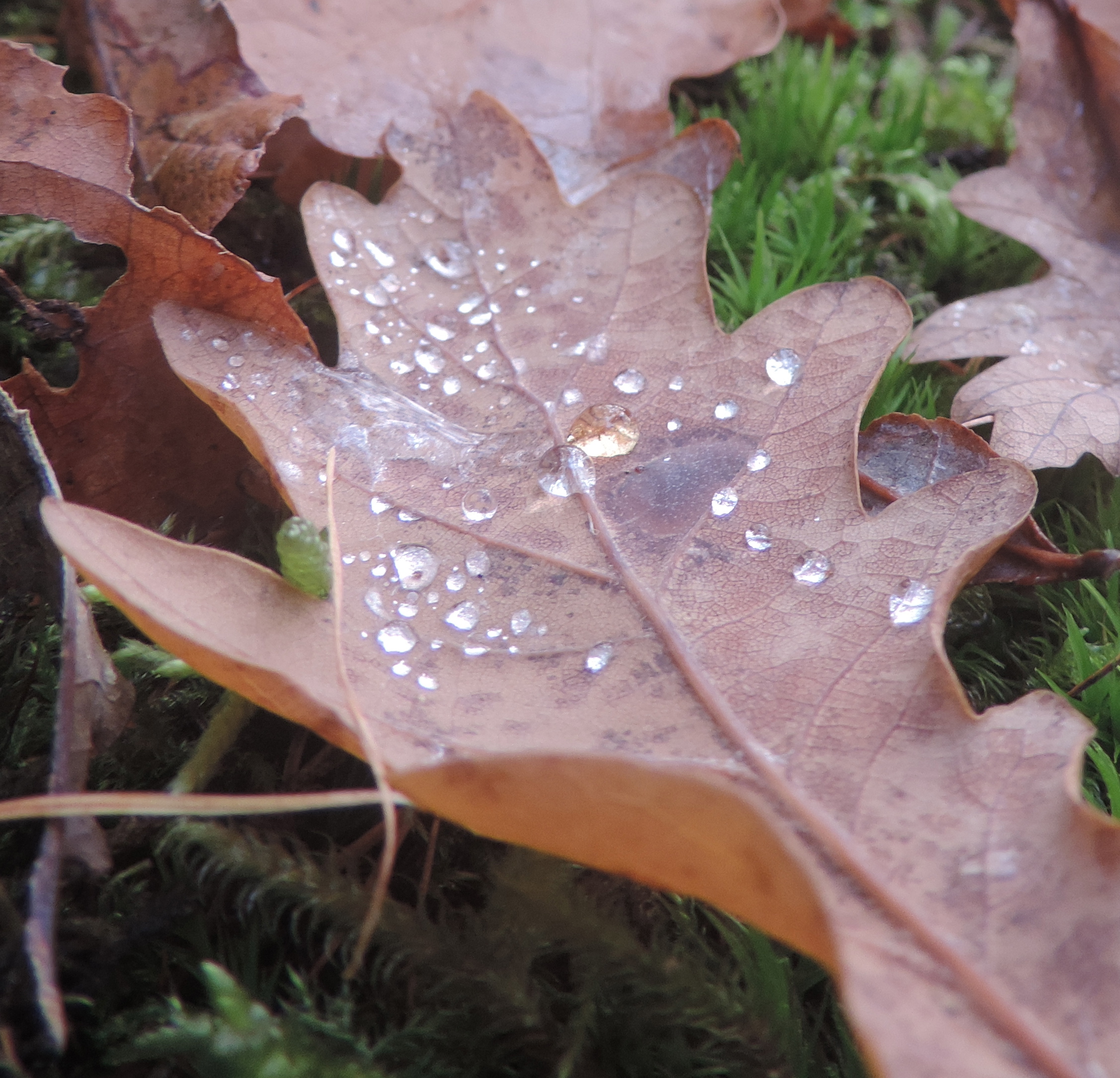
coloured drop


I photograph what I notice.

Something catches my attention, draws me to it. I become aware of it, and a sense of wonder, or an appreciation of beauty rises in me.

Then, so often, when I upload the photo onto my computer later and look at it on the big screen I see something even more striking, even more amazing than I was consciously aware of at the time I pressed the camera button.

Look at this photo. What caught my attention was a sparkle. The light and the water glistened like little gems. I took a few photos. When I looked at this one later I noticed that one of the drops of water is different. It’s like a little drop of honey, or amber, rather than like a small diamond or crystal of clear glass.

When I notice this, something else happens.

My delight increases. My sense of wonder increases. (How come this one drop on this leaf is such a different colour?) And it activates those deep values in me – the values of presence, of becoming consciously aware of this present moment, the beauty of transience, knowing that this present moment is fleeting, and all the more precious because of that, and the love of diversity and uniqueness.

All in a drop, all in a moment.

Read Full Post »

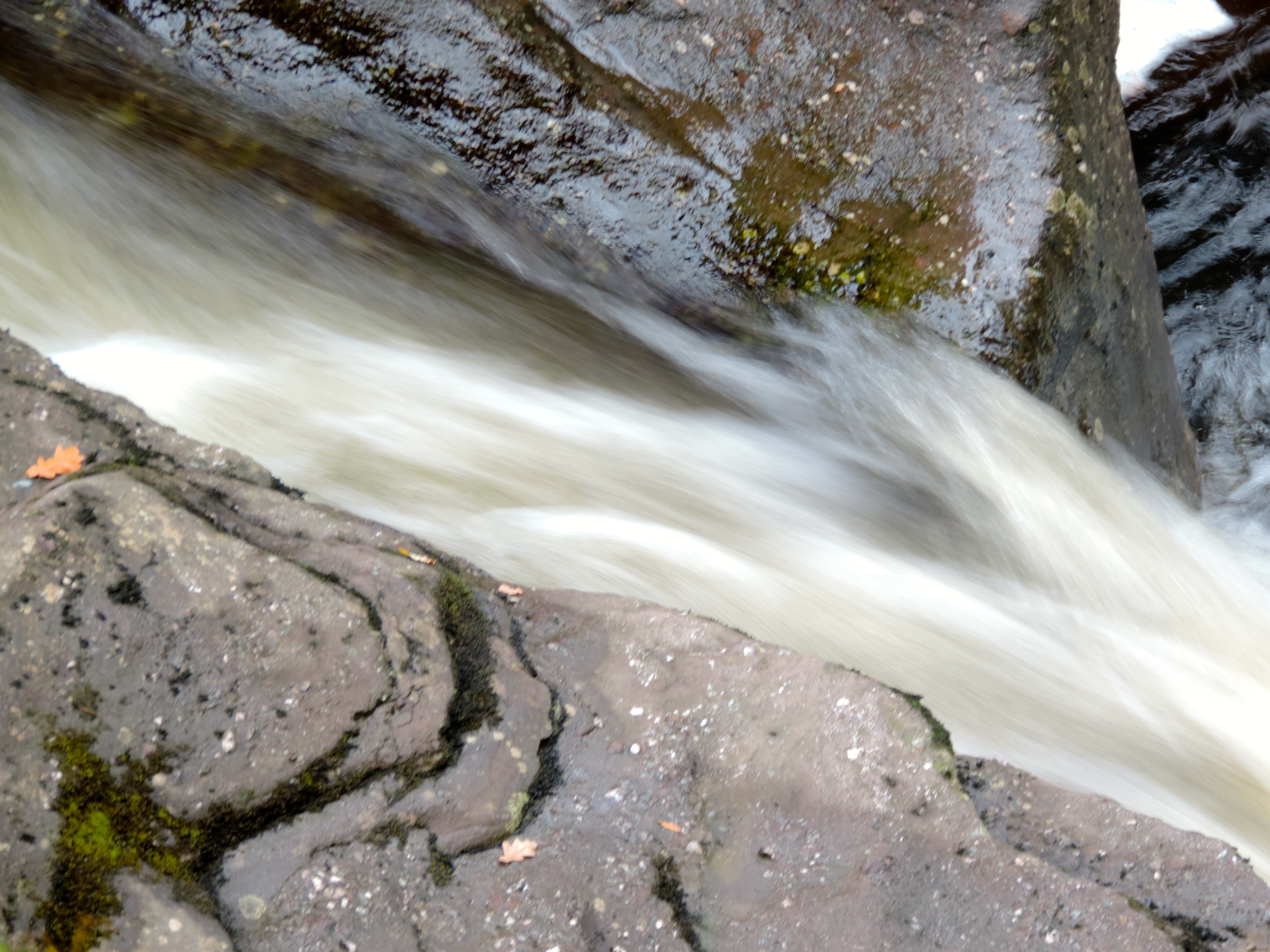
river flows


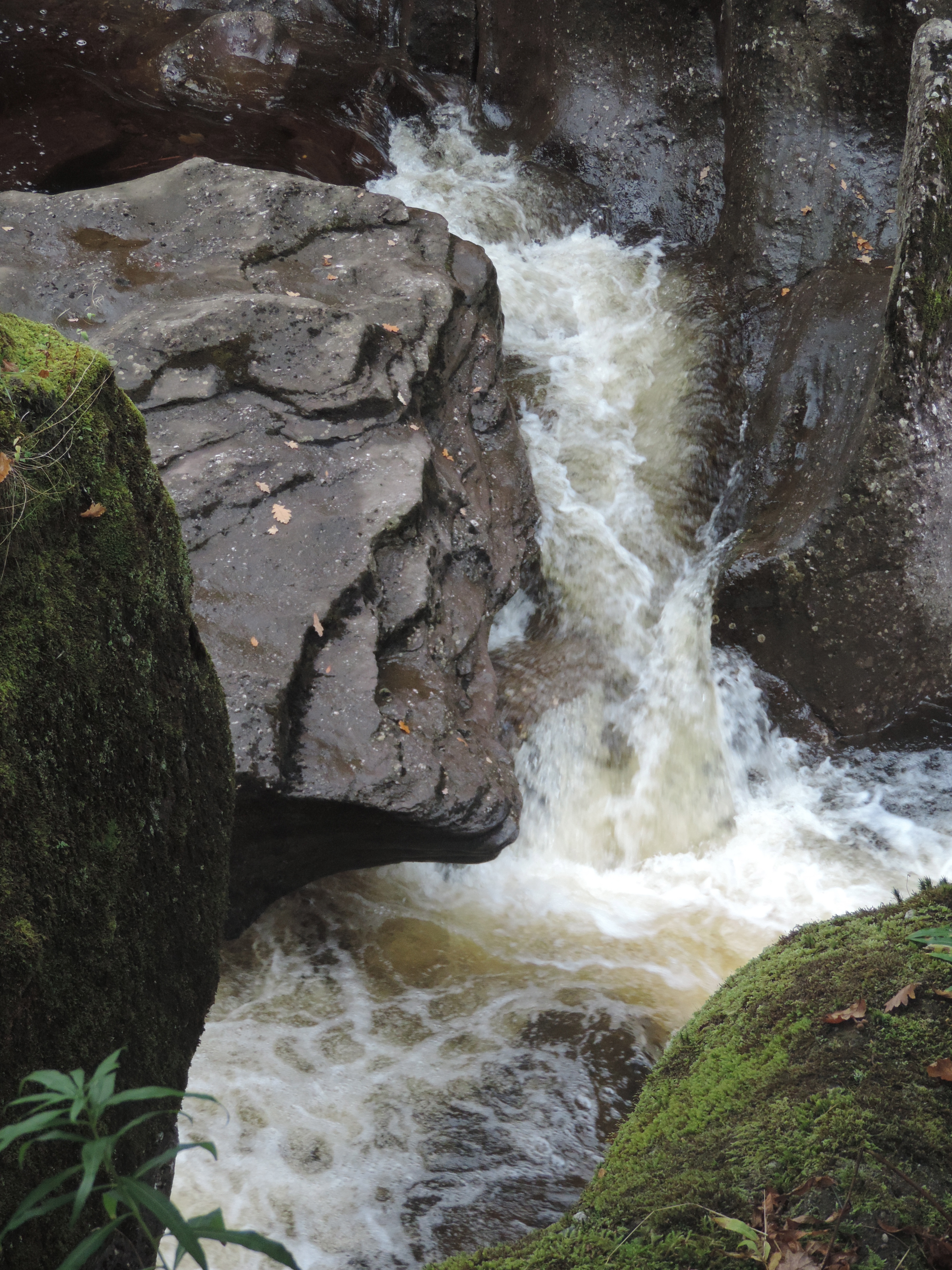
As the river flows over the rocks in the forest around the Bracklinn Falls I stand and wonder about the relationship between the rocks and the water.

I can see the rocks set the boundaries of the river and channel the direction of flow for the water, but I can also see how the water sculpts its own path leaving the rocks far from untouched as it pours down the hillside.

bracklinn


This got me thinking again about that continuous interplay of two essential forces in the universe – the diversity generators and conformity enforcers of Howard Bloom’s “Global Brain”.

That same idea is captured with a different set of metaphors in Thomas Berry’s fabulous “The Great Work”, where he talks of “wildness and discipline”.

I recently came across yet another set of metaphors for this process in David Wade’s “Crystal and Dragon“. In this latter book, David Wade describes the patterns of Nature (actually you could say of the Universe) and Culture which emerge from these two, apparently opposite, forces. Think of how a crystal forms, with a set of rules, which are strictly enforced in a disciplined way to produce the structure required to allow the growth of the crystal. Then think of the patterns of flow which emerge in the creation of clouds, waves and waterfalls. The former containing a certain predictability, and the latter retaining an apparently chaotic randomness. In one section of his book he compares Islamic art to Taoist art, the former known for its beautiful geometric patterns, and the latter for its freehand ink drawings of clouds, waves and water. Interesting then to think of the strict and detailed rules of Islam, and the Taoist focus on constant change, flow and uncontrollable nature of Life. In Chinese culture this force is represented by the Dragon.

So, the crystals of conformity enforcement and discipline, and the flowing Dragon of diversity generation and wildness……and what an astonishing Universe is produced in the process.


Read Full Post »

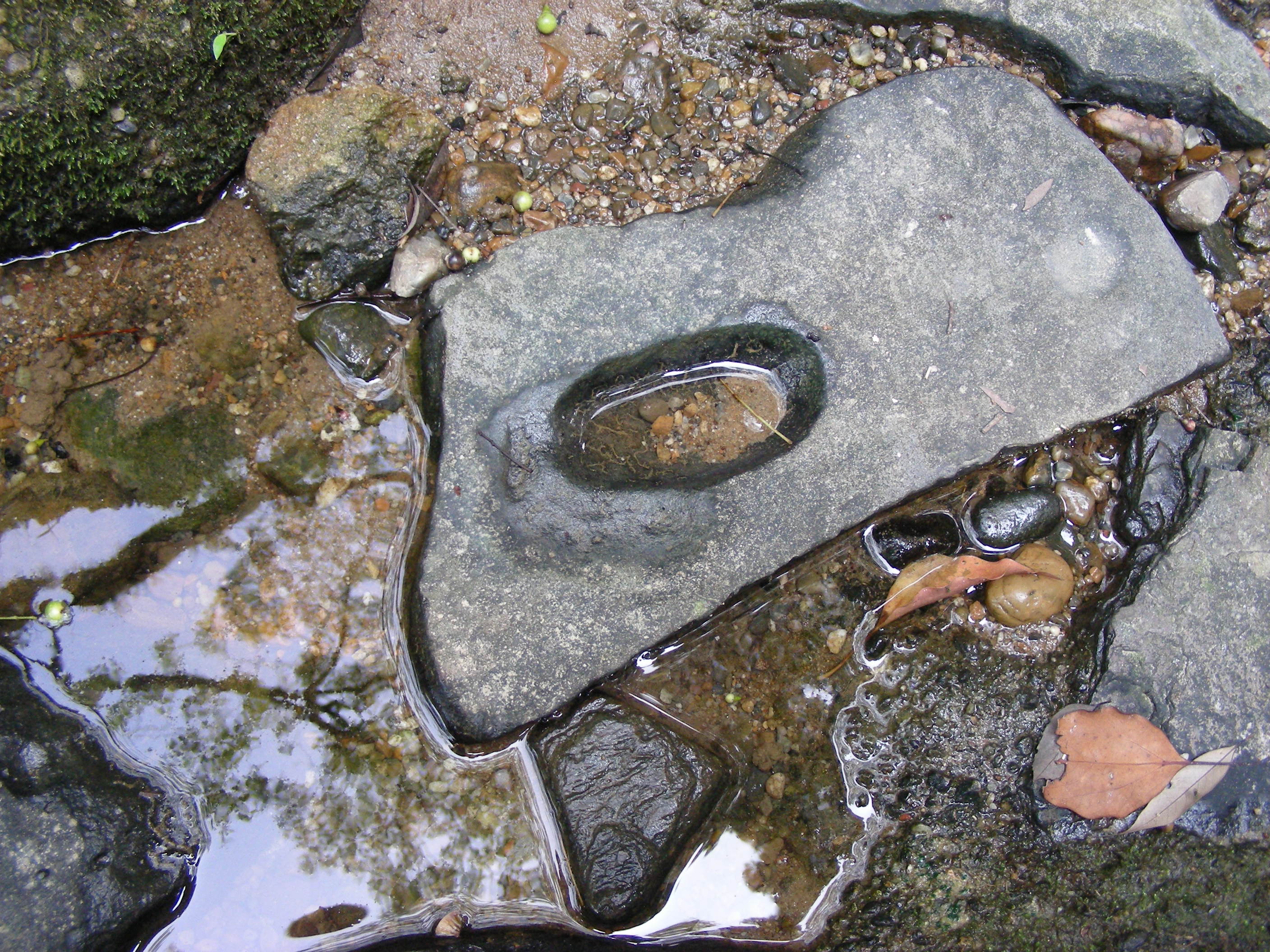
worn stone


Jung said “The world will ask you who you are, and if you do not know, the world will tell you.”

Do we make ourselves, or does the world make us?

Actually, that’s one of those questions which poses a false duality. The truth is it’s a two way process, an interaction, a conversation, relationship, a dance.

I’m fascinated by the patterns we see everywhere. As I listen to someone’s story, I’m listening for patterns. What kinds of patterns?

Well, I suppose you could call them habits.

  • Habits of the body
  • Habits of the head
  • Habits of the heart

The habits of the body are our physical actions, the ways in which we use our bodies to move and to interact with the world. Think of your eating habits, your exercise habits, your physical preferences, how you experience the world and how you engage with it.

The habits of the head are our thoughts, our beliefs and our world view. Think especially of whether or not your thinking habit focuses on the past, the present or the future? What are you sensitive to? What do you notice? How do you interpret the world? It’s especially helpful to think of how we approach the world, and Iain McGilchrist’s brilliant understanding of the clearly different ways in which the left and right hemisphere’s of the brain approach the world is really exciting.

The habits of the heart are revealed in the patterns of our emotions, our longings, and our passions. What moves you? What touches in you in your heart? In your soul?

This is the examined life – where you become aware of your inherited and acquired patterns which create the habits of your existence. And if you want life to be different, you’re going to have to create some new habits, or change some old ones.

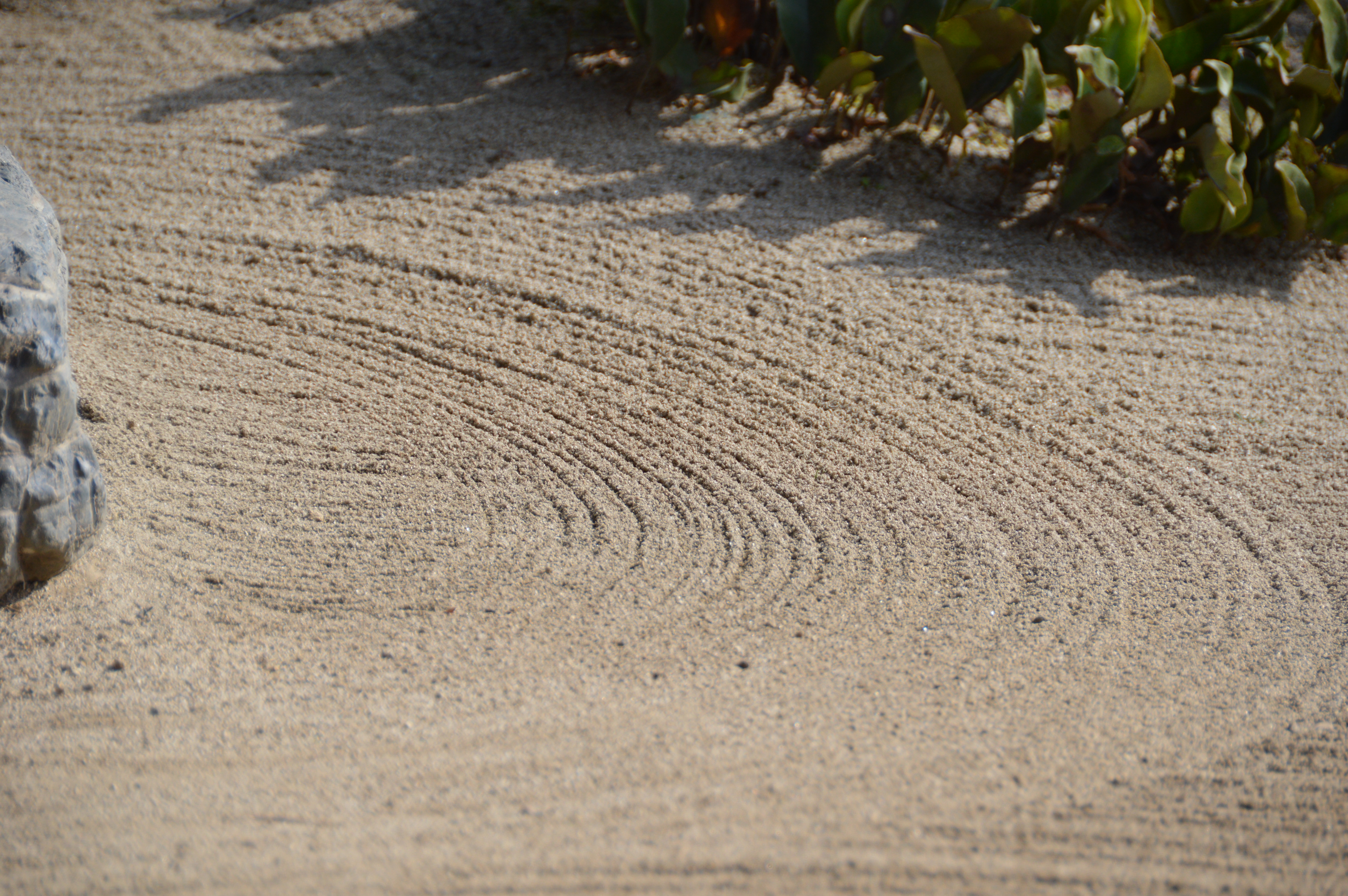
zen sand

Read Full Post »

The forest becoming

If you go into the forest just now you’ll see how everything is connected.
You’ll see the trees shedding their leaves.
You’ll see fallen trees covered in moss.
And you’ll see all kinds of fungi pushing up from the forest floor.

Here’s one thought that occurred to me in the forest – where does the past go?

We often think of time as being like a river, the future rushing towards us as we stand in the present moment and watch it all flow by and into the past.
So, once it has passed, it’s gone. Right?

Except it often really doesn’t feel like that. So try this instead.

The past is always with us. The present grows from the undergrowth, from the forest floor, of the past. It’s always here. It’s what we are shaped by. (Well partly……we are also shaped by the present and even the future, but I’ll return to that another time)

We are changed because of this ever growing relationship between the present and the past. Can’t have the one without the other.

But here’s the other part which occurred to me. The past doesn’t stay the same. Just like this forest floor is changing minute by minute, so the past itself is changing, constantly being altered by the present.

So it doesn’t go somewhere. It’s always with us. And it’s always changing.

Beautiful.

Read Full Post »

« Newer Posts - Older Posts »