Feeds:
Posts
Comments

Archive for the ‘photography’ Category

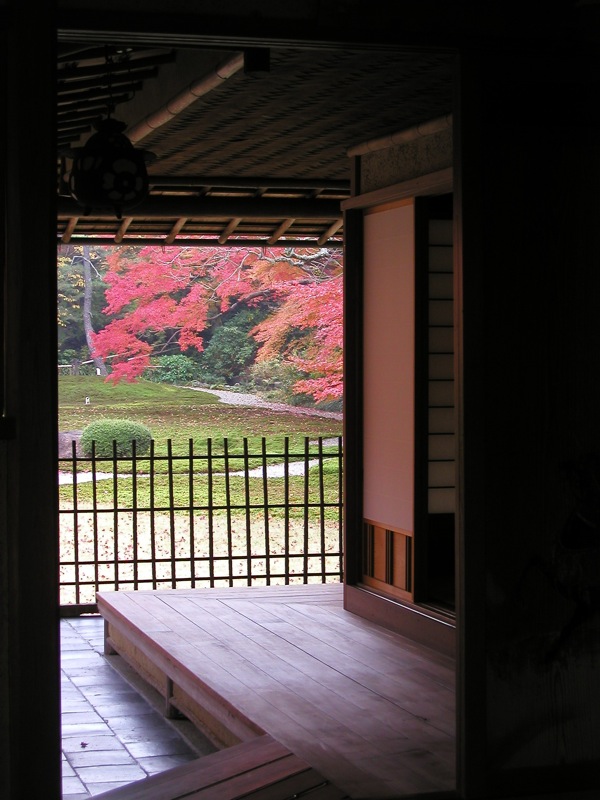
I’ve read before that one of the major differences between Japanese and English garden design is that in Japan the emphasis is on what the garden looks like from inside the house, whereas in England the garden is designed from the perspective of the observer actually in the garden.

I think that’s probably an over-simplification and as with pretty much all generalisations it should be taken with a pinch of salt.

However, here’s an example of a Japanese garden. I took this photo form the interior of a temple, and you can see that the garden pulls your attention towards it. Not only does the window seem to create a frame for a beautiful picture, but the wooden flooring leads you out of the room towards the fence inviting you to enter the garden…..but only to the edge.

Maybe that’s partly where this idea comes from that the aesthetic in Japan is to create the experience for the observer standing just a little bit outside of the garden.

But, now, look at this next photo, which I took during the same visit to the same garden.
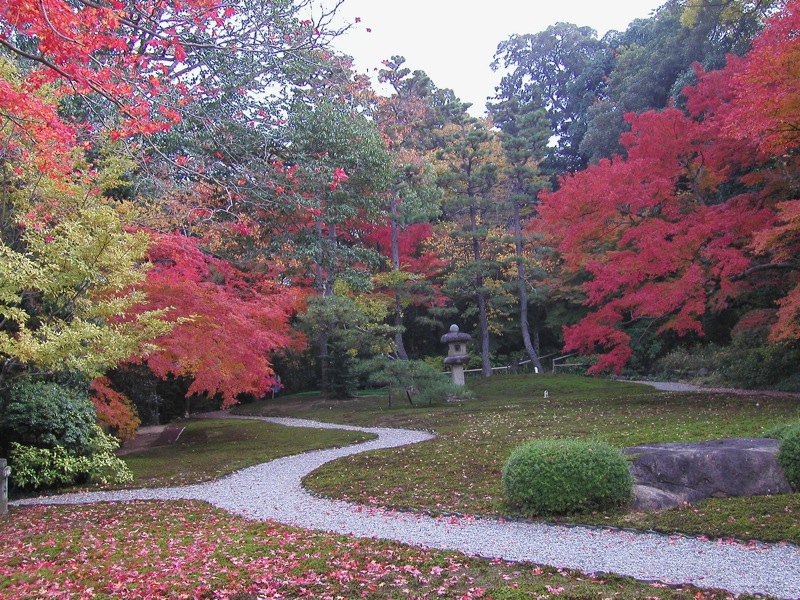
This isn’t a garden just to be looked at from the outside. Look at these winding paths, the stone lantern, the opening between the trees, the well trimmed low shrub, the grey rocks. This is all absolutely begging you to get out onto that path and experience this garden as it unfolds around you! This is a garden to be experienced from the inside of the garden itself.

How do I reconcile these two views and these, at face value, conflicting sets of design value?

And not or“.

Here’s some of the true genius of Japanese aesthetics, in my humble opinion…….a resolution of polarities to create something greater than either of the poles can achieve by themselves.

This is a garden created to be beautiful and inviting from inside the temple, AND to be beautiful and inviting once you are in the garden itself. Both of these experiences are so memorable, and dovetailing the two perspectives into one takes the entire visit to a whole other level.

I find this incredibly inspiring. It inspires me to connect to, to seek out, and to create, beauty. It inspires me to break down the artificial boundaries between perspectives – to bring the view from outside the garden into the view from within the garden. It inspires me to create curiosity and intrigue as well…..because don’t you just want to walk along that path and have a closer look at those rocks, that shrub, that stone lantern? Don’t you just want to walk along that path and “bathe” in that gorgeous forest of colour? Don’t you just know in your bones that this is the kind of thing which is “good for you”, which will nourish your soul, stimulate your body and your mind, enrich your life?
Read Full Post »

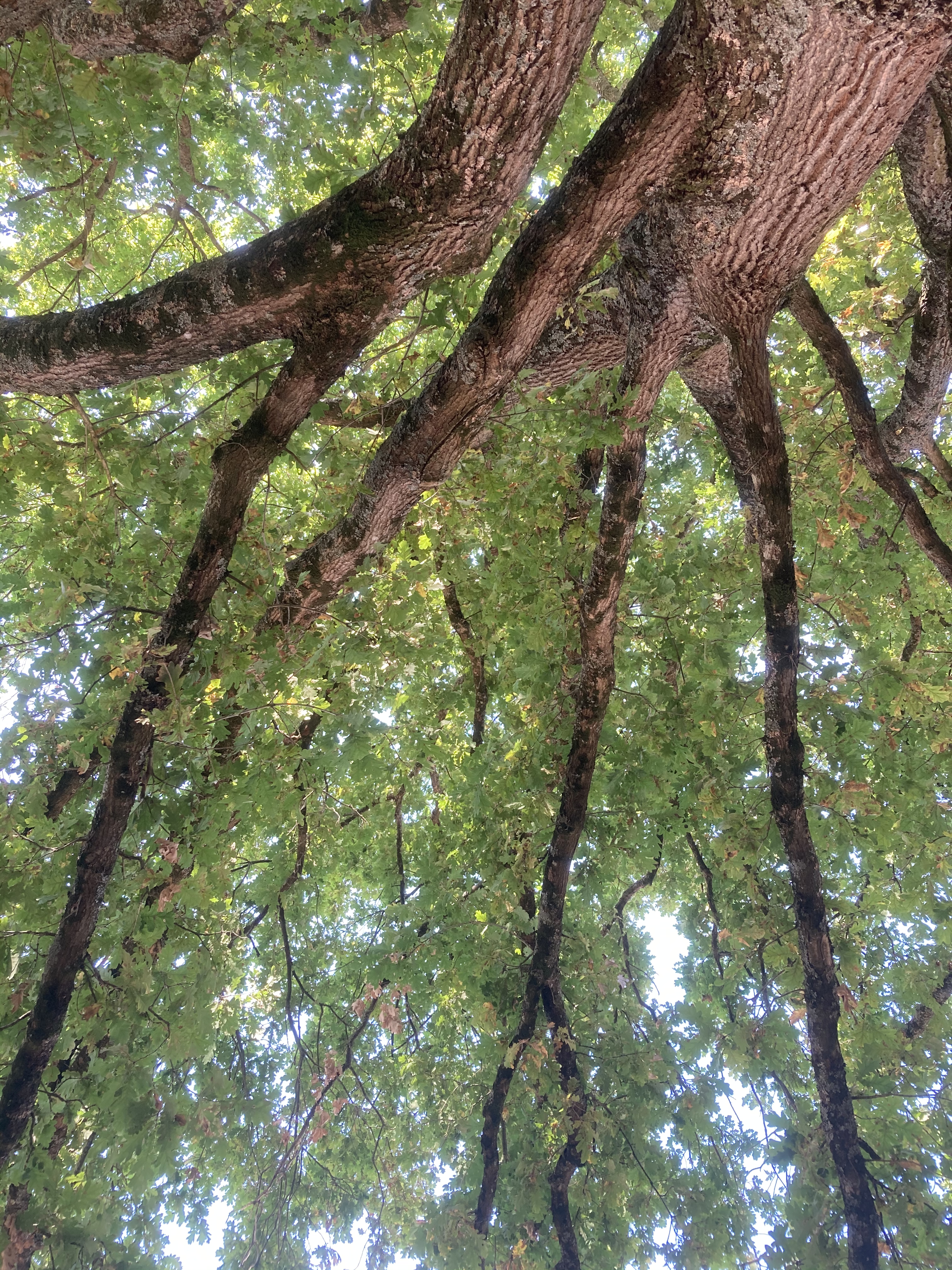
When we look up the world looks very different.

This is not the view of a tree which you’d usually see in a photo, and I think it stands out all the more because of that.

In “Metaphors we live by”, Lakoff and Johnson make a convincing case for the embodied nature of the metaphors which underpin the meaning of so much of our speech. We take these metaphors so much for granted that we don’t even notice them. They give many, many such examples in their book, but the one which comes to mind as I write this is the one I used for the title today – “Looking up”.

Looking up is something we do physically, as you see in this view of a tree. “Looking up” also refers to our position in the physical world. We’d have to be very tall to look down on most trees! We look up to see what is above us…..or to raise our eyes from the ground if we happen to be walking around with our gaze fixed somewhere just between our noses and our feet.

The important insight about the embodied nature of our metaphors is that we can find clues in the language we use which can point in two different directions – they can indicate something about our emotions and our behaviours, but they can also indicate something about our bodies.

Once I learned that insight I became even more alert to the exact language a patient would use when describing their symptoms and experiences. Sometimes the words and metaphors they chose were the clues to finding their pathologies, and the way in which they were unconsciously trying to adapt to those pathologies. But that’s for another day.

Today I just wanted to highlight how physically “looking up” can actually link us in to the emotions, values and behaviours of “optimism”, of “looking forward” and of looking ahead with some flavour of brightness or expectation. Because it seems to me that we are pretty desperately needing a bit more positivity just now.

So, here’s my thought……maybe if we go out and deliberately, consciously, look up more, it will influence our mental state at a deep, unconscious, and emotional level and work as a kind of “reset” to enable us to engage with our lives more positively in the year ahead. And maybe if we do that, then as the active co-creators or reality, we will actually begin to build a better world.

As you raise your glasses at the end of the year, here’s to a time when things begin to “look up”!

Another world is possible.

Read Full Post »

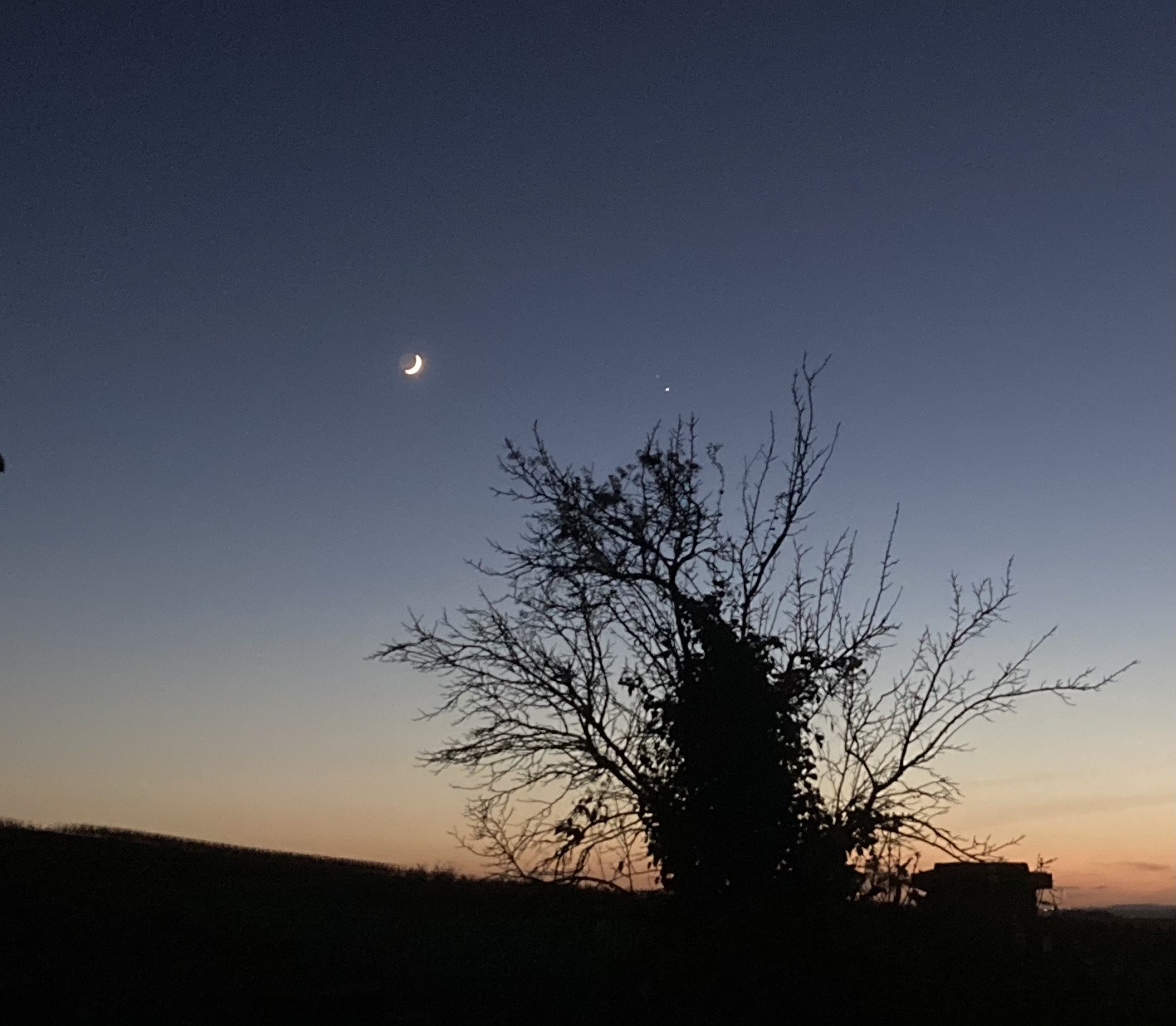
This is just an iPhone photo at night, so not a great quality shot, but what it captures is a special moment. You can see the crescent moon quite clearly, and now that I live in the countryside I’m constantly aware of the current phase of the moon. I notice when its a “new moon”, when it’s a waxing crescent, a waning crescent and when it is full. That wasn’t the case when I lived in a city. I guess when we live in a city, what with all the light pollution at night, as well as air pollution which seems to make the sky more obscure, that the phases of the moon are just not obvious. But there’s an element of attention too. City life = working life for me, and a lot of the time while working my attention and thoughts were absorbed in all the important things of the day. Consequently, noticing such things as the phase of the moon, slipped away from me.

I like that I am more aware of it now, because it gives me an ongoing sense of connectedness to one of the rhythms of the universe, that cycle of phases of our moon.

But there’s an even greater rhythm revealed in this particular photo – if you look at the sky at the twelve o’clock position relative to the plum tree, you might make out a star – or if you look really carefully you’ll see that it’s two stars, very close to each other. Well, they aren’t stars really, they are planets. Jupiter and Saturn. From our perspective here on Earth they seem to be occupying almost the same small square of space in the sky. They haven’t appeared this close to each other for hundreds of years and won’t again for another several hundred years. That makes this particular pattern special. It’s the only time I’ll ever see this in my lifetime. Generations of my ancestors never saw this, and generations of my offspring will never see it either.

Yet, it impresses me so much, not just because of its uniqueness, or, that it is so rare. What impresses me ever more is how this is part of a cycle of the universe which is way, way greater than I am. It is a rhythm, a pattern, a cycle which loops through generations….in both directions. That fact really strikes me. It humbles me. It puts me, viscerally, not just intellectually, in touch with the fact that I am part of something much, much greater than I am.

I find that intensely reassuring. I find it transcendent. I find it incredibly satisfying.

I also find it beautiful.

This is a great example of when the night sky reminds us that we are a part of flows, of patterns, of rhythms and cycles which are far, far bigger than we are. Isn’t that “awesome”, “inspiring”, “enlightening”?

Read Full Post »

When France went into lockdown the first time in this pandemic I decided to share one of my photos, and write some reflections on it, every single day. My idea was to send some positive waves out into the world. I wanted to spread some beauty, some awe, some wonder, some love. And I wanted to provide some inspiration, some stimuli to reflection as we all try to work out what on earth is going on, and how might we collectively, and individually, respond to it.

I had no idea that I would still be writing and publishing these posts by the time December would be drawing to a close. I wrote the first of this series on March 17th……that’s just over 280 days ago, and I haven’t missed a single day.

As we move towards the end of any year we approach a threshold. January, after all, is named after “Janus”, who has one face looking backwards and one looking forwards. It’s a time when we traditionally begin to think about “New Year resolutions”. It’s a time when newspapers, magazines and TV shows do a “Review of the Year”, producing dozens of “Best of 2020” lists. So, in the midst of all that, I came across two photos which I took earlier in the year…..both of them are paths.

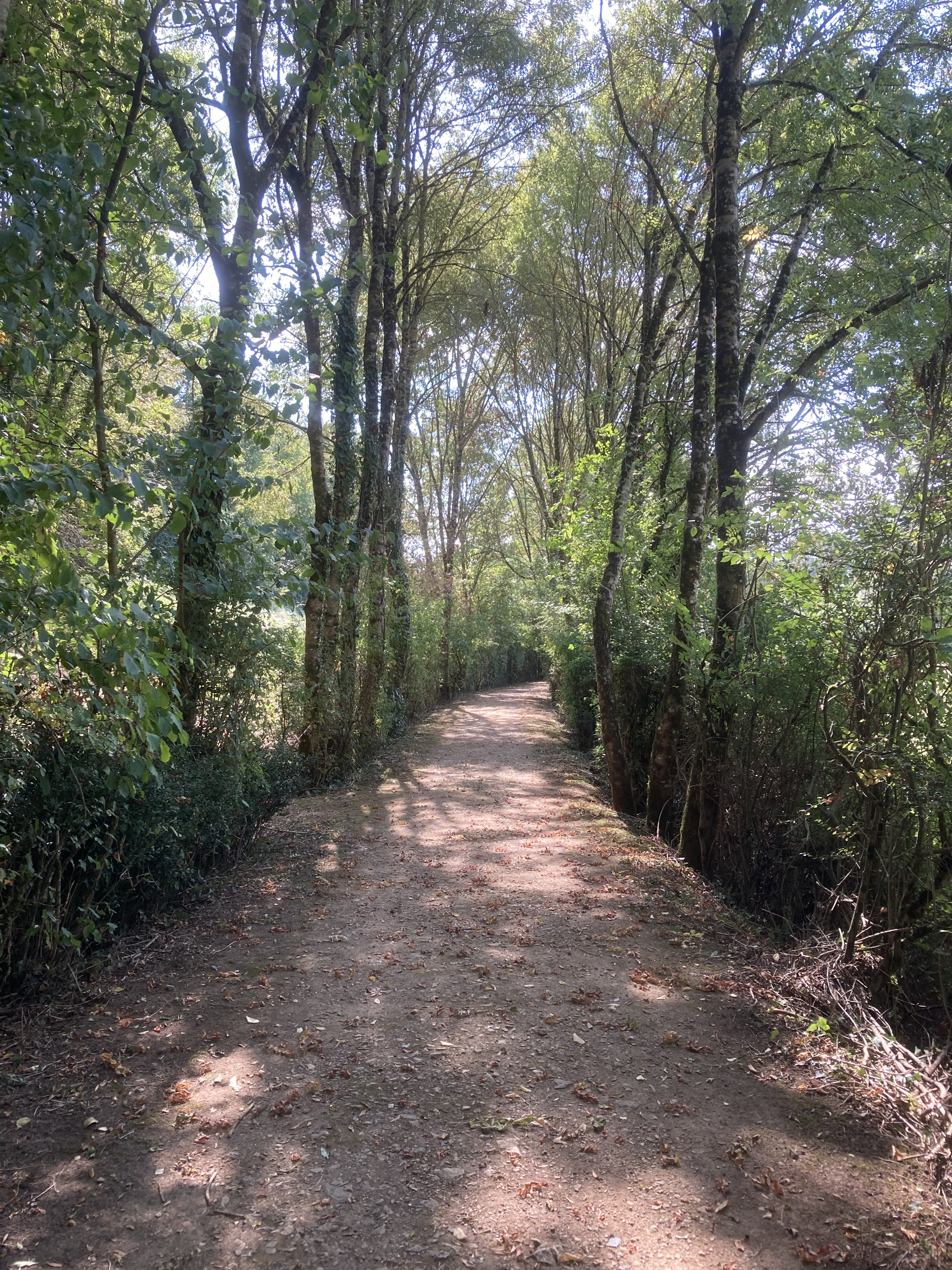
The first path is the one at the top of this post. Isn’t it beautiful? This is one of my most favourite kinds of path….through a forest, or, at very least, tree-lined. This particular one is a tree-lined path connecting the remains of a Roman amphitheatre to an extensive Baths complex and the outline of a temple. I wrote about this place the other day, highlighting what was obviously important to people in those times – culture, health and spirituality. Compared to those magnificent structures this path seems kind of humble but I love it all the same. It inspires me to reflect on the whole concept of a path – because I think the paths we walk are probably more important than the goals we make. You might think, well, doesn’t every path lead to a destination? Aren’t those destinations “goals”? OK, I don’t want to divert off my main thought here. My point is that as we come to the end of 2020 and start into 2021, which paths do we want to take? Do the paths exist already? Or do we have to lay some new ones?

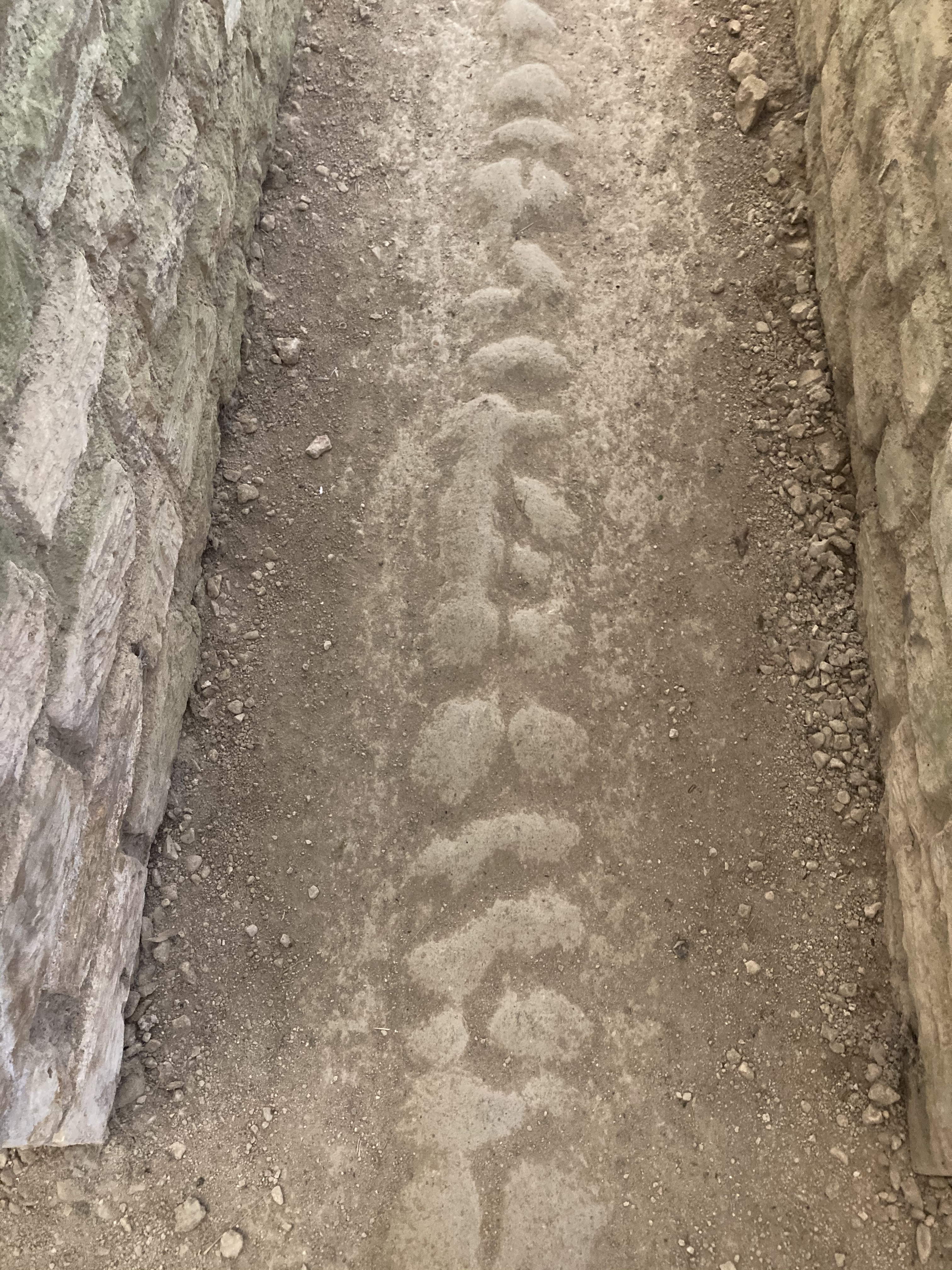
The second path is inside the old Roman bath complex –

Look at these stones! Look how worn they are! Can you imagine how many people walked along this narrow passageway between two of the bath houses? Almost 2000 years ago? It’s been a long, long time since the Romans lived in this part of the world, and I know that with the excavation and opening of the site to the Public that many others will have trod this same path recently, but isn’t it astonishing how long a path can exist?

This second path made me wonder about our human tendency to do what other people are doing. We are created as highly social creatures and it’s not a bad thing to learn from others, to share experiences with others, even to mimic or echo others. But too much of that tendency can obliterate individuality and turn us into “zombies” unconsciously responding to signals and stimuli set by others. This pandemic with its repeated lockdowns and its long drawn out “social distancing” has, at least, shone a light on that. It’s showing us what we’ve been blinding following, what we’ve tolerated, and maybe even, I’d suggest, made us start to wonder how we got into this mess in the first place – in other words if we can find and understand the paths we’ve taken to end up here, maybe we can choose different paths, create more, and better ones, to take us forward.

Well, these are the things I’m going to be reflecting on over the next few weeks. I’m reaffirming my commitment to continue created these little posts every day until this pandemic is over. But I’m also ready to make some new paths too………..

……..and here’s my wish for you – that you create your own unique paths as you walk into 2021, that you create them yourself, and that you create them with those whom you love.

Another world is possible.

Read Full Post »

I worked for about 40 years as a doctor. I’ve studied I don’t know how many diets in that time. I’ve seen “miracle” diets come and go, I have seen diets for losing weight, diets for preventing heart disease, diets for preventing cancer…..it goes on and on. And confusingly over the years there have been totally contradictory pieces of advice – especially about carbohydrates and about fat.

However, here’s the good news…..time and time again, the evidence keeps returning to a pretty simple fact – the more your diet is plant based the better. It’s good old fruit and veg which comes out top again and again and again. I know, there are lots of other issues and nuances, and it doesn’t ALL come down to fruit and veg, but if you are thinking of doing one thing to “improve” your diet in 2021 – eat more plants!

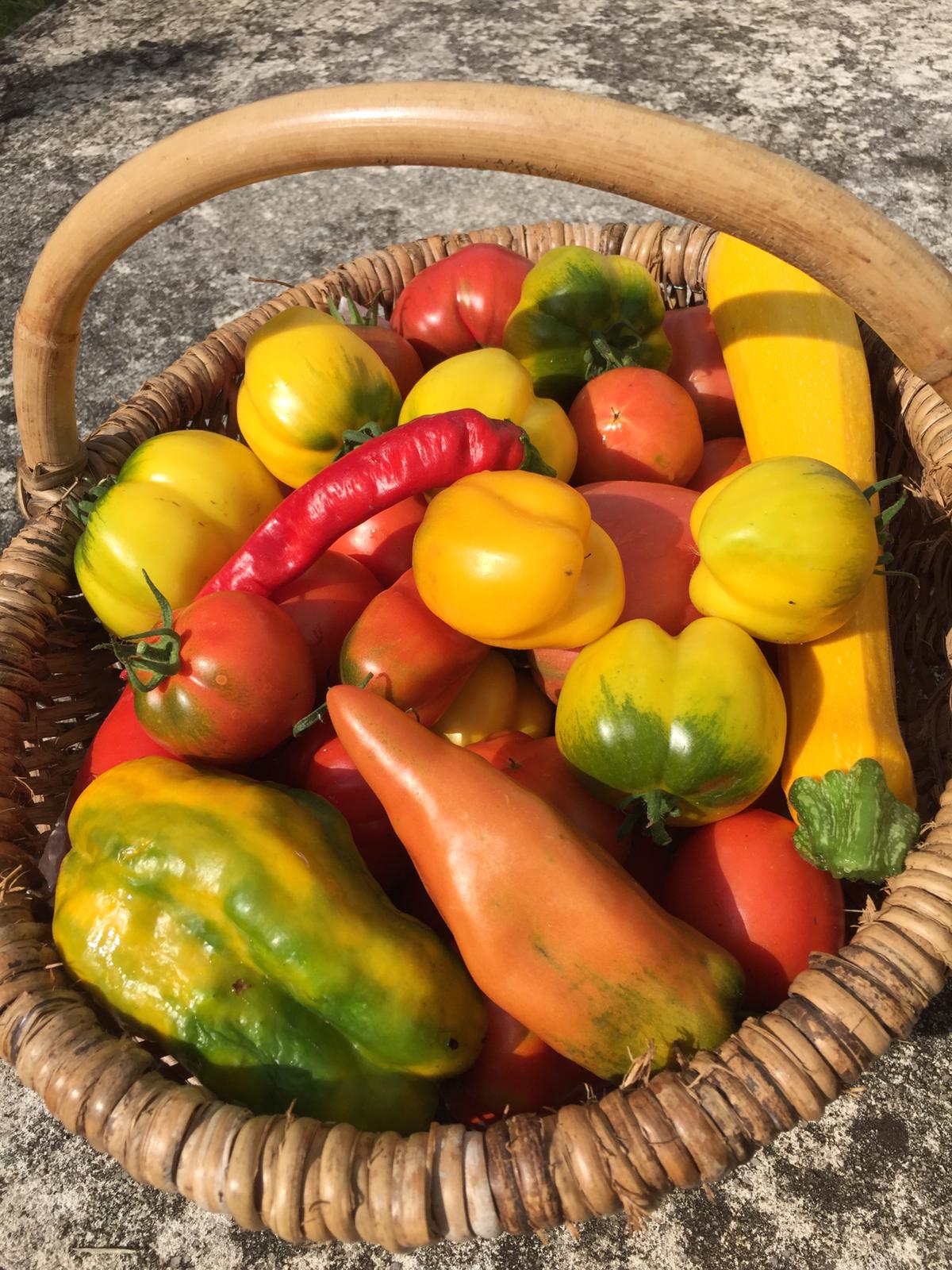
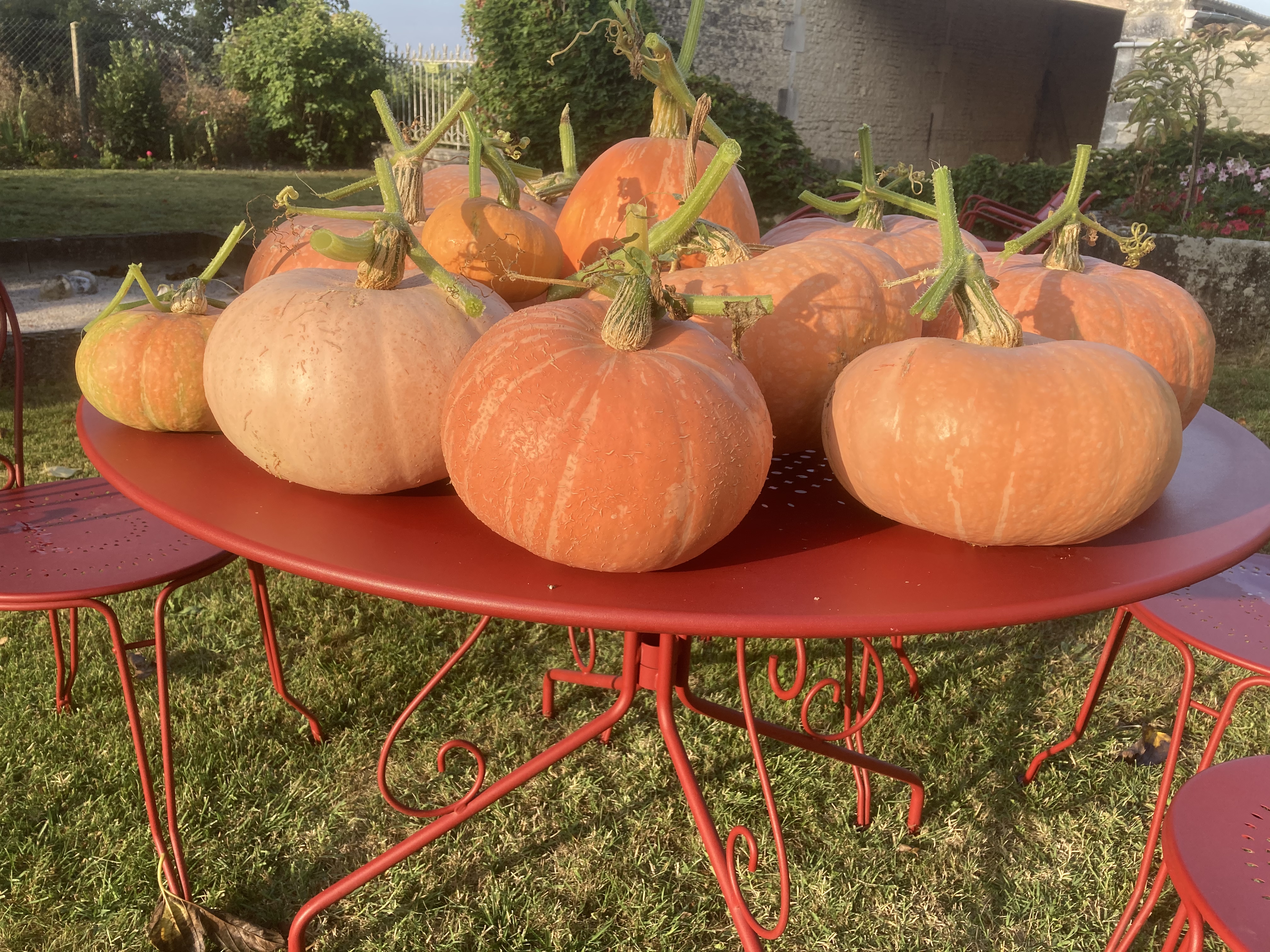
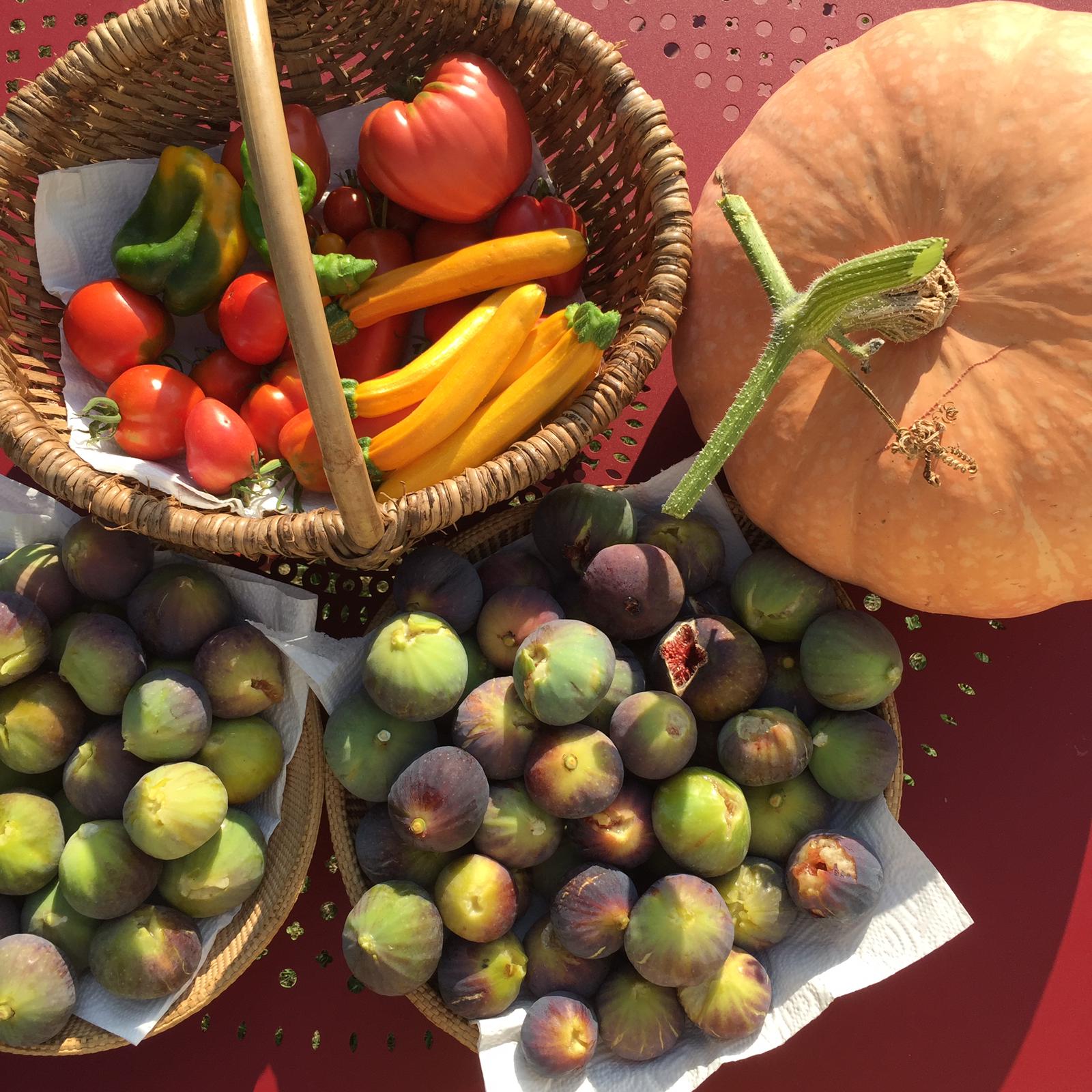
These photos are of some of the harvest we got this year from our little veggie patch. We don’t have a big patch but it’s very productive. I use compost I make from the grass cuttings etc in the garden, and I don’t use any chemicals at all. I live in South West France in an area famous for vineyards where the grapes are grown for cognac production. I’m sure that wherever your live there will be different plants which grow well, which I can’t grow, and others I get in abundance which won’t grow where you are.

As well as geography and environment affecting what you can grow, I believe that we all need individualised diets too – we don’t all enjoy the same flavours, some of us are allergic to certain foodstuffs, and each of us have particular needs in terms of nutrition. But I’m sticking with this one single piece of advice because it applies whatever the variations – eat more plants!

I highly recommend growing some fruit and/or veg if you can. You don’t need a huge piece of ground, and if you live in a city there may be the possibility of getting an allotment, or, increasingly, citizens are getting together to get permission from local authorities to create community gardens where anyone can plant, tend and harvest some fruit and/or veg. See if such a thing exists in your area, and if it doesn’t, maybe you can initiate one…..hey, someone’s got to make the first move!

There is an additional health benefit which comes from growing your own fruit and veg – being outside, exercising and the whole cycle of seeding, tending and harvesting are all good for us. And don’t worry about not managing to become self-sufficient – pretty much nobody is going to become totally self-sufficient from a garden, an allotment or a community project. Just do it for fun, for the bonus of some additional variety to the fresh food in your diet, and there will be a spin off – you’ll become more aware and more informed about ALL the food you consume. For example, the first time I ate a radish I had grown it almost blew my head off! I had no idea radishes could have such a powerful taste! And I’ve had several other mind opening experiences as my taste buds discover flavours for the first time.

So, eat more plants. If you can, grow some plants. And just enjoy the flavours. Honestly, it’ll be a good start.

Read Full Post »

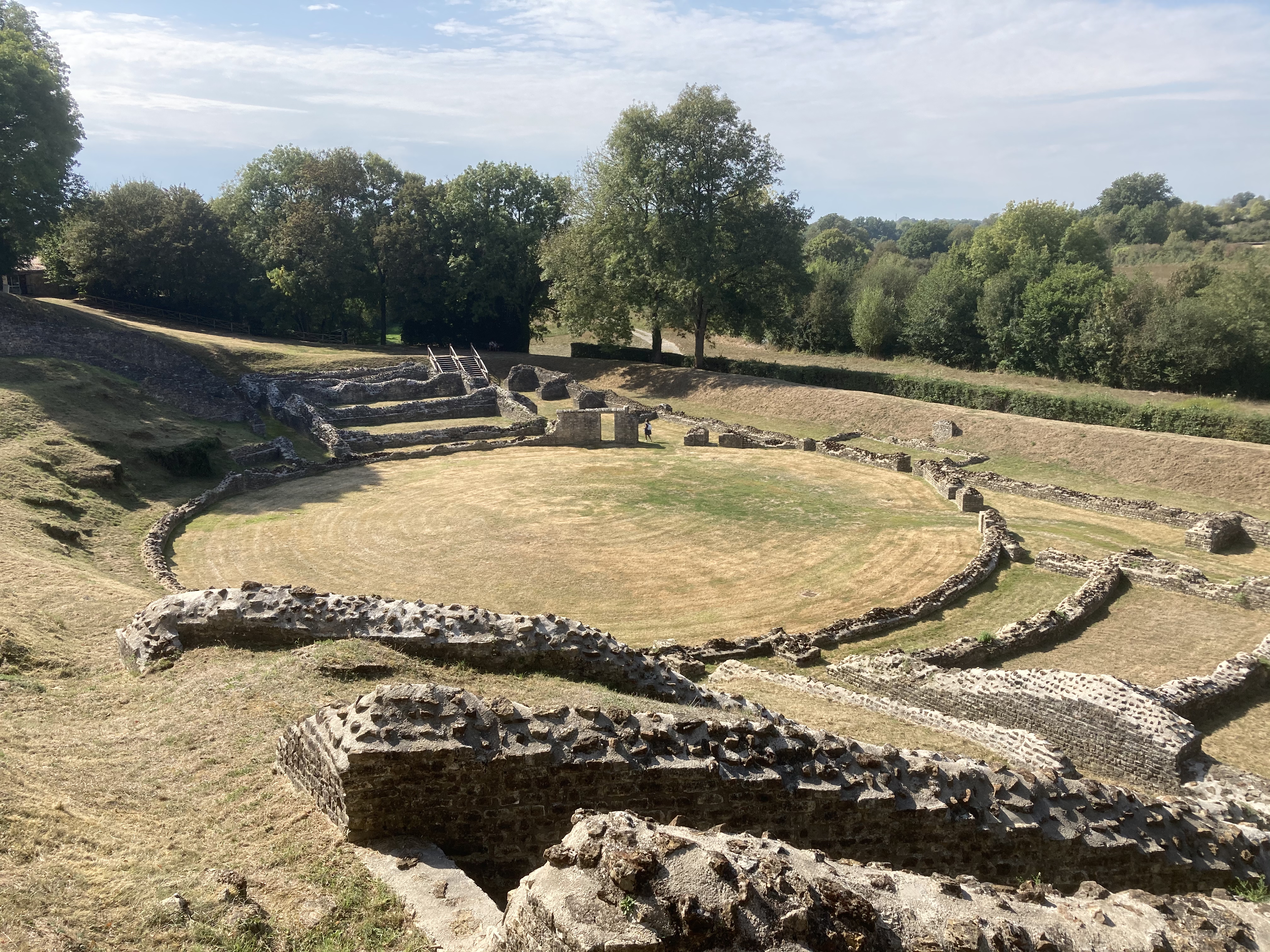
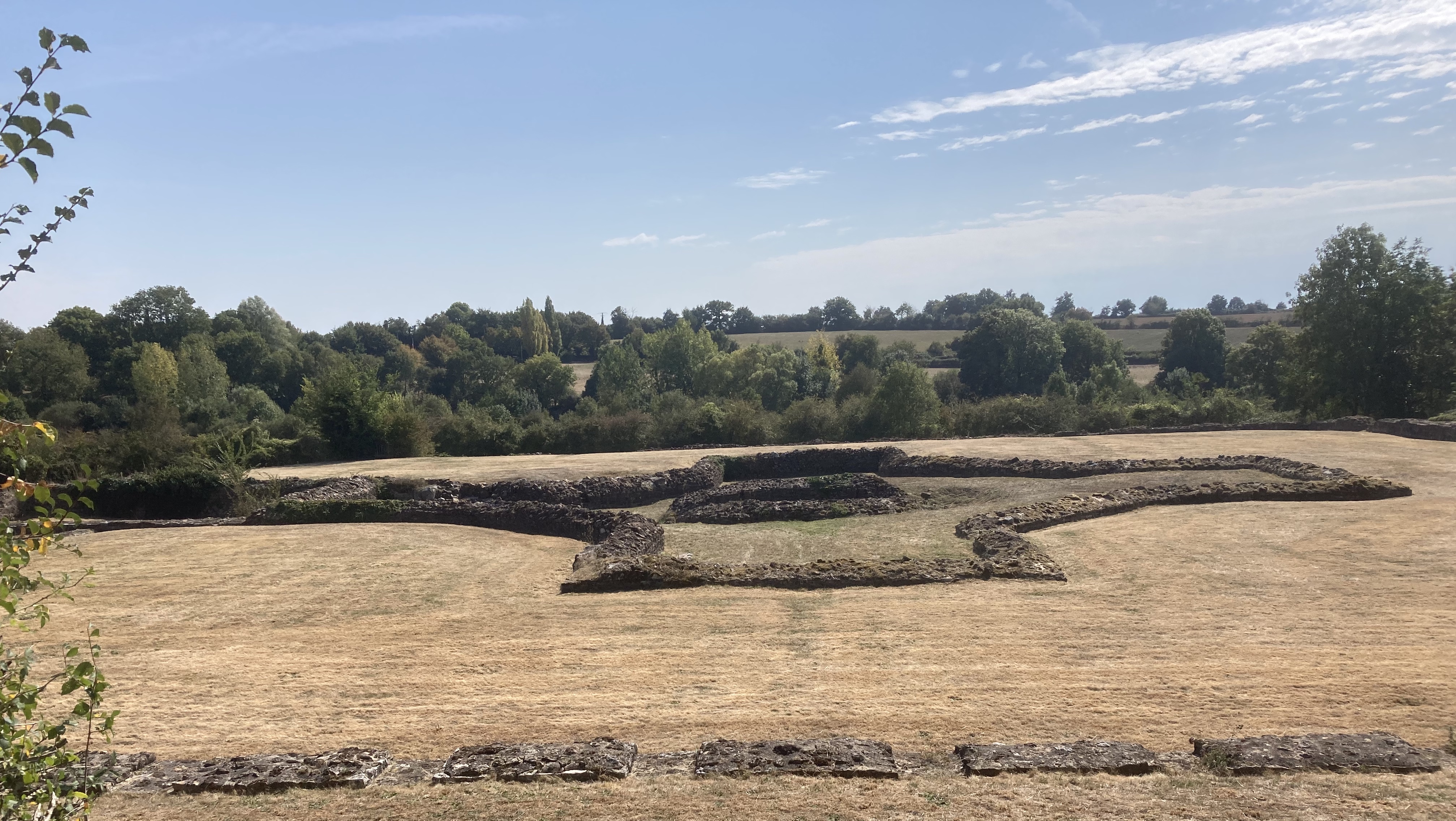
There’s a Roman site about an hours drive from where I live. I visited it earlier this year during one of the times we weren’t in lockdown. These three photos show you the three main parts of the site. First on the left is an amphitheatre. The guide says this kind of amphitheatre was used for performances, like plays and music, not like the different sort of amphitheatre they made elsewhere for gladiator fights. In the middle is the remains of a temple. Look at the extraordinary shape of it! Again, the guide says, it’s thought there was a Celtic temple on this exact spot before the Romans constructed theirs. On the right is one of the baths in an enormous complex of baths. You can sort of make out the floor level of the bath, and below that the area where they lit the fires to heat up the water. It’s an astonishing building with several different baths, each of which were apparently heated to different levels.

One of the things that astonishes me about this site, apart from just how big it is, is exactly which buildings were constructed and what they were constructed for – primarily you’ve got the cultural space of the amphitheatre, the religious space of the temple and the social/health space of the baths.

Now contrast that to a modern “High Street”! Or one of those rings of shopping malls orbiting a town or a city!

I look at this and I wonder…..is it time to shift our priorities? To put culture, spirituality and health at the centre of our societies and communities? How might that change our experience of life?

What do you think? I’m not wondering here about re-creating a copy of what the Romans did…..I’m wondering about what a contemporary or into the future equivalent would be if we picked up on some of those core values…..creativity, spirituality and healthy sociality. (is that a word? “sociality”? well, I hope you know what I mean!)

Read Full Post »

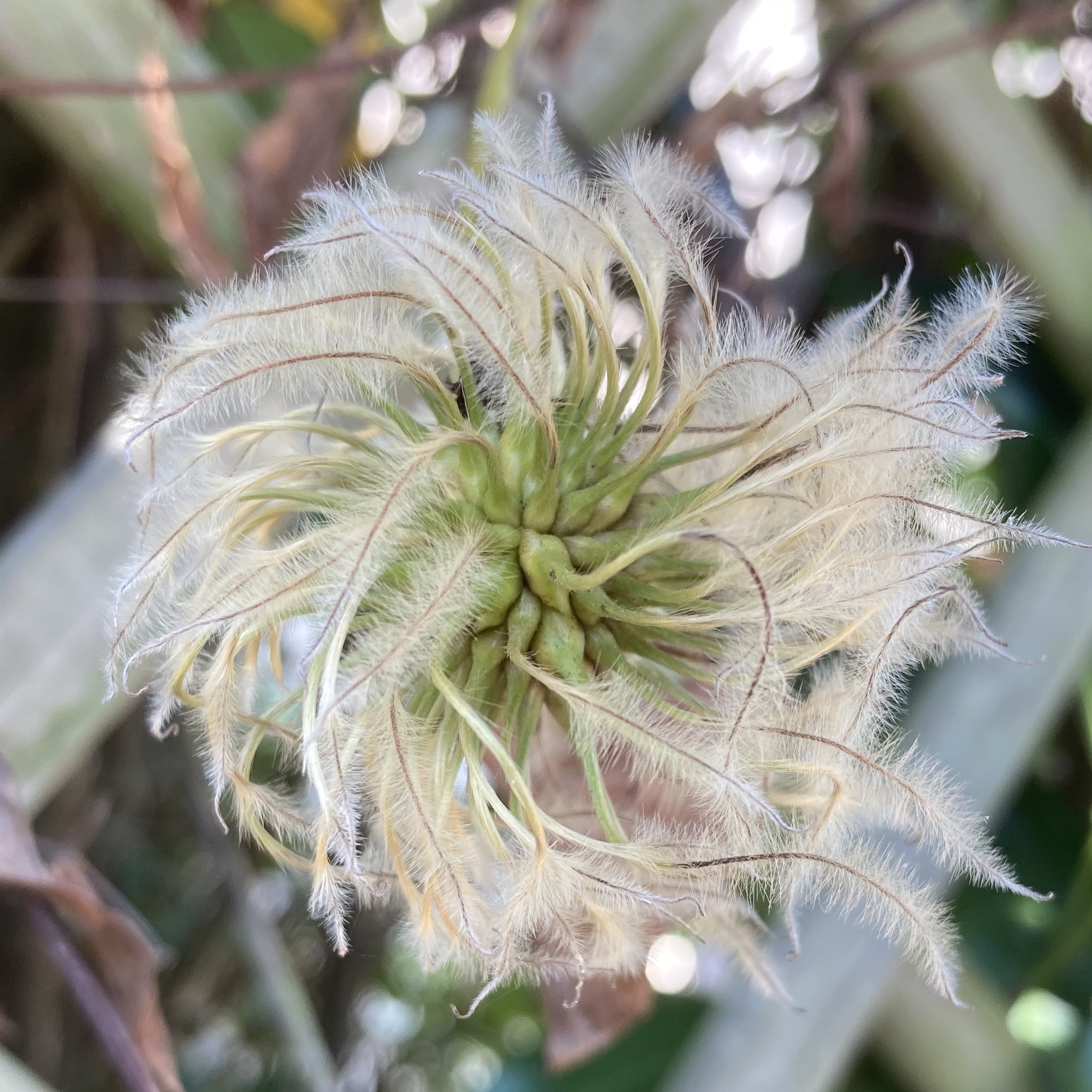
This is one of my most favourite photos of a seed head. When I was a child I guess the “dandelion clock” was the seed head we all knew best, but as I’ve got older I’ve realised there are an immense diversity of “wind dispersal” structures and systems used by a variety of plants. I do find them truly beautiful. But they do more than entrance me, they inspire me too, and perhaps this one more than most.

I love the whole phenomenon of wind dispersal. This is the way a plant handles that most crucial aspect of life for any species – expanding its reach physically (to other fields, other landscapes, even other continents), and expanding its reach temporally (by reproduction – by reaching into the future and create the generations to come).

No species of life would survive unless it did this – yet look at the way these plants handle it – not by setting goals, measuring and calculating and trying to control all the variables – but by trusting to the planet – by holding their seed high and waiting for the wind to come, pick them up and carry them to their future destinations.

This is SO different from our drive to be in control of everything. I’m not saying our controlling drives aren’t useful, I’m sure they are, but I am saying we should learn from the rest of the natural world sometimes and pick up this principle of letting go, of trusting that when you live in harmony with the rest of Nature, then you will survive and thrive.

Of course this is not a way for we humans to procreate and raise children – leaving them outside for the wind to carry them away! But that’s not what I’m saying…..we are not adapted to survive through the specific method of wind dispersal! No, what I think we can learn from this is the deeper, more widely applicable lesson – that we should live in harmony with, in tune with, in association with, in collaboration with, the rest of the natural world, rather than seeing the rest of the planet as something outside of ourselves just waiting to be plundered, consumed and controlled.

But there’s something else in this particular seed head – that glorious spiral shape. It seems to me that the spiral, looping model of time makes a lot of sense….the way the cycles of Nature appear – from seasons, to moon phases, to birth, growth, maturity, decline, death and birth again……

A spiral is also a very dynamic shape – it looks like it is moving. It captures that truth that change is constant, that nothing every stays the same.

I hope you find something inspiring in this photo today – it really is one of my favourites.

Read Full Post »

I love a blue sky. There’s something incredibly uplifting about seeing blue filling your whole view from horizon to horizon. But of course, not many places in the world see blue skies like that every day, and those which do, tend to suffer from a lack of clouds and, so a desperate lack of rain. So, it’s not that we should want blue skies every day. There’s a lot of wisdom in the observation that we need contrasts, that we need the dark to appreciate the light, and the light to appreciate the dark. There’s a Scandinavian wisdom in plunging into the snow and ice when you step out of a sauna!

I understand the need for these opposites and contrasts. But that takes nothing away from the joy and delight in what is….right here, right now.

Today the weather forecast is wrong again. I went to bed expecting to have a day of rain when I woke up, but instead I’ve woken up to a blue sky. I can see white clouds making their way across the low horizons, and maybe they will spread and bring rain later, but, for now, I’m enjoying the blue.

Perhaps that’s why this particular photo caught my eye this morning. You see these gloriously faded, distinctively blue signs all over France, but especially in the South. I’m no expert in colours but there is something about this particular shade of blue which evokes a whole culture for me. It’s the colour of France, the colour of the Med, it evokes memories of cafes and bars, of village squares and tables under spreading plane trees. It evokes vineyards, fields of sunflowers and hillsides of lavender. It entices me to buy a bottle of Rosé and a small bag of olives.

Amazing what a colour can do……

So, here’s my challenge for you today – find a colour somewhere – in the sky, in the garden, on your bookshelf, on your wall, in your closet……just find a colour that attracts you, that brings you joy, that stirs your heart and lifts your spirits, and allow your mind to recall the times and places that colour evokes, allow your mind to re-create those moments of beauty and happiness. Allow yourself to bask and bathe in those experiences for a little while. I have a hunch, it’ll do you good.

Read Full Post »

Here’s what Nature does. She reaches out.

Here’s what Life does. Life expands.

There are many stories of the Universe, many Creation stories. We discover the Universe in those stories. We tap into Creation. We uncover the themes, the characteristics, the features, the behaviours and the phenomena of reality in those stories.

One of those stories is the story of Evolution. It’s the story of Life on Earth. In this story there is one particularly striking feature – there is always more life. Life creates life. Life replicates, reproduces, expands, connects, complexifies, diversifies, multiplies.

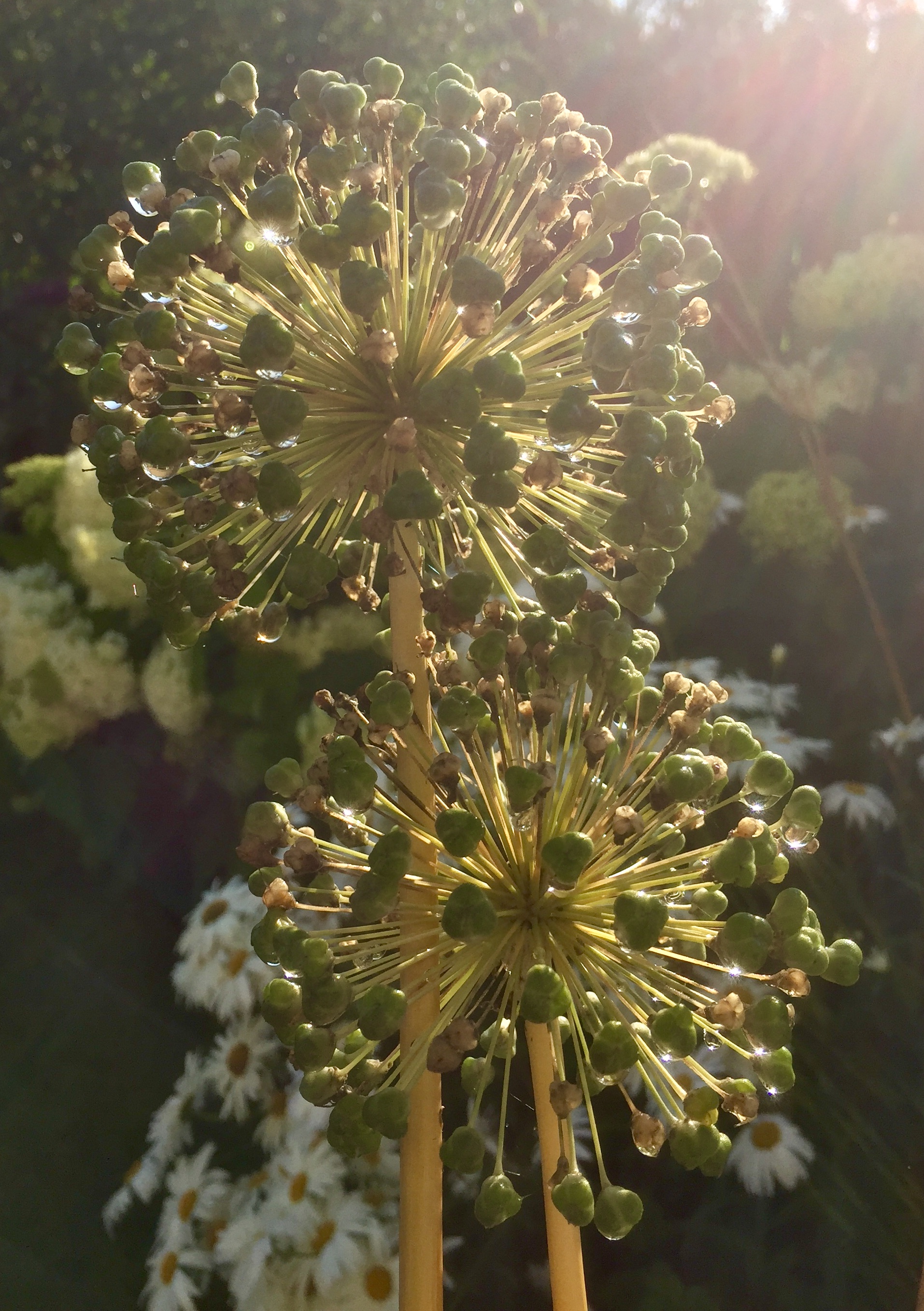
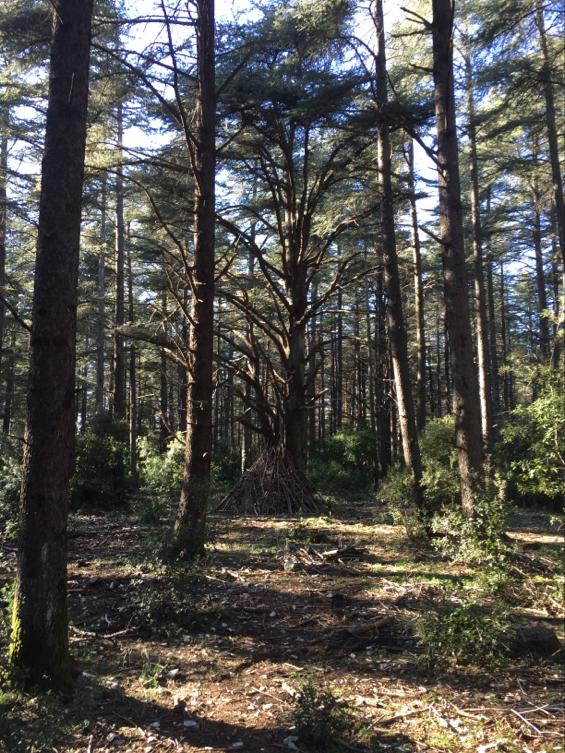
Look at these two photos – on the left, a plant with two sunbursts of seeds held up as high into the air as it can. Reaching for the sky, reaching for the Sun, reaching for the wind, reaching out for other creatures, birds and other animals, to come along, to help her spread her seeds, to send her offspring far and wide, seeking new places to settle, take root, and to thrive. On the right a tree in the middle of a forest, a tree with branches reaching out in every direction. Every year adding rings to its trunk, every year sending out new branches to hold leaves closer to the sunlight, closer to the other trees, inviting birds, insects and other creatures to come and find home, to make their nests, to find shelter, in order to nurture their own.

We used to think of forests as collections of individual trees, but we know now that forests are not quite like that. Instead every single tree has multiple connections through a hidden root system interwoven with a myriad of fungi creating a “wood wide web” of connections. Each tree learns to find its share of sunlight and holds back from interfering with its neighbours. Each mother tree protects her young, nurtures them, in ways we never knew before.

Every year there is more Life on Earth than there was the year before. Yes, we have species loss, and we lose habitats. But from the beginnings of the Earth until now, Life has spread to every nook and cranny, adapted to every possible environment, diversified, evolved and spread.

It’s something which evokes wonder and amazement in me. After all, we know that when it comes to elements, the elements we have ordered in the Periodic Table, that pretty much all the atoms of all the molecules which exist on this planet, have been here since the beginning. The Earth doesn’t make more gold, more silver, more lithium. All the elements we know were created in the great furnaces of distant stars, and all came together here to form this little planet. But Life isn’t like that. Life expands, doubles, multiplies.

From the time Life emerged this direction of travel hasn’t stopped.

Life, it seems, makes life out life.

I think that’s pretty amazing.

It strikes me that if I want to be in tune with the planet, if I want to live in harmony with Life, then I need to pay attention to this characteristic of reaching out, connecting, expanding…..I need to focus my energies on nourishing and nurturing, on protecting and providing, this living planet. What does that tell me about the choices I should be making, the directions I should be following, as 2021 rises above the horizon?

Read Full Post »

This is a very common pattern of spider web, and in the early morning the dew hangs in sparkling droplets creating these beautiful strings of glittering crystal balls.

But this particular web attracts me especially because of the parts I can’t see. There is a whole central section between the outer rings and the middle of the web which have not held onto any water droplets (or hardly any) so there are many strange of the web that, at least at first, you can’t see.

That reminds me of constellations – how we create the designs and symbols in the night sky by “seeing” the invisible connections between particular stars. It was the artist John Berger who first pointed that out for me when I read his “Ways of Seeing”.

Artists are also the people most likely to be aware of “negative space”. Only yesterday I came across an article which pointed out that if you look at an “8” of diamonds in a pack of cards, you can see the figure eight in the negative space between the red diamonds.

It’s clear once it’s been pointed out to you, isn’t it?

Iain McGilchrist describes how the right hemisphere is brilliant at enabling this kind of observation. Whilst the left hemisphere zooms in on the parts, the right has a preference for connections, for “the between-ness”, and for patterns.

Finally, this web makes me reflect once more on perception, and how what we “see” in our minds, is not a simple optical image cast onto the brain by a lens, the way a camera works. It’s a far more complex phenomenon, an act of creation, where we use sensations, memories and imagination to deliver the exact image which we “see”.

Turns out there is always more to be seen that we realise at first, it’s always worth exploring the “gaps”.

Read Full Post »

« Newer Posts - Older Posts »