Feeds:
Posts
Comments

Archive for the ‘photography’ Category

IMG_3197

William James wrote –

Practically everyone knows in his own person the difference between the days when the tide of this energy is high in him and those when it is low, though no one knows exactly what reality the term energy covers when used here, or what its tides, tensions and levels are in themselves . . . To have its level raised is the most important thing that can happen to a man, yet in all my reading I know of no single page or paragraph of a scientific psychology book in which it receives mention. (The Energies of Men, 1907)

What is this energy he is talking about? I’ve often wondered about that. When I gave talks to young medics I would often start by saying “Let’s make a scale for energy. Let’s say 0 is the lowest energy you can imagine experiencing, and 10 is the greatest. Where would you put yourself on that scale right now?” Then I’d go round the room getting everyone to say what level of energy they were experiencing. Everybody answered. Everybody instantly offered a number on the scale. Then I’d ask “How did you do that?” “What did you check to arrive at the number you gave?” Nobody knew.

Dan Seigel and his group who developed “Interpersonal Neurobiology” (IPNB) came up with this definition of “mind” (see if you can find other definitions of “mind”) –

A embodied, interpersonal process of regulation of energy and information flow

Pretty useful, isn’t it? But what is the “energy” which is being regulated?

Having read the IPNB definition it struck me that as complex adaptive systems, living organisms are constantly exchanging energy, molecules and information with their environments.

But again, just what is this “energy”?

What do you think? (And where are you right now on the energy scale of 0 to 10?)

Read Full Post »

IMG_3256

Many scientists now take a similar view, seeing reality as a vast force field in which every part influences every other part, with unpredictable consequences.
Long  before physicists split the atom only to discover there wasn’t anything solid inside, Bergson wrote –
So matter resolves itself into countless vibrations, all linked together in uninterrupted continuity, all influencing each other, and travelling in every direction like shivers through an immense body. (Matière et mémoire) 
Michael Foley points out that one of the most important consequences of seeing how connected everything is –
If organisms are mutually dependent then it is wiser to cooperate than to dominate, and if life requires constant adaptation then nimble ingenuity is more effective than brute strength. (Life Lessons from Bergson)
For a long time the capitalist lesson drawn from Darwin’s insight into evolution was that competition, “survival of the fittest”, was the driving force behind the evolution of Life on Earth. Richard Dawkins even claimed in his “Selfish Gene” that self-interest (and hence, selfishness) lies at the root of all evolution.
However, many other authors are now highlighting the importance of co-operation, collaboration and the evolutionary advantages of togetherness. (See Howard Bloom’s Global Brain, Thomas Berry’s The Great Work,  Lynne McTaggart’s The Bond, and Barabasi’s Linked just for starters!)
As Michael Foley notes, the reality of intense, complex connectedness, is not just that everything influences other things, it’s that, due to the two way nature of many of the connections, the initiator of an action or event, often ends up being changed by it.
If everything is connected to everything else then every action propagates its effects for ever, and if feedback loops are the method of propagation then every action also modifies the character of the actor.
So, karma turns out to be real after all?!
Who was it who said we reap what we sow?

Read Full Post »

DSCN4425

Is there anything more thrilling than witnessing or participating in creativity?

Whether it’s watching day by day as a seed grows into a full blossoming flower, or seeing a child acquire new skills through play and experimentation, acts of creation surround us.

We are a process of creation.

Every day we wake up changed, with new cells, new thoughts, new visions, new hopes and ideas.

Bergson wrote –

The more we study the nature of time, the more we shall comprehend that duration means invention, the creation of forms, the continual elaboration of the absolutely new. (L’Évolution créatrice, 1907)  
This way of thinking puts creativity at the heart of all Life. Creativity is just something which artists have. It’s how we live.
As Michael Foley writes –
This idea, that Life is its own creator and that creativity is not a late aesthetic refinement but the very principle of existence, was Bergson’s most radical and inspiring insight.
To see the universe as a creative process, stretching from the earliest formation of stars, through the appearance of galaxies and nebulae, to the creation of Earth and the emergence of life……isn’t it breathtaking?
Stuart A. Kauffman, sounding exactly like Bergson:
‘In the new scientific worldview I’m describing, we live in an emergent universe of ceaseless creativity in which life, agency, meaning, consciousness and ethics . . . have emerged. Our entire historical development as a species . . . has been self-consistent, co-constructing, evolving, emergent, and unpredictable. Our histories, inventions, ideas, and actions are also parts of the creative universe.’
Creativity is not just about art as practised by gifted, or professional, artists.
It’s our every day reality.
We, every one of us, is engaged in a continuous process of co-creation of our universe. A universe that grows, evolves and develops.
What makes creation thrilling?
Awareness.
The conscious awareness of it. Try it for yourself today.
See if you can notice the unfolding creation of the new.
Or perform a creative act. Make something. Express yourself.
Or notice how what you are doing involves creativity, as you make something new, bring something new into this universe.
See what that feels like.

Read Full Post »

DSCN4452

Michael Foley, in his Life Lessons from Bergson, gives an excellent, concise description of the complex adaptive system model (even though he doesn’t actually use that term)

There is also the intellectual problem that, in a complex organism, the whole is never merely the sum of the parts and the parts are never entirely independent of the whole.
A whole person can never be understood from even the most comprehensive set of measurements from a laboratory and an imaging centre (where X-Rays and scans are carried out).
The whole person has to be encountered as the unique individual that they are.
As Mary Midgely, the philosopher, put it –
One cannot claim to know somebody merely because one has collected a pile of printed information about them
In complex systems, simple arithmetic doesn’t work, not least because the bonds between parts are so often integral parts of feedback loops, so a small change in one part can induce much greater change in another, and together the changes within the whole organism are way beyond what can be understood from analyses of single parts.
Also, there isn’t a single organ within us which acts by itself. In fact, there isn’t a single cell which acts in isolation. At all levels, from the molecular within the cell, to the whole person within a physical, social and cultural environment, nothing is “entirely independent of the whole”
An organism is a hectic, almost frenetic, process, operating far from equilibrium in a ceaseless metabolism that seeks out and draws in nutrients, converts them to energy, expels waste, and uses the energy to reproduce, and to regulate and renew its parts, so that its make-up is constantly changing though its structure is relatively stable.
We have such a sense of solidity, don’t we? We have such a clear sense of a unified identity which exists throughout the whole of a life. But our physical make up is really not so solid. As a living organism we are dynamic, always in motion, always processing energy, molecules and information from the environment and within us. We make ourselves anew every single day, our cells in a constant process of creation and destruction. I found that idea quite startling and exciting when I first encountered it. It means that life is a process of constant change and unceasing creation.
But there’s something else in that paragraph which I first read when studying the concept of complex adaptive systems – “operating far from equilibrium” – when I first studied biology I was taught about “homeostasis” – the processes which maintain the inner environment of the body is a state of equilibrium. I learned about many feedback mechanisms which sought to maintain a number of balances – blood pressure, muscle tension, the levels of various salts in the blood and so on. So learning that complex adaptive systems function “far from equilibrium” was a bit surprising. But then that’s how we change. That’s how we grow. It’s only by operating at the edge of the balance that we meet what is termed “bifurcation points” and undergo “phase changes” and “emergence”. I didn’t learn about those phenomena when I first studies biology or Medicine, but they are fundamental characteristics of all living organisms.
Shifting from a focus on checks and balances, to living complexity, can move us from seeing homeostasis as an end in itself, to seeing that it is only one element in the over all process of creativity and development.
As long as we live, we are never finished with these creative, developmental processes. As Michael Foley says –
there are no independent, isolated, finished organisms.

Read Full Post »

DSCN4415

Michael Foley, focusing on Henri Bergson’s philosophy in “Life Lessons from Bergson”, writes –

there is a tendency to see what things have in common rather than what makes them unique, the source of a dispiriting sense of sameness.
As a doctor I need to know how to make a diagnosis. I also need a knowledge of the natural history of disease. However to actually help any individual patient I need something else as well – knowledge of this individual. So, I have to be able to see what things people have in common (certain symptoms and signs which indicate particular pathologies perhaps) and I need to be able to see this person sitting in front of me right now.
This person sitting in front of me right now is not the same as all the others. Every narrative I hear is unique and individual. No two patients have led, or are leading, identical lives, with identical bodies, minds, values and beliefs.
Reducing the individual to what they have in common with others is, in my opinion, “the source of a dispiriting sense of sameness”. That’s why I have such an aversion to Medicine by flow-chart, and the distorted practice of so called evidence based medicine which seeks to replace subjective human experience with data.
In short, we do not see the actual things themselves but in most cases confine ourselves to reading the attached labels.
Our left cerebral hemisphere is great for analysing things, sorting them into categories and applying labels, but it’s not enough. We have to attempt to “see the actual things themselves” and not be blinded by the labels. For doctors, that includes seeing the actual patients themselves, and not confining their understanding to the “attached labels” – diagnoses, categories or types.
I think the creation and appreciation of narrative is an important part of a doctor’s job and it requires more than a knowledge of the “medical sciences”.
Here’s Michael Foley again –
A crucial function of the arts is to prevent, or break down, dismissive labelling and reveal the singular instead of the similar, the peculiar instead of the familiar, and the inscrutable instead of the understood.
This reminds me so much of Deleuze’s three modes of thinking – science, which is thinking about function; philosophy, which is thinking about concepts; and, art, which is thinking about percepts and affects. Deleuze was a great advocate of thinking about difference too.
What an elegant phrase too – revealing “the singular instead of the similar, the peculiar instead of the familiar, and the inscrutable instead of the understood”.
What a great way to enhance respect for the individual – seeing them as unique and knowing you will never achieve a complete understanding them….which reminds me of Saint-Éxupery’s teaching that “What is essential is invisible to the eye”

Read Full Post »

DSCN4404

In Life Lessons from Bergson, Michael Foley writes –

What happens when we fail to live in duration, no longer hear the inner melody and lose touch with the intuitive self? We become frozen, petrified – automatons, slaves of habit or convention or both. 
“Living in duration” is living in the experience of life, being fully present, attentive and aware. The opposite is to live in our inner worlds of representations and labels. Iain McGilchrist describes this brilliantly in his The Emperor and His Emissary, showing how the right hemisphere of our cerebral cortex processes the raw information as we pick it up from the world, then hands off some of it to be re-presented and analysed in the left hemisphere. What should happen next is that the analyses and representations are fed back to the right side to be re-contextualised. McGilchrist makes the point that, sadly, we’ve created a world where we forget the importance of the activities of our right hemispheres, and give primacy to those of the left.
“Hearing our inner melody” is a beautiful phrase. When we experience music we don’t experience it as separate notes and pauses. We experience it as rhythm and melody.
And our “intuitive self”? That deep, natural, heart-focused knowing….
What happens when we lose touch with those things? We get rigid and stuck.
There is no doubt that the pressures to conform in our society are enormous. It seems to me we are becoming less and less tolerant of difference, fearing “others” and suppressing diversity.
Every day we need to freely choose what to do, what to say, and what to think. As Michael Foley says –
Our freedom, in the very movements that affirm it, creates the developing habits that will stifle if it fails to be renewed by constant effort: it is dogged by automatism.
This is the fundamental theme of this blog – we all tend to default into autopilot and in so doing we live in a more limited, and less fully human way – like zombies – with habits and routines and “norms” on loops. Our alternative is to wake up, become aware and consciously choose to become the author of the one unique story in which we are the hero, the protagonist, the main character.
William James, who shared many of the same views as Bergson said
Could the young but realize how soon they will become mere walking bundles of habits, they would give more heed to their conduct while in the plastic state. (Psychology: The Briefer Course, 1892)
My only issue with that statement is I don’t accept we completely lose our “plastic state” – what he means by “plastic” is dynamic, malleable, capable of being changed. Sure, as we become constrained by our habits and automatisms, it becomes harder to change.
But with awareness and will, change is possible!

Read Full Post »

DSCN4411

In Michaei Foley’s Life Lessons from Bergson he describes the philosopher’s ideas about the “self”
Bergson constantly distinguished between two selves, meaning two levels of process – a superficial self whose reactions are socially conditioned and a deep, intuitive self capable of empathy and free will…..This deep self is always in danger of being misrepresented by the categorizing self, dismissed as irrelevant by the utilitarian self and snuffed out as a threat to popularity by the social self
It’s interesting that nobody has ever found “the self”.
We talk about the benefits of “self-confidence” but what is this “self” we have confidence in?
We talk about the benefits of having “self-awareness” but who, exactly, is aware of this “self”?
Whatever you think about the concept of the “self”, I think it’s pretty clear there is no fixed entity called the “self”….no unchanging thing.
I often found the concept of a “community of selves” to be a more useful model when working with patients. People often identify much more closely with one aspect of their personality, or with one role in life, than they do with their other ones. For example, I fully identified with my doctor self while I was at work, and yet in other times and places my dad-self, or husband-self, or my teacher-self would feel much more prominent.
So, I’m quite taken with Bergson’s two selves – the superficial and the deep.
I especially like his description of the deep, intuitive self as being capable of empathy and free will, whilst the superficial self is more reactive, more subject to the pressures and influences of others.
Read the last sentence of that passage from Foley’s book a second time….
Our deep, intuitive self is constantly interacting with our superficial self, but look at the potential “misrepresentation” of the deep self – by the “categorising self” (…our left hemisphere?), by our “utilitarian self” (….makes me think of evolutionary biology) and by our “social self” (…with all that pressure to conform and fit in)

Read Full Post »

image

In Michael Foley’s Life lessons from Bergson he says this about Bergson’s concepts of time –

Bergson distinguished two versions of time – time measured, which he defined as clock time, and the experienced, which he defined as duration. Clock time, spatialised and uniformly calibrated, is obviously necessary, but only duration is authentic.

When I was reading Deleuze’s work on cinema I came across Bergson’s concept of duration for the first time. That was my entry point. Realising that the way cinema artificially creates movement by showing you still images in rapid succession was the first time I had encountered the idea that clock time is actually artificial. We invented it. It wasn’t sitting there waiting to be discovered.

We experience time as a flow, not as a rapid succession of images or events.

For most of my working life a large part of the day was divided into blocks of minutes. A standard clinic of follow up appointments would be set out in 20 minute periods. A new appointment allocated 90 minutes. In General Practice the time slots were all much shorter than that. Our Practice was created around standard 10 minute appointments. Other groups used a standard of 5 minutes.

I didn’t wear a watch, and I didn’t have a clock on the wall, but I rarely ran late.

Same thing with giving talks or presentations, or teaching. Whatever time allocation I was given, most times (not always!) I said what I’d come to say in exactly that period of time.

Somewhere in me something kept me to time, but not by measuring minutes. I think that mainly arose through habit and experience. I became able to work according to duration.

Here’s more from the Life lessons of Bergson –

We should learn not to manage time but to let time manage us….the paradox is that the only escape from time is in submission to time. When we are flowing along with a process, awareness of time disappears.

We all know that one don’t we? When we go to a great movie we are surprised that two hours has passed already. When we are absorbed in a great book time disappears. When we are fully immersed in sharing a meal or being with someone we love, time disappears.

The “slow movement” is really based on this concept. In fact, the slow movement is, I think, not about being slow at all. It’s about immersing yourself fully in whatever you are doing. Sinking into, absorbing yourself in, fully enjoying and experiencing the present. The best book I know about the slow movement is Carl Honore’s “In Praise of Slow”. Why not buy a copy, and read it…..slowly?

I love Michael Foley’s suggested exercise of sitting on a sofa a dusk –

The gradual fading of the light is a perfect example of process, ‘succession without distinction’, impossible to catch in action but impossible to miss in effect. And the effect, especially if accompanied by a glass of wine, can be mysterious, enchanted, a spell that encourages reconciliation with process and time.

Read Full Post »

image

Reality no longer appears essentially static, but affirms itself dynamically, as continuity and variation. What was immobile and frozen in our perception is warmed and set in motion.

Those are the words of Henri Bergson, quoted in Michael Foley’s excellent “Life lessons from Bergson”.

I love that. The experience of life as dynamic, “warmed and set in motion”.

Life isn’t “frozen and immobile” to me, and that’s why I am wary of categories and labels. I’ve always resisted being put into a box, defined by one or two of my characteristics. When I think of that I recall the adage of the General Semanticists – “judgement stops thought”. So often fixing someone or something into a category or type stops us from really seeing, really understanding.

Reducing an individual to a type diminishes them in all senses of the word.

Every patient I ever encountered was unique, presenting experiences and stories unique to them. To reduce them to diagnostic categories, or to types of any sort, blocked my understanding of them. Everyone always has more to reveal, more to share, more to experience and be understood.

Michael Foley says he came back to Bergson’s work after dismissing it decades earlier. His way back is interesting. It’s not the same as mine. My first encounter with Bergson came when I was reading Deleuze but I didn’t find him easy. I later stumbled into complexity theory and, in particular, the idea of complex adaptive systems. At that point I remembered some of Bergson’s ideas and went back to explore his writings further. Michael Foley’s path was through his encounter with “process philosophy” and with particle physics –

I learned from twentieth century philosophy of mind that memory and the self are processes rather than fixed entities – and suddenly this connected with the theories of particle physics, which claim that at the heart of matter there are in fact no particles but only processes…….everything is process…and everything is connected to everything else.

In the process view nothing is fixed, nothing is final and no circumstances ever repeat in the same way.

This strikes me as very true. Dan Seigel, one of the founders of Interpersonal Neurobiology, worked with colleagues to come up with a definition of the mind. What they concluded was that ” the mind is a process of regulation of energy and information flow. ”

The mind is not an entity or a thing, it’s a process.

The body is not a fixed entity or thing either – it’s a dynamic ever changing network or community of cells.

Disease is not a thing either. That really startled me when I read that once I was a practising doctor. As a medical student I picked up the view that disease was pathology and pathology was the changed organs or cells. Once I became a GP I encountered dynamic, hard to pin down illnesses that certainly couldn’t be reduced to pathological entities. Hearing that disease was a process not an entity was liberating for me.

I will return to some of the issues raised by this thinking in other posts but let me finish this one by returning to the title, because once we gain the insight which shifts our attention from entities to processes we discover diversity – we find out that variation is a key characteristic of Nature and of Life. But I think we find out something else too – that the universe, the world, and our lives are not completely random, chance, accidental phenomena. Instead there is continuity. We are in a process of continuous creation and emergence. We are who we are in our networks of family, nature, society and the world. We emerge from the past, as the past encounters and interacts with the present. Our future doesn’t contain just anything you could ever imagine. It emerges from here and now, from that flowing river of life and connections.

Continuity and variation. Just like the flow of a river. Just like the natural history of a plant, an animal, or any other living organism.

Read Full Post »
image

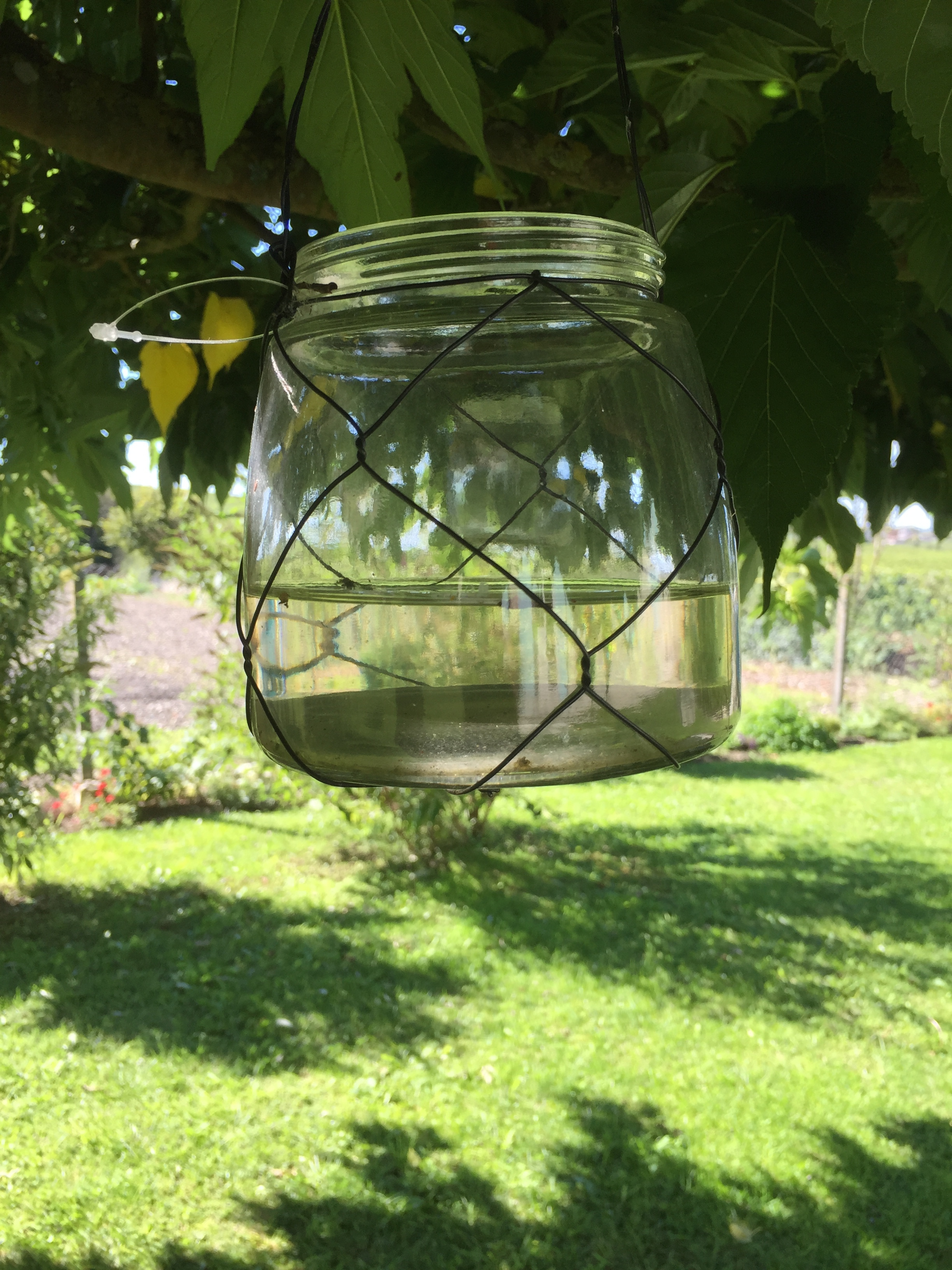
Out walking in the vineyards the other day I noticed this plant with its strikingly unusual flowers and its little red berries.

It’s “dulcamara”, which is a plant I know from my homeopathic studies. Its fuller name is “solanum dulcamara” which helps us to realise it is from the same plant family which other “solan…” plants belong to. That family is the Solonacaeae family.

The Solonacaeae family is a fascinating one to explore if you want to look at the relationships between the plant and human worlds. Some of them are staple foods – potatoes and tomatoes for example. But others are hallucinogenics – belladonna, hyoscyamus and stramonium being striking examples. Witches were said to make up a paste which included some of these hallucinogens and applied it to their skin with a stick – the origin of the “flying sick” perhaps?

In fact a lot of these plants can be poisonous to humans and I often wonder how human beings first got the knowledge to enable them to distinguish between the nutritious and the poisonous – trial and error? Sickness and health? Life and death?

If you are at all interested in looking into “ethnobotany” this is a good family to start with!

Read Full Post »

« Newer Posts - Older Posts »