Feeds:
Posts
Comments

Archive for the ‘photography’ Category

I used to support this idea that you ‘write what you know.’ You hear that advice given to young writers all the time and even to kids in school. It’s one of the greatest disservices – even in elementary school, teachers ask students just back from holidays to write about what you did, what happened to you, what you know. What about what you imagine? The imagination is the richest tool you will ever have as a novelist and, really, as a person. Anybody can do research. To use your imagination is to use a gift of the gods. The imagination is really disrespected when you’re telling people over and over to write what you know. This idea that what you experienced in your backyard when you were 15 is more significant or more real is just not true. Lawrence Hill

I’m increasingly convinced that imagination is indeed a “gift of the gods” and that it is the “richest tool” any creative person can use, not just writers. 

In fact, I’m increasingly convinced that more imagination is needed to solve the problems and crises we face, to feel genuine empathy with others, to develop tolerance, and to re-enchant our dis-enchanted lives.

Read Full Post »

In Eric Cassell’s “The Nature of Clinical Medicine”, he postulates that a key problem with Western Medicine is the focus on disease, at the expense of seeing, hearing and understanding the person who may, or may not, have the disease. At Medical School I was taught it was very bad practice to refer to “the gall bladder in bed 3” or to say “I admitted a case of pancreatitis last night”. Despite that we continue to think of disease as paramount in patient care, and we even create our health care services around the diagnosis and “management” of disease. Whole protocols of procedures are created, distributed and enforced around the concept of diseaes. Doctors and nurses are told what to do with a patient with disease X on the basis of “the best evidence”, where “the best evidence” refers to group studies which seek to “control for” individual factors – a process which prioritises the disease over the individual experience of it.

Eric Cassell enumerates “8 problems with using disease language”.

Disease names, for example, coronary heart disease or carcinoma of the breast, wrongly imply that a disease is a concrete thing (as opposed to an abstract concept) that can be found separate from the patient in whom it is found.

I read the phrase about disease being a concept, not a concrete thing, many years ago, and it had a big effect on me. Disease is exactly that – a concept. It’s a pattern of change which we name. Yet how many people, patients or health care professionals, think of a disease as being a thing? If you look at recent slogans used in health care, and in charity campaigns you’ll see the kind of thing. They are full of war metaphors about fighting this, beating that, kicking cancer’s butt, and so on. 

Disease names, for example, renal cell carcinoma or ulcerative colitis, incorrectly imply that the disease and its behavior are independent of the persons in whom they are found.

There are NO diseases which exist outside of people (or other living organisms). A disease is ALWAYS found in the context and the environment of the person who is suffering. 

Disease names, for example, lupus erythematosis or chronic obstructive pulmonary disease, mislead the unwary into believing that the name refers to one thing whose manifestations in individual patients are more alike than dissimilar. Just as the word tree refers to a class of things whose members are more alike than not, when, unless one wants to use trees or their wood, their variations are more important than their similarities.

What does every patient who attends an asthma clinic have in common? Asthma? How similar does that make them? Is this the most important fact to know about this person who is attending today? It’s individual differences, not the similarities, which are the most important.

Disease names, for example, multiple sclerosis or pneumococcal pneumonia, fool the unsuspecting into believing that what is referred to is a static entity, like the Bible, the Statue of Liberty, or the map of the New York City subways, rather than a constantly unfolding process that is never the same from moment to moment. The history of disease concepts depended on and furthered the classic separation of structure and function in which abnormal function was believed to follow from abnormalities in structure. This distinction seems to have been derived from the idea of form (which goes back to the Greeks) and its consequences that loomed large in 17th- and 18th-century medicine (King, 1978). The hard and fast distinction between structure and function itself is invalid. Structure is merely slower function, in that it changes at a lesser pace than the process called function—put in mind how bony structure changes in response to trauma or age so that it continues to perform its original function. Even the Statue of Liberty and the Parthenon are constantly changing.

As best I can understand, change is the nature of reality. There are no static entities. Even the ones which look static, are just changing more slowly, or less perceptibly. As Cassell says, “structure is merely slower function”.

Having named a disease within the patient, for example, diabetes mellitus or metastatic adenocarcinoma of the lung, physicians may be fooled into believing that they know what the matter is at this particular time and why. The disease may be the sole underlying reason why the patient is sick, but more often other factors—physical, social, or psychological (or all three)—have been crucial in the generation of the details of the illness and its losses of function (Cassell, 1979).

This is a common error. Just because an abnormal reading is found, that does not necessarily mean the explanation for the patient’s suffering has been found. For example, it has been clearly shown that there is no direct linear relationship between a lesion and the pain a patient is experiencing. Pain can change irrespective of the findings in the MRI scanner.

Disease names, for example, amyotrophic lateral sclerosis and psoriasis, inadvertently cause physicians to fall back on definitions of disease that are now accepted as outmoded because they fail to provide an adequate basis for treating the sick.

Disease names can, and do, change as we develop our understanding.

Using disease nomenclature to describe human sickness encourages the belief that only research into (molecular) mechanisms of diseases holds promise for understanding and treating human sickness.

You’ve probably encountered one of the ways in which “patient centred” is being used – pharmacogenomics. The idea that as long as we find not just the genetic code associated with a particular disease, but the genetic codes which seem to indicate responsiveness to certain drugs, then all we need is the genetic code. This isn’t to say that molecular or genetic research is not of value. It’s just not enough.

Finally, focusing on naming the disease takes attention away from the sick person.

Ultimately, this is Eric Cassell’s main message, and if only we made this the foundation principle of health care then we might have better medical education, more useful research, more effective treatments, and even health care organisations constructed around people, not diseases and drugs.

Read Full Post »

It’s often said that every action you take, every word you utter, maybe even every thought you have, ripples out into the Universe like the spreading waves on the surface of the water after you throw a stone into a pond.

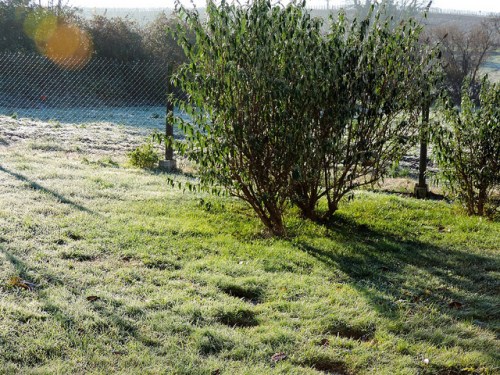
Take a look at this photo. I took it the other morning when I saw the grass was covered in frost and the sun was coming up.

You can see the sunlight is coming from the top left of the image and that the bush is casting a shadow towards the bottom right. You might think (rightly) that the land covered by the shadow will not be warming up as quickly as that which is in direct sunlight, so the frost will stay there longer. 

But look more closely. there is a whole circle of ground around the bush where the frost has gone. And that circle is on both sides of the bush – the sunlit side, and the shadow side.

More than the metaphor of the ripples on the water, I think this image reminds us how a living organism impacts on the world of which it is a part. 

It reminds me that all living organisms are “a part” of the Universe, not “apart” from the Universe.

It reminds me that our every day living influences and effects the place where we live, the environment in which we live, and that we interact in complex and surprising ways with the Universe.

It’s true, isn’t it? Every action we take, every word we utter, every thought we have, cascades “out” into the Universe.

Read Full Post »

UNESCO has declared 2015 as the “Year of Light” (“and light-based technologies”), so I thought I’d share a couple of thoughts about light.

For the last 52 Sundays I’ve published a post about an action to consider in the week ahead. To focus on actions, I’ve been writing about verbs. Verbs are tools for us. We use them to create the lives we experience. Verbs are doing words. They can’t quite be pinned down into one place or time. When we are doing something, we are experiencing continual change. Some even say that the best way to think of the “self” is not to think of self as a noun, but as a verb.

The practice of meditation invites us to investigate the flux of arising and passing events. When we get the hang of it, we can begin to see how each artifact of the mind is raised and lowered to view, like so many flashcards. But we can also glimpse, once in a while, the sleight-of-hand shuffling the cards and pulling them off the deck. Behind the objects lies a process. Self is a process. Self is a verb.

Verbs are our tools of becoming. Because we can choose our verbs and practice them, we can become active creators of our own experience.

I’m thinking of doing two things with the A to Z of Becoming series – develop them into a book which I hope to publish this year, and continue the Sunday series of posts about verbs.

This Sunday, I’m going to pick up on the UNESCO theme and think of verbs related to light. A long time back I figured that being a good doctor included practising three verbs related to light – lighten, brighten and enlighten. But now I think they are good value-grounded verbs which can add to anyone’s life.

So, this week you have three verbs to explore.

What or who lightens up your life? Can you find time to spend doing what it is that lightens up your life this week?

And what light do you shine in the lives of others? In your day to day interactions with others do you make their lives lighter, or darker (lighter or heavier maybe)?

What about brightening? To me, if you lighten someone’s life, you do something which eases any suffering they are experiencing. You help them to relax, feel less anxious, or down. To brighten someone’s life is to turn the light up in their lives. Think of sunshine, or of sparkling. Sparkling eyes brighten a day. Smiles brighten an exchange. Sharing a passion or an enthusiasm makes an experience more vivid. I’m thinking of brightening in those ways.

What can you do to brighten someone else’s life up this week?

And, how do you brighten your life? How do you add colour to it, richness or, variety? How can you increase the intensity of your experiences…..turn up the brightness…..hear, see, smell, taste, feel more vividly?

Finally, what about the idea of enlightening?

To enlighten is to understand better, to see something more clearly, to know what something means. How can you increase your understanding of another this week? How can you see something more clearly? We humans crave a sense of meaning and purpose. How do you make sense of what you experience this week?

There are lots of questions in this post, and I don’t expect you’ll explore them all in just a week, but maybe that’s why I’ve been thinking about them today. If this is to be a year of light, I can explore light in many ways over the coming days and weeks. I’ll do that with my camera, and I’ll do it with my journal. But mainly I’ll do it by coming back again and again to these three verbs – lighten, brighten and enlighten.

Here’s some amazing sunlight

sun

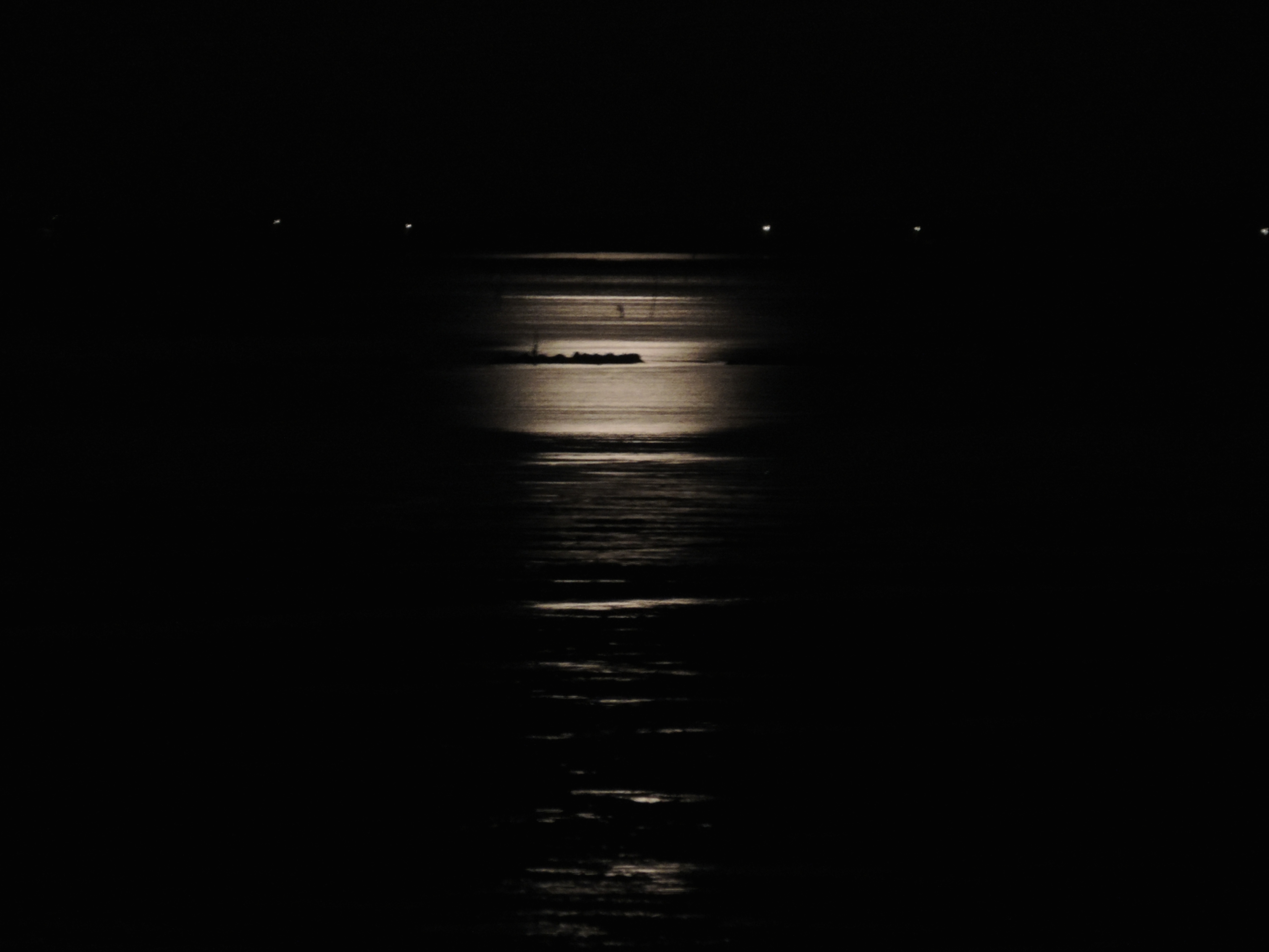
Some moonlight…..

moon

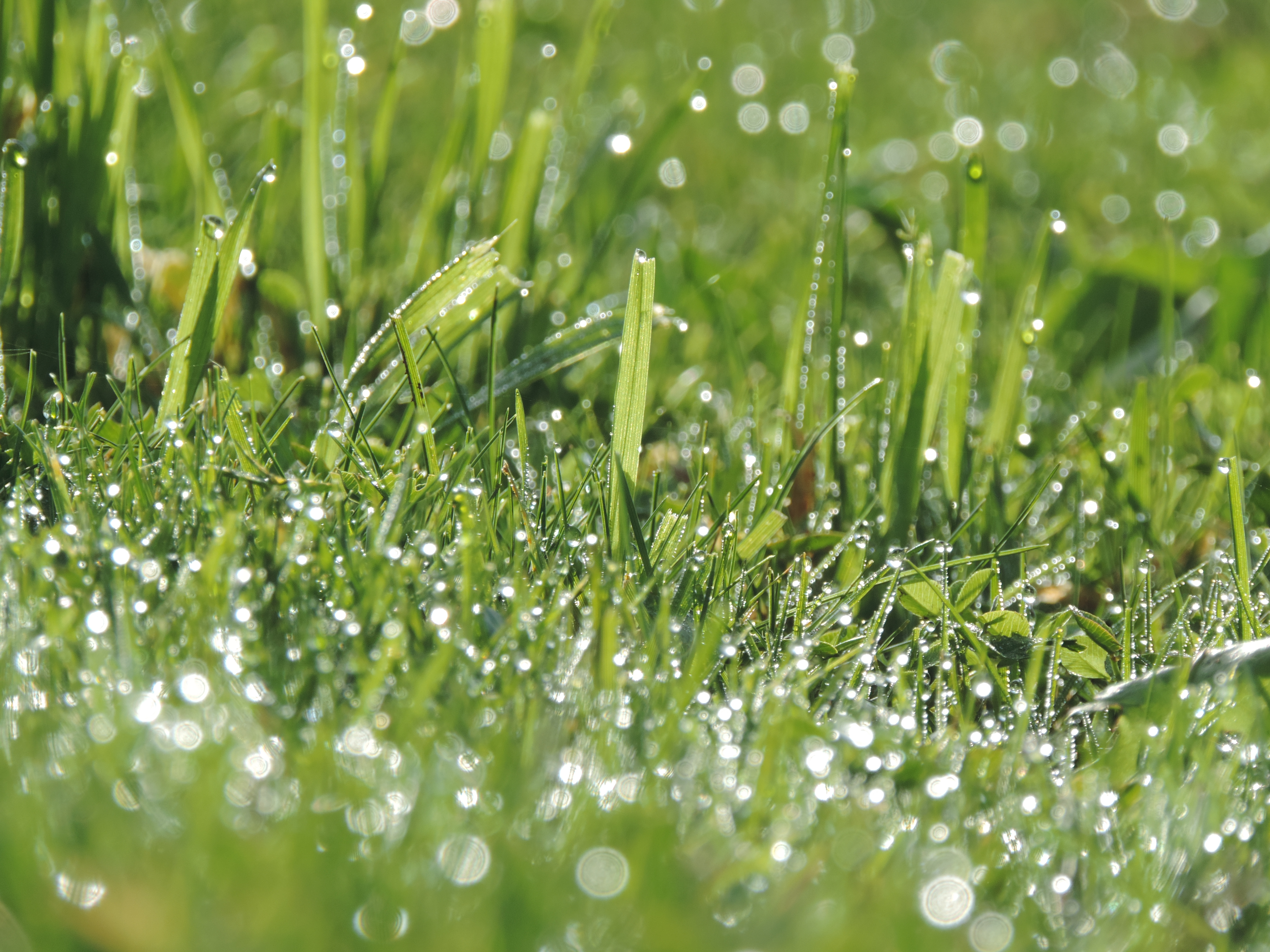
And some sparkles….

sparkles

Read Full Post »

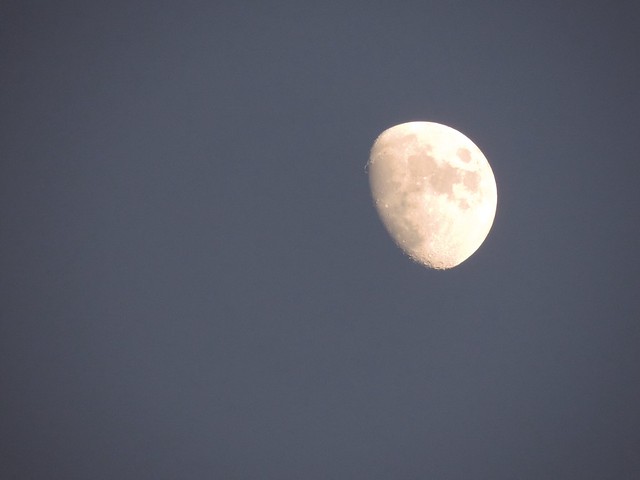
Moon

The moon has been very bright recently, so I thought, I wonder if I can get a decent photo of it? Not bad, huh?Isn’t it wonderful, and beautiful, and amazing?

This is how I take photos.

I thought I’d just share, at the start of the year, the foundation principles of my photography.

  1. First, never, ever go anywhere without a camera. That’s pretty easy nowadays when our smartphones have such great cameras in them, but I still prefer to take an actual camera with me too.
  2. Second, be prepared to be amazed. L’émerveillement du quotidien is the French phrase for it.
  3. Thirdly, photograph what catches your attention, or your wonder. That’s it I think. Oh, no, wait, there’s a fourth one!
  4. Take your time. You can just point and shoot, but you’ll get way more interesting and pleasing photos if you take your time. Change your position, your point of view, move the frame, zoom in or zoom out. If you are using autofocus, give the camera time to focus and make sure you’re focusing on the part of the view you want to be most sharp…….just take your time and press the shutter release only once you’re happy with what you are looking at.


Read Full Post »

January gets its name from Janus, the God who faces both ways, forwards and backwards, the God of gateways and doorways.

This is a good month to take the time to stand on the threshold of the new year, look back, and look forward, and see both which paths you’ve been following in 2014, and which new ones you might follow in 2015.

This door I photographed has clearly been doing its job for many years, and I love the way it has gradually evolved and changed. Clearly some of the panels needed to be replaced, but this is still the same door in the same doorway. It reminds me of the old philosophical question about a wooden boat which needs to have some of its planks replaced every year. By the time not a single plank from the original construction remains, can you still say it is the same boat?

So this month, is your month. And this is a month of the year you will have visited many times before (for me, this is the 60th January I’ve experienced), but every year brings a new January.

Every January, you think back to remember the moments from the year gone by, and you start to think ahead, to make plans for the year to come.

Every January, as you pass through your doorway, you’ll be crafting new elements onto the ones which were already there.

Maybe its an idea to take your time this month, allow yourself to reflect on 2014, and take a few moments to imagine how 2015 might be, imagine how you would like it be.

And amongst all this reflecting and planning, recognise that this a moment of passage, that January is a month for you to step, seemlessly, and deliberately, from last year into this one.


Read Full Post »

1st of January today. 2015.

Outside there is a frost on the grass, and up above a cloudless, blue sky. 

As the sun rises it starts to melt the frost.

Here’s a leaf at the half way point.

Half frosted, half warmed and wet.

Like a yin yang symbol, lying there in the grass, reminding me of the cycles and rhythms of change, and of the beauty in difference and contrast, and stimulating me to think about 2015 gradually emerging from 2014.

Good morning.

Bonjour.

Bonne Année.

Becoming not being.

Read Full Post »

In the London Review of Books, Hilary Mantel has written an extremely thought provoking review of Brian Dillon’s “Tormented Hope: Nine Hypochondriac Lives”.

For some of us, the question ‘Am I ill or well?’ is not at all straightforward, but contentious and guilt-ridden. I feel ill, but have I any right to the feeling? I feel ill, but has my feeling any organic basis? I feel ill, but who am I to say so? Someone else must decide (my doctor, my mother) whether the illness is real by other people’s standards, or only by mine. Is it a respectable illness? Does it stand up to scientific scrutiny? Or is it just one of my body’s weasel stratagems, to get attention, to get a rest, to avoid doing something it doesn’t want to do? Some of us perceive our body as fundamentally dishonest, and illness as a scam it has thought up.


We understand, almost instinctively, the nuanced difference between disease and illness. As Eric Cassell put it so clearly – “illness is what a man has, and disease is what an organ has”. Or “illness is what you go to the doctor with, and disease is what you come home with”. However, both doctors and patients are caught up in the blurred boundary between these two concepts. For doctors, once a sensation is classified as a symptom, it becomes a signpost to a pathology (or it is dismissed as “psychological”). For all of us, though, we live with the possibility that any sensation might be a symptom. For the hypochondriac, every sensation might be a symptom. As Hilary Mantel says – 


In hypochondria, the whole imagination is medicalised; on the one hand, the state is sordid and comic, on the other hand, perfectly comprehensible. It is the dismaying opaqueness of human flesh that drives us to anxiety and despair. What in God’s name is going on in there? Why are our bodies not made with hinged flaps or transparent panels, so that we can have a look? Why must we exist in perpetual uncertainty (only ended by death) as to whether we are well or ill?

Am I well, or am I ill? Who decides?

Brian Dillon consoles us that ‘hypochondriacs are almost always other people.’ The condition exists on a continuum, with fraud at one end, delusion in the middle and medical incompetence at the other end; he is a benefits cheat, you are a hypochondriac, I am as yet undiagnosed.

One issue is symptoms, which are a particular way of classifying sensations. Are some more real, somehow, than others? Do they need accompanying physical changes in the body to be real?  

Many people are simply hyper-aware of bodily sensations, and so are driven continually to check in with themselves, examining visceral events as a man about to confess to a priest examines his conscience; like the believer scrutinising himself for sin, they expect to find something bad, perhaps something mortal. Forgiveness, and cure, are only ever partial and temporary; there will always be another lapse, some internal quaking or queasiness, some torsion or stricture, some lightness in the head or hammering of the pulse, some stiffness in the joint or trembling of the limb, or perhaps even an absence of sensation, a numbness, a deficit, a failure of the appetite.

A researcher called Kurt Kroenke has published many studies where he shows, time and again, that not only is the percentage of people listing symptoms which they have equal whether they are attending medical clinics, or are simply stopped in the street and asked, but the actual symptoms people complain of are the largely the same whether they are attending for health care, or just going about their normal lives. Clearly, not only are sensations not usually symptoms but symptoms do not equal disease.

Bodily, and psychic sensations are part of being alive. But we humans are compelled somehow to try to find the underlying meaning of everything..including sensations. Isn’t this the crux of the issue? Who gives meaning to your daily life, your lived experience, your sensations, thoughts, and feelings?

In the days before internet information and misinformation became available, patients often came away from a consultation with the feeling that they did not own their own bodies, that they were in some way owned by the doctor or the NHS. Now perhaps Google owns our bodies; it is possible to have access, at a keystroke, to a dazing plurality of opinion. There is an illness out there for every need, a disease to fit any symptom. And it is not just individuals who manufacture disease. As drug patents expire, the pharmacological companies invent new illnesses, such as social anxiety disorder, for which an otherwise obsolete formulation can be prescribed. For this ruse to work, the patient must accept a description of himself as sick, not just odd; so shyness, for example, becomes a pathology, not just an inconvenient character trait. We need not be in pain, or produce florid symptoms, to benefit from the new, enveloping, knowledge-based hypochondria. We are all subtly wrong in some way, most of the time: ill at ease in the world. We can stand a bit of readjustment, physical or mental, a bit of fine-tuning. Our lifelong itch for self-improvement can be scratched by a cosmetic surgeon with his scalpel or needle, our feelings of loss assuaged by a pill that will return us to a state of self-possession. For hypochondria, the future is golden.

It’s not just doctors who interpret your sensations now, there are interpretations everywhere, and some of them are deliberately invented for marketing purposes. 

Living involves experiencing sensations, and being human involves sense-making. Trying to understand what is happening now may be an inescapable part of Life. Deciding what meaning fits best is, ultimately, down to the individual – either by simply accepting the interpretation of an other, or by consciously, rationally, working it out in our own terms.

Entangled as they might be, the untangling of sensations is up to us.

Read Full Post »

In the second part of the A to Z of Becoming, Z stands for the verb, zoom.

What I suggest you do with this verb, is think of a camera lens – the kind that zooms – it can zoom in, and it can zoom out.

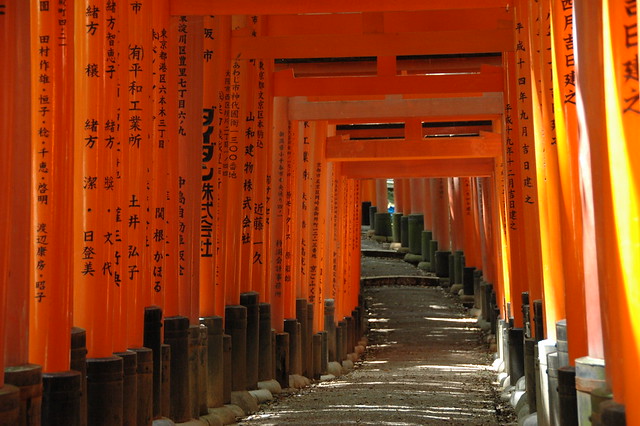
A few years back I climbed the hill to the Inari Shrine just outside of Kyoto. I took photos (of course) and what follows here is the sequence, starting at the entrance gate, then looking back towards the gate, and beyond to Kyoto, as I climb the hill. See if you can pick out the entrance gate in all the photos.

inari

inari and kyoto

inari and kyoto

inari and kyoto

Imagine now, that you are standing on top of this hill, and you zoom in on the gate you passed through at the start of the climb. You can either do that using a camera lens, or you can do it using your memory or imagination.

As you zoom in, and zoom back out, the context changes. You see what you saw before but in a different, broader, or narrower, setting.

That’s what zooming does for us. It allows us not to get stuck on one single viewpoint, but to see whatever we are looking at in a number of different contexts.

You can do the same with time.

You can stand here, at this point in the year, today, this very day, and zoom out to remember or imagine this day in the context of this week, of this month, of this year, of this life even. Then zoom back in again, to focus on the present.

Can you do that to see forward as well as back?

Fushimi Inari Shrine

You can, if you use your imagination…..

By the way, the shrine has many passageways like this one –Fushimi Inari Shrine Torii Gates

and this one –

Fushimi Inari Shrine Torii Gates

– where you can’t zoom very far forwards, or backwards, you can only see as far at the next curve, and as far back as the last one – keeps you focused on the here and now! It’s good to focus on the here and now, but a bit of zooming can broaden or deepen your awareness.

Read Full Post »

silver lining

Have you ever looked up at a cloud and wondered about just where its edges are?

You’ll be familiar with the idea that every cloud has a silver lining….like the one I’ve photographed here. When we talk about that we have this kind of image in our minds, an image of a grey cloud with a bright white silver edge.

But where exactly is the edge of a cloud?

If a cloud is droplets of water, where do those droplets become so numerous that they constitute a cloud? Watch any cloud for a moment and you’ll see the edge slowly, but constantly, changing. The cloud literally changes its shape before your eyes.

I find that fascinating. And it can be a nice contemplation or meditation too.

Either to keep your attention on the cloud, observing the changes at its edges, bringing your mind gently back to the cloud every time it drifts off into some other thoughts.

Or think of a cloud as a model to consider other “objects” in the world – yourself for example. Where are your edges, and how are they changing?

Read Full Post »

« Newer Posts - Older Posts »