Feeds:
Posts
Comments

Archive for the ‘psychology’ Category

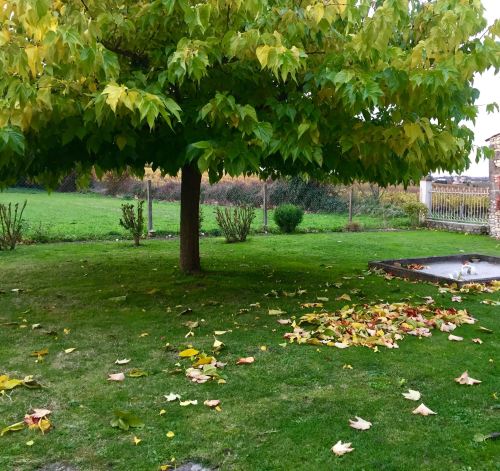
gathered-leaves

In this season the leaves begin to fall and one of my daily activities is to rake them up. Before I moved to France I lived in a second floor apartment so leave raking wasn’t part of my life. I’ve found that I really enjoy it. It gives me great pleasure. I know it’s not the same as a zen monk raking his stones, but there is something of that quality to it. I don’t rush it and the sweeping movements with the rake feel strangely relaxing. It’s also really pleasing to gather the leaves into a heap, then to scoop them up to take them away to the “déchetterie” for composting another day.

I am constantly amazed by the variety of shapes, sizes and colours, and often pause to look at a leaf more closely, to turn it over in my hand and feel its texture.

Once I’ve finished raking it feels like having tidied up, or cleaned a room. It’s satisfying. You can immediately see the results of your efforts.

The other morning I opened the front door, unlocked the shutters and stepped outside to see what I’ve captured in this photo. During the night the wind had worked differently from usual. Instead of scattering the leaves everywhere it had gathered them together into this heap under the tree. I hardly needed the rake that day. I just had to scoop up the leaves with my hands.

I remember years ago I used to read an American magazine entitled “Wired”, and they had a regular column of “new words”, neologisms which people were starting to use. One which really impressed me at the time, and has stayed with me ever since, was the word “pronoia”. You know the word “paranoia”? Which means the delusion that the world is conspiring against you. Well “pronoia” means the delusion that the world is conspiring to help you out!

I had a real sense of pronoia the morning I took this photo……

As I sat down to write this post I remembered a thought which has been attributed to Einstein, although I believe there is no record of him ever having actually said it.

“I think the most important question facing humanity is, ‘Is the universe a friendly place?’ This is the first and most basic question all people must answer for themselves. For if we decide that the universe is an unfriendly place, then we will use our technology, our scientific discoveries and our natural resources to achieve safety and power by creating bigger walls to keep out the unfriendliness and bigger weapons to destroy all that which is unfriendly and I believe that we are getting to a place where technology is powerful enough that we may either completely isolate or destroy ourselves as well in this process. If we decide that the universe is neither friendly nor unfriendly and that God is essentially ‘playing dice with the universe’, then we are simply victims to the random toss of the dice and our lives have no real purpose or meaning. But if we decide that the universe is a friendly place, then we will use our technology, our scientific discoveries and our natural resources to create tools and models for understanding that universe. Because power and safety will come through understanding its workings and its motives. God does not play dice with the universe,”

Well, even if he never actually said it, it’s still an interesting thought to turn over in your head for a bit, isn’t it? So many people live as if the universe is harsh and hostile and they need to struggle against it, to overcome it. Yet others believe the universe couldn’t care less and that everything that occurs is completely random and meaningless, even an individual life. But there is this third option, which is that the universe is actually a creative, “friendly” place. If you think that way, then every day becomes filled with wonder and delight. Every day you encounter something, or someone, astonishing.

I prefer the third stance. I think there is too much beauty and elaborate complexity in the universe for it all to come down to either malign intent or apathy. There’s something amazingly wonderful about a leaf, a season, an ecosystem, a bird, a person…..I’ll never tire of being amazed by, and trying to understand, my daily life.
Read Full Post »

img_5606

I named this blog “heroes not zombies” because we humans have a tendency to go about the world on autopilot. As we walk through the day the thoughts which fill our heads are often ones from the past or the future. We go over what people said or did, recall events and circumstances which made a big impact on us….even the ones which seemed quite inconsequential to others. And we go over and over what might lie ahead and worry about it. All these thoughts squeeze out our attention to the present. I’m sure you’ve had that experience of traveling from one place to another, maybe even driving a car, only to arrive and realise you were so preoccupied with something you are surprised you’re at your destination already.

There’s something else which prevents us from experiencing the here and now. We become habituated. We are creatures of habit and when we stay within the bounds of the familiar we have a tendency to become oblivious to the detailed differences of the every day.

And there’s another thing. People who want power over others, whether that be politically, socially or commercially, pressurise us to conform and be compliant. Difference is singled out as a negative and suppressed. Governments, institutions, authorities, corporations want to control us a mass. The Romans did that through the provision of “bread and circuses”, but maybe now its “sugar and screens”.

Living in a zombie-like autopilot submissive way means we lose touch with reality. Reality is the here and now. Reality is uniqueness. Reality is diversity. Reality is freedom, opportunity and change.

The alternative is to become the authors and main characters, or heroes, of our own life stories. We can co-create our daily reality and claim this one wild and special life as our own.

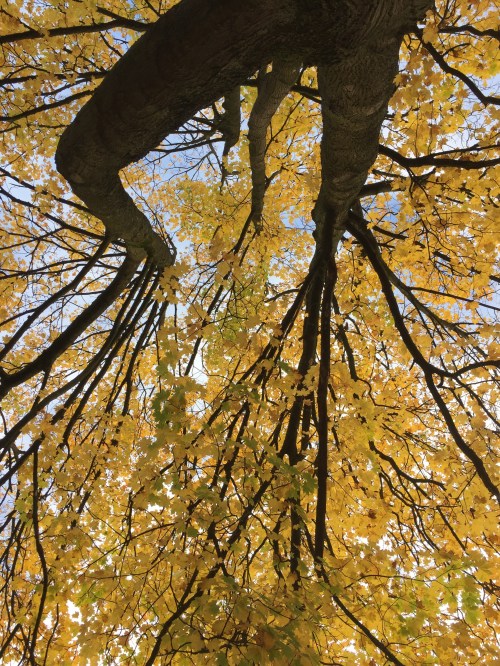
OK, so how did I get all that from that photo today?

The other day I was walking a route I’ve walked thousands and thousands of times over a lifetime. It’s autumn here in the northern hemisphere and the colours of the leaves on the trees this year is particularly eye catching. In fact I think to walk amongst trees is one of the best ways to draw yourself and your attention into the here and now. So I was stopping every now and again and taking a photo. Then, I don’t know quite why, but I looked up from the base of a tree towards the sky and took this photo.

It wasn’t just the colours which caught my eye, it was the shape and form of the branches. As I look at it now my imagination kicks in and I’m more and more convinced I just managed to glimpse the legs of one of the spirits of the forest as they leapt over my head in the canopy of the trees.

Well, I did say my imagination had kicked in……

Read Full Post »

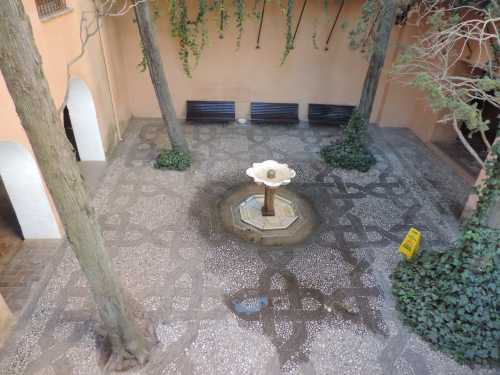
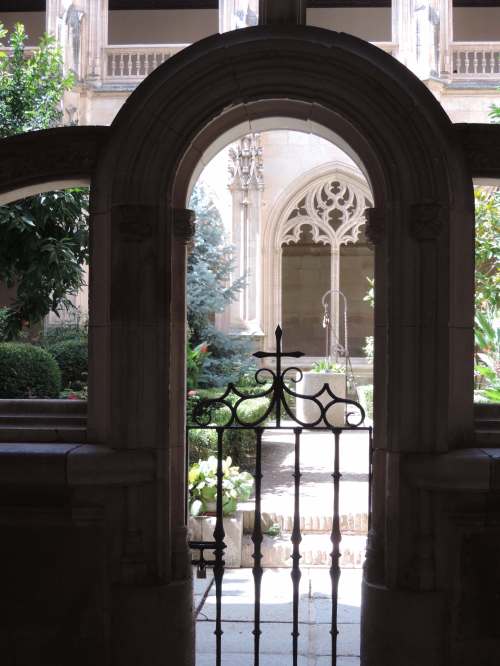
gate to cloister toledo cloister small cloister alhambra cloister simple cloister

I can’t remember when I first encountered a cloister or an inner courtyard. Part of me thinks it was in Marrakech where I stayed in a restored ryad. I loved how you could walk around the sheltered edges of the square, how there were places to sit, and how there were two other, what I think are essential, features – trees and water (either a fountain, or a well).

So, here are a number of photos from my trip to Spain last week. There are three kinds of courtyard/cloister here – very Christian, very secular, and very Islamic. Isn’t it interesting how these three different traditions have the same core features whilst they are distinctly different?

I think one of the reasons I adore these spaces so much is that induce a desire to slow down, pause for a while, and turn within.

Of course we don’t need these types of spaces to do that. I often recommended Julia Cameron’s “artist’s date” practice to patients – scheduling some time to spend by yourself doing something you don’t have to do.

When I came back home I listened to the latest episode of Onbeing, an interview with Mirabai Bush, about the importance of contemplative practice. During that interview there was a mention of the “tree of contemplative practices” which brilliantly illustrates the diversity of contemplative practices through the varied traditions in the world. I hadn’t realised there were so many.

We all need to find some way to be still and become aware. Maybe you have your own favourite ways, favourite places, or practices. Or maybe you’d like to explore some by clicking through on the links in this post……or maybe you’d just like to sit and gaze at one of these photos for a while and see where that takes you?

Read Full Post »

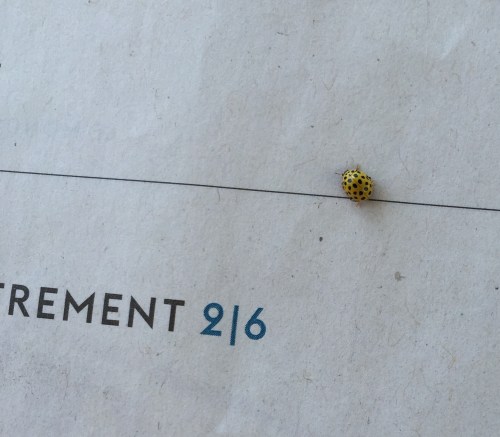
ladybird yellow

I was sitting under the mulberry tree last saturday afternoon reading the newspaper when this little creature landed right in front of me. In an instant I was back in the real world. Let me explain….

I think that when we are reading, particularly if we are reading something which engages us fully, then we become absorbed into a different world. It’s a world partly described by the author, and partly created by my (the reader)’s memories and imagination. It’s not that that world isn’t real, but it’s highly subjective and intensely personal. Nobody else has my memories. Nobody shares my imagination. Nobody is having an identical experience to me. I might be transported by the words and my thoughts to far away places or far away times….real or imaginary.

But when this startling, attention-grabbing, little creature lands right in the centre of my vision, I leave that place and time and return to here and now.

I read an article by a French philosopher recently who argued that human beings can never experience the real because we always bring our memories, our imaginations and our processing of the sensory signals from the world to all of our experience. What we live is our subjective creation of the real. I’m not sure what I really think about that. I understand the point he is making but I something nags at me….maybe it’s that there is no real for we humans to experience other than the real that we humans experience. Oops, that sounds rather peculiar doesn’t it? What I mean is, is there any “real” “out there” which doesn’t include us? Isn’t the universe whole? And doesn’t the universe include us? So an imagined universe without us is less real, not more real, isn’t it?

Oh, I didn’t set out to go down that path. Where I meant to go was a different story altogether. Pokemon Go was released in France last week and in the papers I read a report of over a 1000 people rushing around the public garden in Bordeaux trying to find a rare Pokemon creature. Over a 1000 people! Rushing around a park looking for something that doesn’t exist! Well, only as a digitally manufactured creation. The makers call this “AR”, for “Augmented Reality” and the reporter who wrote the piece about the crowd in Bordeaux said that it was a delight to see so many happy people, their faces beaming with anticipation as they rediscovered the childhood delights of play. Wow! Very positive Monsieur Journaliste! But does something like Pokemon Go genuinely augment reality?

But then, I’m wondering again….isn’t this just a contemporary example of how the human imagination interacts with the rest of the universe to produce the “real”, irrespective of whether you are going to use the word “augmented” or not?

Maybe these technologies are bringing people together, stimulating delight and pleasure, creating a brand new world. Maybe.

I think my reality is augmented every day by the world around me. This little yellow ladybird made my day  different and made it feel special to me.

Don’t we augment our reality through curiosity and paying attention, by delight, wonder and being prepared to be amazed?

I think it does…….


Read Full Post »

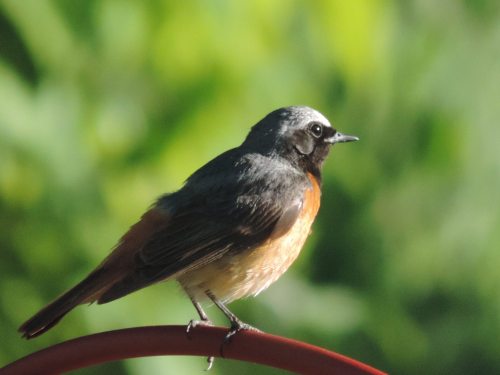
redstart close.jpg

This morning I woke up to the news that the referendum vote on the UK’s membership of the EU had been won by the Leave campaign.

I immediately felt sad, not least because I see this as a victory for the forces of xenophobia and misinformation. I’m a great proponent for diversity, for the celebration of uniqueness and for integration (the definition of which is “the creation of mutually beneficial relationships between well differentiated parts”).

But I found something else happened too. I tumbled into anxious feelings of uncertainty. Question after question flooded my brain.

Will I have to give up living in France? Will I need a residency permit and visas to visit other European countries instead of having the right to live here and to drive across the borders into Italy, Spain, Belgium or wherever I else I want to visit freely? What will happen to the currency exchange? To the value of my pension? What about my children and my grandchildren? Will they now lose the right to travel, study and live in this richly diverse continent?

Oh, the questions kept coming, and the answers are unknowable.

Then I looked outside and there he was again. The redstart. I’ve written before about my experience of a particular redstart in this garden but since yesterday he’s been perching on a chair right outside my front door and whistling loudly. He’s never done that before and it got me wondering.

What’s he trying to tell me?

Is he in trouble? I even went and looked where his nest is but couldn’t see anything wrong. He can’t be hungry. There’s an abundance of food around just now. He looks healthy and vigorous. Nope, I couldn’t figure it out.

Then I thought, well maybe he just likes it there. On the back of that chair.

Or maybe he’s just enjoying being close and asking for some attention.

Well, you know what he did? He called me right back into the here and now. The worries, the unsolved problems which might not even ever exist, all faded away. I just enjoyed looking at him, listening to his song, and taking his photograph.

Attention to the present and the particular does that for us. It makes today, this moment, more real, more vivid, and more enjoyable.

Thank you, Mr Redstart.

Read Full Post »

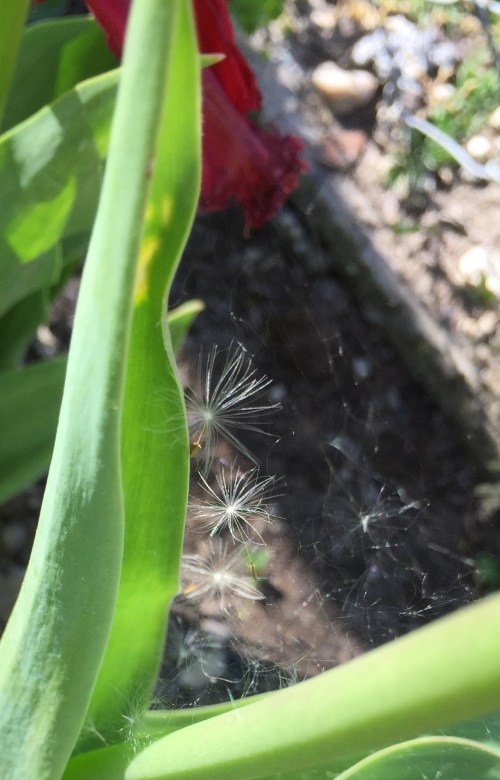
seedweb

In “Deux Idées de Bonheur”, Luis Sepúlveda says that he’s come to understand that happiness and wellbeing are a web or network of relationships, between ourselves and others, between ourselves and what is around us, between ourselves and Nature.

I like that. It seems very true to me. We all exist with an intricate and infinite web of connections. None of us exist without any relationships. We all have, or have had parents, we’ve all encountered many, many others over the course of our lives, people we’ve been taught by, looked after by, friends, rivals, people we are related to through genes and marriages. We all live our every day lives in a web of others who produce, transport, prepare and sell the food we eat. Others who make the clothes we wear, who make every object we handle in an ordinary day. We live with others with whom we share our stories, co-create our values, our purposes, our reasons to get up every morning.

And we are in an intimate and unceasing relationship of exchange of energy, information and substances with the natural environment. The air, the water, the soil, the way we work the land, change the landscapes, warm the atmosphere around the Earth.

The other dimension of these vast webs is time. Our lives are all like stories….we are continually describing and telling the present as it emerges from our personal and our shared past, and which, moment by moment, is already in the process of becoming the future.

Happiness and wellbeing are not states, not independent, self-sustaining, isolated characteristics or “data points” to be measured. They are experiences which emerge out of a web of moments, within a network of connected people and events.

They are qualities of life, not permanently present, but always in the process of creation, like an intricate cloth of threads woven across lifetimes.

Read Full Post »

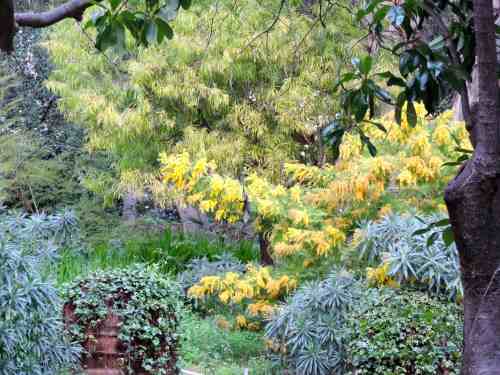
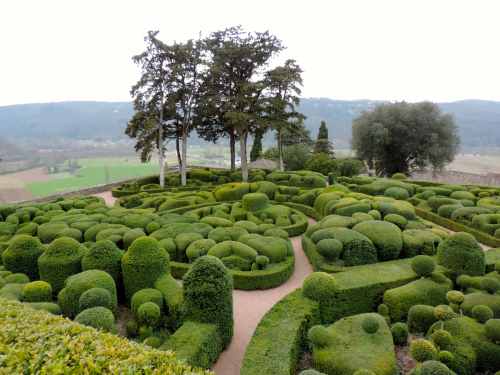
hanburymarqueyssac

Two gardens.

Could they be more different?

The first is the Hanbury Botanic Garden in Ventimiglia, Italy, and the second is Marqueyssac in the Dordogne, France.

Thomas Berry, in The Great Work, describes the two forces of the universe as wildness and discipline. David Wade, in The Crystal and the Dragon, describes them as the moving, flowing principle, and the ordering, or structuring principle. You get the idea? One tends toward expansion and one towards constriction. Empedocles wrote about Neikos and Philia, the forces of repulsion/separation and of attraction/combination.

Our left cerebral hemisphere is great for sorting, labelling, and ordering. The right seeks out the new and makes connections.

There is no right or wrong here. Both forces need each other, like the yin and the yang. As they interact with each other, as we produce integration (the creation of mutually beneficial bonds between well differentiated parts), we create.

These two gardens are examples of this. In the first case, the Hanbury Garden, there is a glorious “far from equilibrium” quality brought about by encouraging diversity and a light touch on control. In the Marqueyssac, constant pruning, trimming and shaping brings this astonishing spread of geometric and repeating forms.

Is one more beautiful than the other?

I suspect each of us have certain preferences…..drawn towards the wildness, or drawn towards the discipline.

Isn’t it great when we can have “and” not “or”? It just requires the will to explore and to stand back and see the view from Sirius.

Read Full Post »

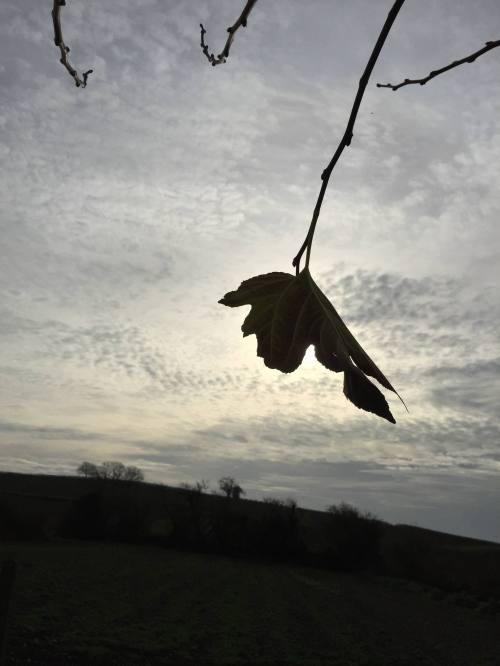
last leaf

There’s a growing body of evidence that using your brain is good for your brain. Who’d have thought it?!

There’s also a growing body of evidence that what is good for your brain is good for you. The old mind-body duality is breaking down in the light of neuroscientific findings about the connections between the brain, the rest of the nervous system, and the rest of the body.

Using your brain is one of the key themes of this blog. I believe it’s just too easy to drift through life in zombie mode, influenced by others, manipulated by others, controlled by others. And yet, I also believe it very, very possible to make our own choices, to become “self-directed”, conscious creators of our own, unique stories and, hence, lives.

One of the most commonly promoted ways to use our brains is “mindfulness“. A sort of clumsy word which describes a certain state of awareness.

You can practice “mindfulness” by learning certain meditation techniques, and/or, you can do what Ellen Langer says, and “seek novelty”. 

I find that choosing to be aware, stoking the natural curiosity for the day, seeking “l’émerveillement du quotidien” is one of the easiest, and most delightful ways, to achieve this – this is the main way I try to be “mindful”.

There are two related techniques which help me to live this way. They both date way back thousands of years but both work just as well here and now.

Here are two photos to illustrate the techniques.

The first one is the one at the start of this post. It’s “the last leaf”. There’s a mulberry tree in my garden here in France and this is my second season of raking up and gathering the leaves as they fall. The first year I arrived here I wasn’t prepared for this phenomenon. This tree really sheds a LOT of leaves. I confess, I found that clearing up the leaves was a bit of a burden. But this year? This second season for me? I’ve loved it. Pretty much every other day I’d take the rake and gather up the leaves into huge canvas bags and every other week I’d make a trip to the “déchetterie” (“the tip”, we’d say in English). I enjoyed taking my time, rummaging through the different shapes, sizes and colours of the leaves. I enjoyed seeing the green grass again once the leaves were gathered, but quickly, of course, the grass would recreate a “wabi sabi” appearance with just two or three newly fallen leaves adding interest and attracting attention.

As more and more of the tree shed its leaves I decided I’d like to photograph the “last leaf”. That’s my first image in this post. And that’s the first technique – “live today as if this is the last” – that’s not as morbid as it first sounds…..due to the constancy of change, every day is unique, and the truth is, you will never have a chance to live this day, exactly like this, ever again. So it might be a good idea to savour it. To notice what you can, to hear what you can hear, touch what you can touch, smell what you can smell, take your time to taste and savour the food you are eating.

Because this will be your last opportunity to do so.

Here’s the next image –

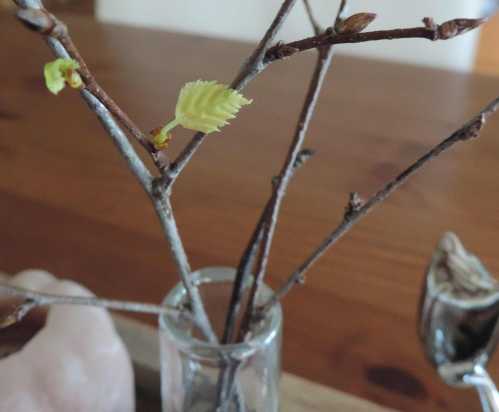
first leaf

We have twin birch trees in this garden, and when the wind blows in the autumn, they shed, not only leaves, but lots of small twigs and branches. Yep, most of these head to the “déchetterie” too, but Hilary picked some up, finding their shapes pleasing and used a couple as a table decoration. There was a little water in the bottom of one of the vases she used, and look what happened! A few days later, there was a new leaf!

So, here’s the second image, “the first leaf”, and the second technique, “live today as if it’s the first”.

That’s true too. Due to the uniqueness of every day, of every experience, of every moment, whatever you encounter today, you encounter for the first time. Sometimes that’s not so obvious. Our habits and our routines deaden our awareness and we become oblivious to the small changes which can make a big difference.

You have never lived this very day before. So why not approach it with the sense of wonder, curiosity and amazement which you did so naturally as a child? (This is “l’émerveillement du quotidien” – the wonder of the every day)

I mean look at that little twig! It’s grown a leaf! A perfect, bright green, little leaf! Isn’t that amazing? I wondered a wee while ago about how difficult it was to know whether a seed was dead or alive, but I didn’t wonder about these (apparently discarded) twigs. They were dead as far as I knew. But add a little water, and, hey presto! Life magically emerges!

If you don’t stumble across something new, something for the first time, today, you’re just not looking.

So, there you go, two photos, two ancient techniques, “last and first”, and a step in the right direction from “zombie to hero“!

Read Full Post »

paris corner

Montaigne wrote in one of his essays that he once met a wealthy man who he found studying in a corner of his great hall, with only cloth hangings partitioning him from the noise and bustle of his servants. He told Montaigne

that he derived profit from this racket, as if, battered by this noise, he withdrew and concentrated in himself better for contemplation, and that this storm of voices drove his thoughts inward. While studying at Padua, he had for so long a time a study exposed to the rattle of coaches and the tumult of the square that he trained himself not only to disregard the noise but to use it for the benefit of his studies.

Have you had that experience? I’ve read of several writers who would write in cafes, but others who find such a buzz too distracting. Montaigne himself was one of the latter –

I am quite the opposite; my mind is sensitive and ready to take flight; when it is absorbed in itself, the slightest buzz of a fly is the death of it.

Since Montaigne’s day we could add another scenario – studying, or reading, while listening to music. Again I think there are some of find this beneficial, and others who just find it too distracting.

When I was studying Medicine in Edinburgh there were two places where I studied best. One was in the Botanic Gardens, and the other was in the Anatomy Museum! Well, what does that say about me??

How about you? Do you need peace and quiet? Or do you find a hustle and bustle around you conducive?

chauvigny

Read Full Post »

lines of vines

Habits.

We all have habits – LOTS of them! People often talk about habits as if they are bad things, and they can be, but we have them for a reason and don’t we all classify habits into two types anyway – “good” and “bad”?

Before I go any further let me just reiterate that I’m really not a fan of what is referred to as “two value thinking” – categorising whatever we are thinking about into boxes – “good” or “bad”, “black” or “white”, “right” or “wrong”. So often what we put into one category doesn’t look like it fits there very well after a while. However, for the purposes of this reflection let’s think about what’s “good” about habits and what’s “bad” about them.

Habits are good in at least a couple of ways I can think of – they bring us comfort, and so, ease, security and familiarity. We all want those feelings. And they allow us to turn our attention to other things. For example, if I have a routine way of making a cup of coffee, I don’t have to start from scratch every time and figure out how to make a cup of coffee. If I have a habitual path I take to get from home to work (whether walking, driving or taking public transport) I can just set off each day and not have to figure out how to get to my destination.

Why do we think of habits as bad then? Either because they are behaviours which we’d rather not have – for health reasons, or because they are particular patterns which always make us sad or fearful. Or because they restrict us. Because, let’s face it, habits can be very hard to break.

I think there are two ways to change habits –

First, become aware. If I become conscious of my habit then I can choose to repeat it. For example, if there is a particular route I like to take I can consciously choose to go that way, instead of just finding myself following it unthinkingly – that’s the heroes not zombies thing – it’s moving from autopilot to conscious living. Becoming aware and actively choosing doesn’t mean we have to do everything differently. Choosing changes how we experience a routine or a habit.

The second is to create new habits. When discussing how to get out of the same old ruts and loops, I used to talk to patients about “making better dents” – read about that here if you like. The idea though stems from the fact that it is much easier to create a new habit, which can then replace an old one, than it is to try to wrestle an existing one into submission! People talk about the 30 day rule for new habits – start doing something differently, and do it each day for 30 days – that seems to make it more likely to stick!

So instead of beating yourself about the head about bad habits, or struggling to “break” them, why not try first becoming aware of what they are, then either consciously choosing to continue them, to using your imagination to create a new, potential replacement?

Read Full Post »

« Newer Posts - Older Posts »