Feeds:
Posts
Comments

Archive for the ‘psychology’ Category

“Everybody needs beauty as well as bread, places to play in and pray in where nature may heal and cheer and give strength to the body and soul.” – John Muir

Just as we are constantly influenced by what’s inside us, so we are constantly influenced by what’s around us.

One of those influences is beauty.


Bay of Biscay

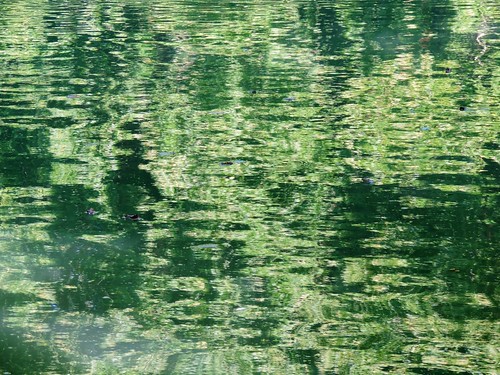
Monet like reflections

Moonrise over the Atlantic

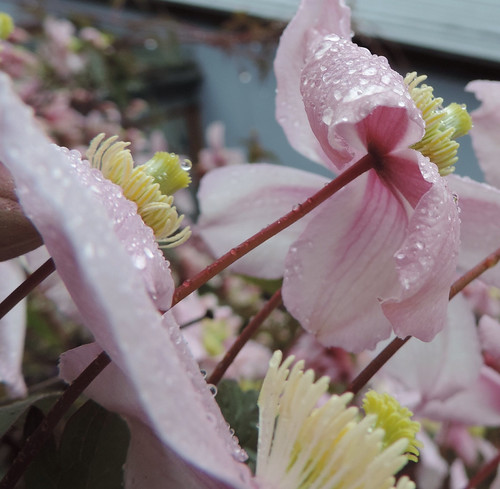
Clematis

spiral

restaurant

A recent article in The Atlantic looks at the influence of beauty on happiness.

Beauty tends to feel like something that must be found in special places—parks and museums, galleries and exotic cities. Lunch is not a place one would normally think to look. But finding beauty in normal activities can bring deep happiness to life, studies show.

“In a paper titled, “Untangling What Makes Cities Livable: Happiness in Five Cities,” Abraham Goldberg, a professor at University of South Carolina Upstate, and his team conducted a statistical analysis of happiness in New York City, London, Paris, Toronto, and Berlin.”

In addition to the usual “Big Seven” influences (wealth, family relationships, career, friends, health, freedom, and personal values), Goldberg found that what makes people happiest is the beauty around them.

It seems part of humans’ appreciation of beauty is because it is able to conjure the feelings we tend to associate with happiness: calmness, a connection to history or the divine, wealth, time for reflection and appreciation, and, perhaps surprisingly, hope.

Beauty, famously, is “in the eye of the beholder” and maybe some of the images I’ve included here are not what you might find beautiful (but I do!), but what interested me about this article was not just that beauty can be found in big works eg architecture, great paintings etc, but also in everyday small objects and scenes.

I also especially liked the quotations towards the end which highlight a very interesting aspect of beauty – it’s connection to anticipation, or hope…..

“So long as we find anything beautiful, we feel that we have not yet exhausted what [life] has to offer,” writes Nehamas. “That forward-looking element is … inseparable from the judgment of beauty.”………… As the 18th-century French writer Stendhal wrote, “Beauty is the promise of happiness.”


Read Full Post »

Here’s an interesting recent research study looking at how the micro-organisms which live in our bodies might influence our behaviour. The researchers

concluded from a review of the recent scientific literature that microbes influence human eating behavior and dietary choices to favor consumption of the particular nutrients they grow best on, rather than simply passively living off whatever nutrients we choose to send their way.

It seems that different organisms have different nutrient needs and that are able to send signals which will increase the chance of them getting what they want. Amazing, huh? The communication seems to be two way, because its also been found that changing your diet changes the “flora” (that’s the community of micro-organisms in your gut) within 24 hours.

Some of the signals apparently go through part of the autonomic nervous system.

“Microbes have the capacity to manipulate behavior and mood through altering the neural signals in the vagus nerve, changing taste receptors, producing toxins to make us feel bad, and releasing chemical rewards to make us feel good,” said Aktipis, who is currently in the Arizona State University Department of Psychology.

Given that there are about 100 micro-organisms to every human cell in the human body, the concept that each of us is a living community of highly diverse cells is a strong one. There must be an immense amount of inter-cellular communication going on that we totally unaware of as we live our lives.

Makes you wonder, doesn’t it? Gives “acting on your gut feelings” a whole other dimension!

Read Full Post »

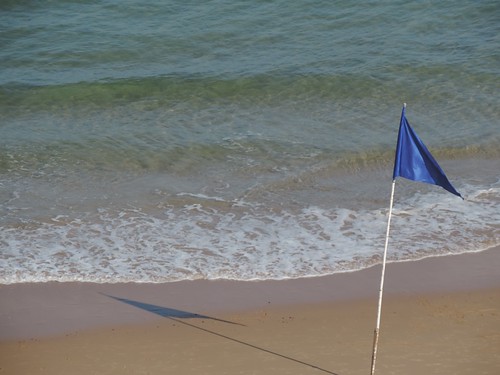
Blue flag

In the A to Z of Becoming, Part 2, G is for “Go”.

I’ve got three different contexts of the verb “go” for you to consider this week.

Firstly, as this is the month travel in the 12 monthly themes (the month of “Le Grand Depart”), where might you go? Are you planning any holidays, any weekends away, any day trips? Or maybe you could just break a routine and go somewhere different this week…..a different route to work, a different park for the children to explore, a different cafe, restaurant or even supermarket! Yep, just GO! Go somewhere different!

Secondly, “Go!” is a command. We shout it at the start of a competition or a race, but we can can use this ourselves to just start something. You’ve probably got a list of goals somewhere, either written down in a notebook, or rattling around in your head, so why not pick one and make a start? Take your first lesson in that foreign language you want to learn, or pick up that instrument you’ve been meaning to play, go out a buy a notebook to start your writing practice, sign up for exercise class…….whatever it is, just pick one and “GO!” Make a start!

Thirdly, we use the verb go in the phrase “have a go”, which means to try something. So why not give some thought to what you’d like to try and take the opportunity to do it? What would you like to “have a go at”? Baking? Cooking? Fishing? Tennis? Photography? Again, why not pick one and “have a go”?


Read Full Post »

In the A to Z of Becoming, one of the verbs beginning with an “F” is to feel.


amv

To feel something means at least two distinct yet inextricably connected things in the English language.

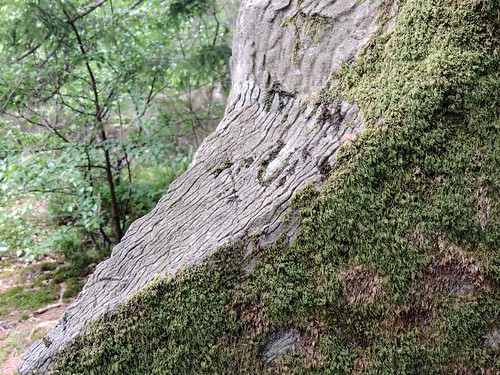
Firstly, it refers to the sense of touch. Look at the moss covered rock in this photo. When I was actually in the forest and encountered this, I found it impossible not to touch it. Some surfaces, some textures seem to beg to touched and feeling them is both an experience of pleasure, and a voyage of discovery. Our bodily sense of touch allows us to feel things in this way. We can feel objects and we can feel the sensations which arise within our own bodies. For example we can feel hot or cold, heavy or light, stiff or supple.

Secondly, we use feel as a verb related to emotions. If you hurt someone’s feelings, you are upsetting them emotionally. We can say we feel happy or sad, anxious or relaxed.

What strikes me is that these two variations of feeling are inextricably linked. The verb, to feel, is a connecting word – it joins our bodies to our psyches.

We see this best in the way we use embodied metaphors in our language. If I say I feel hot and bothered, then I am probably experiencing both an increased temperature and a feeling of irritation. If I say I feel comfortable then I’m probably referring to both a feeling of physical comfort and ease and a mental state of relaxation. Tension is felt in the body and the mind at the same time.

There are many psychology studies which have examined this linkage. One of the ones which most surprised me was where the subjects in the study were asked by a researcher to hold a cup as the went up together in the lift to the room where the study was to take place. Sometimes the researcher had a hot drink in the cup, sometimes a cold one. At the end of the study session each participant was asked what the thought about the researcher and those subjects who had held a hot drink felt much more positive about the researcher than those who had held a cold drink. (You might like to think about that next time you’re having a meeting!)

Dan Seigel describes a meditation exercise he calls the “wheel of awareness” – you can read, and/or listen, to it here. You can try a variation of it focused on feeling –

Sit in a quiet place, get comfortable and close your eyes.

Take a deep breath in, filling your lungs with air, then slowly let the breath out, until your lungs are completely empty. Repeat that three times, then bring your attention to the physical sensations you can feel. Can you feel the ground under your feet? The cushion you are sitting on? The arms of the chair you are relaxing in? Does the room feel warm or cool? Take your time just to notice each of these feelings. Notice them, then return your awareness to your core.

Next, bring your awareness, methodically, to the sensations arising within your body. This section of the meditation is often described in mindfulness practice as a “body scan” (you can read the detail elsewhere, or here)

Finally, notice the feelings which are arising, or are present, in your mind. Notice them, name them, then return your awareness to your core.

Stop when you want to. Open your eyes, and, if you like, write down in your notebook a description of what you have just experienced. What links do you note between the feelings or sensations arising from the external world, those from within your body and the feelings which are present in your mind?


Read Full Post »

DSCN2119

Breathing is something we do automatically. We don’t have to remember to breathe out every time we breathe in. But we can deliberately influence our breathing rhythms, choosing now to inhale, now to exhale.

When we exhale, we stimulate the parasympathetic autonomic nervous system, and one of the things that does is calm us down. The parasympathetic nervous system slows the heart, and is a very deep, very basic part of our survival behaviour. You’ll be familiar with “fight or flight”? That’s the sympathetic nervous system at work – preparing us to hit or run when under threat. We feel pretty “wired” when the sympathetic nervous system kicks in – heart racing, fast breathing, adrenaline pumping. The parasympathetic nervous system has a complementary function – it is part of what creates a “rest and digest” response.

When we exhale, we stimulate this system and induce the “rest and digest” response.

Do it now.

Fill your lungs, then slowly, slowly, breathe out, taking your time to completely empty your lungs. Now do it another couple of times. Just three exhalations like this will stimulate your “rest and digest” response.

One of the things I love to when I am beside the sea is to breathe in time with the breaking waves on the sand. It seems to me that every rush of the surf up the beach is like the ocean breathing out. It’s the sea exhaling. Sometimes that rhythm is even and calming and tuning in your breath to the ocean by timing your exhaling to match the exhaling of the sea can not only induce the “rest and digest” response, but creates a deep sense of being at One with the Earth.


Read Full Post »

There’s a classical teaching about living life to the full which says to embrace each experience as if it is the very first time you are having this experience (which is true…..every experience you have today is for the first time). This is quite like the mindfulness or awareness teachings which tell us to be fully present, as fully aware as possible, as much as we can. This, in fact, is the essence of “heroes not zombies” – it’s about waking up, living consciously and not on autopilot all the time.

There’s another teaching which says to embrace each experience as if it is the very last time you will be having this experience (which is also true……you will never have exactly the experiences you have today ever again).

I find both these teachings come to mind as the sun rises and the sun sets (or Earth Falls and Earth Risings?). Have you ever seen the movie, “City of Angels”? (an American re-make of Wim Wenders, “Wings of Desire”) There are beautiful scenes there where the angels all gather on the beach each morning to experience the sunrise. To be quite honest, I’m not out and about experiencing sunrises all that often, but the other end of the day, sunset, is an equally entrancing event.

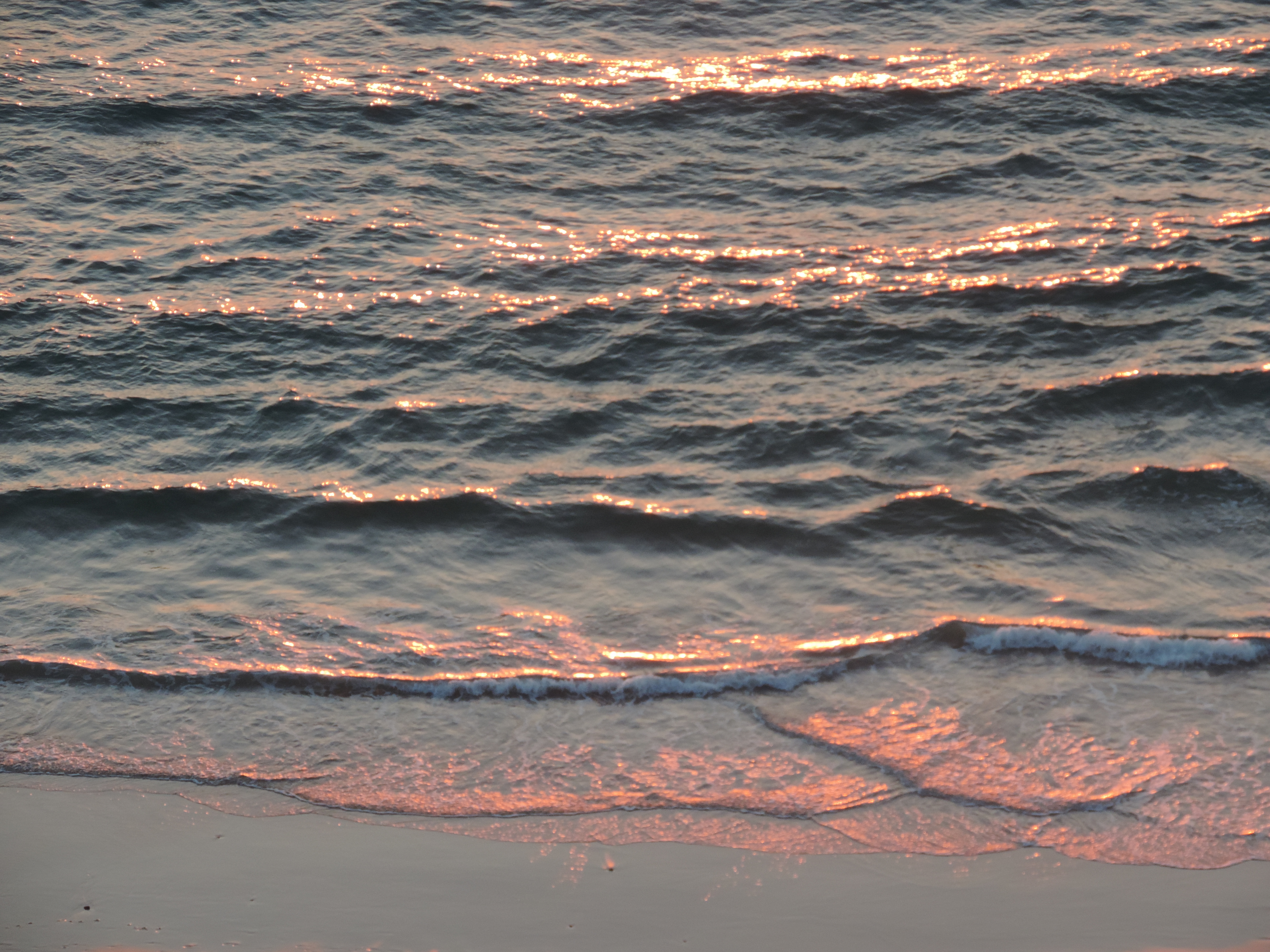
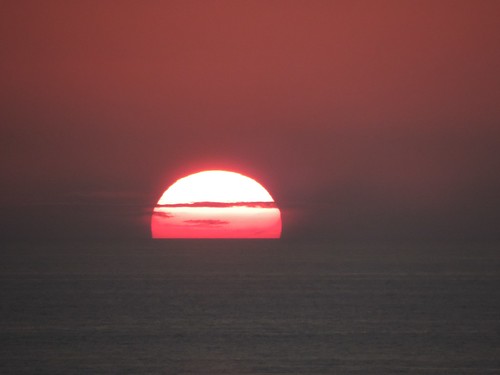
If you are ever somewhere where you have an unobstructed view of the sun setting, you’ll likely see that you aren’t experiencing the sunset alone. I was lucky the other day to watch some spectacular sunsets from Biarritz, watching the sun sinking below the horizon of the Atlantic Ocean (and, no, I didn’t see any green rays)

The play of the light on the waves and the wet sand were amazing…..


Sun set light on surf

Low sun on sand

Sunset Biarritz

Setting sun up close


Live life fully today – living every single experience for the first time and the last time.

Read Full Post »

IMG_0607


Over the first half of this year, I’ve written a post every Sunday under a series title of “The A to Z of Becoming”. I’ve picked 26 verbs and shared some thoughts about focusing on one verb a week as a way to consciously engage with the process of change in our lives.

We change all the time – as Henri Bergson says, in “Creative Evolution”

for a conscious being, to exist is to change, to change is to mature, to mature is to go on creating oneself endlessly

This process of “creating oneself endlessly” is largely an unconscious one, but we can engage with it consciously by making choices about what we DO. It’s our actions which create our selves and our world.

As Game of Thrones fans will know

Words are wind

Or to consider Bergson again….

we are, to a certain extent, what we do, and that we are creating ourselves continually

Our lives are creative processes of unceasing change, and consciousness gives us, uniquely in this universe (as far as we know!) the opportunity to escape from passivity and automaticity. We are not objects. We are not things. We are not zombies. Unless we choose to be……

Heroes, are the protagonists of the stories. Each of us is the hero, or protagonist of a unique story, a story untold by any other being in the history of the universe and a story which will never be told again by anyone else.

Heroes are “action heroes” – WE are these “action heroes” if we choose to become aware of the actions we take every day.

You can find a post on each of the verbs in that word cloud above by searching for the it using the search box on this page, or find the whole series by searching for “a to z” (use the quotation marks as well as the phrase)

Read Full Post »

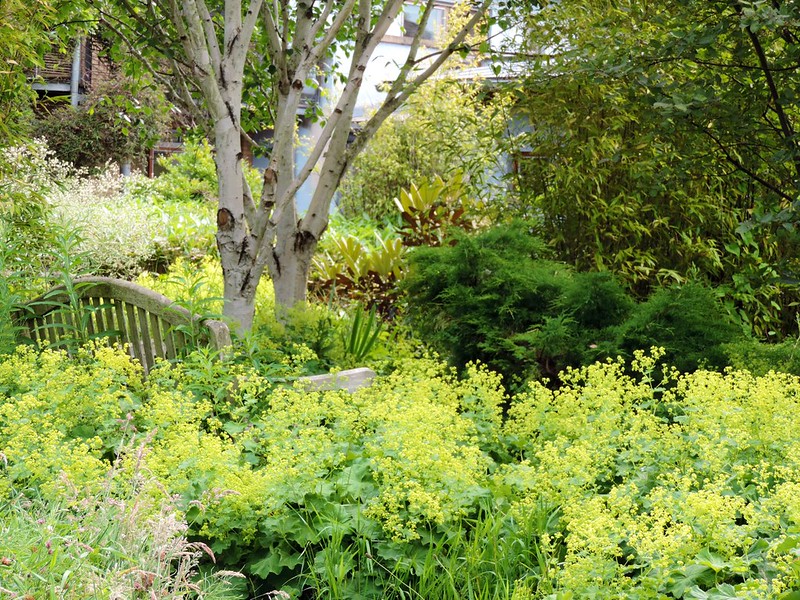
A seat in the garden

I took this photo the other day in the garden at the Centre for Integrative Care. It provokes certain thoughts for me, because in this view I see an abundance, a flourishing, a diversity of green Life and I see a place to facilitate its full enjoyment, a place to pause, to slow down, to be present.

So, here’s what I’m thinking today……Life is for living, and that living has at least two important aspects – the full enjoyment of Life, and the creation of uniqueness.

Whatever other reasons we might find for being here, we all, moment by moment, have the opportunity to fully enjoy this Life – that captures for me the sense of émerveillement du quotidien which I often to refer to, that sense of wonder, of seeing and experiencing everything as if for the first time and for the last time. It captures the teaching about slowness, of mindfulness and of being present in the NOW.

If there is one quality of Life I’d focus on it’s change. Change is constant. Nothing, but nothing, stays the same. Life is a continuously unfolding, creative, emergent process. We are creative creatures. We create our perception of reality. We c0-create our daily experiences with others, and with the world in which we are alive.

So, when I look at this photo I see these two phenomena – a full enjoyment of the flourishing diversity of Life, and the creative expression of the Universe.


Read Full Post »

I’ve often thought about the question attributed to Albert Einstein (although I think he didn’t actually ever pose it!)

The most important decision we make is whether we believe we live in a friendly or hostile universe

Whether he said it or not, it’s still an interesting question which highlights how our beliefs inform our choices. If we believe the universe is hostile then we see ourselves in a constant battle for survival, if we see it as friendly then we call to it for support, and if we think it is neither then maybe we make choices based on the essential meaningless and randomness of life.

OK, I think that is too simplistic and in fact there are no clear answers to this question, but I do think the useful point is about influences. I do believe your choices are informed by your beliefs. Simple, everyday beliefs. Is it safe to walk down this street? Are strangers likely to attack you? Are your friends likely to act in your best interests? And so on…..

All this came to mind this morning having listened to Jim Carrey’s speech at the Maharishi University. Here’s the ONE minute edit…..

(you need to click the link to see the video for this one. Go on, do it now, then come back and read the rest)

So, here’s the key point to think about just now – are you making your choices based on love or fear?

Fear is the main weapon of persuasion in the world, but you don’t need to make it the basis of your life.

What choice will you make today if that choice is to be based on love?

What choice would you make instead if you are basing it on fear?

What are you going to choose?

Read Full Post »

I reckon we often think about time as a line. We stand at a point on the line and we call that point the present. Everything from the start of the line up to that point is the past. It’s behind us. And everything from that point to the end of the line is the future. It’s ahead of us. In fact, I’ve used just this idea many times in the consulting room.

It’s neat.

But it’s not a good model of reality!

Time in many ways is a more cumulative process. We grow, not by leaving the past behind us. Every moment emerges from the accumulated past. The past is always within us, always present. It’s probably more like the rings of a tree. Each day grows out of all the other days.


Emerging branch


Henri Bergson puts it this way, in his “Creative Evolution”

……the past grows without ceasing, so also there is no limit to its preservation. Memory, as we have tried to prove, 1 is not a faculty of putting away recollections in a drawer, or of inscribing them in a register. There is no register, no drawer ; there is not even, properly speaking, a faculty, for a faculty works intermittently, when it will or when it can, whilst the piling up of the past upon the past goes on without relaxation……..the past is preserved by itself, automatically……The cerebral mechanism is arranged just so as to drive back into the unconscious almost the whole of this past, and to admit beyond the threshold only that which can cast light on the present situation or further the action now being prepared—in short, only that which can give useful work.
He is saying that we select elements of the past (memories) which might be useful to us in the present. He’s describing something ideal there, explaining something about the mind, but it is really more complex than that, isn’t it? Quite often, it seems, some memory is evoked seemingly against our will, and without it being at all clear that its becoming conscious in a helpful way. But in those moments, in those experiences, we have the opportunities to learn a lot about ourselves.
To what extent do we operate on a kind autopilot ( a major theme of this heroes not zombies site ), with the past memories, habits, loops, paths, somehow running our whole lives?
Not that we can act without these influences. Here’s Bergson again…
it is with our entire past, including the original bent of our soul, that we desire, will and act
Just to put this in context, when he refers to our entire past, he includes what we brought into this world when we were born, not just our accumulated experiences of this life. One common fascinating aspect of that view is our common experience of behaviours and traits which we see in our children or ourselves which seem identical to those of certain predecessors….a father, grandmother, great grandparent, or some other relative who was never alive at the same time as this child.
We don’t have to operate only on autopilot of course. We can develop our understanding of ourselves, become more aware of our present moment, of our choices and why we are making them, and create some small spaces (the neuroscientist’s “necessary distance”) between what comes up and what we do……we can learn to respond rather than react, and in so doing grasp that opportunity to become the active author of our own story.
To become heroes, not zombies.

Read Full Post »

« Newer Posts - Older Posts »