Feeds:
Posts
Comments

Archive for the ‘science’ Category

I love forests. I love how the sunlight filters between the trees, drawing my attention from shadows and patches of sunlight, up towards the trees themselves, and further up to the Sun itself.

It’s one of those magical, enchanted scenes we encounter in life. It takes the Sun, the trees, the forest, and an observer (in this case me) to have this encounter, to experience this event, to delight in this moment.

I know it’s said that a rainbow only exists with the triad of sun, rain and observer are in place, so that we need to be standing at a particular angle to the sun and the rain to see the rainbow appear.

I think the light in the forest is like this too. The world is not an object “out there” waiting to be seen by me “in here” witnessing everything from disconnected observer’s box, like a birdwatcher crouching in a hide.

No, I am the co-creator of this life I am living. These experiences I have come into being, emerge, if you wish, from the interactions of everything that is……from the Sun, the trees, the forest, from consciousness. Everything changes in that moment….my consciousness, the forest, the trees, and even the Sun. We “commune” together.

You would have a different experience from me. Maybe you have had similar ones, but, we never have the same ones. I have had similar experiences at different times, but they are not the same experience, because I can only have this particular, this special, this unique, experience one, single time.

How wonderful, how amazing, how delightful…….I hope I don’t miss it next time.

Read Full Post »

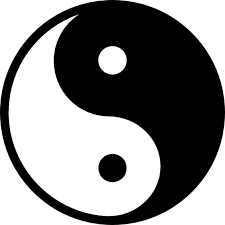
When I looked up and saw these black and white clouds I immediately thought of the yin yang symbol….that brilliant representation of wholeness, the union of opposites, and the permanency of change.

I think those are three of the most significant principles I return to again and again to make sense of the world, of life, of other people and of me.

Wholeness because all reduction, every move to separate and isolate, every attempt to disconnect, to abstract, to re-present, is fraught with the potential for delusion. There are no separate, isolated, disconnected phenomena in Nature. All our abstractions and re-presentations which we carry out with our left hemispheres are a step away from reality. Which is not to say they aren’t useful. They are. But you can’t rest there. You have to re-contextualise, to hand back the analysis to the right hemisphere to understand what you are looking at as only an aspect of the whole.

The union of opposites because we humans, Nature, Life and the Universe are full of opposites….dark and light, heat and cold, attraction and repulsion, organisation and disintegration. In fact it seems that there is no universe without opposites. We are tempted to construct the myths of competition and conflict from that fact, but we must not miss the deeper understanding – that all of existence emerges from the integration of opposites, not from the elimination of one pole by another, not from the unchallenged dominance of one over another.

The permanency of change because that’s the nature of reality. There is nothing fixed, nothing which is not in the process of growing, or adapting or degenerating, whether we see that as three Gods, or as the natural cycles of the biosphere and of the seasons.

So when I look again at these clouds, these beautiful black and white clouds, I am captured by their beauty and entranced by the teaching they can give me.

Read more about this in my book, “And not Or”. You can get it from Blurb at https://www.blurb.co.uk/b/10155078-and-not-or

There’s also a Kindle version – https://amzn.to/2UozjIw – if you are in the UK. If you are not in the UK, go to your local Amazon site and search for “Leckridge” – you’ll find it quickly that way (let me know if you don’t!)

Read Full Post »

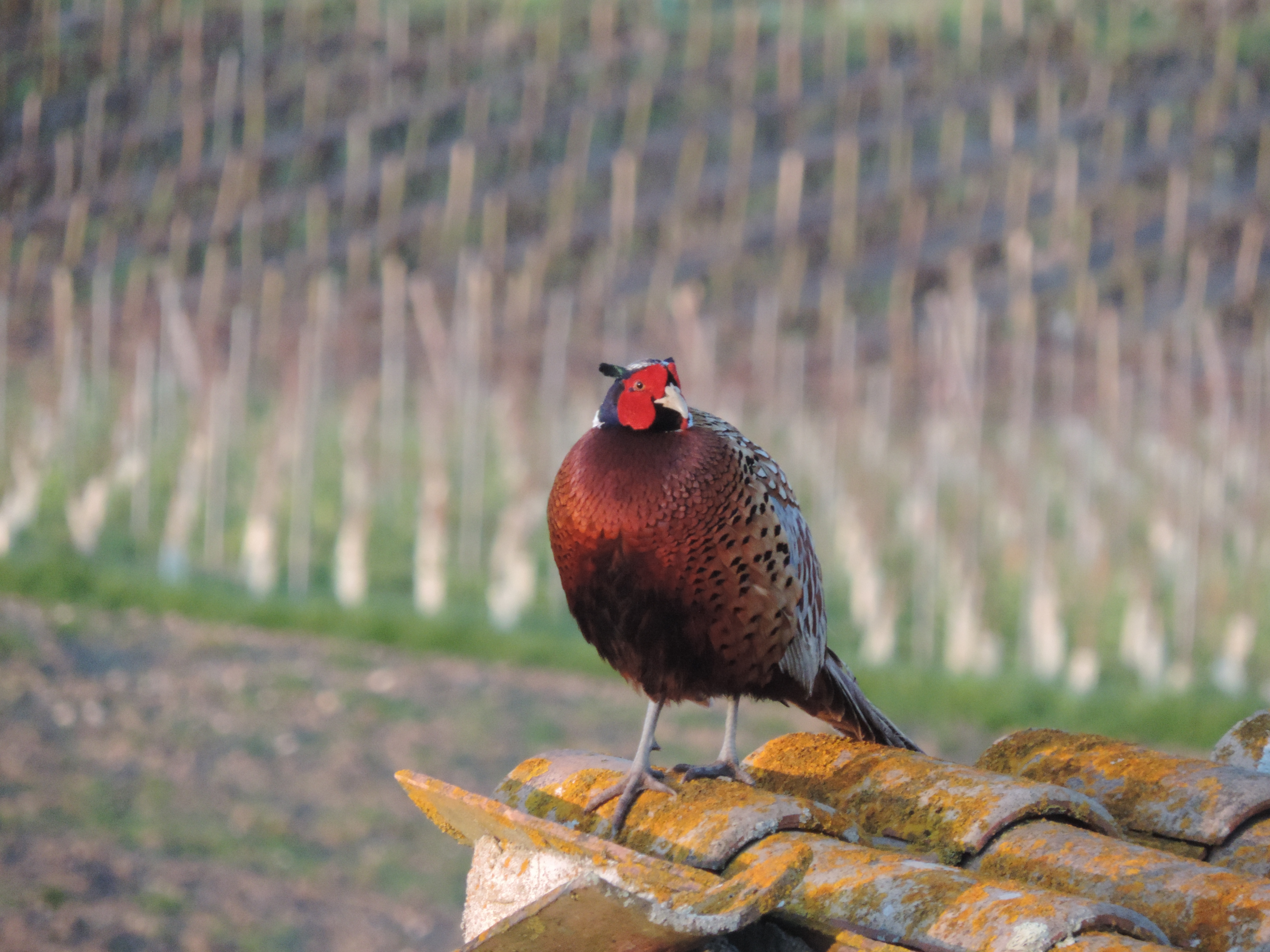
In the exact same place this year I saw two strikingly different birds. Of course, not at the same time! But standing on the same tile on the same roof.

The pheasant on the left, and the “Little Owl” on the right, are both delightful. But don’t they both transform the same view?

The bright colours of the pheasant are in striking contrast to the browns and greys of the owl, and despite the fact that the tiles, the lichen on the tiles, and the background vineyards are pretty much the same, each image is strikingly unique.

It’s not just the image though….it’s the experience. My experience. The day I saw the pheasant and the moment I saw the owl were completely different for me. Each thrilled me, but each in its own way. They were great examples for me of how our being in the world is not something fixed, not a collection of objects waiting to be discovered, but, rather is constantly changing, and teaming with qualities. We co-create our lived experiences with all the other creatures who also inhabit this little planet, Earth.

I was very struck by how the owl seemed to be looking directly at me looking at him. But I didn’t have the same experience with the pheasant. However, looking more closely, I can see that pheasant, too, is looking directly at me. The difference is that because it is a predator, the owl has both eyes on the front of his face, whereas the pheasant has its eyes on the sides of its head. You can see the pheasant has turned his head to look at me with his right eye.

Now, according to Iain McGilchrist birds, like humans, have two asymmetric halves to their brain. The left eye is controlled by the right hemisphere and is used for broad vigilant awareness, whereas the right eye, controlled by the left hemisphere focuses right in on things and is used to clearly find food, for example. I don’t think the pheasant was regarding me as food, but I do think it interesting that he turned to get a better a focus on me using his right eye!

Well, I had another reason to share these photos with you today – they are two of my most favourite shots of 2020! I just think they are beautiful, and I hope you do too.

Read Full Post »

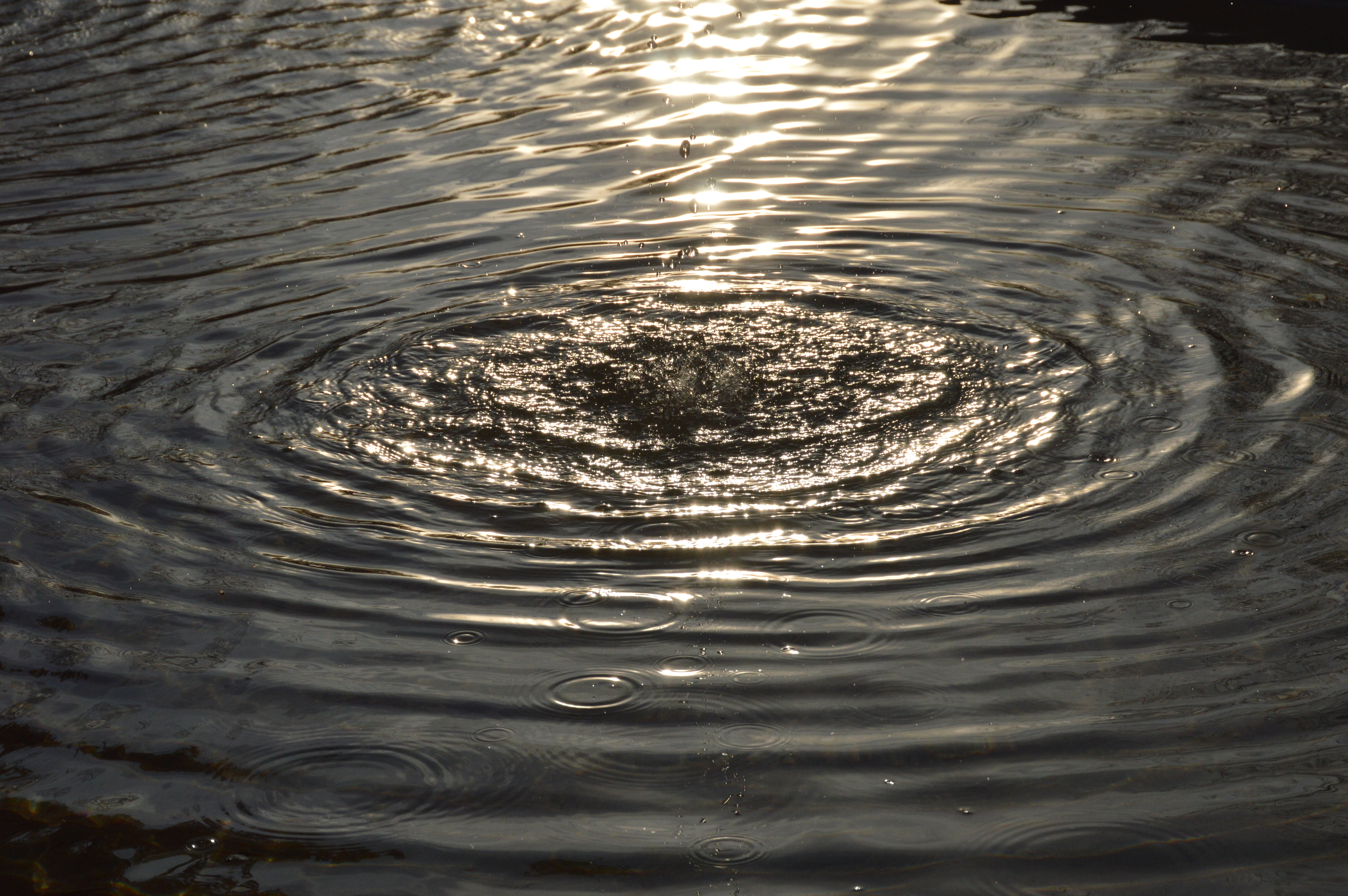
Aix en Provence is a city of fountains. There are dozens of them throughout the town. This one, in the Cours Mirabeau, is a simple bubbling up of water in the middle of a round basin. It’s not a dramatic spray or jet of water, but I love it. I can sit and watch the patterns on the surface of this water for ages. They are mesmerising.

At first, you could have the impression that there is one main point of activity, where the water emerges from the bottom of the basin, sending out concentric rings of ripples towards the outer edges of the fountain. They look like the rings inside a tree, and they remind me of how a small action spreads its effects over the whole body of water.

But, you don’t have to look terribly closely to notice that there is more than one centre of action in this fountain. I’ve zoomed in on just one of the several points where the water bubbles up onto the surface. Up in the top left of the image you can see some of the ripples which are clearly coming from another source. Those ripples interlace themselves with the ones from the centre focus, reminding me of a lesson I learned in school when we were studying waves – it’s called “interference” – two concentric circles of waves meeting each other, with two peaks creating a big peak, two troughs creating a deeper trough, and peaks and troughs cancelling each other out when they meet in the same time and space. It’s a beautiful pattern and you’ll be familiar with it.

This image of “interference” from two sets of ripples already demonstrates the beauty of interaction and complexity. It reminds me of the “attractors” we see in all complex systems, and also reminds me that “attractors” do not necessarily pull everything towards them the way the pole of a magnet does. Rather, they are organisational centres, influencing the structures and patterns of the environments in which they exist.

But, wait a moment, we aren’t done. Look a bit closer and you see a number of smaller circles dotted across the larger pattern of the concentric circles. Each of these is caused by a drop of water falling from higher up in the fountain, or from a splash which releases a few water molecules from the mass, a few molecules which fly through the air, then fall onto the surface a short distance from their origin. Look how each of those circles enhances the beauty and complexity of the overall pattern.

In the real world, in the natural world, there is no such thing as simple cause and effect. Everything which happens, occurs within an interconnected web of events, influences and forces. There is always this interplay. There is always this complex beauty which renders the future unpredictable.

What we experience, our health, our illnesses, our joys, delights, our sorrows and pains, are always multi-factorial, always complex in origin, always multiply connected. We pull out some of the threads, focus on some of the events and factors, and create a story which helps us to make sense of what we experiencing. that story is necessarily always complex, always changing, always developing.

I read a passage written by Umberto Eco the other day –

Per ogni problema complesso esiste una soluzione semplice. Ed è sbagliata. (For every complex problem there’s a simple solution. And it’s always wrong.)

Read Full Post »

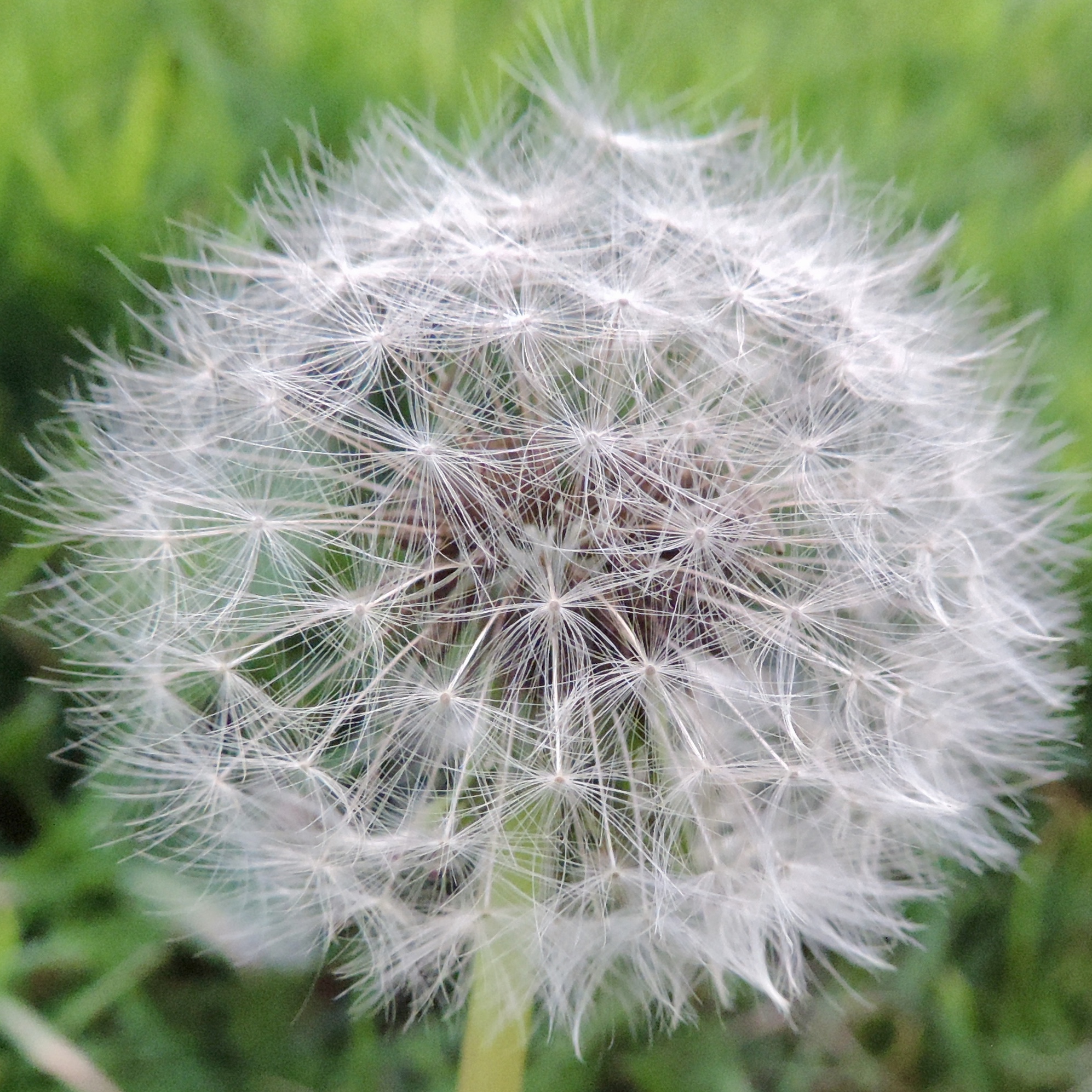
I know, you’ll have seen photos like this one many times. It’s almost a cliche. But, hold on, let’s just pause for a moment and take a closer look.

Plants which use wind dispersal of their seeds often produce a spherical display like this one. Even at first glance, they are beautiful, but once I stop to look closer, I can see each individual seed held on the end of its own delicate stalk and surrounded by a myriad of soft, fluffy, fibres, just waiting to catch to the wind. In that moment I am amazed. I am caught, the way the seeds hope to catch the wind. The delicacy, intricacy and complexity of this structure is actually quite mind boggling, but, still, it’s just part of normal life for a little plant like this.

I think we are apt to pass this by too easily. I think that when we stop, look more closely, and reflect on what we are looking at, we can’t help but be impressed by the creative power of plants, the creative power of Nature.

But I think something else now when I see a seed-head like this. Because this has been the year of the pandemic, of the rapid, global spread of a tiny virus, hopping from one human to the next, infecting millions, killing hundreds of thousands. If that hasn’t given us pause for thought to realise that we might live in a civilisation of nation states, but we share the one, small, utterly inter-connected planet, then I don’t know what will.

So, I see this little plant now, waiting for the wind to come and spread her seeds far and wide, and I am reminded of how Nature is One, and how we humans are neither separate from each other, nor from the rest of the living planet.

Aren’t we going to have to move on from the dominant mythologies of capitalist materialism? Don’t we realise now that we cannot dominate Nature, that we are not separate from Nature, and that if we want to survive and thrive we need to learn to live together by creating mutually beneficial bonds and relationships – do you remember that definition? It’s the definition of “integration”.

I think that’s the new story we need to learn, those are the new myths, beliefs and principles we have to adopt…..the ones which teach us about, and which promote, “integration”.

My actions are like these seeds.

My words are like these seeds.

My thoughts are like these seeds.

They are going to spread far and wide, and so are yours. That’s just how it is. So maybe I should consciously choose the actions, words and thoughts which will spread “integration”, will spread kindness, will seed happiness, love and joy….wouldn’t that be something?

Read Full Post »

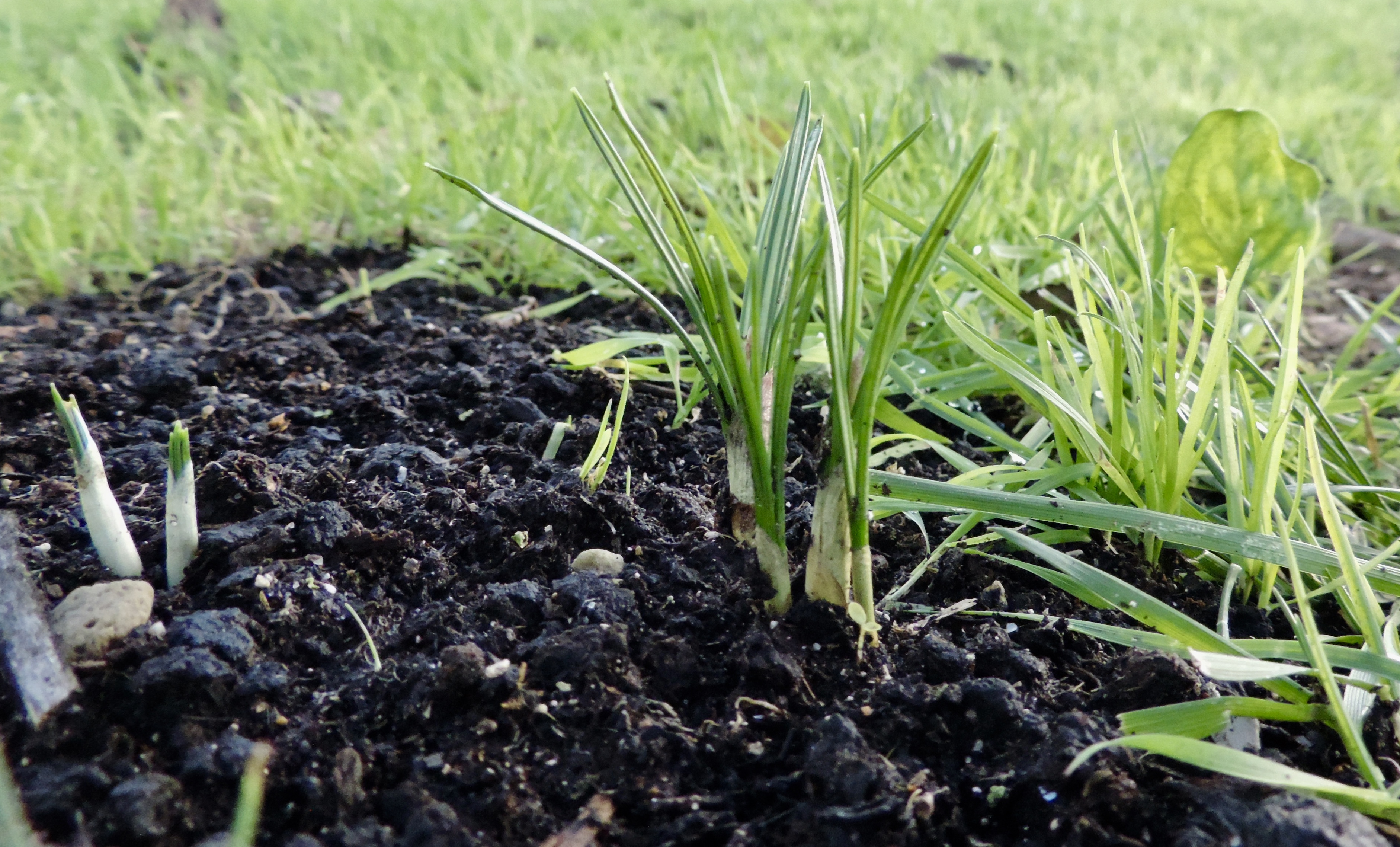
I tend to associate new growth with the Spring, but, these crocus plants popped up from under the soil through the month of December. I took this photo on December 24th last year, and so far, on the 6th December, as I write this, there is no sign of them yet.

But that just reminds me – that creation is going on all the time. The phase, or season, or time of new and emergent growth is not limited to the Spring. It’s not limited to any single season, any particular month, or even any specific day.

We have a great tendency to chop the flow of life into pieces. We did that when we invented measured time – by making clocks and “time pieces” with their minutes and their hours. We weren’t even satisfied to stop there, but chopped the minutes into seconds, driving everything faster and faster, measuring this thing we call time in ever shorter, ever smaller units.

The thing is – those units are a human invention. Time flows in Nature. It flows continuously, the way a river does. Time is experienced by each of us in different ways. It flies past when we are enjoying ourselves, drags when we are bored, can’t pass quickly enough when we want to escape. However, the one constant is…..time is continuous. And so is creation.

The other thing this image provokes in my mind is how much is going on that we just don’t see. Are these crocus bulbs lying sleeping, unmoving, unchanging under the dark soil, then in a flash they turn into green shoots stretching towards the Sun? Nope, it’s not like that. But life often seems like that to us because we invent disconnections. In reality change, growth, development, maintenance, on the one hand, and dis-integration and dying on the other, are happening all the time, and all at once. They don’t fall into nice neat boxes. Nothing in life does.

I like the feelings which arise when I think of this – I like the focus on flow, on continuity, connectedness, on the whole, on change, and on invisibility. They bring me joy, delight, and wonder. Hey….so do little crocus plants shooting up from under the black earth!

Read Full Post »

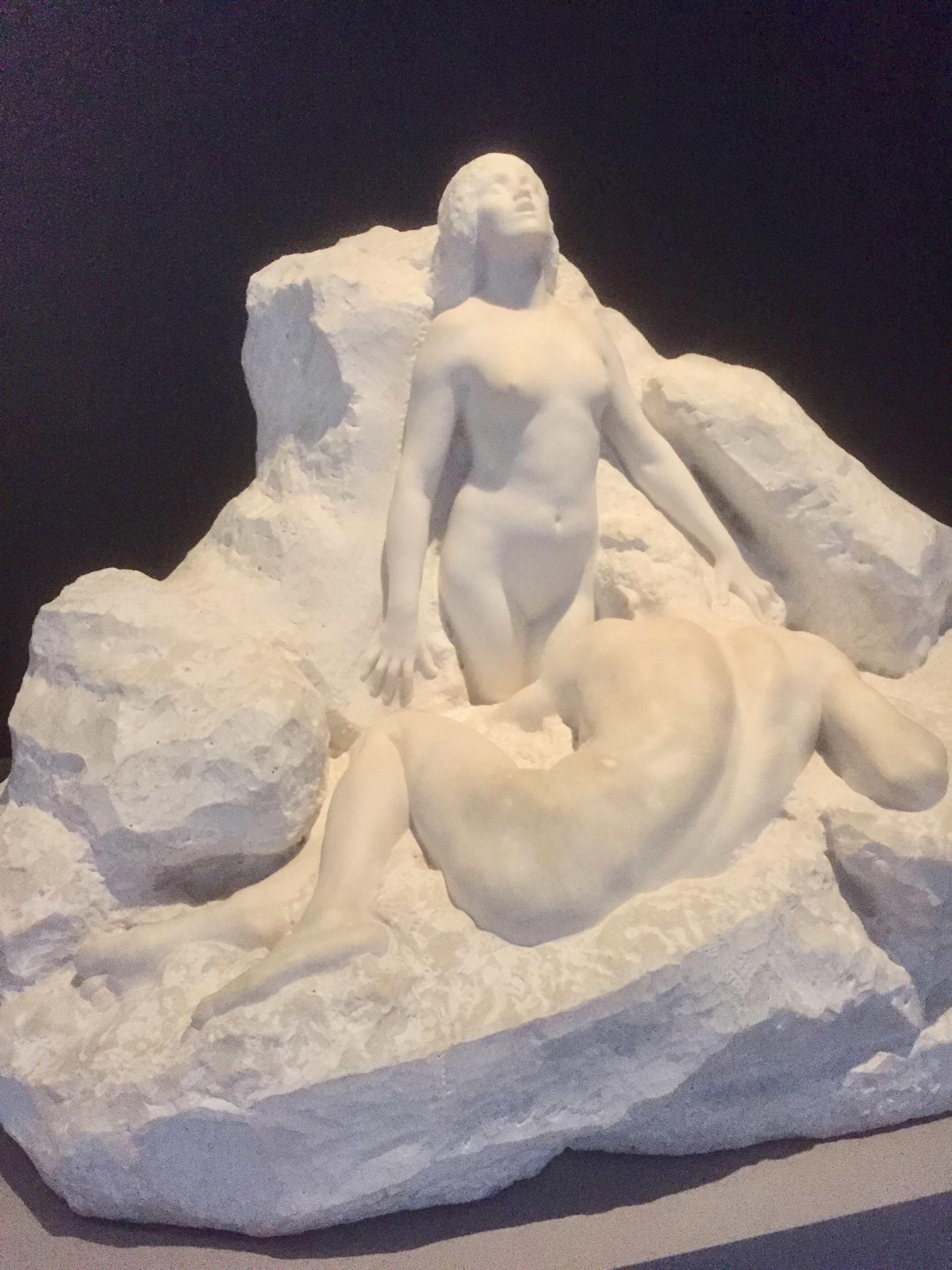
This sculpture in the Glyptotek Museum in Copenhagen is called “Creation Fantasy”, and it’s by a Norwegian-Danish sculptor called Stephan Abel Sinding.

It reminds me of some of Rodin’s work, not least the “Hand of God“, which is one of my most favourite of Rodin’s works.

I love how the male and female bodies are emerging from, but are not separate from, the rock. It think this captures a deep truth – that we are not separate from the Earth, not separate from “Nature”, not separate from each other. But instead we emerge within all that exists, and we remain forever, embedded in everything. I think one of the most pernicious beliefs human beings have adopted is the notion that we humans are “apart from” not “a part of” Nature, that Nature is something “out there”, maybe even something to go and visit from time to time. Worse still, that The Earth and all that “out there” Nature is a resource to be plundered, consumed, polluted at will, as if none of that activity will affect “us”, we humans, because we are outside of Nature.

I hope we are beginning to move away from that terrible misconception. I hope we are beginning to KNOW that we emerge within Nature, and that we live inextricably within all that exists.

It reminds of me of the “Universe Story” – which tells how all the elements of the Periodic Table were created in the giant furnaces of stars throughout the universe, and how once the Earth was formed, all the elements which had been created in distant stars were gathered together, almost like being dealt a hand in cards. How every material substance which has ever existed on Earth has been made from those initial elements. The Earth doesn’t create new elements. She transforms what she has into every molecule, every cell, every organism, every substance which we find on our one small blue planet.

This sculpture makes me think of something else – the relationship we have between men and women. It seems to me we need to learn from sculptures like this one. For far too long we’ve built civilisations and societies on the basis of male dominance. It’s well past time to redress that imbalance and create more loving, more respectful, more mutually nurturing relationships between the sexes.

So, there’s my “Creation Fantasy” – that we are called to live by – that we humans emerge within Nature on this single planet, and that men should not dominate women.

Read Full Post »

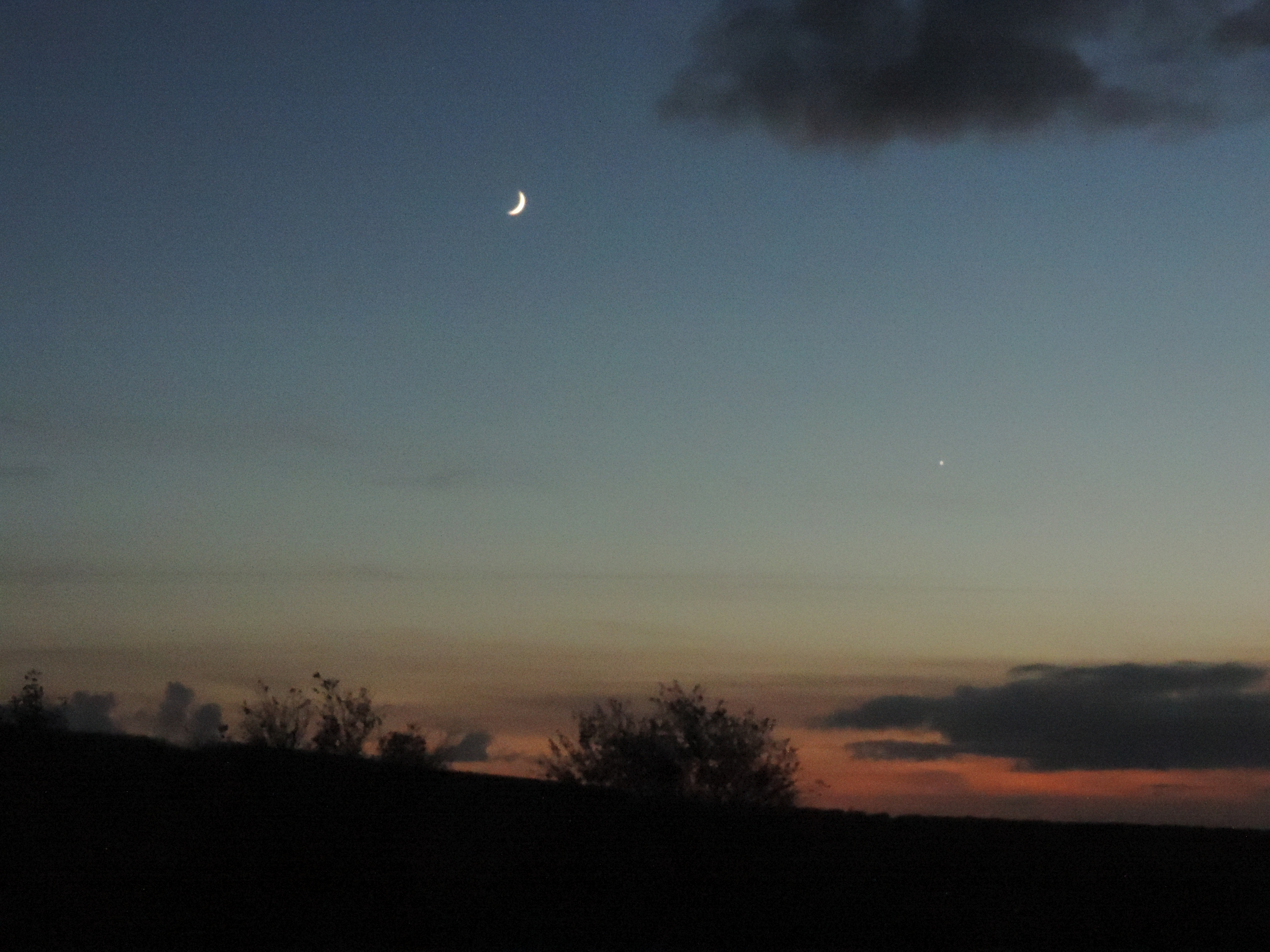
I wonder how much the sky influences our lives. I don’t just mean how a blue sky lifts our spirits, and a heavy grey cloud cover can dampen them. I’m not only thinking of the reds, tobacco browns, and goldens of a setting sun. I’m thinking about the evening sky, like this one, and the night sky which you know, looking at this, is only a few minutes away.

I don’t share this photo because it’s a great photo of the Moon and Venus in a twilight sky. I share it because it sets off a train of thought in my mind. It gets me thinking about the rhythms of our planet, and how, for millennia, we humans have learned to understand some of those rhythms by looking at the night sky. I know there are stories of how ancient peoples navigated by the stars and worked the Earth by the progress of the constellations. I know that even now, there are farmers and gardeners who plant, cultivate and harvest according to the phases of the Moon. I know I get a lift in my heart when I see Orion appear for the first time on the Eastern horizon, knowing that I’ll be able to see him make his journey to the West every night until Spring comes again, knowing that Orion is a winter companion in this part of the world.

But I also look at a sky like this and am struck by both the Moon and Venus, and, instantly I’m thinking of the Divine Feminine, as both the Moon and Venus are associated with goddesses. I wonder if they evoke the anima in me. I wonder if they start me thinking about intuition and beauty.

Actually, I don’t wonder that at all. They do. For sure. I look at this scene and I am entranced, I am enchanted, I am absorbed in feelings, thoughts and images of intuition and beauty.

Have you ever wondered how much the sky influences your life?

Read Full Post »

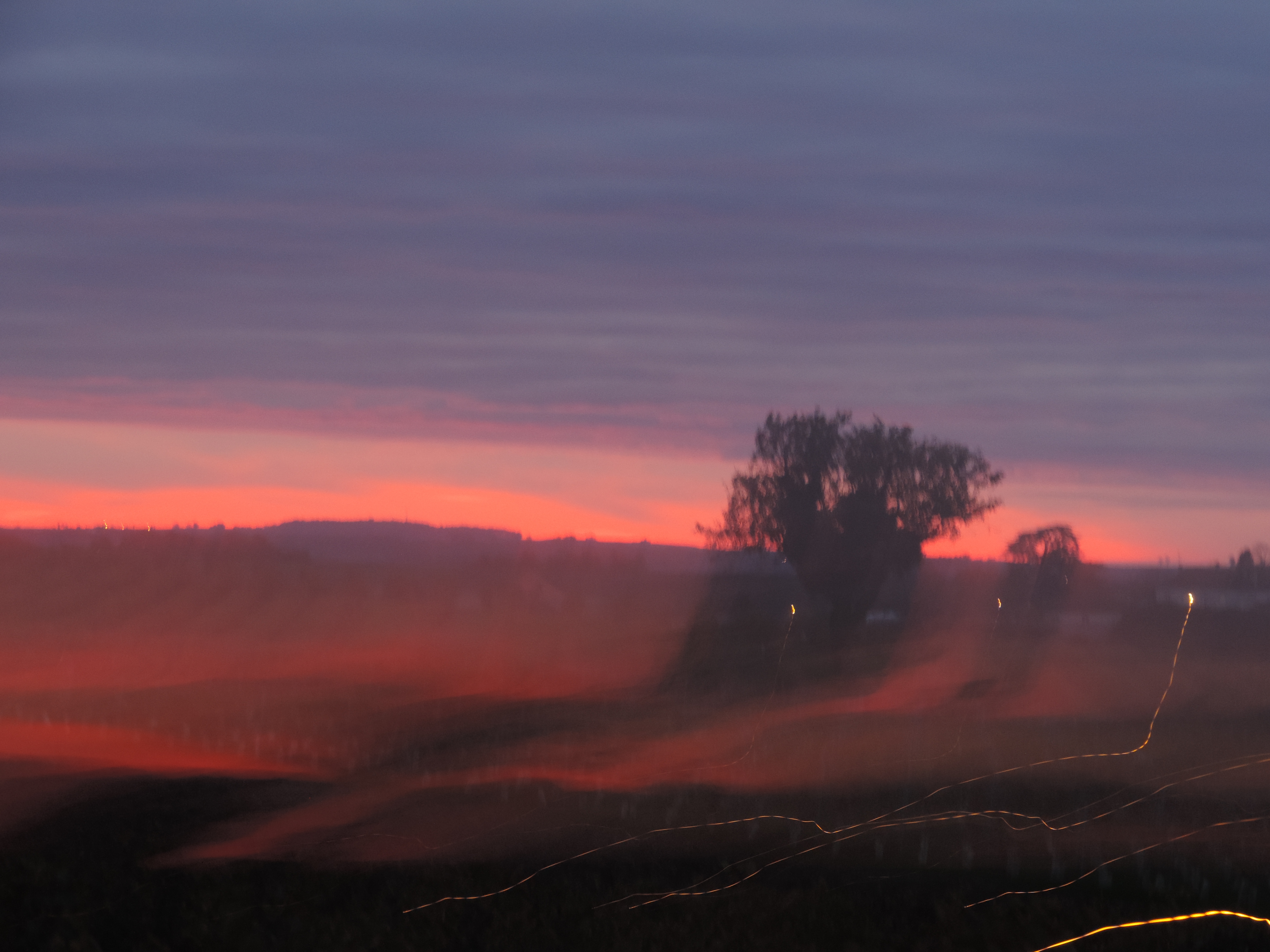
I took this photo of a sunset with a long exposure time and my hand moved a bit but when I looked at the result I really liked it.

OK, it’s obviously not exactly what I saw as I looked out over the vineyards that evening. In fact, it’s almost more like a water colour painting than an exact representation of what I could see with my eyes. But don’t you think that makes it, somehow, all the more appealing?

We have a tendency to prefer clear boundaries, to be able to pick out an object or an individual as separate from all the others, in order to recognise them, to name them. This recognition and categorisation skill takes us a long way. Such a long way that we tend to forget the power of fuzziness, the reality of uncertainty, and the unavoidable fact of dynamic change.

Nothing exists in isolation. Everything changes all the time. The future is unpredictable with any accuracy when we pay attention to the details, to the unique and to the individual.

Seeing how everything flows into everything else, how there are streams of substances, energies and information flowing through us and everything else constantly, streams which form us, which we process, which flow through us on into the future and into other beings and other objects.

We need that skill too. That ability to shift our perspective away from labelling and categorising to flows, to connections, relationships and uniqueness.

Maybe that’s why I find this image so beautiful. Because reality can’t be fully understood as made up of separate “bits”.

Read Full Post »

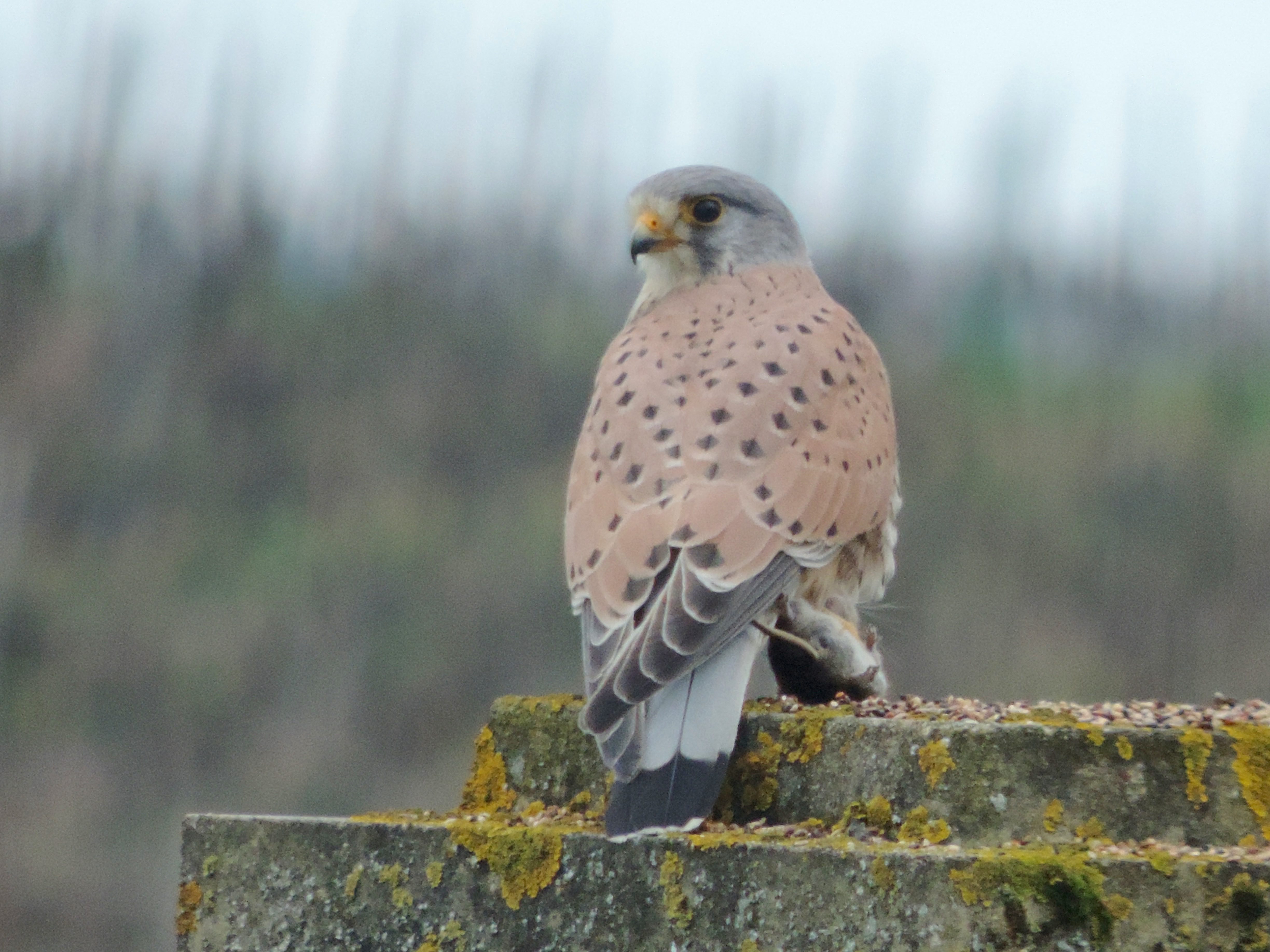
There are three common predator species of birds which I see around where I live, pretty much on a daily basis. There are the buzzards which circle on invisible airstreams way high up in the sky. I hear one call with a distinct but also distant cry and look up at the blue sky which I then have to scan till I spot what is often just a small dot against the blue. Then there are the owls, both the “barn owls” and the “little owls” which live in neighbouring outbuildings. On of the “little owls” sat up on my neighbour’s TV aerial last night calmly watching me while I closed all the shutters on our windows. Finally, there are the kestrels, like this one in the photo above.

The kestrel hovers, often at a height about that of a two or three storey house, whilst the buzzards circle rather than hover, and do so at much higher levels. I never see a kestrel sitting on a roof or an aerial, but I’ve spotted them in trees sometimes. Mostly, however, I see them like this. They are hovering silently, then, all of a sudden they fall like a stone onto some prey they have spotted.

Iain McGilchrist’s majestic “The Master and His Emissary” changed the way I understood the brain, and also changed the way I understood human, and other animal behaviours. He describes how birds share the phenomenon we humans have of a brain divided into two halves. You might know this already, but there is a crossover thing that happens between brains and bodies – our left hemisphere controls the right side of our body, and the right controls the left side. In birds the left hemisphere processes the information from the right eye and the right processes the information from the left eye. They choose to use each eye for different purposes.

The bird’s left eye and right hemisphere combination specialise in broad attention – they use this to be aware of potential predators around them, and to make social connections with other birds. They use the right eye and left hemisphere combination to focus in on details. The right eye, left hemisphere lets them spot prey, or find grain. They enable it catch and grasp.

As Iain points out in his book this split and asymmetry of the brain brings great evolutionary advantage – it allows the creature to be broadly aware, socially connected, and to be narrowly focused to grasp objects all at the same time. Both halves of the brain function all the time. We don’t selectively switch one off while we use the other one. But we can develop habits which prioritise the one half over the other – and that’s the key thesis of his book – that we have prioritised the attention the left hemisphere pays to the world over the broad, connecting attention the right hemisphere gives us.

I think of all that when I gaze in wonder at the kestrel. I marvel not just at its ability to hang there in the sky, but its ability to see a broad sweep of territory below, and to pick out, from such great heights, the prey it needs, exactly where it is moving in the field below.

Only once in the last six years have I been able to see a kestrel hover above me, dive down into the hedgerow and return with its catch.

Astonishing. Amazing. Wonderful.

Read Full Post »

« Newer Posts - Older Posts »