Feeds:
Posts
Comments

Archive for the ‘science’ Category

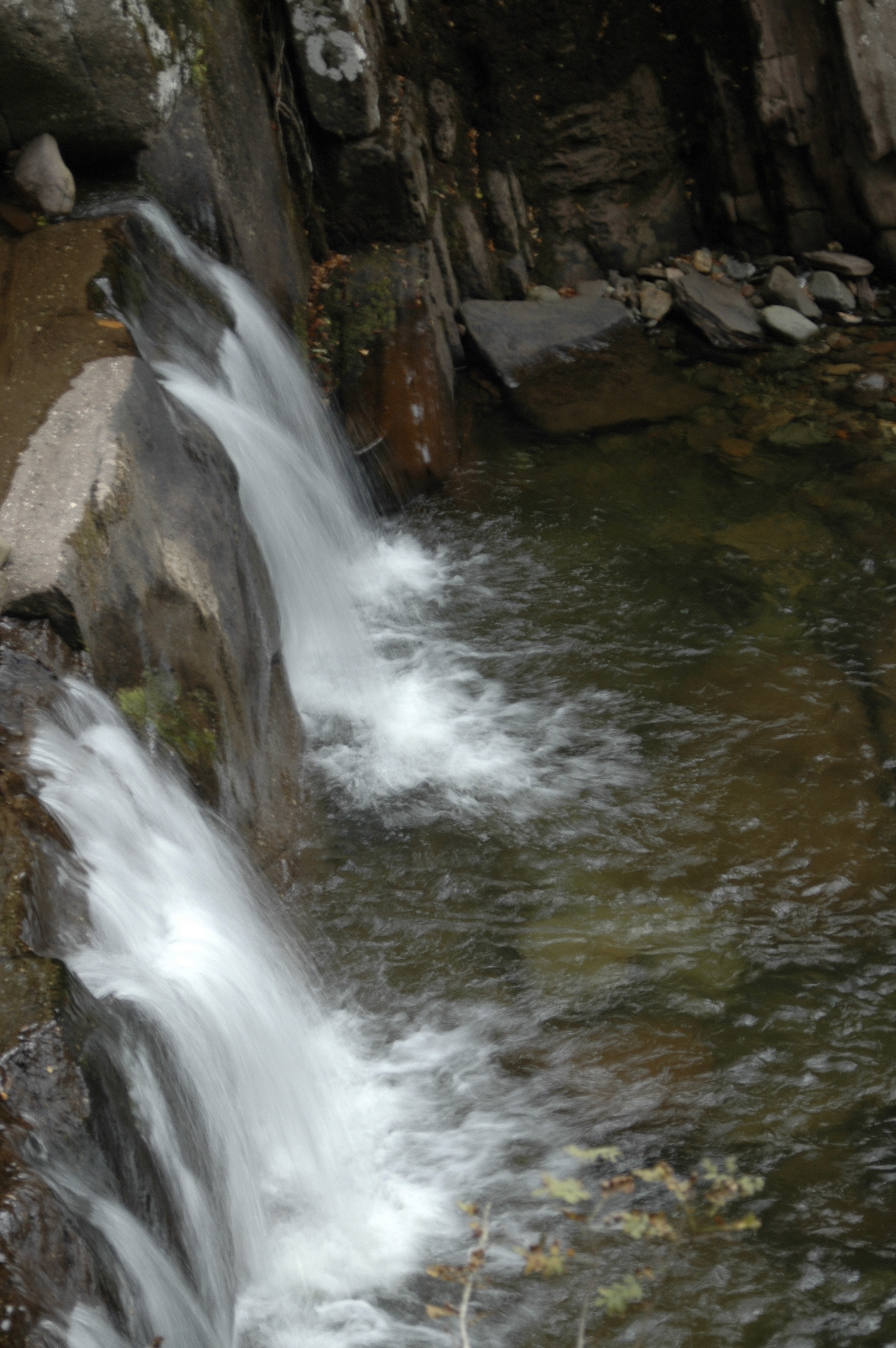
In my photo library I’ve named this “waterfalls”. Yep, plural. And when I looked at it again this morning I thought it seemed a great image to stimulate thought about working together…..in fact, “flowing together” was the phrase which popped into my mind. I slowed down the shutter speed for this photo so the water would blur like this. I think the whole sense of movement and flow is captured better that way. There’s a power in this scene, and that power lies in the water itself. Or, at least, that’s how it seems at first.

So I look at this and think, this is what we are like together…..when we flow together…..when our energies, our focus and our direction all align. Isn’t that beautiful?

I’d almost be happy to leave it at that. Just to put this image in front of you and hope that you’ll think of the power and the beauty of harmony, resonance and alignment.

But, then I wondered why I’d called the photo “waterfalls”, plural. Isn’t it just one waterfall? After all most waterfalls don’t have a single stream of water falling over a specific rock. Rather, most waterfalls are made up of multiple paths where different amounts of water channel through particular spaces, and tumble over specific rocks. We don’t look at a waterfall which has six streams of water falling and think, oh look at those six waterfalls, do we? Or maybe we do.

So that’s where my mind went next. It went off to reflect on our very human capacity to separate out whatever we are looking at. To break the whole down into parts. There are a number of words for that – abstraction is one. Abstraction is where we abstract, or remove, something from its context. Our left hemisphere is brilliant at doing that. Indeed it seems that’s the normal process……the whole flows into the right hemisphere which hands off some of that flow to the left so it can abstract the components, the parts, the pieces……abstract them, label them, categorise them. And, yes, what’s supposed to happen next is that the left passes the results of that analysis back to the right for it to re-contextualise it. It’s just, if Iain McGilchrist is right, that this process has broken down and we have developed the habit of giving priority to the work of the left hemisphere…….too often we see only the parts, and forget to re-contextualise them.

If we don’t allow ourselves to use our whole brain, then we see two waterfalls here, where, seeing the whole would mean we see just one.

I don’t know what works best for you, but I’ve had a lifetime of work refusing to rest with reductionist abstractions, and always striving to see and hear the unique whole person every time. Yes, I’ve had to focus down onto parts, perhaps listening to someone’s lungs or heart, perhaps measuring the level of a component in their blood, but, I’ve always preferred to re-contextualise whatever those abstractions reveal.

I think we need to do more of that.

I think we need to see the whole, to see the contexts, to seek the connections and relationships, and to realise that every experience we have changes us…..just as this beautiful waterfall constantly changes, moment by moment, month by month, year by year.
Read Full Post »

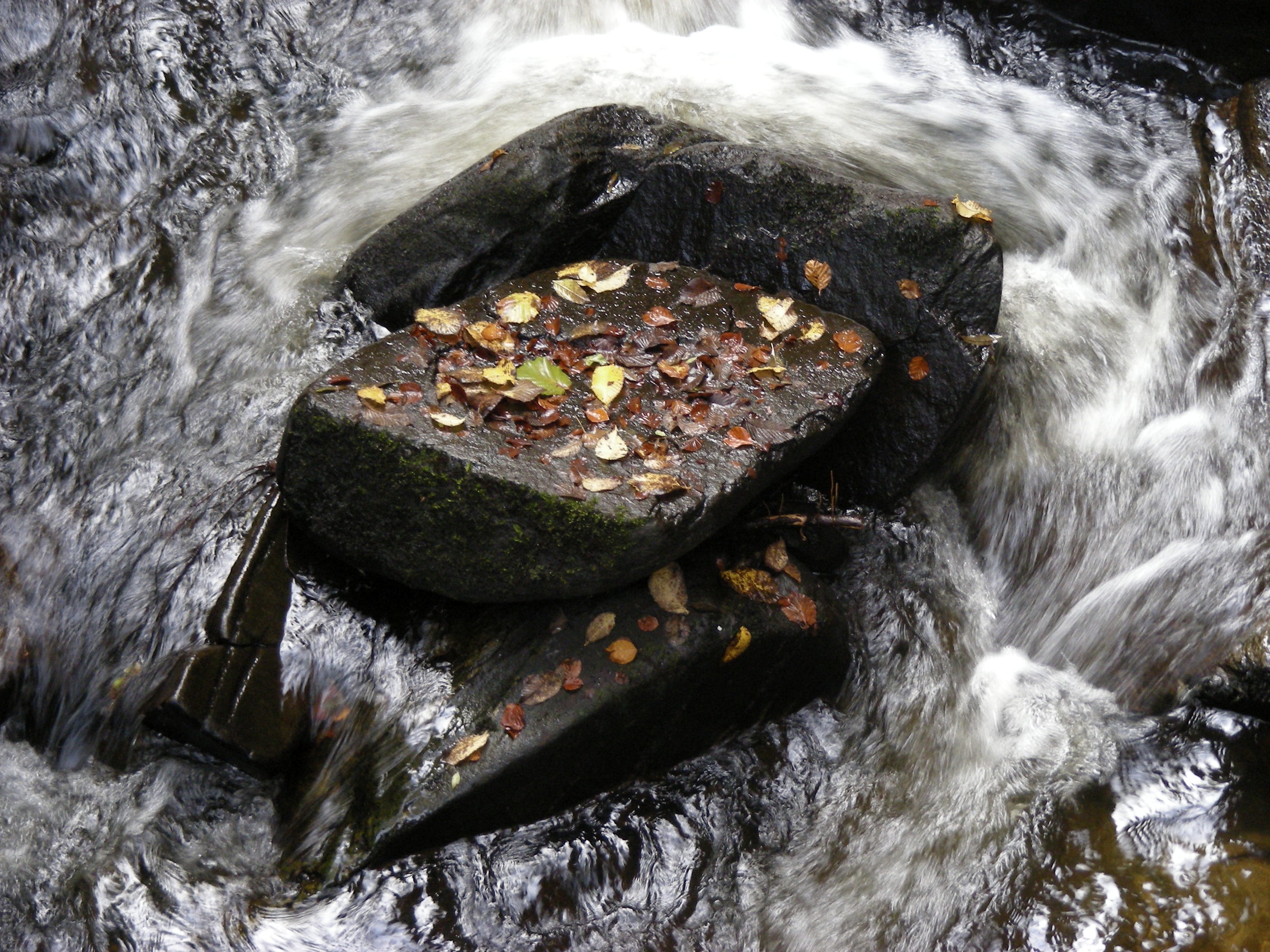
When I look at this photo the leaves seem like pieces of gold at first. Perhaps golden coins. But then I quickly see that they are fallen autumn leaves, with gold, brown, yellow and even green ones. The rock they have landed on, or stuck onto, seems like a collecting point, or a resting point. Maybe the leaves fell here from overhanging trees, but, in fact there weren’t any trees directly overhanging this rock, so maybe they were blown onto this rock. Alternatively, maybe they were swept downstream on the fast flowing water. Whatever their origin and mode of transport, they stuck to this wet rock.

Here’s what comes up for me as I reflect on this image……

Life flows past fast. It rushes by, moment by moment, day by day, even year by year. It never stops. Life is continuous and full of movement, just like this tumbling highland stream. There are places, however, where we can pause. Places or moments where we can step out of the rush and flow of things for a moment and take a breather. It’s important to do that.

When we do step onto the rock, which represents the time out moment, we find that there is some gold there. We find that stuck onto that place of rest there are some golden moments, and some of the gifts from golden moments, from the past. This reminds me of gratitude practice. Many people have demonstrated the benefits to our mental health and wellbeing of doing regular gratitude practice.

Quite simply, there is much to gain from taking a pause, a few moments, and either writing down some of the experiences, events, relationships, gifts for which we are grateful, or even calling them to mind, re-creating them in our imagination, and stirring the benefits of those special times all over again.

The rock, in these musings, becomes a place in the mind. A place where I rest, stand apart for a moment, create what Iain McGilchrist calls “the necessary distance” which allows us to reflect, to set new perspectives, and to see the whole. It’s a place of integration……where I reinforce the mutually beneficial bonds between me and “the other”.

Then I step off into the stream again, and flow off onto the next part of the journey.

Read Full Post »

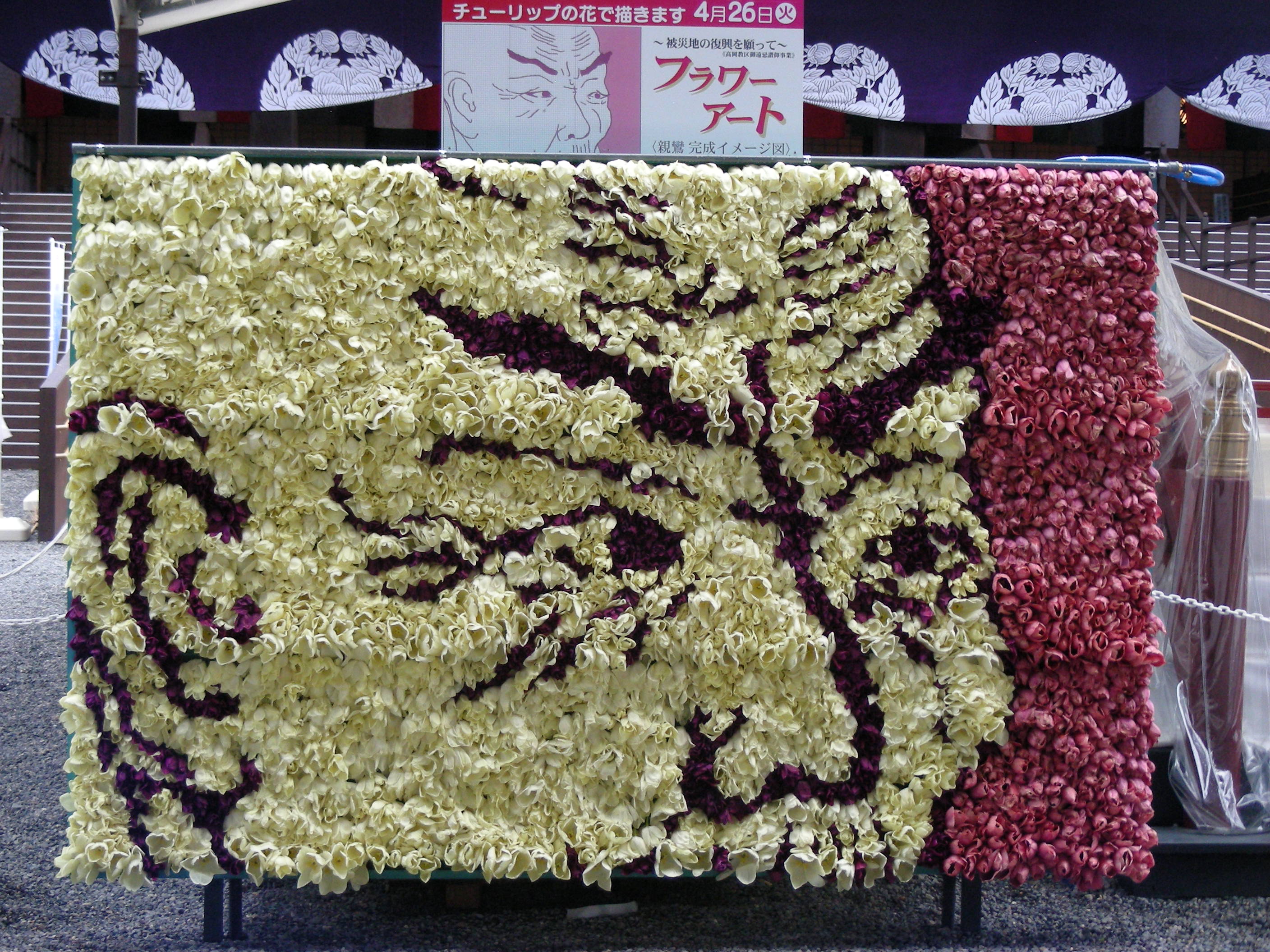
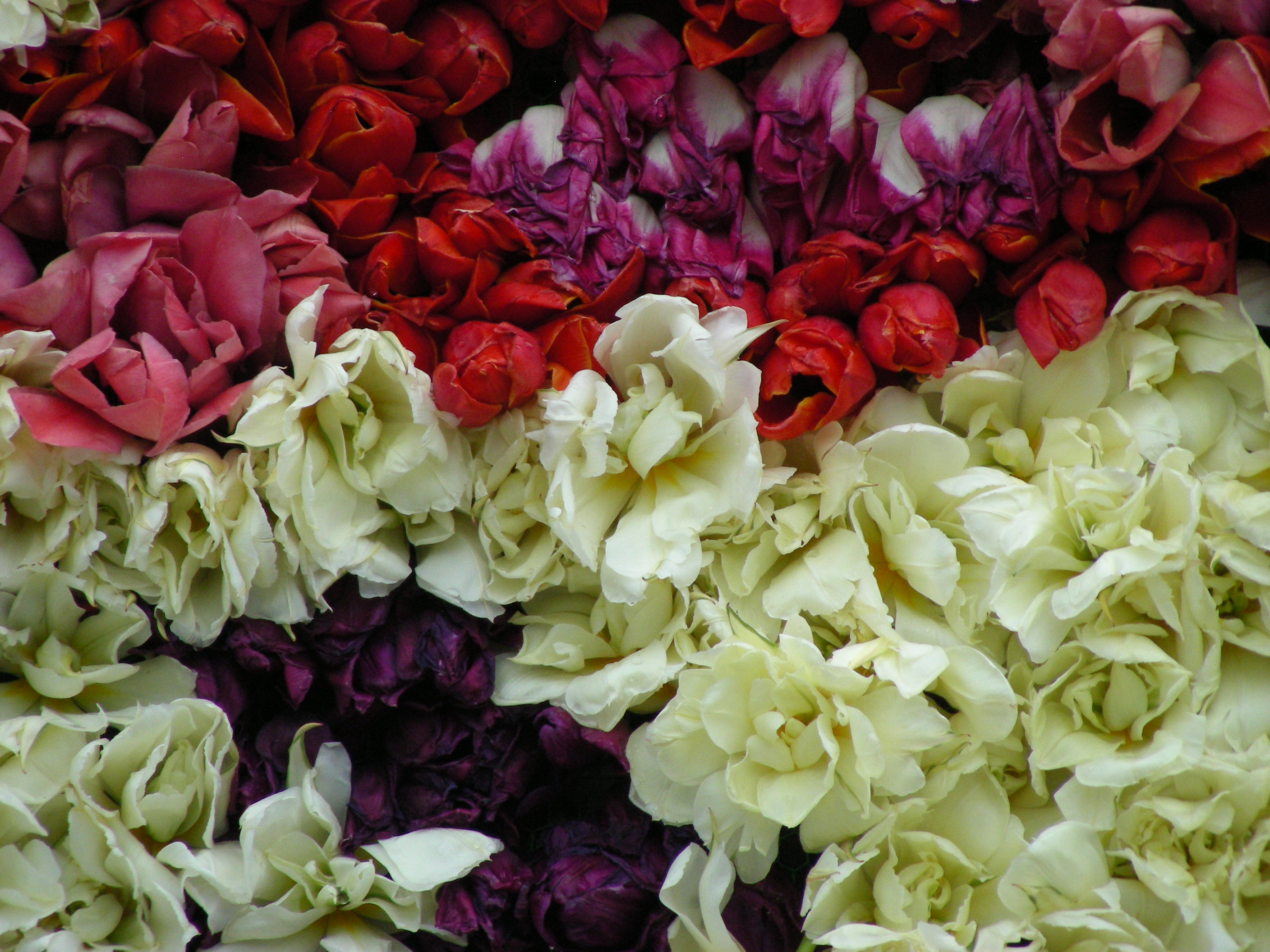
I walked into the courtyard of a temple in Kyoto one day and saw this display of flowers. Well, actually, this first photo is what I saw once I got closer to the display which had caught my attention.

When you look at these flowers, all you see is some flowers. It’s not possible to see the pattern which is revealed only from a distance.

This is what you see when you stand back…

Isn’t this amazing?

Actually, whether you encounter the full image first, then get closer in order to realise that it is constructed from hundreds of flowers, or whether you start close up seeing only the flowers, and gradually stand back to see the full image, the two positions are a huge contrast, aren’t they?

These are the two perspectives we bring to everything. We use the left cerebral hemisphere to zoom in on individual elements. To do that it focuses on parts and identifies them, matching them up to whatever we have previously encountered and categorising them. In this case, it identifies the objects as flowers and labels them according to their colour. But at the same time, we use the right cerebral hemisphere to take in the whole picture, to see whatever we are looking at within its contexts. To do that it focuses on the connections and relationships, and, at the same time brings a heightened awareness for novelty – it homes in on whatever is new, whatever is unique, whatever is special.

You’ll know already from my writing that I believe the principle of “and not or” is a good one in life, and that’s in no small part due to the fact that this is exactly how we have evolved. We don’t have only one way of looking at things. We have multiple ways, and we throw them into the complex mix of reality so that we can do more than perceive the world in which we live, we explore, play, learn and create. We adapt, we grow and we evolve.

I’m very wary of black and white, rigid, fixed, narrow views of reality. The world is richer than any of us can conceive. The universe has more potential than any of us can imagine. And there is much to gain from diversity and tolerance.

Read Full Post »

This pandemic has hit the pause button around the world. Who’d have thought that so many habits, so many routines, so many automatic choices would have become as disrupted as this? While the climate crisis has been demanding that we think more carefully about our use of fossil fuels, along comes a pandemic which massively reduced travel by plane and by car. Having got used to seeing the sky above streaked with plane trails most of most days, now it’s a surprise to see one. The numbers of deaths and injuries sustained on the roads in France is a fraction this last year of what it’s been in recent years.

But will everyone just rush back to doing exactly what they used to do now that restrictions are easing?

Maybe not. Many of us have become wary of crowds and of sharing time and space with many strangers in confined places now. Many people have discovered that working from home gives them more time with family and friends, and less time crowded onto commuter transport and are keen to maintain at least some element of that now. “Flexible working” is one of the commonest phrases around just now and how that’s going to impact on city centres and vast office complexes, who knows?

Health care is creaking at the seams with exhausted, over-worked staff asking themselves if they can carry on. Education has been massively disrupted and it’s not at all clear how to get it back on track.

Many people haven’t been buying nearly as much “stuff” because the shops have been closed (or they’ve changed their buying habits to buy online now instead).

But how many of these changes have been based on our personal, conscious, choices?

I think it would be a shame to pass up the incredible opportunity this enforced pause has given us. We can take a few breaths, reflect, and ask ourselves – where do we want to go from here?

I know many people are already doing that. There is a surge of demand in France for houses with gardens now, as city dwellers trapped in apartments for weeks on end are thinking, “I don’t want to be stuck inside like this again.” Connect that to the remote working or “teletravail” and people are thinking – we don’t need to live stuck in small apartments, breathing polluted air and spending our days in crowded offices. We can find a place with a garden about an hour from a city centre, enjoy working from home for part of the week, and travel in to the city for face to face work when we need to.

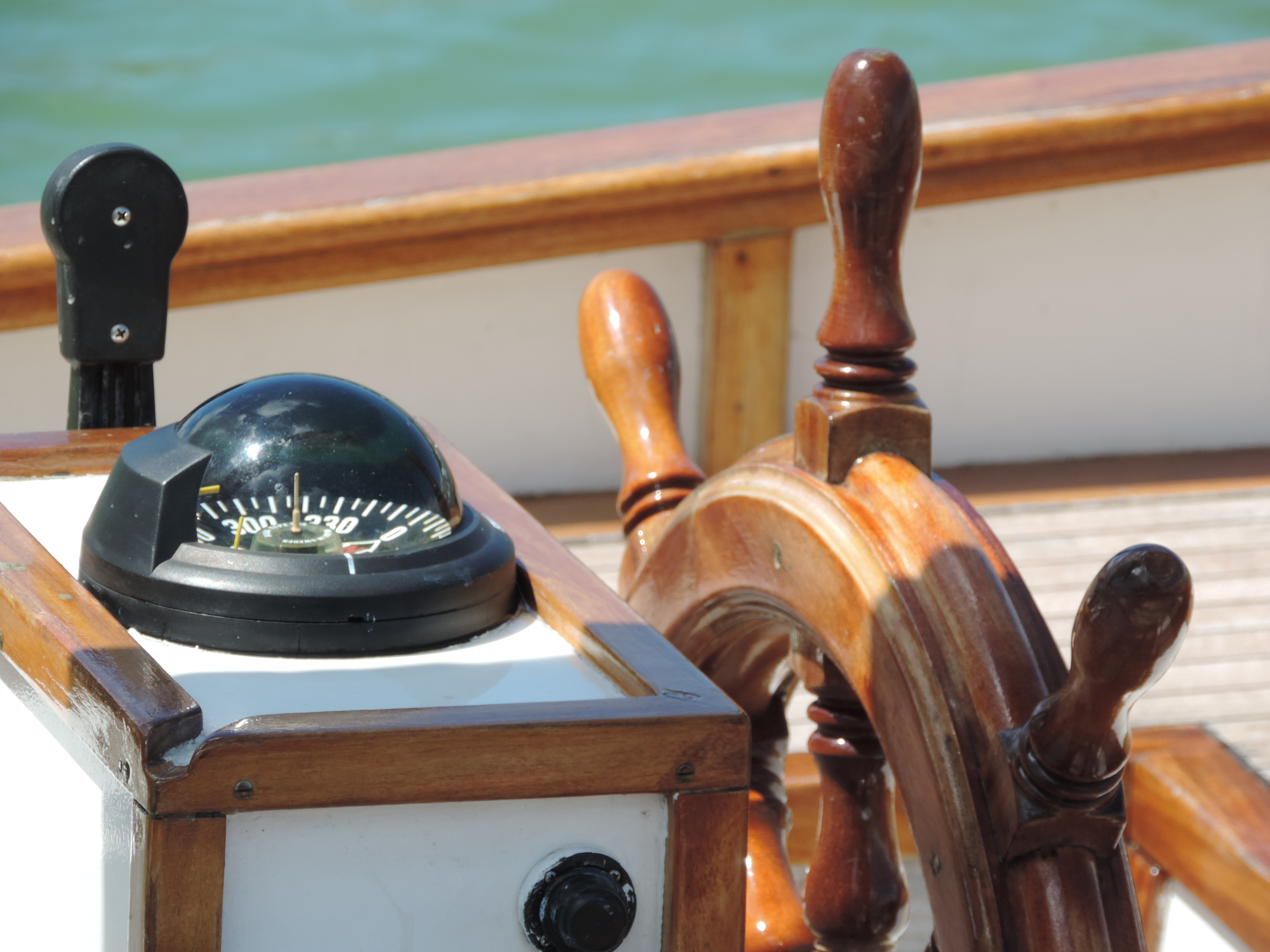
I got thinking about all of this when I came across this old photo yesterday. It’s a ship’s compass and steering wheel (there’s probably another name for a ship’s steering wheel but I can’t think what it is at the moment!). I’m wondering now – what about my own life? My personal life? Do I want to look at my navigation maps, set a new direction on my life compass and steer my way in a new direction?

Well, you could argue that that is exactly what we all do every day. Except we tend to do it on autopilot – our direction is set by employers, advertisers, politicians and authorities. But what I’m wondering about is how to shift the balance now – away from zombie to hero – to more conscious, more deliberated choices.

I just had a birthday too, and I think when birthdays come around I often find myself doing a bit of reflecting…..thinking back over the previous year and asking myself what I want to change now, and in the year ahead.

Are you doing that too?

Are you reflecting on the quality of your every day? Are you reflecting on your habits and priorities? Are you thinking of changing direction?

I reckon this is a good time for collective change too – it’s a time for us to ask the question – “Am I a good ancestor?” It’s a question I’ve come across a few times in recent weeks. How am I living – yes, me personally, but also me, collectively – and will this way of living be likely to create a good world for my grandchildren, for my grandchildren’s grandchildren? Will they look back and reckon that we have been good ancestors?

I do think it’s time for us to change direction – away from consumption and money grabbing – towards more compassion, care and collaboration – towards a better way of living with the rest of Life on Planet Earth.

So, here’s a place to start – David Attenborough has a book out – “A Life on Our Planet” – you can read it, or you can listen to it as an audio book. Or you can watch the film version on Netflix. I recommend it. His work is pretty much always inspiring but this is perhaps his clearest description of what’s happened over the last 90 years he’s lived on this planet, and ends with huge hope and optimism, really inspiring us to change direction.

Read Full Post »

I graduated in Medicine from The University of Edinburgh back in 1978. During my medical education and training I was taught about the heart. I remember we were taught about the heart muscle, the system of electrical conduction which produced the rhythm of beats, about the heart valves and how to diagnose different valve problems according to the sounds we could hear when we listened through our stethoscopes. I learned how to administer and read an “ECG” – that series of spikes and waves you see on heart monitors and printed out on long strips of paper.

I didn’t learn that there was a neural network around the heart, nor what that might do. Back then if we thought about it all, the heart was a sophisticated pump for keeping the blood flowing around the body, and phrases like “heart felt”, “broken heart”, “having a heart to heart conversation”, and so on, were considered flowery or poetic metaphors.

I know better now.

We now know that there are sophisticated networks of nerve cells around all the hollow organs of the body, but especially around the heart and the gut. We also know that there is a LOT of communication between the heart and the brain, and that, contrary to what we used to believe about those connections, most of the flow of information is from the heart TO the brain, not the other way around.

We’ve also learned that the beating of the heart creates electromagnetic waves which radiate out around the whole body, and can even be detected outside the body. Those rhythmic waves seem to have a role to play in co-ordinating, or “integrating”, a wide range of functions of the whole body, and even connect with, influence and can be influenced by the waves radiating from other peoples’ hearts.

It turns out that those metaphors we use have a biological, neurological, physical basis in the person. We have a certain kind of “heart intelligence” which allows us to “know” and to “communicate” from one heart to another.

Isn’t that amazing?

Since I came to understand all that I’ve realised just how important it is for we humans to have a “heart focus” – to try to connect to others and communicate with others “from the heart”, not just from the rational brain.

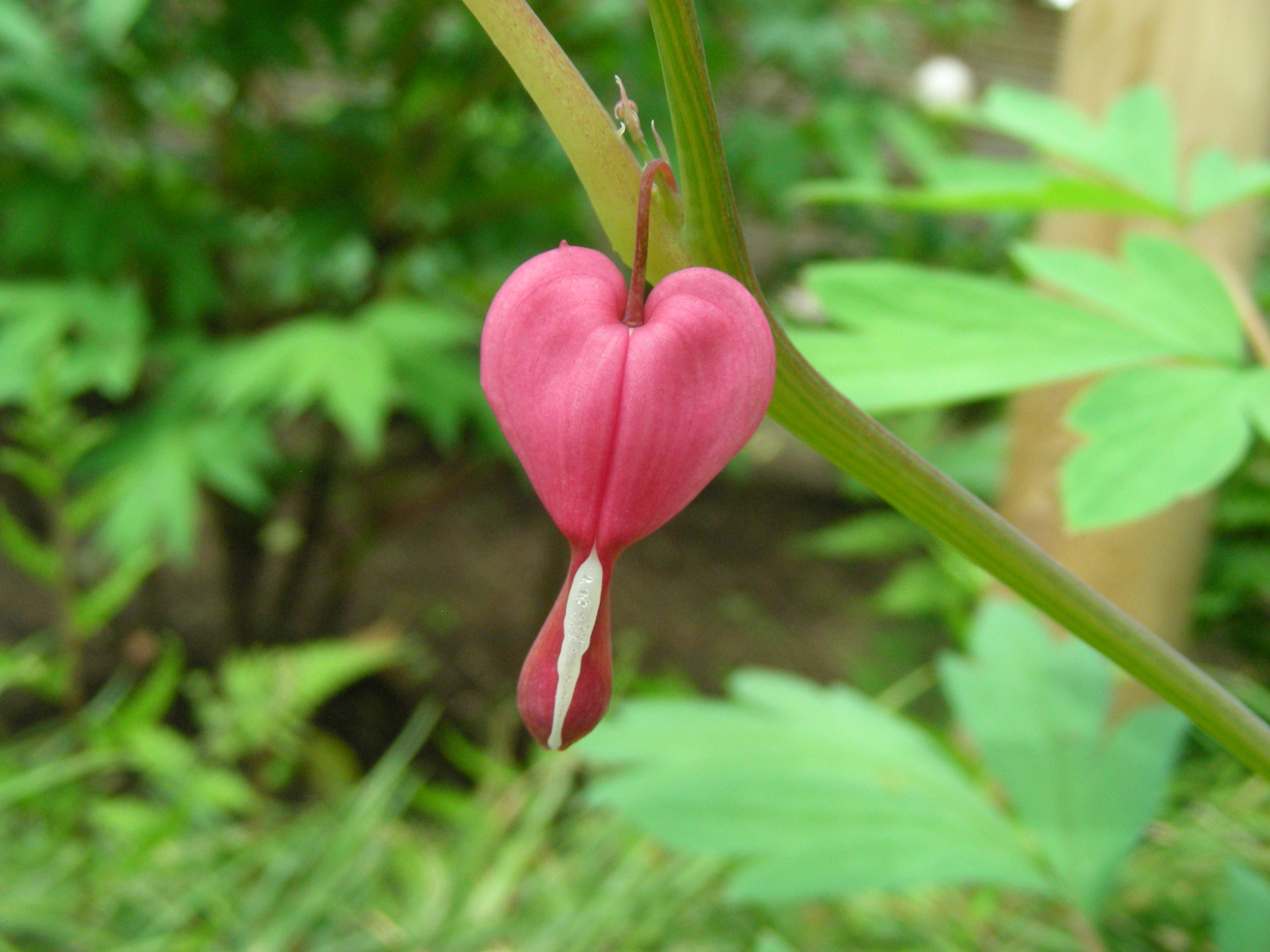
We all love to find heart shapes in Nature, don’t we? Like this little flower in today’s image. Or in the bark of a tree, the shape of a stone, or in a work of art. Why is that, do you think?

I think it speaks to the core importance of everything we think of when we use these heart metaphors in our language, in our poetry and in our songs.

After all, who thinks it’s a good idea for someone to act in a “heartless” way?

Not me!

Read Full Post »

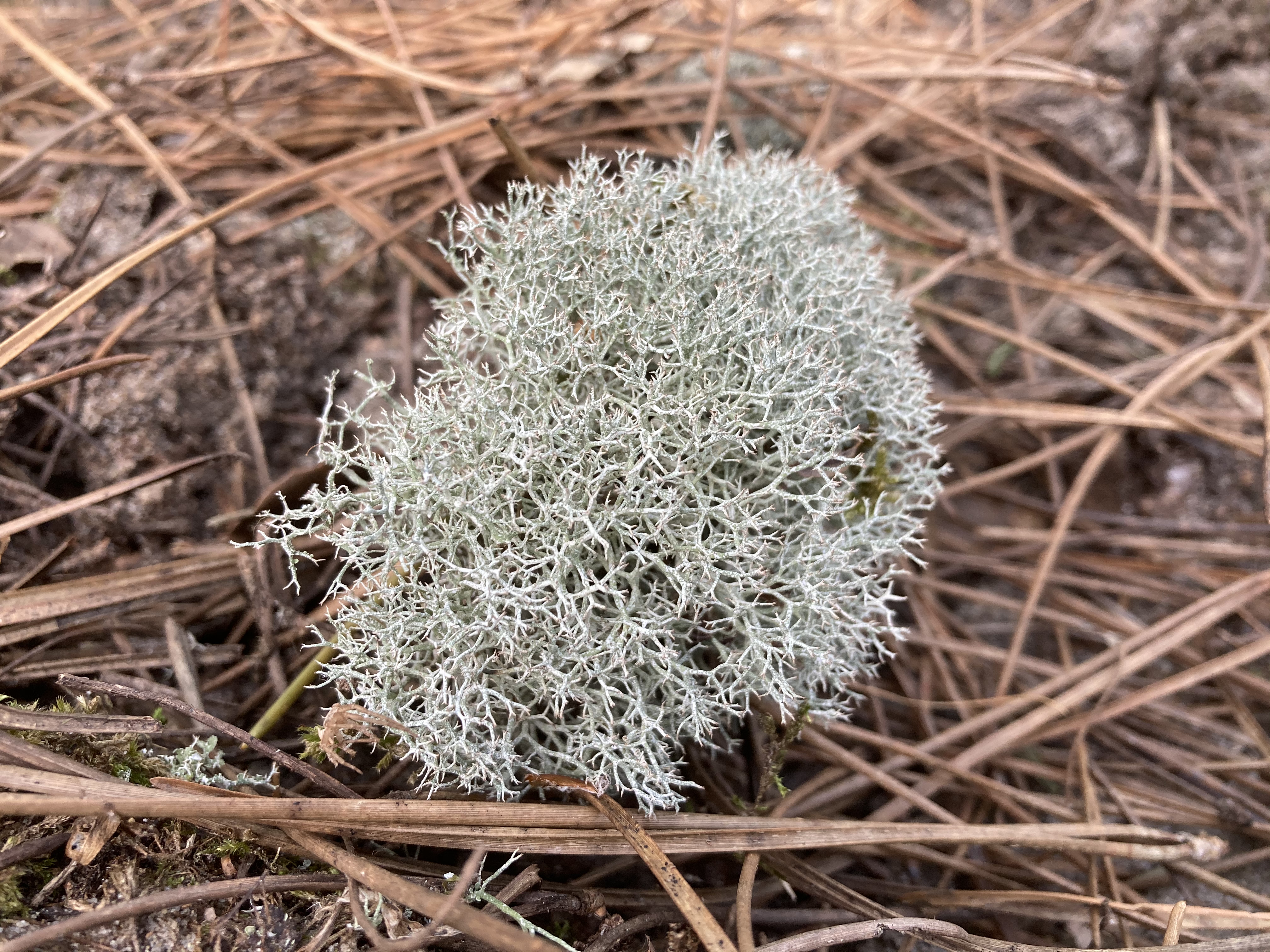
I saw this lying on a pine forest floor recently and stopped to take this photograph. I don’t know if this is a kind of moss, or a lichen, or what. It’s the colour of lichen, but the shape of moss, but its structure is more open than I’ve seen in either moss or lichen before. If you know what this is please leave me a message in the Comments section below.

Although my eye was caught by the pale green ball, after taking the photo and looking at it once I got back home, I found that the image was way more attractive than I had even thought when I took the shot……because of the mass of brown pine needles on the forest floor on which this structure is lying.

That took me by surprise, but, then again, it doesn’t surprise me. It took me by surprise because I was focused on just this pale green ball of interlaced fibres. I thought, and still do think, it’s almost like a model of the neural networks which make up our brain. Not that I’m saying I looked at this and thought, oh, look, a little brain! But I looked at it, found it beautiful, found it sparked my curiosity and drew me in, and thought that it was a good example of the complex inter-connectedness which is at the heart of universe.

It doesn’t surprise me to find my pleasure and interest both increase once I notice the ball is lying on a carpet of brown pine needles. Because I have learned over and over again that seeing whatever I am looking at in its contexts and environments pleases me and interests me in equal measure.

I can look at this and because of the pine needles instantly remember my walk in this particular pine forest. I remember the smell of the pine needles, the heat of the sun, the roar of the Atlantic Ocean just metres away. I get an enhanced, lived experience, which is specific to me. But then maybe you can see this too and remember a similar time when you, yourself, wandered through a pine forest. Maybe you also noticed mosses and lichens and enjoyed the scent of the pine needles. Or maybe you’ll decide now that one day you’ll have a walk in pine forest because this photo and these words inspire you.

You see, we all live in this vast, complex inter-connected network, this beautiful Planet Earth, in this mind-boggling Universe. And from the scale of a single pale green ball on a pine forest floor, right up to our web of relationships, to our shared life on this living planet, to the unfathomable depths of the universe stretched out in the night sky above our heads……..it’s all one vast, inter-connected web.

It’s all a matter of scale.

Read Full Post »

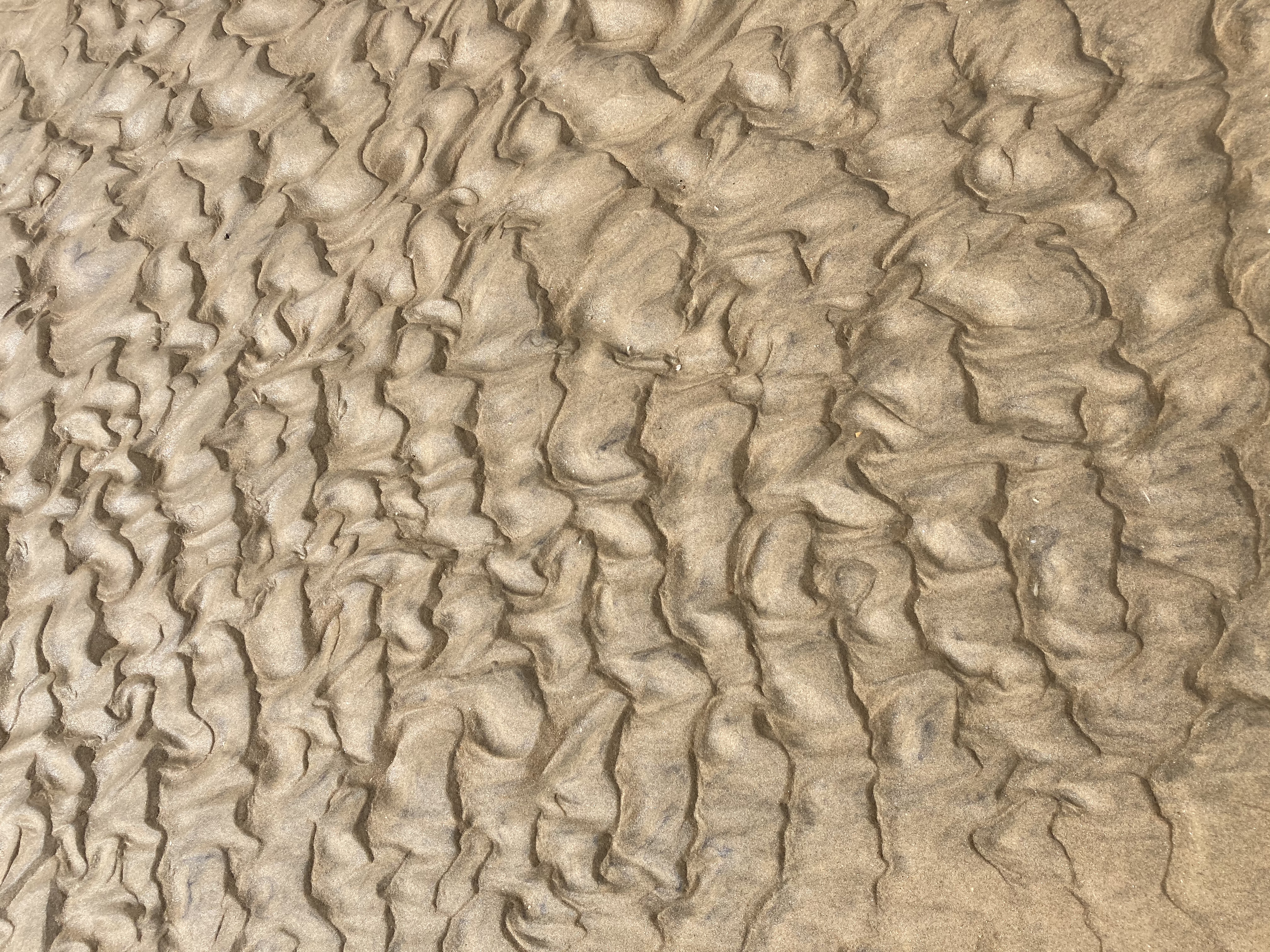
Look at this amazing pattern left on the sand by the action of the water after the tide has gone out again at the beach.

When you look at this you know immediately that the sand has been shaped by the water, although, to be honest, I don’t understand how water manages to make such intricate patterns like this on the sand. Maybe somebody does!

There are other striking patterns on the wet sand at the beach, some clearly made by plant material, seaweed I expect, and some obviously from the imprints of shells, some little worm-shaped piles caused by burrowing creatures throwing up the sand behind them, and often many footprints of birds which have run across the beach.

What impresses me most about all these patterns is that they are the traces left by some activities which occurred a little while ago. They are the evidence of the past imprinted on the present. That reminds me of how we are shaped by the events and experiences of our lives. Our encounters with others change us. Our experiences don’t just create memories, they set up patterns of chemical, electrical and cellular response in our bodies.

We can become aware of some of that in bodily changes, from tightenings of muscles, to changes in heart rate and breathing, to sweating and trembling, and so on, usually before we are even aware that we reacting to something.

I spent much of my career working with patients who had chronic, long-standing illnesses, and we could often make some sense of what was going on by teasing out the threads and themes which ran through their stories over many years. It certainly wasn’t always the case, but sometimes the actual disease and its precise location in the body was clearly related to the body’s responses to events or experiences long forgotten.

It’s pretty clear to me that just as the movement of the water shapes the sand in the way you can see in this photo, so do our experiences and relationships shape us. Realising that makes me want to be more aware of my own actions and words. It makes me want to choose to spread constructive, supportive and creative waves in the world. After all, whatever we do, whatever we say or write, has effects far beyond the limits we could imagine.

Read Full Post »

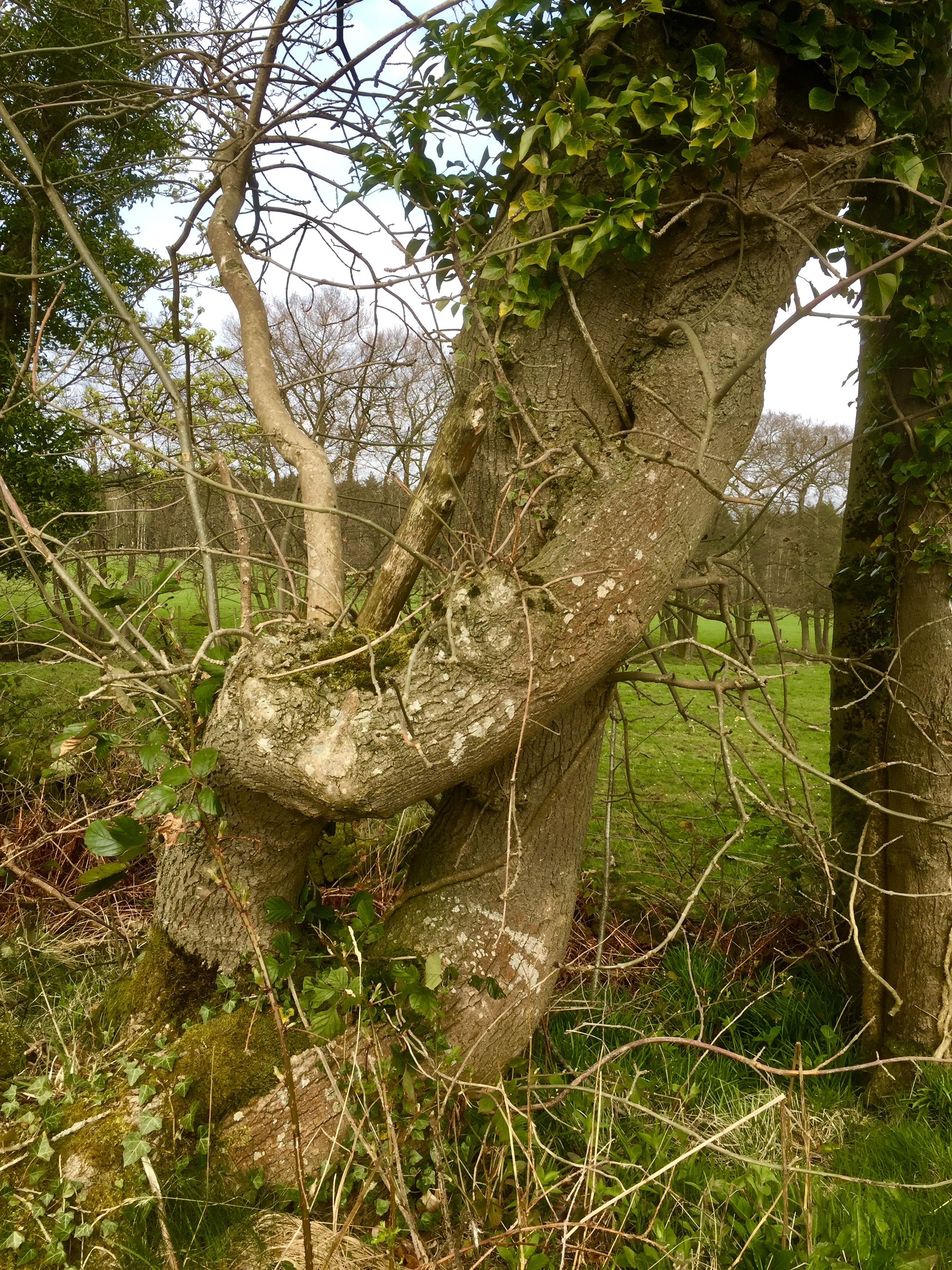
I reckon we pretty much expect trees to grow straight up, then branch a bit, then grow further, still straight up. But, actually, of course, this is seldom the case. Trees, even their main trunks often veer off this way and that, or bend in one direction, only to turn in a totally different one a few metres further on. I confess I don’t know what makes a tree take the twists and turns that it does.

Look at this one for example, not only has it swerved around an almost 90 degree angle but it seems to have entwined itself on the neighbouring tree. What do you think? These trees are lovers? They’ve entangled themselves in each other’s lives forever?

It looks that way to me.

So maybe some of the shape of this tree can be understood in relationship to the other tree. Now how often is that the case with we humans? Do we ever reveal our character in any other way than by responding to what we encounter and by acting in response to the others in our social world? Can you really understand anyone without understanding their place in a family, in a community, a society? Can you really understand anyone without seeing how they respond to others, without exploring the nature of their relationships? I don’t think so.

A belief in the uniqueness of every single human is at the core of my world view and my practice as a doctor. But I never attempt to understand a person solely in isolation. I can only get an idea of who they are by hearing the stories of their experiences and relationships, and by observing how they respond to others….including myself.

I’ve no doubt that all our interactions with others change us. I would not be who I am today without having been changed by all the doctor-patient relationships I experienced in my life. You could say patients made me who I am. Not only patients of course, you also have to take into account the others in my life, family, friends, colleagues, even those who challenged me, or disliked me.

Our lives are entangled.

That’s just how it is.

But we can make choices, and we choose both who and how. We can choose to pay attention to certain people, to care for them, to engage with them, to collaborate with them, or to compete with them. All of those choices weave our unique, personal web of inter-relationships. And that constantly evolving cloth forms the very tissue of our being…..or should I say of our “becoming”.

When I look at this photo today it leads me to contemplate the people in my life, those who are no longer present, those who I’m actively relating to, and those who played significant roles in fashioning my experiences and creating the memories I have. You could say, it leads me to consider the characters in my life story. Who they are, who they were, what experiences we had together and how we become entwined and entangled.

I am grateful to them all. We made each other who we are…..together.

Read Full Post »

Water and rock. Two very different forms of matter. The one flowing, moving, changing, restless. The other solid, steady, firm and enduring.

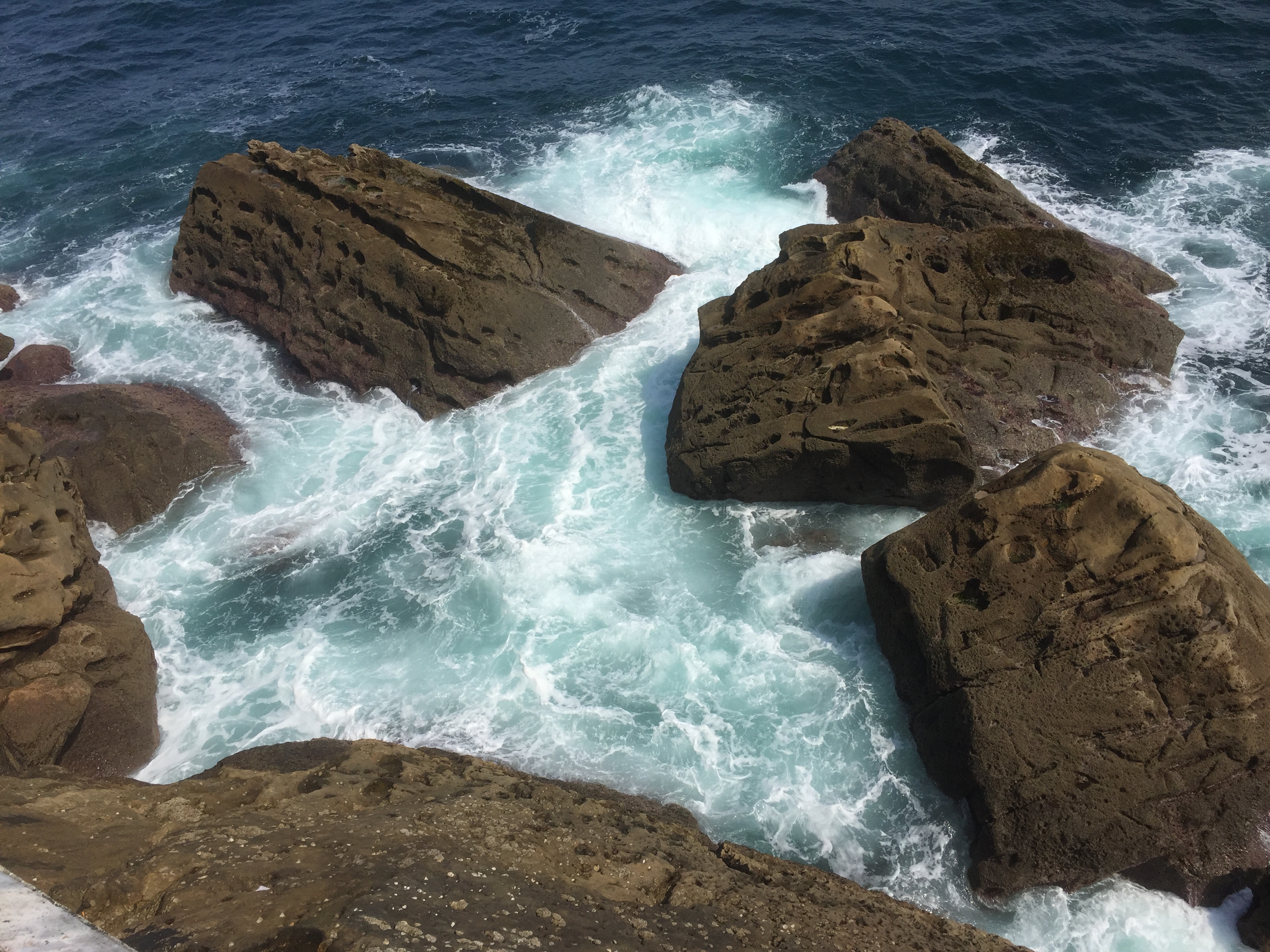
What happens when these two forms meet, as they are doing so vividly in this image?

Just look at the water amongst the rocks. I’ve zoomed in to focus on this area but you can see the ocean beyond the rocks and it looks pretty quiet and peaceful in comparison. In this zone, where the water is bounded by the rocks, it is seething. There is turmoil. There is action. There is an abundance of energy. You can see that, hear that, feel that.

In fact the water and the rocks are in a relationship. They are constantly exchanging atoms and molecules with each other. The rocks set a boundary for the flow of the water, giving it a shape, the shape of a roiling cauldron. The water leaches minerals out of the rocks. The water dissolves the surface of the rock. So, just as the rocks shape the water, so does the water shape the rock.

This exchange of materials goes both ways. There are molecules and substances deposited onto and seeped into the rock as the water crashes over it, again and again.

I look at this photo and I see the creative power of difference. When different energies, different materials, different thoughts and ideas crash against each other, and constantly interact freely with each other then they release a creative power.

If every day feels the same, if all our days are filled with the same mindless habits and routines, if we only ever exchange with the same people, comfort ourselves with our social media echo chambers, then our energy starts to sag. The mundane, the apparently unchanging, the monotony, are all energy sapping, and without energy there is no creation, no growth, no life.

I think it’s one of the most important things to do in life – make new connections, discover new things, new places, make new relationships and friends, read about new ideas, listen to new music, read new poetry……you get the idea.

I heard a psychologist talking about children recently, explaining how children’s brains seem to work differently from adult brains. She drew from both psychology and computer research to describe – the “explorer/exploiter” duality. We are all born as explorers and young children are in that mode all day. Everything is an adventure. Every day is filled with discovery and learning. Then as we get older we begin to prioritise the exploiter mode, learning to how focus, make plans, and how to fashion the things around in into objects and goals we want to achieve.

Well, the truth is, we need explorer mode a lot more than we use it. So why not start today? Discover, do, experience the creative power of difference.

Read Full Post »

As best I understand it, the latest discoveries about the nature of the universe suggest that everything which exists comes into being within an infinite field. The “field” is a beautiful concept. You might also think of it as a network or a web, but part of the reason why I like the “field” metaphor is that it works at the level of energy. We know that electromagnetic energy exists as a field. It doesn’t really fit to see it as a beam, or as building blocks, because it washes over, around and through everything. Think of how you can pick up radio signals anywhere within the field of transmission, and think of how different radio signals can “interfere” with each other.

Interference patterns are one of the things I remember from schoolday science. I remember learning about them in Physics class and finding them beautiful and intriguing even then. Watching one set of ripples encounter another set, and seeing the new patterns emerge as they interact with each other was, and still is, a delight.

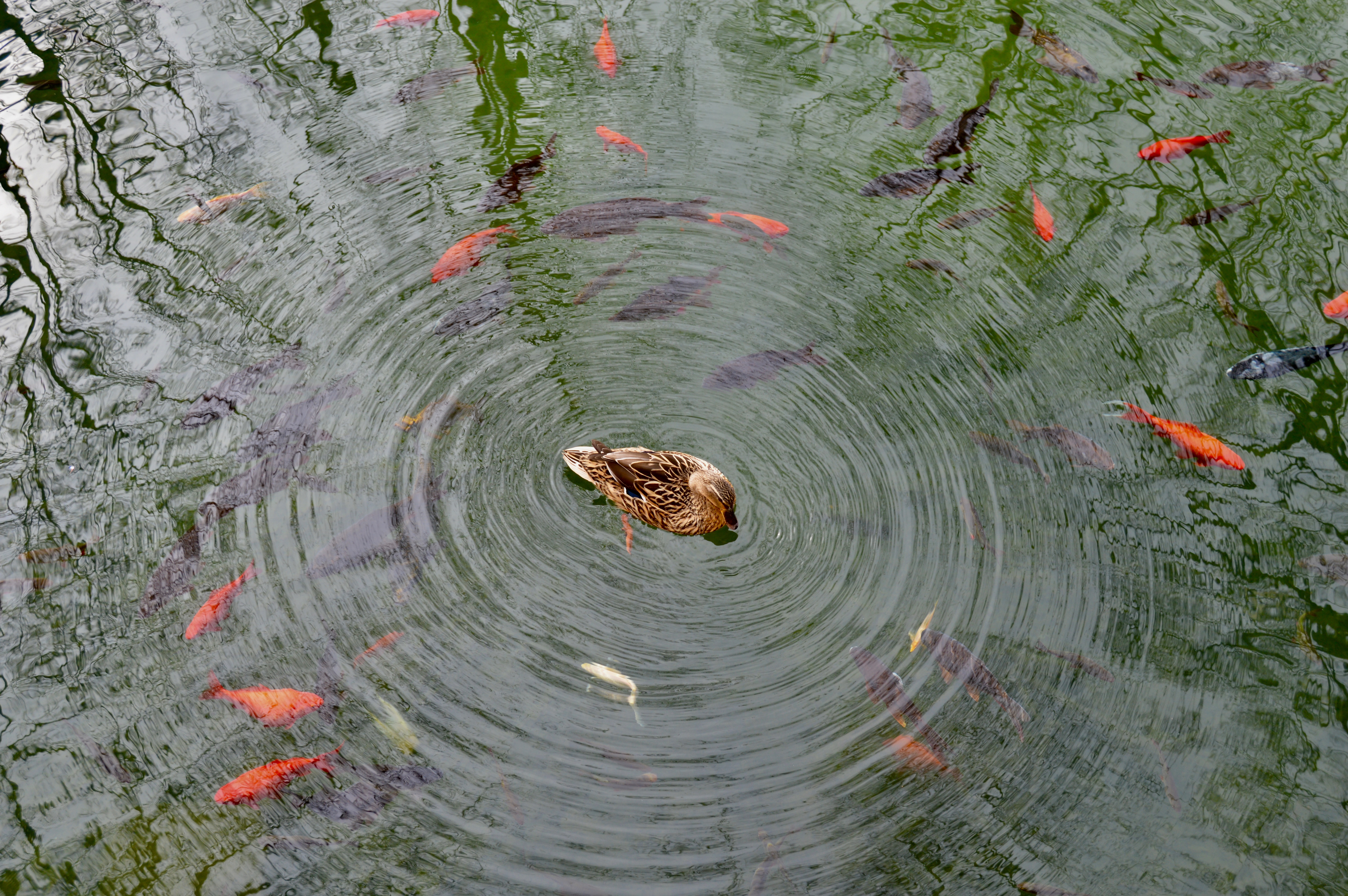
I thought of that when I saw the concentric rings around this duck sitting on the water. I’ve returned to this image many times and one of the things which draws me in is the fish – they really seem to be arranging themselves around these circles of influence which the duck is emitting. I’ve wondered if they are just keeping their distance from the duck, but although ducks do eat fish, I’m not sure they eat these ones.

However, it’s the pattern which captures my attention because the duck is just sitting there. It isn’t swimming around. It’s just being. And I think that all of us continuously interact with, and affect, whatever is around us, just by being.

For example, researchers at the Heartmath Institute, have studied the electromagnetic waves and fields set up by the beating of the human heart. Did you know that your heart rhythm can influence the heart rhythm of someone standing next to you? It seems that the actual rhythm sets up a field which can harmonise with the rhythms of other fields within a couple of meters or so…..an effect enhanced by actually touching each other. Ever since I read about that I’ve wondered if that’s the basis of the feelings and intuitions we get about others. How often have I thought about how some people just seem to be “on my wavelength” and others never are? I know there are many other ways we signal to others and many other signs and influences we can detect, but I’m pretty sure these heart waves are a significant part of it.

That’s where I find my thoughts returning to when I look at this image. I realise that I send out energies and information all the time….just by the way I live. I send out vibes from my heart, my mind, perhaps even my soul. And I know most of that occurs below the level of consciousness. I’m not aware of it. But surely it’s a good idea to become more aware and to choose more deliberately what kinds of energies I’m sending out into the universe?

And surely it’s also a good idea to become more aware of the influences on me which come from the vibes and ripples sent out into the world by others? That’s partly why I choose to direct my attention towards what is loving, what is beautiful, what is creative and curious and amazing. Because I want to magnify all of that. And why I choose to direct my attention away from negativity and hatred – and I don’t mean by that to ignore them – I mean to deliberately shift the balance so that they don’t overwhelm me, so that I can adequately defend myself, and, more than anything, so that I can refuse to be a repeater – magnifying and sending on those destructive energies to others.

It’s tricky, huh? But it’s inescapable. As this duck shows we affect the world around us just by being. The only choices we have are how aware we want to become, and then how we want to respond to what we become aware of. And finally, what we then choose to magnify with our attention.

Read Full Post »

« Newer Posts - Older Posts »