Feeds:
Posts
Comments

Archive for the ‘science’ Category

Yesterday I was looking for spirals, one of my most favourite shapes in the universe. Today I’m looking for circles, or more specifically, concentric rings. They are another of my most favourite universal shapes.

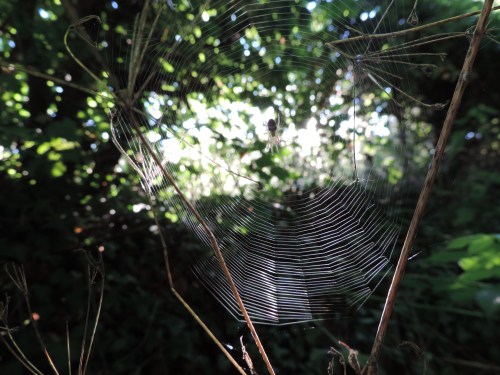
I’ve taken a lot of photos of spider webs over the years, and, believe me, they are very, very different. This one is a classic of type, though, isn’t it? You can see how ring after ring has been spun to create this fabulous pattern.
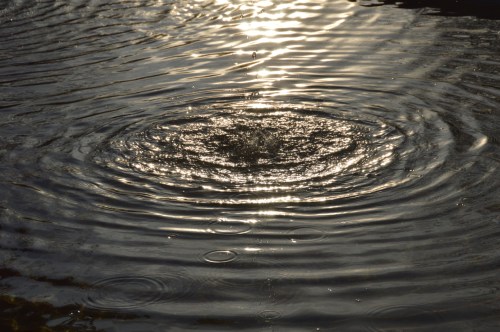
The commonest place to see this pattern is on the surface of a pond or a still lake. It always reminds me of the basic fact of influence – how whatever we do or say ripples out into the universe, connecting with, and influencing whatever the waves reach. That’s one of the main reasons I’m so particular about what I write and share. I always hope that whoever encounters these words and images is stimulated in some positive way.
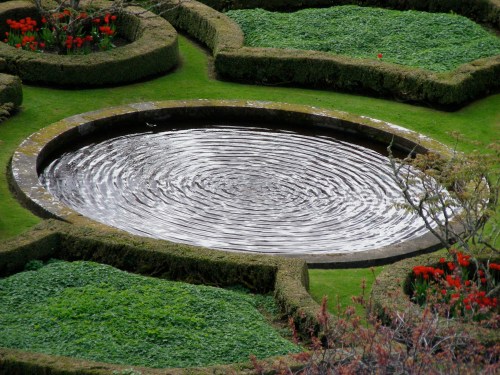
This is one of the most impressive examples I ever came across, in the gardens of Dunrobin Castle in the north of Scotland. What really grabbed my attention in this one was, firstly, the completeness of the pattern, the concentric circles filling the entire pond, and, secondly, unlike where there is a fountain setting off the waves by dripping water into the centre of the basin, in this one there is no fountain. What’s making the ripples?
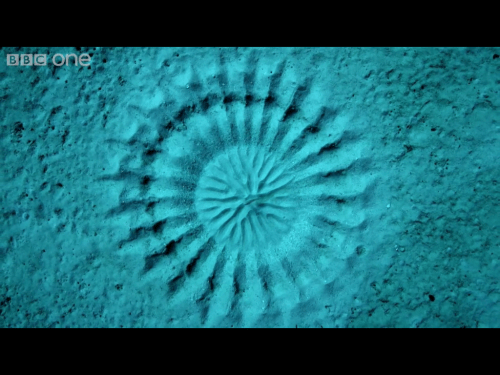
This is the pattern created on the sea bed by a little Puffer fish. It makes this beautiful pattern in the sand to attract a mate.

I recently saw a concentric circles pattern in the sky, when the Sun appeared with a corona – yes, a corona during the corona virus pandemic!
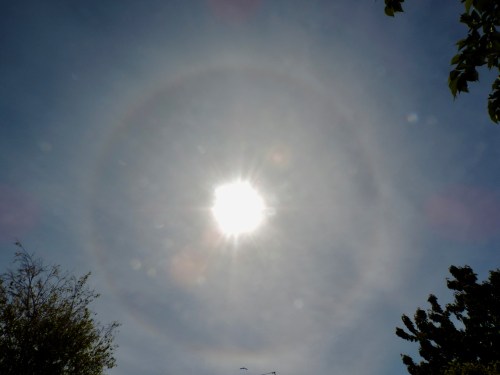
And, it’s not hard to find this type of pattern in wood, is it?
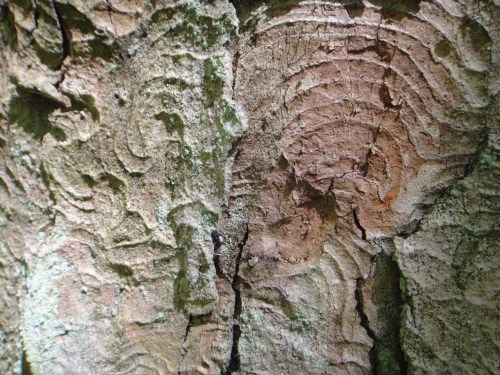
or even in rocks
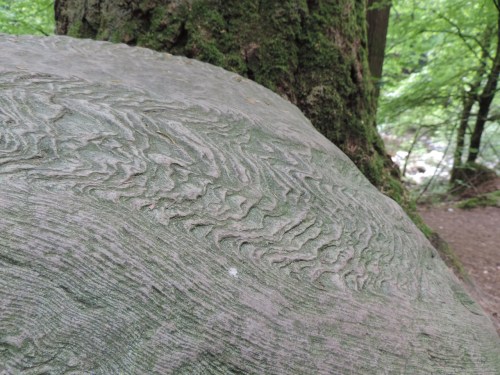
You can see that I’ve extended the symmetrical concentric ring idea to a much wider variety of irregular ripples, but I think those two patterns are really just different expressions of the same underlying force – the end result depends on the context, the borders and limits set by the environment.
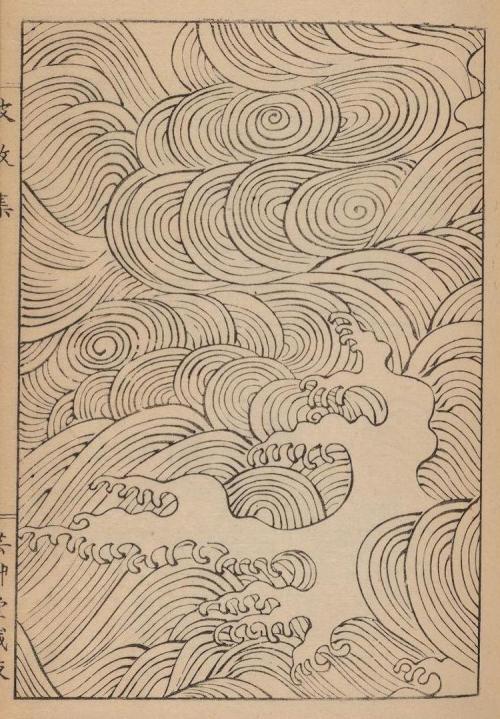
Japanese art combines spirals, concentric circles and ripples to create a beautiful and very distinct style.

It even influences what I can see on the surface of the Earth when I’m flying above it in a hot air balloon!
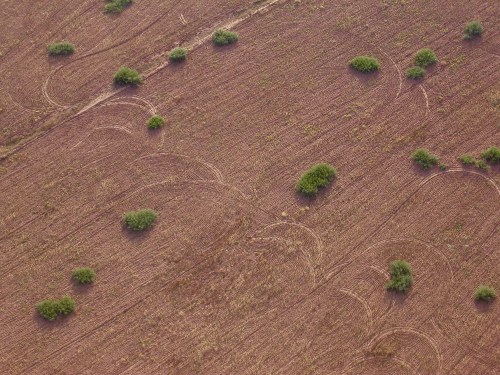
OLYMPUS DIGITAL CAMERA

How about you?

Have you seen any beautiful spirals, circles or ripples recently?
Read Full Post »

Sometimes I like to collect images of similar shapes or patterns. Today, I’d like to share some spirals.

The spiral is one of the most beautiful forms in nature and art. I think it is at the heart of our universe and tells us something interesting about the course of a life.

It seems to me that rather than running along a straight line, our lives often follow more of a spiral pattern, revisiting old issues and events time and time again, but each time from a different perspective. If we are growing those spirals drive forward movement and a deepening of our understanding. If we aren’t then we spin round and round the same issues until we learn from them.

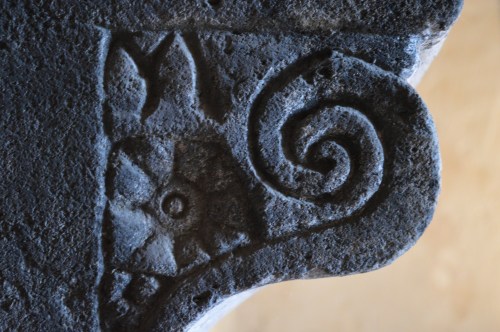
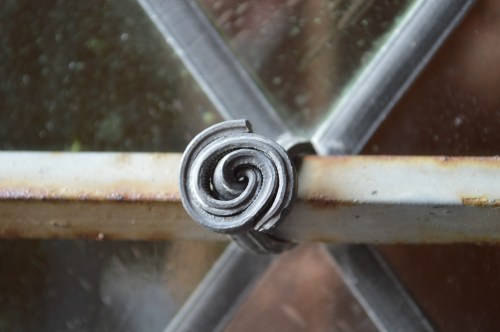
That first image is on a window fitting in the chateau where Montaigne lived. Here’s one from a mantelpiece inside that same chateau.

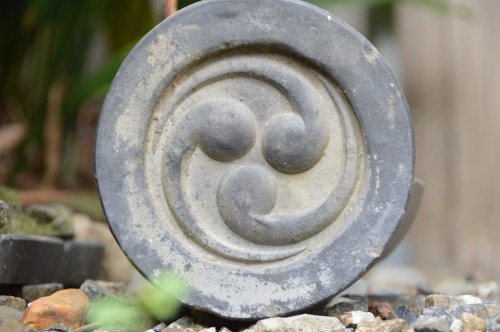
Some spirals you could draw with one line, but what appeals to me so much is how this enfolds two spirals into the one motif.

Here’s an example, found commonly in Japan, of three entwined spirals.

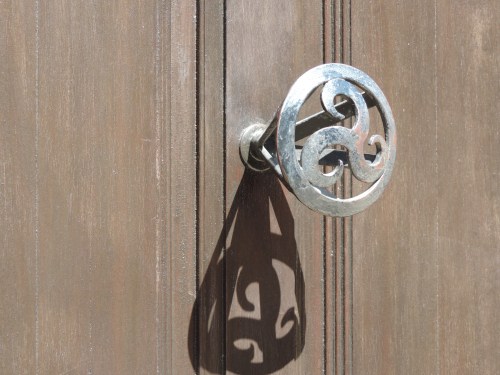
And, here’s a triple spiral where each one is spirally outwards, rather than in towards a central point. Although I completely agree you could see that in completely the other direction….as a gathering from three directions towards a single, common, point.

That’s a simple doorknob, but how beautiful is it? Especially with its triple spiral shadow cast onto the door.

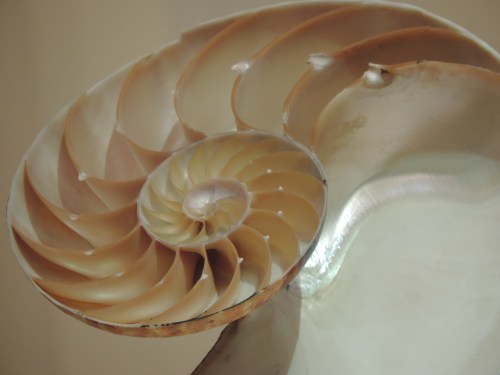
Nature loves spirals too. Here’s a section through a seashell – I found this particular one in the Museum of Scotland in Edinburgh.

At the opposite end of the scale, here’s a photo of a star being born….

I saw this while browsing the web this morning, and I think it’s what set me off in this spiral-gathering exercise!

Do you have any images of favourite spirals?

Read Full Post »

There is always another way.

I don’t believe people who say there is only way to do something. There are always other options, other choices to make, all dependent on our preferences, values, beliefs and particular circumstances.

Margaret Thatcher famously said “There is no alternative” – which was shortened to “TINA”. It wasn’t true then, and it’s never been true since.

I’m suspicious of algorithms and protocols because they tend to marshall everyone down the same pathway in order to produce the exact same outcome. But we are all different, and we are all living our every day lives, moment by unique moment, in each of our individual and particular circumstances. The more generally “TINA” is applied, the more inappropriate it is.

It’s been frustrating to hear politicians say they have been “following the science” all the time during this pandemic and that they have “taken the right steps at the right time”.

There is no “the science”.

Science is a methodology. It’s a way of considering the world, of exploring and attempting to understand it. The scientific method doesn’t produce end points. “IT’ is never finished. There is always more to discover, more to learn. Science is about doubt, not certainty. The findings and analyses of scientists can increase our understanding but they will never be set in stone, fixed for all time.

There are no “right” steps to take at “the right time”. There are just the steps we choose to take, in good faith, or carelessly. There are just the steps we choose to take now. They say hindsight has “twenty twenty vision” (or will we say in the future “2020 vision”?) but that’s not true either. Things just look different when we look back. Looking back is just a change of perspective. Not a perspective we had at the time.

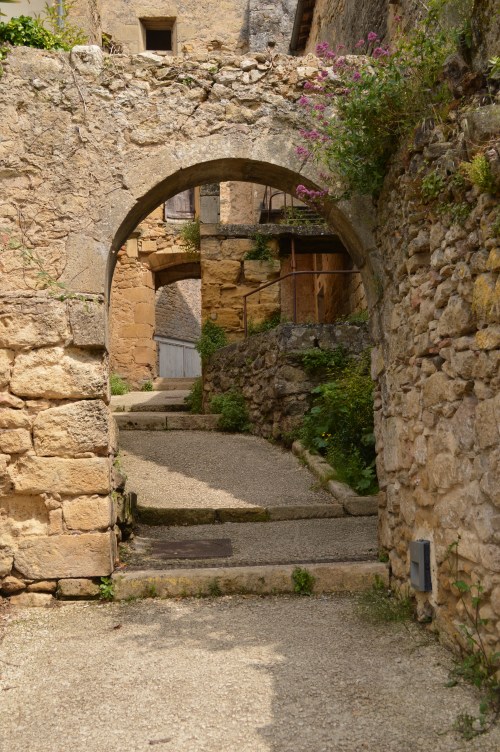
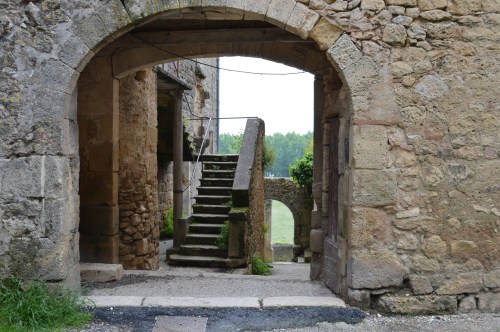
Here’s the same passageway, viewed from the other side – looking back to the way we came, where the first one was looking forward to the way we were going.

Change the perspective, change the understanding, change the options.

There is always another way.

Read Full Post »

I took this photo one winter in Scotland. It’s a particular kind of image which really pleases me. There is straight line running across the entire scene and splitting the image into two parts, but the two parts, at first glance, don’t seem enormously different.

However, there are clear differences. The foreground field is flat and the earth beneath the snow forms parallel lines running up to the border from the front of the photo. The field over the border is on a hillside and it’s markings are like contours of a map of a hill. The snow on the hill is whiter than the snow on the field and, somehow looks deeper.

Between the two there is a border zone. That appeals to me. There is not a solid wall or fence, more a rough line of stones, containing an unworked area of land partially marked off with a fence. In fact, as I look more closely now, I think that line of stones is the top of a dry stone wall and there is a dip in the land just beyond it.

Apart from the trees at the bottom and the top of the image the only “Life” in the picture is one sheep and one tree, both in that in-between zone.

That reminds me of the fact that Life itself exists in a kind of in-between zone. The zone between order and chaos. Thomas Berry describes this beautifully in his “The Great Work” where he calls the two forces of the universe “wildness and discipline”.

When first the solar system gathered itself together with the sun as the center surrounded by the nine fragments of matter shaped into planets, the planets that we observe in the sky each night, these were all composed of the same matter; yet Mars turned into rock so firm that nothing fluid can exist there, and Jupiter remained a fiery mass of gases so fluid that nothing firm can exist there. Only the Earth became a living planet filled with those innumerable forms of geological structure and biological expression that we observe throughout the natural world……….The excess of discipline suppressed the wildness of Mars. The excess of wildness overcame the discipline of Jupiter. Their creativity was lost by an excess of one over the other.

For Life to exist there needs to be an ordering principle, something which builds and creates, turning small, apparently disconnected pieces, like atoms, into elaborate complex networks, like the multicellular human body and the astonishingly interconnected human brain.

But too much order is counter to Life. Rigidity isn’t much good without flexibility. We live in a changing universe. Year by year, month by month, week by week, day by day, even second by second. We have a word for that kind of phenomenon – dynamic. The universe is a manifestation of a dynamic, living, breathing, integration of order and chaos, of discipline and wildness.

All of Life exists in this dynamic, “far from equilibrium“, zone. It never stands still. It’s never “complete”, “finished” or “done”. It’s a flow, a process, a complex, vastly inter-connected network. Maybe that’s why it’s hard to pin down definitions of “Life” and “Health”. They aren’t fixed objects.

Read Full Post »

When you really look, there are a lot of strange features in trees. Look at this one!

What is this? You think maybe it’s an ear? Can the tree listen to the birds singing their welcome chorus to the dawn every morning, chasing each other excitedly through the forest, and calling goodnight to each other at sunset? Or maybe it’s listening to the other trees. To the sounds of the wind in the leaves. Or to the sound of another tree falling. What do you think a tree would hear, if it could?

Maybe it’s not an ear, but a mouth. What if it is a mouth? What sounds could a tree make? What’s the language of trees? Do you think they communicate with each other? Actually, they do. A lot! Just not by using either mouths or sounds. Trees in a forest are connected above and below ground. They communicate through the air by sending out a variety of molecules, especially to alert other trees to the presence of a predator. Under the ground their vast root systems have gigantic webs of fungi embedded in them which extend the number and distance of connections between them many, many fold.

I like the phrase that certain tree specialists use – the “wood wide web” – it provokes an image of an intricately, multiply connected, living network really well.

Every living organism, animal, plant, or any other form of life from the other “kingdoms”, survives and thrives through communication and connection.

I like to contemplate three flows which travel into, through, and beyond every single person, every single animal, and every single plant – flows of materials; energy; and information. These flows connect us all. They know no borders. They wax and wane across this entire, small planet. We couldn’t live without them.

Read Full Post »

I reckon a lot of us have a fascination with water. Little children love to play with water, whether its in a sink, a pool, or at the beach. Pretty much all children can spend hours filling up brightly coloured plastic pails with sea water and pouring it into holes they’ve dug in the sand.

I’ve certainly always had a fascination for water. One of the few experiments I actually remember from schooldays is “a little goes a long way” where we put a few crystals of potassium permanganate into a big trough of water and watched with amazement how quickly the entirety of the water turned purple.

Learning about the “water cycle” of nature, where water evaporates from the sea, forms clouds in the sky, falls as rain on the mountains and runs down the rivers back to the sea, was probably my first encounter with the idea of cycles and ecosystems.

But ice – now isn’t ice just completely fascinating? Not simply because it expands in volume as the water freezes, which is counter to our instincts (which tell us that heat expands things and cold shrinks them). But because it is utterly beautiful.

The town of Aix-en-Provence is partly famous for all its fountains. I can’t remember how many it has, but there are a lot. These photos I’m sharing today are all taken one day in winter on the Cours Mirabeau in the centre of Aix. They remind me that just when I think I’ve seen all the shapes which frozen water can make, one day, I discover something new to me.

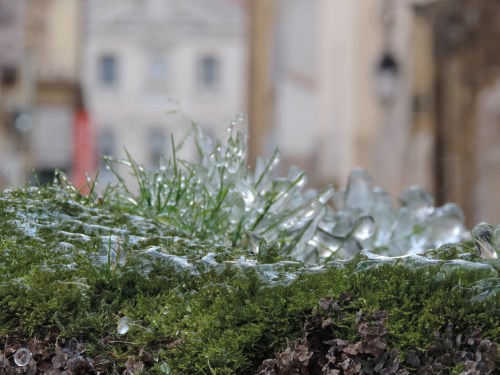
At first glance that image at the top of this post is typical of a frozen fountain. There are many long dangling pointy icicles. (Poetic, huh?).

But, look more closely and you’ll see something pretty weird.


On top of the moss the water has formed ice which looks more like jelly than anything else. It actually still looks liquid, but, you can see, it isn’t. It’s frozen. Not in a smooth level way, like you’d expect to see when water lies in a puddle or pond, but undulating, almost like frozen waves, but smooth waves, not spiky ones. It’s really not like anything else I’ve ever seen. When you imagine water lying on top of moss, you think it would have a level surface, just like a puddle would. So, it should freeze like that – level. But this didn’t.

Here’s another close up.

Look at the shape of this! These tiny stalagmites of ice are so rounded. Not at all spiky or pointy like the stalactite forms higher in the fountain. How does water form into shapes like that? And, if you look at the left hand side of this image, you’ll see that frozen flow appearance I showed you in the previous photo.

Wonder.

That’s what images like these provoke in me.

A sense of wonder…..that combination of curiosity and amazement tipping over into astonishment.

This is the “émerveillement du quotidien” which I love so much – that “everday wonder”. Makes life all the more special I find.

Read Full Post »

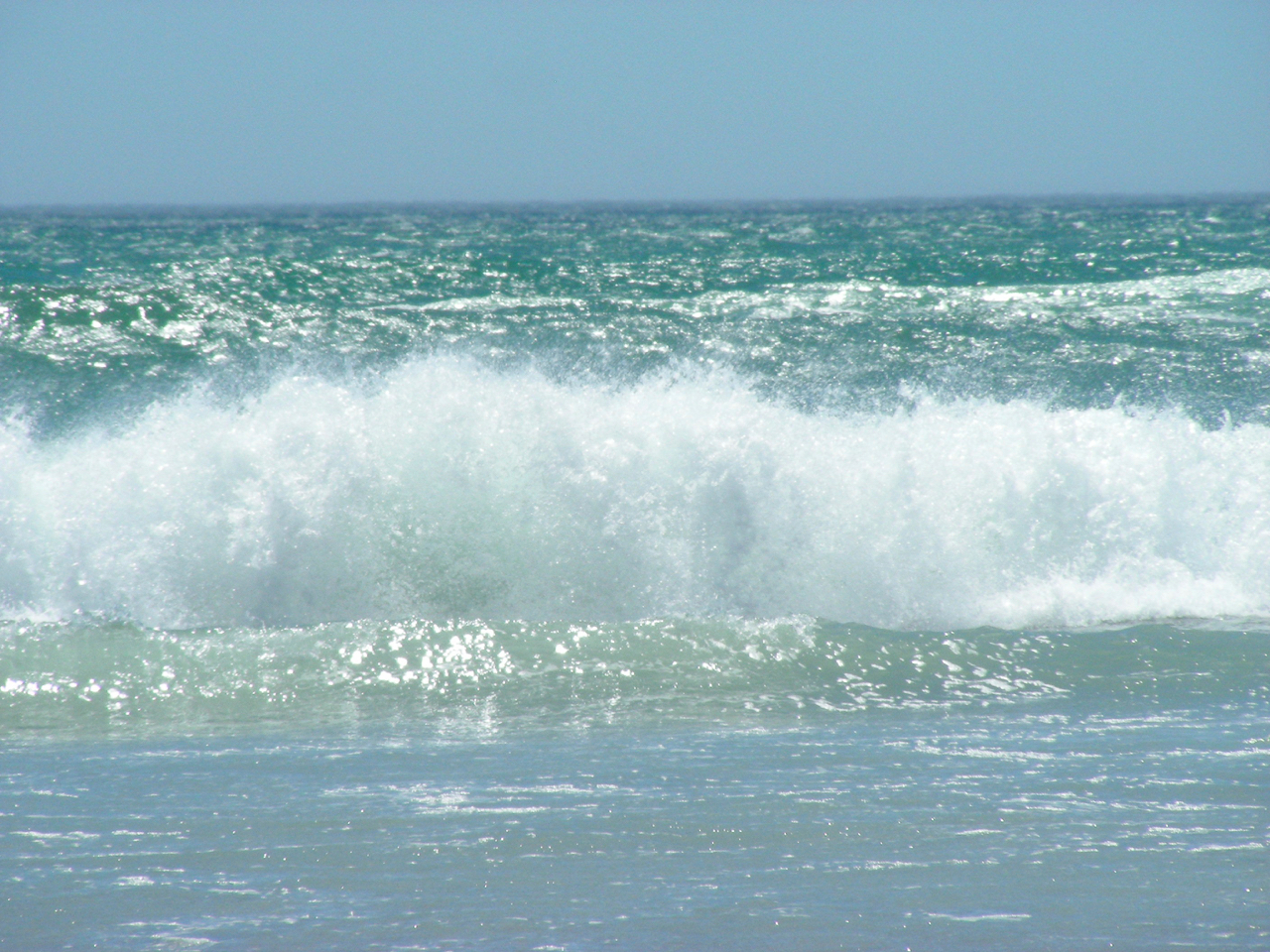
I can remember science lessons in High School where we studied waves. I thought they were fascinating. I still do. All kinds of waves. Waves in the sea

waves in a pond

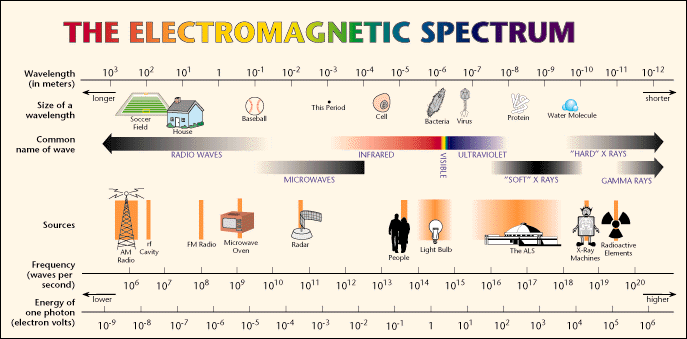
the electromagnetic spectrum which includes the light and colours we can see, the radio waves we can tune into and many other varieties of invisible waves which affect us.

the waves produced by our hearts and brains which we can’t see, but we can measure and represent on charts (did you know that when your heart rhythm emits a wave pattern which can influence the heart rhythms of people who are physically close to you? 

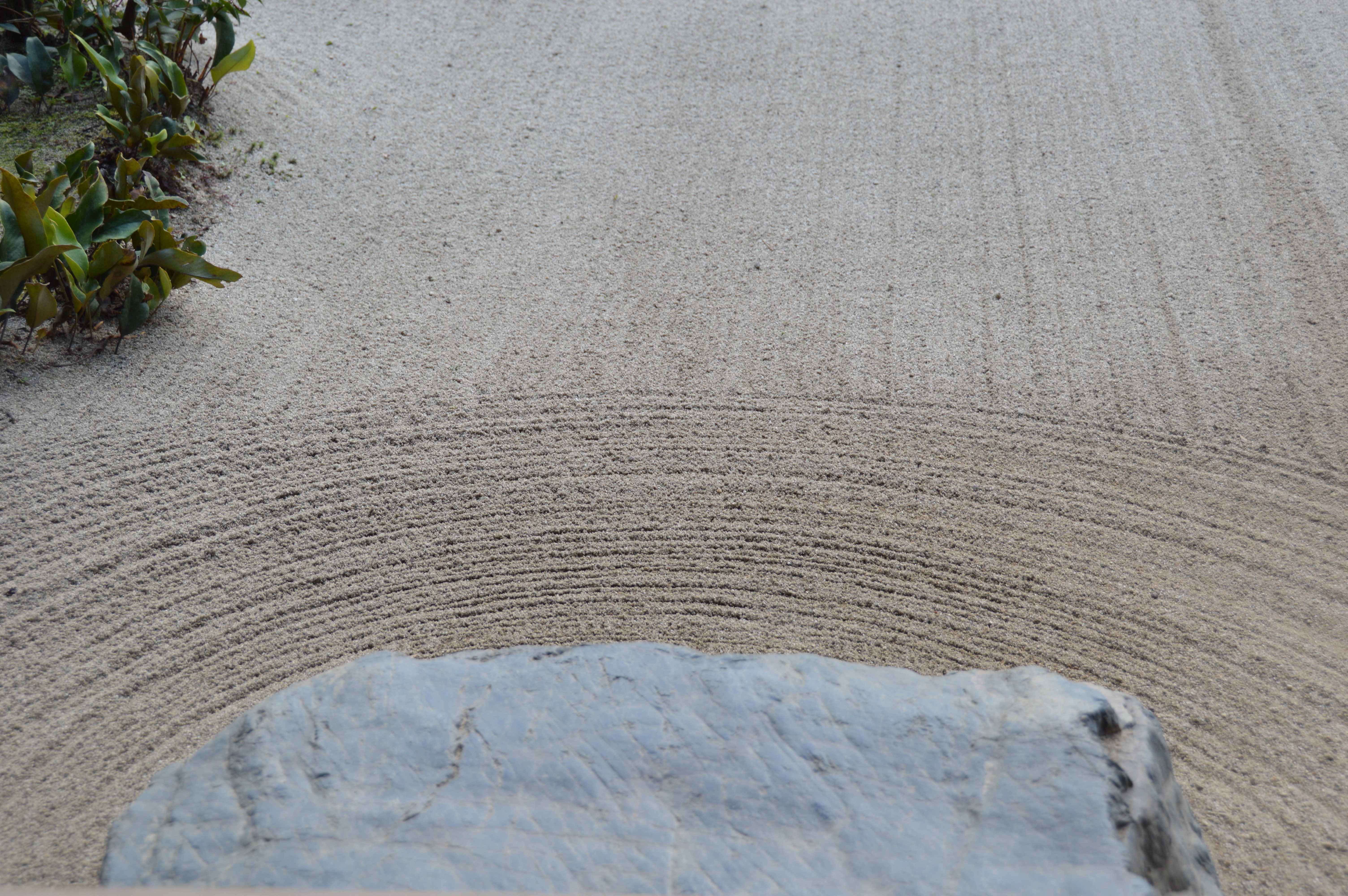
Even the representation of waves drawn in the stones in a temple or shrine (like the one at the start of this post).

Waves change us.

Waves carry energy and information.

As energy and information reaches into our bodies and minds it changes us.

I read the other day that “influencers” are having a hard time. Bear with me, I’m 66 next month, and “social media influencers” are not my specialist subject, but as best I can tell people who make a living from advertising and marketing revenues from companies by sharing pictures and videos of themselves wearing or using those companies’ products have seen a sharp decline in their income.

Seems one of the things during this pandemic is that people are consuming less “stuff”. Well, given that around the world millions of shops are closed and production lines are at a standstill, maybe this is no surprise. But there’s another element to this story which seems to be a sort of re-evaluation that’s going on. Less people seem interested in the lives of “celebrities” (ie people who are famous for being famous) just now. Priorities and values are changing.

However you want to look at this, the underlying reality is that we are all influencers. There is nothing I do, from the breaths I take, to the beating of my heart, to the communications I make and the behaviours I show, which doesn’t change the world. OK, yes, of course, not the whole world! Well, probably a very small part of the world actually. But collectively we are all influencers.

We send out materials, energy and information into the world constantly. Unceasingly.

What materials do you send out? What “waste” do you produce and what do you do with it?

What energy do you send out? How does that energy affect your relationships?

What information do you send out? What are your messages? How do you say them? Are they based on kindness or hate? Hope or fear? Anger or Joy?

You cannot escape being an influencer.

The question is – what waves are we making? You and I.

Read Full Post »

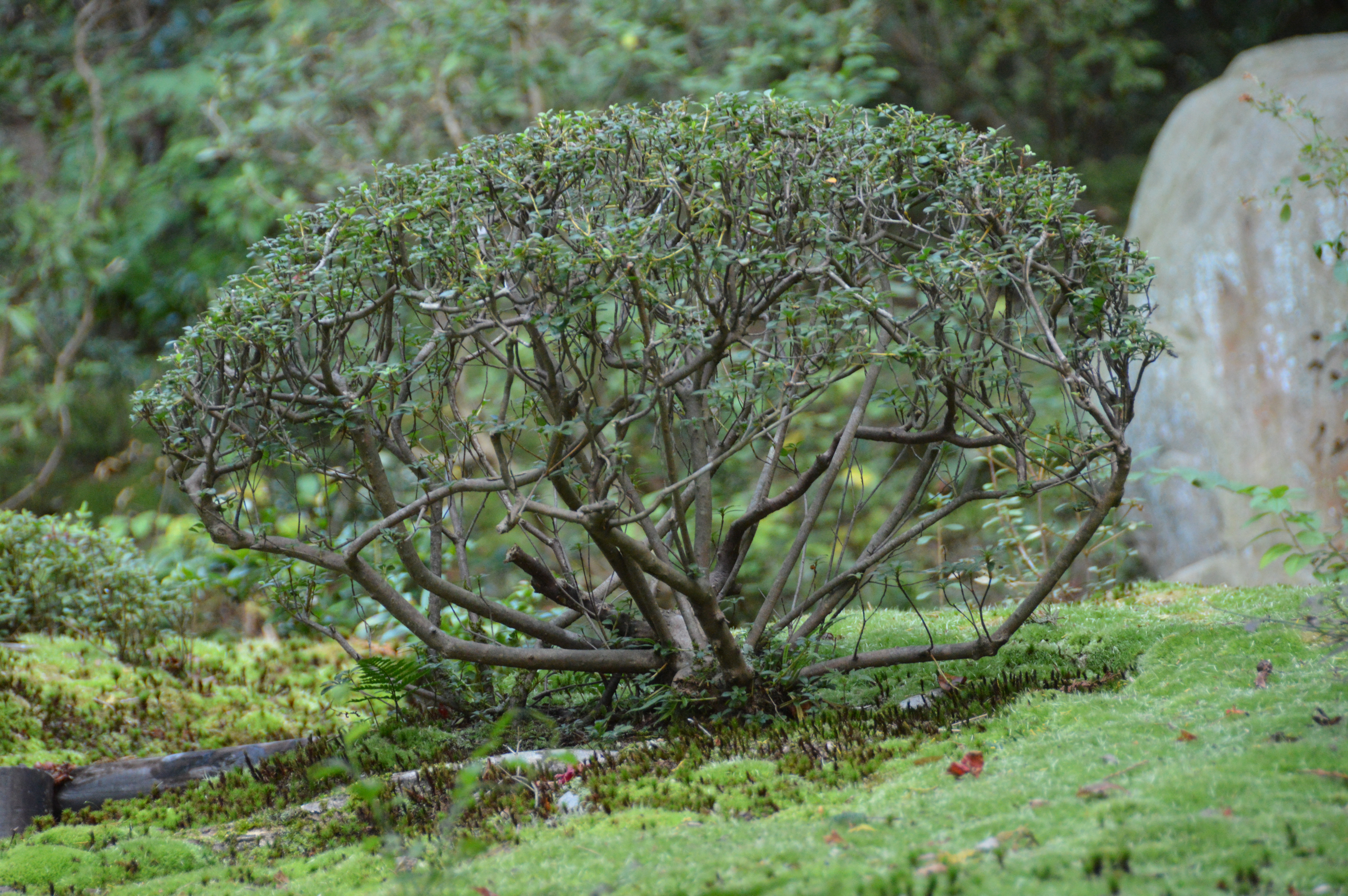
There’s something of this shrub that makes me think about the human brain. The leafy cortex forming a curved border and the mesh of branches, twigs and stems which look a bit like a neural net.

Deleuze and Maturna wrote about two common models we use to organise our world view – the arboreal and the rhizomal. They described how we use the former to create tree structures everywhere…..those hierarchical constantly branching sets of binary choices. Think of a genealogy chart, and how we refer to it as a “family tree”. But think also of “organisation charts” which lay out the positions within a company, and show the power flows, with the “Chief Executive Officer” at the top. We see it in protocols, guidelines and algorithms, which proscribe the actions to take at every point to get from a starting position to an “outcome” or “goal”.

I love trees, but “arboreal” models of thought and world view make me uneasy. They are too binary for me. At every stage you can go this way or that way, and there is often an implication that there is only one way which is the right way. It assumes that the starting conditions are exactly as the author expects them to be, and the goals or outcomes which the model maker identifies are the best, or most relevant, or most “efficient” ones, so everyone should share them. Like all models the people who make them have certain values, beliefs and world views, but, rarely are those things made explicit. They are also too hierarchical for me. I’m not a fan of strongly hierarchical, centralised power structures.

On the other hand, there is something very appealing about these tree-like diagrams. I probably drew little family trees every working day. I found it helpful to chart a patient’s relationships, siblings, parents, grandparents, partners and children. They often revealed patterns which shone a light on this patient’s illness. And there is no denying the tree-like branching structures within the body – particularly in the lungs and the circulatory system, but not only there.

In Jacques Tassin’s “Pour un Ecologie du Sensible”, he uses a variety of metaphors to show how interconnected all of life is. One of his metaphors is the tree. He says all life is like an invisible tree rooted in the Earth, each branch, each leaf a living being, a part of the same tree. I like that. If each of us is a single leaf, then, obviously we are connected to every other leaf through the over all structure of the tree. I also like his reference to the roots, which we usually don’t see, because it seems very true that we are vastly interconnected in invisible ways.

The rhizome model is more like grass. There isn’t a single trunk, or root. It’s massively interconnected. It’s a “distributed network” as opposed to a “hierarchical structure”. The brain is probably more like that. Every one of our millions and millions of neurones makes up to 50,000 connections with other neurones. Trees don’t do that. I find the network model very appealing. I love the way it reveals a multiplicity of equally “good” pathways. I love how it doesn’t pre-determine either the starting points or the end points. In fact, it’s kind of impossible to see where a brain begins and ends. It’s not even fenced off in the skull!

When I look at this shrub, then, I actually see elements of both of these models – the branching tree structure, and the presence of multiple, connected pathways.

OK, maybe only up to a point, but, hey, at the end of the day, it’s a pretty appealing and inspirational shrub!

Read Full Post »

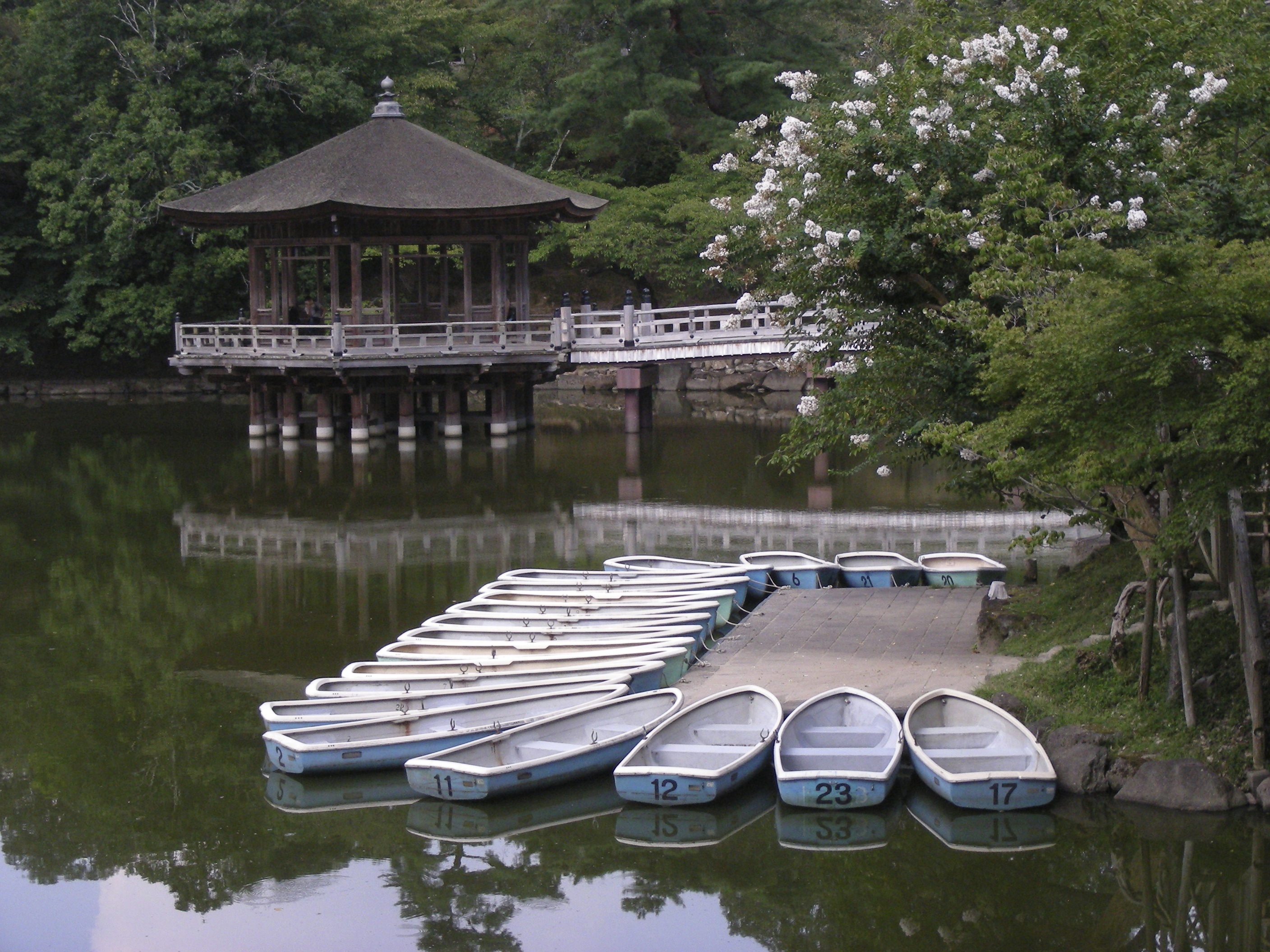
It strikes me that this is a pretty good image for this present moment.

All our boats are tied up at the dock. Empty. Nobody there.

Actually, when you look really carefully there is somebody in the pagoda. It’s hard to see them. I have the impression they might be a ghost!

Moored is the word we would use to describe the situation these boats find themselves in. They’ve been carefully set aside, brought home, tied up to the dock to keep them safe. I guess we’re all a bit moored just now, aren’t we? Although, frankly, an increasing number of people are feeling quite the opposite – un-moored!

But let’s stick with this image for a wee bit longer.

I see nineteen boats arranged around this platform, and, yes, it bugs me that they aren’t aligned by number – what does that say about me? – but, worse than that, one of them is number 23 – and I can only count 19 of them! Are there are at least four missing? Where are they? Are they OK? So, already, what at first glance looks like a completely peaceful scene, with the reflections of trees, clouds and blue sky on the surface of the still, still water, starts to become a little…..unmoored?

Then I see the blossom of the tree above the boats, and instantly, I’m back to enjoying the beauty of the scene. My gaze follows the hidden path to bridge, and across to that gorgeous pagoda, itself perfectly reflected in the calm lake. Then I notice that indistinct person, that ghostly presence, and I start to unravel again.

Now, here’s the thing, until today, every time I’ve looked at this image I’ve seen and experienced nothing but calm, and I’ve delighted in its beauty. This “un-mooring” is new. It doesn’t come from the photo itself. It comes from where I am, here and now.

Well, this is a great truth…..whatever we perceive, whatever we see, notice, appreciate and experience, is always, but always, an interaction between our “self” and what is around us. This is the way I understand the teaching that there is no real world “out there”. This is how I understand relativity. It’s not that there is nothing objective, or that nothing exists unless I see it, hear it, or otherwise sense it. It’s that my lived experience of reality always, but always involves my memories and my imagination.

We co-create our world.

Read Full Post »

This little chameleon hugging the stalks of grass wasn’t easy to see. From the distance he was, to all intents, invisible. He’s designed to have that as his core quality.

We think of chameleons as creatures which are brilliantly camouflaged. Their colouring perfectly matched to their surroundings.

Many of we humans have that tendency too. We like to “blend in”. We like to be “one of the crowd”. Even in the earliest years of school, children will pick out the one who is different. And, often, that’s not a good thing. They’ll be singled out for insults or blows.

There’s a message there – it doesn’t pay to be different.

Conform! Keep your head down! Don’t attract attention!

There is a tendency in human communities to demonise “the other”. A new inhabitant might be treated as “an outsider”, or “an in-comer”. “You ain’t from round here, are you?” The more different they are, the more they are likely to arouse suspicion and prejudice.

It’s not very appealing, is it?

But this little chameleon….he’s pretty appealing, isn’t he? Clearly there is something potentially valuable in the strategy of blending in, and hiding, of not getting noticed.

There’s a safety in being “normal”, “one of the crowd”.

But it’s not enough, is it?

We need quite the opposite.

From the moment a baby is born they demonstrate their core skill – attracting attention! They scream and yell when they are hungry, when they are thirsty, when they are uncomfortable and when they want company. Failing to attract attention would be fatal. Literally.

None of us want to be ignored or passed by. None of us want to be unseen and unheard. Well, most of us don’t, anyway.

There are many paradoxes at the heart of being human and this is one of the biggest ones – how do I fit in, or belong, and at the same time, get noticed (at very least to avoid being neglected)?

There’s no one right way here is there? It’s not a binary choice. We need both.

As I became aware of paradoxes like these I developed a mantra – “And not or”.

That has become my core mantra. It’s a perspective of understanding, of tolerance, and of humility. It lets me open up to the views, beliefs and values of others. It allows me to avoid opting for reductionism and simplicism. I prefer to explore the whole, and the complex.

It’s NOT about “having your cake and eating it”. We have to make choices. But it does mean accepting that every decision should be made as best I can at the moment when I make it, knowing that, pretty quickly, things will change, my understanding and knowledge will change, and I might need to make a different decision next time, in the light of all that.

It means nothing is fixed in stone. Everything is fluid and uncertain. Does that scare you? Does that offend you, even?

And not or.

Can I suggest you just explore it? Play with it? Try it out? See if it helps you to navigate the world better than the binary, good/bad, right/wrong, abstracted and reductionist approach does. I find it’s more human.

But, seriously, explore it. That’s what I’m doing. And I would love to hear your experiences and thoughts about it.

Comments on this blog are “fully moderated”. That means I need to deliberately share them to make them public, so you can send me a comment, and tell me you don’t want it made public, and I’ll respect your wish. We can have a conversation privately. In fact, if you would like to start a conversation with me about anything on this blog, just comment on one of the posts, asking me to get in touch, and including your email address. I’ll reply from mine, and I won’t publish your comment or your address.

See, I welcome comments which people want to share with each other. I’ll publish those. But I also welcome personal conversations. I won’t publish those. And not or!


Read Full Post »

« Newer Posts - Older Posts »