Feeds:
Posts
Comments

Archive for the ‘science’ Category

the geometry of flowers

Isn’t this beautiful?

How could you fail to be seduced by the astonishing geometry of this flower?

We see this everywhere in the world – how patterns seem to display an remarkable mathematical order.

Interestingly, the same day I took this photograph (which I immediately titled “the geometry of flowers”) I read a fascinating article about mathematics teaching, entitled “The limits of a rational mind in an irrational world – the language of mathematics as a potentially destructive discourse in sustainable ecology.” by Steve Arnold of Auckland University of Technology. Here are a couple of paragraphs which caught my eye –

Galileo famously said, “The laws of Nature are written in the language of mathematics.” However we realise that this profound statement was while very true, it is not strictly true. There are times when the mathematical understanding of the world breaks down. Now in a time of ecological distress, we need technologies and tools that can match more perfectly our world. In reality, Mathematics is a highly nuanced poetry that describes the human condition, it mirrors the workings of the human brain (as mathematics is exclusively a product of human thought). Mathematics tells us our own story, it tells us how the human brain works, and as we strive to make meaning of the world, we do so using the tools available to us; number is one of the ways that we language our experience.

Within mathematics there continues to this day an expectation that the simple relationships described in mathematics should be able to neatly describe our complex world. However the real world is not simple, tidy and neat. The real world is full of messiness, unpredictability, human emotion and error. Mathematics describes a predictable world, where error can be eliminated, and it is desirable to simplify and exterminate unwanted complications. Where the two differ, surprisingly it is the human experience in the real world that defers to the all-powerful notions of mathematics.

And, in conclusion, he makes the excellent point that mathematics is just one way to make sense of the world, and it’s a way that we ourselves have made up.

We put so much faith in numbers, that sometimes we place the power of the digit over the judgement of our experience. This idea of positivism has found a secure home in the teaching of mathematics in schools. We are controlled by numbers, from the early stages of test results, to class position and IQ, to more recently BMI scores, glasses prescriptions, salaries and postcodes. We sometimes forget that numbers are a way to tell the human story. We forget we make them up, not the other way round.

So, yes, this is a beautiful geometric flower and how often can we use mathematics to model the beauty of the natural world? But, surely, we need to always remember that the mathematical story of the world is not a perfect explanation. And that we should not allow anyone to reduce Life to numbers.

Read Full Post »

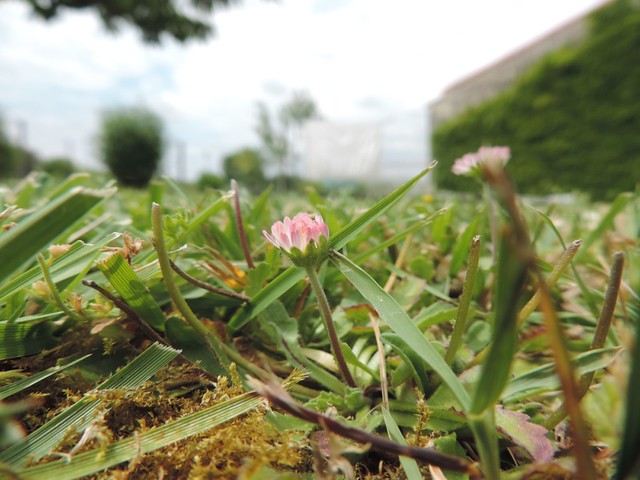
white flower in the grass

In the garden of the house where I live now there is a quite a lot of “grass” to mow. I put “grass” in inverted commas because there is a lot growing there that sure isn’t botanically grass. I suppose some people like to have a “lawn” which really is all “grass” – a monoculture of grass.

I like diversity. I find it beautiful and I think it is a fundamental characteristic of healthy, sustainable ecosystems. It’s even a good principle to have in your own life. T S Eliot said “human kind cannot bear very much reality” but I think he could have said “human kind cannot bear very much same-y-ness” (OK, Eliot wouldn’t have actually used such a word but you get my point)

The other day I decided to take my camera and get down to grass level to really see what was there. The photo above is the first one I took. Here are some of the others –
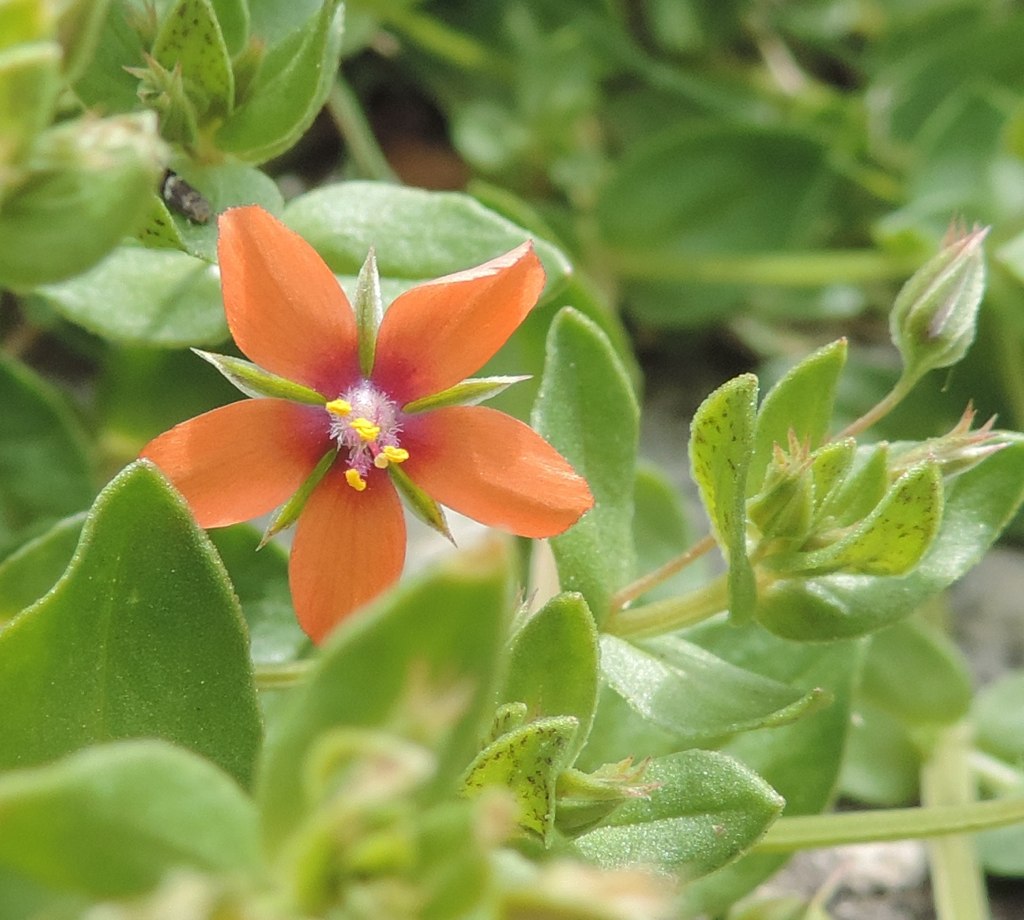
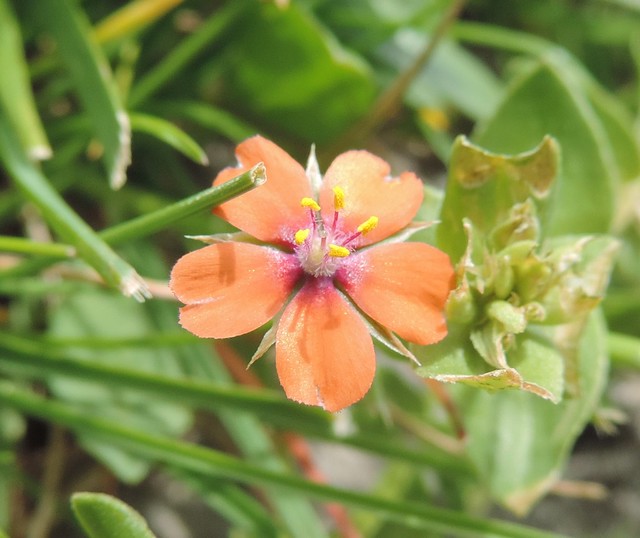
orange flower in the grass

purple flowers in the grass

daisy in the grass

yellow flower in the grass

The thing to remember is that ALL of these flowers are tiny – the daisy is probably about the biggest of them.

Aren’t they just beautiful?

Isn’t diversity compellingly attractive?

Read Full Post »

blue butterfly

Whether we think about this butterfly, think about a tree, or think about a person, we know we are not looking at machines.

Yet the reductionist, mechanistic model seems to retain a dominance in our culture.

Here, I think, is a better way to think of living creatures –

Complex, open, dynamic beings.

Complex

All living creatures are composed of millions of cells. In each creature, all of those cells develop from a single fertilised egg. All of those cells interact, but not in simplistic, “linear” ways. Instead the interactions can be described as “non-linear”. (Connections such as positive and negative feedback loops which produce exponential changes, rather than simple changes of addition or subtraction)

An assembly of cells connected in a non-linear manner is a complex being. And complex beings have certain characteristics, not least of which are the abilities to self-repair, self-regulate, defend themselves and to replicate.

We can focus down on the individual elements of a complex being, for example on a single cell, or a group of cells working together to form an organ, but we can’t fully understand any of those cells or organs until we consider them again as parts of the whole creature.

Open

An open system exchanges energy, materials and information with the rest of the environment in which it exists.

All living creatures are open systems. They are constantly breathing in, breathing out, consuming and excreting (amongst other things!)

We can focus on an isolated single creature but we can’t fully understand it unless we consider it again as part of the whole environment in which it exists.

Dynamic

Living creatures are dynamic. They are constantly (and I do mean constantly) changing. They change because they are open and they change because they are complex. Every day some cells break down and die, and others are created new, but overall they have a direction of growth – becoming ever more complex and ever more unique every single day.

This dynamism in a complex, open being leads to the manifestation of “emergent” properties. They develop, change and behave in unpredictable ways. It is impossible to know with certainty what changes are going to occur at any particular moment in any single individual.

Look again at that lovely blue butterfly I’ve photographed.

Have you ever watched a butterfly fly?

Would you be able to predict which way it’s going to move next? Have you ever met anyone who can even explain how butterflies manage to fly the way they do?

Look at that lovely blue butterfly again.

Isn’t it beautiful? Isn’t it a work of art? Isn’t it astonishingly more complex and unpredictable than any machine?

And that’s a butterfly. What about a person?

Read Full Post »

courgette stamen

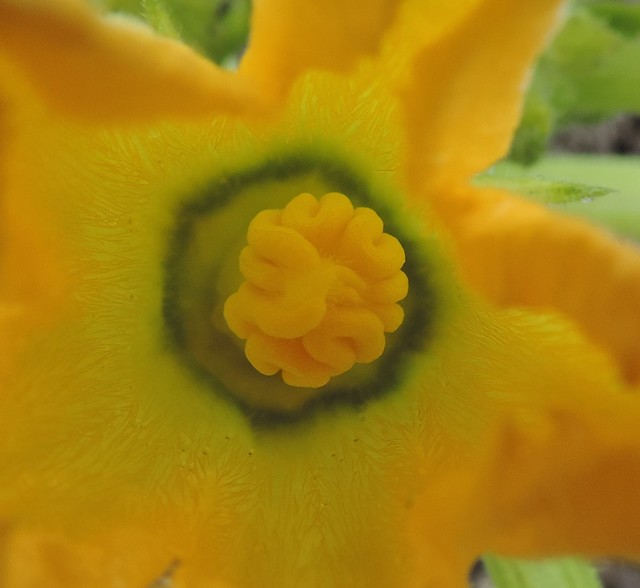
This is a close up of the stamen of a courgette (zucchini) flower growing in my garden.

Doesn’t it remind you of the human brain…..just a little? Picking up on my last post, isn’t it amazing how many echoes there are between the three “kingdoms” of Nature?

And the other thing I thought was how the intelligence of a flower is certainly not found in its brain (it doesn’t have one!) but that doesn’t mean to say it can’t perceive, respond and communicate. Plants do all of those things all the time.

And how true is it that even though we do have brains you can’t find our minds or our intelligence solely in there.

Like all other life forms, we perceive, process and respond with our whole beings.

Read Full Post »

Mulberries

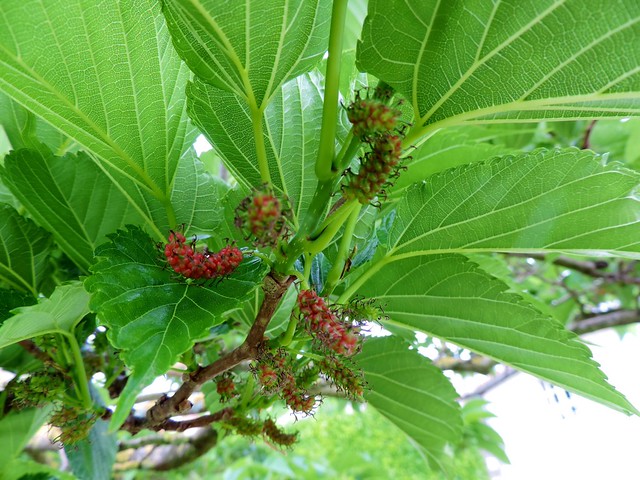
Mulberries.

Have you ever seen them before?

This is a first for me. We’ve a mulberry tree in our garden in France and as this is our first year here, we’re watching it change through the seasons. And here comes the fruit.

Don’t they look like little creatures?

How often do we see that in Nature, where some kind of organism develops the characteristics, or features of another?

I love how we can see such inventiveness and rich variety in Nature.

Read Full Post »

seeds

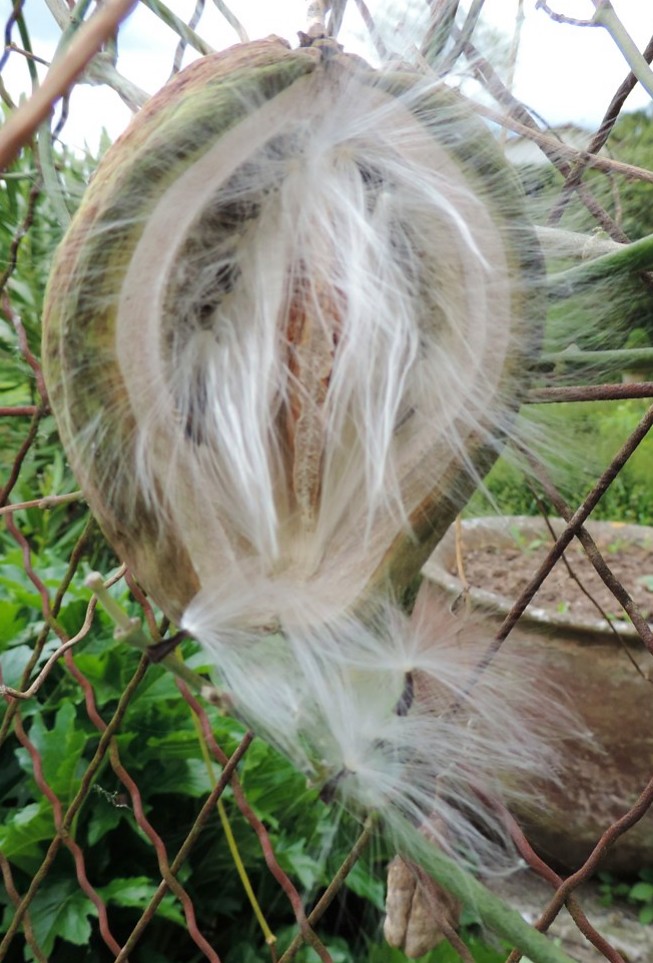
I’ve no idea what this is.

Some kind of seed head with soft, fluffy, fibres attached to the seeds so they will fly off in the wind, but I’ve never seen this actual plant before.

There’s something satisfying about naming things, isn’t there? We see a plant like this and instantly we want to say “what it is”. But it isn’t it’s name anyway.

It is what it is becoming…

And that’s what interests me even more than its name…..what does this seed grow into? So I collected a couple of them, and planted them in my garden. Will they grow into a plant? “On vera” (“We’ll see”)

Read Full Post »

ava charlie

I was recently sent a copy of an article published in Norway back in 2011. The article’s title is “The human biology – saturated with experience“. Here’s the summary –

SUMMARY

BackgroundHuman beings are reflective, meaning-seeking, relational and purposeful organisms. Although experiences associated with such traits are of paramount importance for the development of health and disease, medical science has so far failed to integrate these phenomena into a coherent theoretical framework.

Material and methodWe present a theory-driven synthesis of new scientific knowledge from a number of disciplines, including epigenetics, psycho-neuro-endocrino-immunology, stress research and systems biology, based on articles in recognised scientific journals and other academic works. The scientific sources have been deliberately chosen to provide insight into the interaction between existential conditions in the widest sense (biography) and biomolecular processes in the body (biology).

Results. The human organism literally incorporates biographical information which includes experienced meaning and relations. Knowledge from epigenetics illustrates the fundamental biological potential for contextual adaptation. Intriguingly, different types of existential stresses can enhance disease susceptibility through disturbances to human physiological adaptation systems, mediated in part through structural influences on the brain. Experiences of support, recognition and belonging, on the other hand, can help to strengthen or restore a state of health.

It’s a fascinating review of research literature on the links between “biography” – an individual’s unique story, and “biology” – the biomolecular processes of the body. It seems clearer to me than ever that talk of “mind and body” as if these are two separate entities is both unhelpful and misguided.

We are certainly “reflective, meaning-seeking, relational and purposeful organisms” and it’s long seemed to me that to practice medicine without that understanding demeans both patients and practitioners. Human beings are not objects which can be reduced to genes, molecules or cells. We are complex adaptive organisms with consciousness. As these authors say, we have  –

a capacity for self-reflection, for designing sophisticated symbolic structures, for attaching metaphorical concepts to experiences and for building models and categories with the aid of the imagination.

We create art, music, poetry and stories. We play. We make sense of our daily lives. (See my recent series of posts on re-enchanting life for more about these very human activities) We connect. We live embedded in a mesh of relationships. We use language, myths and symbols to interpret and experience the world.

Unfortunately, such experience does not lend itself easily to standardised interpretation; it is always an experience of something for someone, in a unique context

All of our experiences are personal and unique. To be fully human, to really understand another person, we must consider the personal and unique. My contention is that we must not only consider it, but must hold that focus as central come what may.

Yet, as these authors point out, contemporary “evidence based” approaches to medicine have failed to include the subjective –

Human subjectivity is not only absent from contemporary evidence-based medicine, it is in fact explicitly eliminated by the mathematical analyses performed during assembly of evidence.

Should we allow statistics and “controlled” de-humanised research (with the experiences of the human beings who are the subjects of the research removed) be our “gold standard”? We need the research which incorporates the subjective and the personal if we want the findings to be relevant to the real, everyday lives of human beings.

Right up in the “Results” section of this paper the authors say “Experiences of support, recognition and belonging, on the other hand, can help to strengthen or restore a state of health”. That is completely congruent with the clinical experience of my lifetime’s work as a doctor. The essential elements of healing are based on the relationship – as a doctor it is my role to recognise each patient – to see each one as a unique individual with a particular issue or problem to discuss – and to be able to say “I see you”, “I hear you” and “I understand what you are experiencing” (and that includes making a diagnosis and being aware of the natural history of diseases). It is also my role to support, not judge. To provide what help and care I can. And finally, at the base of it all, it is my role to create a relationship with each patient, a meaningful connection which reduces the feelings of isolation or alienation a person who is suffering can experience.

It is heartening to see the beginnings of a scientific method which will help us all in the future to create the conditions for health. And if the start of that is to create “Experiences of support, recognition and belonging”, then we will be starting from a good place.

Read Full Post »

strawberry

With the current dominant world view, there is an enormous tendency to focus on “mass” – mass production, mass consumption – and to focus on quantities – GDP, profit, numbers “in work” etc. This all seems to drive core values of conformity and uniformity. We have ever more protocols and algorithms which are supposed to deliver “evidence based outcomes”. We find one-size-fits-all policies in health care, education, economics and politics. Difference is described as “variation” to be eliminated and “integration” is about forcing people with different values and beliefs to conform.

What values and what kind of world view might develop from a positive prioritisation of difference?

A shift from the general to the particular. 

Human beings are brilliant at spotting patterns, classifying them and naming them. We categorise by moving quickly from specific instances to general characteristics. We do that by stripping away the context and homing in on one or a few characteristics. By doing so we quickly lose sight of the individual, of the reality of the uniqueness of every person, every experience, every organism. And we quickly lose sight of the whole.

If we keep our eyes and ears open for the differences, then we take these generalised patterns which we spot and then consider how this particular instance fits, or doesn’t fit into those generalities. In other words we do what Iain McGilchrist describes in his “Divided Brain” – we perceive with the right cerebral hemisphere, analyse and classify a part of that with the left, then hand that analysis back to the right for further integration.

A shift from quantities to qualities.

“Lies, damned lies, and statistics”? Does the total number of people with jobs mean very much? Or is the nature and content of those jobs important? Does it matter if the jobs are zero-hour contracts, or full-time, more than minimum wage contracts? Does it matter if the jobs are to manufacture chemical weapons, or chemotherapy?

In health care, in education, in politics or society, because these are human institutions, its the quality which matters, not just the numbers.

A shift from seeing the world as composed of fixed objects, to seeing the world as a complex system which is continuously growing and evolving.

A shift from conformity to diversity.

Should we all have the same beliefs, the same values and make the same choices? If I choose one modality of health care when I am ill, and you choose another, is that a good thing? Or is it better that we both receive the authorised treatment which the protocol demands? Nature thrives on diversity. Monocultures are not natural.

A shift from a focus on parts to a focus on connections.

When we focus on parts, we tend to reduce what we are considering to objects. But no object exists in isolation. Everybody, every creature and every “thing” on our planet has a history. We all emerge out of what already exists. In the here and now we are inextricably linked to who and what is around us. Our left cerebral hemisphere is great at focusing on the parts. Our right is fabulous at focusing on the connections – the “between-ness” (to use Iain McGilchrist’s term)

A shift to integration.

Integration is the creation of mutually beneficial relationships between well-differentiated parts.

Think of the human body. A heart is distinctly different from a liver. To be healthy we need both, and we need both to be working in ways which maximise the health of the other. Our heart and liver are not in competition. They are not fighting it out to see who survives – only the strongest? Instead, they function best by integrating. I think we can see the same principle at work everywhere – or at least in all complex systems, from living organisms, to families, societies, cultures and environments.

A shift to seeing the flow of change

Nothing stays the same. We have cycles of growth and cycles of destruction. We see change which describe as growth and maturation, from (in the case of human beings) single cells, a spermatozoon and an ovum, to a fertilised egg, which grows into a foetus, a child, and then a fully grown adult. to And from the first moments of the Universe until now we see not just change in terms of growth and maturation, but a direction of change which we call evolution – we see an increase in complexity from the first hydrogen based stars to human beings with consciousness.

Whether in terms of maturation, or evolution, what we see is flourishing – the coming to fullness of all a being can be.

So, here’s my starting list of values

  1. Uniqueness
  2. Diversity
  3. Tolerance
  4. Integration
  5. Flourishing

What might the world become if we prioritised these values?

Read Full Post »

Dandelion

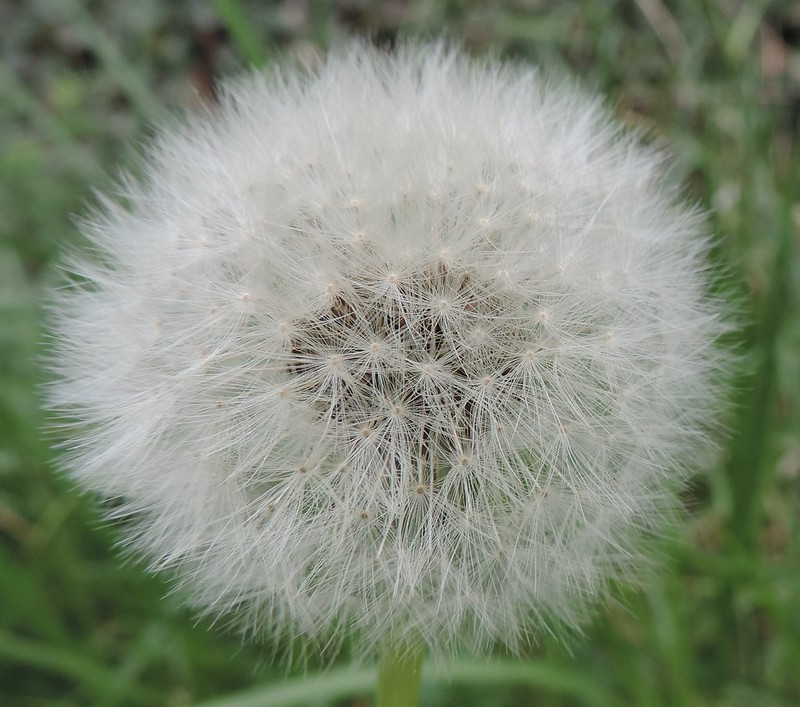
A dandelion seed head – did you ever play with one, blowing the seeds off and counting the number of blows it took to scatter them all, saying that the number equalled the time of day? We even called the dandelion seeds like this a “dandelion clock”.

Strange game when you think about it. Was there ever a relationship between the number of puffs and the hours of the day?

Yet, this image remains a powerful symbol of the passage of time, and hence of change.

It’s one of my favourite images.

i don’t know if you have ever stopped to think about what the inevitability of change really means. You might be surprised to know that it’s only in fairly recent times that scientists have begun to describe the universe in a historical and evolutionary way. Before this understanding there has been a way of thinking based on the idea of permanent laws – laws of physics, laws of the universe, laws of Nature – laws which don’t change. But this idea is undermined by the discovery that the universe is constantly changing. As it changes, it changes itself, because we have also discovered that everything is connected, that there are no “essential fixed, unchanging elements” which are the raw materials or building blocks on which these so-called laws act.

This new understanding shifts the focus from being to becoming, and gives becoming primacy.

All is in a constant process of becoming.

There are no fixed states. There are no permanent entities. There are no unchanging laws.

Yes, there is what endures. Yes, through our lifetimes there is plenty which seems to last. But ultimately, if you take a longer term perspective, nothing endures. Nothing is fixed.

Some people might find this scary. Some people might find the uncertainty this brings hard to handle. But I find it stimulating. Understanding the inescapable nature of change helps you to become aware of emergence – life is in a continual process of emergence – constantly producing the new, constantly creating.

It’s this connection between impermanence, change, emergence and creativity which excites me.

Shifting the emphasis from being to becoming, shifts your focus to the processes of creation. It also moves the attention away from objects and onto connections/relationships and actions. (See my series on this blog under the A to Z of becoming title, for practical ways to explore this)

This “dandelion clock” becomes a symbol of change, and so one of creation – after all it is a SEED head, literally bursting with potential new lives.

Read Full Post »

wired

“Always think of the universe as one living organism, with a single substance and a single soul; and observe how all things are submitted to the single perceptivity of this one whole, all are moved by its single impulse, and all play their part in the causation of every event that happens. Remark the intricacy of skein, the complexity of the web.” Marcus Aurelius

For many years the dominant model of reality has been one of discrete parts. Now we are beginning to understand that everything is connected, that nothing can be fully understood if it is cut out of reality and considered as a separate part. This shift in world view moves us away from the machine model with its command and control management systems, to the life model of the organism, always changing, never fixed or permanent, vibrant, dynamic and flexible. Life can’t be controlled like a machine, but it can be enjoyed as a flow….beautiful, good and emergent. Becoming not being.

Read Full Post »

« Newer Posts - Older Posts »