Feeds:
Posts
Comments

Archive for the ‘science’ Category

IMG_0571

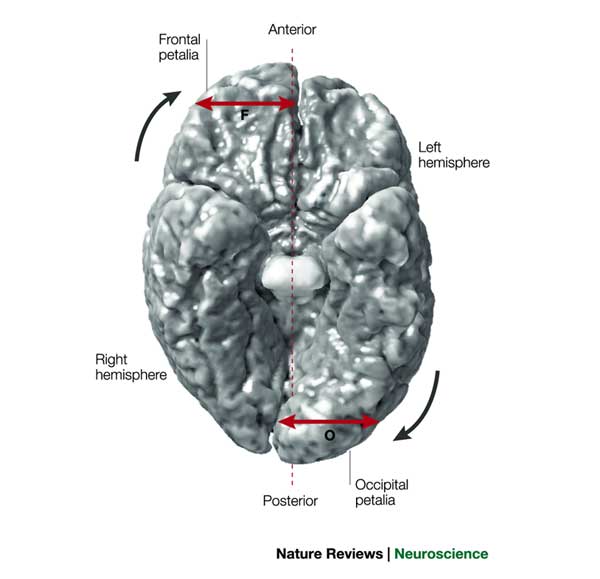
When I learned neuroanatomy at Medical School I was taught that the two cerebral hemispheres were symmetrical. There was no mention at all that they were in any way different. But look at this image above. (This is referred to as Yakovlevian Torque)

Clearly, the two hemispheres are NOT identical. In particular the right one is bigger at the front, and sits just a bit in front of the left, and the left one is bigger at the back, and sits just a little further back than the right.

Why might that be? Why the larger frontal area on the right, and occipital (back) area on the left?

Iain McGilchrist nicely summarises it by pointing out that how the left hemisphere approaches the world is by trying to grasp it. We try to make sense of the world by literally getting a hold of it – we want to understand it, to measure it, to predict what it going to happen by matching the patterns we see to those we have already learned from our experience, and we try to manipulate or control it. This is what the left hemisphere is really great at doing. Interestingly, the areas at the back of the brain are primarily for processing the outside world (our visual and auditory areas are toward the back, and the cerebellum which helps us to know whether we are standing up or falling over by orientating where we are in 3D space, is also to the back). The right hemisphere majors in making connections and maps. It has a significant role to play in all the skills we need to act as social animals.

So, one nice summary of why there might be this asymmetry in the brain, is to enable us to both grasp the world and to be social creatures. Amongst all the creatures on this planet we are probably the most able to manipulate our environment and the most developed as social animals.

There’s a huge amount more to this left brain/right brain understanding but I do think this is a fabulous starting point. Oh, and by the way, look at this
IMG_0349

Interesting, huh? And how come this has been pretty much completely ignored for so long?

Well, Iain McGilchrist’s theory, written up in full in The Master and His Emissary, or summarised in the Kindle Single, The Divided Mind, is that we have over developed the left hemisphere approach so much that we have developed the tendency to see only what we have already “learned” – so if we were taught that it was symmetrical, and we haven’t explored the differences between the two hemispheres, then we’ve become a bit blind. Time to start using our whole brains?


Read Full Post »

There are an increasing number of studies showing how plants have a much greater range of abilities than we realise. We tend to think that because they don’t have neurones and don’t seem to have even the most rudimentary brains, that they won’t be able to perceive, think, remember or imagine……ok, maybe I’m pushing this idea to its limit, but look at this recent study of how Berberis plants deal with infestations by parasites.

berberis


The Berberis berries can be infected by a species of fruit fly which injects its larvae into the plant’s fruit. Most of the berries have two seeds in them. To prevent the larvae from feasting on the second seed, the plant can “abort” that seed, resulting in the death of the parasite. A surprising strategy for a plant! But in fact, the plant is even more clever than this makes it seem. Not only has it “learned” how to prevent further parasitic infestation, but it can actually selectively “choose” to abort a seed depending on the chances of the parasite dying off….

If the Barberry aborts a fruit with only one infested seed, then the entire fruit would be lost. Instead it appears to ‘speculate’ that the larva could die naturally, which is a possibility. Slight chances are better than none at all. This anticipative behaviour, whereby anticipated losses and outer conditions are weighed up, very much surprised us. [say the researchers] The message of our study is therefore that plant intelligence is entering the realms of ecological possibility.” The Barberry, it would appear, has evolved a strategy where it’s able to adaptively and selectively abort its own seeds to prevent parasitic infestation. It’s considered the first ecological evidence of such complex behavior in plants, showing that they’re capable of structural memory, the ability to discern between inner and outer conditions, and anticipate future risks.

Read Full Post »

This undated handout and annotated image


Did you see this?

It’s a photograph of the oldest star in the Universe….or at least, the oldest one, the furthest away one, we’ve managed to see so far. It’s about 13 billion light years away and as the Universe is thought to be just over 13 billion years old, then the light from this star set off towards us just a few hundred thousand years after the Big Bang (of course, not everyone agrees there ever was a Big Bang, and we haven’t managed to see just that far back yet BUT let’s just take the theory for real for now)

In the beginning, we think the first element to appear in the universe was Hydrogen, and the strange thing is not only did the energy and subatomic particles which predated Hydrogen not just scatter everywhere, and fill the universe evenly, but Hydrogen particles were brought together in the first stars (like the one in this photo). These stars are giant furnaces, and in their cores they fused Hydrogen particles into Helium ones.

And then there were two. Two kinds of elements.

What happened next?

The bigger the stars, the greater the fusion capacity and the bigger the elements they could manufacture by connecting them up together.

Here’s a diagram illustrating the next steps

IMG_0564


Hydrogen fusion produces Helium; Helium fusion produces Carbon, Nitrogen and Oxygen; Carbon fusion produces Oxygen, Neon, Sodium and Magnesium; and so on with each level producing ever heavier elements…..Sulphur, Silicon, Phosphorus and all the other elements in the Periodic Table up to Iron.

Connecting elements together by fusion didn’t go any further than iron, and all the other natural elements in universe were produced by giant cosmological phenomena known as supernovae!

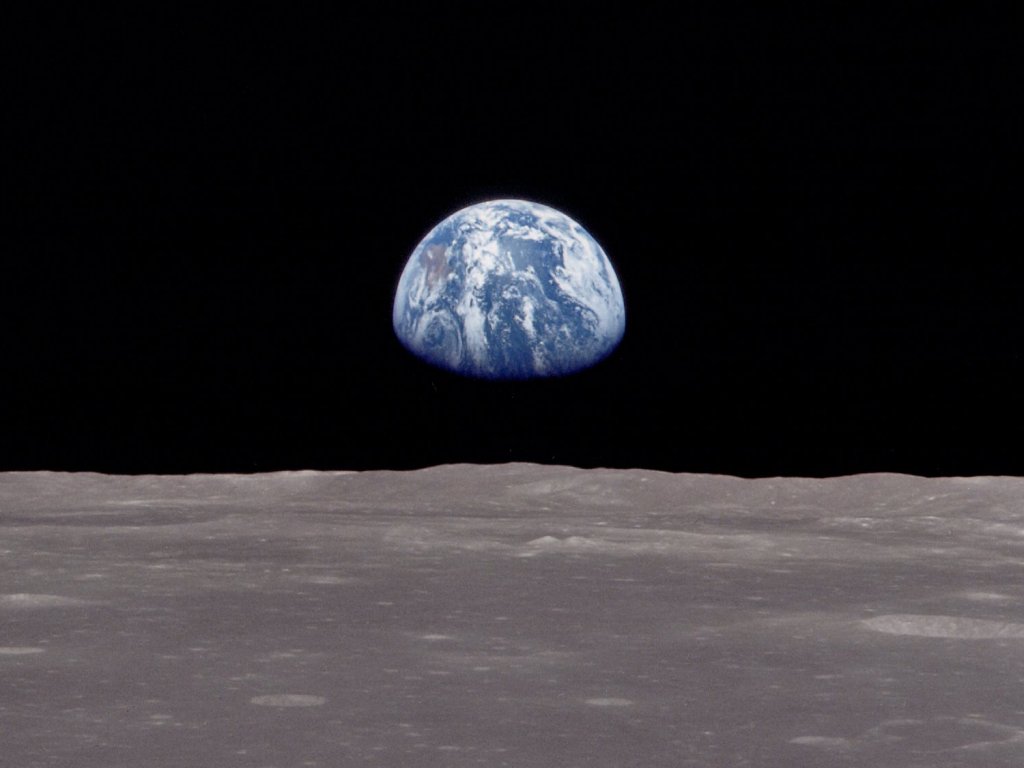
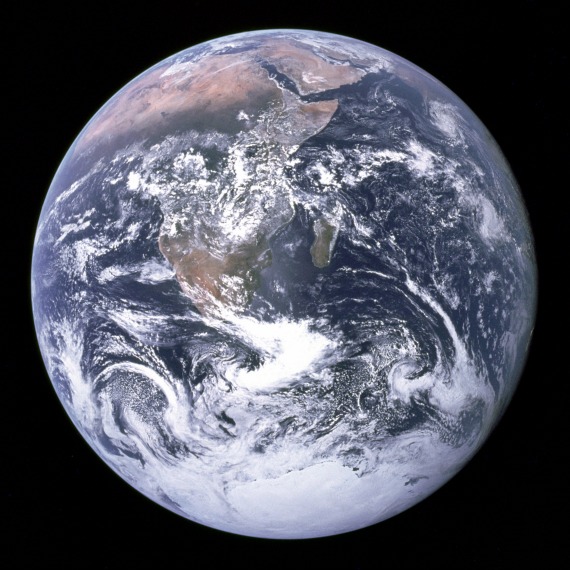
All of these elements scattered around the universe and the universe continued to connect them up, producing this –

IMG_0534


….our Earth.

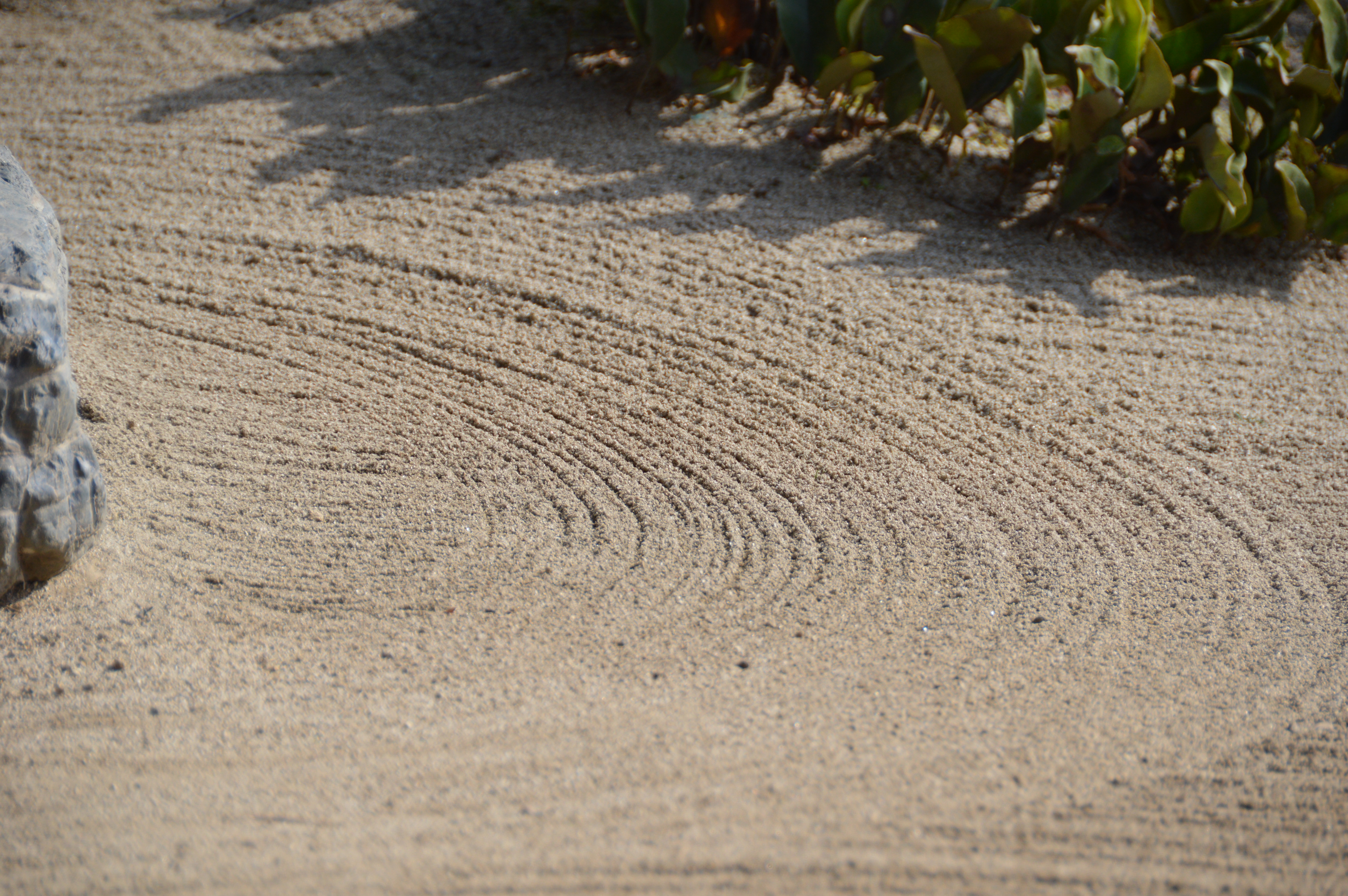
And the connecting didn’t end there. The universe continued connecting the different elements together to create beautiful structures, like sand particles…..

zen sand


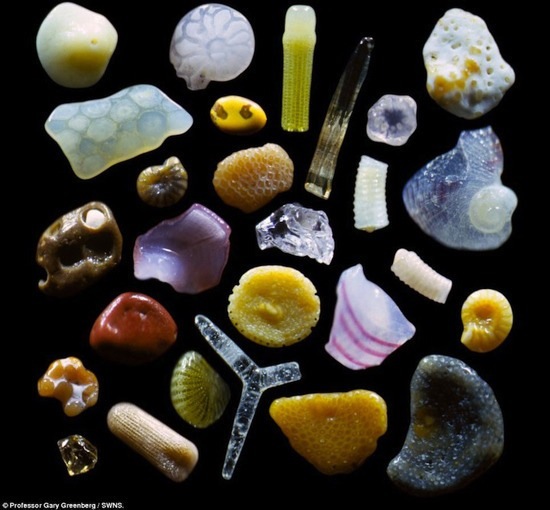
…which when you look more closely look like this…

IMG_0503


…and still the universe kept connecting everything to everything else to produce beautiful spirals of shells…

DSCN0692


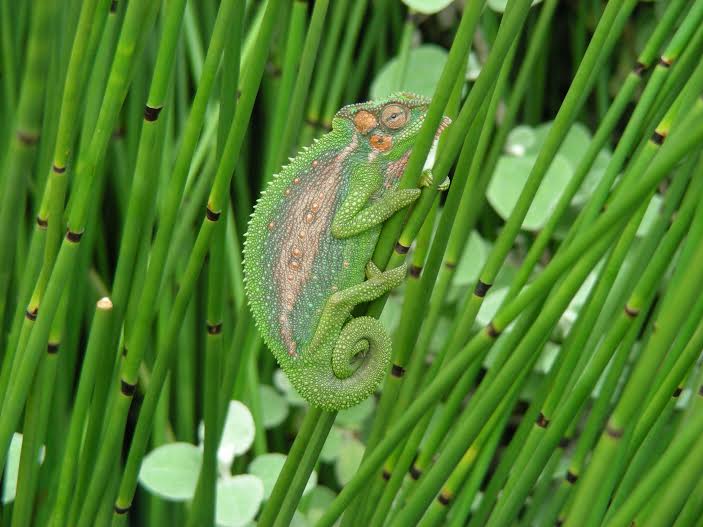
and…plants and creatures…..

unnamed-1


and, eventually…..

unnamed


My littlest grandchildren!

Just think! Over 6 billion human beings on this planet, the most complex, most connected phenomena the universe has ever created and every single one of us is unique – no two of us share the same DNA, the same fingerprints, the same irises, and certainly not the same two stories.

There IS a clear direction of travel in this story of the Universe – ever greater complexity, ever greater uniqueness, ever greater connectedness…….

I find that pretty thrilling actually!

Read Full Post »

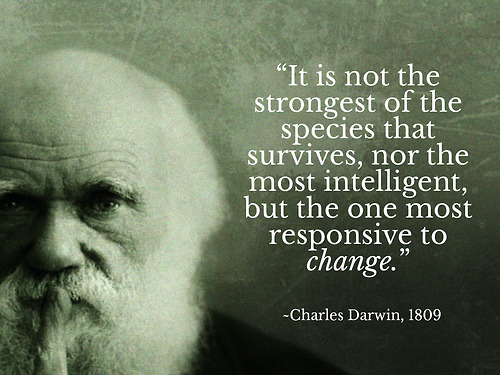
These last few days, I’ve been thinking about change. I was inspired do so when I read this quote from Darwin

tumblr_n0wbbutmHg1s9x3i1o1_500


I was also inspired by the writing of Marc Halévy who summarises four major changes in the Introduction to his “Petit traité du sens de la vie”, and as I started to write I could hear the sounds of Bob Dylan’s “The times they are a’ changin'” in my mind (little did I know that this month is the 50th anniversary of his release of the album of that name!)

In Part 1, I reflected on the ecological changes, especially the incredible population growth and consumption of non-renewable resources since 1800. Halévy says this change signals the end of the Age of Abundance.

In Part 2, I looked at the explosion of digital connections producing not just a web, but an entire noosphere. Halévy says this is the end of the Age of Ignorance.

In Part 3, I considered the replacement of the machine model with the organic one. Halevy refers to this as the end of the Age of Hierarchy.

So, here we are with the final part. Part 4. The end of the Age of “Abnégation”. What does he mean by that?

Well, where do we expect to find happiness and wellbeing? We have been through the eras where our happiness and wellbeing was taken care of by the Church, by the State, by the Party, or the University, or the Unions, or the Market. But now we know that happiness is found on the inside, not supplied from the outside.

With this realisation we can rediscover our uniqueness, and claim for ourselves our responsibility for our own happiness and wellbeing.

We can make our own quality of life autonomously, by changing our relationships with others, with institutions, organisations, Nature, and the world.

We now have the chance to become heroes not zombies.

Read Full Post »

We are coming to end of a 500 year or so period where we’ve engaged with Life as if it is a machine. The machine model is of distinct, definable components which when assembled in a regular, repeatable pattern produce a mechanism which produces stable, predictable outcomes.

DSCN0175

That model was the foundation of the industrial and technological age. We used it to create ever more efficient tools to work with.

One problem with that model is that we went on to apply it to the world, and, indeed, to Life. From this perspective, the Earth is a storehouse of resources to be consumed, and Nature is something which human beings have to subdue and control. From this perspective disease is a malfunctioning part, and the application of an “evidence based” tool will fix it. From this perspective, organisations of humans, from communities, to factories, shops and offices, to whole societies can be controlled by applying a strong hierarchy. A ruling elite can control the cogs in the machine – the rest of the human beings in that organisation. With the “right” rules and processes, all organisations can be made to do whatever the planners, controllers and managers want it to do.

We’ve even squeezed our understanding of science into this model. The mechanistic view of science states this – science is a matter of “observation, description, explanation, prediction and control”. This might work with machines, but we are beginning to discover, it doesn’t work when dealing with Life, human beings, Nature, or what the rest of us might call reality.

So, what’s the new model which is going to help us to see things differently for the next 500 years? It’s the network model. Take a look at this

IM short intro .005


Quite simply, networks are nodes and links. Some nodes have many links, others have only one or two. The nature of the links in organisms is “non-linear” , and a connected network of non-linear links produces a “complex adaptive system”.

Here are a couple of characteristics of complex adaptive systems which change everything –

They develop “emergent” behaviours. That means that the parts combined create something new, a new form, a new behaviour which could not have been predicted from an analysis of either the parts or the links. Emergent behaviours are one of the keys to growth and evolution. They are the basis of adaptability. They are unpredictable. You’ve heard of the “butterfly effect”? Where a small change in the starting state of a system produces huge changes in the end state?

The economy is like this. It is not predictable. 2008 financial crash. Predictable? Controllable?

Nature is like this. Tsunamis and earthquakes. Predictable? Controllable?

Human beings are like this. Choices, illnesses, responses to treatments. Predictable? Controllable?

Life is like this. Every single living organism is a complex adaptive system embedded in higher and higher orders of complex systems, from families, to communities, to species, to ecosystems, to planets……Predictable? Controllable?

But here’s another characteristic of these systems –

Self-organisation. Organic, complex, adaptive systems have the capacity to self-organise, self-regulate, self-repair, and in the case of living organisms, to self-replicate and make themselves (autopoiesis)

So the organisations of the future will be networks, not hierarchies. We can see now that human beings are not separate from Nature, and that all of Life on planet Earth is co-dependant, connected, and co-evolves. There isn’t Nature out there to predict and control. There isn’t an Earth out there to be plundered and consumed with no consequences to Life.

IMG_0440

We can see a different way to live coming down the track towards us. We’re only at the beginning of this one, but here it is – we live, not in giant machine, but as complex organisms inextricably connected in a finite, complex Earth.

blue marble


Read Full Post »

There is a lot change going on. Let’s consider some of the big changes over the next few days.

Part 1 – ecological change

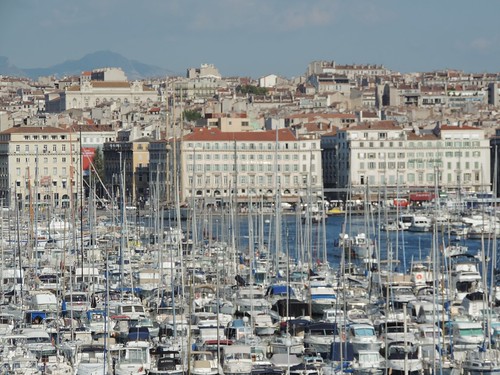
Marseille


Two disturbing elements – population growth and resource depletion

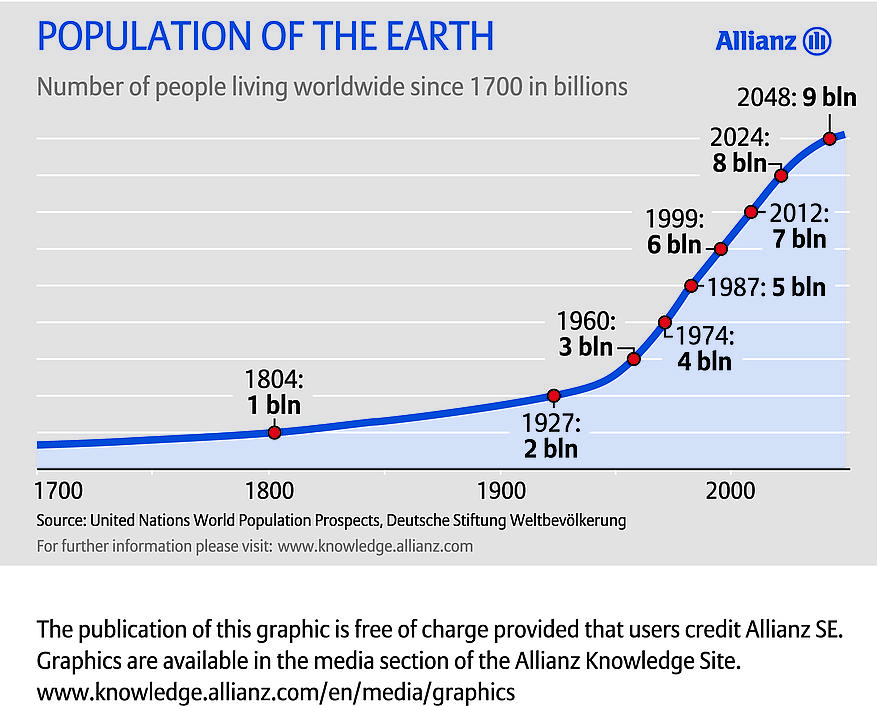
First up, population growth – the increase in the number of people living on this little Earth is phenomenal in the last couple of hundred years. We’ve gone from 1 billion to 8 billion between 1800 and now. It’s not just the sheer numbers which are important, it’s the rate of change – the increase is increasing!

demographic_change_global_population_150dpi_3_57881


Secondly, non-renewable resources. So far, human beings have treated the world as if it is an infinite source of anything we want. But the problem is that we have consumed 80% of ALL known NON-RENEWABLE resources since 1800. Most of it has gone. How much is left?

BBC-stockcheck-02


Put these two developments together and what do you have? A rapidly increasing number of human beings rapidly consuming the finite resources of the Earth.

What does this mean?

The Age of Abundance is past.

And yet, in every country of the world, economists and politicians push for “growth” – greater and greater consumption by more and more people. This isn’t sustainable. We are going to hit the point where the “growth curves” start to dive, dive, dive.

So, the questions include, when and how are we going to change course?

The times they are a’changin’……….

Read Full Post »

Blue zones” are communities around the world where the life expectancy and quality of life is higher – in these communities more people live to be 100, and more people are still healthy when they are 80. (In fact, it turns out that most people who live to 100 were healthy when they were 80)

Researchers have found that there are common themes amongst these communities. David Buettner, who published these findings, identifies nine of them, which he calls the “Power 9

In summary, the first common theme is movement – and not vigorous exercise or actually using a gym membership! They mention “natural movement”….you know, the opposite of sitting all day.

(Oh, of you’ve got a minute, check out this video about how to move more…watch out for the brilliant suggestion about where to part at the supermarket)

Three are about food and drink – the 80% rule, which is about stopping eating before you are full ie when your stomach is 80% full; the “plant slant”, which is the same as Pollan’s “mainly plants”

(see Michael Pollan’s Food Rules)

….and drinking a glass or two of wine a day!

Then there is one about “time out” or “down time” – taking a pause in the day to relax or nap.

Two left……one is having a sense of purpose. Do you know that having a sense of purpose can be worth an extra seven years of life!? By sense of purpose they mean everything from having a reason to get up today, to still having important things to fulfil in your life.

And, finally….and last, but not least, I’d say….THREE that are about our relationships with others –

“Loved ones first” – having children, parents, partners, siblings who you really care for.

“Belong” – almost ALL the centenarians interviewed belonged to a faith-based group

“Right tribes” – this is an interesting one….it’s about being part of social circles where the others are also healthy and long living. I think that’s fascinating, because I remember reading that if your friend’s friend becomes obese, then you are more likely to become obese. So, there is a common phenomenon of social networks where people influence each other through apparently indirect ways – goes both ways apparently – healthy or unhealthy – I wonder what tips the scales from the one to the other given that most networks will have both…..careful who you hang around with!


Read Full Post »

There are three kinds of “attractors” described by complexity science. An attractor is a kind of local organiser, producing distinct forms from the patterning of energy flows.

Here are three photos of mine which will help you see these three common patterns. First up, the “point attractor” which creates spirals or whirlpools, organising the local region around a single point.

photo

Secondly, here’s a “loop attractor” pattern, where there are two points of organisation close to each other. This creates a pattern of alternating zones, or states, figures of 8, or “infinity loops”.

Bark marks

Thirdly, there are “strange” or “chaos” attractors where it is hard to see any distinct pattern but the region is being organised around multiple, interacting points.

amazing detail on stone


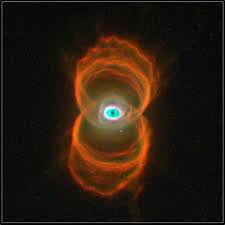
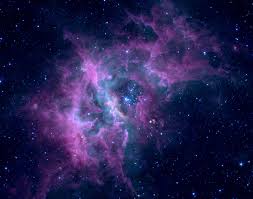
Similar patterns can be seen throughout the universe, from the microscopic to the cosmic level. Here are three astronomical photos showing large scale attractor patterns (I didn’t take these ones!).

A beautiful, point attractor, spiral.

images-1


A fascinating loop attractor….

images


And, finally, a strange attractor pattern….

images-2


I think we see these patterns in disease as well, from situations where everything gets stuck, going round and round the same restricted path, to those alternating, or flip-flopping states, like highs and lows, and, then thirdly, the chaos patterns where there is such a level of dis-integration that everything feels a mess, feels chaotic.

I wonder if you can see any of these fundamental patterns in your world?

Read Full Post »

Diversity

These are not my photos, but here are two amazing revelations of diversity.

The first is a magnification of grains of sand…..yes, sand, the kind of sand you find on the beach. Did you have any idea that grains of sand were so diverse?

IMG_0503


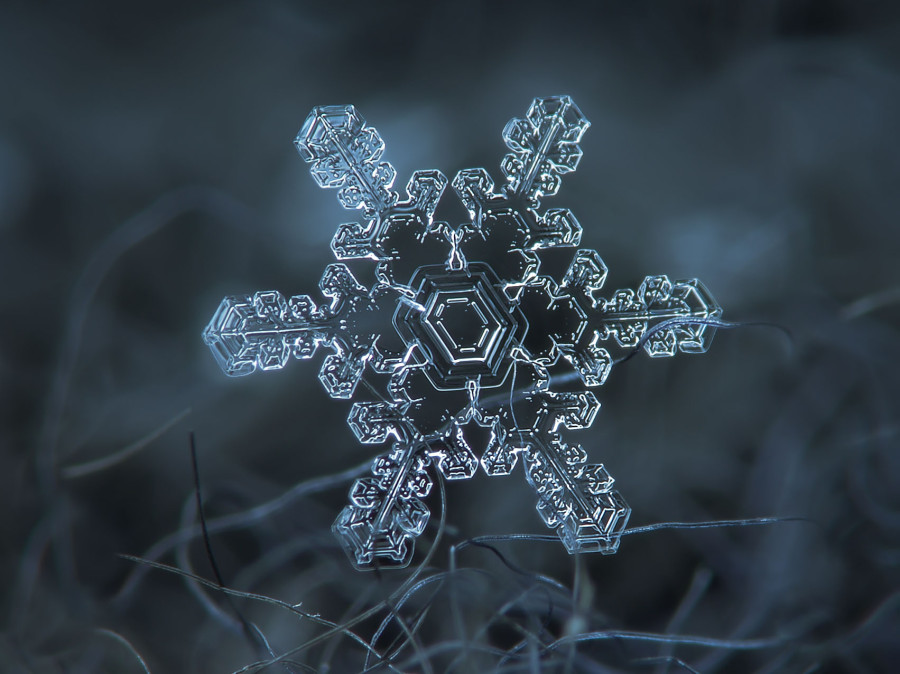
Then, you might have come across these amazing photos of snowflakes…..here is just one of them.

o-19-900


So, folks, if even grains of sand and snowflakes are so diverse, can you imagine how diverse more complex forms are….like lifeforms? Like human beings?

This is one of THE main purposes of the universe – to produce ever more uniqueness, ever more diversity

Read Full Post »

Oh, this is fascinating! We tend to think of plants as pretty static creatures, despite the fact that every large plant was a tiny seedling once upon a time. They move. They move a lot…..but slowly.

Time lapse photography reveals just how much a plant moves. I’m sure you’ve seen many such videos, but click through the link below and watch this one because this one reveals the plant’s neurobiology, its intelligence, and its ability to interact with, and respond to, other plants.

Seriously, I don’t think you will ever have seen something quite like this. You won’t look at plants the same way again!

Read Full Post »

« Newer Posts - Older Posts »