Feeds:
Posts
Comments

Archive for the ‘Uncategorized’ Category

4 elements

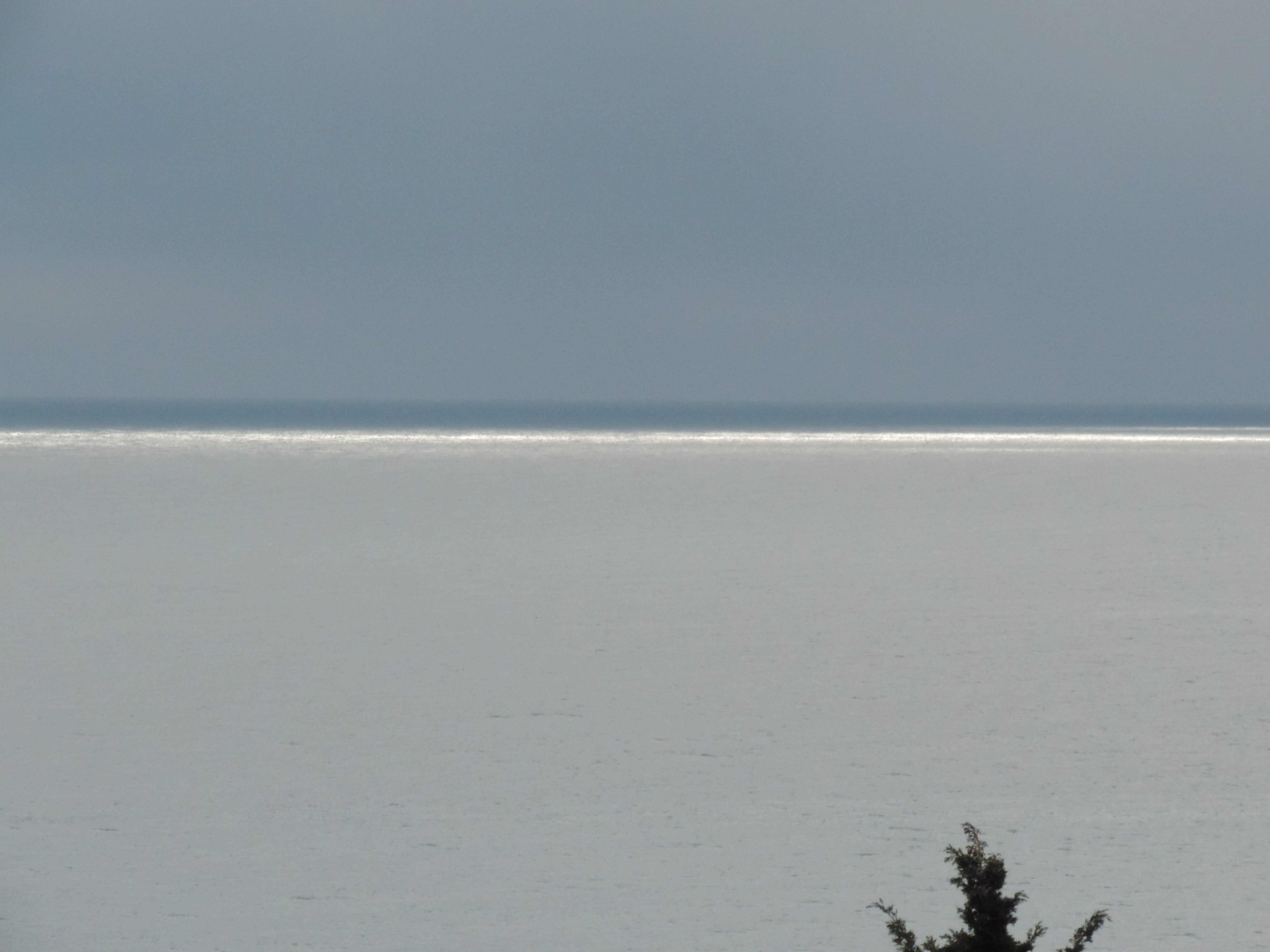
As I stood looking out over the Mediterranean I saw this.

Water. Stretching in every direction. From this distance it looks calm, almost smooth. But from where I stood I could hear the waves breaking on the rocks, the water spraying into the air then slipping back down from the land into the sea again. Without water, no Life.

Fire. That silver shining strip of light caused by the Sun’s rays sparkling the sea. But it’s a false horizon. Beyond that apparent edge, if you look carefully, you can see more water. The fire of the Sun warms the water and warms the Earth. It’s the source of all our energy. Without the fire of the Sun, no Life.

Earth. Look more closely now, beyond the water on the other side of the sunlight. Can you see shadows? Hazy impressions of something more solid?  The Earth. Islands, other lands, rocks and stones and sand. Earth, the element which changes so slowly. Without earth, no Life.

Air. No, you can’t see the air. But as I stood there I filled my lungs with it. The clear, fresh, sea-scented air. The most invisible of all the elements, constantly changing, as I breathe in and breathe out again. As you breathe in and breathe out again. As all living creatures breathe in and breathe out again. Without air, no Life.

Then look again. Look down at the bottom right hand corner of this photograph. See the tree? Doesn’t she look like she has a fancy hat on? Doesn’t it seem as if she is looking out over the water, the fire, the earth and the air?  It seems to me that she is stretching both her arms up towards the sky and celebrating. A joyful tree.

We share all of this, you, me, everyone we know, everyone we don’t know, and every other living organism on this one, small, finite planet.

Read Full Post »

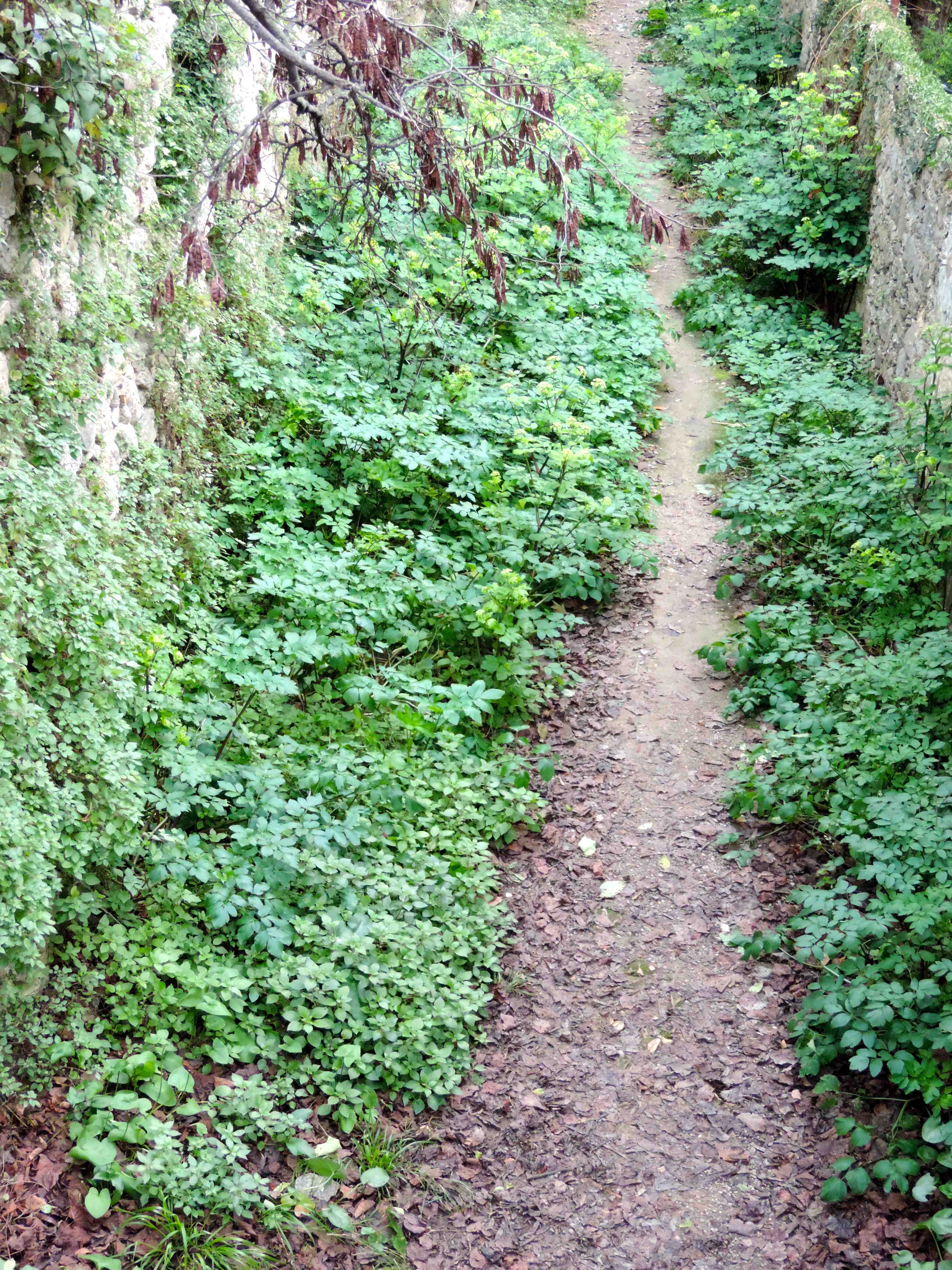
What do you think about this path?

path

Not very impressive is it? Not sure it would catch your attention at all if you stumbled across it.

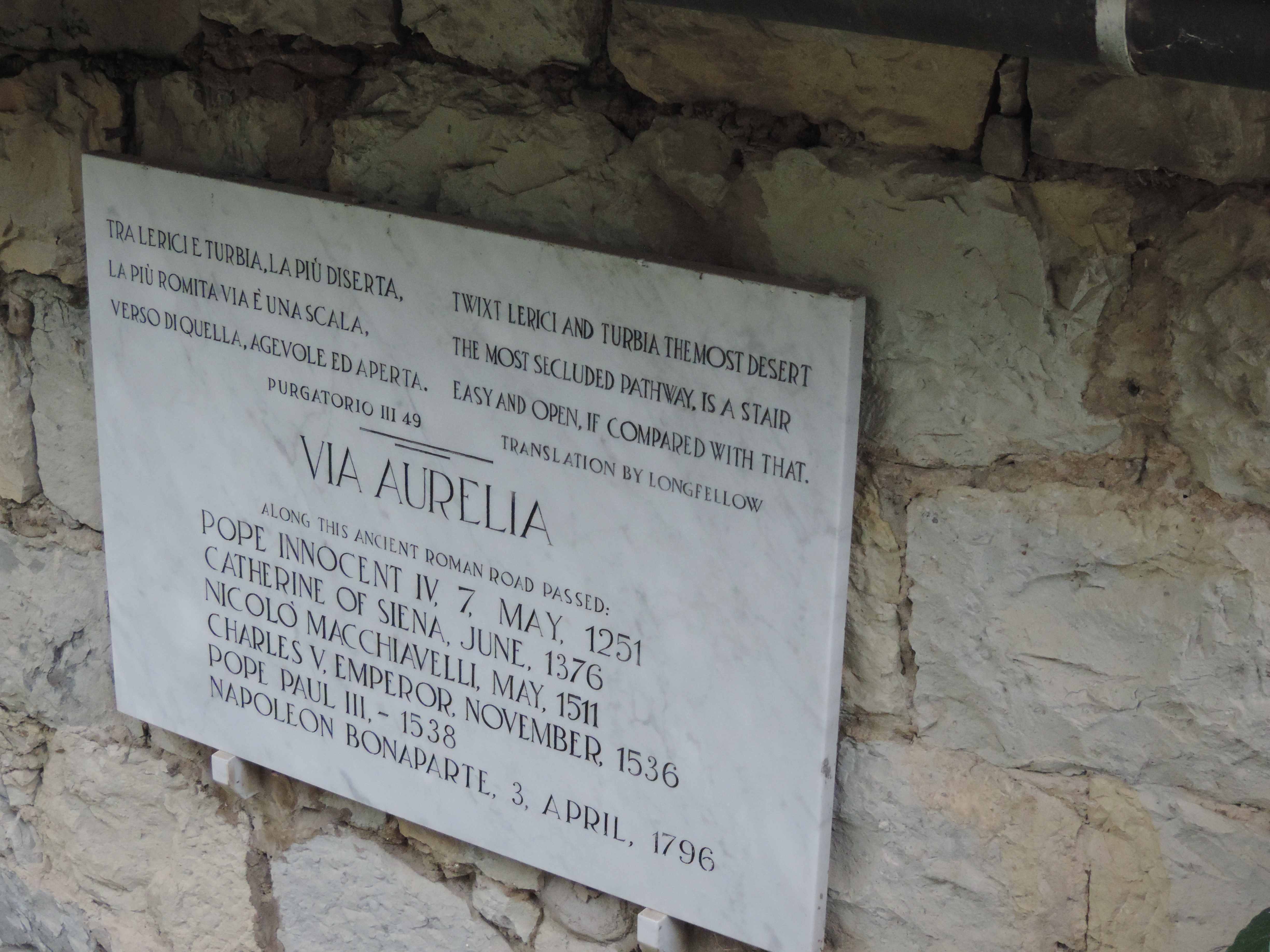
But then what about this sign on the wall telling you a little bit about this path, the “Via Aurelia” (nice name, huh?)

notice

Now, I’m sure that’s not a complete listing of all the famous people who have walked along this very path, but even knowing that Napoleon, Emperor Charles V, Macchiavelli and Catherine of Siena, (not to mention the various Popes!), all walked along here completely changes it doesn’t it?

I’m sure that if you were to read some of the stories about where these people were coming from and where they were going to, then this little, apparently unimpressive little path, would take on another quality altogether. Try it for yourself, look some of these people up on the net and imagine the part of their story which describes them walking along this very path.

There’s no doubt in my mind that stories make all the difference. They transform our world.


Read Full Post »

obstacles

How do you deal with obstacles?

When something gets in the way of your project, or if someone blocks you, what do you do?

Confusingly, there are two opposing pieces of advice. Either you interpret it as the universe telling you that you’re going the wrong way, so you change course, or you should think it’s the universe asking you to prove how hard you want whatever it is you’re working towards.

I’ve tried both interpretations, but I must say I don’t find either to be particularly convincing!

What do you do when you come up against the immovable? Push harder? Jump up and down? Scream and shout? Cry “unfair”? Nope, none of those strategies are very satisfying either.

What does a river do?

It flows around it. I like that. I’ve come to think that obstacles, difficulties, opposition and delays are all a part of the rich tapestry of life. I guess what I mean is that I don’t ascribe a greater meaning to them. I don’t think “the universe” is actually trying to tell me anything.

Rather, I’m learning that there will always be bumps in the road, problems to solve, things that break or stop working. My choice is to adapt. That’s what we humans do so well….accept and adapt. We can’t use brute force to make reality conform to our fantasies, but we can always learn more about the nature of reality……or as some say, “every day is a school day”.

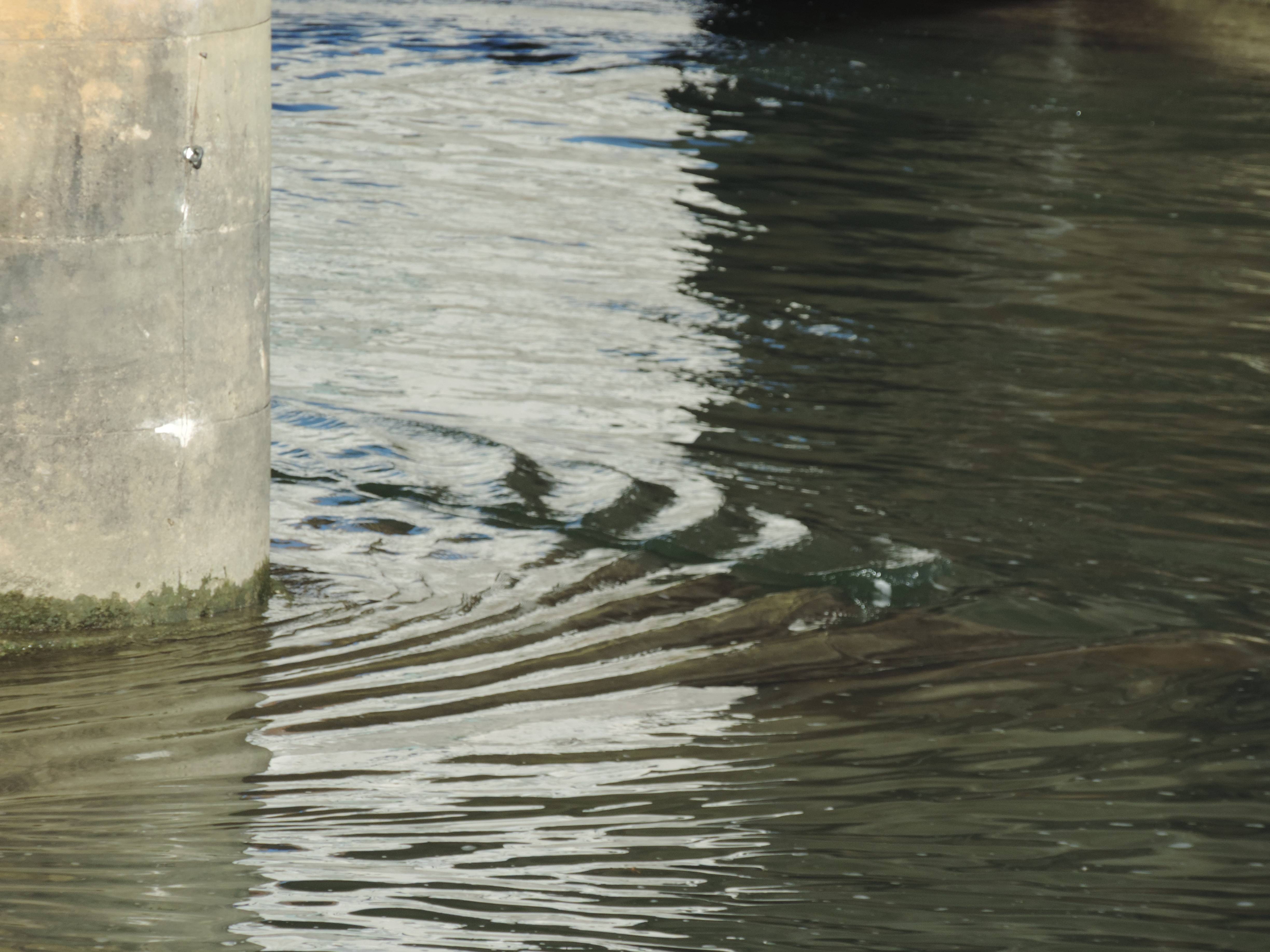
But more than that, look, the river does more than flow……it creates beauty as it does it!

This photo is of the River Charente flowing through Jarnac. There’s a road bridge over the river and I was struck by the beauty of the patterns as the water flowed around one of the concrete pillars. Mesmerising.

I thought….there’s a lesson here…..

Read Full Post »

Iain McGilchrist, in The Master and His Emissary, says we use our two cerebral hemispheres differently. The hemispheres, remember, control the opposite sides of the body, so the right control the left hand, and the left hemisphere control the right. It’s the same with vision where the right field of vision is the responsibility of the left hemisphere and the left field of the right hemisphere. I’m simplifying here, but you get the idea. In birds which have their eyes on the sides of their heads instead of in the front of their faces, each hemisphere controls the opposite eye but the idea is the same.

The right hemisphere supports a broad, vigilant attention. In a bird the left eye, therefore, is taking everything in to be aware of predators.

left eye

See how this duck is looking at me?

They use the left hemisphere to focus the right eye on details….for example, when picking out food.

right eye

There’s something else interesting about the field of view of interest to each hemisphere.

In we humans, the right hemisphere is more interested in what is far from us….

distance

while the left is more interested in what is close up….

catkins


We need to use both hemispheres – a whole brain is better than half a brain! But Iain McGilchrist shows that we’ve all developed a rather bad habit – using the left hemisphere to focus on parts and utility to the extent that we ignore or disregard the right – which seeks out the personal, the particular, the connections and the whole.

Read Full Post »

Not just a bucket of ice

I get a lot of lovely feedback from you all about my photos. Thank you. My photos bring me lots of pleasure, and they’ve also become THE inspiration for each of my blog posts. In other words, they act as a creative spark for me, and, I hope, they do that for you too.

I notice beauty….especially in the natural environment around me…but, more than that, I am often stopped in my tracks by a moment of wonder.

Today’s photo is not so much a beautiful photo, it’s just a bucket of ice, and not an especially beautiful bucket, nor a particularly spectacular ice form. But, it absolutely stopped me in my tracks…..

First of all I’m amazed that there is so much water in this bucket. I’ve got a couple of these buckets and use them when I’m weeding or gathering up leaves. They’ve been sitting empty recently, because I’m no fan of gardening in the rain, or the snow! But, look, it’s rained so much this month that the bucket has almost filled with water!

We had a historic drought with several heatwaves in the high 30s/low 40s (centigrade). Full release from water restrictions here didn’t happen until December. Then around Christmas and New Year it was much milder than usual. Come January we’ve been dropping down to minus two or so every night, so there have been many frosty mornings.

But let me dwell for a moment on just how much it’s been raining. It’s filled this bucket and restored the “source” to a healthy vigour, but it’s also flooded many fields around here. The contrast between the drought-induced crispy brown, burnt grass underfoot, and the splashy sloshy mud and puddles now is really something.

Actually, here in SW France, in the Charente Maritime, we are spared most weather extremes and we certainly haven’t experienced anything like what I’ve seen reported from California and other parts of the USA which are hit by hurricanes, tornadoes or polar “snow bombs”! But the contrasts here are enough to make me aware there’s something not right with the climate.

The second thing that struck me was how the water in this bucket turned to ice. Thick ice, not just a slim skin of it. Isn’t water astonishing? This substance, made up of molecules of hydrogen and oxygen, which is all around us, but which we barely think about, has this ability to exist in three distinct phases – the common fluid phase we call water, the solid form we call ice (or snow or hailstones), and the gaseous form in the air all around us. In each of these phases it looks and behaves completely differently.

This phenomenon of phases exists in all complex systems and forms. As a system moves towards a “far from equilibrium” position, it tends to reach “bifurcation points”, and leaps into such a different state we call it a “phase changes”. By and large, phase changes are “emergent”, you couldn’t predict them. These terms all come from complexity science and I find they help me make sense of myself, others and our world. All of this floods into my mind as I gaze at this bucket of ice.

Then I notice something else…the circle of green grass around the base of the bucket, an area devoid of the frozen snow and frost just a little bit further away. Isn’t that strange? Isn’t that striking? There must be a small zone around the bucket where the ground temperature is slightly higher….slightly higher than the snow covered grass, and slightly higher than the ice bucket.

That set me off thinking about micro climates, and how nuanced and diverse reality is. How often do we blind ourselves to the rich complexity of reality by using the definite article? We talk about “the weather”, or “the climate”, or “the ground”, or…..well, you get the point. This generalising, categorising and labelling, all such great strengths of the left cerebral hemisphere, reduces our world. It simplifies reality, turning flows and networks into static objects, each separate from the other.

Not only does this way of looking blind us to change. It blinds us to difference and diversity.

So anything which draws us up, stops us, and makes us look more closely, engages the right cerebral hemisphere, and enables us to see the particular, the specific, and the individual.

Well, there you go, it turns out this is a lot more than “just a bucket of ice”!

Read Full Post »

Stones

When I was a young boy sometimes, at the weekend, we’d take a trip, my family and me. We would drive up towards the River Tay where it widened, as a mouth might open wide, as eyes that would grow as big as saucers, when it saw the vast, dark, cold North Sea, just ahead.

We’d find a beach, a particular beach, another enthusiast had confided to us, and walk carefully, gathering small pieces of agate. From what I remember some were easy to spot, glowing already like jewels in grey gravel, but others didn’t look much at all until you took them home and put them in the little rock tumbler my dad had set up in the garage. I can’t remember how long he ran the motor but I’m pretty sure it was a long time, but worth waiting for, because when he opened the cylinder up, there would be some of the most beautiful, intricately painted (or so it seemed) jewels, transformed from something ordinary into something extraordinary.

I’m sure those experiences nurtured my sense of wonder, convinced me that there was beauty to be found, magical, astonishing beauty to be found all around us.

Maybe those experiences also taught me that even what might seem dull or uninteresting at first glance could reveal a unique and specific beauty within.

This photo isn’t of those stones I found as a child, but one I took in Capetown a few years ago, when my friends took me to a “scratch pad”, where you could rummage around over a few square metres of pebbles and collect the ones you wanted, filling the empty jar you paid for at the entrance.

That much later activity reminded me of the first one, noticing both children and adults excited by what they found, holding stones up to the light, calling to each other to “come and see this one”.

All of this came back to me as I was browsing a collection of Mary Oliver poems, “Blue Horses”, where she has two poems about stones, both of which reminded me just how fascinating and beautiful both stones, and the every day, can be.

The poems were “Watering the stones” and “Do stones feel?” You’ll be able to find them both if you go looking for them….

Read Full Post »

Stories of our lives

“I think what I’m trying to say is that every human being could be said to be as much an accumulation of stories as of molecules. I am, in part, all the things I have read over the years. They don’t leave me. They settle inside me like – how can I put it? – like sediment.….we ought to be mapping out … the sequence of the stories that go to make up a life.” – from The Seducer, Jan Kjaerstad.

I’m re-reading Jan Kjaerstad’s remarkable Norwegian trilogy, The Seducer, The Conqueror and The Discoverer. I read them the years they were published in English, which was 2003 for the first volume. Do you find, if you return to a book after an interval of several years, that there’s a real mix of the comfortably familiar and the surprisingly new? I read some passages and remember them as if I read them yesterday, and yet others I feel I’m reading for the first time.

That passage I’ve quoted above is about how stories create who we are, perhaps more than our genes do. I’ve long been fascinated by our stories and felt so privileged to hear patients’ stories every day. In fact, I thought that was at the core of my work as a doctor – to enable people to tell their unique stories, to help them understand what those stories mean, and to co-create new stories with them, stories which would heal.

But this passage from the novel suddenly made me think of other stories. Not the ones we tell ourselves and others, but the ones we read.

I don’t know why I haven’t given much thought to that before, but, surely, the stories we have read, not only stay with us, but fashion the lenses through which we perceive the world, turn our attention in certain directions and away from others, lay the foundations for our habits…..our habits of thinking, feeling and acting.

I don’t think it’s just the fiction stories which have that power. It’s the non-fiction ones too, the histories, sciences, biographies, and so on.

How important is it to me that my grandpa read me all of Walter Scott’s Tales of a Grandfather? How important is it that I looked forward every week to the part work magazines of “Look and Learn” and “Knowledge”? How important is it to me that I read the myths and folklore of different countries?

As I start to think about this, a whole collection of different books come to my mind, and I’m starting to wonder about the ones which settled, like sediment, inside me, and to begin to map out the stories “that go to make up a life”.

Does that inspire you to do the same?

Read Full Post »

Flow

Turn up your volume…..

We had the longest, most severe drought here in France in 2022. The grass turned brown and crispy underfoot. There was one heat wave after another and many weeks without rain.

The Roman spring opposite where I live (the French word for a spring is a “source”, which I think I prefer) was hugely diminished. The water level dropped and dropped. There was still some water making its way underground into the Roman aqueduct but not enough to flow over the edge of the pool. This meant the source seemed still and silent. It wasn’t immediately apparent there was any flow at all. Here’s a photo from towards the end of summer…

If you look closely you’ll see the water level is below the top of the stone at the outlet.

Flow feels like Life.

Without the flow of blood around your body you’d die. Without of the flow of air in and out of your lungs you’d die. Without the flow of nutrients in the form of food and drink you’d die. We are flow – the constant flow of materials, energy and information into and through us, creating us, remaking us, a Life Force living through us.

And in the rhythms of the natural world those diverse and interconnected flows come and go in terms of intensity and power.

Sometimes we are vivacious. Full of life and energy. Sometimes we are quiet. Settled and at ease.

But always…..we flow.

Read Full Post »

Panopticom

Peter Gabriel, one of my all time favourite musicians, has just launched a new project/album, called “I/o”. He’s going to release one track at a time, each one to coincide with a full moon. As he says in his video describing the project, every time we look up at night and see a full moon approaching we’ll know the next track is about to be released. I’ve not known anyone else do that but it sure appeals to me.

The idea of an album being released track by track over a period of time of course is similar to all the long form streaming fiction we are so familiar with in recent times. The habit of binge watching long form fiction has been countered by a growing number of producers making their viewers wait a week at a time to see the next episode, something that only works first time unless you are wonderfully disciplined. (Have you ever done that? Have you ever watched, say 10 episodes just one episode per week once all 10 have been made available?)

But it also reminds me of how novelists like Dickens used to publish their stories in serial form in periodicals.

Here’s the video of Peter Gabriel describing the project and the first track, Panopticom.

The title, Panopticom, is a neologism. He picked up on the Jeremy Bentham idea of a “panopticon”, a prison designed to facilitate maximum surveillance of the prisoners, and turned it around to imagine something that would allow us, the ordinary people, to be able to see what the people with power were doing. He briefly describes his idea of an actual “panopticom” (with an “m” for “com” or communication), which I find both intriguing and inspiring.

I don’t know how we get there, but I’ve long since believed that transparency, total transparency, is the only way to reduce the widespread abuses of power by politicians, corporations and the rich. If the “Panopticom” can be realised, then maybe it will be at least one step towards that goal.

Check it out and see for yourself. I think this is an idea worth developing.

Read Full Post »

Entangled

We’ve been having such changeable weather recently, each day wave after wave of heavy rain interspersed with periods of bright sunshine and blue sky. So, I took my chance when the sun came out and walked up to the edge of the wooded part of the garden.

I’d noticed this particular tangle of trees from the back window and was intrigued to explore it further. What caught my eye was the depth of entanglement….several different trees, now all without their leaves, each of them stretching their branches and twigs between and through each other.

I’ve cut away a lot of brambles, ivy and creepers from this particular group in this first year in the garden. You can see the huge iron rings which I found clasped tightly between the trees as they’ve grown up through them.

There are a number of pieces of old agricultural equipment scattered through this part of the garden. The hamlet where I live now was once a farm owned by several generations of one family. My house was originally the farm house and our gite was a large barn. I think these huge rings would have come from an old wine press, bits of which I’ve still to uncover in other parts of the garden. You can guess how many years ago they were thrown there from the fact the trees have lifted them up off the ground as they’ve grown.

The patterns of tree branches and twigs are endlessly fascinating. Although the pattern of growth occurs fairly simply by dividing and subdividing, throwing off new growth along the stems, the final positions and forms are completely unpredictable. There’s no way you could draw them in advance.

I love how all the elements in this photo are so intricately entangled. I love the diversity and co-existence you can see here. And of course all the creatures who live in and around these trees aren’t visible at the moment but I see the robin and the blue tits in here regularly, and recently saw the bright red flashes of two woodpeckers.

There are whole ecosystems in there. How lucky am I to be surrounded by such beauty and complexity?

Read Full Post »

« Newer Posts - Older Posts »