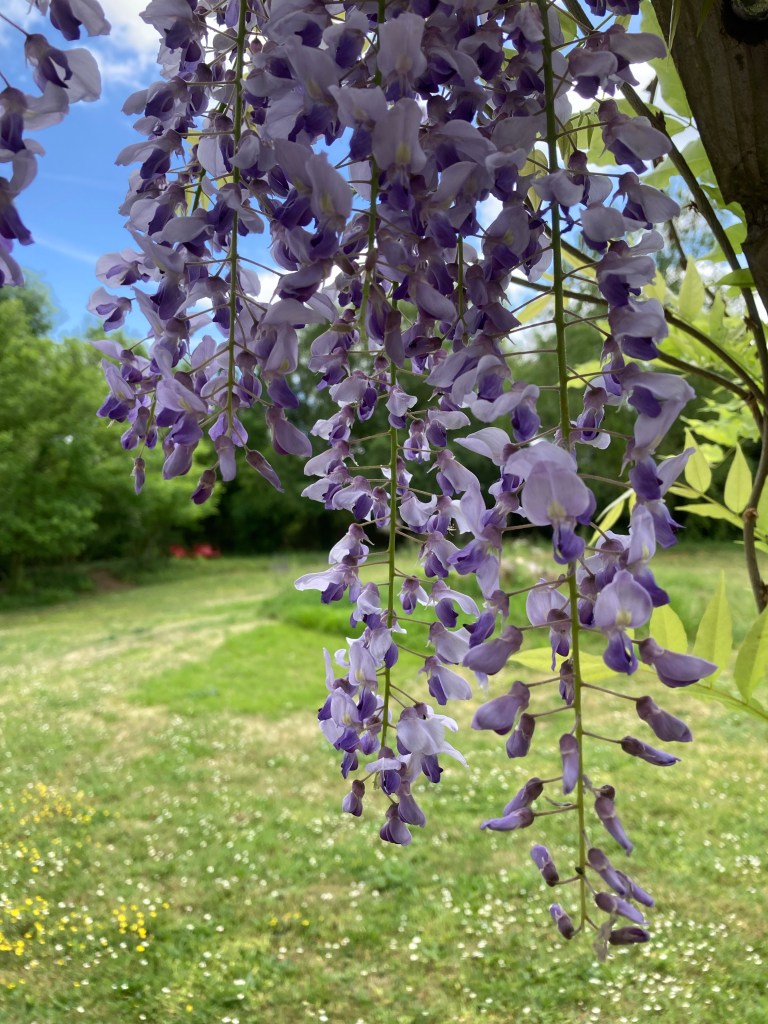
I moved house in December, and there’s a wisteria plant in the garden here. I was really looking forward to it blooming in the Spring but in South West France the beginning of the year was abnormally warm. That resulted in various plants and trees, including the wisteria, producing their early blossom. Then, the temperatures plummeted, with minus 2 one night, minus 3 the next, and minus 4 the final night before the place started to warm up again.
All around the village, pretty blossoms turned brown. Disaster.
Well here we are a couple of months on and the wisteria has started to produce some flowers. Here’s a photo of some of them. Aren’t they glorious?
Yet again I’m amazed to witness the power of plants. Their resilience, adaptability and opportunism means they surprise you again and again.
Aren’t these great qualities for us all? The ability to spot opportunities and grasp them, the ability to adapt, and the self-healing, self-repairing power of resilience.
I’ve got a bit of a thing about taking photos of benches! I think it comes from the days when I was working as a GP and my days were super busy. Sometimes I’d pass a park bench as I drove from one house call to the next and the thought of being able to sit there and just do nothing for a wee while was tantalising but impossible!
Benches say to me “sit down, take the weight off your feet and your mind” and that is SUCH good advice. We all need to pause from time to time, even if only for a few moments.
We need those pauses to catch our breath, break out of vicious cycles of over-busyness, and give us opportunities to reflect, take stock and see the bigger picture.
Have you got any favourite places to enjoy a pause?
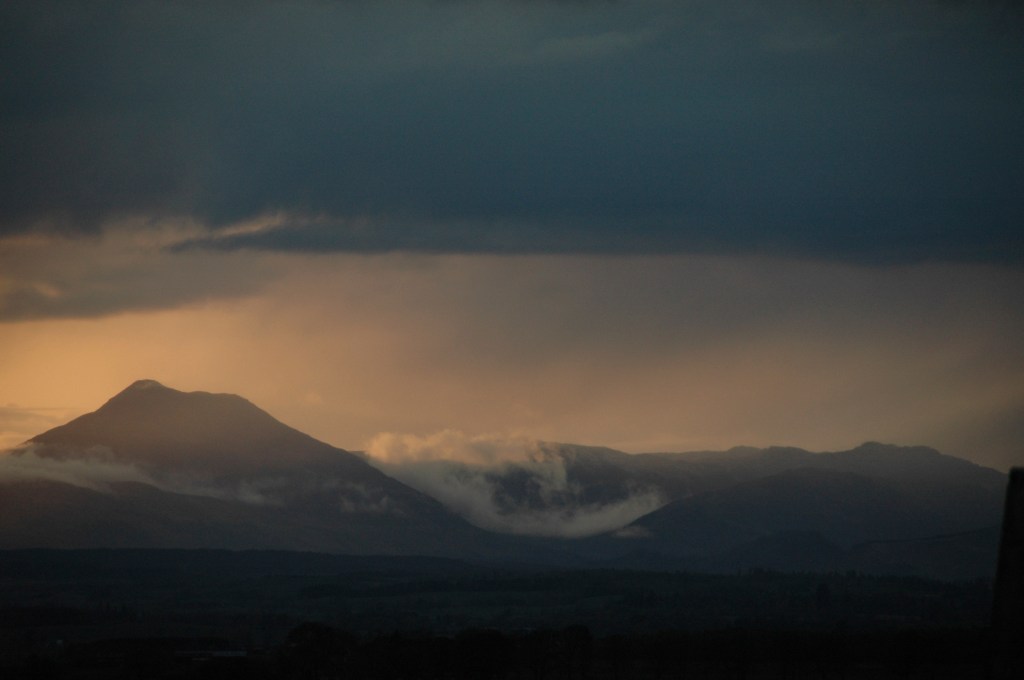
Ten years ago this month I took this photo from my bedroom window. The mountain is Ben Ledi and what amazed me was that every day it looked different. The mountain itself probably changed so slowly that it looked exactly the same one day after another but the light, the clouds, the mists…..they combined to create a brand new scene, not just daily, but every time I looked.
On this particular day, two things struck me. Firstly, the colour of the sky as the sun lit the clear area below the dark grey cloud. Secondly, the wisps of constantly changing mist, or low clouds, which slid along the surface of the mountain, closely following its slopes and curves.
One patch of mist, towards the right of this image, curled up towards the sky, circled around, and headed back down towards the Earth. It seemed to me I was watching mist become cloud, and cloud become mist.
Absolutely beautiful. Take a moment to enjoy the dance.
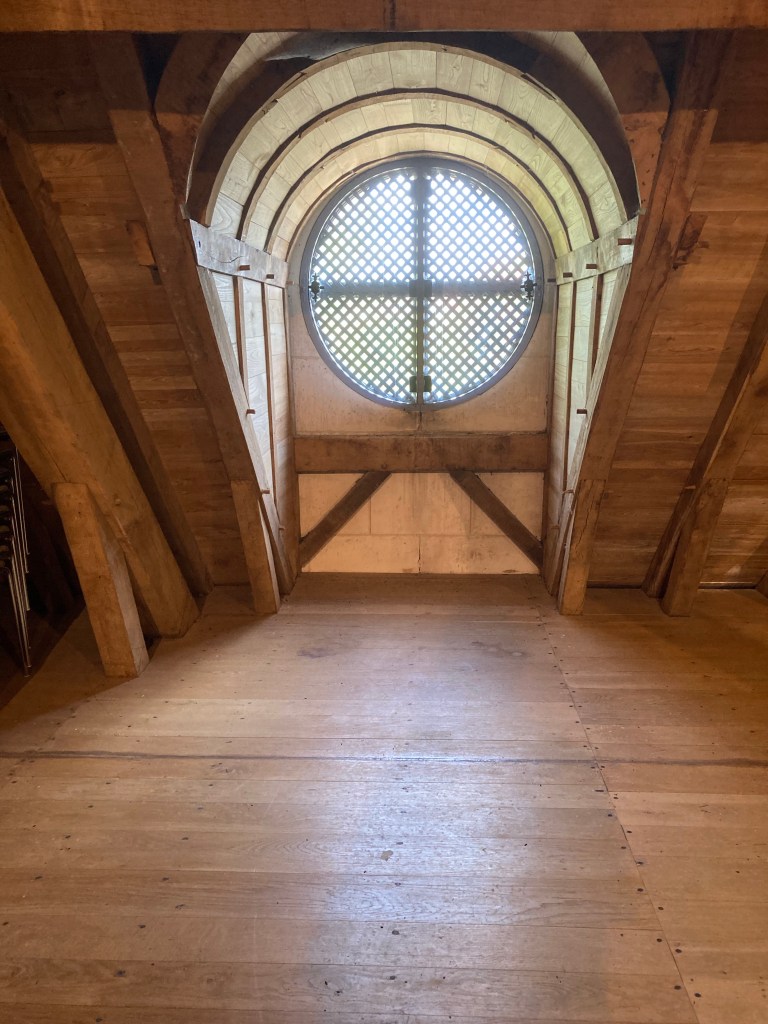
There are some windows which are simply beautiful even when you can’t see through them to what lies beyond. I think I find round, or arched, windows especially appealing. Can you think of any windows which you really like?
What this image does for me is set off a train of thought about how we frame our views of reality. Is that a big leap for you? Stick with me for a moment…..
Have you ever noticed how your mood or mindset seems to influence what you see on a particular day. If you’re feeling a bit sad, you might notice other sad people, come across sad scenes, or feel that everything around you is bleak and grey. On the other hand, when you’re feeling happy, it can seem the world is full of delights and smiling people. You get the idea…
But it’s more than mood that creates a frame of mind. Our beliefs do that too. I think you can see that with luck. People who feel lucky, get lucky. People who consider themselves unlucky, get plenty of opportunities to confirm that. Which raises an important point….what beliefs are you carrying around with you – about yourself, about others, about the world?
My daily experience is that people are kind and friendly. I’m sure that’s partly because I believe that, at heart, most people are indeed kind and friendly. Of course I come across some people who are quite the opposite. I know they exist. But, in my life, they are by far the minority.
So here’s my question to you….do you believe the universe is a friendly place?
Actually, it was Einstein who first posed that question.
For if we decide that the universe is an unfriendly place, then we will use our technology, our scientific discoveries and our natural resources to achieve safety and power by creating bigger walls to keep out the unfriendliness and bigger weapons to destroy all that which is unfriendly and I believe that we are getting to a place where technology is powerful enough that we may either completely isolate or destroy ourselves as well in this process.
“If we decide that the universe is neither friendly nor unfriendly and that God is essentially ‘playing dice with the universe’, then we are simply victims to the random toss of the dice and our lives have no real purpose or meaning.
“But if we decide that the universe is a friendly place, then we will use our technology, our scientific discoveries and our natural resources to create tools and models for understanding that universe. Because power and safety will come through understanding its workings and its motives.”
Our two cerebral hemispheres allow us to engage with the world in very different ways, particularly by the types of focus they enable. If you browse through my blog, or search “McGilchrist” you’ll find lots of detail about this.
One difference is that the left hemisphere is always on the lookout for the familiar. It seeks to re-cognise what we encounter and to classify it according to previous analyses. The right hemisphere however is primed to spot what’s new. It seeks to focus on the unfamiliar, the unique, the particular.
You could say that the right hemisphere promotes discovery by seeking novelty.
Maybe that partly explains our common fascination for new life, for seedlings, shoots and buds. Maybe it explains why we find the unfolding of leaves and petals so beautiful, or why we enjoy seeing growth, development and emergence.
The right hemisphere helps us elevate becoming over being.
One of my favourite ways to photograph a plant is with the sun shining through its leaves or flowers. I suppose this breaks the same rule about shooting with the sun behind you, which I wrote about the other day. But in this case the sun is nowhere to be seen.
I like this image because plants capture the energy of the sun and turn it into structure and nutrition. They also gobble up carbon dioxide from the air, and in exchange, produce oxygen.
If plants weren’t able to transform the sun’s energy then none of us would exist. Plants evolved before animals, after all, and if they’d never emerged then the Earth wouldn’t have developed the protective atmosphere which it has now.
I also like this image because it seems as if the plant is radiating light. To me, it seems as if you can see its Life Force, a phenomenon we are all aware of, but which isn’t considered nearly enough in health care.
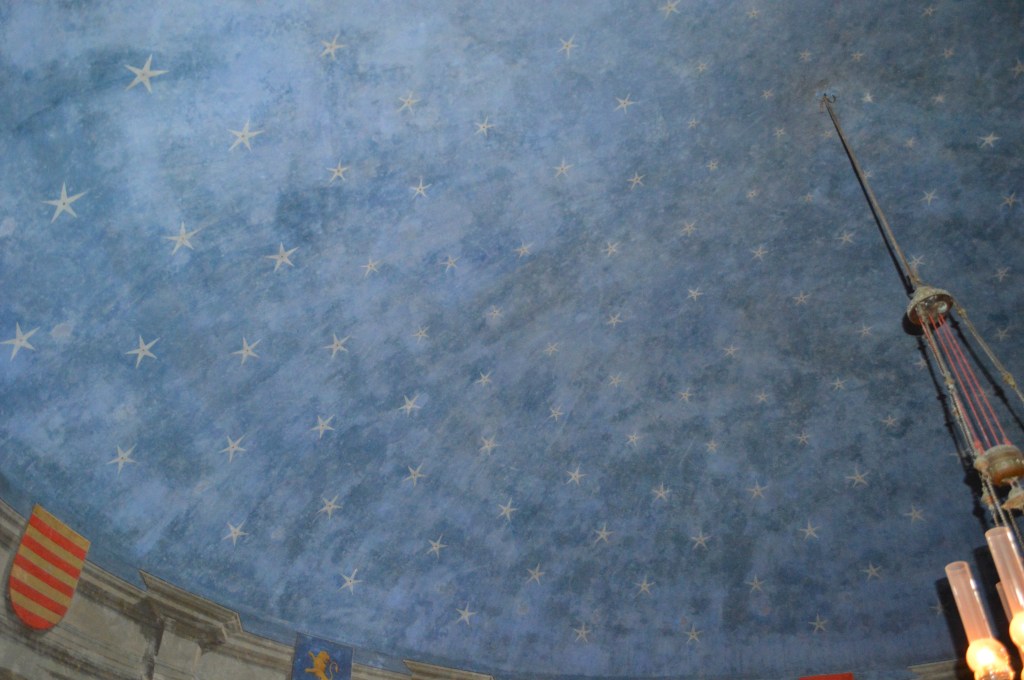
The ceiling of this room has been decorated with stars which makes you think of the night sky, although you know, instantly, that it’s not at all like the night sky. How do we know? The stars are distributed too regularly. The universe doesn’t do “regular”, well, not a grand scale.
I know one of the big questions scientists ask is why is the universe so “lumpy”? If the Big Bang happened as theorised why didn’t all the matter created distribute evenly as the universe expanded? How did we end of with randomly distributed stars, planets and galaxies?
Looking at this image again today I’m thinking of a novel I read last week where one of the characters pointed out that although we have described patterns of stars and called them constellations, those stars exist in three dimensions and are not nearly as close to other as they appear when we see them in the shape of a constellation. That’s just one of the mind boggling things about the night sky, the fact that the light we see from each star set off towards us hundreds, even thousands, of years ago, so as we gaze at the night sky we are witnessing the past.
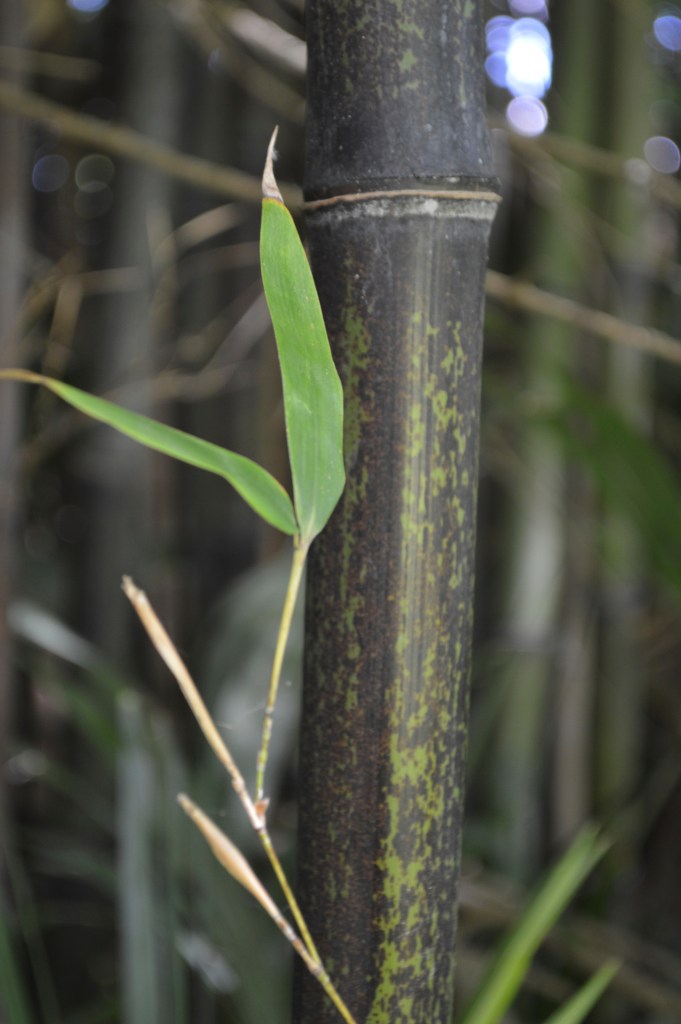
Bamboo is a remarkable plant. It’s strong, yet light, firm, but seemingly delicate. It’s a remarkable coloniser, spreading rapidly and many people fear it in their gardens because of its ability to grow and spread virtually uncontrollably.
I think it’s a great example of nature at its best….strong, resilient and adaptable.
We need those qualities too, and I’m still surprised that Medicine pays such little attention to the natural mechanisms of defence, repair, healing and growth.
From anti-inflammatoires to anti-biotics, anti-histamines to anti-depressants, modern Medicine seems based on the war concept of fighting enemies in an attempt to overcome them. During the pandemic we saw repeated attempts to find a magic bullet – lockdowns, masks, vaccines – nothing stemmed the tides of infection, nothing inhibited the proliferation of variants and a whole succession of waves.
At various stages in this pandemic I’ve thought – the virus isn’t the problem, it’s how we are living – because we’ve seen that those hit hardest are those who are most vulnerable – those living in poverty, those living in overcrowded housing, those already suffering from other incurable chronic ailments, the frail elderly, those living in care facilities or working in poor work conditions with inadequate ventilation, space, etc.
But are we addressing those issues? Because the magic bullet never came, and, probably it never will.
We know a lot about what we have to do to promote and sustain health and adaptation. We just need to turn that into political will and tap our human creativity to follow through.
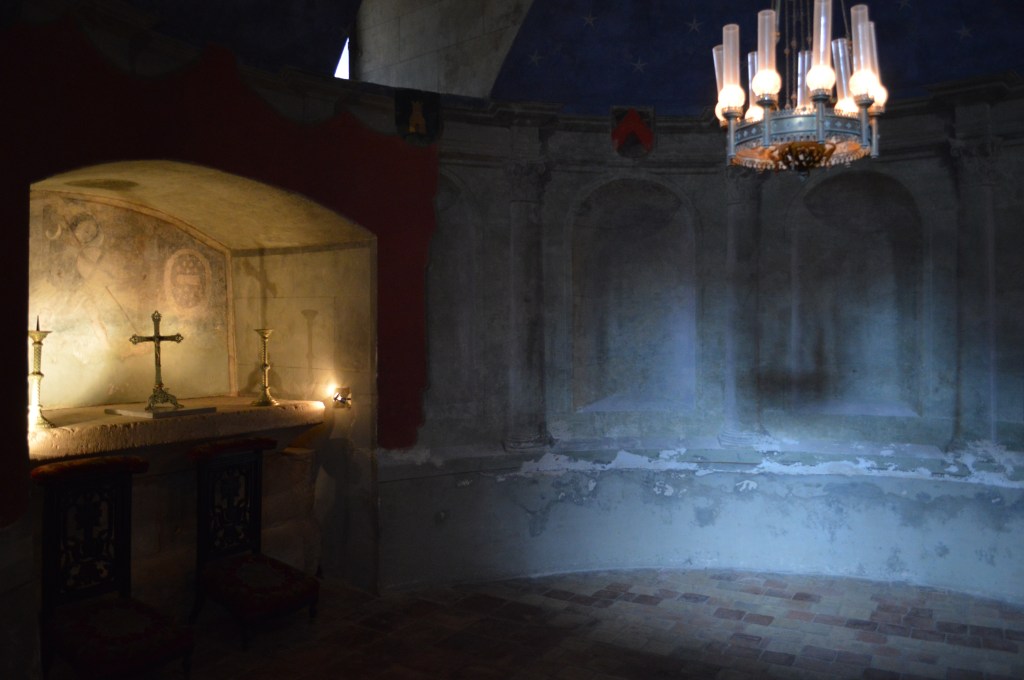
I took this photo a few years ago inside Montaigne’s chateau. I loved that visit. It’s a fascinating place. In this one room, used as a place of worship I noticed that the light was of two very different kinds. The natural light coming in through a high window seemed softer or gentler than the artificial light in the altar, so I took this photo to capture both kinds of light, setting the exposure to a general setting which balanced the total light in the room.
Now that I see the image there’s a distinct difference of “temperature” between the two kinds of light. The artificial light seems warm, and the natural light seems cool. Don’t you agree?
This is one of many photos I have where the light itself becomes a main subject. I find that so appealing – it doubles the pleasure. I enjoy looking at the features of the room AND I enjoy seeing the light itself.
So here’s my “challenge” for you today….see if you can notice the light, either in your home, or when you’re out and about….not just what the light illuminates but the light itself.
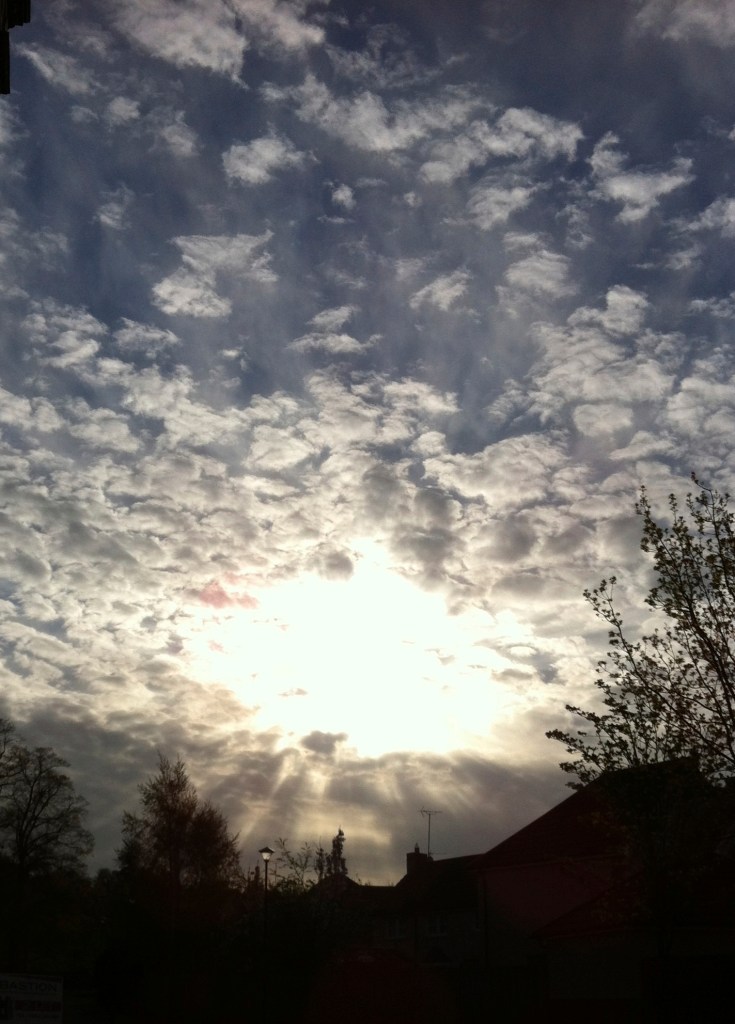
You know there’s a general recommendation not to take a photo “into the Sun”, and certainly it’s not a good idea to look directly into the Sun at any point.
However, using a camera, with an LCD screen, there’s no risk and, actually, sometimes the results can be stunning. As is the case in this photo.
With an automatic exposure setting everything in the frame is under exposed in relation to the Sun, but that just heightens the drama.
Two things I notice in this photo is how the foreground seems so dark it looks like night time – actually that contrast between the dark land and the bright sky reminds me a particular Magritte painting – you know the one? And the other is the sheer beauty of the sky. Aren’t those clouds simply gorgeous?
I welcome constructive criticism and suggestions. I will not, however, tolerate abuse, rudeness or negativity, whether it is directed at me or other people. It has no place here. ANYONE making nasty comments will be banned.