Feeds:
Posts
Comments

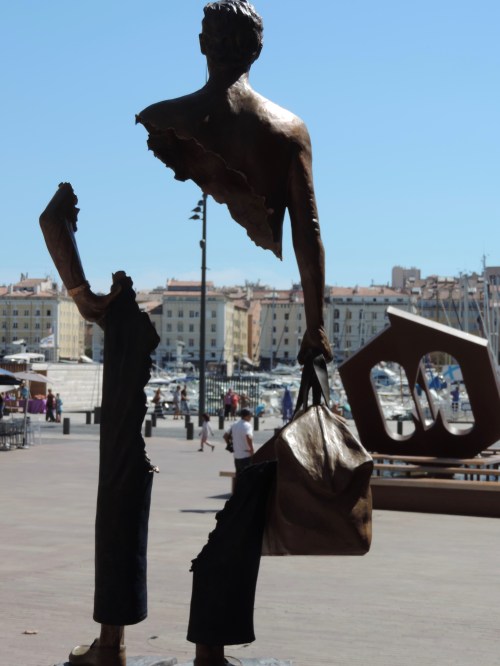
marseilles sculpture 2

It’s been a year since I wrote my last post here and I’m ready to start sharing my photos and writings again. I’m going to do that from now at a different address – bobleckridge.com If you have a look you’ll see there are different sections – things to see (my photos), things to read (my posts), things to listen to (readings a new podcast I’ll be starting) and things to watch (videos).

My idea is to have a self-hosted site (in case any of the particular internet companies go belly up!), using the world standard of WordPress, and make that be the place I express myself. I just want to capture some of my experiences, my thoughts, ideas and creations and I hope you might enjoy and/or be inspired by them.

I think every single one of us is unique and we all have a one time opportunity to share with others what our unique experience of living is, and has been, like.

Curiosity is probably my core instinct in life. I’m driven to explore, to notice, to learn about and to understand. I think curiosity makes me realise I never know enough, and that every single person is utterly fascinating. Really! I believe that! That’s what I discovered over four decades of work as a doctor. I never met a single person who I didn’t find fascinating, and I never met one who wasn’t unique.

I think uniqueness emerges out of the infinite web of connections and contexts from which we all emerge. In other words, what makes us unique, is the totality of the personal experiences, memories, thoughts, feelings and imaginings which occur moment by moment, in the environments in which we live.

Uniqueness will be the theme of my new website. I’d be delighted if you’d come and explore and I’d be even more delighted if you got in touch and shared your own, unique explorations with me.

Before I stop adding to “Heroes not Zombies” though, I’m sharing an updated version of last January’s post. Living in France now I experience the issues of delivering health care in two separate cultures and places – France and Scotland. There are striking similarities between the two countries but each is, surprise, surprise, unique.

Here it is.

Dealing with the crises in health care – a 7 point plan.

Wherever you live I bet there are at least three health stories you’ve been coming across pretty regularly. One is that “demand for health care is going up”, another is that “the country’s health services are struggling to cope with the demand”, and a third is, “it’s getting harder for patients to get help when and where they need it”.

What’s the problem?
Much of the media coverage focuses on the “demand”, by which they mean the sheer numbers of people going to hospitals for health care. In the UK there is a version of this unmet demand story in the number of people seeking GP consultations. In France, there’s concern about “désertification médicale”, which is the phrase used to describe areas of the country where there are too few (or no) local doctors.

The issue of waiting times seems to be a key story every winter in the UK. How long it takes to be seen when you present to the Emergency Department of the hospital (A&E, or “Accident and Emergency” as it’s called in the UK), or even how long you need to wait in the ambulance outside of the hospital. I don’t read those kinds of stories so much in France, but there are certainly more and more stories about how long people have to wait to get an appointment to see an ophthalmologist, an ENT specialist, a dermatologist or a gynaecologist.

Why are there problems with waiting times? Why can’t people get access to the health care they need in a timely manner?

1. There aren’t enough doctors and nurses.
There wouldn’t be long waiting times if there were enough doctors and nurses to attend to the patients’ needs. There aren’t enough, and if there were, they would be able to devote all the time necessary to each patient but there wouldn’t be a huge queue of people waiting to be treated. There’s another part of this story, because A&E departments (Emergency Departments) are not places where anyone is expected to stay. Everyone (at least everyone who survives) goes home, or is transferred to another part of the hospital for further care. Staff can’t move patients through A&E to inpatient care quickly enough because there aren’t enough inpatient beds.
2. There aren’t enough inpatient beds.
There are more patients needing inpatient care than there are beds to put them in. And beds aren’t enough. Once a patient is in a bed, they need to be cared for….by staff to keep the ward clean, staff to make food for them and feed them, staff to care for their daily needs and staff to manage their diseases and get them well enough again to go home.

So can we fix that first?

1. Increase the numbers of healthcare staff to the level where there are enough of them to meet the needs of sick people.

2. Increase the numbers of beds available in hospitals to cater for the needs of sick people.

Isn’t that the whole point of health services in the first place? To meet the needs of the sick in society.
All those patients waiting on trolleys for a hospital bed have been assessed as needing the complex care of a hospital because they have complex needs. However, not all those patients already in the hospital need the complex care of a hospital. Some of them are elderly, and/or disabled and unable to look after themselves at home. They need to be looked after somewhere else. Here’s the next item on the list.
3. There are not enough places available in care facilities which are not hospitals.
Places in care facilities, (nursing homes, residential homes etc), need sufficient numbers of trained and support staff to provide the care for their residents. There aren’t enough care facilities, and there aren’t enough care workers.
Another factor which adds to the pressure on hospitals is that time and again we hear that many people pitch up at A&E simply because they can’t get to see their local GP. They are told they have to wait several days, or even weeks, for an appointment so they go to the local hospital instead – with problems which could be, and should be, managed by GPs in the community. Why can’t people get to see a GP in a more timely manner?
4. There aren’t enough GPs.
There never have been.
The scourge of General Practice is not having enough time to treat each patient as well as the doctors would like to. Were five minute appointments ever adequate? Are ten minute appointments adequate? Do they give the patient enough time to say what they want to say? Do they give the doctor enough time to listen, to examine, to diagnose, to offer treatment, to give the patient enough information to give informed consent to the treatment, to allow enough time to discuss options and alternatives?
You’ll have a hard time finding someone who can answer yes to that.
There aren’t enough GPs. And there aren’t enough support staff in the GPs’ teams either.

Let’s turn to demand……..it’s going up!
And there’s absolutely not a shred of evidence to suggest it’s going to do anything other than continue to go up.
The proportions of the population over 60, over 70, over 80, and, yes, over 90 are all rising. All the evidence shows that older people have greater health needs. Demographics show us that, simply due to the fact of ageing populations, demand will increase. Although life expectancy is going up, disease isn’t going down. There are more people suffering from more chronic illnesses every year. There are more people suffering from two or more chronic illnesses every year. This is what doctors are referring to when they talk about increases in “complex problems and needs”.

The biggest delusion suffered by those who created the health service in the UK was that the NHS would make the population so much more healthy that eventually demand for it would shrink.

That’s never happened. And it’s not likely to happen.
The thing is, health care isn’t the biggest contributor to the health of the population. Health Services treat the sick, they don’t make the population healthier. What does? Arguably, it’s education.
5. Better educated societies are healthier societies.
Look at this, for example –

“ UNESCO reports that each extra year of a mother’s schooling reduces the probability of infant mortality by as much as 10% and that a child whose mother can read is 50% more likely to live past age five.”

Read that carefully. I read it several times. A child whose mother can read is 50% more likely to live past the age of five. 50%! There isn’t a drug, or an operation, or any other medical therapy which can make such a difference. I wanted to understand that a bit better. One of the best things I found was this explanation of how education can make such a difference. It describes how education can influence every one of the United Nations 17 sustainable development goals (“SDGs”),

However, the answers to these problems are not solely in the domain of education. If we want to reduce the demand by creating healthier societies, we need to address the causes of illness.
6. The causes of illness are primarily social, economic and environmental.

  • We need to tackle the isolation of people in society.
  • We need to tackle poverty.
  • We need to tackle the constant stress of the “precariat” – all those without secure incomes, those on zero hour contracts, short term contracts, those employed for insufficient hours at insufficient levels of pay to meet their daily needs.
  • We need to tackle the food industry, from farming methods, to factory production of foodstuffs, to marketing and sales of food.
  • We need to tackle the chemical industry, to reduce the amount of CO2 in the atmosphere, the amount of plastic in the sea, the number of chemicals found in the blood of every newborn child, the number of chemicals found in drinking water, the number of chemicals in every household.
  • We also need to tackle the Pharmaceutical industry. That industry which doesn’t exist to produce cures, but profits. There isn’t a drug on the market which increases health. At the very best a drug will support the body’s natural systems of repair and recovery. At worst drugs diminish symptoms without making any impact on the underlying disease.
  • We need to tackle inequality which is rising fast and has been shown time and time again to inflict pain and suffering on millions.
  • We need to tackle conflict, to be able to direct resources towards healthy lives instead of war.
  • We need to tackle our political systems which leave so many feeling disempowered and forgotten. Democracy might be a great idea. Maybe we should try it. Not the pretend democracy of a vote every few years for someone to work in government, but real, relevant, responsive democracy which increases the engagement and autonomy of citizens.
  • We need to find different ways to live together. Does the extreme individualism and competitive consumerism of the dominant capitalist, neo-liberal model serve us well?
  • We need to look after our planet better – dealing with everything from Climate Change, to pollution, to de-forestation, dessertification and loss of biodiversity.

7. Finally, we need a different philosophy of health care, one focused on health not taking drugs.

That’s an awful lot. Daunting perhaps. But are there better answers? This is a toe in the water. There is no way to cover the complexity and extent of the issues in one short article. But can we make a start?

Oh, hold, on. I know. You’re going to say “where’s the money going to come from?”

Well, that, dear reader, is another subject. However, we’ll probably have to find a way to redirect the world’s resources away from the pockets and bank accounts of a handful of rich people, and apply them to solving the problems we think are worth solving. That’s going to involve some big changes in our current economic and political systems. There are some very exciting, innovative ways to do that, emerging as a result of the failures and crises of the current models. There are a number of economists and politicians suggesting wealth taxes, that is tax on land, property, stocks and shares. Financial Transaction taxes and the funding of National Capital Trusts with statutory percentages of shares in all Initial Public Offers (IPOs) could also contribute to the creation of healthier societies. Thirdly, there are also calls for more “progressive taxation”, taxing the highest incomes more heavily than at present. There are actually lots of good arguments and ideas showing how we could run our economies differently.

I’m particularly interested in the work of economist, Maria Mazzucato,  whose work, The Value of Everything, addresses the core of this issue and suggests the UN’s 17 Sustainable Development Goals as a good place to start https://www.un.org/sustainabledevelopment/
The other economist who has really caught my attention is Kate Raworth,  whose “Doughnut Economics” model is particularly exciting.

 
The Seven Point Summary

We need more doctors and nurses
We need more hospital beds
We need more care facilities and the workers to staff them.
We need more GPs
We need better education
We need to deal with the causes of illness.
We need a philosophy of health care focused on health not on taking drugs
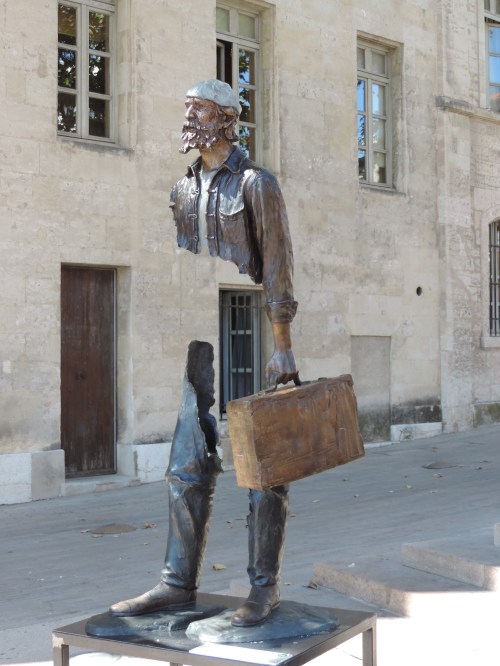
 

bandanaEvery day in the UK, we hear stories of ambulances waiting in queues at hospitals. Patients waiting hours to receive attention. Patients waiting hours on trolleys in hospital corridors.
What’s the problem?

Much of the media coverage focuses on the “demand”, by which they mean the sheer numbers of people coming to hospital for health care.

Let me return to the issue of demand in a minute, but let’s start with waiting times. Let’s set targets aside for a moment as well, because targets can be arbitrary and unhelpful.

Why are there queues of ambulances at hospitals?

Part of the answer is there aren’t enough doctors and nurses to attend to the patients’ needs.

There aren’t enough, because if there were, they would be able to devote all the time necessary to each patient but there wouldn’t be a huge queue.

Part of the answer is the staff can’t move patients through from A&E for inpatient care because there aren’t enough inpatient beds.

There aren’t enough inpatient beds.

There are more patients needing inpatient care than there are beds to put them in.

Beds aren’t enough.

Once a patient is in a bed, they need to be cared for….by staff to keep the ward clean, staff to make food for them and feed them, staff to care for their daily needs and staff to manage their diseases and get them well enough again to go home.

So can we fix that first?

  • Increase the numbers of beds available in the NHS to cater for the needs of sick people.
  • Increase the numbers of NHS staff to the level where there are enough of them to meet the needs of sick people.

Wasn’t that the whole point of the NHS in the first place?

To meet the needs of the sick in society.

Let’s turn to demand.

It’s going up.

And there’s absolutely not a shred of evidence to suggest it’s going to do anything other than continue to go up.

The proportions of the population over 60, over 70, over 80, and, yes, over 90 are all rising. All the evidence shows that older people have greater health needs. The demographics of the country tell us that demand will increase.

Life expectancy might be going up, but disease isn’t going down. There are more people suffering from a chronic illness every year. There are more people suffering from two or more chronic illnesses every year. This is what doctors are referring to when they talk about increases in “complex problems and needs”.

All those patients waiting on trolleys for a hospital bed have been assessed as needing the complex care of a hospital to cater for their complex needs.

Not all those patients already in the hospital need the complex care of the hospital. Some of them are elderly, and/or disabled people who are not able to look after themselves at home. They need to be looked after somewhere else.

Here’s the next item on the list.

There are not enough places available in care facilities which are not hospitals.

Places in care facilities, (nursing homes, residential homes etc), need sufficient numbers of trained and support staff to provide the care for their residents. We don’t have enough care facilities.

Let’s think about another aspect of demand. Time and again we hear that many people pitch up at A&E because they can’t get to see their local GP. They are told they have to wait several days, or even weeks, for an appointment so they go to the local hospital instead – with problems which could be, and should be, managed by GPs in the community.

Why can’t people get to see a GP in a more timely manner?

There aren’t enough GPs.

There never have been.

The scourge of General Practice is not having enough time to treat each patient as well as the doctors would like to. Were five minute appointments ever adequate? Are ten minute appointments adequate? Do they give the patient enough time to say what they want to say? Do they give the doctor enough time to listen, to examine, to diagnose, to offer treatment, to give the patient enough information to give informed consent to the treatment, to allow enough time to discuss options and alternatives?

You’ll have a hard time finding someone who can answer yes to that.

There aren’t enough GPs.

And there aren’t enough staff in the GPs’ teams either.

A healthier society

The biggest delusion suffered by those who created the NHS was that the NHS would make the population so much more healthy that eventually demand for it would shrink. That’s never happened. And it’s not likely to happen.

Health care isn’t the biggest contributor to the health of the population.

We need to address the causes of illness if we want to reduce demand. The causes of illness are primarily social, economic and environmental.

  • We need to tackle the isolation of people in our society.
  • We need to tackle poverty.
  • We need to tackle the constant stress of the “precariat” – all those without secure incomes, those on zero hour contracts, short term contracts, those employed for insufficient hours at insufficient levels of pay to meet their daily needs.
  • We need to tackle the food industry, from farming methods, to factory production of foodstuffs, to marketing and sales of food.
  • We need to tackle the chemical industry, to reduce the amount of CO2 in the atmosphere, the amount of plastic in the sea, the number of chemicals found in the blood of every newborn child, the number of chemicals found in drinking water, the number of chemicals in every household.
  • We need to tackle inequality which is rising fast and has been shown time and time again to inflict pain and suffering on millions.
  • We need to tackle conflict, to be able to direct resources towards healthy lives instead of war.
  • We need to tackle our political systems which leave so many feeling disempowered and forgotten. Democracy might be a great idea. Maybe we should try it. Not the pretend democracy of a vote every few years for someone to work in government, but real, relevant, responsive democracy which increases the engagement and autonomy of citizens.
  • We need to find different ways to live together.
  • We also need to tackle the Pharmaceutical industry. That industry which doesn’t exist to produce cures, but profits. There isn’t a drug on the market which increases health. At the very best a drug will support the body’s natural systems of repair and recovery. At worst drugs diminish symptoms without making any impact on the underlying disease.

We need a different philosophy of health care, one focused on health not taking drugs.

That’s an awful lot. Daunting perhaps. But are there better answers?

In summary

This is a toe in the water. There is no way to cover the complexity and extent of the issues in one short article. But can we make a start?

  1. We need more hospital beds, more care facilities, more GPs, more doctors, more nurses and more support and care staff.
  2. At the same time, we need to tackle the causes of the increase in demand – the social, economic and environmental causes.

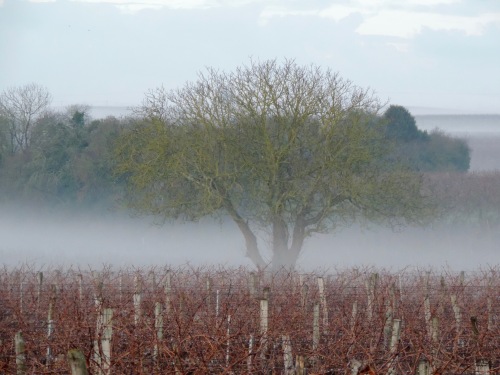
jan17

In January each year I like to make my own calendar for the coming year. Maybe it’d be a better idea to make it in December so it was ready to go in January, but that’s not what I tend to do.

The way I do it is to select twelve images from my photo library, one for each month of last year. I select them first because they are images I’m really happy with. After all, I’ll have to look at each of them for a whole month at a time for the next year. If I find I’ve more than one to choose from then what I do next is select the image which evokes the strongest memories for me. That way I’ll recall, month by month, a beautiful, wondrous, or amazing experience throughout the year. Each image evokes memories, but also inspires me.

I find this is a way of harvesting the experiences of one year to inspire the choices I’ll make this year.

It’s really easy to find and collect your own photos. Of course, you don’t need to make an actual calendar. You could simply select and collect twelve images into a separate album on your phone, your pad, or your computer. Or share them on Instagram or Facebook. You choose. Oh, one other tip – file names – as I save each image into the “2017” folder I name it “Jan17.jpg, Feb17.jpg” and so on. Makes it way easier to organise and use them in the future.

I’m a great one for “and not or”, so I make a special album/folder of the twelve images and keep that on my desktop. I use those images to make a physical calendar, browse through them from time to time, and use them on various posts and sharing platforms through the year. The service I use for the physical calendar is Redbubble. It’s not cheap, but it’s really fabulous quality and their service is fast. There are plenty of other web based services out there, or you could print your images at home and make your own calendar by hand. There are also photo print machines in various outlets but I’ve never tried any of them. Have you?

The image above is my January image. I took it one foggy morning in the vineyards which surround my house. Isn’t it gorgeous? Reminds me just how beautiful winter can be, and how amazingly wonderful trees are.

Here’s February –

Feb17

In February 2017 I spent some time with my friends who live in Capetown. We took a few trips and one of my really favourite areas was Franchhoek. It’s like a French enclave in the South African countryside. As I now live in France the unique blending of French and South African culture in Franchhoek really appealed to me.

Mar17

In March I returned to Scotland and had a day out in the Trossachs. Stopping at the side of one of the many lochs I was astonished by the brilliant reflections of the sky in the absolutely still water. This shot includes the rocks at my feet as well as the reflections of the overhanging trees and the clouds above me. It’s quite a disorienting image and that’s what I love about it. Really draws me in to work out just what I’m looking at.

Apr17

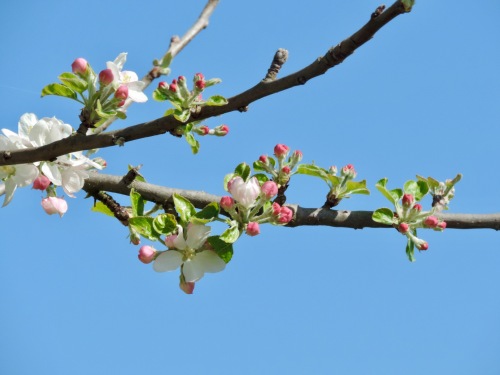
April is the time of blossom in my neck of the woods. Cherry trees, plum trees, almond trees….it’s a beautiful time of year. I can’t look at these blossoms without feeling a surge of new life and creativity. At the same time, I’m reminded of the Japanese veneration of the cherry blossom time of year. The cherry blossom doesn’t last long so it heightens our awareness of the inextricable links between beauty and transience.

May17

Last May we were blessed with an abundance of sweet peas. The previous year we sowed a number of seeds but they really didn’t come to much. This year, they were everywhere! That was a lesson. Take your time. Sow your seeds and let Nature nurture them on her own timescale.

Jun17

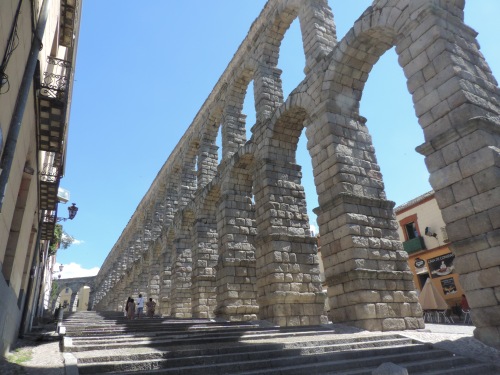
For my birthday in June we took a trip to Segovia in Spain. We’d visited there the previous year and loved it so much we decided to go back. It’s about an eight hour drive from our house to Segovia so we stopped off in Saint Jean de Luz just this side of the French-Spanish border on the way. Clearly one of the most astonishing things about Segovia is this Roman aqueduct which took water from the hills right into the town centre. The Romans, huh? They knew how to build structures which would last for centuries didn’t they? Long after their empire had gone anyway. I wonder how long what we build now will last…….

Jul17

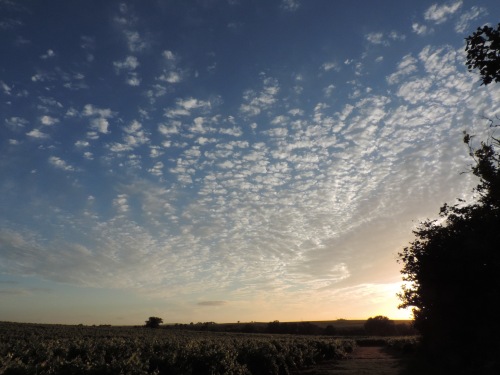
One of the delights of this house is the “open outlook”. Years ago one of my Dutch friends told me how important it was for her to have “a long view”. She felt that these long views opened up your heart and your soul to the world. I think she was right. I’ve stayed in places where the only view was of the buildings on the other side of the road. I know what I prefer. This particular shot, which I took from the garden in July, is just one of the many photos I’ve taken of the clouds. I could look at clouds for hours. They are endlessly fascinating, constantly changing, and often utterly beautiful. Cloud watching. I recommend it.

Aug17

In August we had a day trip to Rochefort but it was a rainy day. It’s easy to get down on a rainy day and wish the rain would just go away, (unless you live in a drought area, when you might welcome a good downpour!), but you can get some great photos on cloudy, rainy days. These magnificent umbrellas were strung across the main street on market day. Well, you couldn’t really not take a photo, could you?

Sep17

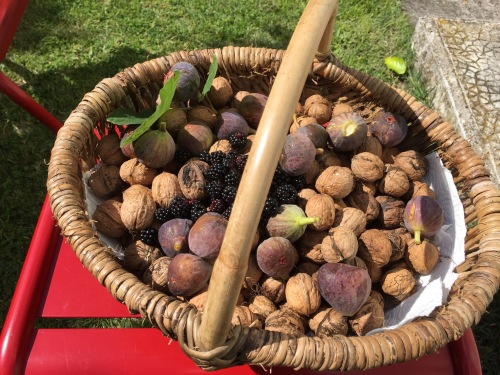
September is a great time to go foraging around here. We took a basket with us and came back with these walnuts, figs and berries. How lucky were we?!

Oct17

There’s a barn owl, or a pair of barn owls, who live in my neighbour’s barn and for the past couple of years, they’ve laid eggs in a nesting hole in the house, above the front door. This year, though, three kestrels turned up and fought the owls for the box. I couldn’t bear the thought of them actually catching one of the owls to closed off the empty box with cardboard. I was a bit sorry not to see the owls so frequently after that. However, in October, one night at sunset, I spotted this little owl perched up on the plum tree. From her shape and call I reckon she was a tawny owl. Lovely photo though, don’t you think?

Nov17

In November we had our first ever trip to Scandinavia, with a few days in Copenhagen. Loved it! I’ll definitely go back. I chose this photo because it’s off the Rundetaarn – I’ve really never, ever seen anything like this. Built as an observatory the internal path is wide enough to drive a carriage up. Now there’s a road I’d never traveled before!

Finally, December –

Dec17

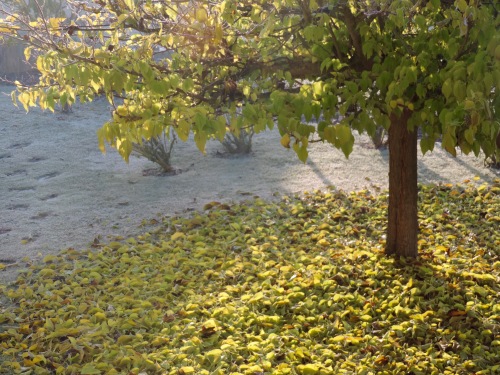
The mulberry tree in the garden begins to shed her leaves gradually, but then one day, usually after an overnight frost, she suddenly sheds most of them, laying this astonishing carpet around her feet. The leaves are so varied in size and colour that I just love taking my time and raking them up. It’s my November/December meditation exercise!

I hope you’ve enjoyed these twelve images and that I’ve inspired you to delve into your photo library and find your own dozen – whether you go on to make a calendar or not.

Disorderly beauty

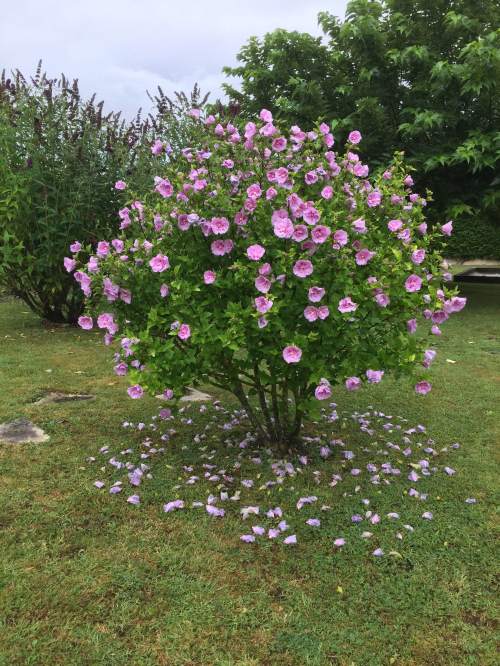
We’ve had a very hot, dry spell recently here in the Charente. Temperatures rising to the mid or high 30s (centigrade) each day which made the leaves of the plants curl up and wilt. Then this last week we’ve had rain, wind and storms. Yikes! What chance have they got?

Well, look what all that varied weather has done to this bush in the garden.

First it suddenly bloomed, going from zero flowers to dozens of them over about 48 hours. Then the wind and rain has knocked off more than a few of them.

But when I walked outside yesterday evening and the bush caught my eye I was transfixed.

Just look how beautiful this is! Not just the bush itself but the way the fallen flowers have made a pinkish purple circular rug on the grass around it.

This is the kind of beauty which Nature makes.

In “The Great Work”, Thomas Berry talks about the interplay between discipline and wildness…..between order and chaos (or disorder). This is a great example, I think, of the beauty the wildness and disorder brings…..effortlessly.

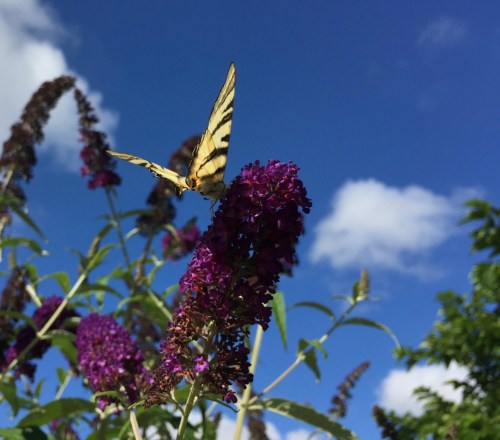
Every year I’m amazed to watch the butterflies appear in the garden the very same day the buddleia bushes flower. I’m convinced they both appear at exactly the same moment. No idea how that happens! Are the butterflies just hanging out around the corner somewhere waiting for the blossoms to appear, then zip round as fast as they can the moment that happens?

However it happens, it’s a delight to see so many varieties of butterfly (and the hummingbird moths, which are incredible creatures!), to watch how they fly in such utterly unpredictable directions, how they spread their wings in the sunlight, or close them up so they look like little leaves.

But here’s one thought which comes up for me time and time again when I see butterflies….they make me more aware of the cyclical nature of life. These little creatures have such different life stages, so different you wouldn’t realise they were stages of the same life. Do we think of them as having a beginning and an end? Starting with an egg, progressing through their caterpillar stages, becoming a chrysalis, then emerging as a butterfly which lays eggs, then dies. Is that the life?

I suppose we do all think of ourselves as having a beginning and an end. But where do we begin, and where do we end?

It depends on whether or not you want to reduce a person to just a physical body. My physical body began with a single fertilised egg and this body will die.

But what about ME?

Do I really think I’m only a physical body? Don’t I have a sense of something immaterial too? A consciousness? A sense of Self? A personality? Characteristics, behaviours, values, beliefs, creative acts, destructive acts? Is there anything I can do which doesn’t ripple out into the world beyond me?

When I look at Rodin’s “The Kiss”, or “The Thinker”, what do I see? The product of the imagination and creative skill of the man called Auguste Rodin. When I listen to music composed and performed by people who are long since dead, isn’t there something I’m sharing there which only they could have created? Aren’t these great works of art the ongoing ripples of unique human beings? Or do you think these are just their footprints? (It doesn’t seem that way to me….these works seem full of life and the potential to continue to create and send out ripples into the universe)

And what about those characteristics, quirks or tendencies that I have which others in my “family tree” also exhibited, even perhaps before I was born? Anyone who explores their genealogy encounters remarkable “coincidences”, talents, life events, behaviours which echo down through the generations. Weren’t those threads present even before the egg which became me even existed?

I think it’s inadequate to narrow a person down to a physical body.

But even if we did, there is still the fact that the body changes continually. It never stops. There is a constant turnover of cells, new beginnings, new endings, every hour of every day. There is a continuous exchange of energy, materials and information between my body and my environment, and we all share the same environment, the same atmosphere, the same air, water…..we are all made from the same molecules, all created from the same “star stuff”.

So it seems to me that beginnings and endings are everywhere……wherever, and whenever, we happen to look.

But it also seems to me that they are nowhere. They just don’t exist. We all emerge from, and dissolve into, the great cycles of the universe.

Beginnings and endings are just where we choose them to be. But we can always make a different choice. We can always take a broader view, a bigger view, a longer view, a more holistic view.

I’m reminded of a song from my school days….it’s by Jeff Beck, and it’s called “Hi Ho Silver Lining” – he sang this truth right there in the opening line of this song…in the first five words……

Humility and awe

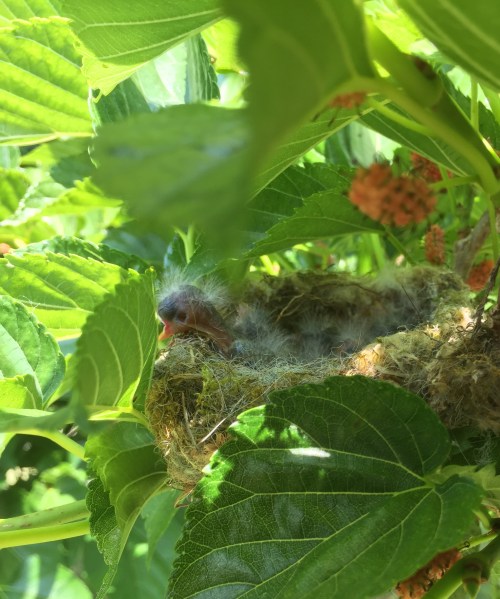
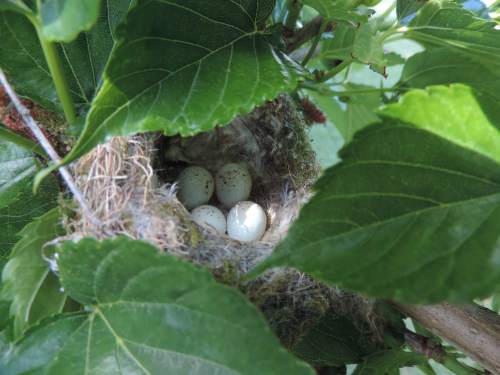
A couple of little finches have built an astonishing little nest almost at the very end of one of the branches of the mulberry tree. The next looks pretty precarious but actually it’s well hidden amongst the leaves and it’s brilliantly woven. Just how do they do that? How do these tiny little birds gather bits and pieces from around the garden and actually weave them into these tight, sturdy nests? I mean how do they manage that with just their beaks? And where do they get their knowledge from? I can’t see that they learn it from any older birds. Is it actually programmed into the DNA sequences of their genes? Really? Isn’t that utterly mind-boggling? I’ve read similar musings about spider webs. Because every single web, and every single nest, is created in a unique circumstance. A new circumstance of time, place, wind, rain, sunshine, heat, cold…..I could go on. So even with a DNA coded programme for web creation, or nest building, each creature has to adapt that knowledge to the present circumstances. Honestly, I’m amazed!

But my amazement doesn’t stop here, because after finding about four little light blue eggs in this nest a wee while back,

Now they’ve all hatched, producing these chicks. What on earth do they look like? This is one of them about a week old. Now, about two weeks old, they are starting to develop feathers. If I understand it correctly, within the next two, or three weeks, they’ll fly. You get that? They will fly! From emergence from the egg to FLYING in about four weeks.

Now, embryology has always fascinated me. Probably my most favourite teacher at Medical School was the professor of anatomy who drew the stages of development of the human embryo on a giant blackboard using a pack of multicoloured chalks. Wow! How impressive was that! Sheer works of art, lecture by lecture. Sadly, we didn’t have mobile phones in those days, so none of us were able to capture those blackboard works. But I do still have them in my memory. Beautiful as they were I still remain utterly astonished that the cells of an embryo can replicate and differentiate and move into entirely the correct places to develop a human being with all the organs, tissues and networks of systems which form the new born child. When I look at this tiny chick I think the same. I think how on earth does the fertilised egg develop this head, this beak, these eyes……and now, the beginning of feathers and wings. And within two weeks from now these chicks will launch out of this nest and fly. How long does it take for a human baby to walk by him or herself? This little bird takes a month from “birth” to flying.

If you don’t find that astonishing and amazing…..well, you do, don’t you?

We take so much of our lives for granted. There’s so much we don’t know and don’t understand. But, can I recommend this?

Take a moment or two to reflect on how one cell (an ovum), joins with one other (a sperm), to become ONE cell which almost immediately becomes two, which become four, then eight, then sixteen……and hour by hour, day by day, a unique creature emerges, with millions and millions of cells, different kinds of cells produced from the original ONE, producing a body, with eyes, a mouth, all the necessary organs……You don’t have to go any further. Just consider any stage along this path and wonder.

Doesn’t it make you feel awe?

Doesn’t it make you feel humble?

Just allow yourself to enjoy that for a moment or two.

It’ll shift your perspective on the world.

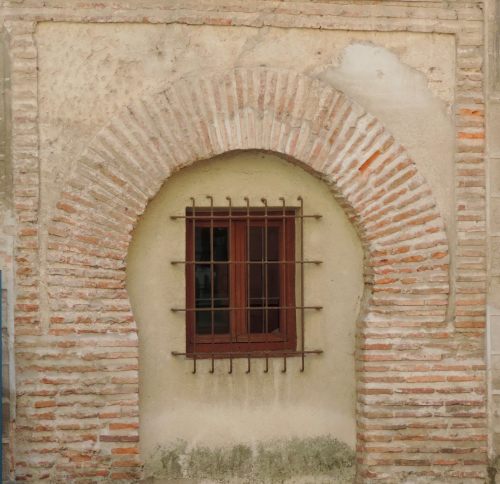
I see this sort of thing a lot when I look at old buildings in either France or Spain. This one is in Segovia.

What’s the first thing you notice?

The window?

Or the window in an arch?

See, when I look at something like this I really get to wondering….how did this come about? Did the original builders build a nice big entrance way, two verticals and a horizontal? Building a frame like a picture frame for an entrance? Maybe not….well, maybe not exactly anyway, because it looks like exactly the same bricks have been used to make the archway and some of the bricks seem to run between the two frames….the square frame and the arched frame. So maybe the original builders built an arched entrance and surrounded the arch with a frame?

But then it looks like somebody decided not to have an entrance there after all and filled in the space.

Then somebody else thought, hey, wait a minute, I’d like a window here and put in the window….but did they fit bars around the window at the same time?

So, has this window, this barred window, emerged over many years from a wall which was built in the space formed by an arched doorway?

And what was the thinking behind each of those steps in the development?

Make an entrance, an attractive, obvious entrance…..then block it up…..then make a window, but not one for letting that much light in, and certainly not one somebody might climb into, or out of…..was that, is that, a problem around here? People climbing in and out of windows?

Bear with me here but because I worked as a doctor for almost forty years this image sparks my thinking about patients and the problems they talked about in the consulting room. They’d bring the equivalent of this window….let’s say they’d talk about a pain (instead of a pane….ha! ha! sorry!)…..and I’d ask about the pain, asking them to describe it….its features, its characteristics, its exact location, what surrounded it, or accompanied it……and then I’d want to know how it arose. Tell me when it wasn’t there. What was there before it? What was happening when it began? And so, gradually, what a first glance might be a simple symptom turned into a unique, never before told, story…..and that’s where I began to understand what the problem might be.

After the fall

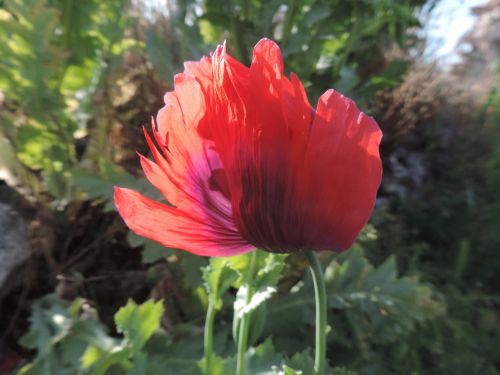
Poppies are such striking flowers. They radiate colour and they pull you towards them to have a closer look, or to take some photos. Their petals are often huge but somehow delicate and fragile, and they don’t last very long.

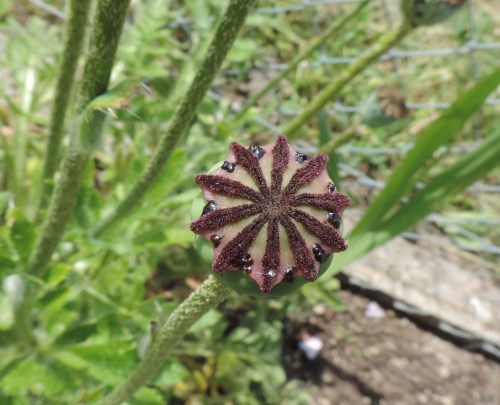
I do adore these flowers, not least because they offer you a second chance to be entranced by them after their petals fall.

Wow! Just look at this! Click on the photo to get a closer look! Isn’t it just a perfect design? A glorious pattern?

It’s like a jewel, isn’t it? Something precious, something valuable, something simply beautiful.

So here’s an impossible question…..what is more beautiful?

The petals of the poppy, or the poppy after they fall?

We all live embedded in multiple environments, or contexts…..webs of connected flows of energy, information and materials. I wonder how aware we are of them? I wonder how conscious we are of the signals and messages we are receiving as we go about our every day activities?

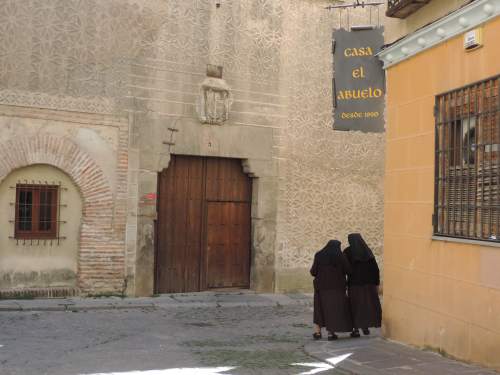
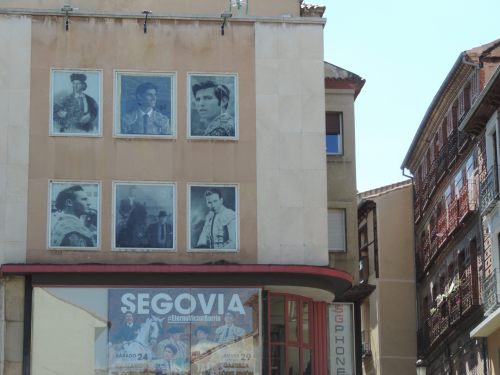
When I was in Segovia recently I took a couple of photos, which, with hindsight, I think say something important about one kind of environment – the cultural one. By that I mean the web of meanings and values which bathe a town, a city, or a region in waves of a certain kind….the kind which contribute to what someone means when they talk about “a way of life”, or “an identity”.

The first photo is of these two nuns walking around the corner of a building. Segovia has a history of convents, and many of them are still active.

The second is more secular.

The matadors. Local heroes. Bull fighting evokes strong reactions in people, with some deeply attached to it, and others considering it barbaric. Whatever your reaction, however, you can’t deny this aspect of the cultural environment in a place like this, exerts a powerful influence on the minds and lives of the people who live here, and the people who visit.

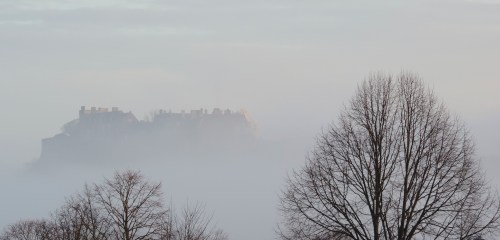
I was born in Scotland, in Stirling, the city on the edge of The Trossachs, an area rich in lochs, forests and hills. Stirling Castle stands on a rocky outcrop high above the town and casts its own historic influence on it, and on the people. My gran used to tell me that boys born in Stirling were “Sons of the Rock”. Is there any better example of how culture and place intermingle to create influential environments where ideas of how to live and who I am have their roots?

What is your cultural environment like?

Could you take a photo or two which would give someone else a sense of it?

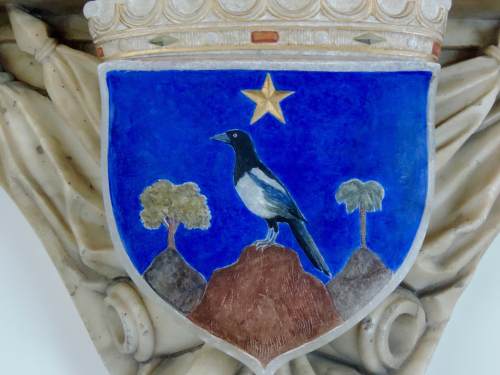
I noticed this emblem in the Alcazar in Segovia, Spain. This is where Isabella “The Catholic” was crowned queen Isabella I of Castille in 1474.

The most prominent part of this image is the magpie. So, here’s my first question – what is the symbolism of the magpie in this context? I know the magpie represents both good luck and bad (the old rhyme starts “One for sorrow, two for joy….?) but what’s it’s significance here, in the Alcazar? Secondly, there are two trees, clearly different species. The one on the right looks like a palm tree, but the one on the left? What is that? What are these trees symbolic of? The tree of life and the tree of knowledge? Islam and Christianity? Does anyone know?

Finally there is the five pointed star. A symbol of the Divine?

I’d love to hear any ideas or insights you might have……