Feeds:
Posts
Comments

More than survival

passing the light

The philosopher, Whitehead, wrote that there are three drives for us – to live, to live well, and to live better. I was reminded of an old post I wrote about light when I read that. Here it is –

Candle light reminds us how sharing light increases it. Have you ever lit one candle from another? When you do, the first candle doesn’t get any dimmer. By lighting one candle from another, you end up with more light.

I wonder what kind of light I bring into this world? You might like to wonder about what you pass on to others too, because, although we might not physically pass light to each other, we certainly pass our emotions, our attitudes, our way of being onto to those around us and spread them the way that light can spread.

Around the turn of the year, when I was thinking about my Life (with a capital “L”), I played with this idea of light and I thought, actually, what I try to do, as a doctor, can be captured in three verbs about light.

Firstly, I try to lighten others’ loads. I try to ease their suffering. If I didn’t achieve at least that, I’d not be much of a doctor. I hope that everyone I see has their life, or the burdens in their life, lightened a bit as a result of my care.

But that’s not enough for me. I don’t want patients to come back and just say they feel a little lighter. I want their lives to be brighter. By that I mean I hope their days become better days, more fulfilling, more colourful, brighter days. I hope for others, and I hope for me, that life becomes brighter, and by that, I really mean an increase in that “emerveillement du quotidien“.

But even that’s not enough for me. I hope, at best, to enlighten, to show new possibilities, to support and stimulate new growth. I just love when I hear that a patient’s life has become lighter, brighter and, yes, transformed – that they’re experiencing a personal enlightenment.

If you think about light this month, why not think of it as a metaphor, as well as a physical phenomenon? What metaphors of light seem most relevant in your life?

So, in answer to yesterday’s question about evolution being about more than survival, I think we have to take on board this perspective – that we are driven to do more than survive. We want to live well. And we want to move forward improving – to live more deeply, more beautifully. We want to savour every moment, to create, to share and to love.

The direction of the universe and of evolution is towards greater complexity and beauty, towards greater diversity and uniqueness. And every day we can play an active part in that.

Evolution

Whitehead, pointing out that inanimate objects last much longer in the world than living organisms, asks, “how did complex organisms with such deficient survival power ever evolve”…..”They certainly did not appear because they were better at that game than the rocks around them”.

Trees can live for hundreds of years, some bacteria for millions, so if survival is a key driving force behind evolution, how come a human life is still only 70 – 80 years, yet we presume ourselves to be THE most fully evolved creatures on the planet.

There’s definitely more to evolution than survival and reproduction. What do you think that is?

This is my song

Humble dazzle
of autumn:
these leaves
on the ground -
each one a page
in the book.
A poem that says:
I lived.
I was
a small part
of the whole
story - this
is my song,
this is my glory.

Gregory Orr

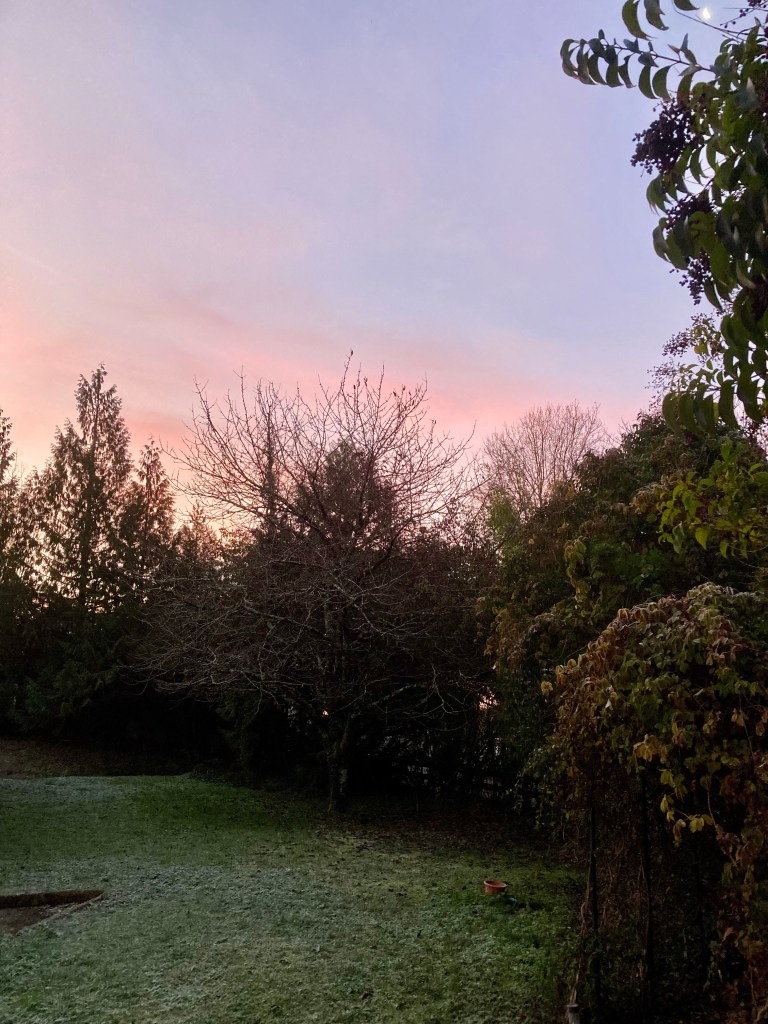
Isn’t that a beautiful poem? Autumn can be such a colourful season, and although there are still many golden, yellow, red and brown leaves falling to the ground, we’ve had our first frost here and really I think we should be calling this winter….maybe the seasons are becoming more interwoven?

But what this poem reminds me to do is see the individual in the crowd, pay attention to the particular which can be hidden by the general.

Each single leaf has lived its own life, fallen at this particular moment and landed on this specific piece of ground. Each leaf, like each and every living creature, sings a unique song, tells a singular story.

Every one of us lives this “one precious life”….it’s our glory.

Mistletoe

You can see lots of mistletoe around here throughout the year, but it’s significance is at a height at this time of year….Christmas.

The Romans associated mistletoe with peace, love and understanding, which seems especially relevant to me here where I live a few metres from a Roman aqueduct.

It has long been associated with male fertility in a variety of cultures and has been used as a medicine for a number of different complaints. It’s highly toxic….a feature which seems to be characteristic of so many different “medicinal” substances. I wonder why that is….why do we humans use poisonous plants to bring about healing? It seems a dangerous game and I often wonder how the first humans discovered that certain plants had both harmful AND beneficial powers.

We humans create a whole extra dimension of reality through our use of symbols and stories, seeing not just a cluster of leaves and white berries attached to a tree, but empowering those plants to turn our minds to love, to peace, to kisses and to protection from evil.

Uniqueness

When the first frost of the winter arrived I went out to take photos before breakfast. Here’s one I took of the ice particles which formed on a plastic cover.

Aren’t they beautiful? I don’t think I could’ve dreamed up shapes like this. I’ve looked at this photo again and again, and if you’re a regular reader here, I bet you know what’s fascinating me….

This is one of those places where at first glance you think, oh look at all these identical clusters of ice! Then, immediately you notice differences and the closer you look, the longer you take over them, you realise…..there are no two exactly the same.

Yep, every single one of them is unique. Just like snowflakes. Just like each of us are unique. Just like every moment of every day is unique.

Isn’t that wonderful?

A Universal goal

To me, a universe with tendencies towards beauty, complexity, and the rich unfolding of uniqueness is already teleological

Iain McGilchrist. The Matter with Things

When I started to read philosophy books I came across the word, “teleology”, and I wasn’t sure what it meant. Best I know it refers to an end point, or a goal….so when something is described as teleological it means it has a purpose determined by its destination. Maybe that’s not an exact definition and I’m happy to be educated if you know better, but the destination doesn’t have to be a fixed, limited one….it can be like a “North Star” or “lode star”…. something to aim at.

So when I read this sentence about the universe, I read it as stating that the universe isn’t random and purposeless, rather it is moving forward in a particular direction…..it’s going “somewhere”, and that somewhere gives a clue about purpose.

So what’s the suggestion here? That, the direction, the “somewhere”, the purpose, is beauty, complexity and uniqueness. That’ll do for me.

I have my eyes and ears open for that every single day….to be awoken by, to be absorbed by, beauty, complexity and uniqueness, so that I stop, wonder, and savour, enriching my life and my soul.

Purpose and direction

The teleology of the universe is directed to the production of beauty

Alfred North Whitehead

Is the universe moving in a particular direction? Does the cosmos seem to evolve towards some destination? Or, better, perhaps, if not a destination then, at least, in developing it reveals a purpose?

Is that purpose beauty, as Whitehead suggests? Beauty, which Iain McGilchrist describes as “gloriously superfluous and unnecessary, its nature is that of a gift.”

I can’t see a destination, or a pre-imagined purpose – at least, I don’t see it from any utilitarian perspective. I don’t see that the universe exists as a tool to achieve the completion of some hidden task.

Rather, I’m more convinced by those right hemisphere understandings of the direction being towards beauty and ever greater interconnected complexity, and the purpose as the daily celebration of Life, of creativity, of difference, uniqueness and diversity.

I enjoy the idea that the universe exists as a celebration rather than as a tool, and that the direction of travel, or of the “flow”, towards ever more beauty, creativity and uniqueness is exactly my “touchstone”, my “values and principles” with which I want to orientate my life.

Machine or melody

“A machine has an extrinsic purpose – not its own but that if the person who made it. It exists purely to achieve an and: another being’s end. By contrast, a melody has an intrinsic purpose: it’s hardly pointless, but it has no other point than itself.” – Iain McGilchrist in The Matter with Things

Despite the fact that we can now understand reality through the lens of complexity science, the mechanistic, materialistic model remains the dominant one. I hope that will change soon.

We are not machines. We are not “machine like”. Machines are built by someone to serve a purpose set by whoever built them. To consider a human being, or indeed, any other living creature as a machine reduces them. It dehumanises people, devitalises Life. It sets up societies where individuals are reduced to cogs in a machine, replaceable, dispensable, having value only when they deliver for whoever hires them.

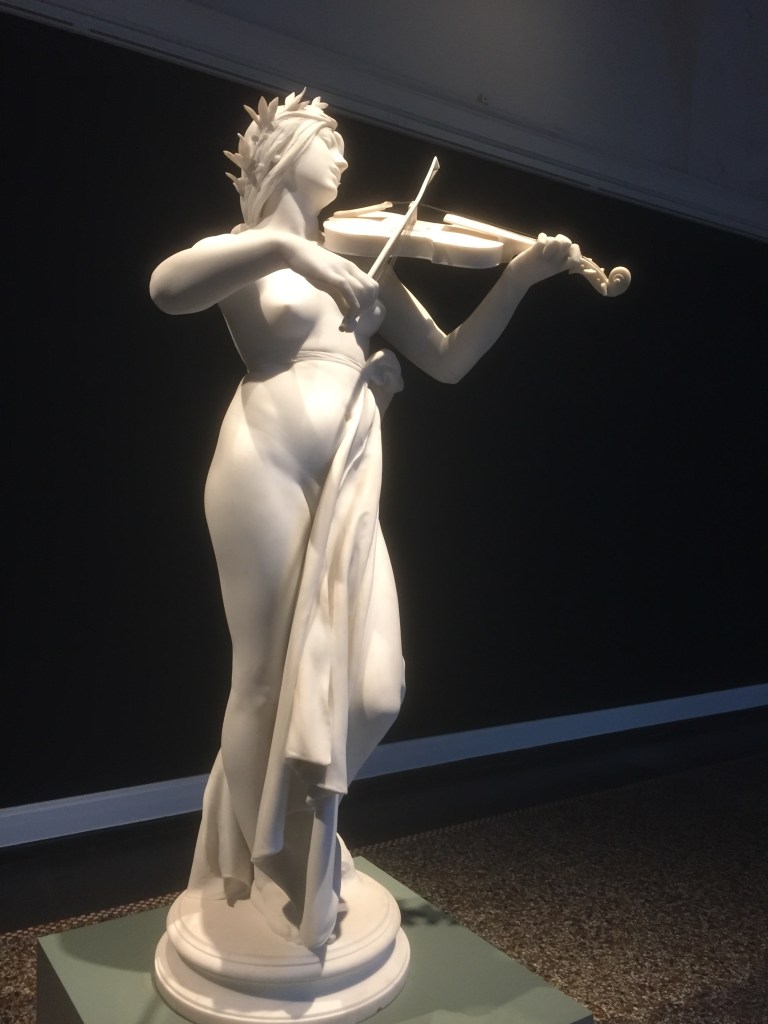
We are more like music than we are machines. Every one of us sings a unique melody, the melody we instantly recognise because every individual is unique.

I often refer to how everyone has their own unique story to tell…the one which allows them to know who they are, to make sense of life, and to communicate their inner experience to others. But this passage comparing machines to melodies makes me realise that we don’t just tell unique stories, we sing our singular songs.

Think how we use metaphors such as “singing from the same hymn sheet”, or of “working in harmony”, being “in tune with each other”.

Isn’t life a performance of a beautiful composition, one which we create and share as we live, day by day, moment by moment?

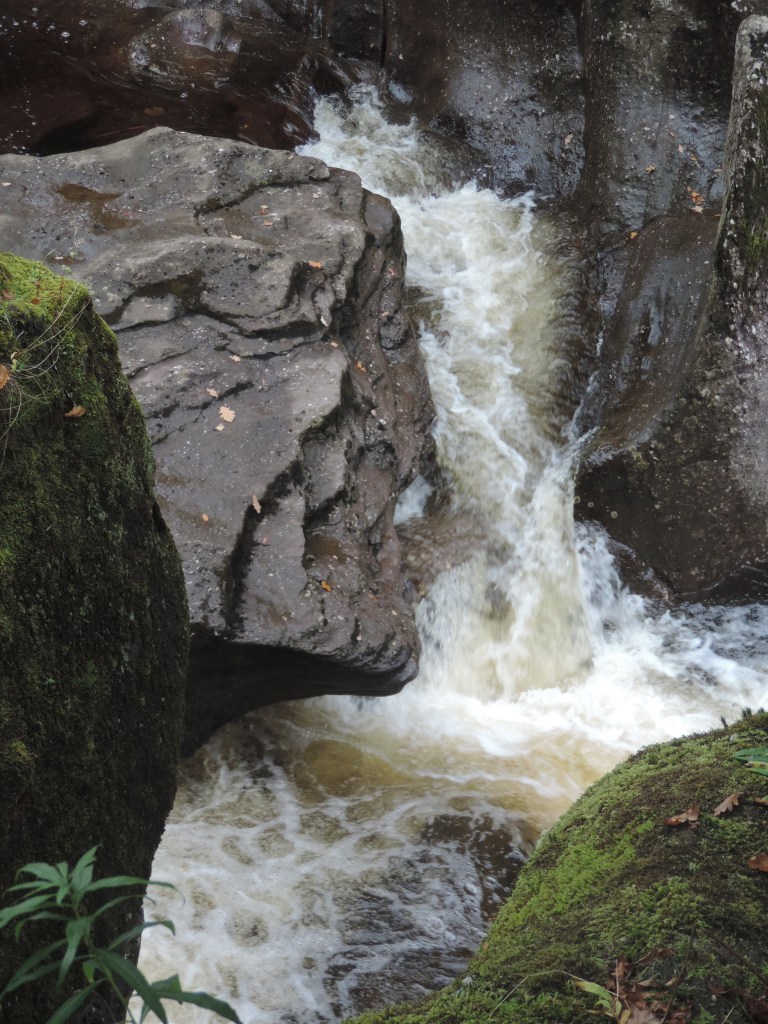
What colour is the sea? Is it sea green?

Is it deep blue?

Is it dark grey?

Is it fiery red?

Of course the answer is – all of the above – and more.

I’m not a fan of labels. I understand the value of classification to organise our thoughts or our filing cabinets, but labels hide so much more than they reveal.

We develop a mental habit based on re-cognition – we say, I know what that is, I’ve seen one like it before. It’s an incredibly useful skill, and we can’t really function without it. But the danger is that we use this ability to stop instead of seeing it as a start.

Yes, it’s really helpful to recognise something and put it in a box with a label on it (literally or metaphorically) but we never fully see, so never completely know, anything or anyone. So, recognition is a good starting place, but we have to be ready to let go of those initial assessments as we start to see more detail, start to see the particular, not just the general.

I was taught this as a core skill – taught to make a diagnosis by recognising certain signs, symptoms and patterns, but always exploring further to move from seeing the disease to seeing the person who was ill.

I often think of this when people divide others into groups, dismissing them because they have put them in a particular box labelled with a political party, a religion, a skin colour or a sexual orientation.

There’s enormous danger in recognising, classifying, labelling and generalising. It leads to all kinds of prejudice (pre-judging) and, frankly, to the de-humanising of individuals.

I always want to know more about someone than I already do. I always want to be surprised as I discover that nobody fits neatly into any labelled box.

There’s a teaching from the “General Semanticists” – “Judgement stops thought” – which alerts us to the danger of using labels.

Everyone and everything is richer, deeper, more nuanced, more multifaceted than first appears.

Truths which unite us

In Ian McGilchrist’s The Matter with Things he says we need to discover (or re-discover) the truths which unite us.

That sentence really leapt out at me and I immediately thought, yes, it seems that divisions have become deeper, that social media is used to set people against each other, to create echo chambers which exclude “the other” and that there is an unprecedented level of deception and lying.

I don’t know if the election of seemingly pathologically narcissistic politicians has brought to prominence people who either deliberately lie with ease, or who actually are unable to know they are lying.

So, yes, we could do with finding truths which can unite us.

But then I thought….you never, ever get absolutely everyone to agree what seems to be true. In a world of conspiracy theorists, religious fundamentalists and people with vested interests in power and wealth, how do we find truths which unite us all? Well, we probably can’t. But surely that’s not the point. Surely we can find truths which are more likely to unite than divide, truths which bring more of us together – in other words truths which turn the tide the opposite way and carry us towards greater togetherness.

Then I began to wonder what those truths might be….and, so far anyway, I’m thinking they mainly exist in Nature and the Cosmos.

We all look up at the same night sky, see the same Moon, see a particular set of constellations depending on where in the world we are when we look up (which reminds us that we can change what we see by putting ourselves in the shoes of others)

We all live on this one small planet, sharing the same air, water and soil. When we change the air, water or soil around us, we change what others will breathe, drink, and eat.

We see the cycles of Nature, seasons, which remind us that change is the only certainty, that transience can be beautiful, and that “this too shall pass”.

We see that, in Nature, living organisms don’t just co-exist, they interact, and often become interdependent.

We learn that all of Life on Earth depends on a wonderful synthesis of competition and collaboration.

How’s that for a start? Aren’t those truths which might unite us?

What do you think? What truths do you think can unite us?