Feeds:
Posts
Comments

The power of an image

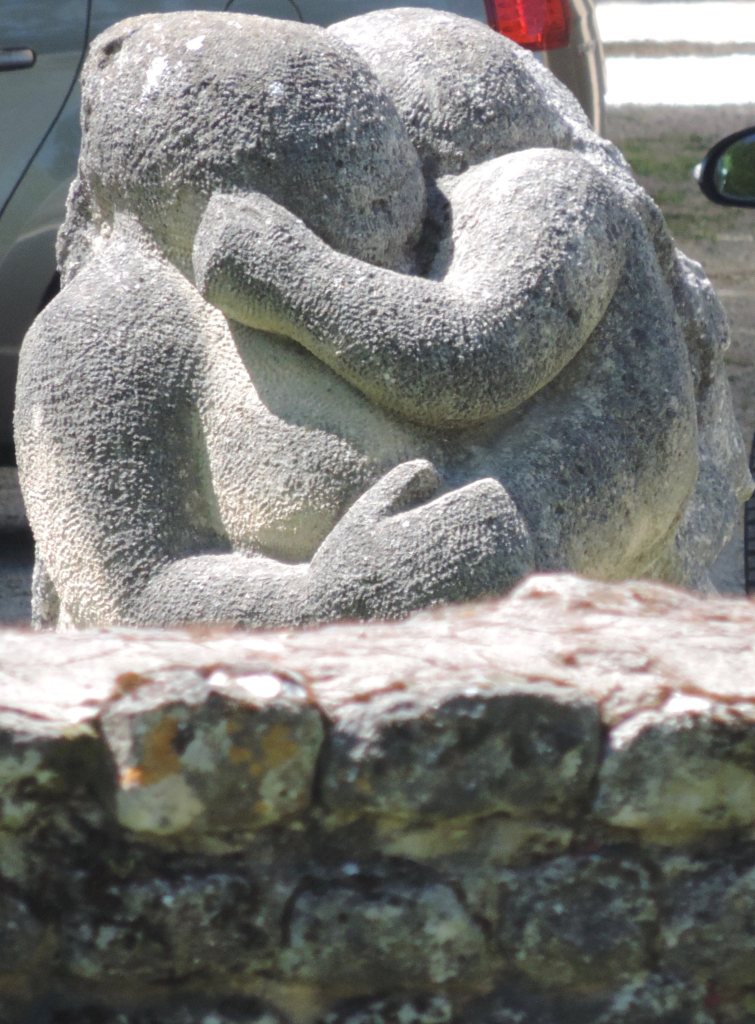
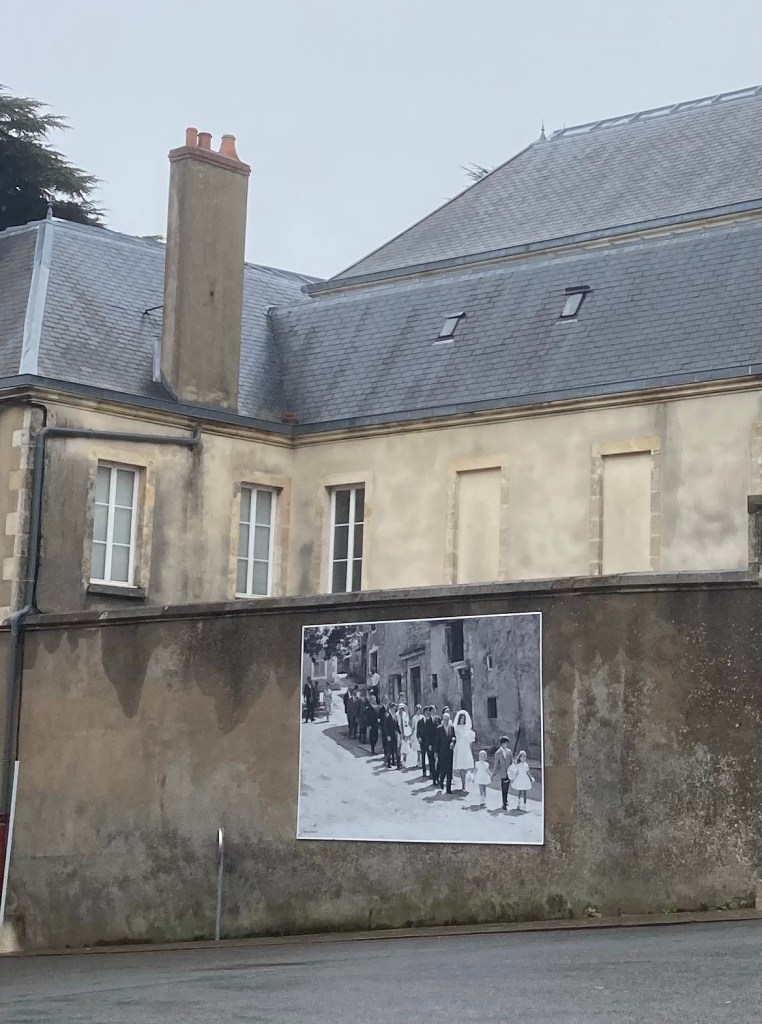
I took these three photos on a recent trip to the village of Sancerre. Aren’t they wonderful? There are several large black and white photos placed on walls and buildings throughout the village. I imagine they represent life in these streets in the years gone by.

I am very keen on words….texts, the spoken word, stories and poems. But I’m also a very visual thinker. I have dozens of notebooks filled with mind maps and diagrams I’ve drawn to help myself think. I’ve given many talks and presentations and have always used as many photos, paintings and drawings as I can as the core of each talk.

I’ve had a love for photography since I was a boy, and I’m always keen to explore a gallery or two when I visit a different city. So, it was natural for me to decide to make each post here with, first, a photo I’ve taken, then below that some writing inspired by that image.

I suppose my favourite images are ones which make me think. I like a photo which stops me, just as I like a flower, or a tree, or a butterfly which catches my attention and makes me pause.

My hope here is that the photos I share do that for you…that they catch your attention, make you pause, and inspire some reflection.

Enjoy!

Where do we go…..?

Where do we go when we die?

There’s a question we don’t get an answer to until we get there, I suspect. But I have a couple of ideas nonetheless.

If you subscribe to a formal religion you’ll have some teachings which suggest (or maybe even insist on) a particular answer. I don’t subscribe to any formal religions.

If you are a materialist you might think only of the body, and it’s pretty clear that after death the body is broken down into separate parts. It no longer exists, at least, not as a unitary body. Perhaps you can think of all the atoms dispersing, to be gathered later with others to create new forms of life. After all, atoms don’t go away. We are made of star stuff, atoms from exploding stars millions of years ago. Most of those atoms remain here, on Earth.

That’s not enough for me. I’m not a materialist. If we reduce a human being to mere matter we lose the human being.

Life flows through us, until it doesn’t. Despite a life’s work as a doctor, it still amazes me that in one moment someone is alive and with you, and in the next, they’re gone.

Individuals are all unique to me. No two people ever share identical bodies, hearts, minds, souls. No two people ever share the exact same set of relationships and experiences. No two people have the same story.

That’s where I get whatever level of answer I have to my question. We continue in the hearts and memories of others. We continue in our creations which live longer than we do. We continue in the stories told, first by those who knew us, then, later, by those who knew them, down the generations.

Ultimately I see us each as a wave on the ocean, our individual expression of consciousness appearing briefly on the surface, before returning into the greater ocean, the greater consciousness, the all-that-is-greater-than-us.

Reabsorbed into the World Soul, the Divine.

An idea of society

The late great English philosopher, Mary Midgley, wrote brilliantly about atomisation. She was highly critical of Thatcher’s claim, “There is no such thing as society”, which was based on the idea that we humans live together as independent, autonomous, completely free and unconnected individuals – social atomism.

It seems the latest version of Toryism to come to power in the U.K. draws its view of the world from this same neoliberal ideology. It’s highly critical of welfare, Public services and spending, and redistributive taxation. In fact, this flavour of capitalism has become the dominant one globally for some time now.

In the face of this we are witnessing greater social division, family breakdowns, worsening mental health, increasing prevalence of chronic illness, climate change, loss of species and habitats and pollution of land, rivers, oceans and the air we breathe. Crisis piles on top of crisis and a pandemic exposes extensive vulnerabilities.

Are we in the best road? Is there a better way to view the world and a better way to live together? I think there is.

If instead of atomism we see the world as a whole, a vast interconnected web in which each of us emerge briefly and live our lives, if we understand that we breathe the same air, drink the same water and eat food from the same soil, if we see ourselves and hardwired for social connection, then we will adopt a different set of values.

We can shift from consumerism to a society based on nurture and care. We can build on the instinctive behaviours human beings have to act decently, fairly and with kindness. We see those behaviours every time there’s a natural disaster, a flood, a forest fire, where strangers put their lives on the line for the sake of others.

We can insist on the power of human collaboration, building relationships and connections within communities and across borders. We can insist on the value of diversity. We can delight in sharing, in beauty, truth and goodness.

We can live differently by awakening from the delusion of atomism.

We have a way of looking at the world as if it’s made up of lots of separate parts which are moving.

The invention of movie film led us to believe that reality is made up of separate moments, each one in its own frame, and if we run the frames past our eyes fast enough we see motion.

We’ve looked deeper and deeper into matter thinking that at the bottom of everything are static, indivisible atoms. But now we know it’s not like that. We’ve looked inside the atoms and found…..it’s all flow, not parts.

Every part we see, every moment we encounter, every atom we discover only emerges to us as it, and we, flow on.

Flow comes first, parts come second. Parts are the shimmering sparkles in the flow.

I think that’s pretty easy to notice once you take it on board. Our right hemisphere is great at noticing the flow, our left sees parts.

What’s the story?

We humans are dedicated storytellers. We understand our lives through stories, the stories of others and the stories we tell ourselves.

We use stories to make sense of our everyday experiences and to create a coherent sense of self which runs through all the years of our life.

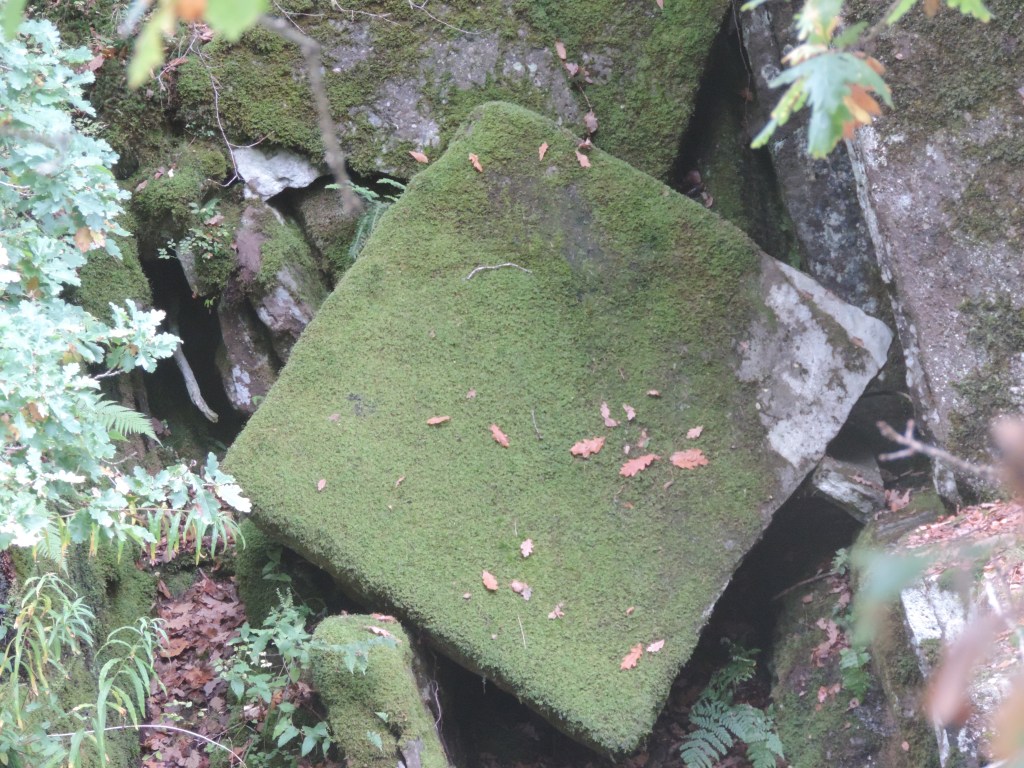
So when I looked at the bottom of this waterfall, through the tumbling waters which rushed between boulders and rocky banks, and saw this particular, greenish stone I thought…..”what on Earth is that??!!”

When you see a shape like this you know there’s been at least one human hand involved in its creation. Nature doesn’t make square stones like this. So, instantly, I’m thinking, who made this, why, when and how did it get here? Actually, it’s highly unlikely I’ll ever get the answers to any of those questions but I can give my imagination free reign and make a story which would explain it all.

Why don’t you have a go?

What story could you tell to explain this stone and how it ended up at the bottom of a waterfall?

Growth

Economists and politicians talk about the improvement of growth, but they are rarely asked to answer the questions…..”growth of what?” and “growth for whom?”

The assumption seems to be that what’s needed is just more stuff….more produced, more consumed. It doesn’t seem to matter too much what the stuff is. No doubt because the capitalist system we live in makes money the main goal, and more stuff sold means more money for the owners.

But isn’t this a crazy way to organise a society? Can’t we do better than that? After all, we live on a finite Earth, so it’s just a matter of time before the “stuff” runs out. Unless you don’t care about future generations, your grandchildren’s grandchildren, this short term, blinkered dash to consume makes no sense. And that’s before we even consider the issues of pollution, waste, species extinction and climate change.

I think growth is a great idea, but only the way we see it in Nature. Look at these Colchicum…..they are flourishing, and flourishing is the kind of growth we can all aim for. Development in the sense of maturity and the realisation of potential is a fundamental of natural processes.

Can’t we organise our societies around this concept of growth instead? Not growth based on greed, but growth based on nurture. After all, a child flourishing or a plant blooming, is both beautiful and wonderful.

Sometimes change is more obvious than it is at other times. I know that in reality nothing stays the same. We, and everything in this universe, constantly changes. The two seasons of Spring and Autumn make that so obvious, don’t you think? They are also the seasons where change can appear most beautiful, whether with new buds and blossoms in Spring or with gorgeous golds, yellows and shades of Autumn red.

Since I moved to the French countryside I’ve spent more time outside than I’ve done in any other period of my life. I notice flowers, trees, birds, much more now, and I’ve become much more aware of the seasons and cycles of Life.

I realise now that we humans are suffering from a profound disconnection. We’ve developed a way of living where we privilege consumption so much we actually refer to people as “consumers”. And we have been telling ourselves that “nature” is something different from us, that it’s “out there”, just waiting to be exploited and controlled.

It seems to me that the wheels are definitely coming off that bus! From climate change, to loss of diversity, and pollution of the entire planet, we should be able to see we need to change direction.

But which way should we go? Increasingly, I think the answers lie around and within us. When we get a better understanding of the complexity and interconnectedness of reality, we get more in touch with the need to privilege harmony, beauty and flow over consumption and control.

It’s easy to think the systems we have created are impossible to change, but we humans made them, and with imagination, will and love, we can make different, more satisfying ones. Can’t we?

Fractal forest

The discovery of the fractal in mathematics opened up a new path for us, enabling us to see symmetries where we’d never seen them before.

A fractal symmetry repeats the same pattern no matter how far out, or how far in, you zoom your attention.

I got down on the forest floor to take this photo of delicate moss emerging into the daylight. When I look at it now it looks just like a tiny forest.

I love the self symmetry of the fractal. It confirms the old esoteric knowledge – as above, so below.

Everything is connected through pattern, relationship and beauty.

Movement

When I look at this old photo I immediately have the impression that the kite is pulling the boat. But that’s just a coincidence of positons. They are, of course, unconnected. Well, except when I use my imagination.

Imagination let’s us see what’s possible, and also what’s not possible. We use it to create patterns, connections and stories. It expands and deepens our everyday experiences making them unique to us. Imagination brings the subject and the object together.

When I look at this photo my imagination kicks in as I see the vast expanse of the sea, the ferry on the horizon, and the setting sun. It conjures up thoughts of travel, of distant places, of what lies beyond….beyond the limits of my vision, beyond the curve of the Earth. I wonder where the passengers will wake up in the morning.

I see the kite surfer’s kite, high in the sky, blown by invisible winds, and if I look very carefully I can see the kite surfer skimming over the surface of the water.

It’s a still photo, but nothing in it is still. The kite, the surfer, the ferry, the sea, the sun….everything is movement.

Connecting

In the French town of Aubigny-sur-Nère I found this phone box. There’s a plaque on the back which tells you that it’s a gift from the people of Haddington, a town near Edinburgh in Scotland.

This phone box has been turned into a free book exchange. You can take any book you’d like to read, and leave any you’d be happy to share with others.

I like the depth this brings to the core value which I think we need more of in this world – connecting.

When it had a phone in it this box was a beacon of connection. It was where anyone in the community could have a conversation with others far away. It brought people closer, enabled them to build and deepen their relationships. It allowed them to find help when they needed it, and to offer help to others.

Now that it’s a book exchange it enables the exchange of ideas, the re-telling of stories, the stories which inspire us, encourage us.

Whether through the telephone or through books this little red box is a symbol of making connections.

And look how deep are the connections in Aubigny-sur-Nère, the town where, in 1295, an alliance was formed between the Scots and the French. An alliance, a friendship, a connection which has existed for so long we call it “The Auld Alliance”. An alliance formed for military reasons, which over the centuries became a deep, and lasting friendship.

Making connections – communicating, sharing, telling stories, describing experiences, building mutually beneficial relationships between diverse and different people. Listening with empathy, listening attentively, listening without judging…..

It’s how we build a better world.