Feeds:
Posts
Comments

Polarities

There are so many ways to think about the universe and Life. So many ways where we consider reality from two poles, seemingly opposite, but where neither can exist without the other.

What do I mean by that? Well, “night and day” would be one. Without nights we wouldn’t have days. Night and day don’t have clear boundaries, each flows into the other without us being able to draw an exact border between them. They form a continuous, seamless cycle.

I think it’s often much more useful to consider such pairs as polarities instead of dualities. With polarities we know we need them both. Whereas with dualities we take sides. We set one against another. We say “you have to choose”…….”us or them”, “this or that”, “for or against”.

Some of my favourite polarities include “wildness and discipline”, “masculine and feminine”, “yin and Yang”, and “left and right hemispheres of the brain”. If you’d like to explore any of those further you can find posts I’ve written about them by searching for any of them using the search box at the top of this blog.

However, the polarity I used most through my working life was “general” and “particular”. With every single patient I had to understand what was unique about them, AND what they had in common with others in order to make a diagnosis and find the best way forward. We are all unique. AND we all share certain characteristics with others.

We are all separate and we all belong.

Which polarities are most illuminating for you? Any of these ones, or some others?

I’ll just add one more that I’ve used a lot. “Order and Chaos”. The concept of integration is a key way of understanding health in complex systems, such as human beings. Integration is the river which flows between two banks, order on one side, chaos, on the other. Too much order and we stiffen up, and get stuck. Too much chaos and life falls apart. We progress down the river of health, not by pitching up on one of the banks, but by sailing down the integrative flow.
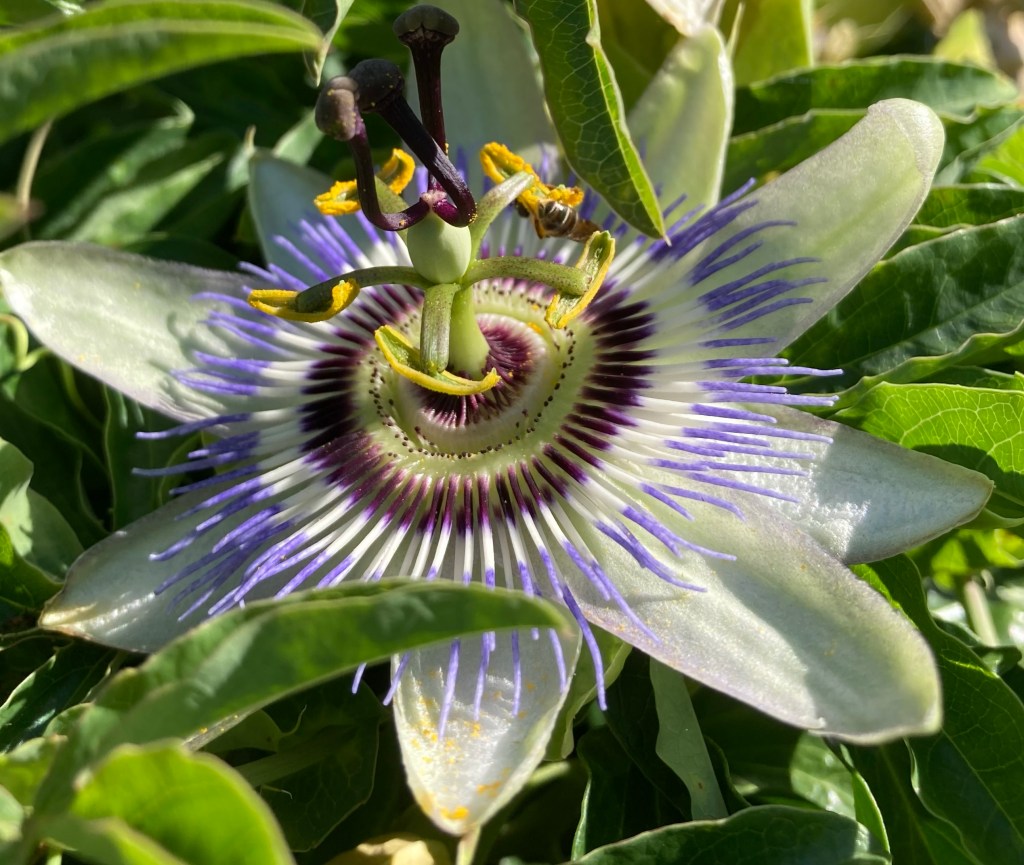
Passiflora

It seems that I will never cease to be astonished by plants. Their adaptability, resilience, and growth are utterly remarkable. I often find myself thinking “how amazing that these creatures have developed the powers to collect the Sun’s energy, pull CO2 and water out of the air, suck up minerals and water from the soil and create all this material – all these stalks, leaves, roots, flowers and fruits!”

Look at this one. The Passiflora flower only blooms for a day, but look how elaborate a form and structure it creates. All that for a day! Doesn’t convince you of the need to flourish, to express your uniqueness, to pour your energies into your creativity, even if we are only here for the briefest of moments in the timescale of the universe?

I think we have so much to learn from Nature….from our own bodies, but also from the myriad of Life forms on this planet. We can learn from the diversity of ecosystems, from the universe’s tendency towards greater and greater uniqueness. We can learn from Nature’s drive to connect, to form healthy co-beneficial relationships, to integrate.

We don’t really need books to learn all this. It’s right in front of our noses.

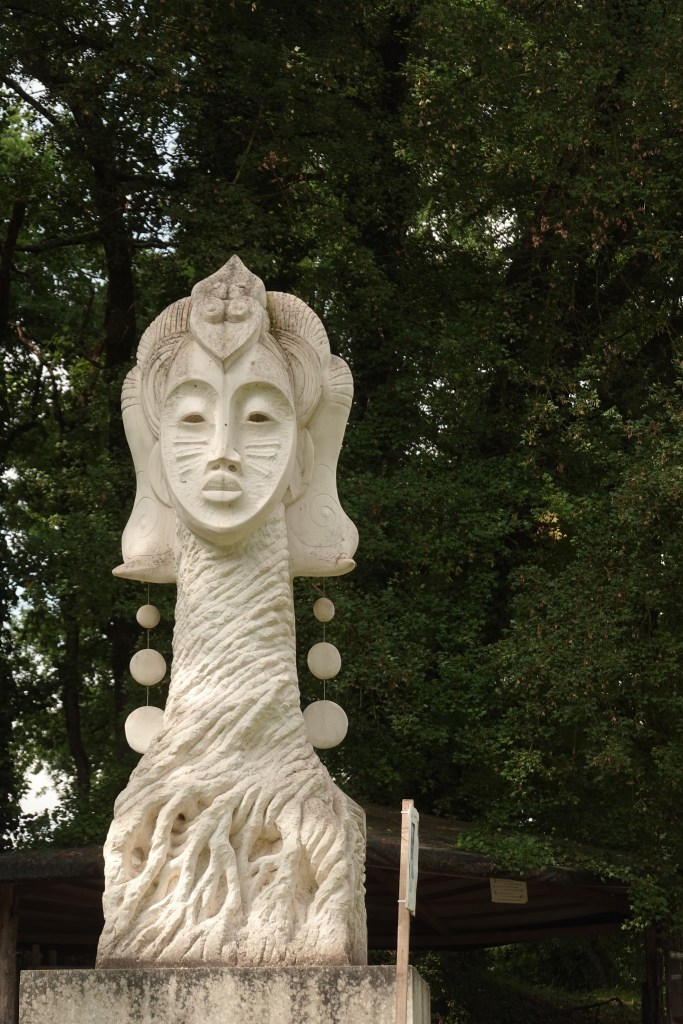
Raphaëlle Duval created this beautiful work and called it “Sentinel. Femme”. It’s in “Les Lapidiales” about half an hour from where I live in the Charente Maritime. There are many, many awe inspiring sculptures there, but this one became an instant favourite of mine.

I feel drawn to it, and held by it. It’s stunning in its power and beauty. Raphaëlle has written a little bit about it and she talks of the African goddesses, of their position standing at the border between tradition and modernism, and between the physical and spiritual dimensions of life.

She, this goddess, is telling us what we need….to weave together the wisdom of the past with our new discoveries and to bring the Feminine back into our lives.

It often seems to me we have created artificial disconnected superficial societies, not least because we’ve let the grasping, controlling aspects of our nature run wild. We need to re-connect to creativity, nurture, care, and the depth of life which brings us meaning and purpose.

In other words we need to bring the Divine Feminine to the fore in each of us. Then, maybe then, we’ll see a better way forwards, a better possible life, not just for we humans, but for our planet.

In the sculpture park called Les Lapidiales some of the sculptors have written poems on huge sheets of paper and hung them from the trees at the side of the path through the forest.

This is one of those simple ideas where you wonder why you’ve never come across it before. What a genius idea!

I love art in nature. Mostly the kind of art I’ve encountered in parks and forests is sculpture, which makes sense, given the vagaries of the weather. But I’ve also seen photographic exhibitions and installations of paintings which are equally powerful. I’ve also been to sound and light installations where the path through a forest (or in one case, the botanic gardens in Edinburgh) is transformed at night with lights, lit sculpture, and music. But I’ve never before encountered works of poetry hanging from trees.

I suppose I’ve come across the occasional quotation carved into stones in the wild, or written in metal plaques attached to a seat, but not whole poems.

I love spending time amongst trees – forest bathing. It’s good for my psyche, nourishes my soul, and, as a doctor, I know it also reduces inflammation in my body and boosts my immune system……forest bathing….I’m a practitioner and an advocate.

I also love poetry. That too, is good for my psyche and nourishes my soul. It slows me down, drops me into the present moment and stimulates my imagination and creativity. From what I’ve learned from neuroscience poetry is also good for exercising the right hemisphere of the brain, something we all need to do in order to counter the imbalance between the hemispheres provoked by our society and culture.

I’ve an idea to recreate this idea in my own tiny woodland but I haven’t figured out the practicalities yet, so meantime, I take a poetry book with me into the woods. Actually, that’s not the same experience but it’ll do for now.

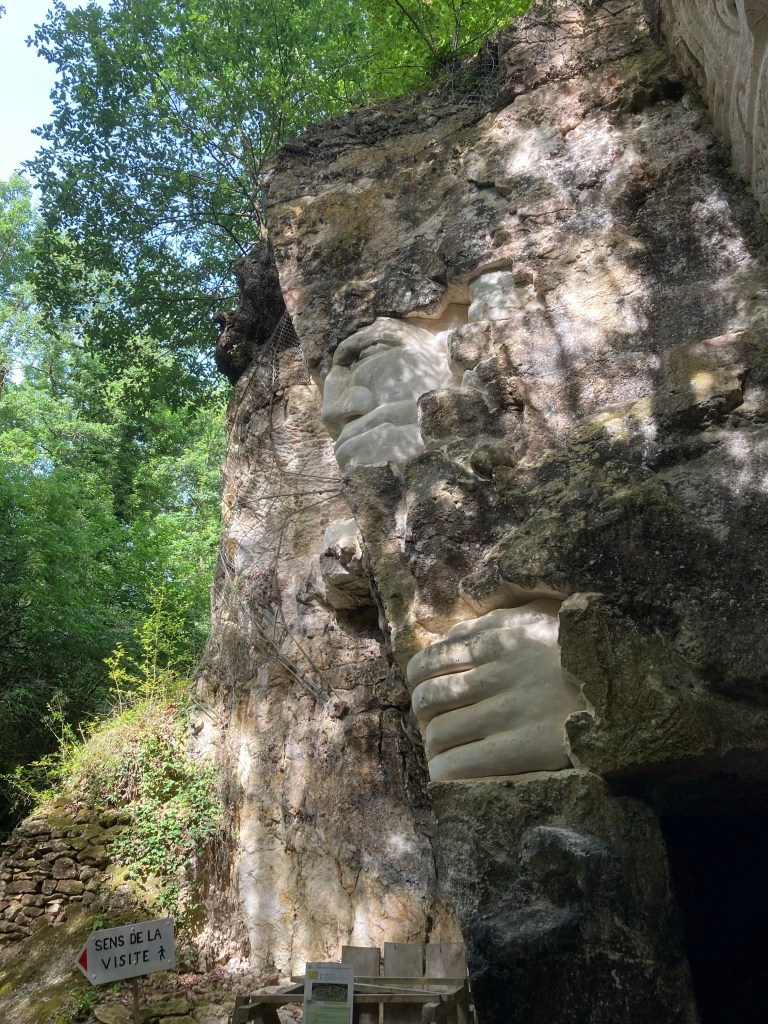
There is a truly astonishing sculpture park called “Les Lapidiales” near here. It’s been created in an old quarry and each year several sculptors from around the world are invited to come and create some new work. Most of it is created on the bare rock faces but there are also many standalone pieces.

This is just one of the works which has been created. It’s immense. And it’s wonderful. I don’t know what was in the sculptor’s mind when they carved this out, but for me, it’s a fabulous portrayal of the fact that every one of us emerges as a unique individual created from the stardust which formed this small blue planet.

There’s a tendency to think of “nature” or the “environment” as something out there, a place where we can visit or where we can live for a while. But the truth is we are not separate from nature. We are part of this whole planet. We are born in nature, live in this one massively interconnected environment and we die in nature.

Our body is formed from all that already exists and cycles back through the rest of the world continuously. We are not separate fixed objects but unceasing flows of atoms, elements, energy and information.

It’s better to think of ourselves as subjects within these flows than as objects separate from each other and from the world.

This work of art captures the idea of our embeddedness. You can never know or understand yourself or another without paying attention to the multiple contexts and environments of our existence. Our physical, familial, social and cultural webs of belonging.

We are embodied, embedded, extended selves.

Quite simply, we are not separate. Nature is us. We are Nature. This is the home where we are created, the home we die in, the home we never leave.

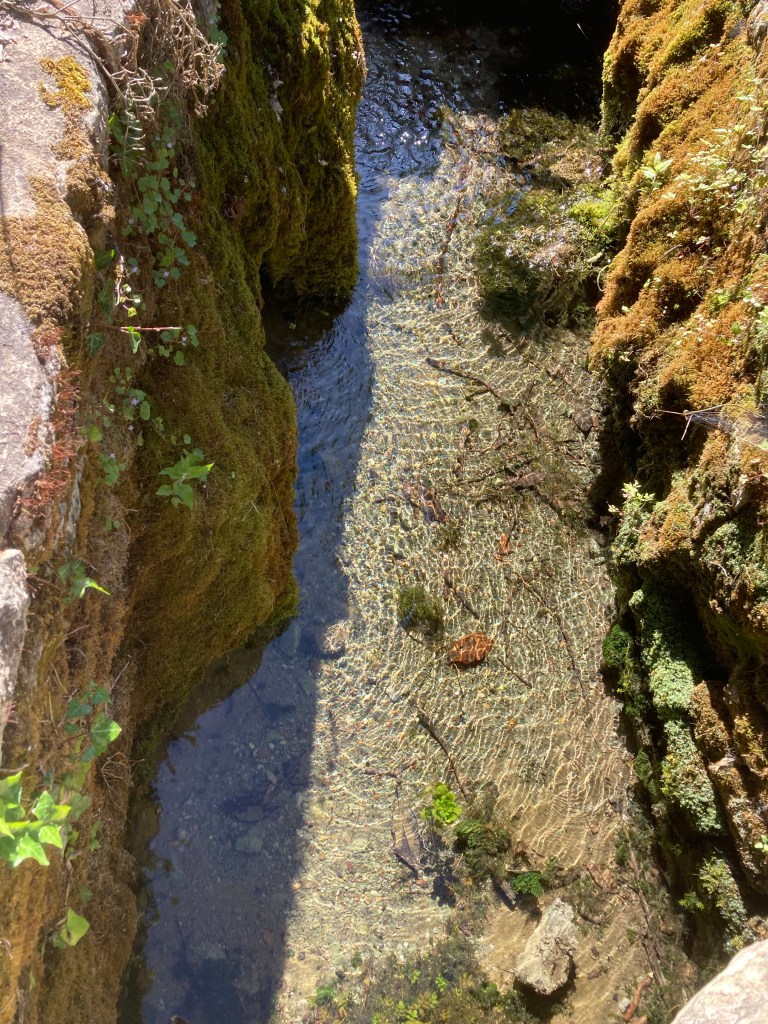
Across the road from my house is an ancient spring. In French a spring is “une source”. I like the French word better because it conjures up the idea of origins for me, so when I pop across to the “source” I feel that I’m touching base with our origins, with the early days of creation.

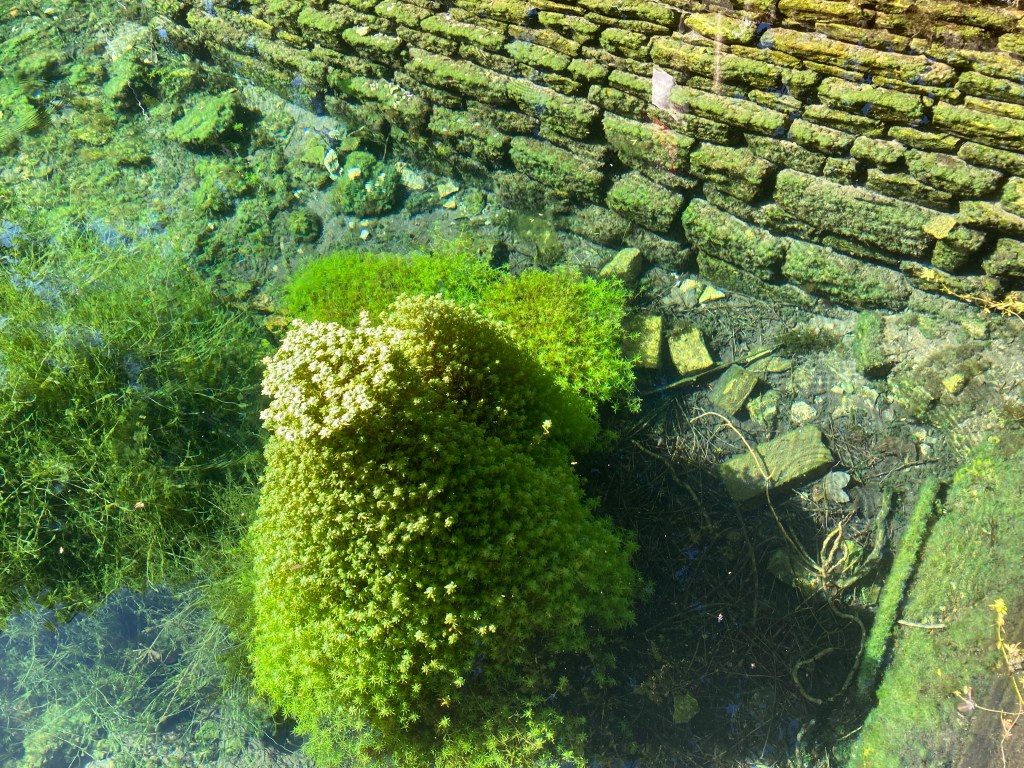
The Romans came this way a couple of millenia ago and they built, amongst other things, this aqueduct to channel the flow of the water from the “source”. By the way, Latin for a spring is a “fons”, which I presume is the root of our word “foundation”, so maybe that’s what the Romans called this water – aqua fons.

Whatever we call it this spring water is the clearest water I’ve ever seen anywhere.

As I watch the bubbles and sparkles on the surface of the water as it rushes along the aqueduct I’m instantly absorbed into the magic of the present moment. I see and hear the constant flow of the water, and I think of Heraclitus’s teaching about not being able to step into the same river twice. I’m reminded of this foundational fact of reality – constant change within constancies – how this stream of water can be named and visited and experienced by we humans over centuries whilst for each of us this water tumbling along is brand new, individual and unique.

As I gaze through the clear, clear water in the source it appears completely still to me. There’s not a ripple, not a wave, not a single bubble. Yet at its edge where the aqueduct begins it pours noisily between the ancient stones, foaming, sparkling, tumbling, filled with life and energy.

That amazes me every time. That proximity and conjunction of quiet clear stillness and tumbling gushing noisy activity. So different, yet both the same flow.

I can follow the stream which emerges from the end of the aqueduct. I can follow its path through trees, along the edges of fields, as it winds its way to the neighbouring hamlets of Le Grand Moulin and Le Vieux Moulin (The Big Mill and the Old Mill) along a little road called Rue du Ruisseau (road of the stream) which becomes the Rue du Petit Moulin (road of the small mill).

The names of the hamlets and the roads which pass through them reveal the importance of this “source” and whisper to me ancient stories of human interaction with this same, this always different, water.

How many people over how many years have stopped for a moment, entranced by this very same, yet utterly different, water as it emerges from the depths of the rocky Earth? How many have drawn water here or close to here, to drink, to wash, to irrigate the soil in order to grow plants, and to generate the power to turn those plants into enough food to feed their families, their communities?

I can only imagine.

I was walking through a forest the other day when this caught my eye. Does that happen to you? You’re just walking along when suddenly something catches your eye and you stop. I love when this happens. It’s feels like the universe is calling, saying “Hey, wait a moment, pause a moment and pay attention. I’ve got something to show you.”

So, what do you see?

A snail on a tree?

Well, yes, at least that. But look a little closer and you’ll see two of the most important patterns in the universe.

There are a number of common patterns we can see which repeat in both the smallest and largest forms….as if there are invisible organising energies which fashion whatever they are flowing through into these universal shapes.

Here there’s the spiral on the shell of the snail and the concentric rings on the bark of the tree.

I think these are two highly dynamic patterns. They both indicate movement and change. These are two of the commonest ways in which change spreads through entire systems, whole organisms, communities and biospheres.

We can see these patterns in our life stories. The constant return of the circle or cycle over time which creates a spiral, each time round familiar, but also new and different. And the seeds or germs of an idea, a thought, which grows and grows changing more and more of our life as it goes. Or the way an emotionally charged experience or a trauma acts as a stimulus, a spark of energy which takes our life story off in a brand new direction.

My rose

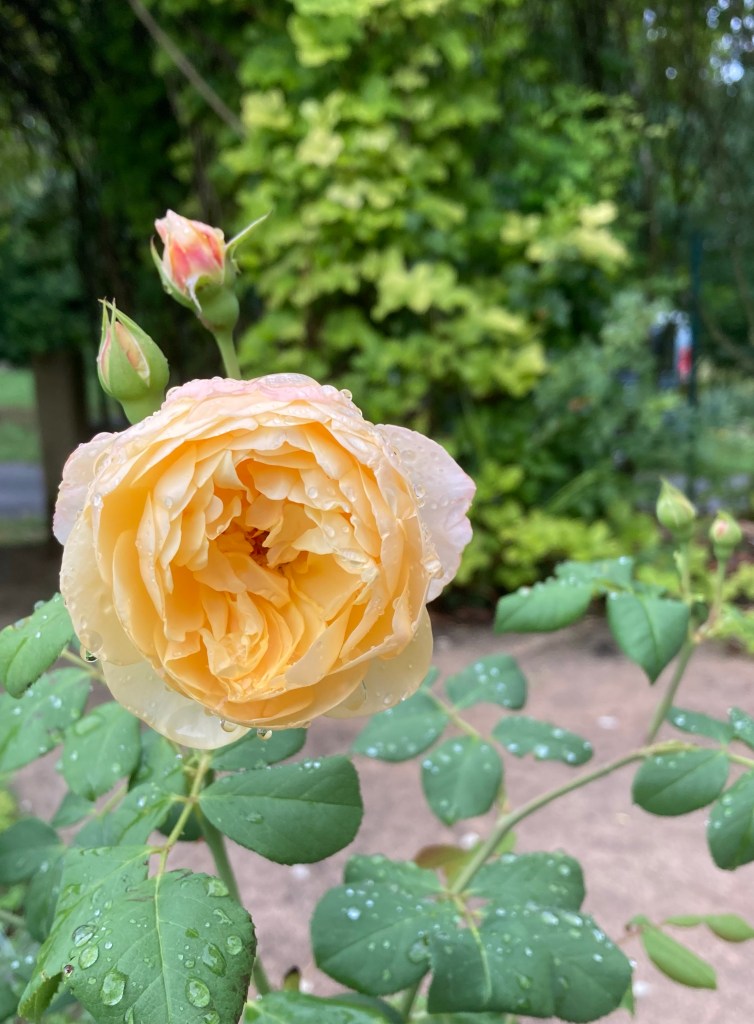
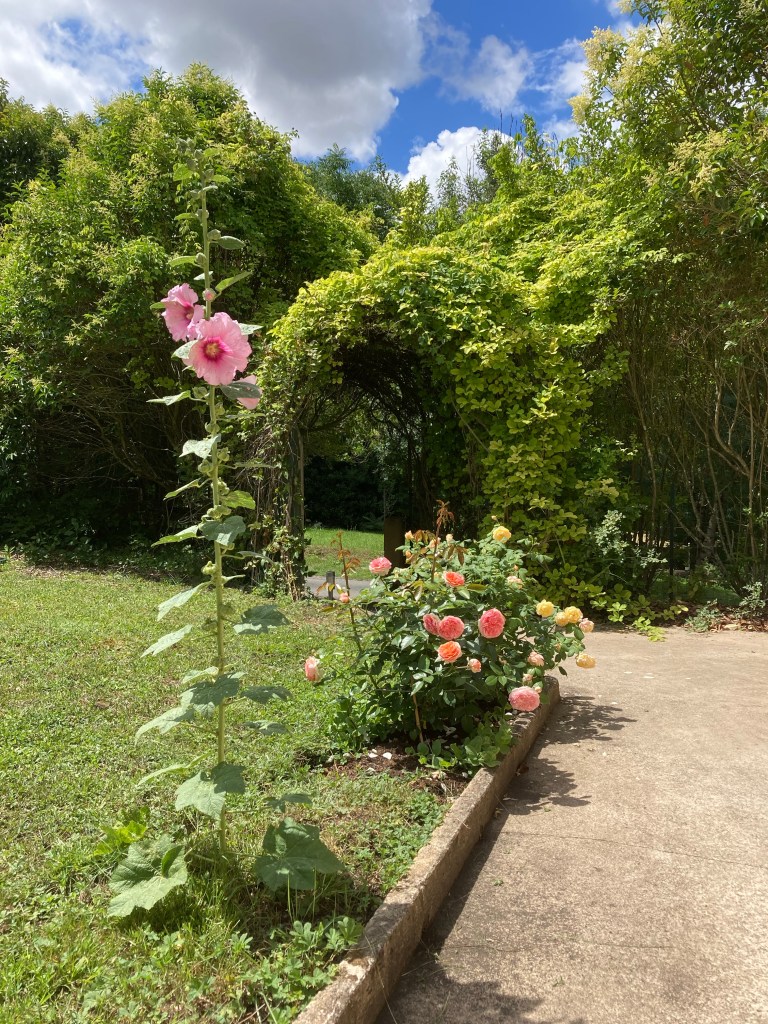
Maybe you’re familiar with The Little Prince and how he cares for his rose. Well this is my rose. I had to dig out a strip of grass and weeds along the border of the path, and here in the Charente Maritime the ground is very, very stony. My neighbour says his main garden tool for planting is a pick! We bought two roses, one each, and planted them next to each other just inside the entrance way.

That tall flower is a hollyhock, known as a Rose Trémière around here. I think they are astonishing and beautiful plants and mostly they grow where the seeds land. You see them everywhere in this part of the world. They go nicely with the roses don’t you think?

My experience of looking after a plant is very consistent with that of The Little Prince. It is based on the creation of an ongoing relationship. This rose is not the same as all the other roses in the garden centre. I don’t care for them the way I care for my rose.

Looking after plants is about nurturing. I can prepare the soil, feed the rose, water her, look out for for pests, but I don’t control her life, her growth or her flourishing. That reminds me of how I saw the practice of Medicine. As a doctor, I attended to patients, established a relationship of care and supported their recovery and growth. Medicine isn’t about control, it’s about care and nurture.

Every plant is unique. Every human is unique. And every relationship between a human and a plant is unique. It’s special.

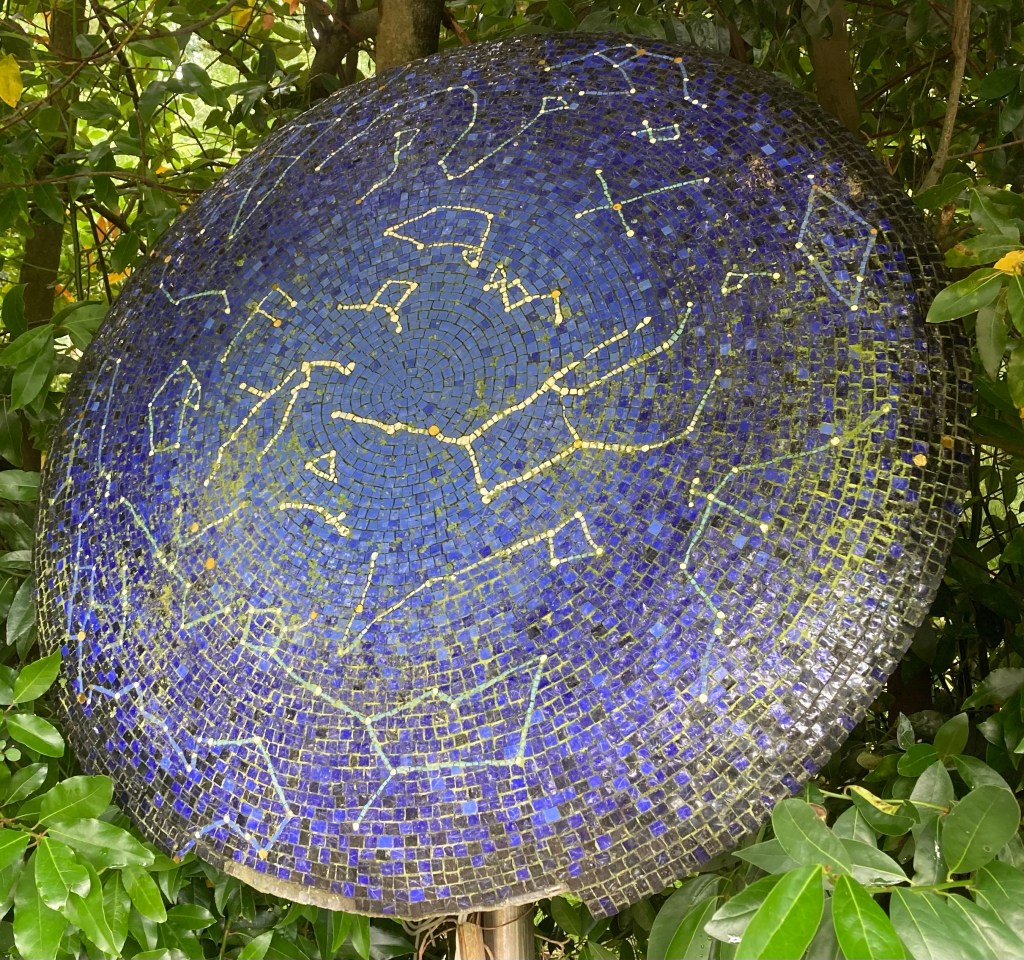
I stumbled across this beautiful mosaic in the gardens of the chateau at Dampierre-sur-Boutonne. Isn’t it glorious? What a work of art!

When I look at this I’m reminded of John Berger who wrote…

Those who first invented and then named the constellations were storytellers. Tracing an imaginary line between a cluster of stars gave them an image and an identity. The stars threaded on that line were like events threaded on a narrative. Imagining the constellations did not of course change the stars, nor did it change the black emptiness that surrounds them. What it changed was the way people read the night sky.

What Berger weaves together in this passage is how human beings use imagination to see patterns, tell stories about those patterns, then use those creative products of imagination to change the way we see and understand the universe.

I often think we underestimate the importance of imagination. It’s a real super power. Without it we wouldn’t have creativity, art, music, storytelling. We wouldn’t be able to solve problems, or to invent anything. We wouldn’t be able to understand other human beings because imagination is at the basis of empathy and compassion…the ability to put ourselves in someone else’s shoes.

This special use of imagination to weave together patterns and stories into maps changes how we perceive, and consequently, how we live, in this universe.

Of course, “the map is not the territory”, as Korzybski, the creator of “General Semantics” pointed out. But maps are lenses, filters, symbolic ways of presenting the world to us. And maps, clearly, are works of imagination.

That doesn’t make them “unreal”. I think that’s a common mistake we make….that what we imagine is unreal. Some of what we imagine is unreal, but we can’t access reality without imagination. Life, every day living, is a constantly creative act.

Here’s what I think is most important about all this. We are able, if we choose, to do two things….to become aware of the maps we use to live our daily lives (and to become aware of where those maps, those patterns and stories come from), and to create our own maps.

We can discover new patterns. We can make new patterns. We can listen to new stories. We can tell new stories.

We can become conscious co-creators of our universe.

We need to do that now. The old, dominant, world view isn’t working. We need a new one. Do you agree? Do you have an idea of what better patterns, stories and maps we could share?

Virginia Woolf’s favourite Montaigne quote came from his last essay…..

Life should be an aim unto itself, a purpose unto itself.

We are meaning seeking, and meaning creating organisms, we humans. We strive to make sense of our experiences and our life. We keep coming back to the idea of purpose…..what’s the purpose of my life? Why am I here? We will all find our own paths to the answers to those questions, but for Montaigne his path was not through religion or politics. It was through fully engaging with everyday life. This is consistent with my favourite French phrase – “L’émerveillement du quotidien” – which works as a touchstone in my own daily life. Roughly translated it means “the wonder of the every day”.

It continues to astonish me that the universe has created me and you, that we are the children of the stars, our whole beings emerging within this vast, interconnected web of subjects. Each one of us created only once, to live a unique and unrepeatable life. Only I, only you, can experience what we experience. Only you, only I, can express those experiences in our own, particular, personal and unique ways.

Sarah Bakewell concludes by saying the modern world could gain a lot from Montaigne’s sense of life.

It could use his sense of moderation, his love of sociability and courtesy, his suspension of judgement, and his subtle understanding of the psychological mechanisms involved in confrontation and conflict.

That’s a powerful conclusion. We could certainly do with a bit of moderation. Sometimes it seems to me the whole economic system we have created is based on greed and selfishness. The constant drive to consume more, to “grow” by ripping more out of the planet and destroying our natural homes strikes me as a kind of madness. Shouldn’t we be aiming at sustainability instead of increasing consumption? What’s the point of billionaires? They can’t even spend all the wealth they’ve grabbed. How sustainable is climate change? Yep, it’s way past time we needed a bit of moderation.

Sociability is such a key characteristic of healthy human life. We are social creatures. We don’t live in separate bubbles. We need each other. Ubuntu – I am because you are.

Courtesy – oh my goodness how much do we need more courtesy in our social and political discourse? Sometimes it feels as if social media is drowning in disrespect and hatred. How much more nourishing, more healthy, would exchanges and conversations be if they were based on courtesy and respect for difference?

There’s such a rush to judgement in our media and society, yet I find the only way to get to know another person and to understand them is by not judging them. Suspending judgement creates a space for compassion and tolerance, two qualities we need to have healthy relationships.

Montaigne lived through a time of great conflict and violence, thriving despite that by concentrating on the here and now, remaining open and welcoming to everyone, delighting in individual differences and staying full of curiosity and wonder every day. His humility and unceasing desire to understand himself and others underpins his writing and that delights me.

I don’t think of Montaigne as a hero but I find his essays an enormous inspiration. We shouldn’t try to be the same as Montaigne, we are, each of us, unique and different after all, but we’d have a better world if we all tried harder to understand ourselves and chose to live more consciously, with more wonder and more compassion.

I’ve enjoyed re-reading Sarah Bakewell’s “How to live”, and I hope you’ve enjoyed these last twenty posts where I’ve reflected on her twenty possible answers to that most fundamental of questions, which reminds me of the fabulous Mary Oliver poem, The Summer Day, which ends with the following lines….

Tell me, what is it you plan to do
with your one wild and precious life?