Feeds:
Posts
Comments

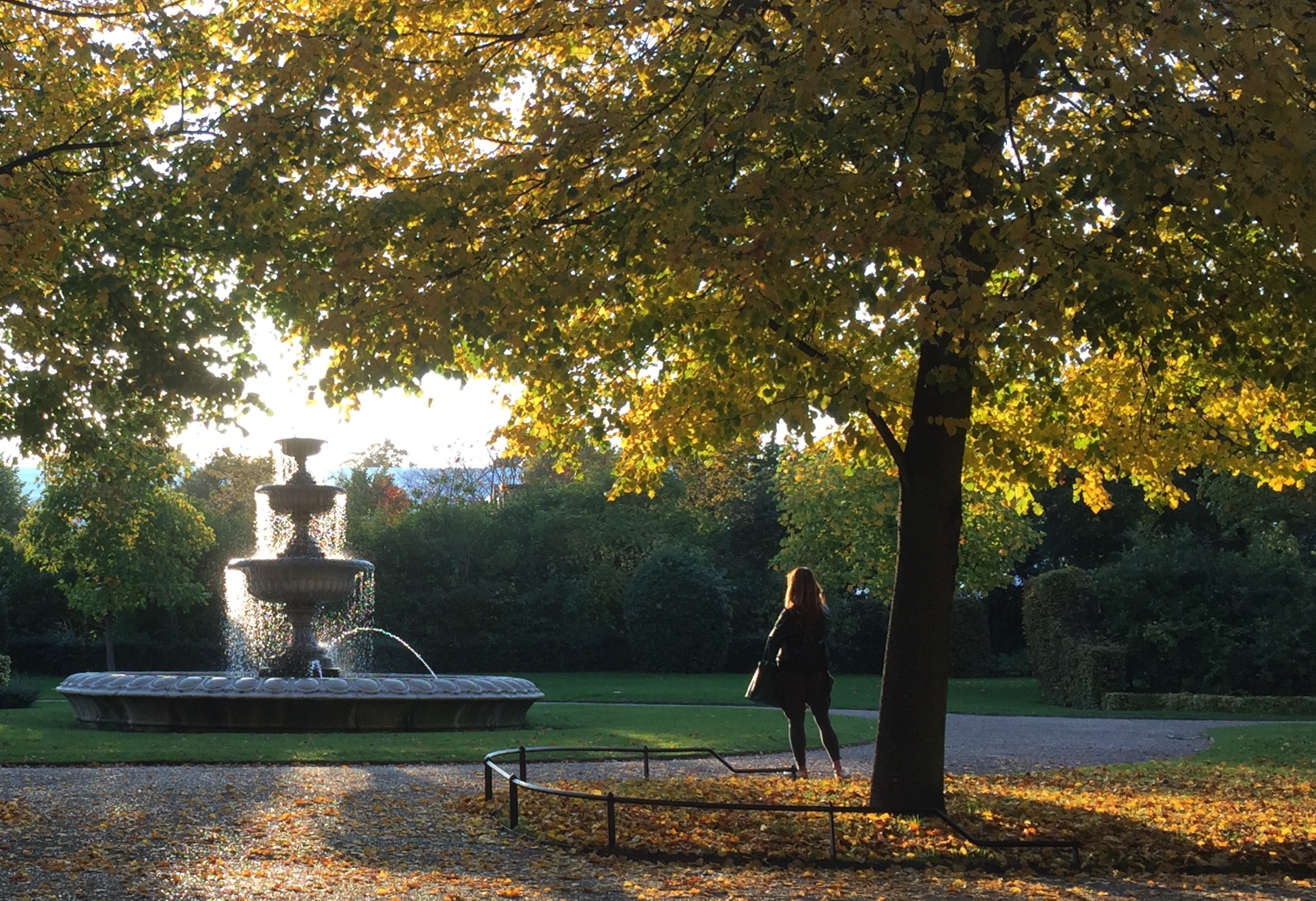
Once upon a time I was walking in a London park. I was attending a weekend workshop and we finished up late one afternoon. As I walked past the gates of the park I was drawn in by the colours of the autumn leaves and I spent a while strolling around, just noticing, pausing, photographing.

I didn’t set out with any intention to take photos. I wasn’t even looking for a park. I didn’t think I should get some fresh air or exercise. I was just walking back to the hotel and the park called me in.

We are a pretty driven, goal-focused, outcome-focused, busy society, so unexpectedly finding “free time” was a real bonus. Many thinkers have written about the value of being a “flaneur” (someone who strolls around without any explicit intent), of passing some time just being present, not working towards some, as yet, imaginary future point.

This was one of those times. I took a lot of photos. I sat on a park bench, listened to birds singing, watching families and individuals enjoying the park. I noticed that at the end of one path there was a fountain, and I’m pretty keen on fountains. They draw me to them, too. As I approached the fountain I noticed the water was catching the light of the low sun. It utterly illuminated the fountain so that it shone as if it was radiating energy all around it. I stopped to take a photo.

As I framed a shot I noticed there was someone standing under a tree, gazing towards the exact same fountain, that fountain of light and water. I took my photo, and then took some more. Then I lowered my camera and just stood taking in the scene. The person under the tree stood completely still, solely focused on the fountain and the play of light and water. Was she lost in her thoughts? I’ve no idea. Was she utterly absorbed in the moment, completely present in the experience of these magical moments? I don’t know. But my instinct says it was the latter.

Did I catch the sunlight? Or did the sunlight catch me? Did the water catch the sunlight? Or did the sunlight catch the water? This was one of those moments where the connection, the interaction, the relationship came to the fore. It wasn’t important to know the direction, it was more than enough to enjoy the flow.

As I look at this photo again, now, I am, once more, caught by the light. It draws me to it, pulls me towards it, and I slip into a few moments of quiet, of peace and calm. I bathe in the feelings of contentment and delight. It nourishes me.

Maybe it will nourish you, too.

You know that thing that happens when a noise stops, and it’s only at that point that you become aware of it? Or where you catch sight of something out of the corner of your eye…..a sudden movement, perhaps of a bird, or an animal, or a person? We humans have a fabulous ability to become aware of change. In fact, in many circumstances it’s how we pick to what’s important or interesting to us…..we see or hear or otherwise become aware of something changing, or something which has just changed.

Many years ago I rented an apartment in Carcassonne. I remember waking up one morning to the sound of the church bells striking the hour. I counted “seven, eight, nine” and then they stopped. I looked at my clock and it was nine o’clock. But I had now awareness whatsoever of counting from one to six. I seem to have started at seven! Of course, that’s not possible, but what it meant was that whilst still in the zone between sleep and wakefulness my brain had registered the sounds of the bells, and had kept track of them. I just picked up the process once I was awake enough.

Much of what we experience, and what we know, happens at levels below full consciousness. That’s not a bad thing. It’s how we function. I mean, imagine if you were aware of the activity of your digestive system moment by moment, or of the speed and rhythm of your heart or your lungs? You just couldn’t keep track of it all. Luckily, you don’t have to. However, it’s also important to become aware when we need to…..or when we want to. And to do that, one of the triggers is noticing change.

This photo is of a plane trail in the sky. This particular one has already been caught by the high winds and is turning from a line, or path, into a feather, or breaking wave on the beach. It’s beautiful. For me, it captures the reality of change. This trail, like all plane trails, is changing right before my eyes. I gazed at it for a few moments, watching this beautiful shapeshifting, following the changes. You can see from the left hand side of the image, how the wisps of white cloud are already disappearing “into thin air”. In fact if you look from right to left, you see three separate stages of the change process….from the fairly condensed rope or string looking part on the right, through the wispy, feathery waves in the middle, to the almost not there any more area on the left.

I like this image because it makes me think of change, and I change is such a great way of making us become more aware.

I used to look up from this garden and see many, many such streams in the blue sky. I don’t any more. I haven’t done for a year now. Why not? The pandemic. I’m sure I couldn’t tell you how many planes past over this part of the country every day over a year ago, but I can tell you that when I see a single one now, I notice it. There are hardly any. What an incredible change!

Hasn’t this pandemic, with its limitations and lockdowns, with its profound and widespread changes which it has brought in its wake made us more aware? I think it has. It’s become clearer than ever before how fragile and unprepared our health services are. It’s become clearer than ever how dependent our societies have become on the vastly interconnected global just-in-time supply chains. It’s become ever more clear exactly how important millions of citizens are…..whether we call them “front line workers” or “essential workers” (must be pretty horrid to be called “non-essential” don’t you think?) It’s become clear how broken our systems of social care are. It’s become obvious how much poverty there is, how much chronic ill health there is, how fragile so many jobs are. It’s become clear that this economic and political system we live under is failing….failing to be resilient, failing to protect, failing to thrive.

Yep, there’s no doubt that change is a great eye-opener. Maybe now that our eyes are wide open, it’s no surprise that many of us are re-thinking our values and priorities. It’s no surprise that all those things which we at some level already knew, are now crystal clear, and demanding that we pay attention to them.

Shall we make a new beginning? Based on kindness, care, compassion, justice and fairness? Based more on co-operation than competition? Wouldn’t that be a good idea?

Metamorphosis

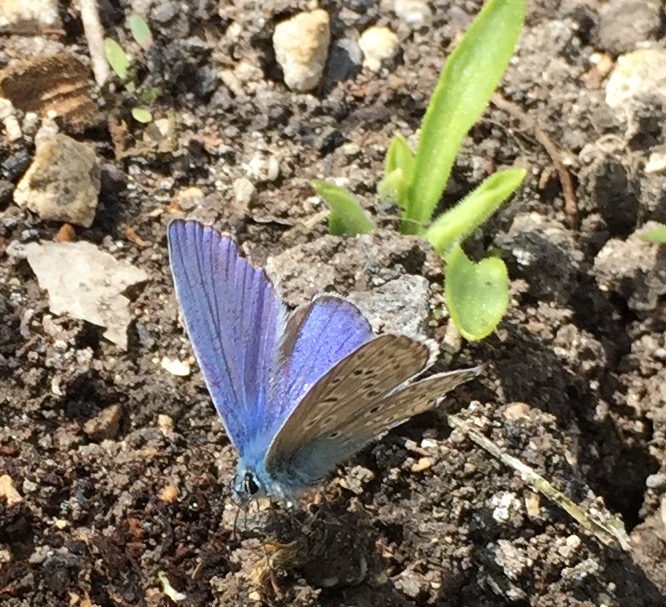
The first butterflies of the year have appeared in my garden in the last few days. They really are such astonishing creatures, butterflies. If you watch one flying around their trajectory seems utterly random. They just seem totally incapable of flying in a straight line! You have no idea, literally, no idea which way they are going to fly next. You can’t tell whether they will veer right or left, up or down, in the very next second, and you can’t tell where they are going to land next. I’m sure I read once that scientists have still not been able to explain the flight dynamics of butterflies. Apparently we don’t know how they manage to fly in this astonishingly varied way.

Apart from the sheer wonder at the flight of the butterfly, and the beauty of individual butterflies, what astonishes and inspires me most about them is their life cycle. They are the creatures which undergo the most incredible metamorphosis. When you look at the different stages of the life of a single butterfly you can’t help being amazed how different, how physically, and structurally different they are at each stage. From egg, to caterpillar, to pupa, to butterfly, each stage just couldn’t be much more different from the other. In fact, it’s hard to take on board that the caterpillar and the butterfly are the same creature.

So, the butterfly has become one of the main symbols of metamorphosis.

Metamorphosis is a sort of super-charged emergence. Emergence is this fairly new scientific concept which describes stages of change in complex systems. It means that the creature, organism or system undergoes such rapid and comprehensive change that once it has changed it seems radically different from its prior condition. So different, in fact, that it would have been impossible to predict exactly what would change, and what the outcome of the next stage would look like. We can only make sense of the stages by looking backwards and putting together the narrative of the timeline.

Metamorphosis is much more widespread and common than it first appears. In fact, I’d argue that each of us undergoes continual metamorphosis throughout our lifetimes. You don’t think so? Well, take a look at some old photos. Do you have any photos of you when you were a baby? You when you were a toddler? You when you were a teenage? You see where I’m going here. At each stage as we look back we know that we are looking at an earlier version of ourselves but we almost can’t believe it because we have changed so much.

We undergo continuous psychological metamorphosis too. It’s not just our bodies which grow, change, mature and age. Our personalities, our thoughts, our beliefs, values, habits, ideas, memories and fantasies do too. Isn’t what Jung termed “individuation” a description of the process of human metamorphosis?

The thing about metamorphosis is that it is BIG – I mean SIGNIFICANT. It’s not a minor tweak here and there. It’s not even a series adjustments. I recently heard an expert, talking about the crises of pandemic and climate change, call for such wide and deep change in the way we humans live on this planet, that what we need is a metamorphosis and to underline his point he said

“A butterfly is not an upgraded caterpillar”.

I love that. And it’s true. We don’t need a “silver bullet”or a “technofix”. We don’t need a simple, single new law or practice. We need to metamorphose. We need a holistic, multi-factorial, complex, wide-ranging, deep, radical change – in our own lives and in the way we live together as communities, as nations, as a human species, and as one of the thousands of species of life on this little blue planet.

The thing is…..we can all participate in this. We can all imagine, invent, suggest, contribute towards the creation of, an utterly different way for ourselves, our children, our grandchildren and the whole of Gaia. But none of us can know what such a metamorphosis would look like.

What we can do is choose different thoughts, different ideas, different values, and different actions which bring us more into harmony with each other and with the world. Because in complex systems, integration and harmony produces emergence, and emergence can be as profound as a complete metamorphosis.

Abundance

I know a dandelion seed head is almost a cliche in photography. I mean who hasn’t seen an image exactly like this one? But the truth is I have several photos of the seed heads of plants, whether they are dandelions, or some other flowers. I find them beautiful. In fact, I find them irresistibly beautiful. I am almost compelled to stop, to look more closely, perhaps to take a photo, perhaps to blow gently on the seeds and send them off into the wide blue yonder. Maybe that’s partly a harking back to childhood. Who hasn’t counted how many breaths it takes to blow all the seeds off a dandelion? As kids, we even called them dandelion clocks and the number of breaths it took to blow all the seeds away was supposed to be the number of hours we were into a day. I’m not sure why that practice persisted because I don’t ever remember that being a remotely reliable way to tell the time!

But what I want to focus on today when I look at this particular image is the fact of abundance.

Just look how many seeds there are in this one single plant! I suppose you could count them if you had a lot of patience, but do you think anyone has ever managed to count the number of seeds in a whole field of dandelions? (Ok, why would you??) But even if we just look at this one plant we see what an abundance of seeds it has produced. This is what plants do. They produce an abundance of seeds. Way, way more than is “needed” just to create just another plant.

Here’s what else plants do – they capture an abundance of energy directly from the Sun. Through photosynthesis they capture the Sun’s energy, suck carbon dioxide and water out of the air, and create sugars to store the energy they need to grow more stalks, more trunks, more flowers, more blossom, more fruits, more seeds. They get what they need to survive and to thrive directly from the air and the Sun (and, yes, their root systems gather and store other nutrients which they need – also in abundance). Many trees live way, way longer than a human being can live…..hundreds of years in fact. They have, and they experience, an abundance of life.

The universe delivers what all Life needs. The universe delivers what all Life needs in abundance.

But do we live that way? Do we live as if the universe supports us abundantly?

Ah, you’ll say, but millions of people in the world live in poverty. Their daily lives are of scarcity, not of abundance. And that’s true. But that’s a political choice. We could feed the world. We could shelter the world. We could create sustainable, thriving societies across the entire planet if we chose to, if we chose to work together, if we chose to care about each other, treat each other with compassion and kindness, if we demanded justice, fairness and equality for everyone……whatever “identity” we apply to them, wherever they live.

Utopia, you think? Wishful thinking?

I guess so. I guess such a vision is utopian. I guess I’d agree it’s what I would wish for, but I feel unable to deliver.

However, I do think we humans have created a dystopian reality with the current economic and political models that we constrain ourselves to live within. Don’t forget money is a human invention. It doesn’t exist in Nature. States are a human invention, and their borders are a human invention. We share one planet, one water system, one atmosphere, one soil, one vast, interconnected, inter-dependent web of Life.

So, yes, I agree, this is utopian, but, also, I’d argue, it’s MORE realistic than the present invented delusion which traps us in its system. Maybe this pandemic has made all of that more clear. Maybe this pandemic is a time for we humans to wake up, see the world for what it really is – a planet, in a universe, which provides for Life abundantly.

How might we choose to live if we choose to make that the foundation of our thoughts, our beliefs, our values, and our actions?

Wired

Vineyards consist of several parallel rows of vines, each plant pruned and tied onto wires which run from stake to stake. The cognac makers call each row a “wire” and a contract between a grower and a distiller will detail how many “wires” are being sold each year. As best I understand it, this is the unit of agreement – a number of wires, not a number of grapes. Interesting, huh?

This photo is one of many like this which I’ve taken over the years. I love how the Sun catches the wires at certain times of day. It makes them vibrant. It makes them sing.

You can tell this is a Spring photo from the fact that there are no leaves on the vines yet, and that beyond the vineyard the trees are full of blossom. Everything has its season.

This image of wires sets off my train of thought along two different paths.

Firstly, it reinforces my understanding of the world as multiply and massively connected. The wires are a symbol of connection for me. They connect the plants together, they connect the growers to the distillers, and they create the basic structure of each and every vineyard. They are an underlying, foundational, creative structuring force which makes the vineyard look and live as it does. There are many such patterns, forces and structures running through and below our lives. There are many, in fact, which give us the forms of physical reality in which we live. I love it when we glimpse these patterns and become aware of the flows of energy and change which shape our lives.

Secondly, the phrase from neuroscience “what fires together wires together” comes to my mind. Although I think the metaphor of wiring for the elaborate, complex set of relationships between neurones in our brain is somewhat overdone, the truth is that it seems that our habits of thought, feeling and action, do actually change the physical structure of the brain. When we think, feel or do something repeatedly we lay down strong, fast pathways of neurones which not only make it easier to do or think those things….they make it harder to not do them! They become the underlying structures which determine some of our unconsciousness activity. To develop new, different, thoughts, feelings and actions, we need to consciously choose to initiate them and repeat them. That’s great news actually, because as well as “what fires together wires together”, we have discovered the brain is “plastic” – not made of the material we call plastic, but has the characteristic of “plasticity” – it can constantly be remoulded. We are not stuck with a set of thoughts, feelings and behaviours. We can change them. We just need to consciously choose to do so, and to repeat what we have chosen. That’s at the basis of the teaching about creating new habits by doing them each day for 30 days. It seems that by that time we’ve created new pathways, or new wiring!

Well, well

There’s an old stone well in the garden where I live. It’s got a rusty metal cover which is fastened with a padlock but we opened it to look down inside when we arrived here. Using a roll of string and an old key we measured about twenty metres down to the surface of the water. How deep the water is, I’ve no idea. Above the well is an iron bowl hung from an arch by a short chain. Obviously you can’t lower the bowl into the well to get water, but, somehow it seems totally appropriate.

The Redstart, and some of the other small birds, like to sit at the top of the arch, and I like to photograph the well in different lights and against different skies. There’s something deep, something rooted, something which connects me to this place, this time, and times gone past, when I look at this well.

This particular photo was taken, as you can see, during a spectacular sunset. One of those sunsets which sets the entire sky ablaze. We get a lot of sunsets like that over the summer months especially. When I look at this image I think of the four basic elements – the Sun’s fire, the winds in the Air which stretch the clouds over the sky, the Water deep in the well, and the solid Earth and rock from which the well is made, and into which it has been dug.

I think, too, of the hands of humans, because it took human imagination and craft to dream up this particular well with its iron bowl, and it took the skill of humans to sink the well, surround the top with stone, and fashion the iron bowl and its fixings.

I wonder about the beginnings of this well, and don’t doubt it was sunk to find water. There’s a very high calcium content in the incredibly stony ground in this part of the world, a region which is called the “Grande Champagne” because of the high quality of Cognac produced from the vines which thrive in this most unlikely looking soil. It’s a soil which doesn’t hold onto the water. So, I think of the vineyards and the men and women who plant the vines, prune them, nurture them, and harvest their grapes. I think of the distillers with their giant copper stills. And I think of the astoundingly varied flavours of the local cognacs which they make.

I haven’t used the well to draw water, and I don’t think anyone else has done that for many, many years. Whoever added the iron bowl and its fixings was doing something else – creating a work of beauty – something delightful to look at. And, probably without predicting it, creating a favourite perch for the local, smaller birds. Did they realise the well would look this beautiful against such gorgeous sunsets? Maybe they did.

Do you see what’s happening here?

This “object” – this “thing” we call a “well” – I find that I develop a relationship with it. I notice it. It catches my attention. I contemplate it on different days, in different weathers, and against very different skies. It delights me. It stirs my curiosity. And it sets off trains of thought which travel along a multiplicity of connections. It changes my experience of the everyday.

That’s how the human mind works. When we are well, when we are growing and thriving, we are driven by our deepest feelings – the affects – which make us the seeking, connecting, joyful creatures we were born to be. Conversely, when we sick, when we blocked or stuck, we disconnect, withdraw, and seek protection. It’s not that the former group are good, and the latter bad. We need all of our affective strategies to survive and thrive. But I’m convinced that the more we nurture joy and curiosity, the more we pursue beauty and harmony, the more we build mutually beneficial relationships in our extended webs of connections, the healthier we will be.

That’s how we thrive. That’s how we grow. That’s how we flourish.

I wish you well.

I’ve seen this only once.

One day, three years ago, I looked up and saw this sort of rainbow. I say “sort of rainbow” because it isn’t actually an arch. From time to time, in different places, I have noticed various rainbow-type phenomena. I’ve seen them in the spray of water in a fountain, in short almost square patches in the sky, and even in long thin strips once. But this particular one looks different from all the other ones I’ve seen elsewhere.

I don’t expect I’ll see another one the same.

What caught my attention? Was it the sudden appearance of colours in the sky? Perhaps. But I don’t think it was all down to the colours. The shape, the size and the location were equally important. What really caught my attention was its uniqueness. It appeared strange, rare and peculiar.

Some of you may recognise that triad of terms – strange, rare and peculiar. It’s one which was at the heart of my medical practice for several decades. I found that every single patient who came to see me was unique. I was never able to, nor ever wished to, reduce them to a diagnostic category. Naming their disease was one small step towards understanding them. Listening non-judgementally, with genuine curiosity and interest allowed them to unfurl their stories. Every story was strange, rare and peculiar. In every story I would be struck by something. Something would provoke a question, stir a sense of awe or amazement, in me, move me, suggest to me that here was a story of a unique life, a life where particular (peculiar) events occurred, and which had unusual (rare) effects. Every story would strike me as having something distinct, something “not normal” (strange) about it. Because that’s how life is.

Every single one of us is “strange, rare and peculiar”. We cannot be understood as “data sets”, spreadsheets full of “variables”, “averages”, “norms” or “typical features”.

And so, I learned, this is true, not only of patients in a consulting room. It is true of life.

Iain McGilchrist’s “The Master and His Emissary” remains one of the key texts of my life. His description and exploration of the asymmetry of the two halves of our brain (our two cerebral hemispheres) has helped me make sense of things in so many circumstances. Our left hemisphere is great for picking bits out of what we perceive, matching them up against our memory banks of what we know already, ascribing labels to them, and filing them away as further examples of familiar categories. Our right hemisphere, however, is continually on the lookout for what’s new, what’s different. It engages with the world as a whole, not as a collection of bits. It sees whatever we are looking at in its contexts, understands it in its vast web of connections and relationships with everything else.

In short, I think, our right hemisphere is terrific for finding the “strange, rare and peculiar”.

So what? you might ask. Well, look again at this photo. I find that the colours and shapes together are beautiful. I love the way light has been prised apart into these bands of colour, in two clouds, one above the other. I love how this phenomenon hangs on a setting sun orange sky, how the silhouettes of the trees form the lower border of the image, and how flocks of birds scatter across the entire sky.

It’s all very beautiful. Enchanting. Entrancing, even. It amazes and delights. It makes me feel good to be alive, and humbles me with the awareness that I will never know all that can be know. I will never cease to encounter what I’ve never encountered before. And neither will “we”, we humans together. I love the feeling of wonder and curiosity that these events create. I love the sense of mystery.

Opening ourselves up to what’s strange, rare and peculiar, turns out to be a great way to live.

One year….

17th March 2020, I sat down and wrote my first post of the pandemic. We went into a national “confinement” that day here in France. None of us knew or even guessed exactly how the next 365 days would unravel. I certainly didn’t think I’d write a post every single day for an entire year. But here I am, still writing. What I committed to on this day one year ago was to share a beautiful photo I’d taken, describe some of the “émerveillement” (wonders and delights) of my every day experience, and share my caring heart.

I still think those are some of the best things I can do – share my joy, my delight, my awe, my wondering, my perspectives, thoughts and understanding – share them all through the lens of a loving, caring heart.

I still think that whatever we think, imagine or do, influences our daily experience of life, changes the lives of others, and co-creates the reality of life on this one, small, blue planet. So we should try to live not on autopilot, but with awareness, with consciousness and with agency. “Heroes not zombies” folks!

As I look at this photo this morning I remember the day I sat on a plane and saw the Sun come up between the clouds. Yep, that’s what that image is – the Sun emerging with clouds above and below (as above, so below) – and I immediately hear Leonard Cohen in my ear. I suppose his line has become one of the most famous lines in song history, but it’s still a brilliant line.

There is a crack, a crack, in everything

That’s how the light gets in.

By the way, if you want to read about the origins of that phrase, check out this excellent article. It reveals some of the roots and influences which led to this particular form of words.

Back to my photo – it looks to me that I’m staring right at that crack which is letting the light in. But, hey, hasn’t this pandemic been just such a crack?

Hasn’t it shone a bright, clear light on the fact that we are one human race, embedded in one living planet, sharing the same air, the same water, the same earth?

Hasn’t it shown us the power of co-operation and collaboration?

Hasn’t it highlighted the vulnerabilities we are subject to from our current model of civilisation? Highlighted poverty, precarious employment, poor nutrition, inequality and injustice, climate change, loss of biodiversity, how we treat animals, and just how broken our economic and political models are?

We are a long, long way from dealing with any of these problems and our current silver bullet of vaccination will not be enough to create a stronger, more resilient, healthier community of humans on this planet. I still have hope. I still hope that as the pain of the wounded crack, and the illuminating brightness of the light which gets in, we will be motivated to enhance the incredible inventive genius and co-operative, social power of human beings to create a better world.

But, hey, right here, right now, I will continue with my commitment and share with you a beautiful image, a positive thought or idea, and my passion for love and kindness. I hope these touch you, and you transform them with your own unique experience and imagination, and pass them on to others.

This half frosted leaf reminds me of the yin yang symbol. About half is white with frost and half is coloured brown. The white half has an area of brown in it and the brown half has an area of white. OK, I know, it’s not the same shape as the traditional yin yang symbol but, still, it captures the same essence I think.

This, for me, is a symbol of transition. We are at that time of the year where one season recedes and another emerges. It’s not that winter has gone completely, and it’s not that spring has quite set in.

Transition is a time of emergence. It’s where whatever exists is in the process of becoming something else. I only discovered this term, “emergence”, a few years ago, but it has been one of the most useful concepts I’ve ever encountered. Emergence describes change in complex systems. The thing is, complex systems are “non-linear”. They aren’t like machines. They don’t change predictably step by step. Because complex systems (like the human being, like all living creatures, like Life, like the living planet, like reality) are non-linear and “open” ie embedded within other systems with constant flows of molecules, energy and information between and through them……then they change in this very different way, which has been called “emergent” – looking back you realise you couldn’t have predicted what they become from how they were! Even if you knew ALL the conditions today, you could NOT predict accurately how a complex system will change.

All that might seem a bit frustrating. I mean, it would be great if we could just gather the “data” and the “evidence” and know for sure how things were going to change. But we can’t. That’s the delusion of the positivist, technocratic world view, the kind of view which claims to know with certainty exactly what “will work”, and only later to realise that it didn’t. In fact, for me, it’s the delusional view which I find most frustrating. I can’t stand the constant pushing of the next “silver bullet”, the next “quick fix”.

I find it liberating to acknowledge and accept the reality of complexity and emergence. It brings several things with it. It demands humility. It requires me to keep an open mind at all times, to remain aware and conscious of the here and now…..just as that here and now constantly comes into being. There’s something exciting and ALIVE about transition and emergence – do you see that phrase I have at the top of my blog?

“Becoming not being”.

I choose that to keep my focus on change, on emergence, on transition, on the everyday, as the everyday unfolds. It brings me my abundant experiences of wonder, awe and delight. It brings me joy.

Final thought for today – transition, the yin yang concept, the idea of emergence – these all fit beautifully with the scientific, rational, and philosophical understanding of complexity – complex systems which are open, non-linear and massively inter-connected. That demands that we always consider contexts, connections, relationships and environments. It shifts us away from the delusion of a world made up of separate unconnected pieces, and brings us face to face with the reality of holism. The whole is always more than, is always different from, the sum of the parts.

Cycles of life

I got down on my tummy and took this photo. What captured my attention was the delicate but vibrant life of this new leaf on its bright green stalk. I’ve come back to this image again and again to contemplate the incredible phenomenon of birth and growth……how a seed can germinate, push out stalks and leaves and begin a long journey upwards towards the Sun…..growing and maturing until it realises its full potential as a flower, a bush or a tree.

Ever since I studied embryology at university I’ve been in awe of how a single fertilised cell can differentiate into so many other types of cells, and how each cells develops in exactly the right place! I mean just think of it in terms of a human being…..how does that single fertilised cell which first divides itself into two cells, then four cells, then eight, and so on, grow a head where a head should be, a heart where a heart should be, and so on to create a beautiful fully formed baby? It still astonishes me.

But the other reason I return to this image is because I look at where the young plant is growing and I can see it is emerging from a forest floor covered in dead leaves. Right in that observation we see the basic principles of life and death….of how there are cycles to life, cycles of birth, growth, development, maturity, ageing and death. That story isn’t a straight line. It’s a circle. Many people have pointed out how, unlike human beings, there is no waste in Nature. Everything transforms into something else. We humans haven’t quite learned that trick and throw away, discard, dump what we don’t want. Where do we think it goes? What happens to all the waste we produce? What effects does it have on the complex, interconnected cycles of Nature on this little shared planet?

I’m already hearing economists and politicians say how they are looking forward to the world economy “re-starting” and saying “we need to get people consuming again”. Already they are talking about how to stimulate “growth” with little thought given to growth of what, and how that increased consumption is both sustainable in a finite planet, and how it fits with the cycles of the natural world.

My hope for after this pandemic is that we undergo what I recently heard an economist call a “metamorphosis”. He said “A butterfly is not an upgraded caterpillar”. What a great phrase! The current system is broken. It’s not meeting the needs of either the human race or the rest of life on this planet. It’s increasing inequality, it’s making us all more vulnerable and it’s teetering on the brink of total collapse.

We need a metamorphosis – we need to emerge from this crisis with new ways of living, new ways of meeting the needs of Life on Earth.