Feeds:
Posts
Comments

Co-creating reality

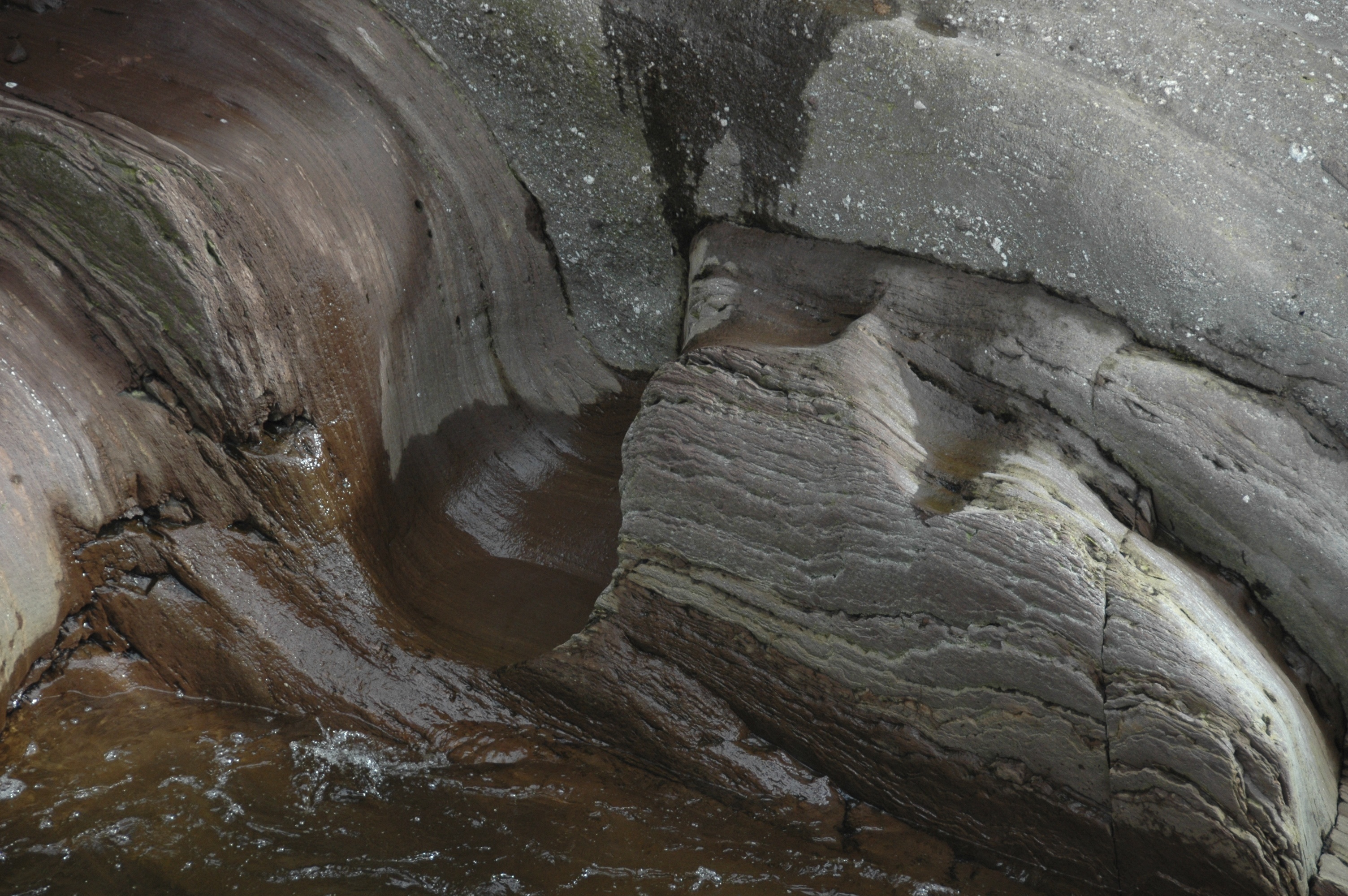
I took this photo many years ago at a waterfall in Scotland. I’ve long since been fascinated by the interplay between water and rocks in streams, rivers and, especially waterfalls. I suppose in waterfalls the power of the water to sculpt the rocks is at its greatest as the water roars down the hillside.

In this particular photo you can see how the water has smoothed the surface of some of the rocks to the extent that they actually look like water streaming over them. It’s as if the water has fashioned the rock in its own likeness.

One of the other rocks is revealing its multilayered structure in such a way that it, too, resembles, the flow of water, and reminds us of the often hidden depths that lie beneath the surfaces of what we see.

What shape is the water?

That’s a strange question, isn’t it? Because water always seems to assume the shape of whatever contains it. Certainly the rocks, whilst not permanent in their forms, create the boundaries or limits against which the water can flow. When there is no clear, solid container, water evaporates, disappearing into the air, rising upwards to form clouds, or staying close to the earth to make mists and fog. But even then it’s contained within the atmosphere. It doesn’t disappear away out to the rest of the universe (at least not in significant amounts, I don’t think).

So water is the shape of what contains it. But that statement doesn’t quite capture reality does it? It assumes that both the water and the container are passive…..that neither changes the other……but we can see, even in this photo, how the water constantly changes the rock and how the rock constantly changes the water. In fact, that interaction carries on at microscopic levels which we can’t see with the naked eye, as minerals and micro-organisms are exchanged between the water and the rock, changing the actual composition of each moment by moment, year by year, aeon by aeon.

That’s the nature of reality, isn’t it? A constant flow of co-creation. Nothing exists in isolation. Nothing lives outside of everything. Connections, interactions, relationships and co-creation are at the heart of universe. They are the fundamental, inescapable basis of reality.

And that’s both beautiful and wondrous, wouldn’t you agree?
Life force

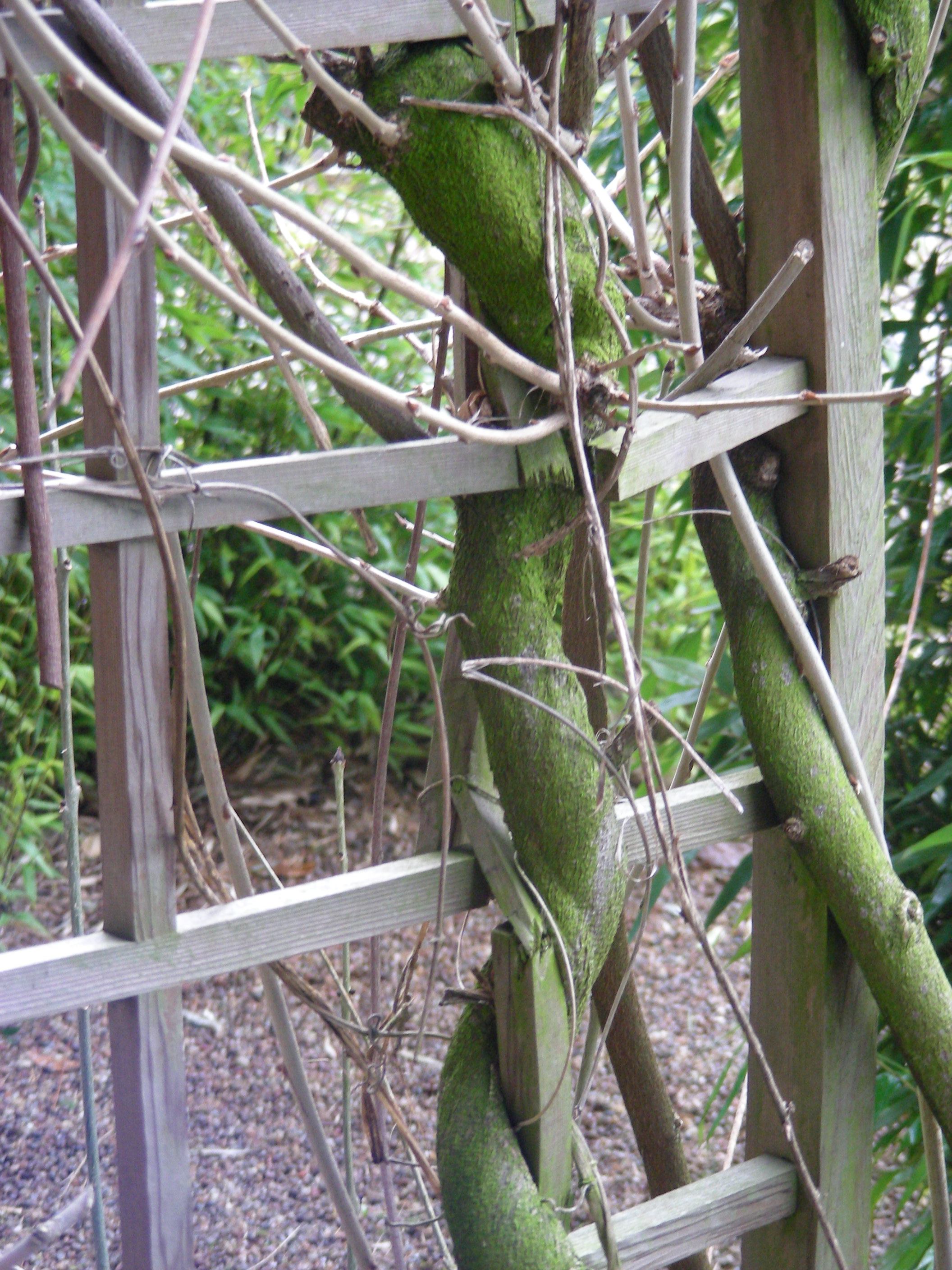
My consulting room at the Glasgow Homeopathic Hospital had a glass wall, half of which could slide open to let you step out onto wooden decking and from there into the garden. Each of the five consulting rooms in a row had that same design, and each of them were separated outside by a wooden trellis with clematis and wisteria growing up towards the upper level of the building.

A few years after the hospital opened and the gardens were laid, I noticed what this climber had done to the woodwork of the trellis as it wound its way upwards. I was astonished. I knew that climbers had great powers to reach out, connect, hang on even, but I hadn’t imagined that these plant stalks could become both so thick and so powerful. You can see this one has actually broken the wooden straps in several places.

Of course, I didn’t notice it happening. We’re not that great at noticing the reality of the present moment, are we? But I sure noticed it this day…..still don’t know why….don’t why it was this particular day and not one of surely many others which preceded it where I might have noticed. Oh well, you can see why I use “heroes not zombies” as my blog title, can’t you? We really do pass through life on autopilot, reacting to overt and covert stimuli which move us this way and that, allowing our attention to be grabbed by the loud, the dramatic, and the shocking. Living, but not fully.

It doesn’t have to be like that, does it. We can wake up, become more aware of the here and now, more mindful, more conscious of life and being alive. We can notice when our attention is caught, when our passions are stirred, and we can choose what we want to do with that knowledge. We can write a new story, our own, unique story, with ourselves as the main character……moving from a zombie existence to a hero one.

When I do that I find that the so called “ordinary” day is filled with what seems to me to be quite “extraordinary”. I mean, just look again at this photo. Think of the Life Force, of the drive to exist, to survive, to grow and to thrive which runs through every living being. And look how it overcomes every flimsy structure, every material object, which we humans fashion and build.

I’m sure you’ve noticed something similar in the surprising appearance of a wild flower, or “weed”, pushing its way up through a pavement, cracking apart the tarmac, or concrete.

Isn’t it astonishing, this “Life Force”?

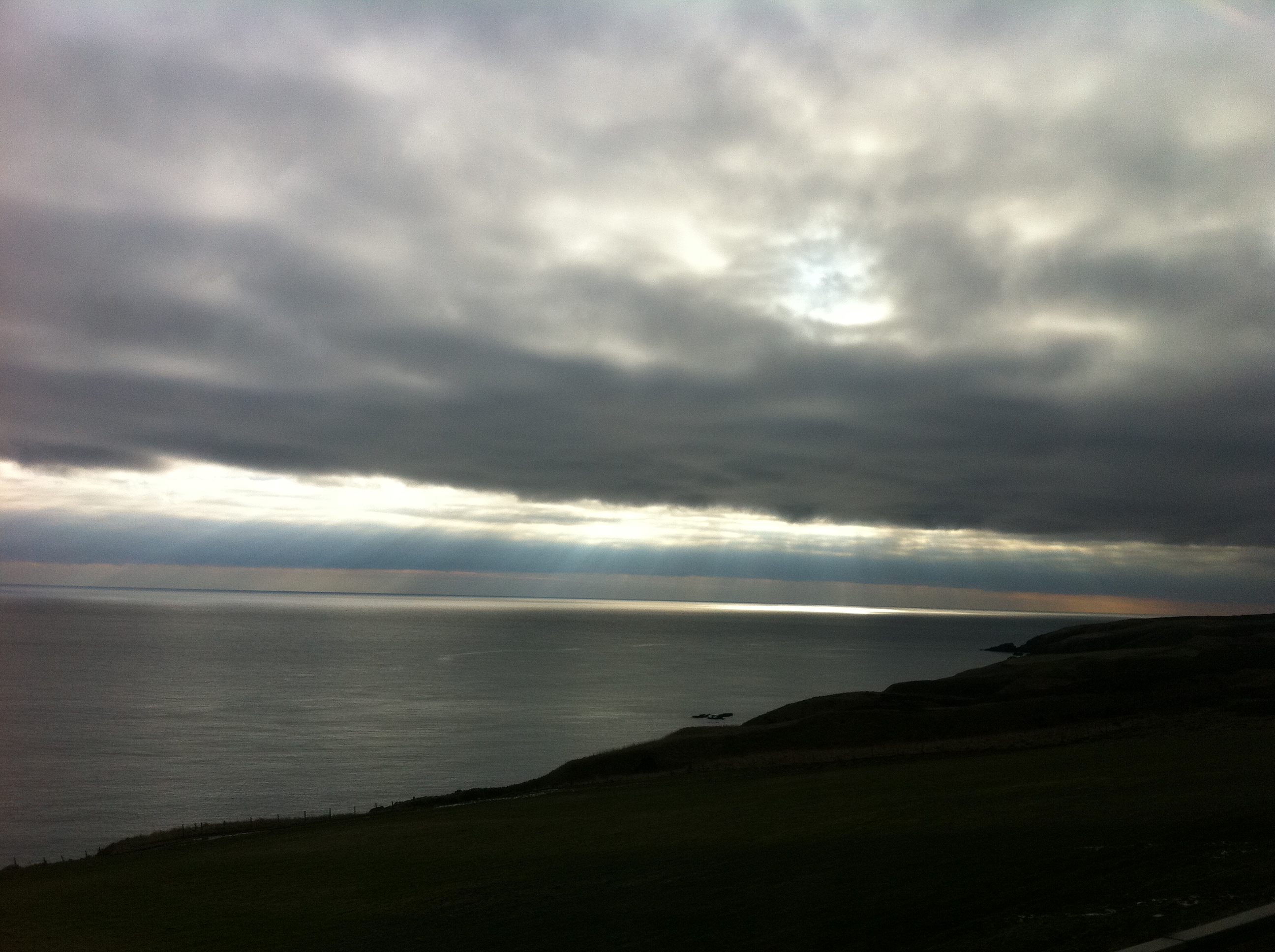
I love to photograph light….sunbeams, dawn, sunsets, moonlight, you name it. But I am especially drawn to scenes where there is a lot of contrast. I just love an image like this with the dark land before me, the grey clouds above, the grey sea below, and then, there on the horizon, at the far edge of the scene, is a display of sunbeams stretching down to the make the sea shine, and turn the grey clouds, blue.

Maybe it’s the yin and yang thing that attracts me. That’s been my favourite symbol for most of my life, and I have worn a rose gold/yellow gold version of it around my neck for decades. I love that statement of reality which isn’t just that there are always opposites, but that neither can exist without the other. I also love what that symbol says about the constancy of change.

Or maybe we are all drawn to images of sunlight on far horizons. Maybe they spark our imaginings and our longings for what might lie ahead, and give us hope as we journey towards it.

What do you think?

Are you also drawn to both the light….and the dark?

Constancy and change

I was born and raised in the town of Stirling, in the middle of the central belt of Scotland. It’s an ancient market town, and the Old Bridge over the River Forth was one of the only crossings allowing movement between the Highlands and the Lowlands in the past. One of the nicknames of Stirling is “The Gateway to the Highlands”. Stirling is also almost equidistant between Scotland’s two biggest cities, Glasgow, to the West, and the capital, Edinburgh to the East.

There are old rivalries between the people of Glasgow and Edinburgh which persist into the present day, and the distinct sense of difference between Highlanders and Lowlanders also remains. Stirling, I always felt, sat right at the meeting point of those cultures and traditions. I’ve often wondered how much that has influenced my values and my world view.

I’m always keen to recognise, acknowledge and understand difference. I’m not competitive. I’m much more interested in building bridges, making connections and creating healthy relationships than I am at “winning” or gaining an advantage over “the other”. I am ceaselessly curious, always keen to encounter and explore “the new” – not least, new people. Maybe that’s why I enjoyed my work as a doctor so much, and why Mondays were always a day to look forward to because someone would come into my clinic that day and tell me a story I’d never heard before.

The River Forth is a very, very winding river at this point in its path towards the North Sea. The bends, turns and loops make it look like a ribbon blowing in the wind. If you look at old maps you can see where the river used to go and compare that to its current situation. It is a river which is always changing. Did that influence my world view too? Is that why I enjoy and accept constant change? Is that why I understand the reality of adaptation and flexibility which are the basis of resilience?

You can see “Wallace’s Monument” in this photo, but you can’t see behind me, “Stirling Castle”. However, those two buildings are surely the dominant characteristic ones of my home town. My grandfather used to read me the stories from Sir Walter Scott’s “Tales of a Grandfather” when I small, so I grew up with a knowledge of the stories of Bruce and Wallace, though I never aspired to be like them! However, there is one story about Robert the Bruce which I do remember, and that’s his moment of despair after suffering defeats where he hid in a cave and he watched a spider try, try and try again, to spin a web. Ultimately, the spider succeeded, and as the story goes, that inspired Bruce to carry on…..rescued him from his despair, and put him in touch again with his determination to succeed. I suspect that was an early, very formative story for me. I still put great store by my qualities of constancy, patience and persistence.

I think of all these things as I look at this lovely photo. I’d encourage you to do the same. Find a photo of the place where you were born and raised, and see what memories and thoughts arise. Maybe you’ll find the origin of some of your own personality characteristics there?

Anyway, I think starting with a strong image is a great way to reflect, and to begin to reach a greater level of self-understanding. I recommend it.

The singular

This little ice crystal mesmerises me. It’s beautiful. Look at the intricate branching structure of each little bristle of ice. It’s almost like a tiny tree, or, at least a snowy leaf. Look at the way it catches the sunlight and sparkles like a jewel. But maybe the most astonishing thing about it is how it is attached to the iron bar from which it is hanging. Can you see? There is a single icy spike holding the entire structure onto the metal. In an instant you can see that this little piece of frozen water is not only incredibly strong, but that the entire crystal has grown from that single point. Isn’t that amazing?

What I love about something like this is that no matter how much you describe water and its behaviour in cold temperatures, the singular, the actual, the specific, particular ice crystal you encounter takes you beyond the limits of your expectations.

I find that everywhere in life, but, especially so in the practice of Medicine. No matter how much general knowledge I had of diseases, their origins, their life histories, and their likely consequences, I never had enough to know precisely what this individual patient today was experiencing, nor how this disease had arisen in their particular life, nor how their illness would progress. On top of that, no matter how much general knowledge I had of therapeutics, I could not predict, with 100% accuracy, what this individual patient would experience as a result of what I was going to prescribe today.

You might say that sounds like a lot of uncertainty, and I guess it is. A GP’s job, after all, has been described as dependent on his or her ability to cope with, and manage, uncertainty. But there was nothing to despair in there. It was a simple recognition that we have to be humble, because there is always more we don’t know, than there is that we know.

More than that…..it meant, and continues to mean, that the individual can never be encountered, understood and helped as a mere example of the recorded experience of groups. That’s another way of saying that statistics are never sufficient to replace stories. Only this unique, singular human being can tell you what they experiencing, what has happened in their life, what sense they have made of it, and only this unique, singular human being can tell you what effect your treatment has had.

The singular can never be replaced by the averages or “norms”.

Cold calling

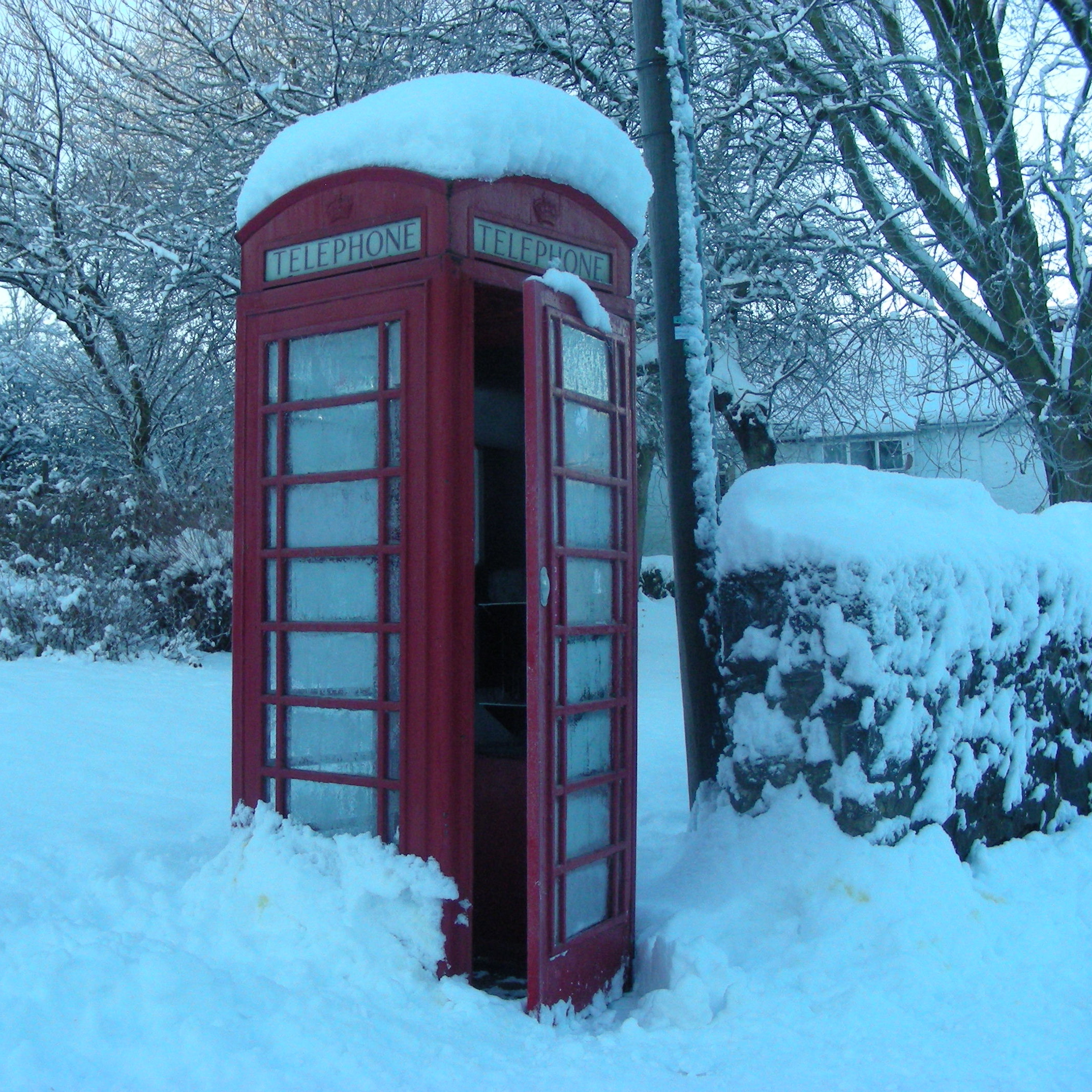
When was the last time you used one of these? Actually, if you don’t live in the UK and you’re half my age (I’m in my 60s), then chances are, you’ve never used one of these. I can’t remember the last time I saw a public phone in France, but there must have been some once upon a time. What were public, shared phones like in your country? Do they still exist?

This stimulates my thoughts on how we communicate. When I was a GP in Edinburgh, my partner, Sandy, and I were one of the first Practices to use mobile phones on call. We had a huge brick sized Motorola thing, and there was only one telecoms mast in Edinburgh so it only worked on one side of Arthurs Seat! How things changed…and how fast!

This pandemic has had an impact on how we communicate too….I don’t just mean what technologies we use, but who we communicate with and when. A lot of communication is now “asynchronous” – which you could have said was the case before the telephone was invented. But I don’t think that text-based or messenger-based asynchronous technologies have brought about a revival in letter writing skills! Of course, we aren’t just using asynchronous technologies, there has also been a huge growth in our use of Zoom, FaceTime, Skype and other video-calling platforms. Then there are social media platforms like Facebook and Instagram, which drive the growth of “one-to-many” communications, “public” communications over “one-to-one” and “private”. Obviously there are many many more, but what’s clear is that for most us, we don’t limit our communications to only one of these services. We are using combinations of them – messenger services, social media platforms, texts, email and video calls, and, hey, some of us still even use the telephone!

So, what do you think? With this vastly increased ease in our ability to communicate, are we communicating better?

Hmm…..I think I’ll take my time over that one.

The first thing that springs to mind is how many people I have reconnected with in the last twelve months. Without this expansion of services, combined with the extended, forced, physical distancing and isolation, then I don’t think that would have happened. But the second thing that springs to mind is the growth of “echo chambers” which feed conspiracy theories, fake news and social division. I suppose the answer to my question depends on how you define “better”. And isn’t that always the case? Isn’t life complex and interconnected? Nuanced and diverse?

Is anything ever reducible to a single label? Like “better” or “worse”? I don’t think so.

However, I still think it’s interesting to spend a little time reflecting on the following three questions –

  • Who do I communicate with?
  • How do I communicate with others? (I mean technologies)
  • and, finally, Does my communication build bridges?

I think that’s the important thing after all – how we use these technologies will always be determined by our intentions – and, hold me to account here, I want all my communications to be open, tolerant, kind, compassionate and understanding. When they aren’t, I want to address that, and improve.

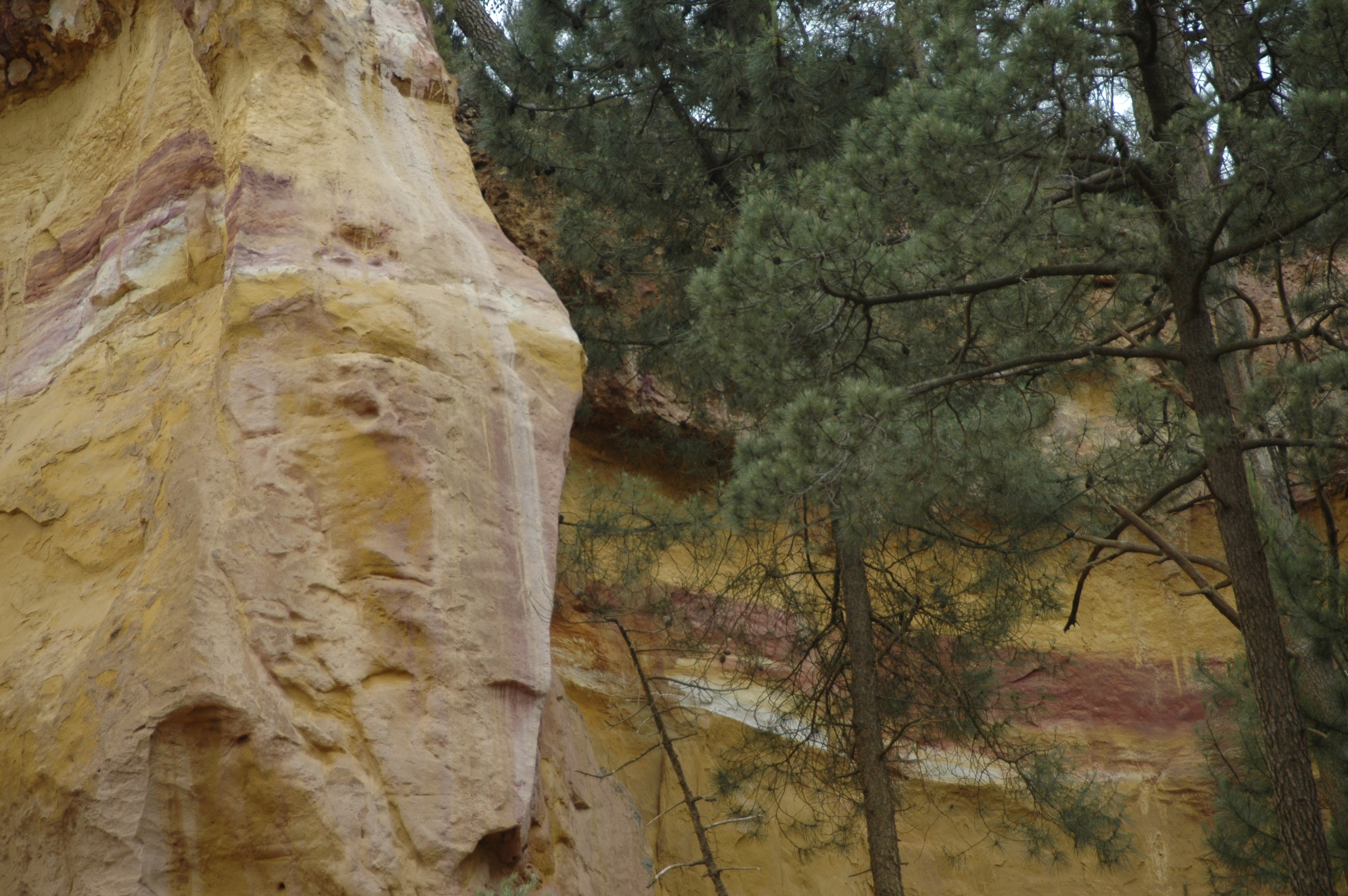
It isn’t difficult to be utterly entranced by this world. Near the town of Roussillon, in the South of France, there is an ochre trail you can follow through a forest. Two things have made this place as amazing as it is…first, and foremost, the Earth herself, which has created the most incredibly beautiful ochre rocks….pink, rose, yellow, orange, and many shades in-between. They are really, really gorgeous. Secondly, human beings who have mined this rock in the past, and have since, allowed, encouraged, and nurtured the forest to grow up around the rocks. So you look at a site like this and you see that interplay of human and non-human forces.

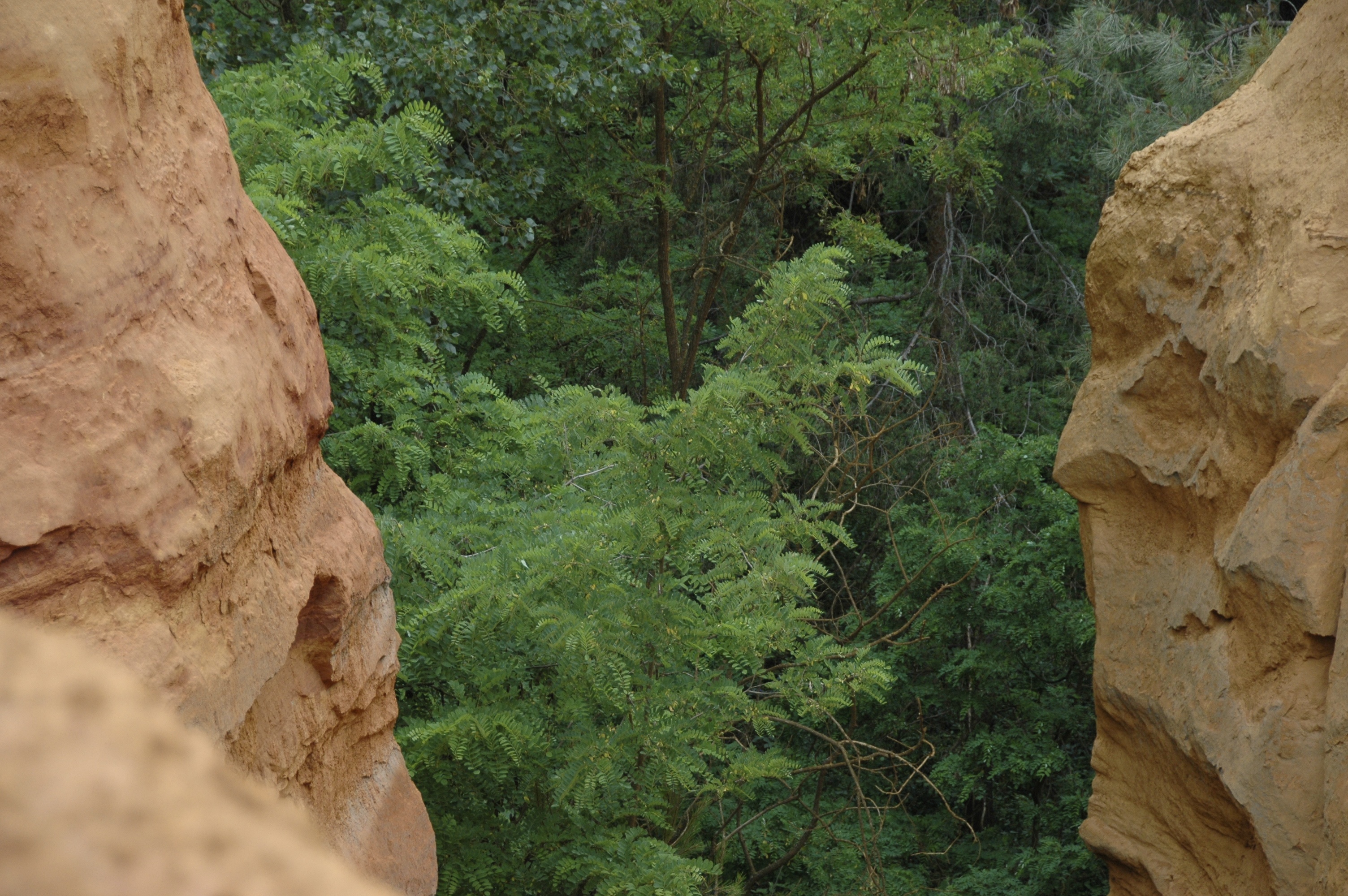
One of the most stunning features of the ochre is how often the surfaces look like faces. As best I know, these are not art works. Nobody deliberately carved the rocks to look like this – although it would be none the less beautiful if they had. No, it seems that we see the faces because of that part of the human brain which has evolved a special skill in seeing and recognising faces. Yes, there really is such a part of the brain! We use it to recognise other humans, but it works all the time, showing us what appear to be faces in rocks, clouds, trees….you name it.

I love that all of this – the geological creativity of the Earth, the living world of trees, and the evolution of the human brain, all combine to make a place like this feel utterly magical. This is the kind of “enchantment” I think we humans long for. This is the kind of “spiritual longing” which only the Earth can satisfy.

For me, these images will always be “The Ochre Gods of the Forest”. Aren’t they fabulous?

This little flower caught my eye. She’s growing, and flourishing, in a small cavity on a rock face. I’ve zoomed right in to see the flower better, but, take it from me, this was a long way up! Frankly, I was astonished. I mean a seed must have blown in there, or been dropped by a bird, and, goodness knows there must have been precious little soil way up there on a rocky cliff face. And yet….not only did that seed germinate, but it grew right up to an adult stage of life, finding sufficient nutrients from who knows where, and has produced these beautiful yellow flowers at the top of the plant. Not only that, but it seems to have grown to a size which exactly fills the size of the cavity.

The first time I saw this, and every time I look at it, I get thinking about the incredible drive of the Life Force….how Life seeks to exist, express itself, and flourish, in a myriad of forms and in more than imaginable habitats across the surface of this planet. Then I marvel at the capacity of Life to be opportunistic….to make the most of whatever conditions it finds itself in and to thrive.

How often do we procrastinate? How often do we tell ourselves we’ll pursue our dreams, we’ll live the life we want to live, but just not until all the conditions are right? How many of us spend our lives waiting for those right conditions to appear?

I think this little flower teaches us a different lesson. Call it “seize the day” if you like. Call it “make the most of today”. It’s a teaching which says “you already live on this Earth with all the conditions you need to flourish”. It’s a teaching about abundance. A teaching about the underlying benevolent, supportive flow of the universe, which has enabled Life to exist, and continues to supply what it needs to grow and to flourish.

You don’t have to wait. Imagination truly has no limits, and loving attention nurtures growth…..starting with the loving attention of self-care, nurturing the desire to exist, to grow, to express your uniqueness, and to flourish.

The Hanged Man

When you look closely at a water droplet you can see that it acts as a kind of lens. You can see the world around the drop reflected in the water. But it’s upside down. Just like you’d see inside the old kind of camera which cast the image of whatever the lens was paying attention to, onto the film at the back, and/or, onto the viewfinder.

The first camera I ever had was a box camera. You held the camera at waist height, flipped up the lid and looked at the image lying on the horizontal glass plate underneath. I think it used a prism to flip the image around so that you could see it “the right way up” in the viewfinder. We don’t even think about that with our modern digital cameras which process the image before we even get to see it.

I think it makes you stop and think when you see an upside down image like this. It literally makes you look at the world differently. And we need to do that sometimes to actually see and understand what is around us. For most of our days we sail along not really noticing most of what our senses pick up. In some sense we only notice what we pay attention to, and we only pay attention to what we notice. This relationship between noticing and paying attention is curious, partly because we can make a choice and attach our attention to whatever we choose….we can choose to become more aware of a scent, a particular colour, a shape or a texture. In fact, it’s a pretty great way to live more in the present, isn’t it……to pay attention to what our senses are sensing?

But it can happen the other way around – our attention can be “caught”. Something which moves suddenly, something which changes, like a loud noise, or a change in temperature, a darkening or lightening of the room as clouds pass over the sun…… Or it can be caught by something “odd”, something “unfamiliar”, something “unexpected”.

I think these upside down images are a bit like that. We aren’t used to seeing the world upside down, so we notice it when it happens, and that noticing “grabs” our attention, and leads to a natural exploration.

There’s a Tarot card called “The Hanged Man”, which I think about when I see an upside down image in a lens like this. I’m no Tarot expert, but I think there’s something about that card which is about changing our perspective, about looking at the world differently, in order to understand it better.

We have to do that from time to time if we want to understand reality. We have to change our perspective, look from a different angle. Other people can be the trigger to doing that….but only if we encourage and are genuinely interested in other peoples’ views.

Getting stuck in social media echo chambers, or trapped in the manipulated information of advertisers and politicians happens all the time. That’s why it can be helpful, though not always comfortable, to try to understand the world view of people who don’t see things the same way we do. It’s not a question of who is right and who is wrong. It’s a question of reaching a fuller, deeper understanding of other people, and of the world.

Yesterday I wrote about a road, and how we can be inspired to think forwards or backwards by that same road.

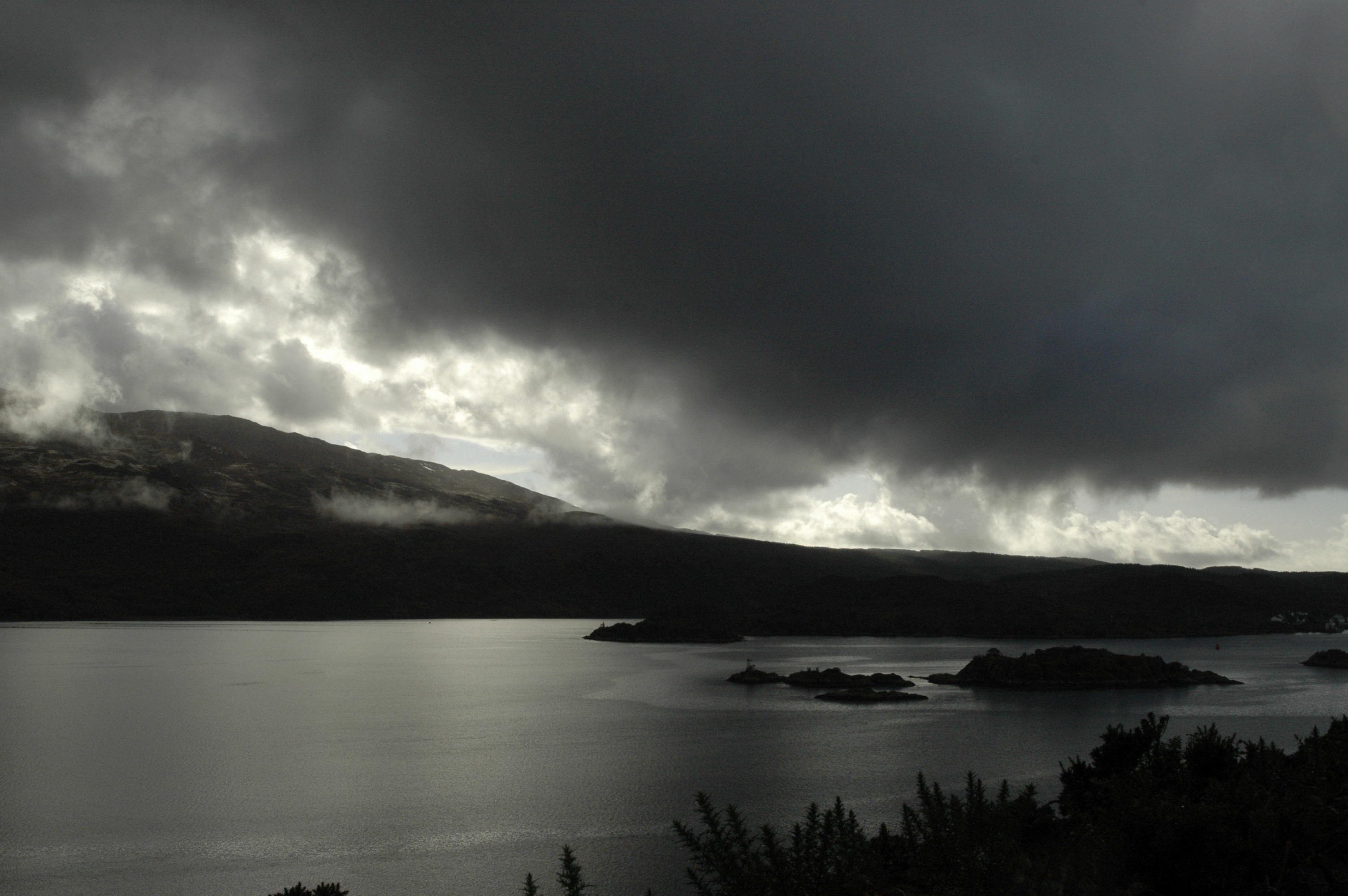
Today I want to share this photo taken in the North of Scotland. I’m pretty sure you’ll agree it’s beautiful. Beautiful, moody, atmospheric. The still silvery grey water of the loch, the dark, craggy islands, the far shore rising to a gentle peak with low cloud and disembodied spirits of mist obscuring our view of the mountain. The large, black, lumbering cloud, dominating the upper half of the image, and the bright, white clouds with a hint of pale, washed out blue sky above the mountain slopes but below the ragged edge of the rain cloud.

Dark earth, bright sky, glimpsed between two bodies of water….the loch and the heavy, black cloud.

You see all of that, don’t you?

I wonder what you noticed first? Whether it was the foreboding heavy weight of the black rain cloud, or the bright white, sunlit clouds over the pale blue sky?

And where did you go from there? Did you start with a sense of foreboding, only to end with a feeling of optimism? Start from an experience of dark times, softened by a hint of brighter times to come? Or did you start with the bright light between the dark mountain and the black cloud, only to feel it in danger of disappearing under the lumbering weight of the Death Star rain cloud?

Or have you finally ended up appreciating it all, delighting in the contrasts, the shades, the variety of forms and of light, of the interplay of water, earth and the fire of the sun, and the belief in the pure, clean, fresh, life-giving air which you can’t see, but which you know is all around?

Breathe deep. Breathe deep. And breathe deep again. Take a moment, then carry on.