Feeds:
Posts
Comments

Posts Tagged ‘family’

I get it.

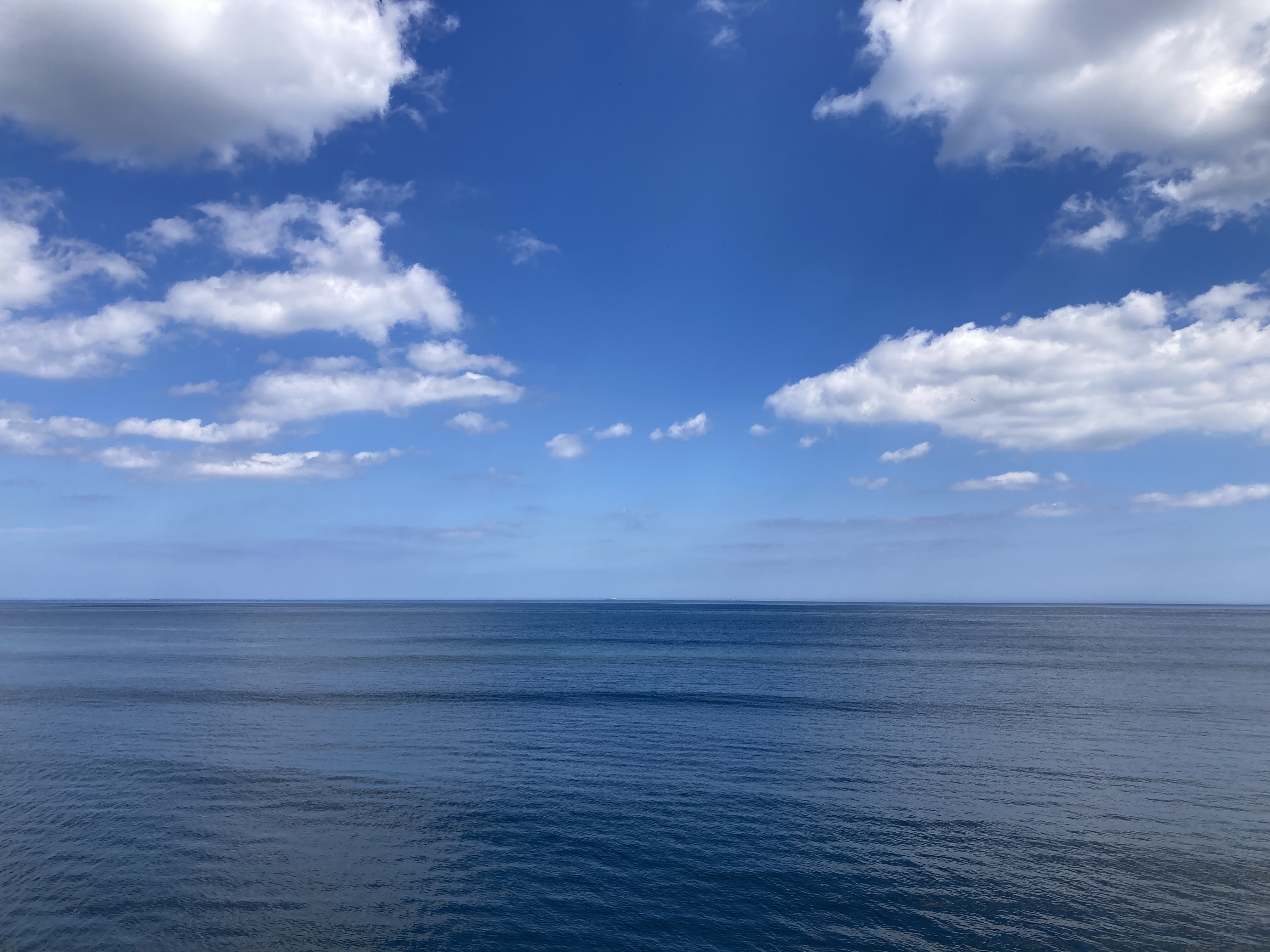
As you stand, alone, gazing out to the vast expanse of the sea, it’s easy to think you are separate. Separate from everyone else, separate from other creatures, standing on the outside, looking in, at this world you find yourself in.

But, that’s an illusion.

We are not separate. We don’t exist apart from Nature. We don’t survive all by ourselves. We are not disconnected.

Yet, this sense of being separate lies at the heart of so much dysfunction and trouble in this world. We have created a system of society, of politics and economics, on the foundations of this delusion. The idea that by encouraging selfishness, actions and choices which put our own interests, not just above those of all others, but with no thought whatsoever to consequences, we can create a healthy, thriving life, is just crazy.

So, why do we live this way? Why do we support the idea that we can consume more and more of the Earth (what we call “resources”) forever and forever? We live in a finite planet. What we burn and destroy won’t come back. The species we eliminate won’t come back. We can argue about timescales, but the Club of Rome’s “Limits to Growth” report, published decades ago, was, essentially, correct. Unlimited growth in a finite world is going to hit the buffers one day, maybe not in our lifetime, but in the lifetime of our grandchildren, or our grandchildren’s grandchildren.

Should we care about our grandchildren’s grandchildren?

I think we should.

Why do we support the idea that a tiny minority of the people in the world should be allowed to grab as much of it as they can? Why do we have billionaires? Does it matter what they do? Does inequality matter? A question which won’t even occur to the narcissist.

Iain McGilchrist’s thesis about our brain asymmetry helps me understand. It rings true and it helps me to see that if we use our left hemisphere excessively, and, as if it is disconnected from our right hemisphere, then we are going to experience the world as if everything is disconnected. Our reductionism and selfishness will narrow our view so much that we’ll fail to see that we, and everything else on this planet, are intimately, inevitably, interconnected.

We are embedded in this world. We exist, for a brief time, in a vast web of relationships. We are the individual waves which appear on the surface of the sea, then dissolve, back into it.

Can we learn to take a longer view? Can we begin to act as if our grandchildren, and their grandchildren matter? Can we make choices which take into account the ripples and effects of those choices, and the effects they have on others, on our environment, on the world in which we belong?

I watched a short video last night which promoted the part of the world where I live, Nouvelle Aquitaine. One phrase they used really struck me – “Vous êtes unique, nous sommes unis” – You are unique, we are united. It’d be good to live that way, owning and respecting our own uniqueness, and that of all others, and feeling connected, deeply knowing, that we are all one.

What do you think? Can we develop and share a different vision for our lives and our world? A vision more consistent with the use of both our cerebral hemispheres, a connected world of embedded lives, where everything we do has consequences, for ourselves, for our loved ones, for others? Can we learn to see the bigger picture, the longer timescale, a better way to live?
Read Full Post »

I’m reading “How the World made the West” by Josephine Quinn, a fascinating and mind expanding history of how the concept of “The West” arose. This paragraph really got me thinking –

“The study of antiquity gives the lie to the idea that everyone is born with a natural, fixed ethnic identity, tied to specific other people by ancestry or ancestral territory. The concept is fundamentally incoherent anyway: at some level all humans share the same ancestry and territory, and decisions about where to draw lines across that shared heritage in time and space can only ever be arbitrary. But ethnic identification is also for the most part a relatively modern phenomenon, associated with modern levels of literacy, communication and mobility. Without these, communal identities tend to form on smaller scales. And despite their physical proximity to one another, links between the ‘Phoenician’ ports were relatively weak.”

This reminds me of my experience working as a GP in the Irvine Valley back in the early 1980s. There were three small towns in the valley, Galston, Newmilns and Darvel. Although they seemed pretty similar in size, and even appearance, to the locals, especially the elderly locals they each had distinct characteristics. For example, one elderly woman told me a traditional saying was “Darvel for swanks, Newmilns for banks, Galston for guts” and another told me she was born in Galston but when she married she moved to Newmilns (two miles away), “But I couldnae staun it and had to come hame” – she couldn’t stand living in Newmilns and had to move back to Galston. Yet another, this time from Newmilns, told me the old piece of marriage advice she remembered was “If you can’t get a man, go to Galston and get a miner”. As Josephine Quinn writes, “communal identities tend to form on smaller scales”. 

By the time I was working there, each of the towns had changed considerably, with mining and textile industries disappearing, and an increasing number of people moving to the valley and commuting for work. However, when I left in 1986 to take up a post in Edinburgh, a twenty something year old female patient asked me what Edinburgh was like. She had never been. I asked her if she usually went to Glasgow (there’s actually still quite a cultural divide between Scotland’s two largest cities), but she said no, she’d never been there either. I asked where she had been, and she told me she’d visited Ayr once. She definitely identified with place, not an ethnic group. 

Anyone who has done even a small amount of genealogical research into their own family, pretty quickly finds that their ancestors come from a wide range of towns, or even countries, and those who use on the DNA testing genealogy services, find that they have percentages of their DNA which can be traced to several countries around the world. 

Josephine Quinn makes the point that DNA discoveries have undermined the concept of separate, distinct, or “pure” races, and that her research in ancient history (her book focuses on the period from 1500 BC to 1500 AD) undermines the concept of competing “civilisations”. As she describes each period, time and time again, she shows that trade and migration play a key role in the spread of ideas, technologies and innovations, whilst strengthening local cultures of belief and tradition. 

Nothing we are familiar with today would be possible without a long, long history of migration, communication and trade.

Read Full Post »