Feeds:
Posts
Comments

Posts Tagged ‘plants’

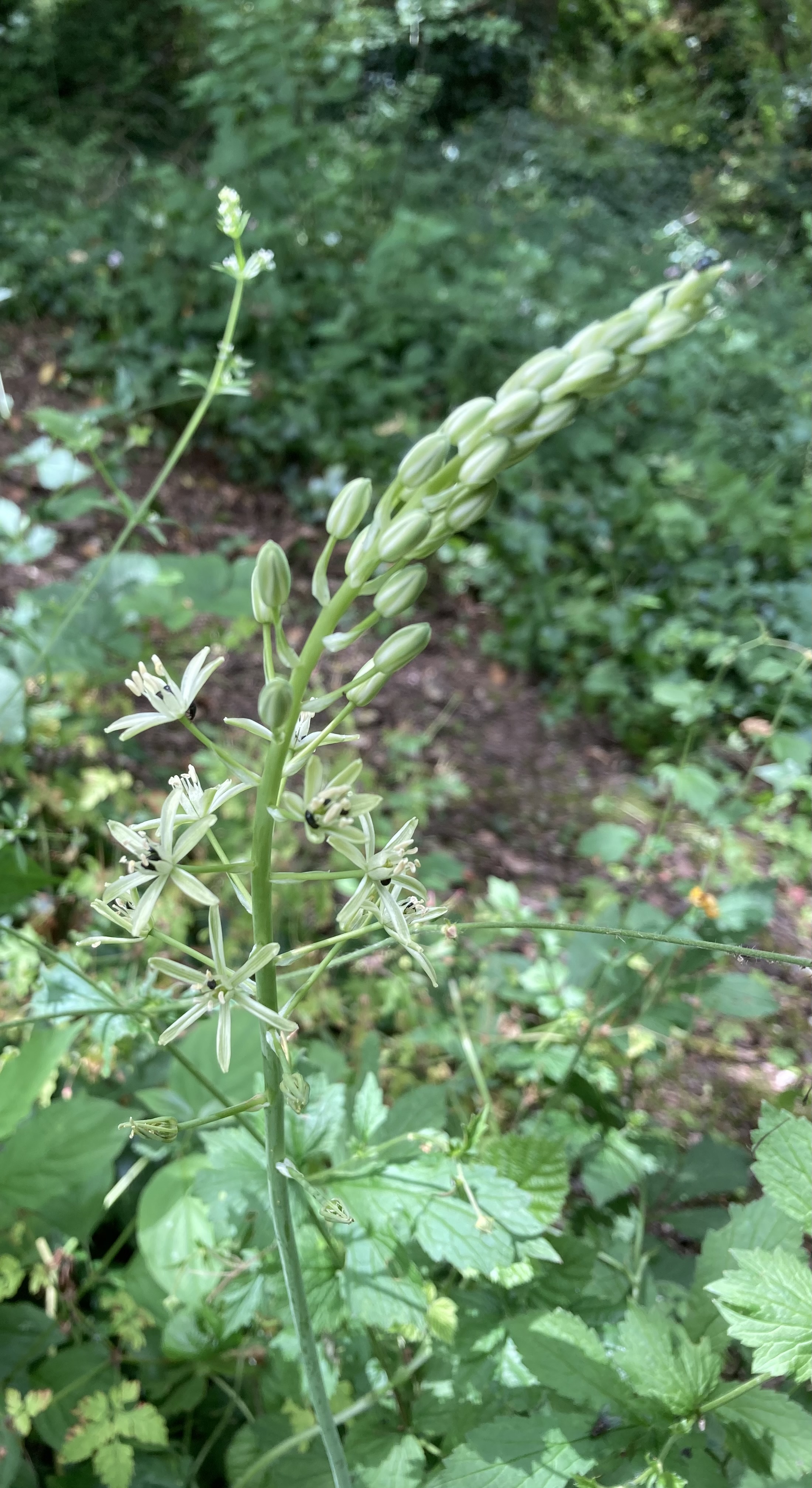
Prussian Asparagus

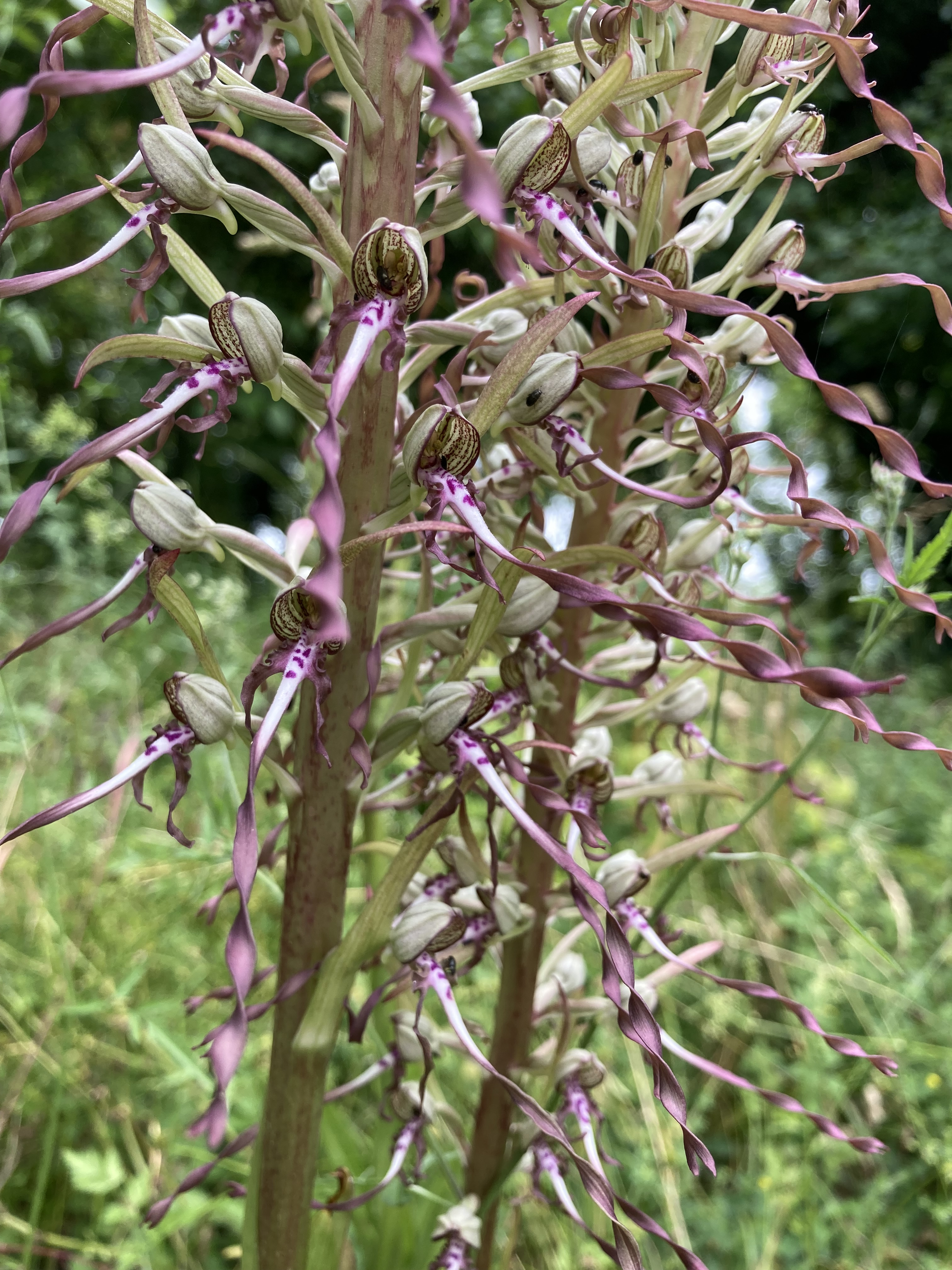
Lizard tongue orchid
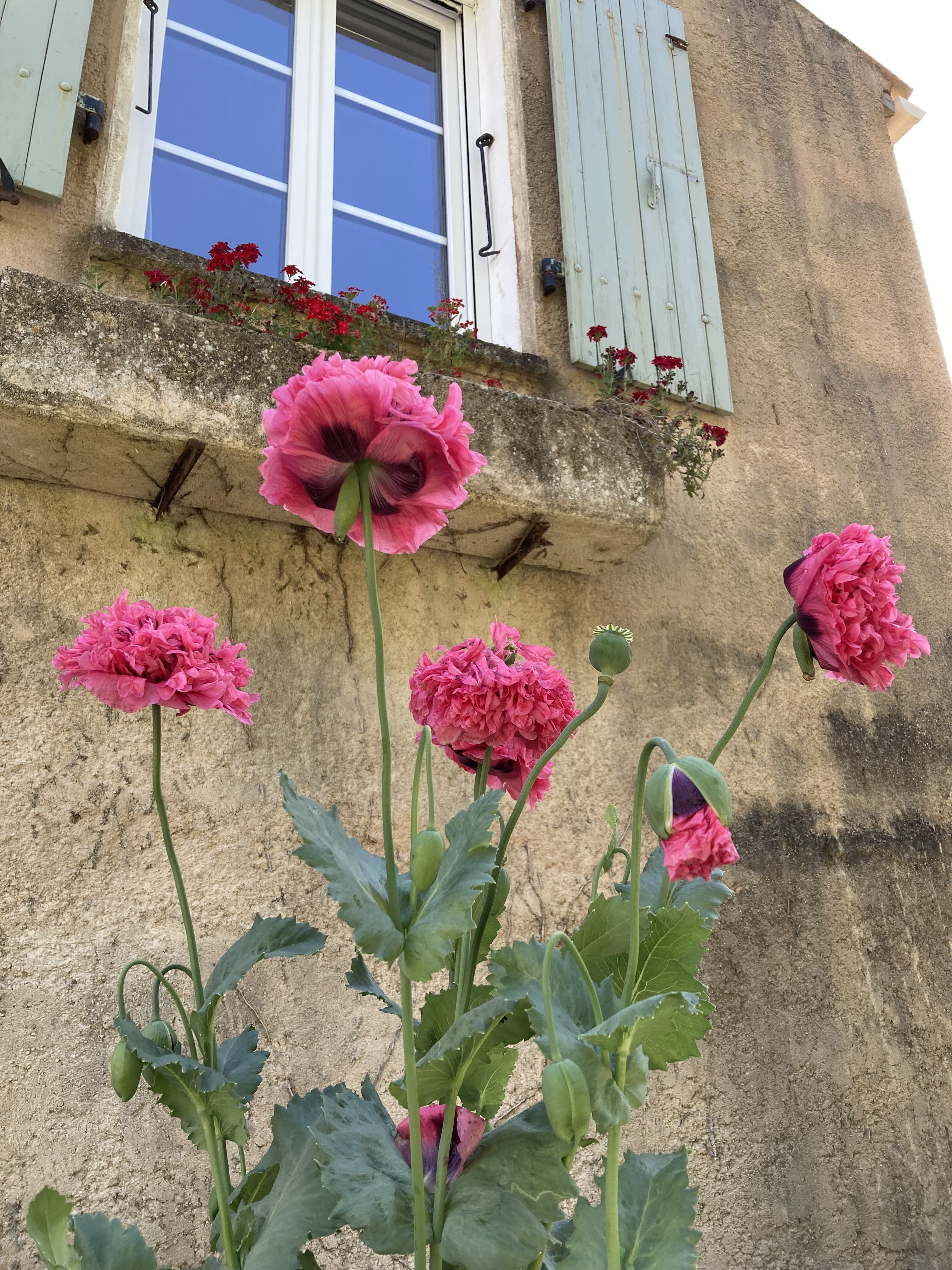
Poppy
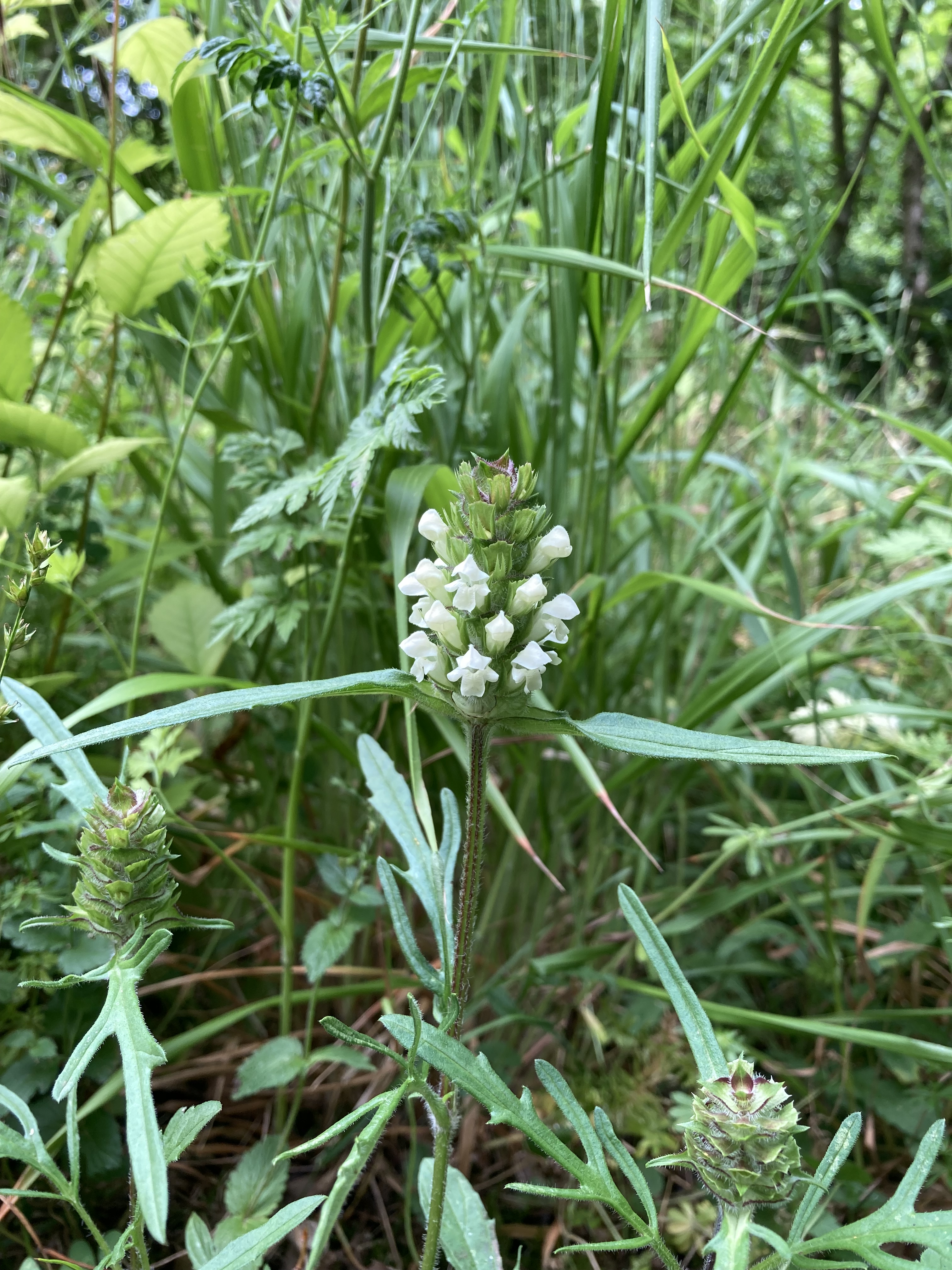
Selfheal
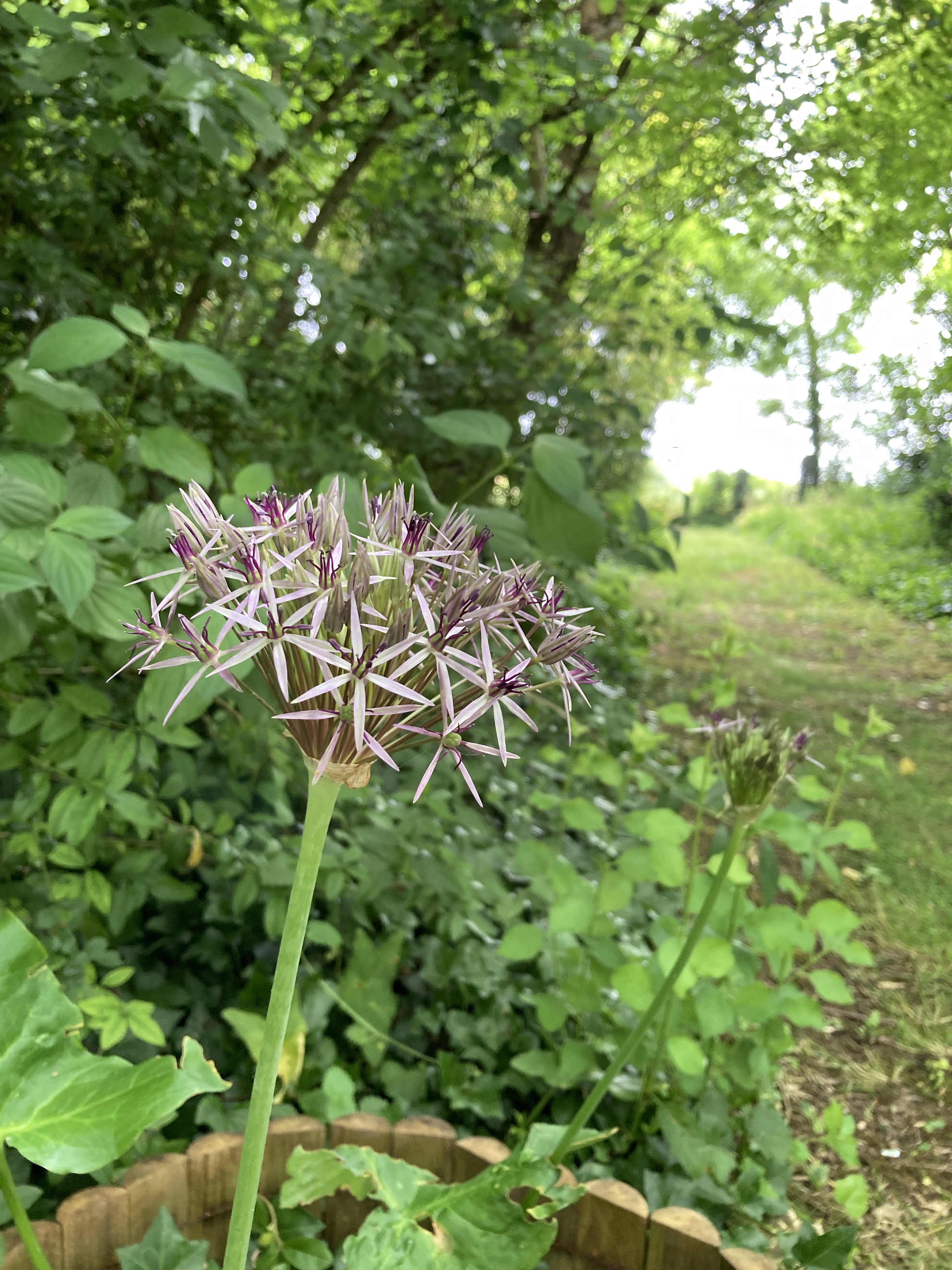
Star of Persia

These are all plants which I’ve discovered in my garden this month. I didn’t plant any of them. They just appeared, clearly their seeds having been borne here by birds, wind, or other creatures. Every single one of them is a delight. Every one of them stimulates my favourite “emerveillement du quotidien” (my everyday wonder). Every single one of them has stopped me in my tracks, to gaze, admire and contemplate not just their beauty, but the incredible, unpredictable nature of Nature.

And in every case, there are several of them. There are a number of these plants, either close together, or in quite different parts of the garden.

I first saw “Selfheal” when it appeared by the forest and spread across the grass as I was recovering from an operation the year before last. I didn’t know what it was, but it gave me a real boost to discover its name and its ancient uses (I didn’t actually swallow any of it, however!).

The poppy is also a medicinal plant, and the ones which have appeared “from nowhere” this year are the tallest poppies I’ve ever seen. (I haven’t swallowed any of that either!)

Apparently the “Prussian asparagus” is edible, but there are only about six of them, so I’m letting them be, in the hope that they will seed and spread further.

Several of the “Lizard tongue orchid” plants have appeared together in a clump at the edge of the forest, and I found a “Bee orchid” in the front plot. Every orchid I’ve ever encountered strikes me as a wondrous plant. They all appear to me as astonishingly beautiful.

So, with the beauty, the wonder, the science and the symbolism of these plants, I really feel blessed. I’m going to share the photos on social media using a hashtag of #AGiftFromGaia – maybe you’d like to do the same.
Read Full Post »

Power of uniqueness

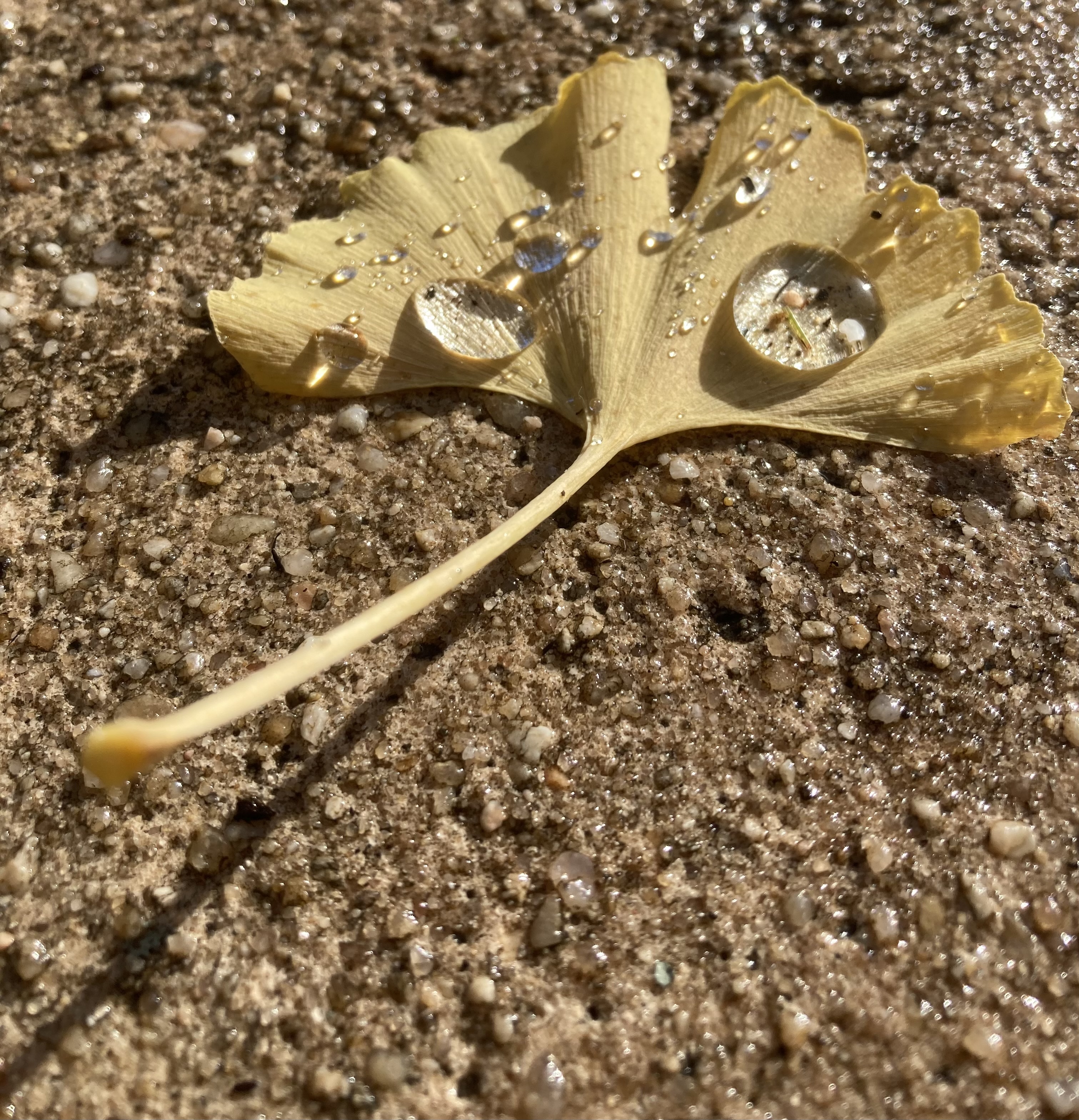
I find many trees beautiful. Some have especially lovely leaves which are so distinct in shape and colour that it’s easy to spot and recognise them. But what I find more powerful than just noticing and naming a tree, is to focus in on an individual leaf and take the time to really see it. There are no two leaves which are completely identical. Their uniqueness emerges as we consider their exact location at a particular time on a specific tree, or even, when we see a single leaf lying on the ground after a shower of rain.

The uniqueness of the leaf doesn’t lie in its “essence”, or even its particular shape, size and colour, but in its contexts and its relationships…….the tree on which it grew, the place where that tree grew, the season, the day and the time we noticed it, and took a moment to photograph it, the place the seed from which the tree grew came from, the person, or creature which carried the seed to this specific place, planted it, nurtured it, looked after it……and so on……

It’s the same for each of us. Every single one of us is unique. Over four decades of work as a doctor engaging with patient after patient individually, I never encountered two identical patients with two identical stories. Everyone had a special, un-repeatable, un-copiable (is that a real word??), presence. There was, and there remains, something incredibly special, even magical about uniqueness….perhaps not least because it can never be completely known.

There’s great beauty in uniqueness. There’s something “enchanting” about it. Not least because it’s the gateway through which we pass to encounter the “real”……all generalisations blind us to reality. They reduce complex individuality to features, characteristics or measurements. Labelling, judging and categorising extinguishes uniqueness and turns the beauty and wonder of diversity into something bland, soulless, and inhuman.

My life experience is that an awareness of uniqueness, and a desire to explore it and understand it, leads to a richer, deeper, more satisfying life.

Read Full Post »

One of the commonest forms you’ll see in the plant world is the spiral. Pretty much any plant which sends out creepers to latch onto something so the plant can grow higher towards the sunlight, uses this form. It doesn’t go for a straight line….what we were taught is the shortest distance between two parts. Why not? There just aren’t that many really straight lines in Nature. It seems there’s a great preference for meandering, changing direction, spiralling around…..not what a machine would do.

Machines, and the industrialised types of management which dominate our lives now, are said to be best when they are most “efficient”. But Nature has a different idea. “Efficiency” seems, these days, to be about expending the least possible amount of effort and money to achieve a standardised outcome. It’s not natural, and it squeezing out beauty and life.

Complex, natural, living forms are not like machines. A plant doesn’t produce the least number of seeds required to produce a second plant. It produces thousands and thousands of them, using a huge number of different methods to have those seeds carried far and wide, relying on the weather and other creatures to do the scattering. Have you ever watched a bee or a butterfly collect pollen? They don’t start top left and work their way “methodically” flower by flower until they’ve harvested the most possible. There’s an inherent, apparent randomness to their flight. You just can’t predict which flower they are going to explore next.

The spiral is a favourite form of exploration in many plants. It’s a way of discovering.

It’s also extremely beautiful. One that artists replicate again and again. Here’s an example from the sculpture park near where I live……

Beautiful, dynamic, attractive, pleasing, and even in a stone carving, bursting with “life”.

I reckon we’ve taken a life destroying path through industrialisation, and I’d love to see us grow whatever we find life enhancing instead. We can do that by paying attention to, and learning from, plants and other creatures. We can privilege beauty, joy and Life instead of consumption, “efficiency” and “profit”. That would lead us to a very different kind of “growth”, and a very different society.

Read Full Post »

Wow! Just look at this poppy which has opened up in the garden a couple of days ago. I went in close to take this photo because I think when you look really closely you see an astonishing creation.

This is like a work of art. In fact, who would have imagined something like this if they hadn’t seen a flower before? I was thinking, what if an alien landed on Planet Earth and encountered this poppy, wouldn’t they be utterly amazed?

Actually, I’m not an alien here on Planet Earth but I am totally amazed by this. Look at the details! As well as the gorgeous red petals, right in the centre we can see this rich, dark array of structures which make up the reproductive system of this flower. The thirteen stripes on the seedhead – what are they? And why are there thirteen? Don’t you think thirteen is a strange number?

Honestly, I think you can lose yourself in contemplation of a glorious flower like this. On single plant, one single blossom, totally captivating.

And it won’t be here for long. Within a few days, all the petals will fall to the ground, ultimately only leaving the seedhead behind. I think it’s amazing. I’m transfixed! In fact, a simple, astonishing, utterly beautiful, intricately complex flower like this, can make me lose my sense of boundaries and separateness. I can experience transcendence in moments spent with a flower like this.

I guess we humans have been, and continue to be, pretty blasé and unthinking about the plant kingdom. But without it, none of us would be here. It’s the plants which capture and transform the Sun’s energy. We can’t do that. We eat the plants, or eat the animals which eat the plants, so existing a bit further along that chain of energy transformation to get what we need to survive and thrive.

It’s not just that there is an emerging consensus that plant-based diets are best for us in terms of health, they are best for us in terms of the planet too. I’m not vegan. I’m not even vegetarian. But I don’t eat meat every day, and in all the studies I’ve read over the years, time and time again, the conclusions seem to be, if you want a healthy life, and if you want a long life, you could do worse than to limit your meat consumption and move towards a plant-based diet.

There are many many studies now which also show us the benefits to our immune systems, to our inflammatory systems, and to our mental health, of spending time in, and connecting with, the natural world. Primarily, that’s the plant world of trees and flowers. So, it’s not just about seeing plants as a source of nutrition. Engagement with the plant kingdom is good for us every day – noticing, stopping, gazing, contemplating, wondering about, and, especially caring about, flowers, plants, trees is one of the best ways I know to increase the quality of everyday life, and to set yourself up to live as healthily as possible.

Glory to the plant world!

Read Full Post »

delicate plant ghosts

This tiny little plant is only about the size of my little finger. It’s so small, it would’ve been easy to miss it, but I’m glad I didn’t.

It inspires me for so many reasons.

I love the fact that what catches the attention is the spaces. They’re the first thing you notice. Almost as if when looking at a net you’d see the holes first, then the thread. And what was in those spaces? Some kind of seed I expect. This framework was most likely the structure that held the seeds in place, raised them up to the sky and waited till the wind blew and took them away to settle somewhere else. That got me thinking about seeds, and how many amazing ways plants have to spread their seeds around the world, how they’ll use the wind, insects, birds, really pretty much any way they can to hitch lifts, travel far and wide without any power to move in the seed itself. This set me thinking about the interconnectedness of everything, of how the world is a vast interconnected network, how really you can’t understand anything or anybody without knowing something of the world they live in and some of their vast web of connections, influences, links and bonds.

Then I got to thinking about how this little group of circles held up the past for inspection. Look, said the plant, here is where my sons and daughters were, and now they’ve all flown and I’ve only the spaces now in my life, where they used to be. And that’s just how it should be.

I had other thoughts too, but I’d be interested to hear if this little plant inspires any thoughts of your own!

delicate plant ghosts

Read Full Post »

I wandered into the Cathedrale Saint-Saveur in Aix en Provence the other day. It’s one of those awe-inspiring spaces. In fact, it’s a multiple of spaces inside, some vast, and some small and intimate. I’m always interested in the way plants are used by human beings (enthobotany is the correct term!) and so it was no surprise to see the prominence of lilies in the cathedral.

lilies in the church

Lilies are one of those plants which have special spiritual signifance over many centuries. If you ever wander around a gallery of French or Italian paintings for example, you’ll spot lily plants in many of the religious ones. The white lily is sometimes referred to as the “Madonna Lily” which further conveys the extent to which people have imbued this plant with spiritual significance.

The scent of lilies is very, very strong. I find it quite overpowering. In fact, it doesn’t take long before I feel rather queasy in a room full of lilies. It’s a pity for me because I think they are very beautiful but I can’t have them in my house. Fortunately, the cathedral is so large I could escape the scent of the lilies pretty easily.

What did surround me absolutely everywhere was the music. They were playing Thais’ Meditation. You know it? Here’s Sophie-Anne Mutter playing it. It’s one of those pieces of music that always, but always, makes me feel tearful. It moves me in my core.

Read Full Post »

purple flower, originally uploaded by bobsee.

Does anyone know what this plant is called?
It’s about 12 inches tall and grows in the verges at the sides of the road. This one is just outside Aix en Provence
I’ve never seen a flower like this in Scotland and I’d like to know what it is.
Can you help?

Read Full Post »