I was watching an episode of Vikings the other day, and was startled when one of the character, King Ecbert recited a few lines of poetry which were completely familiar.
Time present and time past
Are both perhaps present in time future,
And time future contained in time past.
If all time is eternally present
All time is unredeemable.
What might have been is an abstraction
Remaining a perpetual possibility
Only in a world of speculation.
What might have been and what has been
Point to one end, which is always present.
Footfalls echo in the memory
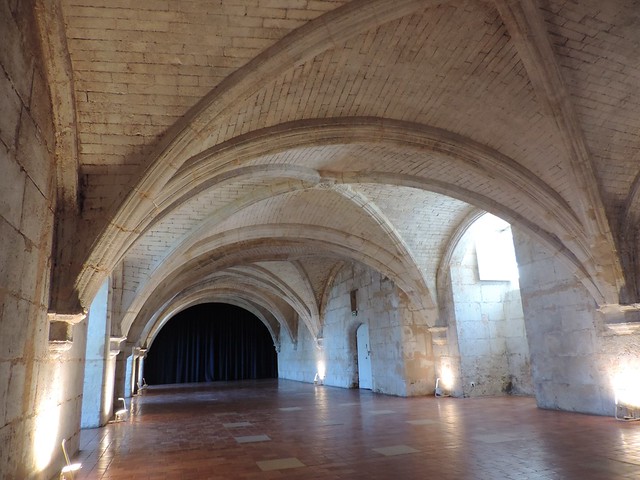
Down the passage which we did not take
Towards the door we never opened
T S Eliot! From the Four Quartets! Dramatically it worked, even if you couldn’t help thinking, whoa there, T S Eliot in the Vikings??!
I studied Eliot at school and he is still one of my most favourite poets. I remember reading this passage and feeling enthralled by it, but I had no idea what he was talking about. Now, as I encounter it again, I’m surprised how well it fits with what I have since discovered about time and memory.
In fact, by one of those strange quirks of synchronicity, this month’s “Philosophie” magazine has a central section on Bergson’s concept of memory. Bergson was way ahead of his time and many of his philosophical ideas about the mind have since been backed up by research findings in the field of neuroscience.
Much as I can be thrilled by reading the work of a philosopher, or research work in neuroscience, neither of these comes close to the power and beauty of Eliot’s poetry.
Draw all three of these strands together, and we have a vision of experience which is not of the past filed away in some cabinet or pigeon hole in the brain, nor of the future lying like the landscape just over the next hill, waiting for us to discover it. No, instead we have a vision of the present which contains the past and the future. This is where we encounter time and reality, in a never ceasing interplay of the ripples of the past, the imagined possibilities of what might be, and the phenomena of the present moment.
So it isn’t just what happened which influences us now, but those passageways we didn’t take, and doors we didn’t open, are also still influencing what we see, hear, feel and think about today.

 Heroes Not Zombies
Leave a comment