Feeds:
Posts
Comments

Archive for November, 2020

This is a machine. It is manufactured by human beings. It has a number of solid, pretty unchanging parts (ok, they all gradually wear out with use), which are assembled into fixed relationships with each other by other parts…. nuts, bolts, springs, cogs and hinges.

These parts don’t grow. They don’t develop or mature. They don’t develop new ways of connecting to each other and they don’t change their function. Their relationships are linear. A always leads to B.

This machine looks a bit complicated but everything can be taken to pieces and understood. We can learn how it works and predict how it is going to work. It does what it was designed to do and if it stops doing that we can find the parts which are “defective” and replace them with new parts.

Living creatures are not like this. Human beings are not like this. We are not manufactured by human beings. Every cell, every tissue, every organ within the body changes all the time. The massive network of inter-connected feedback loops create relationships in the human body between cells, tissues and organs. These relationships are non-linear. A influences B in the presence C, D, and a host of others, whilst B, in turn influences A. These relationships are not fixed. They are not predictable.

Living creatures, like human beings, are “Complex” not “Complicated”. You can’t take them to pieces and understand the whole.

We are all “complex adaptive systems”, constantly bathed in flows of molecules, energies and information, which we transform within ourselves before contributing to their onward flow into others.

Machines can exist in isolation. Human beings cannot. We live only because we are embedded in the complex biosphere of Nature, dependent on the lives of a myriad of other forms of life, dependent on our relationships with others.

Machines are not unique. You can produce millions of identical machines. Human beings are unique. There has never been “YOU” before in the whole history of the universe, and there will never by “YOU” again, once you die.

The truth is every one of us is special, and every one of us deserves to be treated as unique. Every one of us deserves to be understood within our individual web of connections, relationships and life story.
Read Full Post »

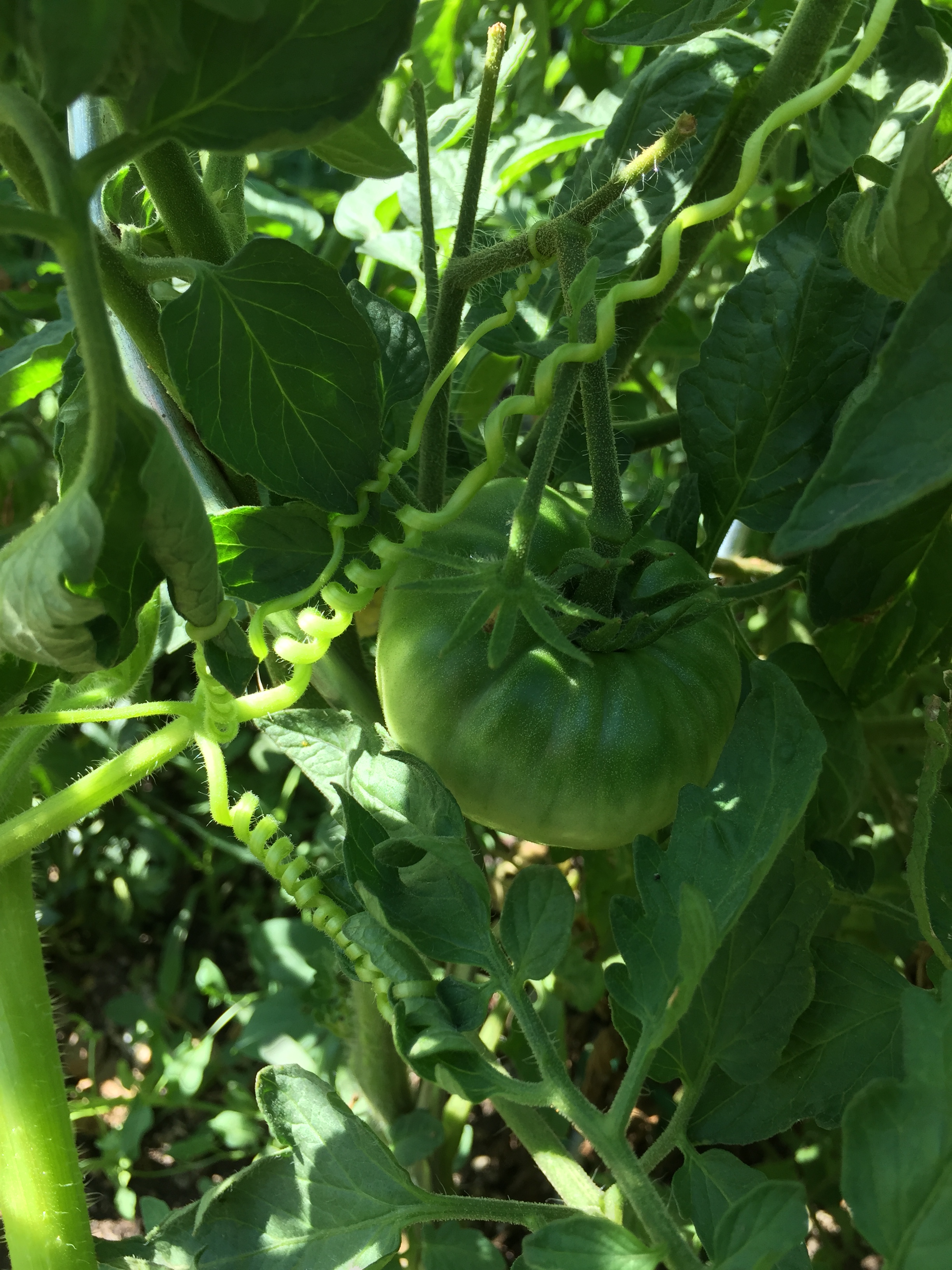
Pumpkins are one of the most prolific and successful plants in my garden. They appear even where I haven’t seeded them (they must be in the soil now after five years of planting) and once they start to grow they spread across the entire vegetable patch reaching out towards every border.

On their way around and over the other plants they send out these tendrils which catch on to whatever they can touch. The tendrils then spiral intensely creating these powerful bonds which the plant uses to anchor itself and pull itself up on the surrounding plants, fences, walls and so on.

I think these bright green coils are astonishing. I’m amazed by them. How does the plant know when it’s touched something else….another plant, a part of the fence, or whatever, and then how does it move its tendrils to wrap around whatever it has connected to, and then how does it “wind itself up” like this?

Plants don’t have brains. We know that. But they sure have the ability to sense – they can sense touch, they can respond to light, to gravity, and as far as I know can seek out the nutrients they need. They can unfold their leaves to gather up the Sun’s energy to transform it into sugars and structures. They can fold their leaves up to protect the plant from too much sun. We tend to think of plants are creatures which stay put, but I can tell you pumpkin plants to anything but stay put!

I think we under-rate the plant world. It is astonishingly diverse, incredibly resilient and is far more sentient than we realise. Plants have the ability to move much more than we realise because we don’t see them walk or run anywhere, and we know they don’t have muscles or limbs. But, goodness, they are not still. They reach out, spread, grow and seek what they need to survive and thrive.

I wonder how they communicate with each other? I wonder if the pumpkin here in this photo communicates with the tomato plant it has found and fastened itself onto? I don’t reckon they “think” or “speak” like we do, but they surely make connections, exchange energy, chemicals and information, and doesn’t that amount to a vast amount of communication?

Seeking, connecting, communicating, pulling together……..I guess we’re at our best when we do that too, aren’t we?

Read Full Post »

Sometimes the colours in the sky and those in the garden just match so beautifully it’s breath-taking.

Here’s my scene to share with you today – glorious pink in the sky and glorious pink blossom on the bush, with the petals falling in a perfect circle on the grass.

I didn’t take this photo today of course but it’s one which delights me every time I look at it. And, hey, why not share was spreads delight?

Here’s my question for you today – what will you choose to share with the world today? Because, the truth is, we share what we think, feel and do all the time. We might do that unconsciously most of the time, but we always have the opportunity to choose – to share consciously. It’s this conscious sharing that I’m interested in today…….which I why I hope this image brings you some joy, delight, and tranquillity. It’s a beautiful world.

Read Full Post »

I took a photo of this little street in Segovia for one reason – it’s name. I mean, look at the street. I’m standing at one end taking the photo so you can tell it’s a pretty small street. I don’t think the buildings on either side of it would entice you to go and explore it, but the cobblestones are attractive, and, probably more than anything that arch at the end looks very inviting. Which is interesting because seeing the arch, which invites you to pass through it, and seeing the countryside rising up the hillside beyond it is definitely tempting. But the truth is there are wonderful views of the countryside all around Segovia.

Here’s what caught me and convinced me to take this photo.

Now I don’t speak much Spanish but I know that this is the street name – and that the name is “Street of the Moon Gate”.

Street of the gate of the moon!! I mean, how can you read this and not feel your curiosity and your imagination start to stir! That archway at the other end of the street was probably where the original gate into the old town was. But why was it called after the moon? Was it the gate to enter by moonlight when you hoped not to be noticed? (actually you are less likely to be noticed on a moonless night)

I don’t know. Maybe one of you does. If you do, please let me know what you’ve found out. There is a Sun Gate in Segovia, but the other gates are all named after Christian saints.

However, here’s my point. It’s the name which caught my attention. It’s the name which has stimulated my curiosity and fires my imagination. I’m sure there must be stories set in Segovia which mention this gate, but if there aren’t, maybe I’ll try and write one!

Have you come across any places where the name made the location special?

Read Full Post »

What makes a good day a good day? Our daily experience is shaped and influenced by a countless myriad of forces, signals, energies and events. Most of those influences impact on us unconsciously….we neither register them, nor do we consciously respond to them. But they shape our days all the same.

That’s not to say that we can’t play a more active role. We can. We can be the co-creators of our daily reality. There are at least three ways to do that.

First, we can create the spaces and pauses which enable us to reflect instead of react. We do this by slowing down, taking time to more fully savour the experiences which nurture us.

Second, we can make choices, choosing to follow certain chains of thought, and choosing to let go of others. We can choose to keep doing, thinking or feeling the same thing, and so reinforce the path we have created, or we can choose to do something different, to think something different, and, yes, even to feel something different.

Third, we can seek out and/or create the contexts, events and environments which we know set us up unconsciously to experience what we want to experience.

Looking at this third option recently, I’ve decided there are a number of qualities which positively influence my day. There’s curiosity and wonder. There’s joy. There’s love, kindness and positive intention. The more I can seek, create, pay attention to, nurture any of those, the more I am setting my brain up to respond accordingly. Even when I’m not consciously choosing.

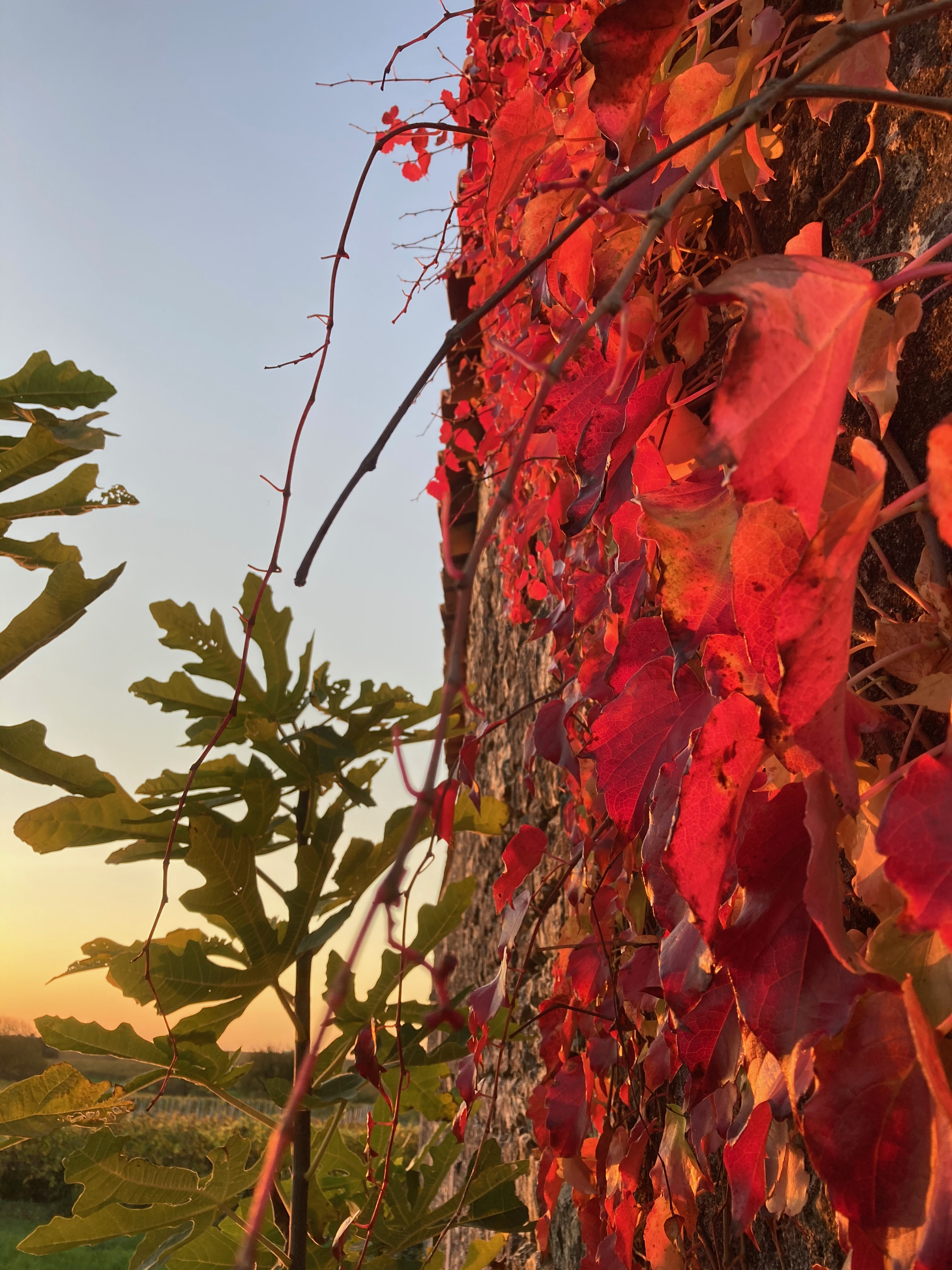
So, here is a photo I took the other day which I find fills me with both joy and wonder. It’s a photo of a wild fig tree which has been growing outside of my garden, and the Boston Ivy plant which has survived the collapse of the enormous old stone wall which runs along that border. That wall fell eleven months ago now, but the vine which seemed to tumble down with it survived, grew and, look – its leaves are a more glorious red this year than they have ever been.

Life amazes me.

I am amazed how a seed can fall somewhere apparently random, germinate, take root and grow….with no involvement from human hands. And I’m amazed at the resilience of plant which can be partially uprooted, which can have the vast bulk of its being destroyed, but can survive. No, not just survive, but thrive.

I didn’t add beauty to my list, but there is no doubt that contemplating beauty is good for the heart and the spirit.

So, here it is to share with you today……an image of beauty which I hope will set you up for wonder and joy today.

Read Full Post »

It strikes me there is a paradox at the heart of what it is to be human. We each have a sense of being different from other people. We experience what Freud termed “the ego”. It’s a sense of “self”, of a kind of centre of the universe from which we observe and interact with everyone and everything else. Our immune system is finely tuned to quickly recognise anything that is “not me”, to identify it as a potential threat and to mount inflammatory and/or allergic responses to contain and/or expel it. We need to know that we matter, that we have value and worth, and whilst some of that comes self-referentially as “self-belief” and “self-worth”, a lot of it comes from that other, somewhat paradoxical theme – the fact that we are social creatures.

We need to belong. Complete isolation is a punishment – we call it “solitary confinement”. We need to find common ground with others, to be accepted by a family, a group, or a community. We need to find and express what connects us to others so that we can share our experiences with them.

This paradox of separateness and belonging is never “resolved” if we see them both as opposite, unconnected poles. Although they are undoubtedly difficult to reconcile, they need to be “integrated” – in other words we need to find how we can connect them to each other in ways which will enhance and develop both.

It’s important to grow and mature as an individual. It’s important to feel free, to have personal autonomy. It’s also important to grow as communities, as a species, (if we want to evolve), and even as an integral part of all Life on Planet Earth. We share the same air, the same water, the same limited “resources”. We create waste which cannot be contained. What I do affects others. There’s no getting away from that.

If an individual takes a strong exclusive position on one of these two needs, they lose their necessary connection to the other one. That results on the one hand in selfishness and narcissism, and on the other, as auto-pilot, group-thinking, which sets them up for domination and manipulation by others.

These things make us sick. They set in train the forces of dis-ease.

To be healthy and fully human we need self-belief and self-knowledge. We need freedom and autonomy. We need to belong, to form loving, caring and mutually beneficial relationships. We need to find common ground with others. And we need to see ourselves as inseparable individuals emerging from, and embedded within, the whole – the whole species, the whole living planet, the whole universe.

Read Full Post »

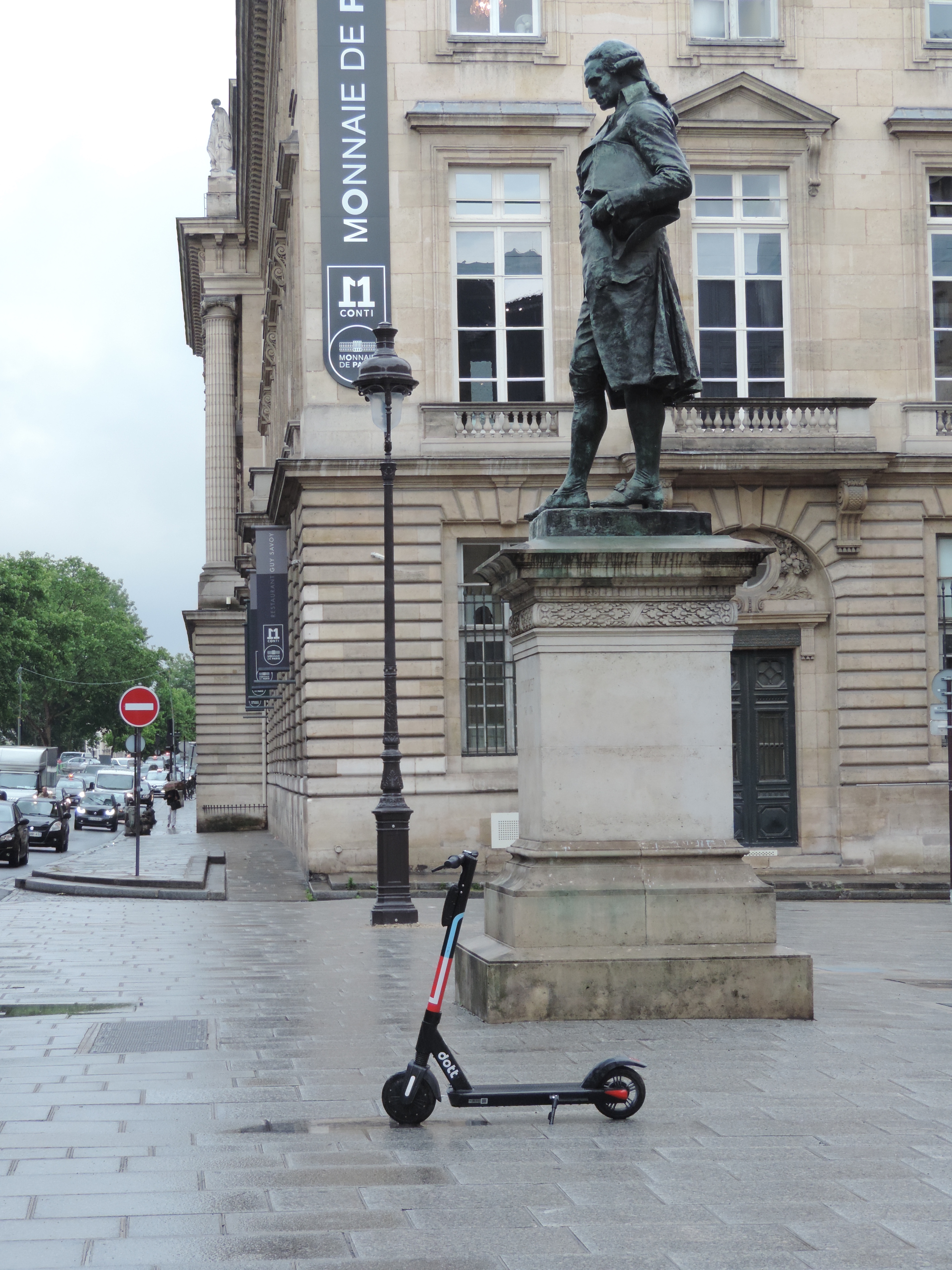
One day in Paris I came across this electric scooter sitting just beside this rather imposing statue of Condorcet. I had the notion that the serious thinker was looking down rather disdainfully at the scooter.

Even as I framed the shot I thought this was an interesting juxtaposition. Condorcet was a leading thinker of the Enlightenment, a champion of rational thought. That’s one large, heavy tome he has in his hand there and he has the air of someone who goes through life, eyes downcast, as he thinks seriously about everything.

For the Enlightenment thinkers rational thought was the way to liberate mankind, to free them up from the chains of superstition and enslavement by autocratic powers.

The electric scooter, on the other hand, is our right up to the moment symbol of autonomous freedom. In a city like Paris you can pick one up wherever it’s been left, pay your hire price using your smartphone, step on, and away you go whizzing along streets and passageways faster than pedestrians, weaving between static traffic jams of cars, pretty much as free as you’d like to be.

Yet a scooter, for many of us, is a sort of toy, isn’t it? I had a scooter as a child, as did my sister. In fact, just the other day there she found an old black and white photo of us both on our scooters, and sent it to me. Scooters back in the 1960s of course weren’t electric, but, apart from that is the modern version really that different?

I have a notion that one of the appeals of the electric scooter is something to do with play. Think back to childhood, or observe a child in your own family. From the very earliest of years children learn and develop through play. They explore, they discover, the try things out, pressing, pushing, bending, tasting, touching, looking and listening. They are like little sponges aren’t they? Absorbing every possible experience they can have minute by minute through the entirety of their waking hours.

Curiosity, then, that fundamental building block of learning, is expressed, first of all, through play. But there are three other qualities to play which come to my mind as I write this.

Play develops the imagination. Children create whole worlds to inhabit. Worlds of creatures, monsters, fairies, heroes. They dress up and assume roles. We even retain the phrase “role play” as an adult activity, don’t we?

Play encourages creativity. Children express themselves through drawing, singing, and making. Play is the medium through which creativity is released and nurtured.

Finally, play is social. Although a lot of play can be solitary, children adore games – games played with others. They are always asking to play games. Come and play this with me! Let’s play…..! They learn to connect, to interact and form relationships through play.

So, yes, the Enlightenment thinkers promoted liberation through rational thought, but are we missing a trick by reducing play to something less important, something somewhat trivial, even “childish”, to be left behind as we grow and mature into rational, thinking human beings?

Hey, you know me, and my “and not or” mantra – don’t we need BOTH? Don’t we need to inhabit, live, develop and grow both our “play” skills and our “rational” ones?

“All work and no play makes Jack a dull boy”

There’s such a push now, during this pandemic, for people to work from home, and already it’s easy to find a host of articles about the dangers this poses to work-life balance. Yet, “home-working” could be liberating. I had a telephone conversation with a government worker recently and I could tell from the background noise that he was at home, not in an office, so I asked him if that was the case. He replied yes and said how much he loved it. He no longer had to commute for 90 minutes to work and another 90 minutes back home every day – so he felt he had gained 3 hours. And, he said, when he wanted a coffee he didn’t have to stand in line and pay a hefty sum for a cup any more, he could just reach behind himself to where he’d placed his coffee machine.

I’m exploring a new way of organising my time, and I’ll share it with you once I’m happy with it, but today I realise I need to factor in something else, something a bit more liberated, something a bit more imaginative, something a bit more fun – play!

Why don’t you join me, and spend at least a little bit more of today in play?

Read Full Post »

Reflecting – I’ve long since thought this is a vital tool in life. There are two main modes of being – reactive and responsive. When some information, some energy or a substance evokes something within us our default is to react.

For example, when we see something threatening our “fight or flight” system kicks in fast and prepares us to do one of those two things…..fight or flee! It’s a complex system involving nerve pathways like the “autonomic nervous system”, certain nodes within the brain, like the “amygdala”, and a release of chemicals such as adrenaline and cortisol. Accompanying all that are the organising influences of the emotions. It happens fast.

The energy of heat makes us react too. When we get too hot our body re-routes the blood flow towards the surface of our skin, and we start to sweat, to try to maintain a steady body temperature in the face of the environmental change. There are many such reactive feedback systems in our bodies to enable us to react to environmental changes. All without requiring any conscious, active role, ourselves.

When we inhale an allergen, such as pollen, then, if we have the potential to be “allergic” to it, we react instantly with sneezing, runny nose, itchy eyes, or whatever, all provoked by an automatic activation of part of our defence system.

All of these are reactions.

But we humans can also respond. We don’t need to be 100% on auto-pilot. We respond, rather than react, by creating what the psychiatrist and author, Iain McGilchrist refers to as “the necessary distance”. We have this remarkable super-power to create a pause, a bardo, or a gap, between the stimulus and the response. We can stand back, stand apart, and change our perspective. This gives us our chance to reflect and it is a major factor in enabling us to move beyond an auto-pilot way of living.

Meditation practices of all types help us to step out of auto-pilot mode too. They strengthen our ability to become more aware in the present moment, and so open up the opportunity for us to play a more active role in our own lives. But reflection, I think, brings an additional benefit.

If a major benefit of meditation is heightened awareness and a breaking of the automatic stimulus-reaction loops, then reflection allows us to bring both our analytic functions of reasoning and our ability to imagine to bear. We can look back, unpick and unpack an experience and use the benefit of hindsight. We can “figure out” what happened and why and choose to act differently on any similar future occasion. We can think through a series of “what if”s to become aware of different potential outcomes.

As a doctor, I was encouraged to do this all the time. It is a common practice for doctors to reflect on their clinical work. That’s how we learn. That’s how we improve. But it’s the same in all walks of life. Stopping regularly to reflect frees us up – you could say it turns us from “zombies” into “heroes” (hero in the narrative sense – the main character of our own story).

There are many ways to build habits of reflection into your everyday. I think the top three are “Morning Pages” – where you write continuously to fill three pages of a notebook, preferably before you do anything else in the day; “Gratitude Journals” – where you end the day by thinking back and noting anything today for which you feel grateful; “Journaling” – whether in diary form, sketching, painting, whatever you prefer, but some regular time spent reflecting and then turning that reflection into something creative – a short essay, a poem, a letter to an imaginary friend, a letter to your older, or younger self, a cartoon, a drawing…..it’s up to you.

Oh, I should add, that it’s essential that all reflection is as non-judgemental as possible. It’s not about beating yourself up, or finding people to blame. It’s about learning and growing and a judgemental attitude isn’t going to help that.

What works best for you? How do you encourage yourself to reflect?

Read Full Post »

What protects us from infection?

The immune system.

What supports, encourages and maintains a healthy immune system?

The answer is lots of things, and no one thing by itself. There isn’t a magic pill or single technique which will keep your immune system healthy, but I thought it might be worthwhile just summarising some of the things which have a good chance of helping.

Nature

My first one is Nature. Japanese scientists have shown that “forest bathing” boosts immune activity. It seems that trees actually send out certain chemical which boost particular immune defence chemicals in the human body. But there’s probably a holistic, experiential element active as well. In other words, it’s probably not all down to particular molecules in the atmosphere. Because we also know that just spending time in natural environments boosts health….to the extent that Richard Louv describes Nature as “Vitamin N” and hypothesises that most of us are suffering from “NDD” – “Nature Deficit Disorder”. It seems that whether we are in a forest, in a garden, up in the hills, walking along the sea shore….all of these places are probably positive for our health and our natural defences.

Physical activity

There seems to be ample evidence that physical activity and many forms of exercise can both boost positive moods, and reduce unhealthy levels of inflammation which damage the immune defences. The bottom line is the more inactive your are, the worst it is for your whole system. Physical activity can include walking, jogging, gardening, sports, swimming, cycling – there’s a wide enough range there for pretty much everyone to find some kind of physical activity they can enjoy.

Diet

There are gazillions of articles about so-called healthy diets, or “anti-inflammatory” diets, or whatever. It’s mind-bogglingly confusing! But I think there are certain well established themes which run through every single “healthy diet”. It starts with eating mainly plants. Diets high in fruit and veg turn up again and again in research which identifies what seems to help to reduce chronic diseases, boost immune defences, and even encourage longevity. The second part is minimising what damages us – and that comes down to refined sugars and artificial chemicals more than anything else. How do you do that? Well, most simply by eating what is prepared by hand at home. The more processed, the more industrialised the “food” we eat, the more we are exposed to the harms. Ideally the more you can eat locally produced, seasonal foods, the better. And the more you can eat food from farms which don’t use artificial chemicals or industrialised techniques, the better. But the bottom line is “the less processed the better”. The third part is not eating too much – of anything! Whether you do that through an “intermittent fasting” diet, or simply by stopping snacking between meals, limiting consumption to what we need is good for us.

Supplements

I’m not a fan of supplements. Probably because I’m one of those weird people who finds it nearly impossible to swallow capsules and most pills! I also think we evolved to get what we need from Nature. However, again and again we are finding that Vitamin D deficiency makes us vulnerable. I’ve read a number of studies showing that vitamin D deficiency is most prevalent in patients who get the most severe forms of COVID. But vitamin D deficiency has been implicated in a host of chronic illnesses. So I do recommend it.

Other supplements? I’m pretty convinced about the value of two others when it comes to viral immune defence – Vitamin C and Zinc.

So, that’s what I take, and that’s what I’ve recommended my whole family takes. Vitamin D (4000 iu), Vitamin C (1G) and Zinc (15mg) every day just now. But you should find out for yourself, because we are all different sizes and ages and the amounts to take vary. So, be clear, I’m not prescribing these supplements for you….do your own research and ask health care professionals who trust, and, especially, ask your doctor if you are already taking medication. Immune defence is certainly not all down to supplements but they are worth some consideration.

Stress

There are undoubted, unavoidable links between the immune system, the nervous system and the endocrine system. Stress and emotional distress undermine the body’s defences. How you manage stress, and what practices work best for you, will differ from person to person, but it’s likely to involve some form of mental practice such as Meditation, Cognitive Behavioural Therapy, Heartmath, Visualisation, keeping a Gratitude Diary, or something like that. That’s in addition to spending time in Nature and taking exercise, both of which also reduce stress.

Maybe you already know what you can do to reduce stress, it’s just you find it hard to set aside the time to do it. Well, now is the time! Start today!

Emotional intelligence – there’s a link between stress and emotional intelligence – by that, I mean that learning to handle our emotions lowers stress, and that stress makes emotional turmoil worse. This is way too big a subject to tackle in a single blog post but I thoroughly recommend learning about your emotions, and how to handle them.

Love

I’ve left this one to last because I guess it’s the least “scientific” factor, but whether it’s longevity studies or studies of well-being, again and again human relationships are shown to be important. We need to be engaged, we need to love and to feel loved. We need that in relation to other people, to other creatures, to Nature, to Life. And that’s pretty tough in times when were are forced into social distancing, or even worse, social isolation. That’s why it’s so important for societies to make sure that whilst physical distancing might reduce the chances of spreading the virus, people are not isolated. We need contact, communication, simple checking in to see if we are ok, or if we need any particular help. We need to know that we are valuable, appreciated, even loved. Without that we are likely to suffer from more stress and less effective defences.

I am sure there’s a lot more you could add to this subject, but my bottom line is that I think we don’t pay enough attention to consciously, actively improving our well-being and our immune defences. If there was ever a time to do that, it must be now.

Read Full Post »

What influences how we experience the everyday? What shapes reality?

One of the ways our minds work is by creating frames and schema. We learn from our own experiences, from the stories of others, and from the messages we are given. All of these combine to create frames, or lenses, through which we filter the present moment. They also combine to create schema which are like pre-formed sets of perception, values, attitudes and behaviours.

There are lots of examples from psychology research – although, beware, because a lot of psychology research has been called into question and other researchers have failed to repeat the results of very famous experiments. But here’s an example of a type – volunteers are told they are being tested on a cognitive skill, say, perhaps, the ability to undertake certain mathematical tasks. But before they take the test, some are interviewed by a researcher who asks them to talk about the lives of the most elderly members of their family. Others don’t have that chat. After the test is complete, the researchers measure the time it takes the volunteer to walk to the exit. Those who had spent time talking about elderly family members before the test take longer to walk to the exit after the test. Bizarre, huh? This kind of experiment suggests that we can be “primed”. That pre-fashioned patterns of thought and action can be set in train unconsciously.

There are lots of different experiments which seem to demonstrate the same idea. These “schema” or “pre-fashioned” patterns of thought and action can be activated and influence how we experience and perform in the light of them.

We shouldn’t be too surprised by this. We know we are influenced by the messages which bombard us. Why else would advertisers spend billions to catch our attention? There’s a whole discipline now of “neuro-marketing” where companies can learn how to use how the brain works to catch our attention and to “prime” us to do what they want us to do – click “buy”, or vote “yes”, or whatever…..

This is one of the things underlying my choice of the title “Heroes not zombies” for this blog. I think that it’s easy to spend life on autopilot, allowing others to press our buttons, to convince us of their frames, to implant their schema in our minds. If we want to become the “heroes” of our own narratives, then we need to wake up, become aware of things like this, and then, perhaps, even consciously choose to create our own frames and our own schema.

So here’s my question today – for me, and for you – what are the frames, the schema, and the messages which are creating my experience of today?

Once we become aware of them, then we are able to make some choices – choose to accept them, or choose to make our own ones.

Let me finish with a simple example. If you spend the first part of your day “doom-scrolling” (you know that new term? Where you read story after story on your newsfeed, your twitter feed, your facebook feed, each one horrifying you, irritating you, outraging you, frightening you….but you can’t stop…you keep on scrolling)….so, if you spend the first part of your day doom-scrolling then what kind of day follows? What are you set up, or primed to notice, to pay attention to, to give your energy to? What if you chose to start the day some other way? With affirmations, reflection, gratitude…….you get the idea?

What if we started each day with some “conscious creation“?

Read Full Post »

« Newer Posts