Feeds:
Posts
Comments

Archive for 2022

Water as Life

I am fascinated by water. Who isn’t? Even little children in the kindergarten are fascinated by water! I love how it thunders down over waterfalls, or lies calmly reflecting the sky on the surface of a pool. I love how it creates such beauty when it freezes and still can’t quite believe that absolutely every single snowflake is unique.

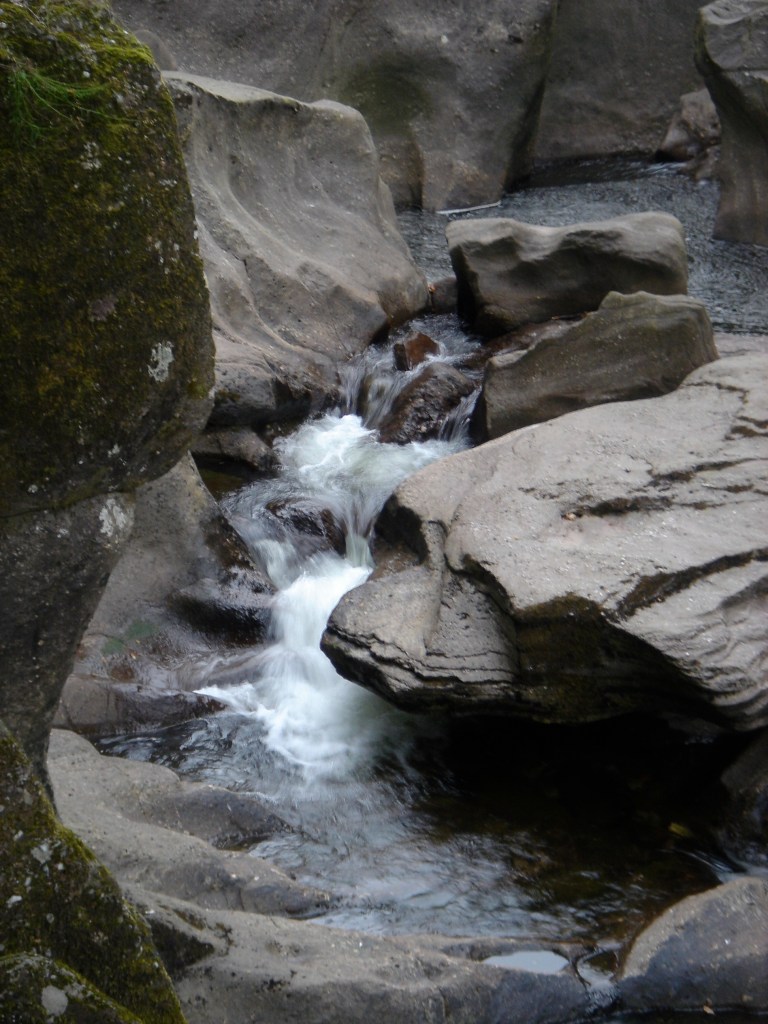
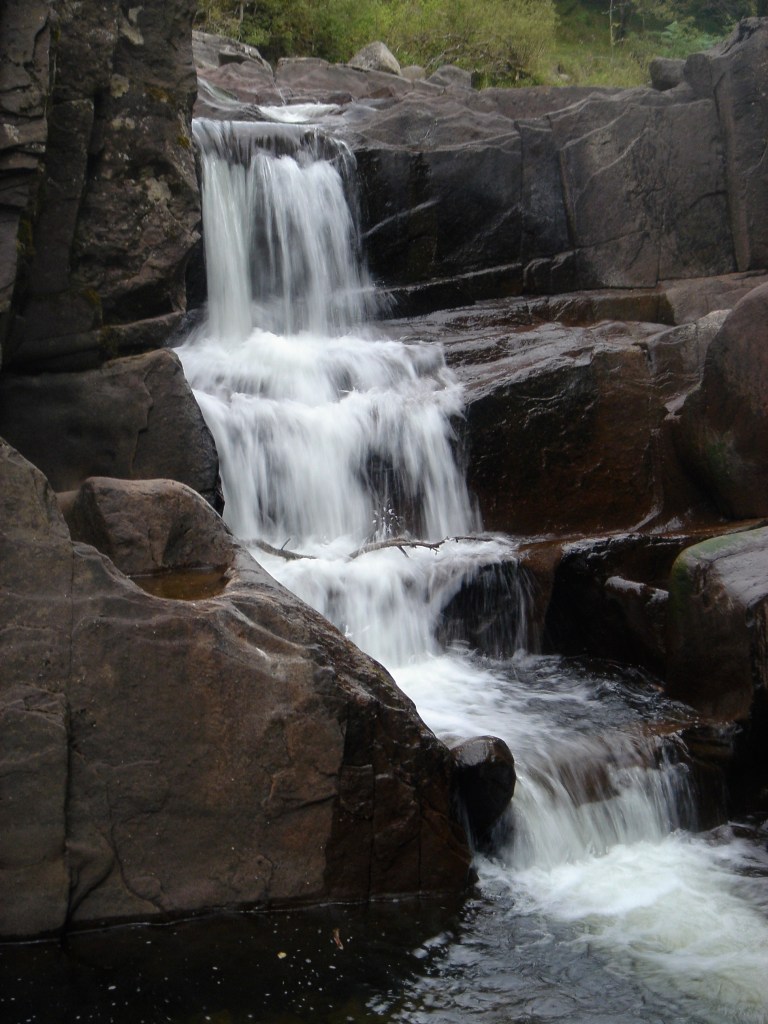
I especially love when you can see enormous, apparently unchangeable rocks, smoothed and carved into all kinds of shapes by flowing water…..like in my photo here of Bracklinn Falls.

I love to see the great expanses of water when you stand on a beach, on an Atlantic Shore. I can stand watching the waves for ages.

But water is also a great metaphor for the Life Force. Both flow through us. We live constantly surrounded by both. They give us life, shape us and sustain us.

Even when you are not aware of water, there is water. Water is inside our physical body and in plants, too; there is water all over. In the same way the pure source is everywhere. Each being is itself pure source, and pure source is nothing but each being.

Suzuki
Read Full Post »

Wonder

Mankind will not perish for want of information but only for want of appreciation. The beginning of our happiness lies in the understanding that life without wonder is not worth living.

Abraham Heschel

Wonder isn’t the same as curiosity, but the latter can lead to the former. I’ve often described myself as “insatiably curious”. I always wanted to know more about every single patient. I’m fascinated by a wide range of subjects and it’s easy to follow my curiosity down a rabbit hole on Wikipedia or the rest of the internet.

But I only learned later in life that wonder was something different, something deeper and more powerful. The experience of wonder includes being amazed or being in awe of something. It brings a deep humility, a conviction that we humans can never know all that could be known and that our understanding is always limited.

I remember learning embryology at university and being utterly amazed at the journey of the fertilised egg, through multiple phases of cell splitting and differentiation, develop all the organs and tissues of the body in all the right places. That still astonishes me.

I remember witnessing patients in the moments leading up to death and wondering just what was happening. I am still amazed how it appears that one moment the person is alive, and in the next, they’re gone. Awe is the only word for it.

I have countless memories of patients healing, recovering from life threatening illnesses, repairing broken bones, broken skin, broken hearts. Time and again, I was in awe at their healing and growth.

Then when I came to live in France I discovered “l’émerveillement du quotidien”, and realised that’s the key to a good life – to wonder, to be amazed, to be in awe of the world I’m living in every single day,

Like Heschel, now I understand that wonder leads to both happiness and the experience of a life worth living.

Read Full Post »

When I grow up….

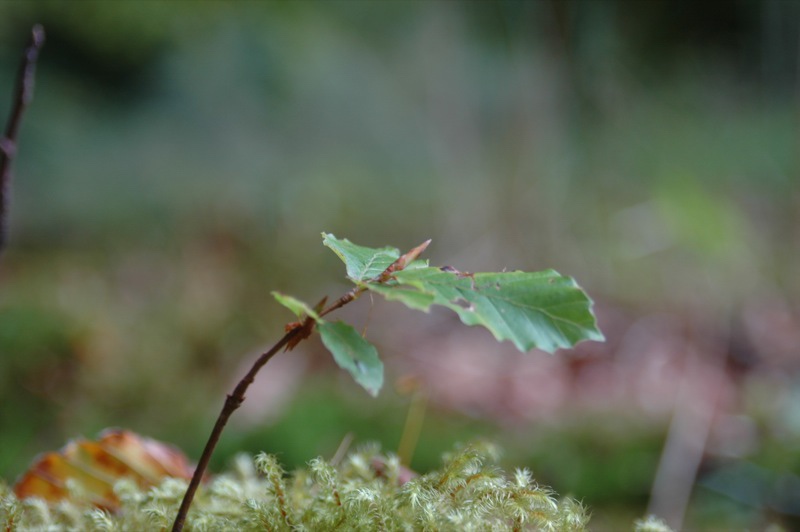
In the forest there are many little seedlings like this. They’re spreading their roots out under the forest floor, making new connections through the mycorrhizal network of the wood wide web. Stretching their spindly first stalk up to life their new leaves towards the sun.

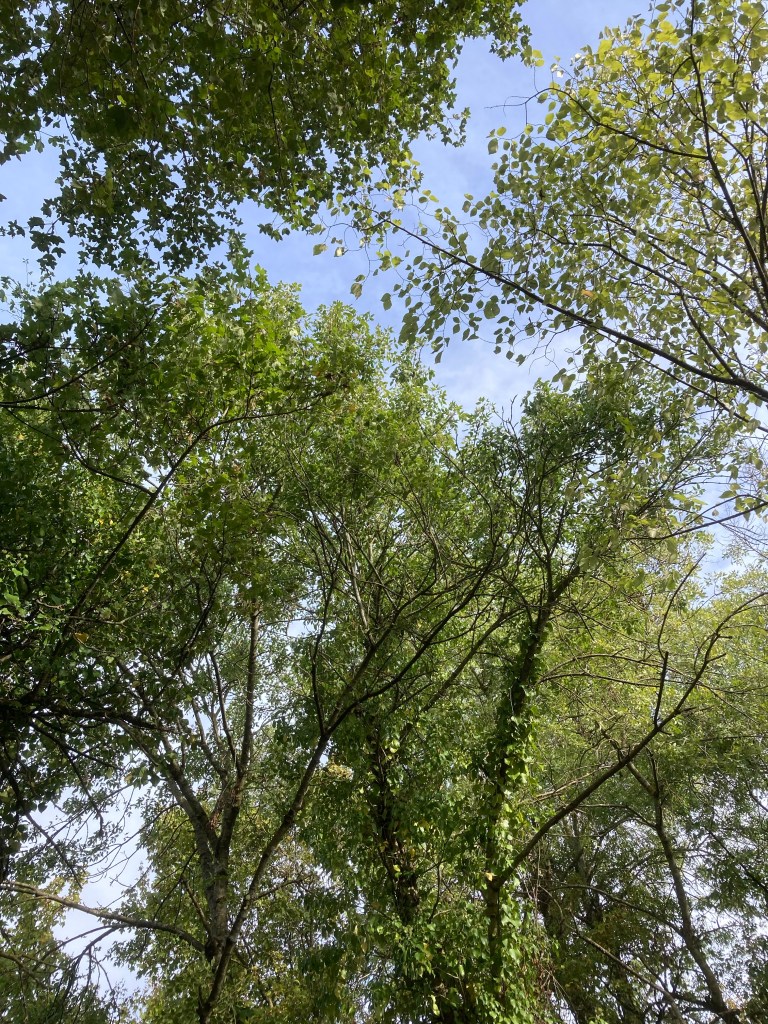
We can’t know which of them will grow to make a forest like this…..

…..but we do know that every one of those tall trees started out that way.

What makes the difference between the seedlings which grow to mature trees and those which don’t?

Another question we can’t answer in advance but we do know their chances are dependent upon their exact location, their immediate and close environment, the interactions between the different trees in the forest and the fungi along their root systems, the quality of the soil, the presence or absence of a large number of nutrients and, of course, the climate they grow up in. Not to mention the actions of human beings who might uproot or cut down any particular tree for reasons of their own.

So it’s multifactorial. We often forget that as we try to explain health and illness in all living creatures, including humans. We have a huge tendency to try and reduce this complexity to a simplistic single issue and seek to use a quick techno-fix to “solve the problem”. Trouble is that only works partially and only temporarily.

If we want to be healthy, if we want to live in a healthy world, we have to pay attention to, and care for, the environments in which we live.

If we want these little miracle seedlings to grow into large miracle mature trees, we need to nurture and care for them.

Same thing if we want healthy humans, healthy societies and a healthy world.

Read Full Post »

Healing

In a French magazine I read – “since the dawn of time, cuts have sealed over, broken bones have knitted together and illnesses have resolved, well before the appearance of shamans, priests and doctors.”

Doesn’t that amaze you? Have you ever stopped, in awe, to wonder how a cut on your skin heals over? We put a sticking plaster over a cut or graze, or sometimes we need a couple of stitches to pull the edges together, but we know, don’t we, that plasters and stitches don’t heal. It’s the body which does the healing. It’s our natural, given ability to self repair which sends cells and chemicals to the right place to close the wound, stop the bleeding, then lay down scar material to make a permanent repair. When we break a bone, all a surgeon can do is align the two parts and hold them together for long enough to let the bone knitting powers of the body do their stuff. When you recover from an infection, even if you taken a drug to kill some of the offending bacteria or viruses, it’s entirely your bodies immune and inflammatory processes which protect your tissues and repair the damaged ones.

I lived with that knowledge throughout my medical career, never losing that respect and awe for our capacities to self repair, self defend and self heal.

Healing is always a natural process. Drugs don’t heal. Like splints or sticking plasters they might support the healing process, but they don’t replace it.

The magazine article I read wasn’t arguing about the value of shamens, priests or doctors. It was emphasising the often forgotten, or taken for granted, powers of natural healing. I’m not arguing against pharmacology or surgery. Both can be life saving. But I think it’s good to remind ourselves that it’s our incredible bodies which heal and which keep life flowing. It’s not our tools which are so amazing. It’s Nature.

Read Full Post »

A nurturing society

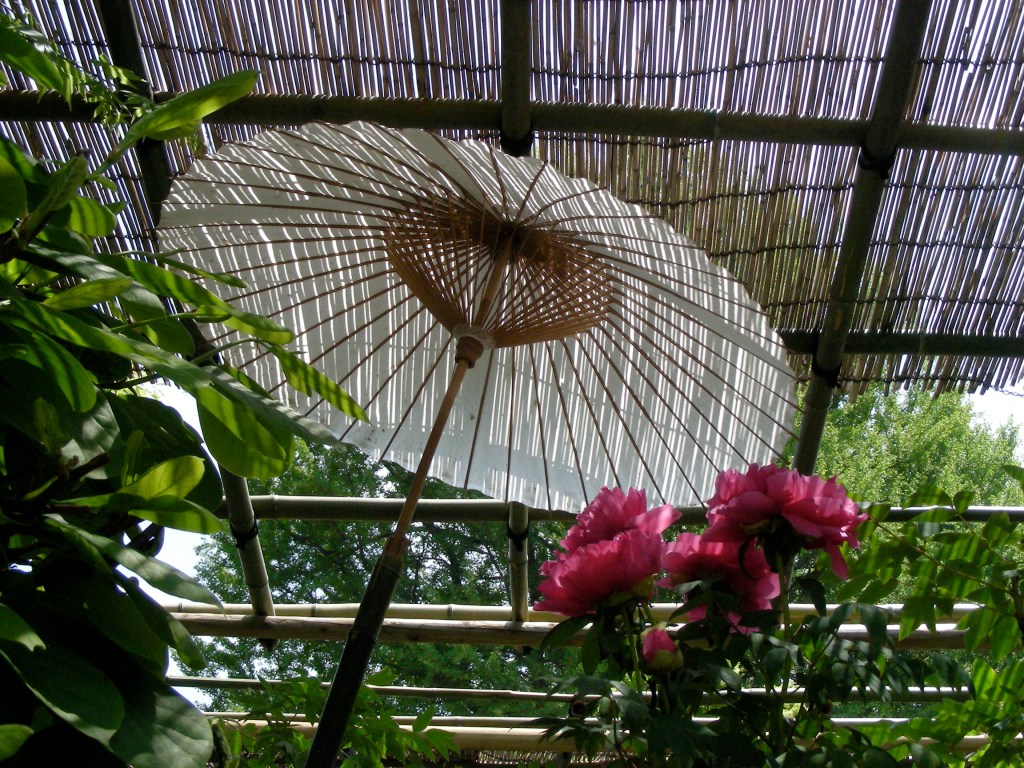
One day I came across these paeonies growing in Ueno Park in Tokyo. I’ve always been struck by how Japanese gardeners look after their plants. This collection of paeonies, absolutely unlike any display I’ve ever seen anywhere had two obvious structures sheltering them. There were bamboo roofs stretching along each bed of flowers, but in addition each plant had its own little parasol.

This image stayed with me in my work as a doctor, reminding me that one of the most powerful things a doctor can do is help a patient to feel safe. Healing starts with recognition and empathy, and moves forward with understanding and care. Any “treatments” only help if they support the body’s natural repairing and healing systems.

It also stays with me as I imagine the kind of society I would like to live in – one which nurtures, supports and shelters the inhabitants, so, in the process, maximising their potential to be healthy, to grow and to flourish.

Can we create a nurturing society which prioritises the creation and maintenance of a healthy environment?

Read Full Post »

If you dip into this blog randomly I wouldn’t be surprised if you discovered me writing about how everything is connected, or writing about entanglement, mutually beneficial relationships, or things like how we co-create reality.

What holds all those ideas together? Circles, cycles and looping paths of influence. Whatever I do, say or think changes my experience of the world today AND changes the world I’m living in. Those actions, words and thoughts don’t only change my subjective experience, they change my lived reality….they change the physical world as I garden, move, eat and drink. They change my relationships as I set off other trains of actions, words and thoughts in others. And collectively we humans are changing the entire planet.

But none of this is one way traffic. Because the changed world, changes my actions, words and thoughts. The communications and actions of others influences what I think about, how I feel and what I’ll do today.

Reciprocity is fundamental to the reality of the vast interconnected web in which we exist. Some people might call it karma. Others might say what goes around comes around. Yet others say you receive what you give.

This reciprocity is rarely linear, however. It doesn’t work like a simple back and forth between two isolated characters. Well, maybe sometimes it’s a bit like that. But, usually, the waves of energy and influence swirl around, wash up on distant shores, magnify into hurricanes and tsunamis which spread and dissipate as they do so. It’s non-linear.

Non-linear makes the detail of individual lives pretty impossible to predict. But we can choose what to do, what to say, or write, and what to think today. We can choose the quality of the waves and ripples we set off.

So why not choose the loving ones, the kind ones, and the creative ones. It’s a good place to start.

Read Full Post »

Natural and man made

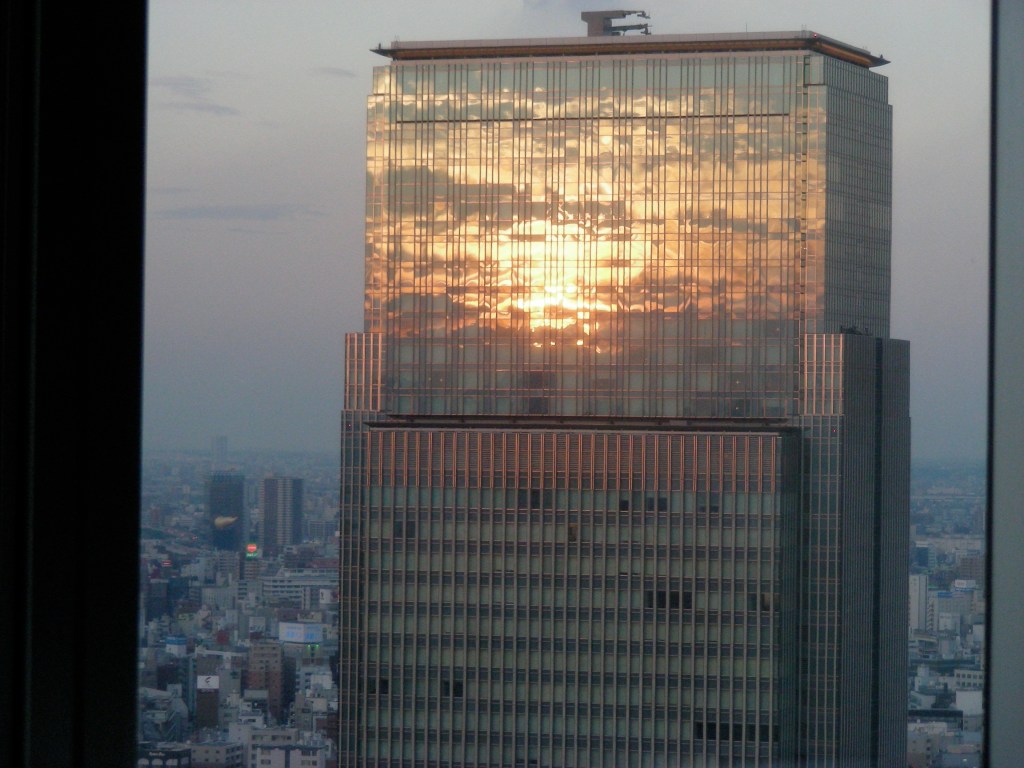
I took this photo many years ago while on a teaching trip to Tokyo. It captures the setting sun reflected in the windows of one of the many tall glass and steel skyscrapers which crowd together in the city.

My first thought is, this is a beautiful image. It catches my attention and makes me pause to look at it more closely,

Then I’m struck by the fact it’s something man made overlaid by something natural. To see both in the same place at the exact same time makes this the delightful scene that it is.

We humans have made some astonishing objects. From homes, to palaces, castles and cathedrals up to today’s modern, seemingly impossible tower blocks. From works of art, to computers in our pockets. But still, nothing we make seems to match the astonishing power and beauty of natural creation, and is there any common natural phenomenon that attracts more attention than the setting sun?

We are drawn to sunsets, whether we see them happening over oceans, beaches, mountains or cities. The last house I lived in was a great place to be to see sunsets. Evening after evening I’d be drawn outside, almost compulsively, as the whole sky turned shades of red and gold. Irresistible.

And not or. This was one of those moments where the built environment and the natural one interacted to create a unique experience of beauty and awe.

Read Full Post »

A way of life

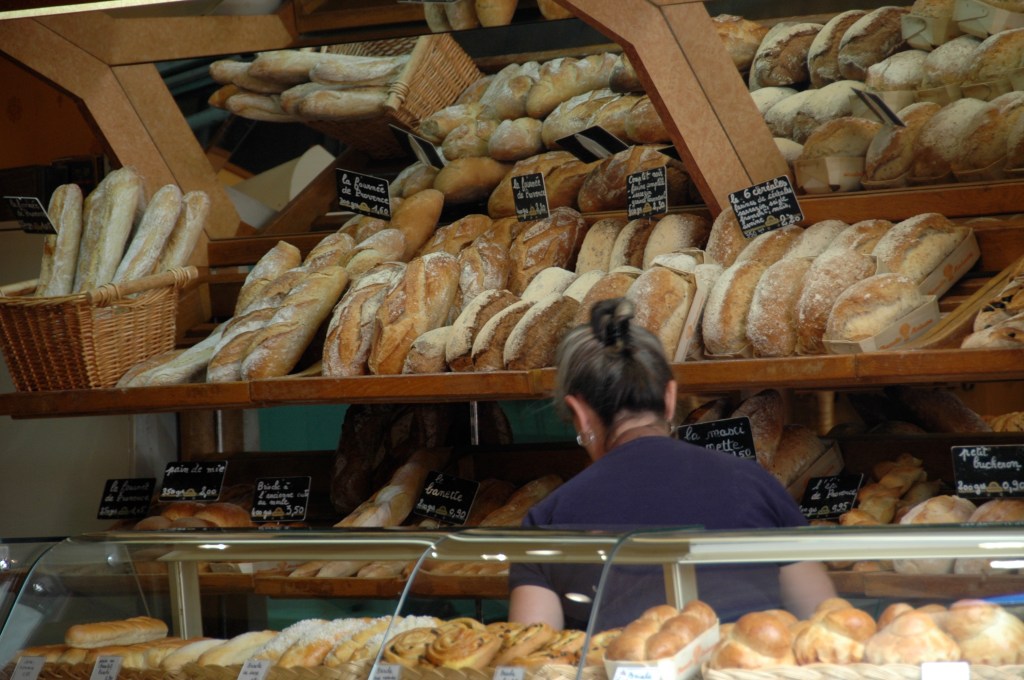
Does any country in the world have as many independent bakeries as France? The “boulangerie” is an absolute staple of life here. Even small towns where most commerce has disappeared often still have a boulangerie. The small village where I used to live had only two businesses, both supported by the community through the “Mairie”….a boulangerie and a hairdresser.

One of the things which has always struck me about boulangeries is that most of them are independent and/or family businesses. The baker produces the daily bread and that’s his (or less frequently, her) working life. Even a successful baker isn’t likely to buy up other boulangeries in other towns to create a bakery empire.

I don’t have the figures and of course there are factory bakers who have industrialised the process and sell via supermarkets or franchises but this model of a respected, skilled, “artisan” (a word used in France to describe skilled workers), earning a living from their small business seems strong here. In some cases these family businesses pass down through generations.

It strikes me this is a different model from that of mass production and mass consumption. It’s more human. And it’s more respected. Long term relationships develop over many years between these workers and their customers. They live in the same town together, their children go to the same schools, they know each other.

It’s a very different model from the profit maximising, dash for growth and short term success one which seems so dominant in most of society. It’s local, stable and integrated into the community. It’s human sized. In fact I often think of Schumacher’s “Small is Beautiful” when I go into these boulangeries.

It’s about focusing on human beings, not on profits and “growth”. The growth these artisans experience is of skill, maturity and human connections. It’s a way of life.

Read Full Post »

Maps

A map contains some truth, but unless you can interpret it in the light of real world experience, it is useless. And although a map depends on the world, the world does not depend on a map.

The Matter with Things. Iain McGilchrist

This is literally true. Every map shows us a representation of the territory. It highlights certain aspects, diminishes or ignores others. They are no substitute for an experience.

The same idea applies to our systems of representation in our brain. Dan Siegel, who wrote “Mindsight”, explains that we create a “me map”, a “you map” and a “we map” in our mind. This helps us recognise and understand others and to know how particular relationships function, but it’s no substitute for the reality of subject to subject relationships. Not least because we never know all there is to know about anyone, including ourselves!

Iain McGilchrist points out how representation is how the left cerebral hemisphere functions. It doesn’t deal with reality directly. Rather it analyses, categorises and labels. It creates “maps”. But to be useful these maps and representations need to be set in the context of lived reality.

It’s a mistake to believe the map over the territory.

Read Full Post »

Three relationships

There are three elements, or relations, which lie at the heart of both our sense of belonging and our experience of wellbeing.

They are our relationship to others, our relationship to the living world and our relationship to the Divine.

Others. We are intensely social creatures. Our babies are born unable to survive alone and the early relationships they form determine the number of connections made by the neurones in the brain, the patterns of those connections, our ability to form healthy relationships in the future and even our susceptibility to a number of illnesses throughout our lives. We thrive when we establish mutually beneficial relationships with others. We realise our potentials when we love, and are loved. Loneliness, alienation and trauma are major factors involved in illness and early death.

The living world. When we treat other creatures and organisms as resources or things we impoverish our lived environment. When we pollute the seas, the rivers and the air we impair our ability to live long healthy lives. Climate change is one manifestation of this destructive attitude to the world. We need to reset our perspective and see the living world as crucial to our own wellbeing. Wonder and respect will support us better than exploitation, consumption and the production of waste.

The Divine. However you think of the divine, let’s consider our relationship to the “whole” and to whatever is more than, and greater than us. The Enlightenment thinkers were wrong in declaring we could understand everything. We can’t. And we never will. Knowing that allows us to become more humble. Beauty, Truth and Goodness all reveal the divine to us. We need a sense of purpose in our lives. We can gain that by connecting to what is greater than us. We can gain it through soulful experiences – of music, of food, of places and people – we feel it in our hearts. We feel it when we are touched in our soul.

Read Full Post »

« Newer Posts - Older Posts »