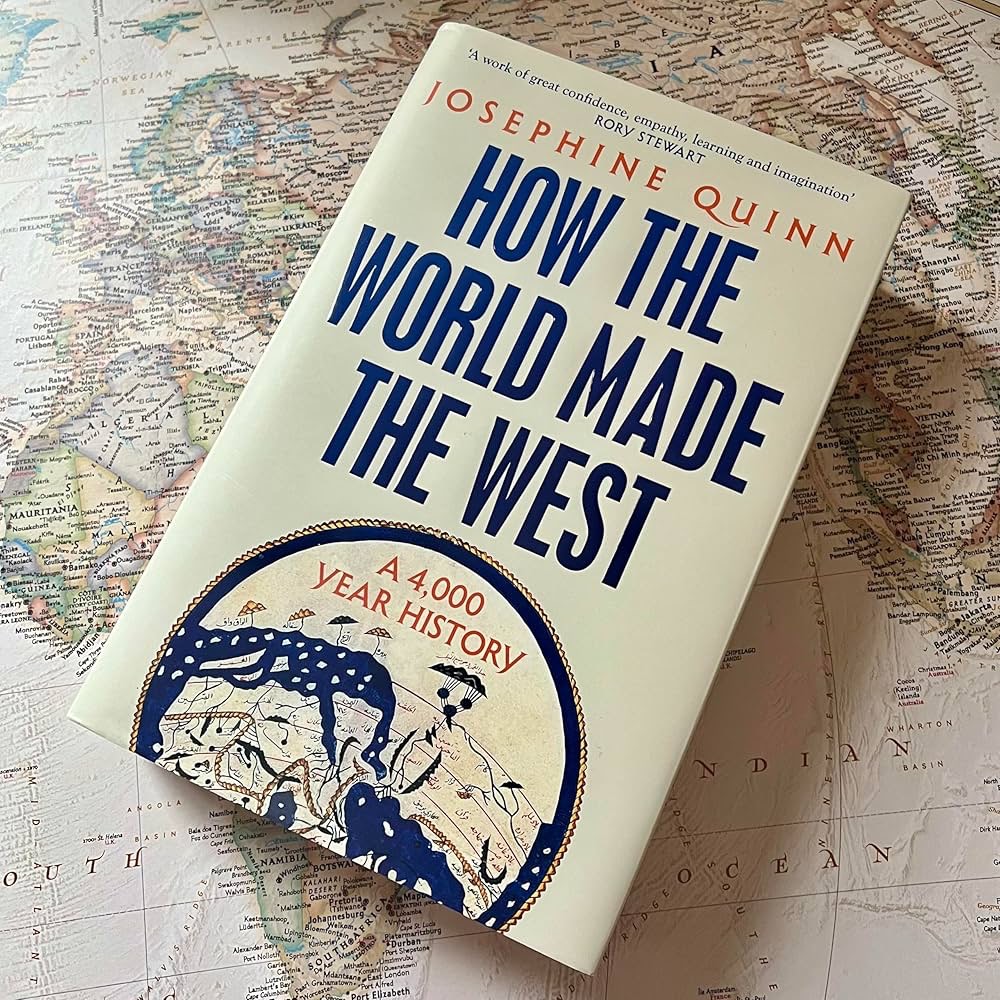
I”m currently reading this astonishing book by Josephine Quinn challenging the whole idea of “civilisational thinking”. She makes an extremely well researched and detailed case for how we got to where we are now, through hundreds of years of trade, travel, migration, and the rise and fall of power bases in cities and lands across Asia, Africa and what we now call Europe. It’s an astonishing read.
In her chapter about Athenian democracy, which is often held up as the standard “the West” claims to pay due to, she shows just how different democracy was there from the versions of it countries say they have now.
It feels as if our current versions of democracy are in crisis. They are distorted by populism, which seems to generate space for new waves of autocracy and fascism. And they are corrupted by money. It’s becoming clearer than ever that wealth buys the governments that the wealthy want. There is soaring inequality, and a decades long grinding down of working people and standards of living as neoliberalism shovels money up from the bottom to the top, privatises the Commons, and pushes “deregulation” to escape any chance of being held to account for the actions of corporations and billionaires. Meanwhile the Public looks at the system and can’t see a political party which will address the real problems we face.
In the Athenian version of democracy, Josephine Quinn highlights three features which protected it from both populism and corruption (accepting it didn’t do that 100%) –
1) Lawmakers were chosen by lot, not by anyone voting for them. What, no voting?! Yep, the method was probably pretty similar to the way a jury is chosen. Jurors are selected by lot. Nobody votes for them.
2) Secondly, those chosen were paid to do the job for a year, so it remained (technically) open to everyone, not just the rich.
3) And, thirdly, they had to step down after a year, and be subject to an open public audit, to look at how they had acted during their term of service. In other words, every one of them was held to account.
These three basic features were designed to protect democracy from the rich and the corrupt, and to engage the greatest number possible of citizens in the law making of the land.
Of course, Athens was a pretty small town by current standards, and present day countries couldn’t manage assemblies of the entire population to gather and make decisions (although with modern online technologies, perhaps the geographical limits have been lifted)
This is an entirely different vision of democracy. If we chose our “representatives” the same we choose jurors, if we paid them for their work, limited them to a single term in office, and held them to open public audit when they stood down, it would make it harder for the wealthy to buy elections and for lobbyists to corrupt politicians (who couldn’t be career politicians any more) – Can you imagine it?
There are lots of other good ideas around the world which might improve democracy, from citizens assemblies and referendums creating a more participative democracy, to trials of different kinds of proportional representation, but none of these ideas are as radical as those we saw in place back when democracy was born.
I mean it’s pretty thought provoking, isn’t it?





 Heroes Not Zombies