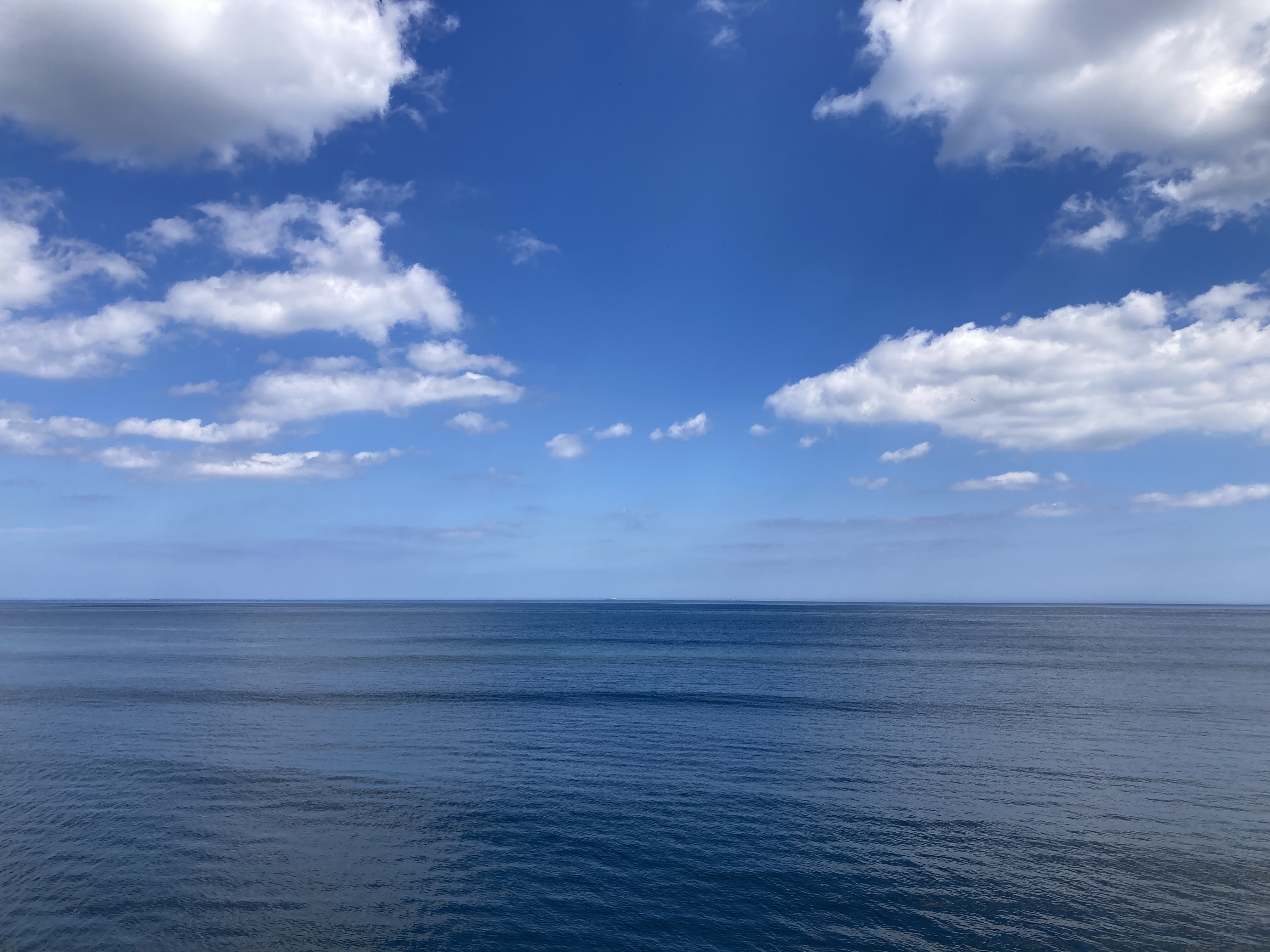
I get it.
As you stand, alone, gazing out to the vast expanse of the sea, it’s easy to think you are separate. Separate from everyone else, separate from other creatures, standing on the outside, looking in, at this world you find yourself in.
But, that’s an illusion.
We are not separate. We don’t exist apart from Nature. We don’t survive all by ourselves. We are not disconnected.
Yet, this sense of being separate lies at the heart of so much dysfunction and trouble in this world. We have created a system of society, of politics and economics, on the foundations of this delusion. The idea that by encouraging selfishness, actions and choices which put our own interests, not just above those of all others, but with no thought whatsoever to consequences, we can create a healthy, thriving life, is just crazy.
So, why do we live this way? Why do we support the idea that we can consume more and more of the Earth (what we call “resources”) forever and forever? We live in a finite planet. What we burn and destroy won’t come back. The species we eliminate won’t come back. We can argue about timescales, but the Club of Rome’s “Limits to Growth” report, published decades ago, was, essentially, correct. Unlimited growth in a finite world is going to hit the buffers one day, maybe not in our lifetime, but in the lifetime of our grandchildren, or our grandchildren’s grandchildren.
Should we care about our grandchildren’s grandchildren?
I think we should.
Why do we support the idea that a tiny minority of the people in the world should be allowed to grab as much of it as they can? Why do we have billionaires? Does it matter what they do? Does inequality matter? A question which won’t even occur to the narcissist.
Iain McGilchrist’s thesis about our brain asymmetry helps me understand. It rings true and it helps me to see that if we use our left hemisphere excessively, and, as if it is disconnected from our right hemisphere, then we are going to experience the world as if everything is disconnected. Our reductionism and selfishness will narrow our view so much that we’ll fail to see that we, and everything else on this planet, are intimately, inevitably, interconnected.
We are embedded in this world. We exist, for a brief time, in a vast web of relationships. We are the individual waves which appear on the surface of the sea, then dissolve, back into it.
Can we learn to take a longer view? Can we begin to act as if our grandchildren, and their grandchildren matter? Can we make choices which take into account the ripples and effects of those choices, and the effects they have on others, on our environment, on the world in which we belong?
I watched a short video last night which promoted the part of the world where I live, Nouvelle Aquitaine. One phrase they used really struck me – “Vous êtes unique, nous sommes unis” – You are unique, we are united. It’d be good to live that way, owning and respecting our own uniqueness, and that of all others, and feeling connected, deeply knowing, that we are all one.
What do you think? Can we develop and share a different vision for our lives and our world? A vision more consistent with the use of both our cerebral hemispheres, a connected world of embedded lives, where everything we do has consequences, for ourselves, for our loved ones, for others? Can we learn to see the bigger picture, the longer timescale, a better way to live?

 Heroes Not Zombies
Thanks for these beautifully expressed insights, Bob. I believe th