Feeds:
Posts
Comments

Archive for the ‘from the living room’ Category

John Barry died this week. When you hear just some of the film soundtracks he composed you can’t fail to be impressed. His music is instantly recognisable, not least the Bond film music, Born Free and Out of Africa.

You could argue that through his music, John Barry will live on. Last week, in Scotland (and elsewhere), we celebrated the birthday of Robert Burns. He died in 1796 but in some way, he’s still around. His words, his ideas, the feelings and experiences which were unique to his life, continue to be accessible to us many years on.
I was recently reading about Lacan’s concept of the three realms, or worlds, the Imaginary, the Symbolic and the Real. It occurred to me that there’s something in that model which helps us to understand death (and therefore life) differently. If the Real is all that is, as it is, unfiltered and unprocessed, then it doesn’t take much thought to understand we can never fully know the Real. We process the Real through our sensory organs, our bodies and the activities of our brains, and in so doing, we experience only a small fraction of the totality of all that is at any given moment.

We only experience a small fraction because, first of all our sensory organs are only able to detect portions of reality (bees for example are able to see ultraviolet portions of the electromagnetic spectrum which our eyes are unable to detect, and dogs can hear tones well outwith our detectable range), secondly we only become aware of a portion of what comes through our sensory organs (we can’t pay attention to EVERYTHING at once), and, thirdly, we then use language and other ways of naming and symbolising all of that information to interact with it. From this perspective, each of us experiences a Symbolic world – our abstracted, selective, processed part of the Real.
Enough of that for now…….taking this model though we can see that there are two ways to die. There is the death of the physical body, and there’s the death of the Symbolic self. In the cases of Barry and Burns, the Symbolic self lives on well beyond the death of the physical body.
I recently saw a patient who is clearly experiencing these two deaths the other way around. Due to a progressively degenerative disease, this person has become unable to continue working in a job which gave them a powerful sense of who they were, and with further decline they have become housebound and socially isolated. Bit by bit, they’ve experienced a death of the Symbolic self, whilst the body lives on, albeit in significantly deteriorated form.

A way forward in this situation is to encourage and support reconnection to others, to Nature, to the sense of “emerveillement” which is always possible in the here and now. In so doing, the hope is to re-invigorate the Symbolic self – our personal experience of reality.

We do die twice, but it’s possible to nurture and to develop the Symbolic self, at least to the point of physical death, but with sufficient creativity, to well beyond that particular event.

Read Full Post »

Happy New Year! I know, I’m a bit late, but, hey, I haven’t been well. Back to health now, though, so time to start blogging again.
Some time back I was learning a bit of Japanese, and was amazed to discover that the words for the days of the week had the same root as the French words for the days of the week. To cut a long story short, I discovered that in multiple cultures and languages we name the days of the week after the sun, the moon and five planets. Not only, the same five planets, but across cultures exactly the same ones for each particular day (Monday is associated with the Moon, Tuesday, the planet Mars, Wednesday, Mercury, Thursday, Jupiter, Friday, Venus, Saturday, Saturn and Sunday, the Sun – it’s less clear in English as we’ve swapped the planet names for Norse Gods on Tuesday through to Friday). Given the rich symbolism of the planets for human beings I thought it would be interesting to explore how the actual name of the day might influence our experience of that day (I’m not talking astrological influences here, but semantic ones). I then wondered about the months of the year. What’s the naming pattern behind the months? Are they planets too? The answer turned out to be immensely unsatisfying – it’s a mess! Some are named after Greek or Roman Gods, some Roman Emperors and some after a number – and not even the right number out of the twelve possible ones for a year of twelve months!
So, I thought, why not come up with a symbolic, or semantic marker for each of the twelve months? I could then interact with that throughout the year.
Here are the twelve themes.
So we start the year in January, named after Janus, who looks forward and backwards at the same time. Janus, the god of gates and gateways. It’s the month when people reflect on the year gone by, and resolve to do something different in the year to come. In other words, it’s a time for both assessing where you’ve got to and having some thoughts about where you might be going.
Here’s my image for this month.

january goals

It’s a photograph of a sculpture at the Gallery of Modern Art in Edinburgh. The sculpture looks like goalposts, so it made me think about the whole notion of having goals (something I’m pretty ambivalent about to be honest – I see their value, but think they can be overdone). When I took this shot, I was struck by how the sculpture framed the little tree and the idea of planting a seed, and nurturing it to full blooming was an even more appealing image for me.
So here it is, the combined ideas of a gateway, to pause and look back before venturing forth, of goals or targets or hopes, and of seeds planted with a vision to work towards, to nourish, cherish and bring to fruition.
I hope some of these ideas, and this image, might colour your January.

Read Full Post »

I finished reading William Fiennes, The Snow Geese, this morning, then as I looked out of my window I saw this sight

flying south

I followed them round to the other side of my house….

flying south

I don’t really know what to make of these “coincidences” in life, but they certainly heighten the sense of emerveillement in le quotidien……

I really enjoyed ‘The Snow Geese’. It’s one of those books I’ve had lying around for a long time, but only recently decided to read. It has that wonderful combination of beautiful writing and fascinating, thought provoking facts, which I love. The main themes of the book, based around the writer following snow geese as they head north to their breeding grounds, are about freedom, our connection with nature, and the strong instincts to head home (migratory birds have two homes really…..one for the summer and one for the winter).

What I didn’t expect to find were some references to homesickness from a medical perspective, and, given that I’m a doctor, it should be no surprise that those passages leaped out at me.

Baron Dominique Jean Larrey, Inspector of Health of the French armies under Napoleon [described nostalgia in the following terms] First, an exaggeration of the imaginative faculty: patients thought of their homes as enchanting and delightful, and expected to see relatives and friends advancing towards them. Second, the appearance of physical symptoms: fever, gastric disturbance, ‘wandering pains’. Finally, depression, listlessness, weeping, and sometimes suicide.

How fascinating to see this holistic description and understanding, beginning with an individual’s inner, subjective, mental processes, leading onto whole body dysfunction with specific disorders in certain organs and systems, then progressing to a life-threatening state of mind. What cures did such doctors suggest? Larrey recommended distraction – through “music, recreation and regular exercise”.

In 1858, James Copland, in his ‘Dictionary of Practical Medicine’, described nostalgia as a cause of disease, rather than as a disease itself (where does a disease begin? Can you really say where health gives way to disease?) However, he still considered it to be a serious problem.

The patient nurses his misery, augments it until it destroys his nightly repose and his daily peace, and ultimately devours, with more or less rapidity, his vital organs.

Fiennes quotes from a 1996 edition of Psychological Medicine ….

What strikes one most in the sparse literature on help for the homesick is that often only returning to the old home environment brings real relief.

Well, well, well…..how often is it the case that the solution to a problem is to deal with the problem?! I know that seems obvious, but if it’s so obvious why do we persist in using drugs which merely mask symptoms as first line treatments for so many problems?

I’m particularly struck by the holistic, contextually bound understanding of the nature of homesickness in these works. How have we allowed the practice of medicine to decline to its currently dehumanised, mechanistic form? A doctor must understand the narrative context of a patient’s illness to arrive at a correct “diagnosis”, not just hunt a lesion and divide illness into real or imaginary, organic or functional. A person can only be fully understood as a whole person, body, mind and spirit, inextricably embedded in their unique physical and semantic environments……and, so, “cures” should be based on this perspective rather than the diminished, reductionist one, shouldn’t they?

We are connected. Intimately, complexly connected. ‘The Snow Geese’ reminds us how connected all creatures are to their environments and to the rhythmic change of the seasons. Good to be reminded of that in this snow and ice bound December in Scotland.

How are you going to spend your wintering?

Read Full Post »

The French have two words which when considered together actually create a great philosophy of living.
Emerveillement
and
Quotidien.

Emerveillement is a kind of wonder, amazement, awe, I suppose. It’s a completely enlivening disposition. The more we can encounter life from a position of wonder, the more wonder-ful life becomes.
Quotidien means the everyday. To live with a focus on the quotidien is to live in the now. It’s a way of being present.

Imagine how good it feels to be present and to find the present wonder-ful……

In this last week, here in Scotland, we’ve been surrounded by ice and snow. Here’s one single ice crystal, growing from the tiniest point of moisture under this iron bar….

one crystal

Isn’t it amazing? Isn’t it wonderful? Isn’t it awe-inspiring how such beauty is created right before our everyday eyes?

Read Full Post »

My answer to this question would be you’d only think all forms of meditation were the same if you think differences are irrelevant. My entire working life is based on understanding difference. I think it’s true of all holistic and integrative practices that understanding the uniqueness of a personal story, told by an individual within their distinct context, is the core focus. But I’ve wondered, just what is different between TM and Mindfulness practice? They seem very different to me. They involve different methods. So it wouldn’t surprise me if it turned out they had different effects on the brain, and hence on the body too. Well, here’s some fascinating research which is beginning to clarify just what the differences are. It starts with a description of three “types” of meditation practice – Controlled focus; Open monitoring; Automatic self-transcending, then goes on to explore different brain wave patterns associated with each, different mind-body changes and the published research on the effects of different practices. The summary is as follows –

  • Controlled focus: Classic examples of concentration or controlled focus are found in the revered traditions of Zen, Tibetan Buddhism, Qiqong, Yoga and Vedanta, though many methods involve attempts to control or direct the mind. Attention is focused on an object of meditation–such as one’s breath, an idea or image, or an emotion. Brain waves recorded during these practices are typically in the gamma frequency (20-50 Hz), seen whenever you concentrate or during “active” cognitive processing.2
  • Open monitoring: These mindfulness type practices, common in Vipassana and Zazen, involve watching or actively paying attention to experiences–without judging, reacting or holding on. Open monitoring gives rise to frontal theta (4-8 Hz), an EEG pattern commonly seen during memory tasks or reflection on mental concepts.3
  • Automatic self-transcending: This category describes practices designed to go beyond their own mental activity–enabling the mind to spontaneously transcend the process of meditation itself. Whereas concentration and open monitoring require degrees of effort or directed focus to sustain the activity of meditation, this approach is effortless because there is no attempt to direct attention–no controlled cognitive processing. An example is the Transcendental Meditation technique. The EEG pattern of this category is frontal alpha coherence, associated with a distinct state of relaxed inner wakefulness.4


My personal experience is greatest with the third category. I practice TM for 20 minutes twice every day. I’ve explored some Mindfulness meditation with colleagues at work over recent months (Mindfulness Based Cognitive Therapy is one of the services we offer at the Centre for Integrative Care in Glasgow Homeopathic Hospital) But I’ve no experience of the first type – controlled focus. My first take on this research is that I’m encouraged to know that it’s good to engage in more than one kind of meditation practice. If loving kindness and compassion meditation increases the amount of love, kindness and compassion in the world I’m all for it. If Mindfulness also reduces negative rumination as it suggests in this research, then that strikes me as also a very good thing. And if TM can lower blood pressure, reduce chronic anxiety and lower stress hormones like cortisol, then that’s good too.

I do enjoy a scientific exploration of how something might work, but I also think that we are all different and it’s likely that we will all experience different meditation practices differently. It is a subjective human experience as well after all! I know Dan Siegel, of Interpersonal Neurobiology fame, claims that there is plenty of evidence to show that Mindfulness meditation increases the size and function of the integrative fibres of the mid prefrontal cortex. He also says that just 10 minutes a day of breath awareness will produce measurable change in integrative neurons.

Are you convinced yet? If you haven’t done it yet, maybe a month from now as you think ahead to 2011, making meditation part of your daily life should be part of the changes you might want to make. (you know what I’m talking about – resolutions!)


Read Full Post »

New solutions

Seth Godin, spot on, as ever…….


If it’s a new problem, perhaps it demands a new approach. If it’s an old problem, it certainly does.

How true. Yet how often have you actually followed through on a thought like this?


Read Full Post »

old man writes

young man photos

Read Full Post »

lavender

This large trailer of lavender was parked on the Cours in Aix, and the scent was strong well down the street. Scents embed memories deeply into our minds. What scents stimulate the strongest memories for you?

Read Full Post »

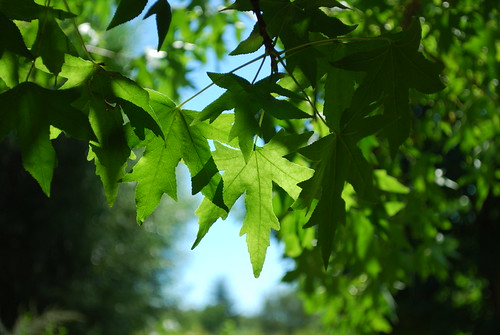
sunlit leaves

sunlit leaves

I love the sight of sunlight through leaves.

Look at these three photos. I think they illustrate a really important lesson for all of us. They illustrate the paradox of difference and sameness. If you’re a botanist, you might look at these three photos and seek to classify them as three different trees. What “families” do they belong to? What are their “names”? But if you just look, you’ll see that whilst each tree has its own characteristics, each leaf is different.

We’re all different too. I think that’s something to celebrate. I despair at the kind of thinking which stops at the level of classification into types, diagnoses, statistics. We need to be able to think beyond that, to see beyond that, to be curious about, fascinated by difference, and to love uniqueness.

Read Full Post »

The Other, by Ryszard Kapuciski (ISBN 978-1844674169) is a beautiful, thought provoking little book.

Here are a few quotes to whet your appetite.

[Herodotus] understood that to know ourselves we have to know others, who act as the mirror in which we see ourselves reflected; he knew that to understand ourselves better we have to understand others, to compare ourselves with them, to measure ourselves against them.

Xenophobia, Herodotus implied, is a sickness of people who are scared suffering an inferiority complex terrified at the prospect of seeing themselves in the mirror of the culture of others.

Conquer, colonise, master, make dependent – this reaction to others recurs constantly throughout the history of the world. The idea of equality with the other only occurs to the human mind very late on, many thousands of years after man first left traces of his presence on Earth.

All this seems increasingly relevant in the growing xenophobia around the world. Yesterday I read Rachida Dati’s impassioned plea, in Le Monde, to stop setting French people against each other.

Cessons donc d’opposer les Français les uns aux autres, au profit d’un meilleur vivre ensemble !

Today, I read in the Guardian, Mya Guarnieri’s piece about islamophobia, where she talks about her feelings and memories aroused by the newspiece about a pastor from her hometown of Gainsesville, Florida, who is intending to burn copies of the Qur’an to commemorate September 9th.

When I was a child, some of my evangelical Christian classmates urged me to convert. Because I was Jewish and didn’t accept Jesus Christ as my personal lord and saviour, they told me, I was going to hell…….In the past, there was antisemitism, roiling just below the surface. Now, there is Islamophobia. If Terry Jones burns copies of the Qur’an in Gainesville, he’ll leave a shameful scorch on us all.

We definitely need a more positive attitude to the Other – to whoever is different from us.

Read Full Post »

« Newer Posts - Older Posts »