Feeds:
Posts
Comments

Archive for the ‘health’ Category

Moonlight on water

I was struck today by this paragraph about Romanticism in Iain McGilchrist’s Master and His Emissary –

Romanticism in fact demonstrates, in a multitude of ways, its affinity for everything we know from the neuropsychological literature about the workings of the right hemisphere. This can be seen in its preferences for the individual over the general, for what is unique over what is typical, for apprehension of the ‘thisness’ of things – their particular way of being as ultima realitas entis, the final form of the thing exactly as it, and only it, is, or can be – over the emphasis on the ‘whatness’ of things; in its appreciation of the whole, as something different from the aggregate of the parts into which the left hemisphere analyses it in self-conscious awareness; in its preference for metaphor over simile, and for what is indirectly expressed over the literal; in its emphasis on the body and the senses; in its emphasis on the personal rather than the impersonal; in its passion for whatever is seen to be living; and its perception of the relation between what Wordsworth called ‘the life of the mind’ and the realm of the divine; in its accent on involvement rather than disinterested impartiality; in its preference for the betweenness which is felt across a three-dimensional world, rather than for a seeing what is distant as alien, lying in another plane; in its affinity for melancholy and sadness, rather than for optimism and cheerfulness; and in its attraction to whatever is provisional, uncertain, changing, evolving, partly hidden, obscure, dark, implicit and essentially unknowable in preference to what is final, certain, fixed, evolved, evident, clear, light and known.

Well, well….for those of you who are already familiar with Iain McGilchrist’s hypothesis about the differences between the left hemisphere and right hemisphere ways of approaching the world, I’m sure you’ll agree this is a terrific, comprehensive summary. He, of course, is at pains to point out, time and again, that he is not saying that the left approach is bad and the right is good, or vice versa…….that we need BOTH, and that we need to integrate the functions of the two hemispheres, not allow the left to dominate the right.

But take your time, and read through that paragraph carefully. He is highlighting what is consistent in the values of Romanticism with the tendencies, or preferences of the right hemisphere of the brain. 

I enjoy what the left hemisphere does for me, but I resonate SO strongly with ALL of these “right hemispheric” qualities he describes so beautifully in this paragraph. It captures my fascination for the personal, the particular, the transient, for “becoming not being…..”

Read Full Post »

It’s becoming increasingly clear that bacteria and human beings interact in profound and complex ways. I wrote recently about the way bacteria in our guts might affect our food choices and behaviour. Well, here’s an interesting study looking at the antidepressant effect of mycobacteria vaccae which are found in the soil.

Antidepressant microbes in soil cause cytokine levels to rise, which results in the production of higher levels of serotonin. The bacterium was tested both by injection and ingestion on rats and the results were increased cognitive ability, lower stress and better concentration to tasks than a control group. Gardeners inhale the bacteria, have topical contact with it and get it into their bloodstreams when there is a cut or other pathway for infection. The natural effects of the soil bacteria antidepressant can be felt for up to 3 weeks if the experiments with rats are any indication.


Read Full Post »

Bay of Biscay

I did a search the other day to see if I could find the origin of the French phrase “l’émerveillement du quotidien” (the amazing everyday) because its a concept which I’ve taken to heart so passionately that if anyone asks me for advice about how to live a good life, how to be happy and healthy, I’ll pretty much always begin by saying they should approach every single day with an attitude of wonder and joy – “l’émerveillement du quotidien” (one good way to do that is to use the “first and last” method)

Well, I haven’t managed to track down the origins yet, but if you put the phrase into a google image search, guess what? MANY of the photos which come are mine!

So, whatever the origins, I guess I’m one of the world’s leading protagonists of “l’émerveillement du quotidien”!

This photo is one I took while on holiday on the West coast of France – it’s a great example of how amazing an everyday view of the sea is. Look at the range of colours! It’s gorgeous, and remarkable!

Read Full Post »

“Everybody needs beauty as well as bread, places to play in and pray in where nature may heal and cheer and give strength to the body and soul.” – John Muir

Just as we are constantly influenced by what’s inside us, so we are constantly influenced by what’s around us.

One of those influences is beauty.


Bay of Biscay

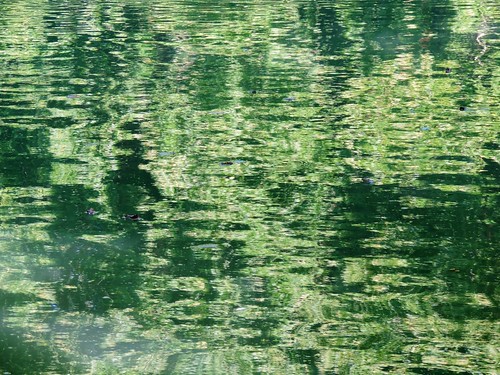
Monet like reflections

Moonrise over the Atlantic

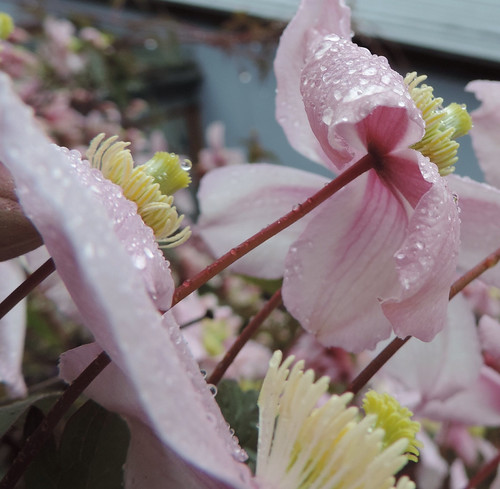
Clematis

spiral

restaurant

A recent article in The Atlantic looks at the influence of beauty on happiness.

Beauty tends to feel like something that must be found in special places—parks and museums, galleries and exotic cities. Lunch is not a place one would normally think to look. But finding beauty in normal activities can bring deep happiness to life, studies show.

“In a paper titled, “Untangling What Makes Cities Livable: Happiness in Five Cities,” Abraham Goldberg, a professor at University of South Carolina Upstate, and his team conducted a statistical analysis of happiness in New York City, London, Paris, Toronto, and Berlin.”

In addition to the usual “Big Seven” influences (wealth, family relationships, career, friends, health, freedom, and personal values), Goldberg found that what makes people happiest is the beauty around them.

It seems part of humans’ appreciation of beauty is because it is able to conjure the feelings we tend to associate with happiness: calmness, a connection to history or the divine, wealth, time for reflection and appreciation, and, perhaps surprisingly, hope.

Beauty, famously, is “in the eye of the beholder” and maybe some of the images I’ve included here are not what you might find beautiful (but I do!), but what interested me about this article was not just that beauty can be found in big works eg architecture, great paintings etc, but also in everyday small objects and scenes.

I also especially liked the quotations towards the end which highlight a very interesting aspect of beauty – it’s connection to anticipation, or hope…..

“So long as we find anything beautiful, we feel that we have not yet exhausted what [life] has to offer,” writes Nehamas. “That forward-looking element is … inseparable from the judgment of beauty.”………… As the 18th-century French writer Stendhal wrote, “Beauty is the promise of happiness.”


Read Full Post »

Here’s an interesting recent research study looking at how the micro-organisms which live in our bodies might influence our behaviour. The researchers

concluded from a review of the recent scientific literature that microbes influence human eating behavior and dietary choices to favor consumption of the particular nutrients they grow best on, rather than simply passively living off whatever nutrients we choose to send their way.

It seems that different organisms have different nutrient needs and that are able to send signals which will increase the chance of them getting what they want. Amazing, huh? The communication seems to be two way, because its also been found that changing your diet changes the “flora” (that’s the community of micro-organisms in your gut) within 24 hours.

Some of the signals apparently go through part of the autonomic nervous system.

“Microbes have the capacity to manipulate behavior and mood through altering the neural signals in the vagus nerve, changing taste receptors, producing toxins to make us feel bad, and releasing chemical rewards to make us feel good,” said Aktipis, who is currently in the Arizona State University Department of Psychology.

Given that there are about 100 micro-organisms to every human cell in the human body, the concept that each of us is a living community of highly diverse cells is a strong one. There must be an immense amount of inter-cellular communication going on that we totally unaware of as we live our lives.

Makes you wonder, doesn’t it? Gives “acting on your gut feelings” a whole other dimension!

Read Full Post »

rock weathering

sparkling water

stained glass light

tree ripples

It seems the way are brains are made we are predisposed to notice patterns.

The scientific method is based on noticing patterns, describing them, and, in particular spotting patterns which repeat. Patterns which repeat give us the ability to predict – not just what might happen next, but what might happen if we take a particular action. In other words we can use what we learn from pattern spotting to manipulate objects. But there are no patterns which ALWAYS repeat and none apply in ALL contexts of time and place. The danger of pattern spotting is to generalise and turn repeating patterns into “laws” or “rules”.

Science can easily go wrong when it hardens into arrogance…….the arrogance which often arises out of conviction.

A good doctor recognises a pattern of symptoms and signs, makes a diagnosis, takes an action known to be likely to produce a particular desired outcome, but retains their awareness and curiosity to seek new patterns, to reconsider their assessment of the patterns and tries different actions when the first one fails to achieve what the doctor was trying to achieve.

After all, even weather patterns are unpredictable…..


barometer

Read Full Post »

Sometimes reading a book creates a feeling of slipping into another world. Page turners do what they say on the tin and the way they are written makes it difficult to put them down, but they don’t always create a world to immerse yourself in. This week I read Alan Spence’s Night Boat and, for me, it is one of those books which creates a whole world to live in for a wee while. In fact, I think the particular feel of the Night Boat reminded me of the feeling I had at least 40 years ago when reading Kazuo Ishiguro’s Artist of a Floating World (I’ll need to go back and read it again and see if it does the same thing for me)

I’ve always had, and still have, a bit of a complex relationship with Zen – partly I feel incredibly drawn to it, and partly I feel it’s just not for me. Reading the Night Boat pulled me right into that complexity. Over all this isn’t just a novel, it’s an experience.

As a story, this is a fictionalised autobiography of the life of one of the great Zen teachers – Ekaku Hakuin.

I didn’t know the story of Ekaku Hakuin but I’d certainly heard the koan about the sound of one hand clapping and koans, those provocative conundrums of Zen teaching, are a core element of his story. There are also several haikus and poems which I think were written by Alan Spence, but maybe some of them are translations of Hakuin’s poetry?

At one point Hakuin talks about “Zen sickness” which is an illness experienced by many of the monks following the Zen path to Enlightenment. Here’s what he says –

Many years ago, I said, I met an old sage who cured my Zen sickness.
How did he do that?
Like with like, I said.
Hair of the dog. The cause of the sickness is also its cure. Zazen made you sick, zazen will cure you. 

Hmmm…..interesting! There’s a concept worth exploring!

One of the classic translations of Hakuin’s work is by Philip Yampolsky (“The Zen Master Hakuin. Selected Writings”) and early in that text he says this about doctors –

The inspired doctors of old effected cures even before a disease made its appearance and enabled people to control the mind and nurture the energy. Quack doctors work in just the opposite way. After the disease has appeared they attempt to cure it with acupuncture, moxa treatment, and pills, with the result that many of their patients are lost.

Hakuin lived in Japan between 1686 and 1768. Yet this idea of what made a good doctor is still something we are a long way from realising. His idea of the “inspired doctor” sounds to me like someone who helped people to be healthy rather than someone who tried to control disease. In fact he calls the doctors who used the various therapies available to “attempt to cure” disease “quack doctors”.

I’m also struck by his emphasis on “[enabling] people to control the mind and nurture the energy”. How much does the practice of Medicine these days “enable people to control the mind and nurture the energy”? Don’t you think we could do with a bit more of that?


Read Full Post »

DSCN2119

Breathing is something we do automatically. We don’t have to remember to breathe out every time we breathe in. But we can deliberately influence our breathing rhythms, choosing now to inhale, now to exhale.

When we exhale, we stimulate the parasympathetic autonomic nervous system, and one of the things that does is calm us down. The parasympathetic nervous system slows the heart, and is a very deep, very basic part of our survival behaviour. You’ll be familiar with “fight or flight”? That’s the sympathetic nervous system at work – preparing us to hit or run when under threat. We feel pretty “wired” when the sympathetic nervous system kicks in – heart racing, fast breathing, adrenaline pumping. The parasympathetic nervous system has a complementary function – it is part of what creates a “rest and digest” response.

When we exhale, we stimulate this system and induce the “rest and digest” response.

Do it now.

Fill your lungs, then slowly, slowly, breathe out, taking your time to completely empty your lungs. Now do it another couple of times. Just three exhalations like this will stimulate your “rest and digest” response.

One of the things I love to when I am beside the sea is to breathe in time with the breaking waves on the sand. It seems to me that every rush of the surf up the beach is like the ocean breathing out. It’s the sea exhaling. Sometimes that rhythm is even and calming and tuning in your breath to the ocean by timing your exhaling to match the exhaling of the sea can not only induce the “rest and digest” response, but creates a deep sense of being at One with the Earth.


Read Full Post »

A recent study from the US has found that most people rate the doctor’s personality and the quality of their relationship with him or her as most important when choosing a doctor.

when asked what they thought was the most important factor in a “high quality doctor,” most people cited factors related to the doctor’s personality and the quality of the doctor-patient relationship, such as whether a doctor is attentive or caring or has a good bedside manner

Does this surprise you?

It doesn’t surprise me.

I think far too little weight is given to the human factors in health care – who the person is – both the individual, unique patient, and the individual, unique doctor.

Not only is every human being unique, but every relationship is unique and I learned early in my career that each partner in a GP Practice would attract a distinct cohort of patients. In fact, we noted that we could all tell exactly who was on holiday from the particular patients who came to see us in our colleague’s absence. There just is no such thing as any one doctor being the “best” doctor for every single patient.

Whilst the statistics-fanatics seem to prefer numbers and think numbers can be applied across the board as if human uniqueness didn’t exist, in the real world, human beings make choices in human ways (not computer/robot ways)

When it comes to competences, then all doctors should do their best to develop their skills and their knowledge continuously. That’s what good, reflective practice is about. Personalised feedback would certainly be useful, but reporting should be done according to the priorities which patients AND colleagues set – and that would include the relationship skills as well as competences in techniques.

Read Full Post »

There’s a classical teaching about living life to the full which says to embrace each experience as if it is the very first time you are having this experience (which is true…..every experience you have today is for the first time). This is quite like the mindfulness or awareness teachings which tell us to be fully present, as fully aware as possible, as much as we can. This, in fact, is the essence of “heroes not zombies” – it’s about waking up, living consciously and not on autopilot all the time.

There’s another teaching which says to embrace each experience as if it is the very last time you will be having this experience (which is also true……you will never have exactly the experiences you have today ever again).

I find both these teachings come to mind as the sun rises and the sun sets (or Earth Falls and Earth Risings?). Have you ever seen the movie, “City of Angels”? (an American re-make of Wim Wenders, “Wings of Desire”) There are beautiful scenes there where the angels all gather on the beach each morning to experience the sunrise. To be quite honest, I’m not out and about experiencing sunrises all that often, but the other end of the day, sunset, is an equally entrancing event.

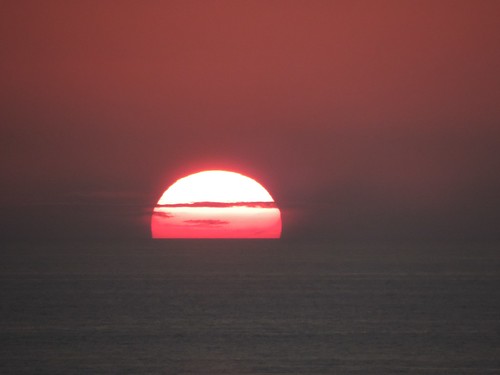
If you are ever somewhere where you have an unobstructed view of the sun setting, you’ll likely see that you aren’t experiencing the sunset alone. I was lucky the other day to watch some spectacular sunsets from Biarritz, watching the sun sinking below the horizon of the Atlantic Ocean (and, no, I didn’t see any green rays)

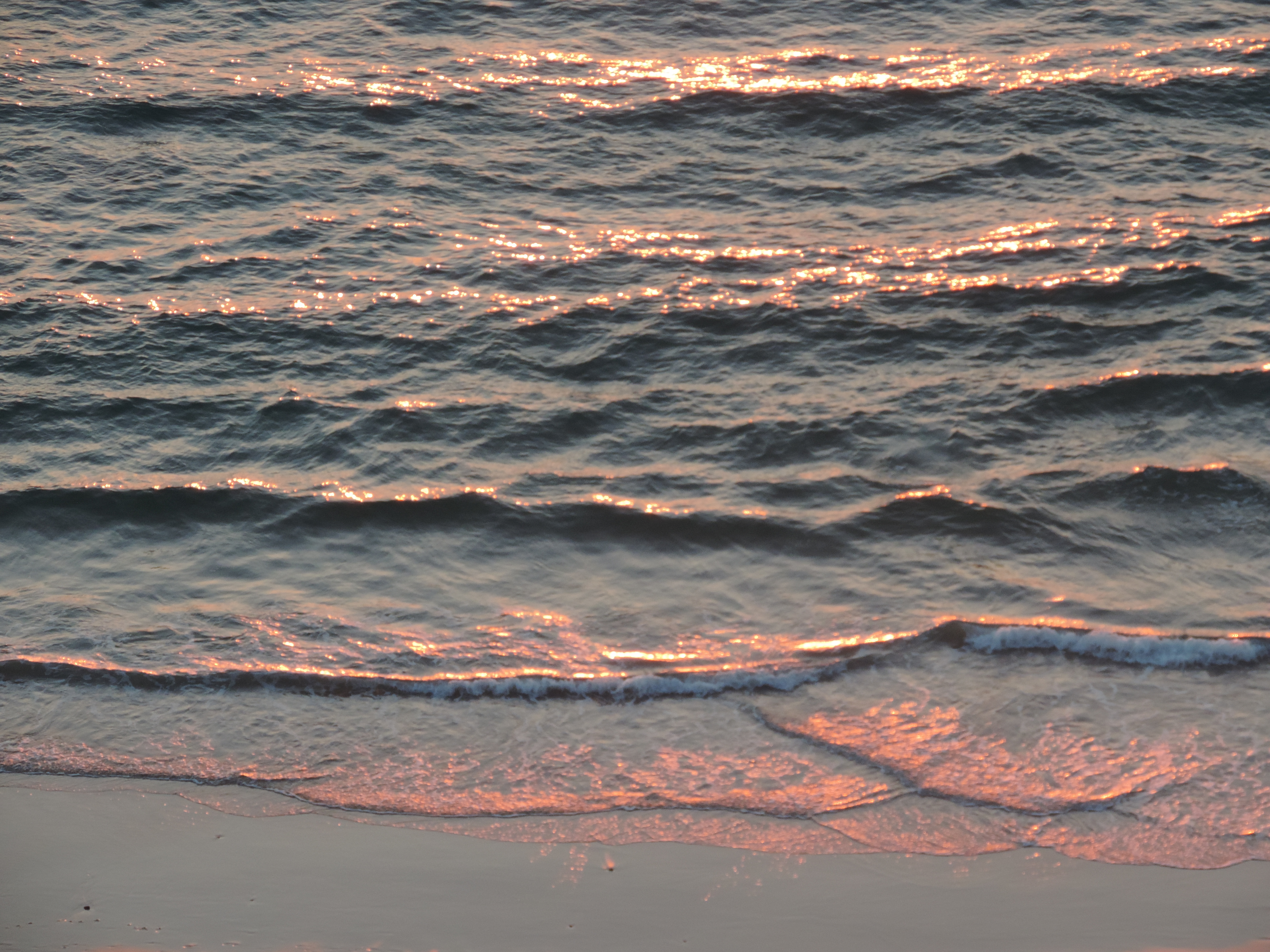
The play of the light on the waves and the wet sand were amazing…..


Sun set light on surf

Low sun on sand

Sunset Biarritz

Setting sun up close


Live life fully today – living every single experience for the first time and the last time.

Read Full Post »

« Newer Posts - Older Posts »