Feeds:
Posts
Comments

Archive for the ‘health’ Category

Breakfast

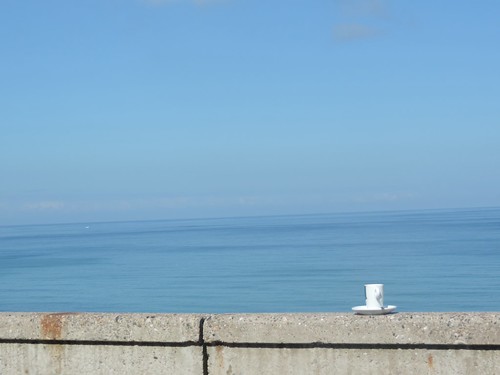
I’m sure we all fall into routines or habits quite easily. As I was having breakfast yesterday here in Biarritz (on holiday!) I got to thinking about how our start to the day influences our experience of the whole day.

I imagine that starting the day with an expresso and a croissant taking in a view like this might set up a good experience for quite a long time!

But I wonder what our routine morning starts set up?

Do you start the day in a rush?

Do you start slowly?

Do you have breakfast or grab something on the run? Or do you meet up with friends or colleagues in the same cafe each day?

Do you watch, listen to, or read the news, and fill your mind with stories of deaths, disasters and crimes?

Do you start with meditation, or exercise, or reading (and if so, what do like to read first thing?)

However you start your day, why not try changing something…..and see how that feels?

Read Full Post »

Rockecology

This little rock easily fitted into the palm of my hand but look at it! The rock itself has many layers of different colour and probably of different elements, then on top, there is layer after layer of different types of lichen and sea plants. It wouldn’t surprise me if there were little creatures living in there too, at least at one time, if not now.

I enjoyed looking at it, turning it this way and that, wondering about the incredible diversity I could see, and how all the elements of this little ecosystem might have interacted over the weeks, months and years gone by.

In some ways this is what our stories must look like, as we interact with others, live with others, and are changed by the events which occur in our lives.

If there is this degree of complexity in one little rock ecosystem, then the complex uniqueness of an individual life must be astonishing.

So why do we treat people as if they are not unique?

Why do we think we can isolate just one aspect of a complex life and influence that exclusively, and predictably?

That doesn’t make sense to me.

Read Full Post »

There are something like 100 billion neurons in your brain – a literally mind boggling figure.  Are you really able to imagine what a 100 billion of anything looks like?

As if that weren’t challenging enough, each neuron has up to 50,000 connections with other neurons, and each connection (a synapse) is an electro-chemical switch of a sort – passing information and energy across the gap between two neurons. This makes the total number of states of the brain (number of “on” or “off” neurons) a figure which is……well, unimaginably huge!

I was taught at university that a synapse was a pretty simple connection between two cells where on neuron released a chemical, which then crossed the gap and stimulated the next neuron. This, of course, is a huge oversimplification.

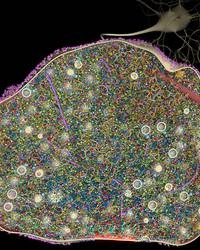
Researchers have recently managed to describe a single synapse much more accurately.

0f9996a3aecb308bd7182564925c857c


The researchers say


The new model shows, for the first time, that widely different numbers of proteins are needed for the different processes occurring in the synapse,” says Dr. Benjamin G. Wilhelm, first author of the publication. The new findings reveal: proteins involved in the release of messenger substances (neurotransmitters) from so called synaptic vesicles are present in up to 26,000 copies per synapse. Proteins involved in the opposite process, the recycling of synaptic vesicles, on the other hand, are present in only 1,000-4,000 copies per synapse. The most important insight the new model reveals, is however that the copy numbers of proteins involved in the same process scale to an astonishingly high degree. The building blocks of the cell are tightly coordinated to fit together in number, comparable to a highly efficient machinery. This is a very surprising finding and it remains entirely unclear how the cell manages to coordinate the copy numbers of proteins involved in the same process so closely.

It’s not just the numbers which are astonishing, its the complexity, and that last sentence particularly struck me – “it remains entirely unclear how the cell manages to coordinate the copy numbers of proteins involved in the same process so closely”

Just how much DO we know about how the human body works? How much DO we know about how it evolves to this level of complexity, both through an individual lifetime from the fertilisation of a single egg cell to a fully grown human being, and throughout history from single celled life forms to the multi celled human beings?

Humility. That’s what we need as scientists. Humility. Our ability to discover and understand is astonishing, but so far pales in comparison with the complexity of a single human being.

I’m amazed.

Read Full Post »

NHSCIC garden

Henning Mankell, who you might have heard of as the author of the “Wallander” books, has been diagnosed with cancer and has written a series of articles about his experience of the diagnosis and the treatment.

That same evening my wife, Eva, told me about something she had heard on the radio. A doctor had been talking about the art of medical treatment. “Nobody talks about ‘the art of medical treatment’ nowadays,” she said. “But that’s what it all boils down to, even so.” She is right, of course. When you have lived for almost 70 years, as I have, you have quite a wide experience of doctors met over the years. Doctors in different situations, in different countries. I don’t think I’ve ever come across an absolute dud, somebody I’ve run a mile to get away from. Obviously, some have been more capable than others; some have been impatient or preoccupied; others have seemed to have unlimited time available. But the doctors I remember most clearly are those who have displayed what can be described, certainly by me, as the innermost subtleties of the art of medical treatment. Alleviation, consolation, perhaps even cure, always involves a dialogue in which the patient and doctor learn how to talk to one another, and if possible create a continuity. Medication and other treatments are never enough in themselves. If the patient doesn’t understand what the doctor is saying, or if the doctor is unwilling or unable to interpret the questions and worries of the patient, the dialogue that is at the very heart of medical treatment will never materialise.

So, what is this? This art of medical treatment? There are some clues in Henning’s words – a dialogue; continuity; the creation of a relationship; the need to understand each other; opening a space to allow the patient’s questions and worries to be expressed and the ability to interpret them.

Why use the term “art”? Well, it’s partly to differentiate this aspect of medical practice from the science which is also required, and partly to refer to the craft, or skill, of the therapeutic relationship. These are people skills, communication skills which require non-judgemental, empathic listening. But I think the “art of medical treatment” is even more than that. It invokes a consideration of what medical treatment is.

What is the purpose of medical treatment? What is a doctor seeking to do with each and every consultation? Surely, it’s an attempt to assist a person to a better life. It’s not just about prescribing, or surgical interventions…..as Henning says “Medication and other treatments are never enough in themselves” – not that treatments are unnecessary – they just aren’t enough.

I feel the same way about diagnosis. It’s one thing to diagnose a disease, but it’s quite another thing to understand a person and their illness. We need our scientific knowledge to diagnose diseases, but we need our art of medical treatment to understand a person and their illness.

I’m struck by the relevance of Henning Mankell’s reflections for me at this point, as I reflect on my medical career, and am blessed to have patients share with me just what it is that they valued about their care over the years – you can read about that here. To summarise, it seems to me, they are telling me what they valued was my “art of medical treatment”.


The wicker basket

Read Full Post »

DSCN1247

“Evidence Based Medicine” is a movement in crisis according to a recent BMJ article by doctors who want to improve it. Many of the responses to the article call for better statistics, more effectively communicated, and one in particular makes a plea for less but better protocols. One doctor talks about a friend who worked as a sailor in command of a nuclear submarine. He said the crew had to learn and consistently apply a small number of protocols and suggests that doctors should do the same.

There is a confusion at the heart of this comment, and in some of the assumptions behind statistics based medicine.

The confusion is that human beings are just complicated machines.

One way to clear up some of this confusion is to think about the differences between the terms complicated and complex.

Machines can be complicated. Technology can be complicated. Anything which is made up of many, many parts which are connected up can be complicated.

So, aren’t human beings complicated then? Aren’t human beings made up of many, many parts which are connected up?

Yes.

Any living organism has many, many parts which are connected up, but there’s a difference.

Living organisms are complex adaptive systems.

Complex adaptive systems have certain characteristics we don’t see in machines not matter how complicated they are. Here are four of them (there are more!)

  1. Non-linear connections
  2. Emergence
  3. Co-evolution
  4. Autopoeisis

Non-linear connections

You’ll have heard of the butterfly effect? Where a butterfly flapping its wings in the Amazon can cause a hurricane in another part of the world? What that illustration tells us is that very small changes in the starting condition of a system can cascade to rapidly produce very large changes in the outcome. This is the nature of most of the connections in living organisms

Emergence

Complex adaptive systems continuously behave in unpredictable, novel ways. Emergence is a term from biology which describes novel behaviours which could not have been predicted from an examination of the previous state.

Co-evolution

All living organisms exist within specific environments and because they are “open” ie constantly exchanging materials and energy with their environment, both the organism and the environment are constantly influencing each other, constantly responding to each other, and, in fact, even affecting each others evolution. You cannot fully understand a living organism by isolating it from the environment in which it exists.

Autopoesis

This is a term which means “self making capacity”. Not only can living organisms repair themselves, but they can grow, mature, develop and even replicate themselves.

Yes, all that is pretty complicated. But not in the same way a nuclear submarine is complicated. Advanced technologies might seem as if they are alive, but they aren’t.

If we forget this, we try to engage with living organisms as if they are just complicated machines which can be broken down into separate measurable parts, each of which can be managed by the application of protocols.

Living organisms need to be understood as complex, not complicated.

DSCN0930

Read Full Post »

As I am about to enter my last week of 36 years of clinical practice, it’s probably inevitable that I find myself reflecting a bit.

Hilltop reflection

One of the things I’ve been thinking about is what good I might have done as a doctor, and, for me, I don’t think of that in terms of “outcomes”. What I’ve been thinking about instead is what did patients find valuable about their contact with me? The answer to that question has been made clear by the letters, cards and verbal feedback I’ve been receiving over these last few weeks.

There are certain themes which recur again and again amongst the thanks and good wishes people have expressed. Five of the main themes are in those verbs in the title of this post.

december gratitude

Listening. This is what is mentioned more than anything else. I’m not at all surprised by that. I just love listening to people’s stories. Endlessly fascinating and always unique. I don’t really see how any doctor can practice good medicine without being an attentive, non-judgmental, active listener.

Understanding. I think its important not just that I understand a patient, but that in the process of the consultation, they not only feel understood, but they come to understand themselves better. Making a diagnosis is a form of understanding. Diagnosing a particular disease process is a useful part of understanding…..but it’s only a start. As Osler said

The good physician treats the disease; the great physician treats the patient who has the disease.

Supporting. Many patients thank me for my support. That support isn’t just compassionate emotional support, but it involves supporting people in their choices and decisions, and supporting the natural capacity for self-healing which every human has.

Advising. I don’t think patients come to see doctors just to be listened to, understood and supported. They come for advice. Advice in the form of information, diagnosis, help in making choices, and in the form of therapies. All therapies are, in one sense, a form of advice. If I prescribe a treatment, that treatment takes some information and energy into the person’s body, and their adaptive system responds….it changes the inner state.

Inspiring. This is the word which pleases me most, and which is most repeated by patients, colleagues and students. I just love that people feel inspired by me, and I hope that, through my writing and photography that I inspire many more people in the years ahead.

A few years back I wrote a post listing the three verbs based on light which I thought were at the core of my values – lighten, brighten and enlighten………still relevant now.

Read Full Post »

Rising demand on “health services”, year by year increases in prescribing and steadily increasing numbers of people with chronic conditions, indicates we are not delivering a sustainable form of health care.

One other indicator of that is the number of doctors taking early retirement, and now, figures showing drops in GP numbers.

The government is facing a GP recruitment crisis with new figures showing a fall in the number of family doctors since the coalition came to power amid warnings that the take-up of training places is the worst since 2007. Official data analysed by the House of Commons Library shows that at a time of ever increasing demand for their services, the number of GPs has dropped by 356 compared with its level in 2009/10. The proportion of family doctors serving every 100,000 people has also dropped, from 70 in 2009/10 to 66.5 now. At the same time, GP leaders have raised serious concerns about what they say are the “worst ever” figures on GP training, with the take-up of places having fallen to 62% of those available in the East Midlands and little over 70% in large parts of the north of England.

I don’t think its only the system of health care which is unsustainable…..Picketty’s economic analysis shows us we don’t have a sustainable global economy either. (And still we hear politicians in countries across the world claim that “growth” is the answer – but growth of what, and how do we get sustainable growth in a finite planet?)

Read Full Post »

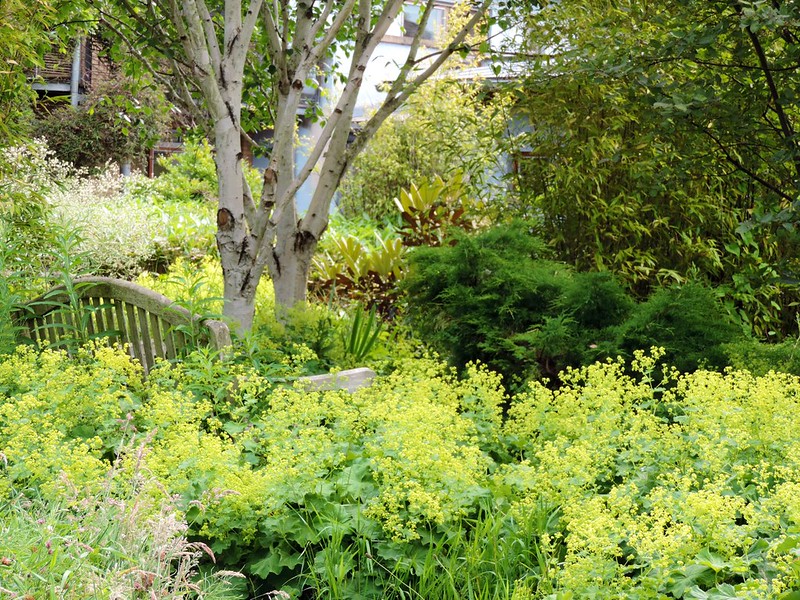
A seat in the garden

I took this photo the other day in the garden at the Centre for Integrative Care. It provokes certain thoughts for me, because in this view I see an abundance, a flourishing, a diversity of green Life and I see a place to facilitate its full enjoyment, a place to pause, to slow down, to be present.

So, here’s what I’m thinking today……Life is for living, and that living has at least two important aspects – the full enjoyment of Life, and the creation of uniqueness.

Whatever other reasons we might find for being here, we all, moment by moment, have the opportunity to fully enjoy this Life – that captures for me the sense of émerveillement du quotidien which I often to refer to, that sense of wonder, of seeing and experiencing everything as if for the first time and for the last time. It captures the teaching about slowness, of mindfulness and of being present in the NOW.

If there is one quality of Life I’d focus on it’s change. Change is constant. Nothing, but nothing, stays the same. Life is a continuously unfolding, creative, emergent process. We are creative creatures. We create our perception of reality. We c0-create our daily experiences with others, and with the world in which we are alive.

So, when I look at this photo I see these two phenomena – a full enjoyment of the flourishing diversity of Life, and the creative expression of the Universe.


Read Full Post »

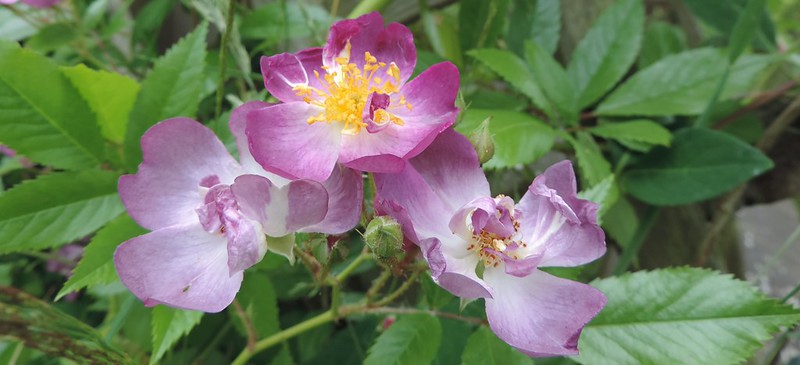
Wild rose

This is a photo of a wild rose (or, in this case, I believe, the “dog rose”)……one of my most favourite flowers.

Traditionally this flower is a birth month flower for those born in June – that’s me. And symbolically the rose is a flower of love, ideal love, and passion. For the homeopaths amongst you, Jan Scholten places the Dog Rose at Stage 10 in the Rosaceae family.

The rose in this photo lives in the garden at the NHS Centre for Integrative Care, where I’ve worked for many years…..(only another few days now, last day at work there will be July 4th – “Independence Day”).

I like that there is a rose in the garden there which will always connect me to that place and all the people there who make it such a special place.

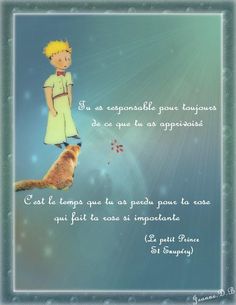
I love the story of the rose in “The Little Prince”…..

c39828f1cd0bd47793250773344d123e

“It’s the time you have spent with your rose which makes it so important.”


And I also like Saint Exupery’s insistence on the uniqueness of each rose…..

556fff4c58fd69cc9a642c2ffcb9c4b4

Let’s not forget the uniqueness of each and every flower, each and every person, each and every moment.

I also like that in this photo I have a “Wild Rose” which echoes so nicely with the Mary Oliver poem I read at our farewell retirement celebration last Friday – “Summer Day” – especially her closing lines……

Tell me, what is it you plan to do
with your one wild and precious life?


Read Full Post »

I think there are many problems with what is known as “Evidence Based Medicine” (not least being the influence of vested interests such as Pharmaceutical companies on the production of “evidence”), and there is an interesting consideration of some of the issues in the BMJ. The paragraph on patients with multi-morbidity ie patients who are suffering from more than one chronic ailment at the same time caught my attention.

as the population ages and the prevalence of chronic degenerative diseases increases, the patient with a single condition that maps unproblematically to a single evidence based guideline is becoming a rarity. Even when primary studies were designed to include participants with multiple conditions, applying their findings to patients with particular comorbidities remains problematic. Multimorbidity (a single condition only in name) affects every person differently and seems to defy efforts to produce or apply objective scores, metrics, interventions, or guidelines.

Both the first and the last sentences of that paragraph really strike me.

“the patient with a single condition that maps unproblematically to a single evidence based guideline is becoming a rarity” – really? Who actually “maps unproblematically” to a guideline? No wonder they say it is becoming a rarity. Was it ever not so? Every single human being is unique. Each one of us has a unique genetic code, is born in a particular place at a particular time and lives a unique life, full of specific life events, challenges, difficulties, opportunities. Each of us tells an utterly unique life story when we sit with a doctor. That story is influenced by the past which is still active within us, and by our values, beliefs, preferences, our sensitivities, our coping strategies and our personal priorities. Biologically each of us is an open, dynamic system. We are continuously being influenced by, and are influencing, the environments in which we live. We never stay the same. At each stage of life we have different bodies and different minds from what we had before and we live in a world which previously never existed. If you’ve ever sat in a consulting room day after day, with patient after patient, you’d know that mapping individuals unproblematically onto guidelines is a fantasy.

“Multimorbidity (a single condition only in name) affects every person differently and seems to defy efforts to produce or apply objective scores, metrics, interventions, or guidelines” Even the most diehard statistics fans know this one. The more conditions a person has, the more difficult it is to predict how things are going to go, which treatments are going to work well for them, and which are going to do them harm. It’s worth remembering that there is no evidence for polypharmacy. Anywhere. The truth is individuals are so unique that even those with a single diagnosis will not experience the same course of the disease, will not get the same results from the same treatments, and will not experience the same particular side-effects or harms. The problems which are highlighted in the situation of multimorbidity still exist in situations where a single disease has been diagnosed. The problems multiply for sure, but there isn’t a situation where they don’t exist.

Sometimes I think there is only one “best” evidence base when treating a person, and that is the ongoing, careful, humble, consideration and understanding of what this person is experiencing. Whatever treatment is given, only this patient’s unique experience is the final arbiter of its usefulness. Not some statistics-oriented guideline produced by a non-clinician who will never have any interaction with this patient.


Read Full Post »

« Newer Posts - Older Posts »