Feeds:
Posts
Comments

Archive for the ‘life’ Category

The A to Z of Becoming has been very popular over the last 26 Sundays (if you want to see any of the posts, search “a to z” using the search box on this blog homepage). A number of readers have asked me what will happen now that last Sunday was “z for zigzag”. The answer is Part 2 starts today.

Ready for another 26 verbs?

Well, let’s start again with A. This time, A is for Amaze.

The French concept of émerveillement is a core value for me in daily life, and one of the connotations of that word is amazement. So the verb for this week is “amaze”.

We can think of this from two different perspectives –

  1. what amazes you?
  2. what do you do to amaze someone else?

Here’s one of the many things which amazes me, and I hope it will amaze you too…..

pre-history

These are impressions left in the rocks by prehistoric people who were probably amongst the first inhabitants of Scotland. Look what happens when we flip this image up the other way

stand out


So, this amazes me in two ways.

First it I find these marks and indentations quite astonishing. To think how many thousands of years have passed since someone made them. And how did they make them? And why did they make them?

Second, I noticed that looking at these rain-filled indentations from one side of the rock made the water look concave, but from the other, they look convex. Luckily, I could capture that with my camera.

Isn’t that amazing?

It sure amazes me!

So, why not think about amazement this week and be prepared to both be amazed, and to amaze!

Read Full Post »

wide open

That’s what the world is like…..wide open.

Read Full Post »

DSCN1247

“Evidence Based Medicine” is a movement in crisis according to a recent BMJ article by doctors who want to improve it. Many of the responses to the article call for better statistics, more effectively communicated, and one in particular makes a plea for less but better protocols. One doctor talks about a friend who worked as a sailor in command of a nuclear submarine. He said the crew had to learn and consistently apply a small number of protocols and suggests that doctors should do the same.

There is a confusion at the heart of this comment, and in some of the assumptions behind statistics based medicine.

The confusion is that human beings are just complicated machines.

One way to clear up some of this confusion is to think about the differences between the terms complicated and complex.

Machines can be complicated. Technology can be complicated. Anything which is made up of many, many parts which are connected up can be complicated.

So, aren’t human beings complicated then? Aren’t human beings made up of many, many parts which are connected up?

Yes.

Any living organism has many, many parts which are connected up, but there’s a difference.

Living organisms are complex adaptive systems.

Complex adaptive systems have certain characteristics we don’t see in machines not matter how complicated they are. Here are four of them (there are more!)

  1. Non-linear connections
  2. Emergence
  3. Co-evolution
  4. Autopoeisis

Non-linear connections

You’ll have heard of the butterfly effect? Where a butterfly flapping its wings in the Amazon can cause a hurricane in another part of the world? What that illustration tells us is that very small changes in the starting condition of a system can cascade to rapidly produce very large changes in the outcome. This is the nature of most of the connections in living organisms

Emergence

Complex adaptive systems continuously behave in unpredictable, novel ways. Emergence is a term from biology which describes novel behaviours which could not have been predicted from an examination of the previous state.

Co-evolution

All living organisms exist within specific environments and because they are “open” ie constantly exchanging materials and energy with their environment, both the organism and the environment are constantly influencing each other, constantly responding to each other, and, in fact, even affecting each others evolution. You cannot fully understand a living organism by isolating it from the environment in which it exists.

Autopoesis

This is a term which means “self making capacity”. Not only can living organisms repair themselves, but they can grow, mature, develop and even replicate themselves.

Yes, all that is pretty complicated. But not in the same way a nuclear submarine is complicated. Advanced technologies might seem as if they are alive, but they aren’t.

If we forget this, we try to engage with living organisms as if they are just complicated machines which can be broken down into separate measurable parts, each of which can be managed by the application of protocols.

Living organisms need to be understood as complex, not complicated.
DSCN0930

Read Full Post »

IMG_0607


Over the first half of this year, I’ve written a post every Sunday under a series title of “The A to Z of Becoming”. I’ve picked 26 verbs and shared some thoughts about focusing on one verb a week as a way to consciously engage with the process of change in our lives.

We change all the time – as Henri Bergson says, in “Creative Evolution”

for a conscious being, to exist is to change, to change is to mature, to mature is to go on creating oneself endlessly

This process of “creating oneself endlessly” is largely an unconscious one, but we can engage with it consciously by making choices about what we DO. It’s our actions which create our selves and our world.

As Game of Thrones fans will know

Words are wind

Or to consider Bergson again….

we are, to a certain extent, what we do, and that we are creating ourselves continually

Our lives are creative processes of unceasing change, and consciousness gives us, uniquely in this universe (as far as we know!) the opportunity to escape from passivity and automaticity. We are not objects. We are not things. We are not zombies. Unless we choose to be……

Heroes, are the protagonists of the stories. Each of us is the hero, or protagonist of a unique story, a story untold by any other being in the history of the universe and a story which will never be told again by anyone else.

Heroes are “action heroes” – WE are these “action heroes” if we choose to become aware of the actions we take every day.

You can find a post on each of the verbs in that word cloud above by searching for the it using the search box on this page, or find the whole series by searching for “a to z” (use the quotation marks as well as the phrase)

Read Full Post »

july rest

In my twelve monthly themes, July has a theme of rest or of taking a pause.

Traditionally, these summer rest days, or rest weeks, are thought of as holidays. In Scotland there is a tradition of “Fair Fortnights” or “Trades Fortnights”, when all the businesses in a particular town would close for the same two weeks. In Glasgow, “The Glasgow Fair” is still a two week holiday period which starts with a Monday holiday. It’s a long time since all businesses shut down for the same two weeks, but a lot of Glasgow people will book an annual holiday for the two weeks of “The Fair”. In France, there is still a widespread tradition of taking a holiday in August, to the extent that the first day of the August holidays is known as “Le Grand Depart” (don’t think I have to translate that one for you, do I?)

If you do have a holiday coming up this month, what are you going to do during that time? Spend it alone, or with family, or friends? Stay at home, or go and live somewhere else for a few days (a tent, a caravan, a guest house or hotel)? Whatever your choices, I expect that your days will be quite different from your “usual” days, and I think that gives you a real opportunity.

Here’s your time to pause, to stand back, to see things from on high, to reflect. Yes, it’s a time for rest, or for exploration, or adventure, but it’s also something like what the Tibetan Buddhists call a “bardo“.

The term bardo can also be used metaphorically to describe times when our usual way of life becomes suspended….


The Med

Read Full Post »

Red arrows Stirling

Well here we are at Z in the A to Z of Becoming, 26 verbs to help you make your life a better one. Z is for zigzag.

Zigzag?

Years and years ago I read Susan Jeffers’ Feel the Fear and Do It Anyway, and one point she made in that book has stayed with me ever since. She described how an aircraft flying from A to B does NOT fly in a straight line, even though it looks like that, but in fact the pilot is continuously adjusting the direction of the plane turning now slightly to the right, now slightly to the left. Actually, I seem to recall, she said the plane is actually technically flying “off course” for more than 90% of the journey (if the “course” is a straight line from A to B).

I loved that insight.

This is what we do. We continuously adjust our direction of travel to stay on track. We travel in a kind of zigzag way because we are always checking to see where we are heading, and making adjustments to get where we want to go.

As with flying an aircraft, this is how we go through life. I think this example is a great counter to unrealistic perfectionism. Yes, we may be trying to achieve something, trying to get somewhere, and when we check we might discover that we have been blown a little (or a lot!) of course! But then we adjust and get back on track.

This example came to mind for me when I was taught how to practice TM – with the wonderful single piece of training which was “just gently return to the mantra” – I loved that way of teaching. When meditating, and you notice your mind has wandered off to remember something or to worry about something, just notice that’s what is happening, and “gently return to the mantra”.

That’s what the zigzag is about. Noticing, and gently returning.

Happy zigzagging!

Read Full Post »

As I am about to enter my last week of 36 years of clinical practice, it’s probably inevitable that I find myself reflecting a bit.

Hilltop reflection

One of the things I’ve been thinking about is what good I might have done as a doctor, and, for me, I don’t think of that in terms of “outcomes”. What I’ve been thinking about instead is what did patients find valuable about their contact with me? The answer to that question has been made clear by the letters, cards and verbal feedback I’ve been receiving over these last few weeks.

There are certain themes which recur again and again amongst the thanks and good wishes people have expressed. Five of the main themes are in those verbs in the title of this post.

december gratitude

Listening. This is what is mentioned more than anything else. I’m not at all surprised by that. I just love listening to people’s stories. Endlessly fascinating and always unique. I don’t really see how any doctor can practice good medicine without being an attentive, non-judgmental, active listener.

Understanding. I think its important not just that I understand a patient, but that in the process of the consultation, they not only feel understood, but they come to understand themselves better. Making a diagnosis is a form of understanding. Diagnosing a particular disease process is a useful part of understanding…..but it’s only a start. As Osler said

The good physician treats the disease; the great physician treats the patient who has the disease.

Supporting. Many patients thank me for my support. That support isn’t just compassionate emotional support, but it involves supporting people in their choices and decisions, and supporting the natural capacity for self-healing which every human has.

Advising. I don’t think patients come to see doctors just to be listened to, understood and supported. They come for advice. Advice in the form of information, diagnosis, help in making choices, and in the form of therapies. All therapies are, in one sense, a form of advice. If I prescribe a treatment, that treatment takes some information and energy into the person’s body, and their adaptive system responds….it changes the inner state.

Inspiring. This is the word which pleases me most, and which is most repeated by patients, colleagues and students. I just love that people feel inspired by me, and I hope that, through my writing and photography that I inspire many more people in the years ahead.

A few years back I wrote a post listing the three verbs based on light which I thought were at the core of my values – lighten, brighten and enlighten………still relevant now.

Read Full Post »

If you haven’t heard about Thomas Picketty, the economist, and his vast work, “Capital”, then start here. His formula which explains increasing inequality is succinct and clear –

inequality grows when the rate of return on capital (“r”) is larger than the rate of growth in the economy (“g”); or, in his already well-known formulation, inequality grows when “r > g.”

He makes many, well argued points, but I want to focus just on this one about wealth producing wealth and how that trends towards a greater and greater share of wealth being inherited.

the share of inherited wealth in total wealth has grown steadily since the 1970s. Inherited wealth once again accounted for the majority of wealth in the 1980s, and according to the latest available figures it represents roughly two-thirds of private capital in France in 2010, compared with barely one-third of capital accumulated from savings. In view of today’s very high inheritance flows, it is quite likely, if current trends continue, that the share of inherited wealth will continue to grow in the decades to come, surpassing 70 percent by 2020 and approaching 80 percent in the 2030s. Piketty says that the “normal” state of affairs in which anyone has a crack at fame and fortune is a blip in the long run of human history that has been largely characterized by a self-serving, greedy hereditary aristocracy whose comfort was only possible because of the enmiseration of nearly everyone else. Absent some kind of extraordinary intervention, hereditary wealth will reassert itself as the primary political mover in our world. The people at the top have always convinced themselves that they live in a meritocracy, because hey, they’re the best people they know, and they’re at the top of the pyramid. QED. But this story is impossible to square with the data

He claims we now have a new aristocracy who increasingly live on the wealth created by their wealth…..not by their efforts, contributions, activities or anything else.

Take a particularly clear example at the very top of the global wealth hierarchy. Between 1990 and 2010, the fortune of Bill Gates — the founder of Microsoft, the world leader in operating systems, and the very incarnation of entrepreneurial wealth and number one in the Forbes rankings for more than ten years — increased from $4 billion to $50 billion. At the same time, the fortune of Liliane Bettencourt — the heiress of L’Oréal, the world leader in cosmetics, founded by her father Eugène Schueller, who in 1907 invented a range of hair dyes that were destined to do well in a way reminiscent of César Birotteau’s success with perfume a century earlier — increased from $2 billion to $25 billion, again according to Forbes. In other words, Liliane Bettencourt, who never worked a day in her life, saw her fortune grow exactly as fast as that of Bill Gates, the high-tech pioneer, whose wealth has incidentally continued to grow just as rapidly since he stopped working. Once a fortune is established, the capital grows according to a dynamic of its own, and it can continue to grow at a rapid pace for decades simply because of its size.

Picketty’s proposed solution is a global wealth tax, but I can’t imagine that being agreed any time soon! A Marxist (as opposed to Capitalist) analysis I suspect would say only revolution or total collapse of the economic/social order will bring this concentration of wealth to an end.

Read Full Post »

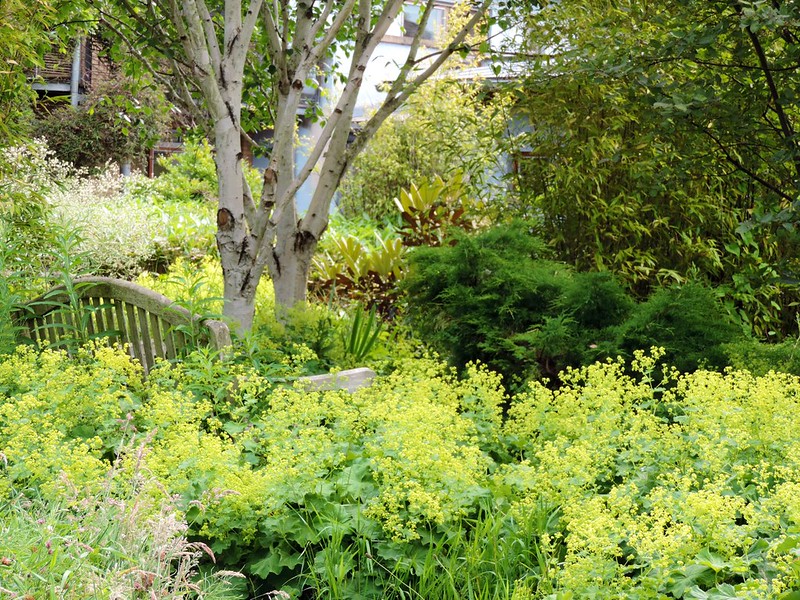
A seat in the garden

I took this photo the other day in the garden at the Centre for Integrative Care. It provokes certain thoughts for me, because in this view I see an abundance, a flourishing, a diversity of green Life and I see a place to facilitate its full enjoyment, a place to pause, to slow down, to be present.

So, here’s what I’m thinking today……Life is for living, and that living has at least two important aspects – the full enjoyment of Life, and the creation of uniqueness.

Whatever other reasons we might find for being here, we all, moment by moment, have the opportunity to fully enjoy this Life – that captures for me the sense of émerveillement du quotidien which I often to refer to, that sense of wonder, of seeing and experiencing everything as if for the first time and for the last time. It captures the teaching about slowness, of mindfulness and of being present in the NOW.

If there is one quality of Life I’d focus on it’s change. Change is constant. Nothing, but nothing, stays the same. Life is a continuously unfolding, creative, emergent process. We are creative creatures. We create our perception of reality. We c0-create our daily experiences with others, and with the world in which we are alive.

So, when I look at this photo I see these two phenomena – a full enjoyment of the flourishing diversity of Life, and the creative expression of the Universe.


Read Full Post »

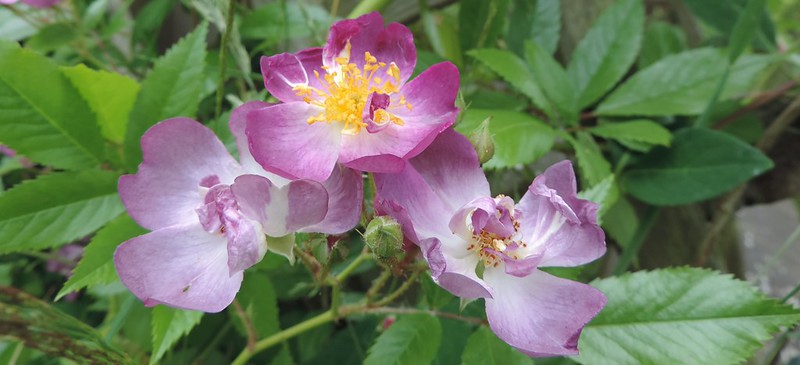
Wild rose

This is a photo of a wild rose (or, in this case, I believe, the “dog rose”)……one of my most favourite flowers.

Traditionally this flower is a birth month flower for those born in June – that’s me. And symbolically the rose is a flower of love, ideal love, and passion. For the homeopaths amongst you, Jan Scholten places the Dog Rose at Stage 10 in the Rosaceae family.

The rose in this photo lives in the garden at the NHS Centre for Integrative Care, where I’ve worked for many years…..(only another few days now, last day at work there will be July 4th – “Independence Day”).

I like that there is a rose in the garden there which will always connect me to that place and all the people there who make it such a special place.

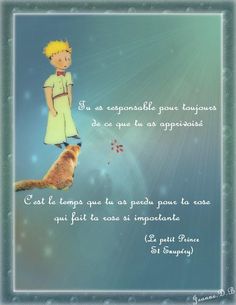
I love the story of the rose in “The Little Prince”…..

c39828f1cd0bd47793250773344d123e

“It’s the time you have spent with your rose which makes it so important.”


And I also like Saint Exupery’s insistence on the uniqueness of each rose…..

556fff4c58fd69cc9a642c2ffcb9c4b4

Let’s not forget the uniqueness of each and every flower, each and every person, each and every moment.

I also like that in this photo I have a “Wild Rose” which echoes so nicely with the Mary Oliver poem I read at our farewell retirement celebration last Friday – “Summer Day” – especially her closing lines……

Tell me, what is it you plan to do
with your one wild and precious life?


Read Full Post »

« Newer Posts - Older Posts »