Feeds:
Posts
Comments

Archive for the ‘perception’ Category

two trees

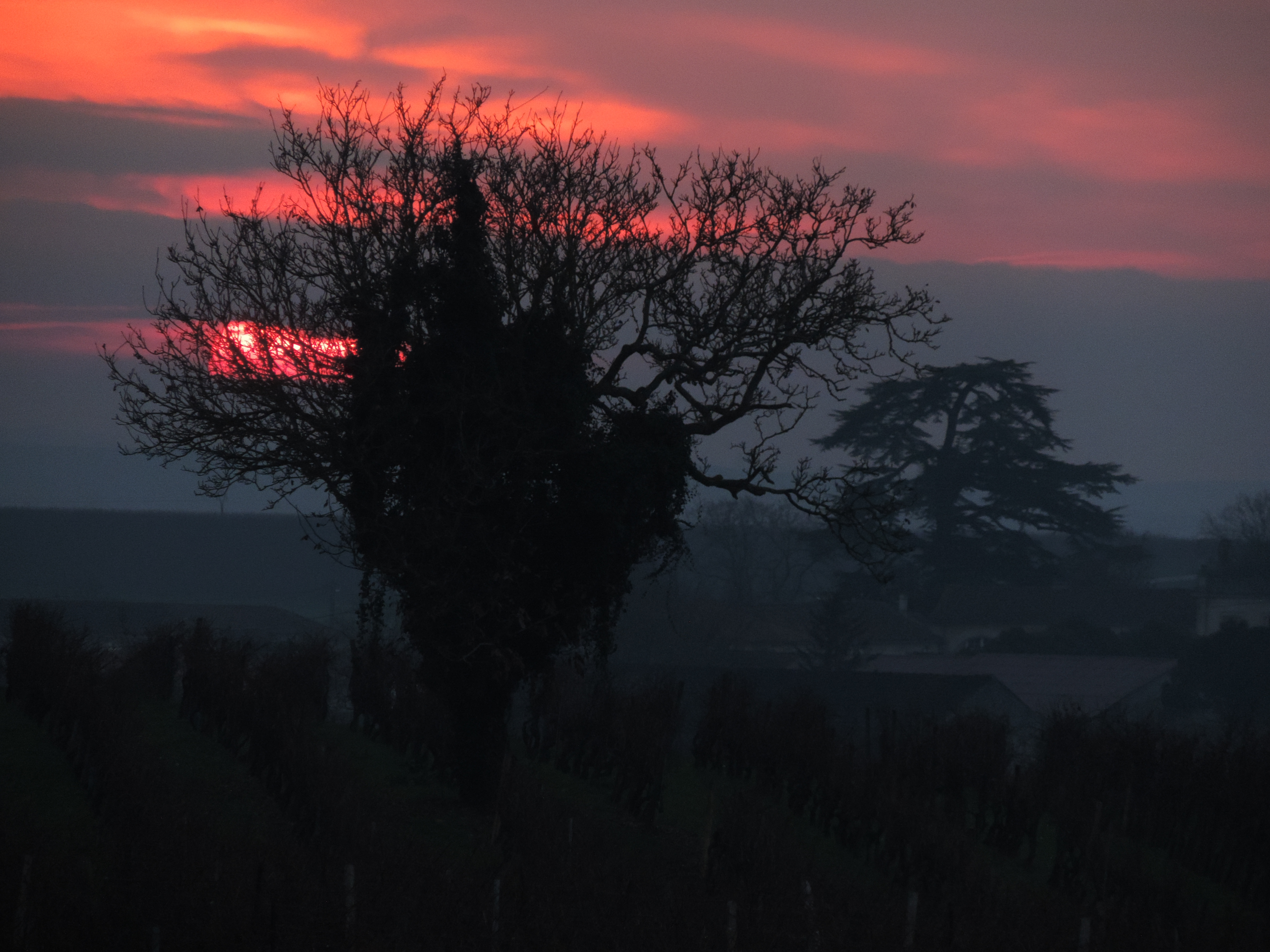
The first thing to catch my eye was the light…..the colour, the deep, vibrant red of the setting sun. I picked up my camera and stepped out into the garden.

As I framed the shot the silhouette of the tree drew me to it, the contrast of the black in front of the red, the spindly shapes of the bare branches over the soft, flowing bands of clouds.

Then as I looked the second tree came into my field of attention, its shape, and its soft haziness. It looked to me like it had elements of the clouds behind it and the tree in the foreground, but melded both into something unique in itself – less spiky than the foreground tree, and less black too, but more angular and edgy than the clouds and blacker than them.

Looks good.

Click!

Not a typical sunset photo. Not a typical tree photo either. It draws me in…..

What goes through your mind in those moments leading up to “click!”?

Read Full Post »

John Berger writes

Because true translation is not a binary affair between two languages but a triangular affair. The third point of the triangle being what lay behind the words of the original text before it was written. True translation demands a return to the pre-verbal. One reads and rereads the words of the original text in order to penetrate through them to reach, to touch, the vision or experience that prompted them. One then gathers up what one has found there and takes this quivering almost wordless “thing” and places it behind the language it needs to be translated into. And now the principal task is to persuade the host language to take in and welcome the “thing” that is waiting to be articulated.

Interesting, huh? That mechanical translation matches word to word then seeks to get the grammar correct, but is the original idea or meaning translated well that way?

As I begin to live in a country where the language is not my first language, I find that, at least in this first phase, I’m translating all the time. Reading or hearing French and translating it into English in my head to understand the meaning. But already there are phrases which seem to require no translation, and phrases that pop into my head fully formed in French. I’m guessing that gradually I’ll do less and less translation.

But actually although Berger is talking about translating a text from one language into another, I think maybe the same issues apply to all communication. I have an idea or a feeling to express, pick some words, some phrases. I’m translating it into written or spoken language. Aren’t I? Which leads me to wonder about the rich diversity of inner lives. I’m sure we all get that experience, from time to time, where we think that someone else seems to come from another planet. Where their worldview is so different from ours that we don’t even seem to be speaking a common language, despite the fact that a superficial observation would lead to the conclusion that we are indeed speaking the same language.

When Berger mentions the third point of the triangle, I suspect he is thinking of our inner lives. That leads me to three questions today.

  1. How can I know my inner life?
  2. How can I express or show my inner life?
  3. How can I know the inner life of another?

For me, the first involves practices of awareness and reflection, the second, creative acts, and the third requires ongoing dialogue. Isn’t it interesting that all three have no end? I will never know myself completely, never be able to fully express myself, and never fully know another. That makes me feel both excited and humble.

Excited because all that is an adventure, a voyage of discovery, and a constant stream of revelation and wonder. It is the ‘émerveillement du quotidien‘.

Humble because nothing can be known completely, fully or finally. Montaigne knew that with his ‘Que sais-je?

Over to you now. How do you answer those three questions? You, personally, in your own life?

  1. How can I know my inner life?
  2. How can I express or show my inner life?
  3. How can I know the inner life of another?

Read Full Post »

webdrops

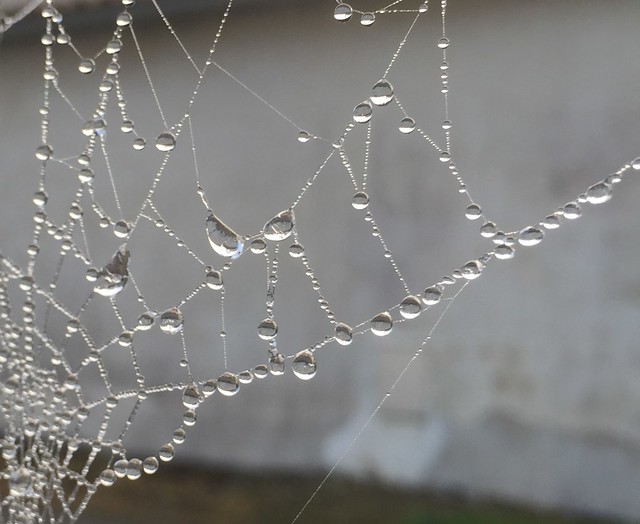
Why do I find the dew-soaked, rain-soaked spiders’ webs so appealing?

Three reasons, at least –

First, they are just so beautiful.

Second, each drop becomes a little lens, which shows the surrounding world upside down. Reminds me how everything we experience is through our personal lens, so our view of the world is always our unique, singular view.

Third, because the form/concept of links and nodes describes so well the phenomena of the world. Shifting our perspective from seeing a world of objects, to seeing a never-ending web of links, hubs or nodes, connections and relationships is exciting!

Read Full Post »

behind the vine

Now the leaves have fallen from the vine, it’s a different kind of beautiful.

Read Full Post »

barometer

In the second part of the A to Z of Becoming, V stands for the verb “vary”.

I found this photo of an old barometer in my collection and it really captures something about the natural function of variation. A barometer is pretty constantly moving, responding continuously to the rising or falling of the atmospheric pressure. I’ve always thought it quite funny that one of the words on these old barometers is “variable” because I tend to think, when it comes to weather, when is anything other than “variable”?! But then, that’s probably down to my experience of living in Scotland for 60 years! I’ve never lived in a country where the weather is the same, day in, day out.

The truth is Nature is constantly varying because all of Nature is a dynamic phenomenon. And the Universe so loves diversity!

But there’s an interesting aspect of human experience, which is “tolerance”. All of our sensory systems have a tendency to tolerance. That is, when something new comes along we notice it, but once its been there for a bit, we stop noticing it. How often have you had the experience of suddenly becoming aware of a noise just when it stops?

Not quite the same as tolerance, but in some ways related, we also tend to move to the “back of our minds” the routines of our lives. This can lead to living on auto-pilot (or as I say in this blog, living like a zombie).

It’s good that a lot of things are dealt with on auto-pilot. What on earth would life be like if we had to think about every breath we take, if we had to initiate every beat of our hearts, if we had to actively, consciously digest all our food, and so on…..? What on earth would life be life if we had to be consciously aware all the time of every single sensory signal our body picks up, second by second?

But the problems come when we default our whole lives to auto-pilot. What happens then is that we tend to just keep repeating the same behaviours, having the same thoughts, feeling the same feelings, and, ultimately, neither making choices, nor creating any life anew.

So, it’s also good to disrupt the default, to break the routines, and raise our conscious level to higher state of awareness.

One way to do that is to vary something.

Walk a different way to work. Choose something different for breakfast. Read a different newspaper. Deliberately introduce a variation to your “normal” habits.

Go on, try it. Vary some things this week and see what that feels like.

Read Full Post »

Leaf

As I was raking up the leaves from the grass……this one caught my eye.

A moment of becoming

Read Full Post »

Morning grass

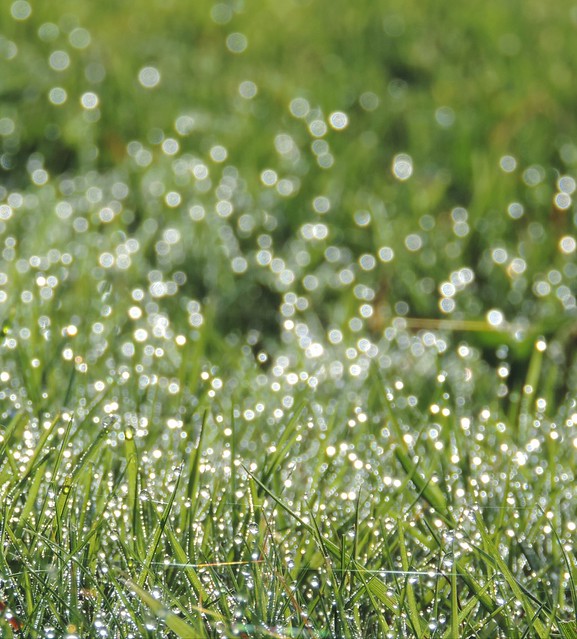
From yesterday’s fog, the rain in the evening and this morning’s dew, all these little water droplets gathered on the blades of grass and were just waiting for the sun to sparkle them.

Read Full Post »

window view

We engage with the world from our own, unique perspectives.

Whatever we see, hear, experience, is influenced by our personal past (memories, previous choices etc), our imaginations, our beliefs, and our values. Everything which has happened in our lives up till now has influenced the physical connections within our brains, and between our brains and the rest of our bodies.

Whatever we see, hear or experience is also influenced by our current state – our current physical, emotional and mental state.

All of this creates a kind of frame through which we experience the world.

We all have a unique, personal world view – have you considered what’s influencing yours?

Read Full Post »

creeper

One of the most striking characteristics of living organisms is change.

These little leaves I photographed in the garden at the weekend are gone now. (which reminds me of the importance of taking a camera everywhere and not hesitating to use it!)

I’m particularly conscious of change just now because I’ve just moved country. Maybe you’ve done that before, maybe even many times, but it’s a first for me. I don’t mean simply travel and holidays, I mean to actually relocate, to go and live in another country entirely, maybe especially in a country where the language is different.

But change has always fascinated me. The byline of this blog is “becoming not being”, not just because I have always resisted being pigeon-holed, or categorised, but because I really don’t think any human being can be understood as an object frozen in time.

That’s just not reality.

The more there is change within a system or organisation, the more we recognise it as “dynamic”, and is there any more dynamic phenomenon in the Universe than a conscious human being? Not only are all of our cells constantly changing, not only is our heart constantly beating, our lungs constantly filling and emptying, our complex immune systems and endocrine systems altering moment by moment, but our minds are never still.

It feels to me there is a constant flow of a life force through me. It never ceases. When it moves on, this physical me will have moved on, but the me of ideas, of thoughts, of creative expression, of ebb and flow between me and the others who share, or have shared, parts of this life with me, that will, in some ways, continue to flow.

Human beings live in both a constantly changing physical universe (some parts of which change very slowly indeed), and in a rapidly changing, shimmering, universe of consciousness. Really, is there anything in the Universe which changes as much (as constantly) as a human being?

As Heraclitus said so long ago, you really can’t step in the same river twice.

That’s why, as a doctor, it didn’t make sense to me to try to categorise patients. It didn’t make sense to me to reduce a person to a diagnosis. A person is a constantly changing, flowing, growing, developing phenomenon, not an object to fitted into a category, to be measured and classified.

Becoming not being………it’s about the reality of constant change.


Read Full Post »
Sunburst sunset

Every single day I encounter something which amazes me, inspires me, or thrills me.

Every single day is unique.

This is the first time I have experienced today.

This will be the last time I experience today.

In France there is a phrase for this approach to life – l’émerveillement du quotidien. (the every day marvel or amazement)

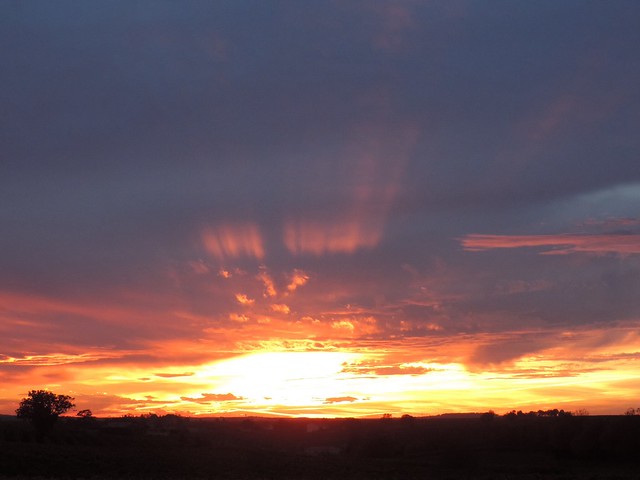
I’m sharing this particular photo of a sunset, taken from my garden a couple of days ago, because I’ve never seen this actual phenomenon before. That burst of sunbeams or reflections in the cloud, above the setting sun…..like the spreading folds of a fan.

Beautiful.

Amazing.

Read Full Post »

« Newer Posts - Older Posts »