Feeds:
Posts
Comments

Archive for the ‘perception’ Category

pleiades

Which of the constellations in the night sky do you recognise? I wonder if one of them is the seven sisters – “Pleiades”.

I read the following in Gary Lachman’s “A Secret History of Consciousness”

In a fascinating chapter of Cities of Dreams, Gooch sets forth the evidence that this undistinguished group, made up of fourth-magnitude stars—not particularly brilliant—was not only known to our ancient ancestors, but appears in the mythology of many disparate peoples, and in exactly or nearly exactly the same context. For example, for the ancient Greeks, the story went like this: Orion the hunter came upon six sisters and their mother one day in a wood. Burning with lust, he chased the sisters through the wood for five years, whereupon Zeus took pity on the girls and changed both them and Orion into stars, hence the constellations of Orion and the Seven Sisters. Strangely, a very similar myth exists among the Aborigines of Australia. Wurrunna the hunter was out in search of game, when he too came upon a group of seven girls. He grabbed two of them and took them as wives on the spot. However, the trees in the forest took pity on the girls and suddenly grew to a tremendous height; the five free sisters climbed to the sky, as did the other two, thus escaping Wurrunna……..The Pleiades are always known as the Seven Sisters, and they are always hunted. Likewise, they always escape, either through magical means or through the intervention of a god………The Pleiades also have the unchallenged distinction of being the only constellation noted and named by every culture on the planet, past or present.
What do you think of that?
The night sky has always fascinated me. I love the way we humans connect up the individual stars with invisible lines to create constellations, which we then don’t just name, but tell stories about…..stories which help us make sense of the Life and this World. But how did this happen? How did we end up with such similar clustering of stars and such similar stories attached to these clusters (or constellations)? I find that especially fascinating when there are these close similarities in the stories of such disparate and disconnected cultures.

Read Full Post »

sparkle and wave

light and dark

reflect and ripple

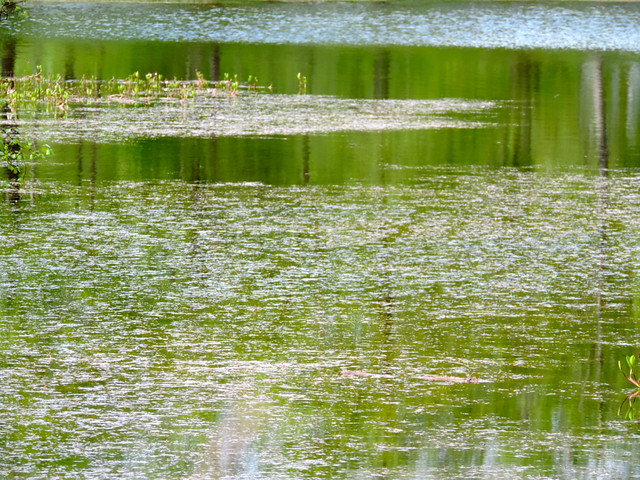
The surface of water always amazes me….it’s texture, it’s colour, it’s interaction with the light.

The deep always makes me curious…..what lies below?

Read Full Post »

I’ve often thought about the question attributed to Albert Einstein (although I think he didn’t actually ever pose it!)

The most important decision we make is whether we believe we live in a friendly or hostile universe

Whether he said it or not, it’s still an interesting question which highlights how our beliefs inform our choices. If we believe the universe is hostile then we see ourselves in a constant battle for survival, if we see it as friendly then we call to it for support, and if we think it is neither then maybe we make choices based on the essential meaningless and randomness of life.

OK, I think that is too simplistic and in fact there are no clear answers to this question, but I do think the useful point is about influences. I do believe your choices are informed by your beliefs. Simple, everyday beliefs. Is it safe to walk down this street? Are strangers likely to attack you? Are your friends likely to act in your best interests? And so on…..

All this came to mind this morning having listened to Jim Carrey’s speech at the Maharishi University. Here’s the ONE minute edit…..

(you need to click the link to see the video for this one. Go on, do it now, then come back and read the rest)

So, here’s the key point to think about just now – are you making your choices based on love or fear?

Fear is the main weapon of persuasion in the world, but you don’t need to make it the basis of your life.

What choice will you make today if that choice is to be based on love?

What choice would you make instead if you are basing it on fear?

What are you going to choose?

Read Full Post »

I don’t understand synchronicity but when it happens its always striking and exciting.

About a week ago I bookmarked a transcript of an RSA talk by Guy Claxton, and yesterday I sat down and read it. It’s a fascinating talk about what he terms “glimpses” (what others have termed spiritual or enlightenment experiences). I’ll let you read the full talk yourself, but in that talk he referred to W B Yeats’ poem, “Vacillation”, where he describes just such an experience –

My fiftieth year had come and gone
I sat, a solitary man
In a crowded London shop
An open book, an empty cup
On the marble table-top
While on the shop and street I gazed
My body of a sudden blazed
And, twenty minutes, more or less
It seemed, so great my happiness
That I was blessed, and could bless

Then, later the same day, I was researching the lifespans of different organisms (I’ll tell you why another time) and picked my copy of Richard Fortey’s “Life” off my shelf. I have a beautiful Folio edition which is a complete joy to hold. Imagine my surprise when on page 22, in his first chapter, where he is describing his early experience of an expedition, he writes about having a dispute with his colleague, then waking to a beautiful, perfect day and he says “The joy of such moments healed any differences between us. Like W B Yeats –

My body of a sudden blazed
And, twenty minutes, more or less
It seemed, so great my happiness
That I was blessed, and could bless

I don’t know how that happens. Do you? How do I read the identical passage of poetry in two such different, totally unconnected places within a few hours of each other?


Read Full Post »

spider in web

web and castle

dew web

web


There’s no doubt that spider webs are beautiful, but spider’s silk is a very complex fibre which has remarkable qualities. It’s strength is legendary, but now researchers from Oxford, Strathclyde and Sheffield have discovered that one of the main ways spiders use their webs is, well, musical.

Most spiders have poor eyesight and rely almost exclusively on the vibration of the silk in their web for sensory information,’ said Beth Mortimer of the Oxford Silk Group at Oxford University, who led the research. ‘The sound of silk can tell them what type of meal is entangled in their net and about the intentions and quality of a prospective mate. By plucking the silk like a guitar string and listening to the ‘echoes’ the spider can also assess the condition of its web.

Dr Chris Holland of the University of Sheffield, an author of the paper, said: ‘Spider silks are well known for their impressive mechanical properties, but the vibrational properties have been relatively overlooked and now we find that they are also an awesome communication tool. Yet again spiders continue to impress us in more ways than we can imagine.’

Isn’t that amazing and wonderful? That spiders set and sense the vibrations and frequencies in the silk they weave to know how healthy their webs are, and to know, from the “music” of the web, what they have trapped.

Wonder!


Read Full Post »

Wonder is one of my most favourite verbs.

I like the French word émerveillement which captures the essence of wonder for me. I think this is a great way to approach Life.

There are two aspects of the verb wonder which really appeal to me.

The first is to wonder in the sense of curiosity…….as in “I wonder what this is?” Here’s an example – “Is this a rock, or a tree? I wonder how these markings formed on this rock?”


rock weathering

The second is to wonder with a sense of amazement……as in “Wow! look at the patterns of the rock and the patterns on the stream, and how similar they are!”

rock waves

sparkling water


I would like to propose that an attitude of wonder increases the quality of your life, whereas, an attitude of scepticism, or nihilism…..hmm….well you tell me if you find those attitudes life enhancing.

Just as a wee bonus today, here is a great song about wondering…..


And, another bonus (well, it is my birthday!)


Read Full Post »

bird

This isn’t what I usually do, but here’s the photo I posted yesterday. I wanted to show you it again to say something about using a camera.

I carry a camera everywhere, and these days many, many of you have cameras in your smartphones so you too will be carrying a camera everywhere too. I’ve heard some people say if you are looking through a lens you aren’t experiencing reality as it is. In other words if you are busy photographing what you are looking at, then you aren’t really seeing what there is to see.

That’s not my experience at all. Of course, I don’t walk around with the camera in front of my face. I look, I see, I notice, and then I photograph.

But what surprises me, and delights me, time and time again, is how once I get the photos loaded up onto my iMac and look at them on the big screen, I see things I really wasn’t aware of seeing at the time.

In the case of this photo, I noticed the bird on the stone when I was trying to photograph the reflection of the forest and the stone in the river, but by the time I focused the shot and pressed the shutter button, the bird had flown off. I thought I’d missed it.

But look! I didn’t miss it, and even better, even more amazing, you can see the reflection of the bird in the water as it flies off over the river!

Wonderful! And I really didn’t see that when I was in the forest.

Read Full Post »

Find the bird (s?)


bird

How do we notice what we notice?

Of course, it’s not the same looking at a photo as it is standing in a forest looking at a river, but I think what catches our attention is often what moves, or what is different. Either that, or we are looking for something, so we scan the scene to try and find it (that’s what you did with this photo)

What are you looking for today?

What might you notice if you have your eyes open for difference?

Read Full Post »

DSCN0338

There is an astonishing amount of information from the environment flooding into your brain every single second. Think just about the information picked up by your sensory organs. All the sounds your ears can hear, all the light, colours and shapes your eyes can see, all the scents your nose can smell, all the textures your body can feel, all the flavours your tongue can taste. All of these, plus all the information being sent to the brain from within your body, plus all the information generated by your brain itself (your thoughts, memories, imaginings), are continuously flooding through the billions of neurones in your brain.

Why doesn’t that overwhelm us?

I’m nor sure anyone can fully answer that question, but at least we do know we have two ways of dealing with all these continuously changing information flows.

One way handle it is to use our brains as filters or valves.

William James, the psychologist said

one function of consciousness is to carve out of the vast sensory environment—what he called the “blooming, buzzing confusion”—a manageable, edited-down version. Only a limited amount of information reaches our conscious awareness, and for the very good reason that the majority of it is irrelevant.

The “blooming, buzzing confusion”….nice phrase!

He thought that

consciousness selects from the world at large elements that are of particular value and interest to it

In other words, consciousness enables us to “edit” the information flows, to focus on what is of “value and interest” – that, of course, opens up a whole other can of worms about how we decide what is of “value and interest”, but let’s leave that for another day.

Henri Bergson, the philosopher, argued that the brain’s function

was to act as a kind of “reducing valve,” limiting the amount of “reality” entering consciousness.

He said

“The brain is the organ of attention to life,” and the part it plays is that of “shutting out from consciousness all that is of no practical interest to us

Same idea as James…..the brain, or consciousness at least, as an editor, or a valve. In both cases the idea is that we reduce the full flow of information and pay attention to only part of it.

Iain McGilchrist argues that this is primarily the function of the left hemisphere – which “re-presents” the information flows to the brain.

There are great benefits to be had from being able to abstract information from the vast rivers washing through our brains, to be able to focus, and to concentrate on, just a subset, or a part of the world. We use this ability to both “grasp” and manipulate the world…..to exert our will on it, to exert control.

The downside is that we can begin to forget that we’re doing the editing in the first place. We lose sight of the filters and valves and think that what we “see” is all there is.
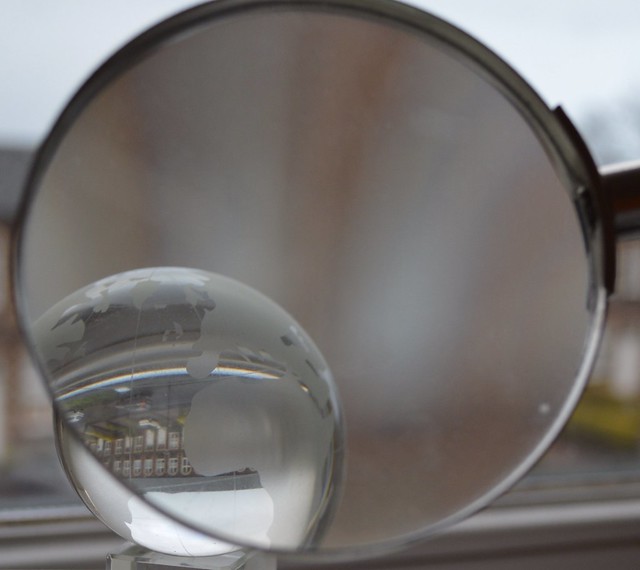
Attend

As Gary Lachman says in his “Secret History of Consciousness”

Yet one drawback to the brain’s highly efficient ability to focus on necessities is that it “falsifies” reality, which, as Bergson earlier argued, is in truth a continuous flow of experience…….The mind constantly takes snapshots, as it were, of reality, which enables it to orient itself amidst the flux. The problem is that science, which takes the most comprehensive snapshots, makes the mistake of confusing the photographs with reality itself.
This is exactly the problem Iain McGilchrist describes in “The Master and His Emissary”.
We have another way of knowing which is different from this editing, filtering, re-presenting way. We know by seeing connections, by experiencing the whole. Bergson describes that as intuition. A good example of that is how you answer the question “How are you?” You can ask yourself, “How is my energy today?” and you will come up with an answer instantly. You don’t have to edit, filter, or quantify anything, you know it holistically, or “intuitively”.
I’ve seen the same function again and again when visiting patients. Instantly, even before anyone speaks or before any “findings” are discovered, an experienced doctor knows he or she has to act quickly. The consultant who taught me Paediatrics, said on my first day at work with him that his aim was to teach me “how to recognise an ill child”. I thought that a strange comment at the time, but that’s exactly what he did. That recognising is a holistic, intuitive function which comes with experience.
Here’s Lachman again, in reference to Bergson
Just as we have an immediate, irreducible awareness of our own inner states, through intuition we have access to the “inside” of the world. And that inside, Bergson argued, was the élan vital
The neuroscientist Wolf Singer who looks at the problem of “binding” – of how the brain puts all this information together, says
there is a process in the brain that is itself antireductionist and is concerned with creating wholes out of parts, and hence with giving meaning to our experience.
I suspect this is exactly what McGilchrist highlights as the main function of the right hemisphere.
Isn’t it amazing that our brain can enable us to know in these two amazing ways? To edit, and to bind together; to filter, and to see patterns which enable us to discern meaning?

a strange turn

Inchmahome Priory

Read Full Post »

trees

Nature LOVES diversity. Monocultures just don’t occur naturally.
But do you know what I like so much about this kind of image?
It’s not only that every single tree is different and unique.
It’s that together they create the fullness of the beauty.

We are like that. We are all unique. But aren’t we so much more when we live in harmony with all the other unique lives around us?

Read Full Post »

« Newer Posts - Older Posts »