Feeds:
Posts
Comments

Archive for the ‘perception’ Category


amv

amv2

amv1

rockforest

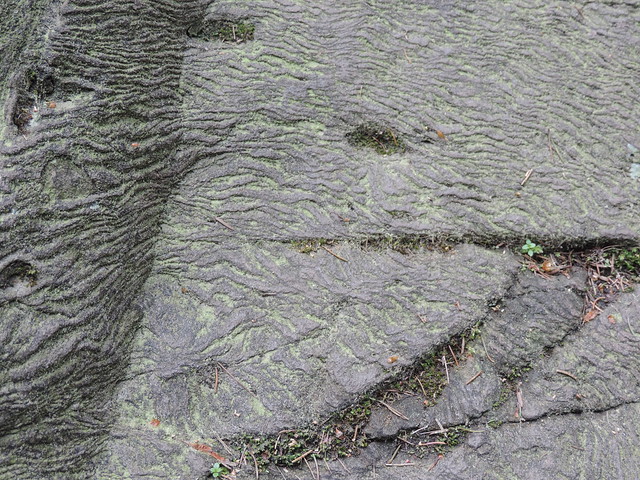
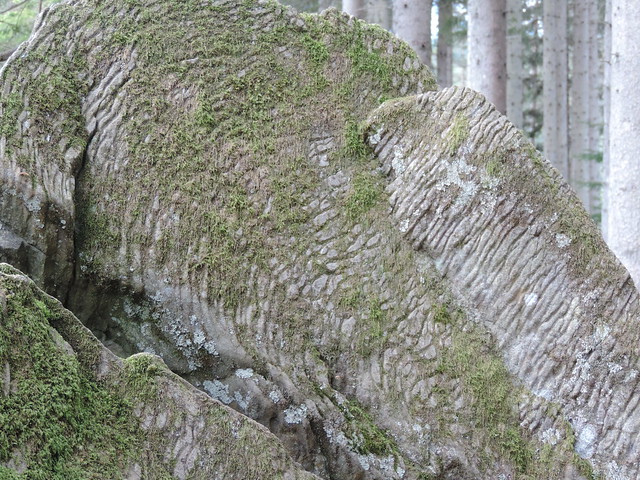
These rocks in the forest bring up two thoughts for me. One is just how much they challenge our preconceptions of form. From the distance they seem to be large boulders, but close up they look like trees. Maybe they are fossil trees? I don’t really know what fossil trees look like, but I’d imagine they look like this. So are they trees becoming rocks? And now I look at that them again in these photos they look like elephants, or some prehistoric dinosaur-like creatures!

The other is about boundaries…..where one object stops and another begins, how every “object” exists in its context and how much the environment, the place where the boulder sits, creates its reality, and then that other boundary of time…..how everything changes, how everything is in a constant state of becoming.

Read Full Post »

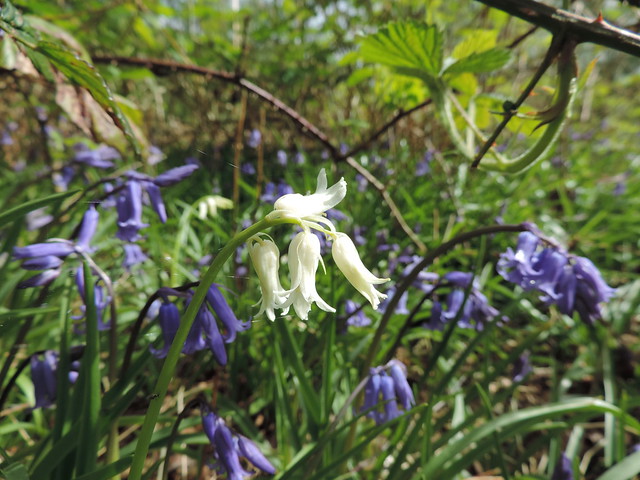
One of the rhythms I enjoy is the Spring season of blooms, and one of the blooms we see in Scotland at this time of year is that of bluebells in the woods.

bluebells

In many of the woods you are surrounded by whole carpets of bluebells.

But I’ve also got an eye for uniqueness, not just the uniqueness of the particular patch of bluebells, but the differences between individual plants.

white blue

Read Full Post »

IMG_1548

We have developed a strange way of thinking about the relationship of human beings and Nature. In fact, that very sentence is an example of how we think. There’s us, human beings. And there’s Nature. They are different. We separate ourselves out from other forms of Life, and from all the other ways Life manifests itself in Nature. We think we are not the same as other creatures. Maybe a bit like apes, maybe a bit like other mammals, but certainly not like flowers or trees. And even if we identify with LIFE in its multitude of forms, we still think of ourselves as separate from the other forms of Nature – earth, rock, water, wind, energy.

But we don’t stop there. We don’t just consider ourselves separate from, and in some way outside of, Nature. We tell ourselves Nature is there for us to exploit, to consume and to control. We think of being in a constant battle with Nature, wrestling with its power and its potential to do us harm. We conceive of the evolution of Life as a perpetual competition, a striving to survive, and only the strongest will win that battle.

But what kind of lives does that kind of thinking create for us? What kind of Nature does that attitude bring into existence? What daily experience do we have when we live from that perspective?

Over the last hundred years, physics has shown us that there are no separate, discreet, irreducible “particles” which are the “building blocks” of reality. We have begun to understand (or maybe rediscover) that any sense of separateness is a creation of the human mind. In particular we use our left cerebral hemisphere to filter and re-present the phenomena of reality to ourselves. This gives us a view which declares boundaries, and which creates the impression of separateness. As we explore the connections, the bonds and the relationships we begin to experience Life quite differently. And as we take on board the phenomenon of integration – of the creation of mutually enhancing bonds between well differentiated parts – we begin to see how co-operation is the basis of evolution, at least as much as, if not more than, competition.

So we can change our focus, taking on board Einstein’s question of whether or not we think of the universe as a friendly place, and then we see in Nature not just the inter-connectedness of everything, but how this Earth is perfectly created to sustain and develop Life itself. How everyday life is only possible because of the innumerable beneficial links between ourselves and others, between ourselves and other species, between ourselves and those who have lived before us, and between ourselves and the rest of the Universe from which we emerge.

The image above is a path. I think it is beautiful and shows an intimate relationship between human beings and trees. Here’s another path, quite different from that one, but which also makes me think about the paths we create as we live in this world.

DSCN1239


Maybe it’s time to create a better path? A more “natural” path?


Read Full Post »

sunset over ben ledi


I look out at this mountain every day (It’s called Ben Ledi), but how different the world might look to me if I actually climbed to the top of it (I haven’t done that….yet!)

Climbing a mountain for aesthetic reasons was, apparently, a defining moment in the development of human consciousness. The famous climb was that of the Italian poet, Francesco Petrarca (Petrarch) in the fourteenth century. He was the first to record climbing a mountain to see the view.

We can say that the origins of our modern appreciation of nature go back to 26 April 1336, when the Italian poet Francesco Petrarca (1304–1374), better known as Petrarch, made his famous ascent of Mount Ventoux in France. This event has gone down in history as the first time someone climbed a mountain solely to see the view. Clearly people had scaled heights before, but Petrarch claimed he was the first to do so solely out of curiosity, for what we might call aesthetic reasons. He recounted his excursion in one of the letters making up his Epistolae familiares (1350)

That’s a quote from Gary Lachman‘s “Caretakers of the Cosmos”. He points out that several thinkers and writers reflected on this famous ascent.

Ernst Cassirer saw in Petrarch’s ascent of Mount Ventoux ‘testimony to [the] decisive change in the concept of nature that began in the thirteen century’ and which led to nature becoming a ‘a new means of expression’ for human consciousness, as well as to a ‘desire to immediately contemplate nature’.

Cassirer wrote brilliantly about how human beings create a world of symbols. Unlike other creatures which live on their instincts and sensory organs, we humans use symbolism to create a richer world and to live in it quite differently from other forms of life.

what began with Petrarch’s ascent, for Gebser, was the age of what he called ‘perspectival consciousness’, the perception and representation of the world from a unique human vantage point.

Jean Gebser’s “Ever-Present Origin” describes an evolution of consciousness from the archaic, to magical, to mythical and mental, and up to the present evolution of  an “integral” form.

I’m sure you can discover many other references to Petrarch’s ascent, but as I look out again at Ben Ledi, I’m able to imagine being at the top and to see Scotland from there. That profoundly influences my sense of who I am and my place in the world. I wonder what it’s like to live in a country without mountains?

Read Full Post »
Light catches my eye, especially when whatever is lit seems to glow as if the light emerges from within….


Sunlit birch bark

The light in the plant

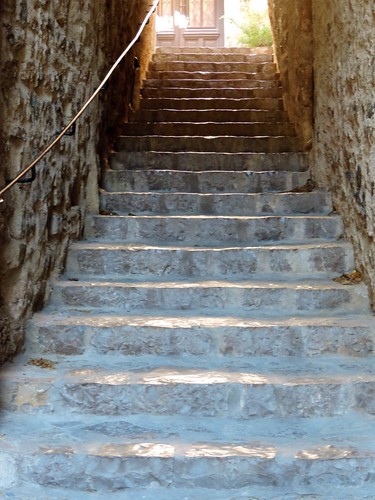
and sometimes, the light seems to lead you somewhere

The Stairway to...

Read Full Post »
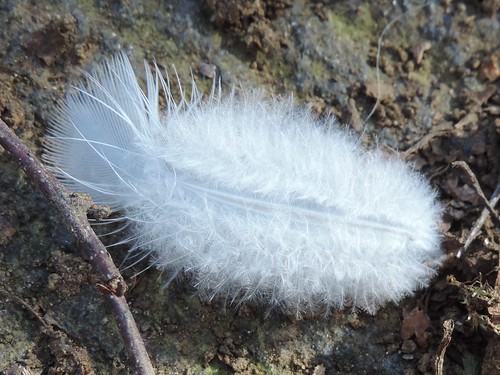
Feather

Burrrrr


When you look at these two photos, do you think, like I do, that the first one looks “soft” and the second one looks “spiky” or “sharp”?

I don’t mean in terms of photographic quality, I mean, in terms of sensations.

When I look at that feather, I think it looks soft. When I look at the burr, I think it looks prickly.

But isn’t that odd?

These are photos. I’m using my eyesight to perceive them, not much touch sensory organs. I cannot feel their softness or their sharpness. But that’s the first thing that comes to my mind when I look at them.

This is what we do all the time.

We are constantly bathed in information, some of which we detect with our sensory systems of vision, hearing, smell, taste or touch. We use our brains somehow to direct attention towards some of those inputs and away from others. So sometimes what we notice is a sound, and at other times, a colour, or a light.

But we are not unidirectional. We don’t process only one type of information at a time. We use all our ways of knowing and we put the results together to create a unified, whole perception. So I can look at this feather, and think “soft”, or at the burr and think “spiky”, even though my eyes cannot experience those qualities.

The one way of knowing cannot be reduced to another. There are always multiple ways of knowing. What we are really great at is synthesising those ways to gain a greater understanding of what we perceive than we could ever achieve by using only one way.

On a different level, this is what Iain McGilchrist has highlighted in the different ways our two cerebral hemispheres approach the world. Our two hemispheres allow us different ways of knowing. How much more fruitful, however, to synthesise their activity, and to use our whole brains?!

Read Full Post »

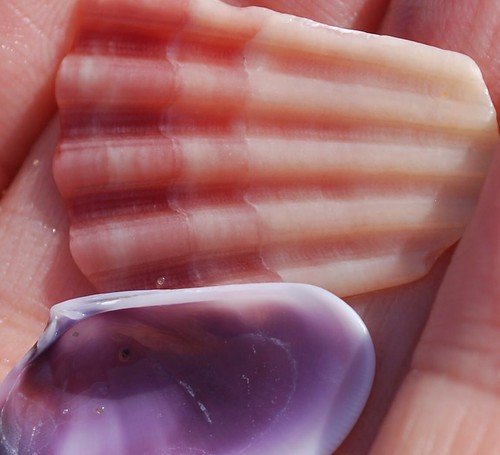
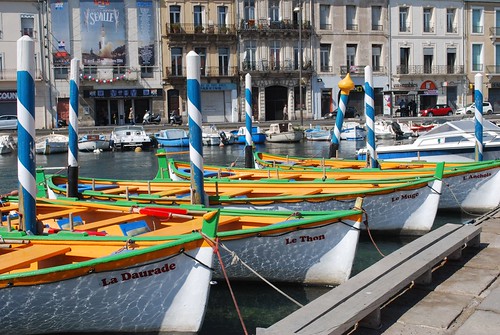
I’m a great fan of living every day with a sense of wonder (l’émerveillement du quotidien) and I must admit that colour often catches my eye.


Shells

Sète

Water into wine

Floral doorway

Read Full Post »

A cloudy day in Scotland….

cloud hidden

A cloudy day on the Med….

Cloudy day on the Med

Read Full Post »

Stone cross

We seek out difference all the time. We look for the edges of things, for their boundaries, in order to see them clearly.
But nothing exists in a vacuum.
Every”thing” we see we have abstracted from its context. We focus on only some of what we see in order to see what we are focusing on.
I’ve read there are no foregrounds without backgrounds.

If it’s true that every”thing” is inextricably linked to its environment and is constantly changing or evolving, then we should be wary of this whole process of separating and labelling.

The beauty in the above image is, I think, in the interplay between the wall and the cross, each of which would be diminished by the removal of the other.

Read Full Post »

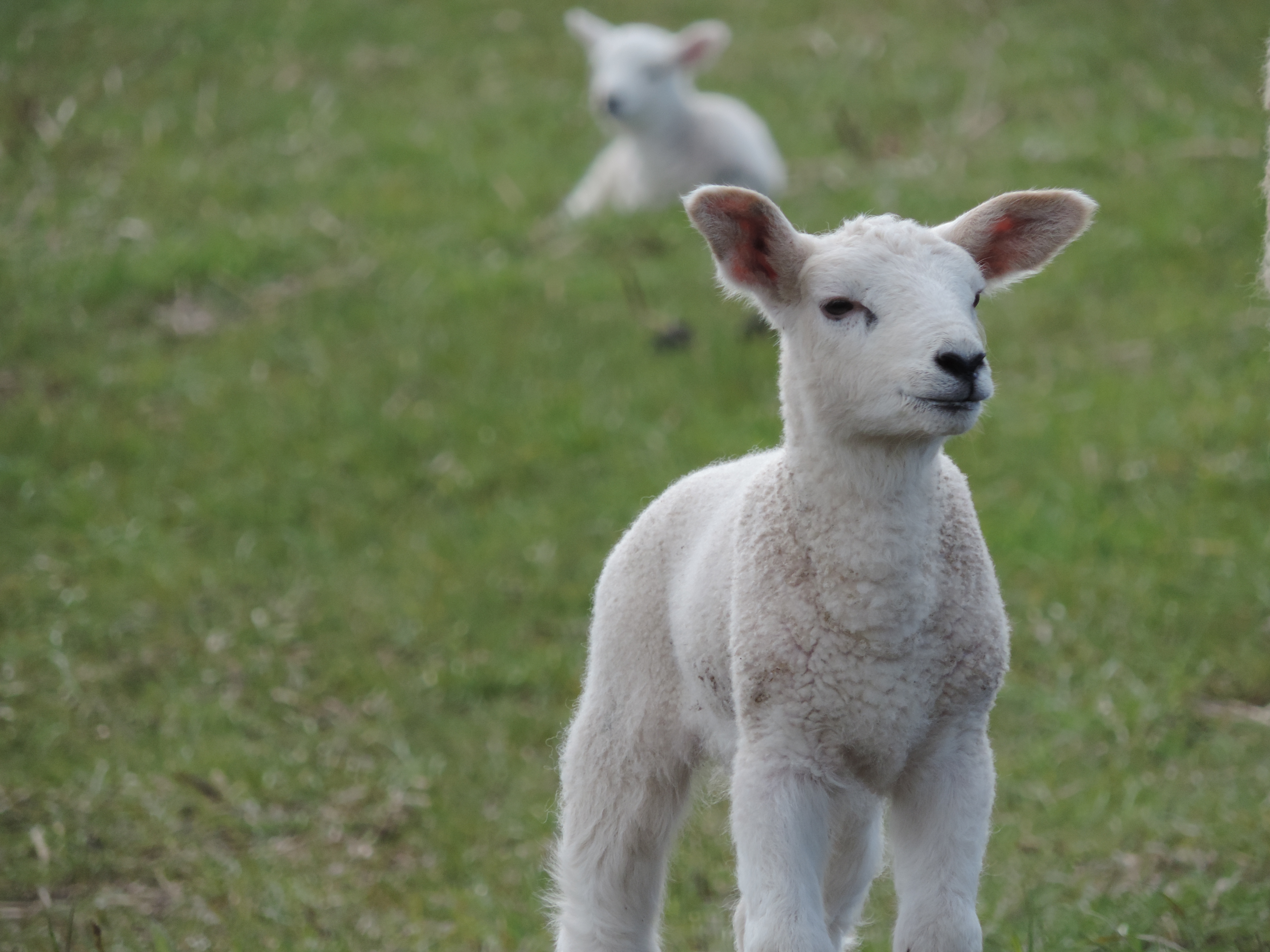
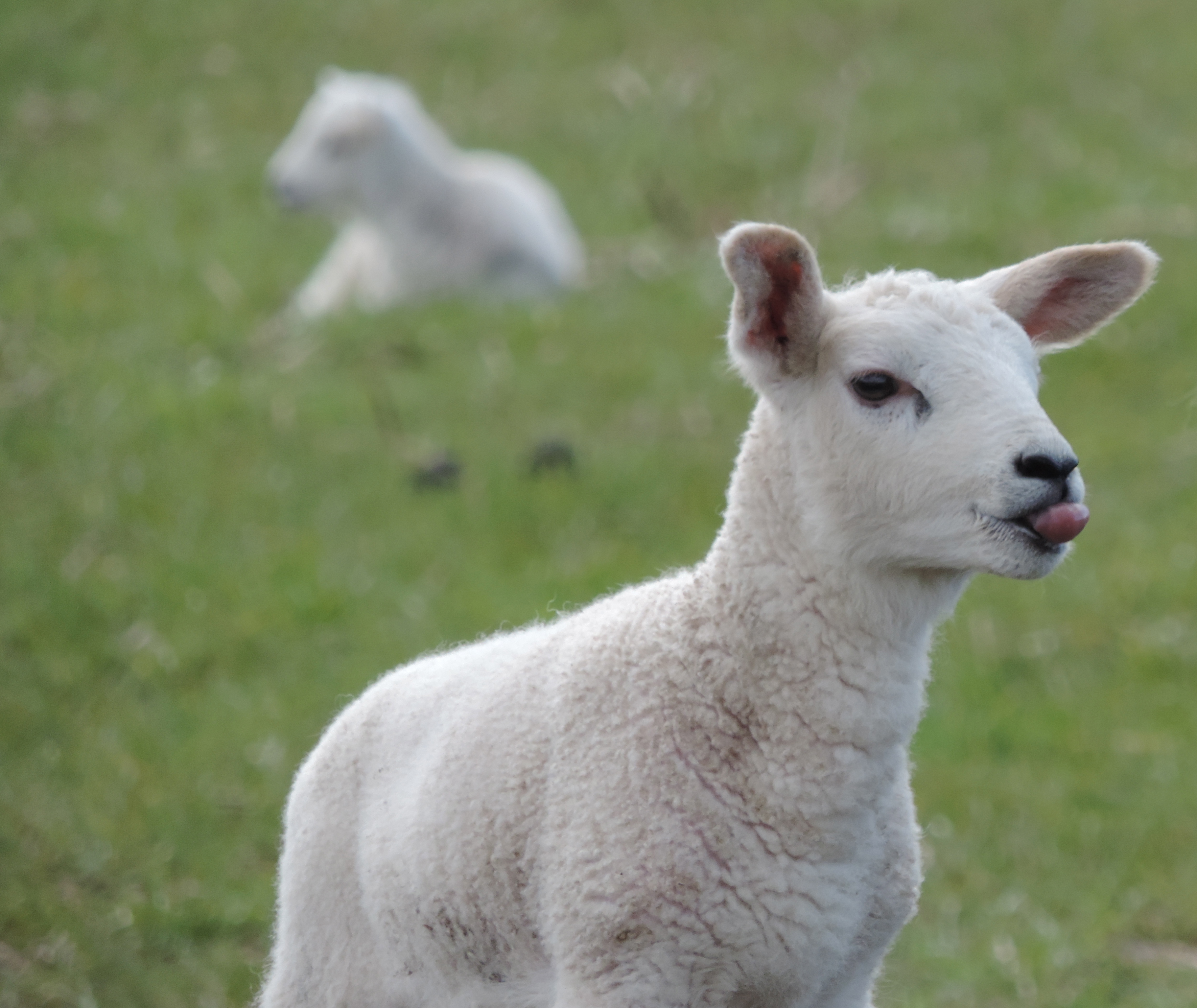
Yesterday I stopped to photograph some of the new lambs in the field near my house. I spotted this one –

DSCN0929

…so took a couple of shots in quick succession – I think it clocked me – and this is what he, or she, thought about it –

DSCN0930

Read Full Post »

« Newer Posts - Older Posts »