Feeds:
Posts
Comments

Archive for the ‘perception’ Category

Patterns, originally uploaded by bobsee.

Our brains are really good for spotting patterns. In fact, pattern-spotting is one of our core skills.
Maybe that’s why this view from Skye really struck me while I was clambering over the rocky beach.
I just found it amazing how the angles matched up here, weaving together the foreground and the background

Read Full Post »

Check this out – it’s a simple and elegant little visual test which claims to show you whether or not you are right or left brain dominant.

Apparently, I’m right brain dominant. What are you?

LEFT BRAIN FUNCTIONS
uses logic
detail oriented
facts rule
words and language
present and past
math and science
can comprehend
knowing
acknowledges
order/pattern perception
knows object name
reality based
forms strategies
practical
safe

RIGHT BRAIN FUNCTIONS
uses feeling
“big picture” oriented
imagination rules
symbols and images
present and future
philosophy & religion
can “get it” (i.e. meaning)
believes
appreciates
spatial perception
knows object function
fantasy based
presents possibilities
impetuous
risk taking

Read Full Post »

the white house, originally uploaded by bobsee.

I just love the colours in the sky over Ben Ledi.
But see that white house over to the left? It’s catching the sun so it’s catching your eye.
We are very good at spotting what’s different, noticing what is unique.
I love that
I love that our perception allows us to focus on what’s different, what’s unique

Read Full Post »

Patterns

Patterns in river and fields, originally uploaded by bobsee.

What caught my eye here was how the pattern in the river was so like the pattern in the field. Almost like a fractal or something. And the more I look at this, the more it pleases me.
It shows me how amazing the human brain is, especially at spotting patterns. We’re doing that all the time. They catch our eye and then we wonder “what’s that pattern about? what does it mean?”
I suppose we often don’t get the answers, or we don’t stop long enough to ponder to allow the answer to be discovered.
Here’s something to do today – what patterns do you see around you? And when you see one, could you just stop for a wee while and ponder it?
Tell me what you see

Read Full Post »

The heart of the flower, originally uploaded by bobsee.

There’s a whole world in there isn’t there?
In Leisure, by Joseph Pieper, he refers to the act of contemplation as a way of perceiving without effort. In Eastern religious traditions meditation is a common practice (and scientific studies support the claims that meditation practice can bring many health benefits). However, for those of us from different cultural backgrounds to those where such spiritual practices are taught, meditation can seem alien and difficult.
Contemplation as effortless perception however is accessible to all of us. First you have to notice something. Then you have to slow down, stop and gaze, letting the object of your gaze fill your thoughts. You don’t have to figure out exactly what you are looking at. You shouldn’t ask yourself any questions about it.
Just take a few moments in silent contemplation.
It’s good for you.
Flowers capture me. On so many levels. From catching my attention, to contemplation, wonder, awe and curiosity.
What captures you?

Read Full Post »

I was heading home on the train from Glasgow to Stirling the other day. I enjoy having my daily commute of about an hour in a train or a bus either way because it gives me quiet, undisturbed time to sit and think, or read, or write, or listen to my ipod. This particular day there was a young, blonde woman opposite me. At one of the stations she moved and sat in another seat (I think to have a table to herself!). The train arrived at Stirling station and I gathered up my belongings and headed for the door. As I passed her table she said, in an American accent, “Excuse me sir. I feel I’m supposed to give you this” and handed me this –

thebox.jpg

I was a bit taken aback and without thinking stepped off the train with the gift in my hand. It was a metal box. I unclipped its magnetic catch and opened the lid to reveal this –

insidethebox.jpg

So now I’m thinking……what??!! A bible!!?? Why me? What did she see in me to make her think she should give this to me! Worse, it was a well worn box which was obviously her frequently used personal copy of the bible. She wasn’t even a bible distributer handing bibles out to strangers like some kind of Scotrail Gideon! What had she seen in me? Did I look depraved and in need of saving? Was I looking weary and worn and needing my spirits lifted? It was all deeply disturbing! What did she think was wrong with me? What need did she think she saw in me?

Then I remembered what I had been reading as she had sat opposite me. Here’s what she would’ve seen –

reading.jpg

OK, so now I understand! She thought I was searching for happiness and I guess she thought I’d be more likely to find it in the pages of her bible than in Daniel Gilbert’s book. Well, it was a kind thought. It involved some sacrifice for her to give away something that was important and personal to her. But! She judged me! She saw what book I was reading and figured not only what kinds of problems I might be facing but how I might best find the answers! Thank you for your kindness, anonymous American girl, but I wasn’t searching for how to be happy. I am happy. And you can rest assured your gift will not get any more worn out than it was the day you gave me it.

An interesting variation on the old saying, huh? Not only can you not judge a book by its cover, but you shouldn’t judge a person by the cover of the book they’re reading!

Read Full Post »

What is this?, originally uploaded by bobsee.

What do you think this is?
I took this photo recently and when I uploaded it to my computer I thought…..what on earth is that??!!
I remember now.
But what do you think?
Can you figure it out?

Read Full Post »

Daniel Gilbert in Stumbling on Happiness makes the point that we make things up when we remember, we make things up when we observe the here and now and we make things up when we imagine the future.

He uses a version of a card trick in his book to illustrate a point about how we observe and remember. I tracked down an online version of it – look at this card trick and see if you can work out how its done.

Then when you’ve done that, watch this video of another card trick. The video also explains how the trick is done and the revelation really is a revelation. You’ll be amazed!

Read Full Post »

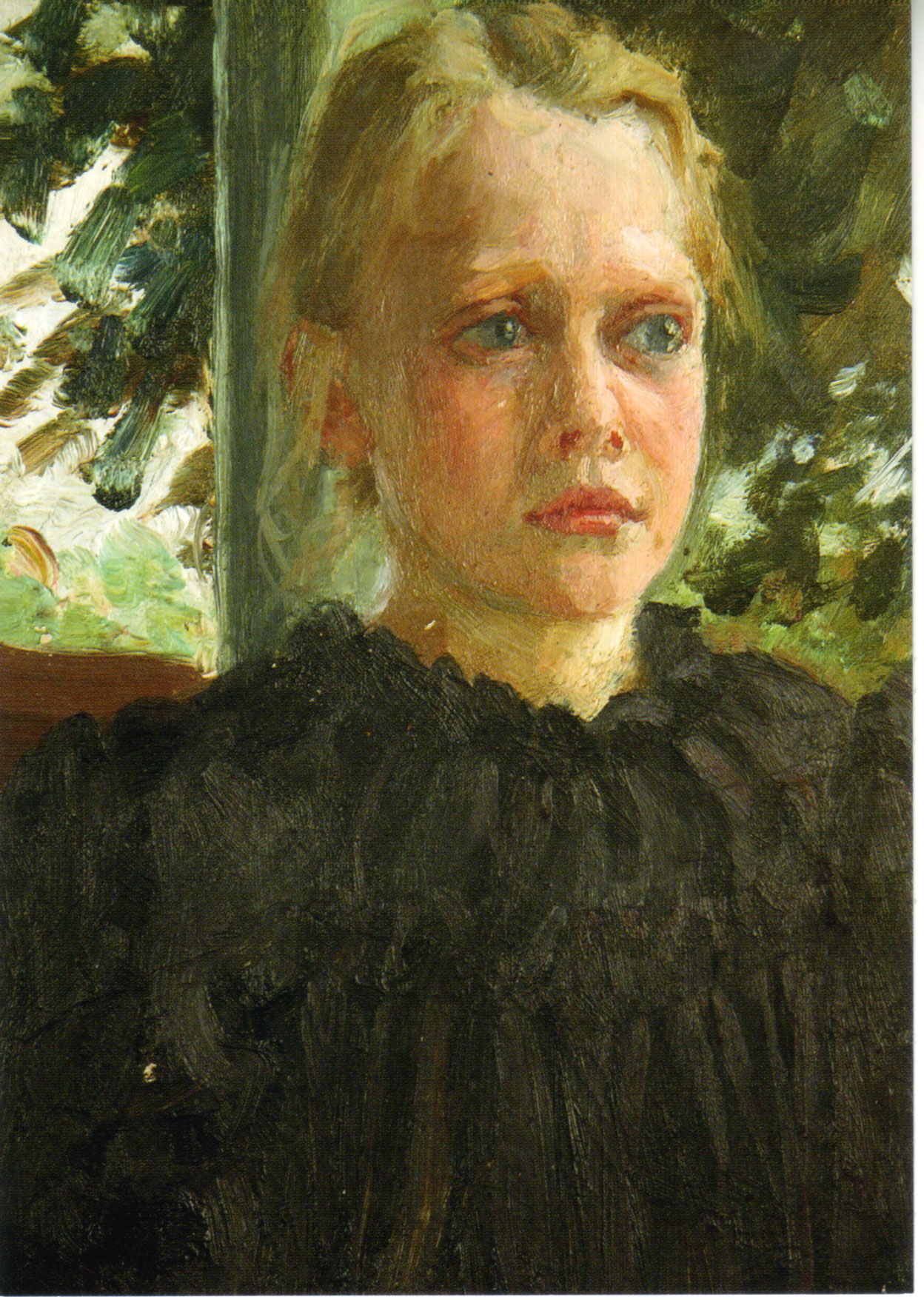
Julia Hasselberg

I found myself captivated by this portrait of Julia Hasselberg painted by Eva Bonnier. Eva Bonnier was a Swedish artist and this painting is of her lover’s illegitimate daughter who Eva adopted after Julia’s father’s death.

This girl has a look which is very familiar to me. It’s a combination of pain and resilience. There’s reserve, distance, independence and spirit here. The kind of spirit that emerges from suffering to strengthen and protect. I find it both moving and powerful.

You can find this portrait and others by Eva Bonnier along with a really interesting short biography of her on the Giornale Nuovo blog. Thank you for posting this Mr h.

All Eva Bonnier’s portraits which you’ll see in that post share these characteristics for me. These are powerful people, fiercely independent, with that special kind of strength which emerges from suffering. One thing that fascinates me is this description of Eva Bonnier

She is reputed to have been an intelligent, strong-willed and sharp-tongued woman who ‘could neither in private nor as an artist charm or flatter her contemporaries.’

How much does the character of the artist influence their portraits of others? How much do they see a bit of themselves in their subjects and, unconsciously, highlight those qualities in them? What do you think Ester?

Read Full Post »

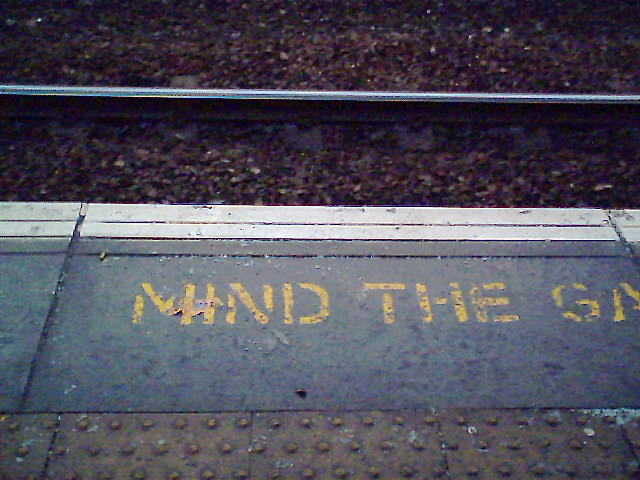
Mind the gap

mindthegap.jpg

It is in the spaces in between that things happen

.……..The Conqueror. Jan Kjaerstad

In a study of how we hear silences in music, Elizabeth Margulis has shown that not all silences are heard the same. In fact she has shown that both the music which precedes the gap and the music expected to follow the gap influence how long the listener experiences the gap to be and alters the quality of what they perceive.

A photo, a quotation from a novel, a scientific study…………they bring to my mind the Tibetan concept of a “bardo” as described in the Book of Living and Dying. I read it years ago but the idea of becoming aware of the gaps (bardos) has stayed with me. Spaces interest me. Shadows, the patches of light within and around shadows, the brief moments between breathing in and breathing out, between one thought and another. So here’s your challenge for today. Notice some spaces. What are they like? See how they are all different? How does life change when you start to notice the spaces in between?

Read Full Post »

« Newer Posts - Older Posts »