Feeds:
Posts
Comments

Archive for the ‘personal growth’ Category

John Berger writes

Because true translation is not a binary affair between two languages but a triangular affair. The third point of the triangle being what lay behind the words of the original text before it was written. True translation demands a return to the pre-verbal. One reads and rereads the words of the original text in order to penetrate through them to reach, to touch, the vision or experience that prompted them. One then gathers up what one has found there and takes this quivering almost wordless “thing” and places it behind the language it needs to be translated into. And now the principal task is to persuade the host language to take in and welcome the “thing” that is waiting to be articulated.

Interesting, huh? That mechanical translation matches word to word then seeks to get the grammar correct, but is the original idea or meaning translated well that way?

As I begin to live in a country where the language is not my first language, I find that, at least in this first phase, I’m translating all the time. Reading or hearing French and translating it into English in my head to understand the meaning. But already there are phrases which seem to require no translation, and phrases that pop into my head fully formed in French. I’m guessing that gradually I’ll do less and less translation.

But actually although Berger is talking about translating a text from one language into another, I think maybe the same issues apply to all communication. I have an idea or a feeling to express, pick some words, some phrases. I’m translating it into written or spoken language. Aren’t I? Which leads me to wonder about the rich diversity of inner lives. I’m sure we all get that experience, from time to time, where we think that someone else seems to come from another planet. Where their worldview is so different from ours that we don’t even seem to be speaking a common language, despite the fact that a superficial observation would lead to the conclusion that we are indeed speaking the same language.

When Berger mentions the third point of the triangle, I suspect he is thinking of our inner lives. That leads me to three questions today.

  1. How can I know my inner life?
  2. How can I express or show my inner life?
  3. How can I know the inner life of another?

For me, the first involves practices of awareness and reflection, the second, creative acts, and the third requires ongoing dialogue. Isn’t it interesting that all three have no end? I will never know myself completely, never be able to fully express myself, and never fully know another. That makes me feel both excited and humble.

Excited because all that is an adventure, a voyage of discovery, and a constant stream of revelation and wonder. It is the ‘émerveillement du quotidien‘.

Humble because nothing can be known completely, fully or finally. Montaigne knew that with his ‘Que sais-je?

Over to you now. How do you answer those three questions? You, personally, in your own life?

  1. How can I know my inner life?
  2. How can I express or show my inner life?
  3. How can I know the inner life of another?
Read Full Post »

webdrops

Why do I find the dew-soaked, rain-soaked spiders’ webs so appealing?

Three reasons, at least –

First, they are just so beautiful.

Second, each drop becomes a little lens, which shows the surrounding world upside down. Reminds me how everything we experience is through our personal lens, so our view of the world is always our unique, singular view.

Third, because the form/concept of links and nodes describes so well the phenomena of the world. Shifting our perspective from seeing a world of objects, to seeing a never-ending web of links, hubs or nodes, connections and relationships is exciting!

Read Full Post »

In the second part of the A to Z of Becoming, we’ve reached the troublesome letter “X”! In the first part, I chose “eXcite“, and in this part I’m going for “eXtol” (yes, I know they both start with an “e”, but make me a suggestion – what verbs do you know actually start with an “x”?)

To extol means to praise….to enthuse about, to rave about, to passionately, lavishly praise. So, it struck me, how appropriate to be choosing a verb which means to praise this month.

What, or who, would you like to praise, and why?

I’ll start……

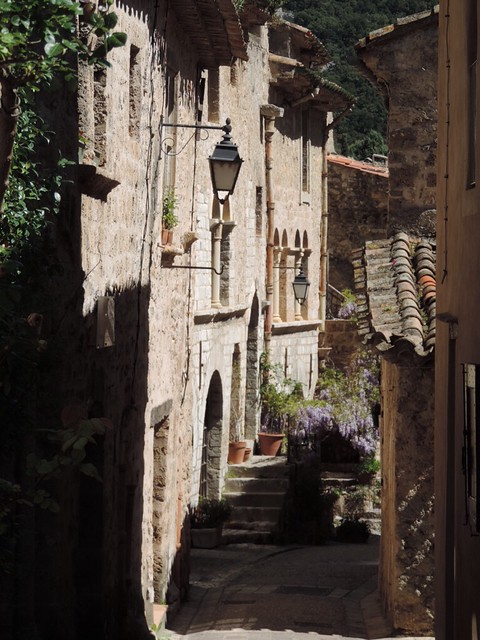
In April we visited one of the most beautiful villages in France – Saint Guilhem le Désert – it looks like this –
Saint Guilhem le Desert

In this village we stumbled across a tiny perfumier run by man called Nicholas Jennings. Here he is –

nicholas

Look behind him at his wonderful desk where he selects the various natural scents to make the products he sells in his shop.

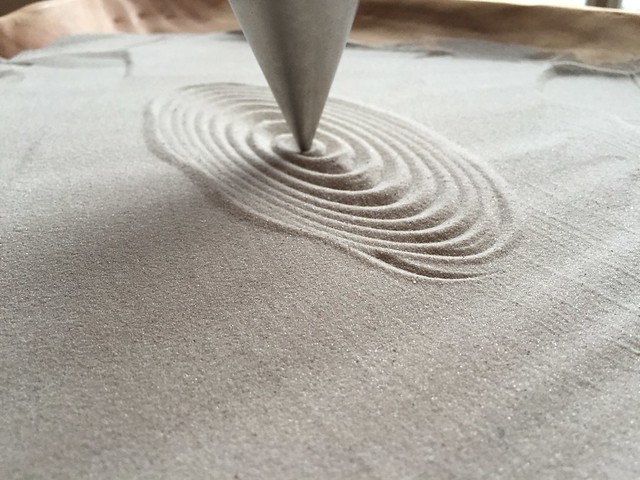
At the door of the shop, he had a wonderful pendulum drawing intricate designs on sand. Nicholas and his friend, Ludovic make them.

So, now that I have my study set up in my house in France, I’ve got my own “pendule de sable” hanging in the window.

Look!
Pendule

Written on the sand

Isn’t it wonderful?

So, there’s one thing for me to “extol”! The amazing, totally absorbing, pendulum of the sand.

And while I’m at it, I can enthuse about Nicholas and his wonderful perfume shop, and the village where it is – Saint Guilhem le Desert.

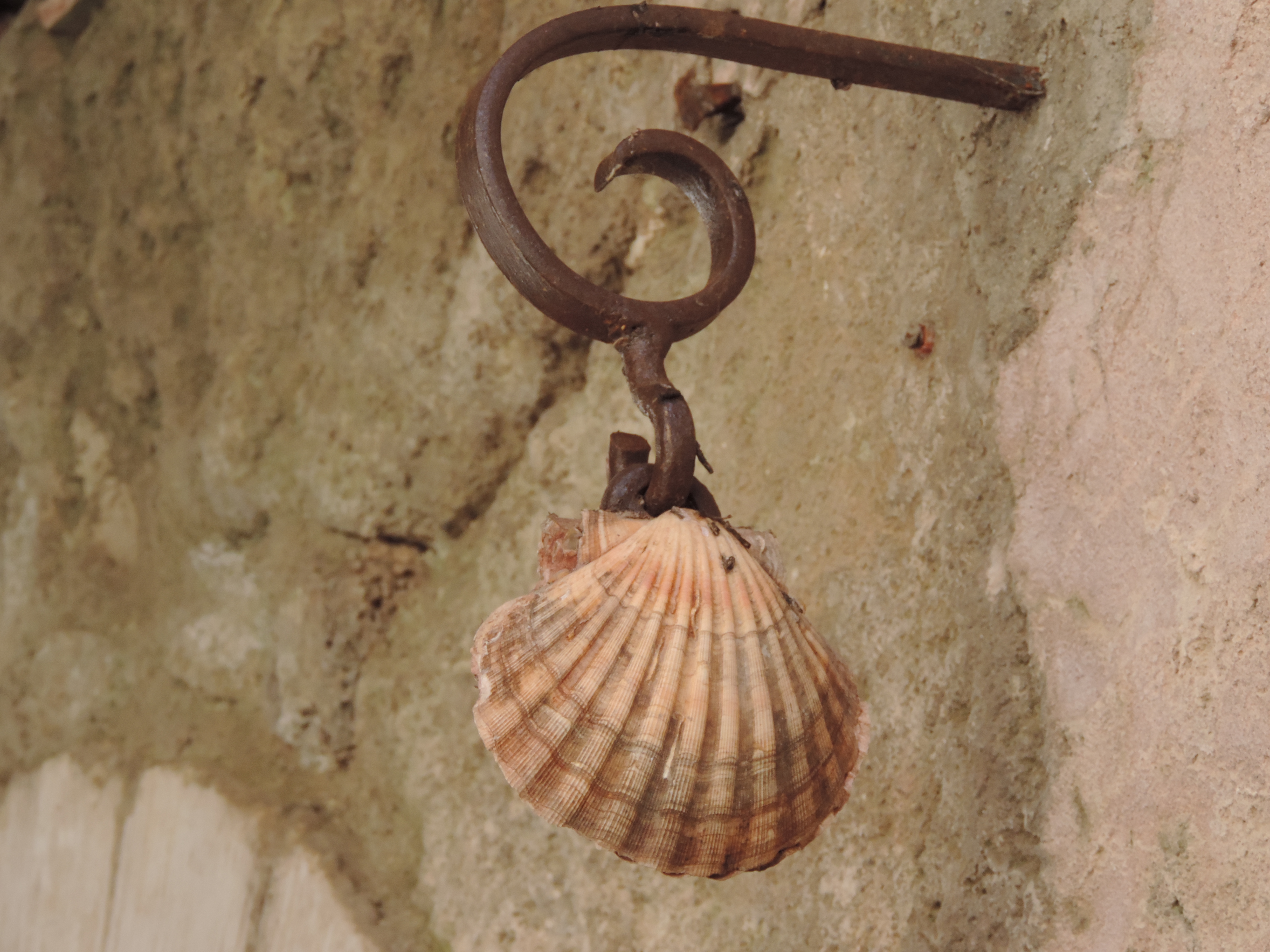
The village is on one of the paths of the pilgrims to Compostella – you can know that from seeing the saint-jacques shells everywhere…..

DSCN1100

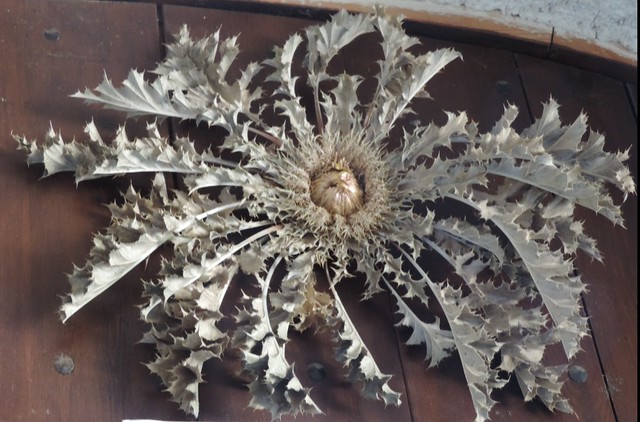
There’s something else unique in this village, and that’s the dried “cardabelles” on the doors. This is now a protected plant, but the villagers can gather them in season. It’s believed to bring luck and protection.

Cardabelle


So, as I set the pendulum in motion once more, I’m not only absorbed in the uniqueness of every single design it makes, but I remember Saint Guilhem le Desert, the cardabelles, the shells along the pilgrim’s way, and Nicholas and his shop.

See what joy can follow when you start to “eXtol” something?!

Your turn……….


Read Full Post »

heart in the keystone

I read an interview with the author, Alexandre Jardin, in the new edition of Cles magazine . He was asked why he is optimistic about the future and the first reason he gave hinged around a word which was new to me –  bienveillance – so I looked it up.

It means benevolence, or kindliness.

In his interview he said he thought there was a reaction to the negativity and extremism of fundamentalism and far right politics, and that reaction had the quality of “bienveillance” – benevolence or kindliness.

He has initiated a movement/website called “bleublanczèbres” – I know, sounds strange, huh? Blue and white zebras? Even if you don’t speak French take a look and get a feel for it. The focus is on acting. On doing. Which is totally consistent with my focus this year on the verbs of becoming (search on my site here for “a to z of becoming”). If you scroll down on the bleublanczèbres.fr site you’ll see a whole host of projects. Every project offers you opportunities to get involved and the things you can do are divided into three categories – things you can do if you have a minute, things you can do if you have an hour, and things you can do if you have a day. I love it. He describes the over all project as not a “think tank” but a “do tank”.

Whether you go and look at that idea or not, I think a good takeaway for today would be to ask yourself how you can ACT with benevolence or kindliness to the others you meet or share some time with (at home, in your neighbourhood, or at work or school) today. How about we put benevolence and kindliness at the heart of whatever we are building – make it the keystone.

Try it, and see what it feels like.

Alexandre Jardin seems to believe we can grow the amount of “bienveillance” in the world by our actions. I think he’s right.

As Gandhi said

We must become the change we wish to see in the world

Read Full Post »

difference

Wouldn’t it be great if difference was seen to be something interesting, attractive, even beautiful?

If we could not just respect and tolerate difference, but encourage it and celebrate it?

Wouldn’t it be great if we didn’t try to make everyone the same?

Read Full Post »

where I write

Here’s where I write.

The reflection of the sky in the window of my study really caught my eye. In fact, I’d say it caught my imagination.

Imagination.

Too often these days imagination is harnessed to fear. Our daily newsfeed from the media provokes us to think about and worry about the most awful horrors. During the Referendum campaign in Scotland this year the No camp bombarded people day in, day out, with scare story after scare story. How else can a minority continue to hold power over the majority? How else can a fraction of the 1% who grow richer by the day, no, by the minute, continue to exert power over the 99%? Is it any wonder that in democratic societies so many are disenchanted with politics? Where are the politicians and parties with vision….with spectacular, engaging ideas and passionately held values which motivate us to create the solutions to the problems which face us?

It seems to me that we need to fire up peoples’ imaginations.

Where else are we to get our new ideas from? Where else are we to get our hope from?

Ursula Le Guin, the author, received a medal at the National Book Awards recently, and she said this

I think hard times are coming, when we will be wanting the voices of writers who can see alternatives to how we live now, and can see through our fear-stricken society and its obsessive technologies, to other ways of being. And even imagine some real grounds for hope. We will need writers who can remember freedom: poets, visionaries—the realists of a larger reality. Right now, I think we need writers who know the difference between production of a market commodity and the practice of an art. The profit motive is often in conflict with the aims of art. We live in capitalism. Its power seems inescapable; so did the divine right of kings. … Power can be resisted and changed by human beings; resistance and change often begin in art, and very often in our art—the art of words. I’ve had a long career and a good one, in good company, and here, at the end of it, I really don’t want to watch American literature get sold down the river. … The name of our beautiful reward is not profit. Its name is freedom.

I so agree.

Hard times seem to be coming. For many, they are here already. We DO need the writers who can see a way ahead and inspire us to create a better future. We do need to writers who “remember freedom” and count it as “our beautiful reward”. And we certainly need writers who can “imagine some real grounds for hope”.

I hope that, daily, little by little, I am becoming one of those writers……

After all, if we can’t imagine real grounds for hope, how do we carry on?

Imagination is such a precious and amazing facility. We can use it to solve problems. We can use it to create – art, music, literature, new thoughts and new acts…..not just, as Ursula Le Guin says “other ways of being”, but other ways of becoming!

If we are to realise our potential to become heroes not zombies, we’re going to need those writers who can fire up our imaginations…….. to think creatively, and, importantly, to DO things differently.

If we believe freedom is possible, aren’t we going to have to use our imaginations to create it?

Read Full Post »

a wish

In the second part of the A to Z of Becoming, W stands for Wish.

How nice, that we’ve come to this verb at this time of year!

You might want to make a single wish, like the Japanese one I saw above, or to create a whole flourishing bush of wishes, like in this next photo….

blossom of wishes

Or you might be a more organised type, and like your wishes in rows and columns! –

making a wish

Whether or not you choose to tie your wishes to a tree, or a fence, or a line of thread, I think it’s a great idea to actually write your wishes down and put them somewhere! This Japanese tradition is an attractive one. Why not try it?

Do you think wishes come true? Well, have you ever heard the phrase “Be careful what you wish for!”?

What does that mean? Does it mean you might not like what you get even when you’ve longed for it? Or because you might not have thought through the consequences of your wish? Does it mean you shouldn’t wish lightly? But only after careful consideration?

Whatever it means, the person saying it clearly thinks that wishes might indeed be fulfilled. Otherwise, why be careful?

I think wishes are often fulfilled. But I don’t think wishes are the same as magic spells. There’s some similarity between wishes and goals. Both provide some kind of focus, some kind of direction and I think a wish is more likely to come true if you apply something like the “SMART” principles which people apply to goals – “Specific, Measurable, Assignable, Realistic, Time related”.

I wouldn’t map the same criteria directly onto wishing, but I do think wishes are more likely to be fulfilled if they are at least specific, realistic and time focused.

I think there is also a relationship between wishes and hopes. Someone without hope is unlikely to make a wish.

What about you?

What place is there for wishing in your life?

Would now be a good time to draw up your own list of wishes for yourself for the coming year? Would that be a nice complement, or alternative, to resolutions, or goals?

And what do you wish for others?

When you wish something for someone else, maybe the wish is more likely to be granted if you actually do something to help make the wish come true. What could you do to help make your wishes for others come true?

I think that also applies to your own wishes, by the way – the ones more likely to come to pass, are the ones you actively work towards……

One final thought about wishes. Values-based wishing is likely to orientate you towards acting according to that value. For example, if you wish there was more kindness in the world, you are reminding yourself how much you value kindness, so you are giving yourself a chance, not just to act more kindly every day, but to open yourself up to acts of kindness in your life.

Read Full Post »

swans at the weir
So, I saw these two swans standing calmly on the edge of the weir and I thought maybe one was saying to the other “dinnae fash yersel” – or don’t worry/don’t get upset……..and how that attitude then turned out to be typical of this part of the world.

Not long after moving to the Charente region of France I was in the Orange shop trying to organise a phone line, broadband, a French mobile….and the assistant was on her computer trying to set me up with a new account. Something went wrong and she had to phone for help. After a few minutes of clicking here and there and conversing with her support line, she said “Soyons Zen” and finished her call. “C’est ça”. That was it sorted, our account was created and off we went.

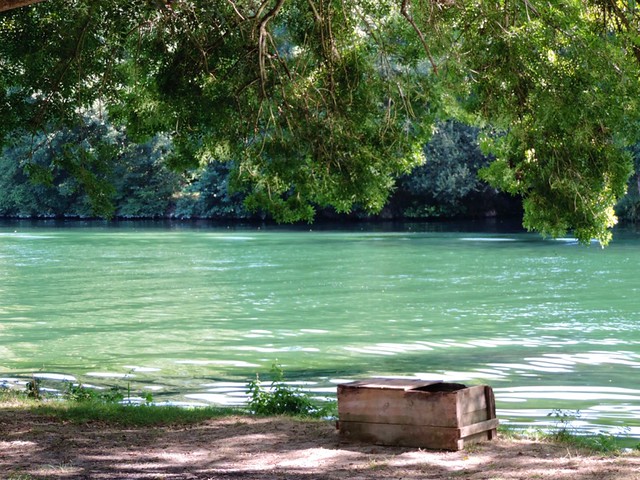
I liked the phrase “Soyons Zen”, which means something like “Let’s be Zen”, or “Let’s stay Zen”. I think that little exchange says so much about the quality of life in this part of the world. Repeatedly I’ve found people helpful, friendly and not inclined to get agitated or upset easily. Maybe I’ve just been lucky, but the Charente river has the reputation of being a calm, flowing river through these parts.


the Charente

One of the nearby villages is Segonzac, which is a signed up member of the “Cittaslow” movement.

I do think there’s something about this environment which seems to generate this attitude to life.

Which makes me wonder…..how much does our physical environment influence the way we experience life?

Read Full Post »

Rainbow fountain

I’m using this photo of a rainbow appearing in a fountain because I think rainbows are a symbol of hope, as well as being a phenomenon which exists only in the presence of the subject (the observer), and a fountain which is symbolic for me, of the life force, that flowing healing energy which enlivens and heals us all.

Isaac Judaeus lived from 855 to 955. He was physician to the Fatimid rulers of Qairawan in Tunisia, and his works were amongst the first to be translated from Arabic into Latin at the time of the great translations which brought Arabic thought and science to the notice of the West. His books had a big influence on Western medieval medicine, still being read into the 17th century. There’s a small book of his, Guide for Physicians, which only exists in Hebrew translation, where he sets out his ethical conception of medical practice (remember this is writing from the 9th and 10th centuries). I’ve only read a few of his aphorisms, but this one, in particular, caught my eye.

Comfort the sufferer by the promise of healing, even when thou art not confident, for thus thou mayest assist his natural powers

What’s he saying here?

First of all that physicians should comfort the sufferer. Sadly, that’s an element of health care which patients don’t always experience. Shouldn’t physicians always offer care and comfort?

Secondly, they should do this “by the promise of healing”. He goes on to say “even when thou art not confident”. Wouldn’t this be deceit in some situations? One of my earliest experiences as a young doctor was admitting a very elderly, very ill lady to the ward where I worked. Her also very elderly daughters were hugging each other on the seat outside the ward, wringing their hands, crying and upset about what was happening to their mother. I thought I’d comfort them and said “Don’t worry. Your mother is in the right place now. I’m sure she will be fine” They smiled to me just as one of the nurses came out of the ward and called me aside. “That patient you just admitted doctor? She’s just died”. Well, that taught me a lesson. But it didn’t stop me practising with hope, practising with the expectation that there was a potential for things to go well. It just taught me never to assume I could accurately predict the future!

I still believe that. I believe none of us can predict the future….especially not in the case of the particular, the specific, individual circumstance. I was surprised many times throughout my career when patients did so much better than the textbooks would have predicted. So, I often thought, the truth is that as you look forward from this point in time, there are a whole range of potential paths leading from here into the future. In the situation of illness, some of those paths will be largely ones of decline, some of stumbling along, and some of steady, or sudden, improvement. And nobody, but nobody, can accurately predict which path this particular patient will take. Therefore, at each stage of the process, hope is not only possible, but is as reasonable an option as any other.

That’s what I understand about “the promise of healing” – it’s not really a promise, in the sense of a guarantee, but a potential (in the way we say something may be “full of promise”). And I think acting from that perspective contributed to the improvements patients experienced.

That’s the final part of Isaac Judaeus’s aphorism – “for thus thou mayest assist his natural powers”.

I can’t see there is any healing other than that brought about by the human being’s “natural powers”. I’d describe them now in terms of systems theory, or complexity theory. Those natural powers are the power shown in any “complex adaptive system” – the powers of self-regulation, self-defence, self-healing…..the “autopoietic” “self-making capacity” of a person.

Medical acts, medicinal substances, physicians’ interventions are only truly healing when they work with, not against, this capacity. That’s why doctors should always remain humble. It’s not what we do that heals. It’s what we stimulate and/or assist….the astonishing self-healing powers of the human being.

In contemporary thought, these “natural powers” Isaac Judaeus refers to are often wrapped up in the idea of the “placebo effect”, but, sadly, that’s a concept so entangled with ideas of trickery and deceit that the “self-healing” powers get lost in it.

So, here’s what I get from that old aphorism –

  • offer comfort and care
  • offer hope and the promise/potential of healing
  • and in so doing assist the natural or self-healing powers found in every human being

One of my hopes for the future of Medicine would be that we learn many other ways to assist those “natural powers”.

Read Full Post »

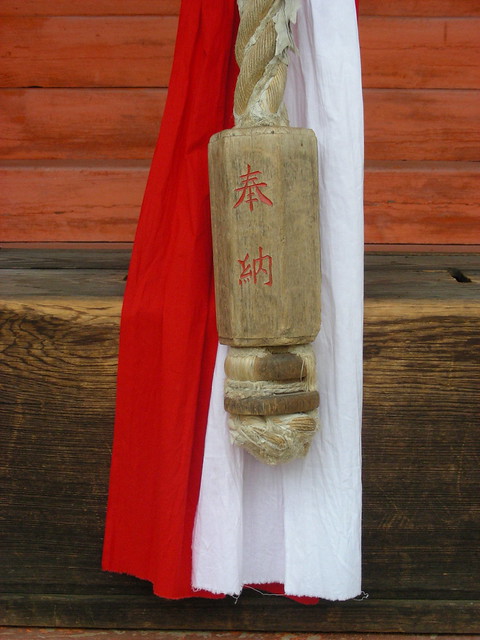
bell rope

In my monthly themes, December is the month to focus on gratitude.

I know, for many, your thoughts will be turning to gifts….what to give and what you hope to receive. I just wonder how your choices might be affected by keeping your focus this month on gratitude. Maybe then ever gift you give will demonstrate, somehow, something of the gratitude you feel towards the recipients of your gifts.

Many studies have show benefits, in terms of mental and physical well-being, which emerge from the practice of gratitude.

Have you ever thought about starting a “gratitude journal“? This might be a really great month to try it out.

Even if you don’t want to start a gratitude journal, why not take the opportunity of December to focus on gratitude anyway? Who do you want to say thank you to? Go ahead, tell them. What do you feel grateful for? Take a moment to think about exactly what it is, and to allow yourself the full benefits of feeling that gratitude swell in your heart as you contemplate it.

Or maybe you’d like to create, or participate in, a ritual of gratitude?

There’s certainly no single, only way to focus on gratitude, so explore a few ideas, and see what works best for you.

Read Full Post »

« Newer Posts - Older Posts »