Feeds:
Posts
Comments

Archive for the ‘psychology’ Category

I’ve read before that one of the major differences between Japanese and English garden design is that in Japan the emphasis is on what the garden looks like from inside the house, whereas in England the garden is designed from the perspective of the observer actually in the garden.

I think that’s probably an over-simplification and as with pretty much all generalisations it should be taken with a pinch of salt.

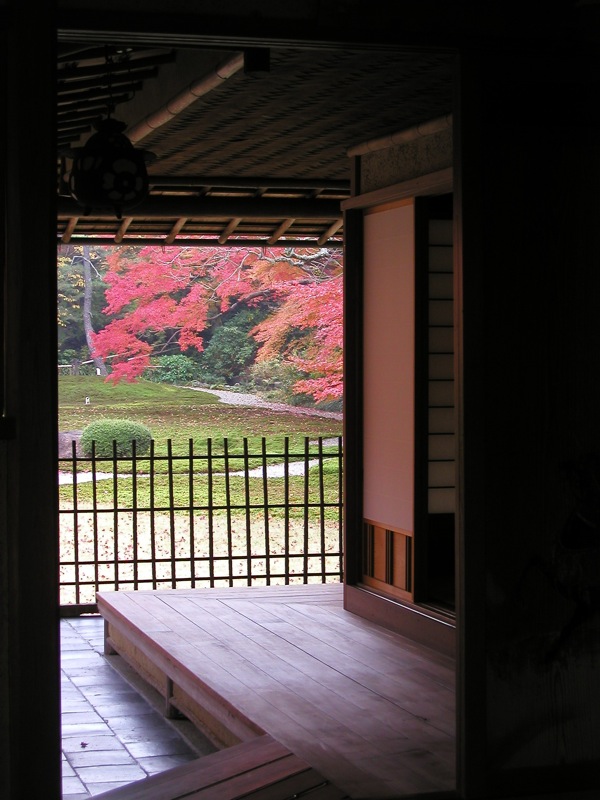
However, here’s an example of a Japanese garden. I took this photo form the interior of a temple, and you can see that the garden pulls your attention towards it. Not only does the window seem to create a frame for a beautiful picture, but the wooden flooring leads you out of the room towards the fence inviting you to enter the garden…..but only to the edge.

Maybe that’s partly where this idea comes from that the aesthetic in Japan is to create the experience for the observer standing just a little bit outside of the garden.

But, now, look at this next photo, which I took during the same visit to the same garden.
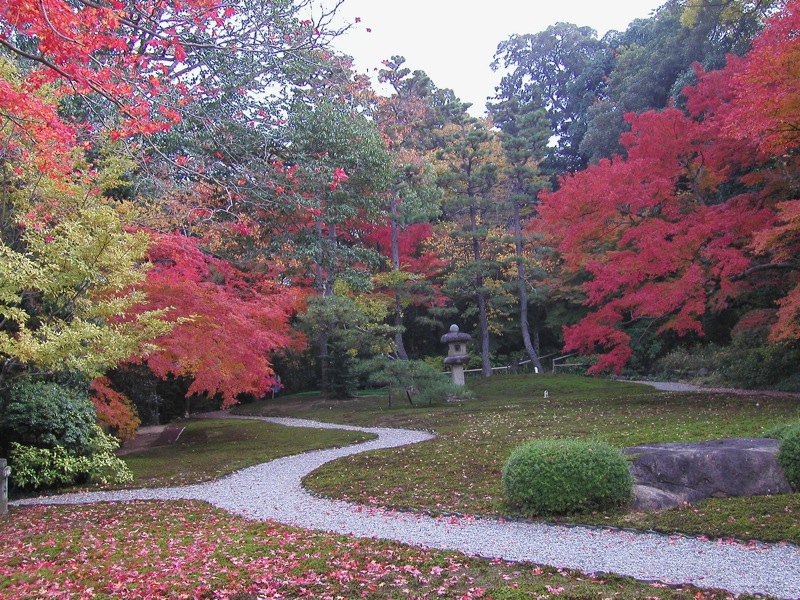
This isn’t a garden just to be looked at from the outside. Look at these winding paths, the stone lantern, the opening between the trees, the well trimmed low shrub, the grey rocks. This is all absolutely begging you to get out onto that path and experience this garden as it unfolds around you! This is a garden to be experienced from the inside of the garden itself.

How do I reconcile these two views and these, at face value, conflicting sets of design value?

And not or“.

Here’s some of the true genius of Japanese aesthetics, in my humble opinion…….a resolution of polarities to create something greater than either of the poles can achieve by themselves.

This is a garden created to be beautiful and inviting from inside the temple, AND to be beautiful and inviting once you are in the garden itself. Both of these experiences are so memorable, and dovetailing the two perspectives into one takes the entire visit to a whole other level.

I find this incredibly inspiring. It inspires me to connect to, to seek out, and to create, beauty. It inspires me to break down the artificial boundaries between perspectives – to bring the view from outside the garden into the view from within the garden. It inspires me to create curiosity and intrigue as well…..because don’t you just want to walk along that path and have a closer look at those rocks, that shrub, that stone lantern? Don’t you just want to walk along that path and “bathe” in that gorgeous forest of colour? Don’t you just know in your bones that this is the kind of thing which is “good for you”, which will nourish your soul, stimulate your body and your mind, enrich your life?
Read Full Post »

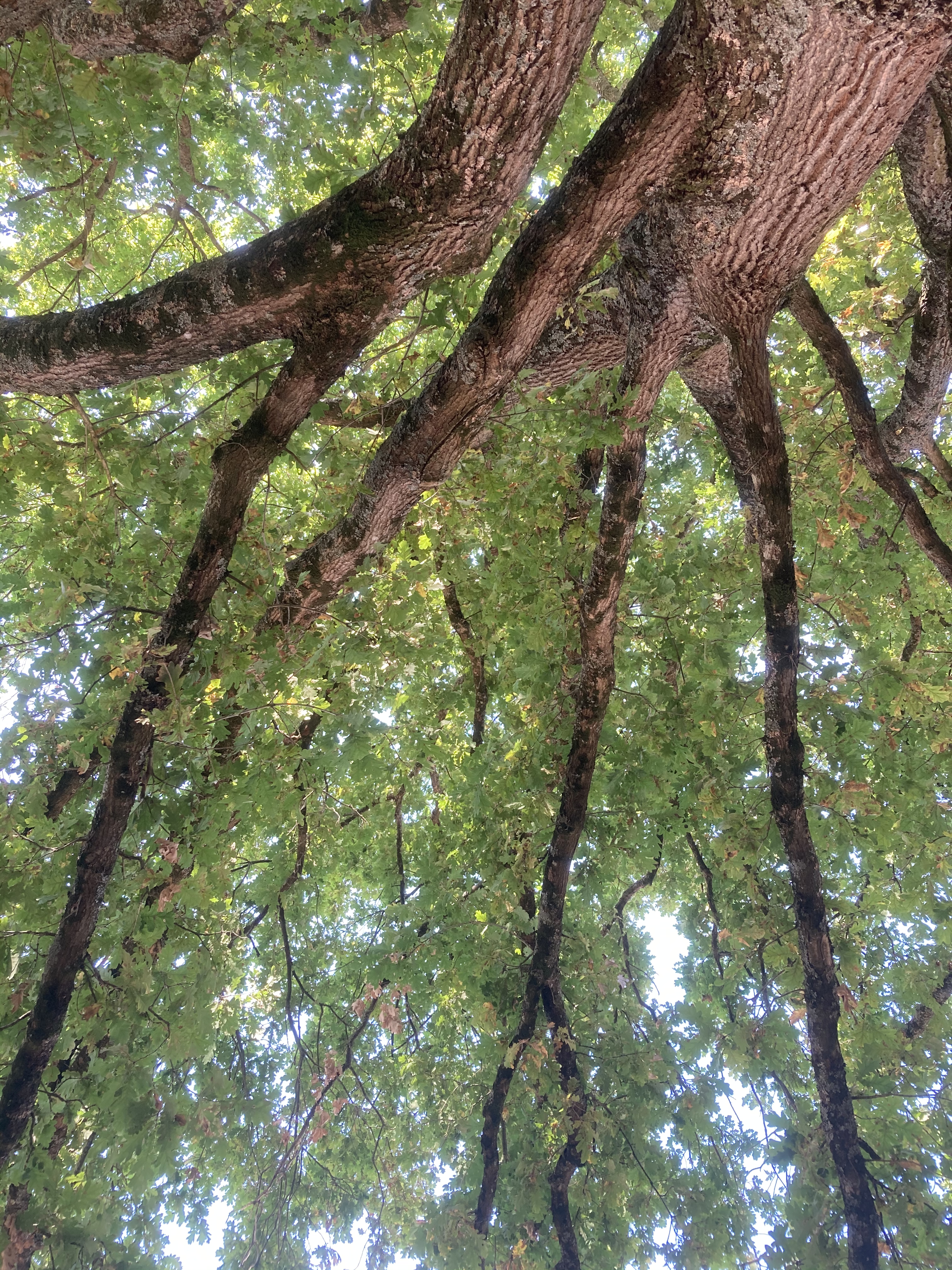
When we look up the world looks very different.

This is not the view of a tree which you’d usually see in a photo, and I think it stands out all the more because of that.

In “Metaphors we live by”, Lakoff and Johnson make a convincing case for the embodied nature of the metaphors which underpin the meaning of so much of our speech. We take these metaphors so much for granted that we don’t even notice them. They give many, many such examples in their book, but the one which comes to mind as I write this is the one I used for the title today – “Looking up”.

Looking up is something we do physically, as you see in this view of a tree. “Looking up” also refers to our position in the physical world. We’d have to be very tall to look down on most trees! We look up to see what is above us…..or to raise our eyes from the ground if we happen to be walking around with our gaze fixed somewhere just between our noses and our feet.

The important insight about the embodied nature of our metaphors is that we can find clues in the language we use which can point in two different directions – they can indicate something about our emotions and our behaviours, but they can also indicate something about our bodies.

Once I learned that insight I became even more alert to the exact language a patient would use when describing their symptoms and experiences. Sometimes the words and metaphors they chose were the clues to finding their pathologies, and the way in which they were unconsciously trying to adapt to those pathologies. But that’s for another day.

Today I just wanted to highlight how physically “looking up” can actually link us in to the emotions, values and behaviours of “optimism”, of “looking forward” and of looking ahead with some flavour of brightness or expectation. Because it seems to me that we are pretty desperately needing a bit more positivity just now.

So, here’s my thought……maybe if we go out and deliberately, consciously, look up more, it will influence our mental state at a deep, unconscious, and emotional level and work as a kind of “reset” to enable us to engage with our lives more positively in the year ahead. And maybe if we do that, then as the active co-creators or reality, we will actually begin to build a better world.

As you raise your glasses at the end of the year, here’s to a time when things begin to “look up”!

Another world is possible.

Read Full Post »

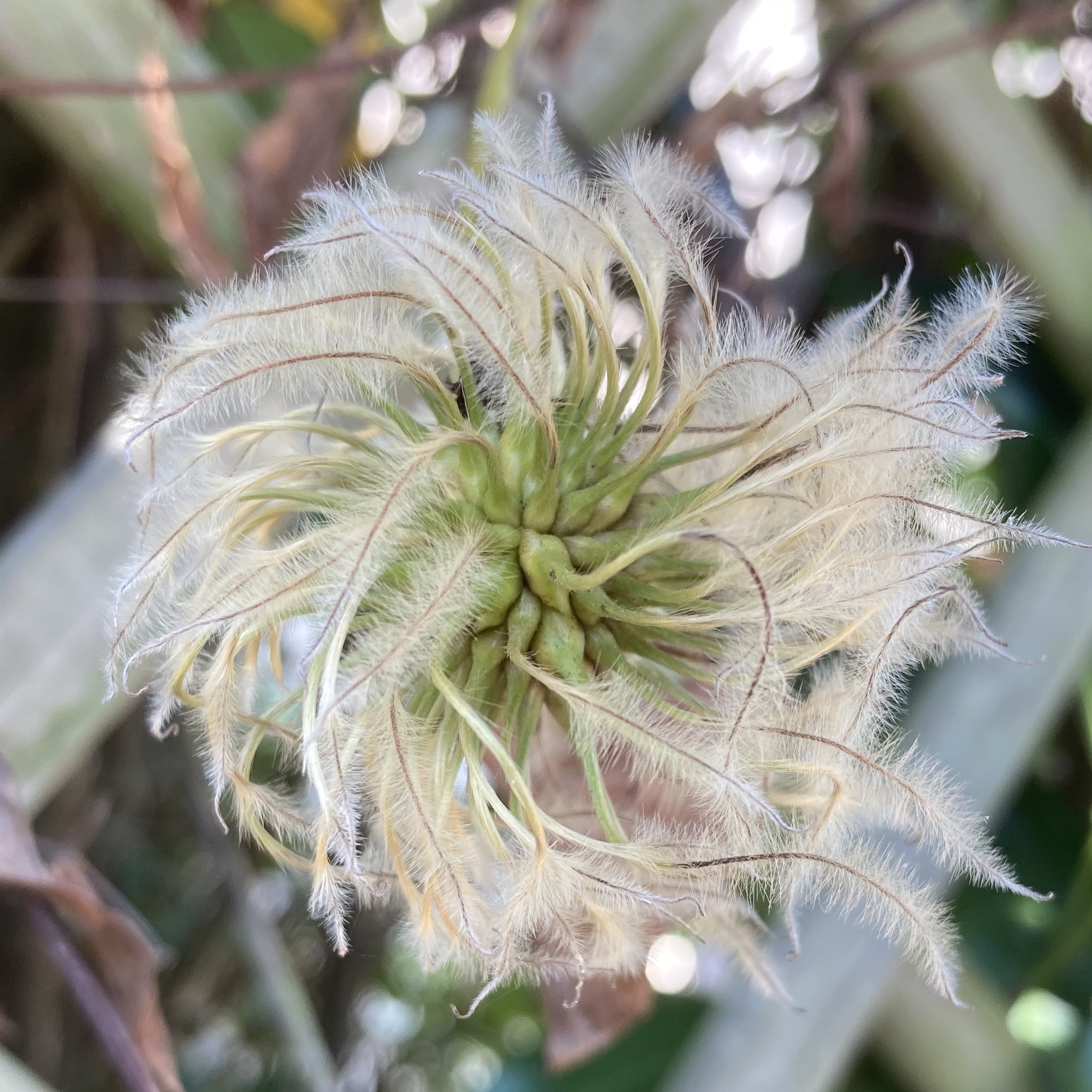
This is one of my most favourite photos of a seed head. When I was a child I guess the “dandelion clock” was the seed head we all knew best, but as I’ve got older I’ve realised there are an immense diversity of “wind dispersal” structures and systems used by a variety of plants. I do find them truly beautiful. But they do more than entrance me, they inspire me too, and perhaps this one more than most.

I love the whole phenomenon of wind dispersal. This is the way a plant handles that most crucial aspect of life for any species – expanding its reach physically (to other fields, other landscapes, even other continents), and expanding its reach temporally (by reproduction – by reaching into the future and create the generations to come).

No species of life would survive unless it did this – yet look at the way these plants handle it – not by setting goals, measuring and calculating and trying to control all the variables – but by trusting to the planet – by holding their seed high and waiting for the wind to come, pick them up and carry them to their future destinations.

This is SO different from our drive to be in control of everything. I’m not saying our controlling drives aren’t useful, I’m sure they are, but I am saying we should learn from the rest of the natural world sometimes and pick up this principle of letting go, of trusting that when you live in harmony with the rest of Nature, then you will survive and thrive.

Of course this is not a way for we humans to procreate and raise children – leaving them outside for the wind to carry them away! But that’s not what I’m saying…..we are not adapted to survive through the specific method of wind dispersal! No, what I think we can learn from this is the deeper, more widely applicable lesson – that we should live in harmony with, in tune with, in association with, in collaboration with, the rest of the natural world, rather than seeing the rest of the planet as something outside of ourselves just waiting to be plundered, consumed and controlled.

But there’s something else in this particular seed head – that glorious spiral shape. It seems to me that the spiral, looping model of time makes a lot of sense….the way the cycles of Nature appear – from seasons, to moon phases, to birth, growth, maturity, decline, death and birth again……

A spiral is also a very dynamic shape – it looks like it is moving. It captures that truth that change is constant, that nothing every stays the same.

I hope you find something inspiring in this photo today – it really is one of my favourites.

Read Full Post »

I love a blue sky. There’s something incredibly uplifting about seeing blue filling your whole view from horizon to horizon. But of course, not many places in the world see blue skies like that every day, and those which do, tend to suffer from a lack of clouds and, so a desperate lack of rain. So, it’s not that we should want blue skies every day. There’s a lot of wisdom in the observation that we need contrasts, that we need the dark to appreciate the light, and the light to appreciate the dark. There’s a Scandinavian wisdom in plunging into the snow and ice when you step out of a sauna!

I understand the need for these opposites and contrasts. But that takes nothing away from the joy and delight in what is….right here, right now.

Today the weather forecast is wrong again. I went to bed expecting to have a day of rain when I woke up, but instead I’ve woken up to a blue sky. I can see white clouds making their way across the low horizons, and maybe they will spread and bring rain later, but, for now, I’m enjoying the blue.

Perhaps that’s why this particular photo caught my eye this morning. You see these gloriously faded, distinctively blue signs all over France, but especially in the South. I’m no expert in colours but there is something about this particular shade of blue which evokes a whole culture for me. It’s the colour of France, the colour of the Med, it evokes memories of cafes and bars, of village squares and tables under spreading plane trees. It evokes vineyards, fields of sunflowers and hillsides of lavender. It entices me to buy a bottle of Rosé and a small bag of olives.

Amazing what a colour can do……

So, here’s my challenge for you today – find a colour somewhere – in the sky, in the garden, on your bookshelf, on your wall, in your closet……just find a colour that attracts you, that brings you joy, that stirs your heart and lifts your spirits, and allow your mind to recall the times and places that colour evokes, allow your mind to re-create those moments of beauty and happiness. Allow yourself to bask and bathe in those experiences for a little while. I have a hunch, it’ll do you good.

Read Full Post »

I love forests. I love how the sunlight filters between the trees, drawing my attention from shadows and patches of sunlight, up towards the trees themselves, and further up to the Sun itself.

It’s one of those magical, enchanted scenes we encounter in life. It takes the Sun, the trees, the forest, and an observer (in this case me) to have this encounter, to experience this event, to delight in this moment.

I know it’s said that a rainbow only exists with the triad of sun, rain and observer are in place, so that we need to be standing at a particular angle to the sun and the rain to see the rainbow appear.

I think the light in the forest is like this too. The world is not an object “out there” waiting to be seen by me “in here” witnessing everything from disconnected observer’s box, like a birdwatcher crouching in a hide.

No, I am the co-creator of this life I am living. These experiences I have come into being, emerge, if you wish, from the interactions of everything that is……from the Sun, the trees, the forest, from consciousness. Everything changes in that moment….my consciousness, the forest, the trees, and even the Sun. We “commune” together.

You would have a different experience from me. Maybe you have had similar ones, but, we never have the same ones. I have had similar experiences at different times, but they are not the same experience, because I can only have this particular, this special, this unique, experience one, single time.

How wonderful, how amazing, how delightful…….I hope I don’t miss it next time.

Read Full Post »

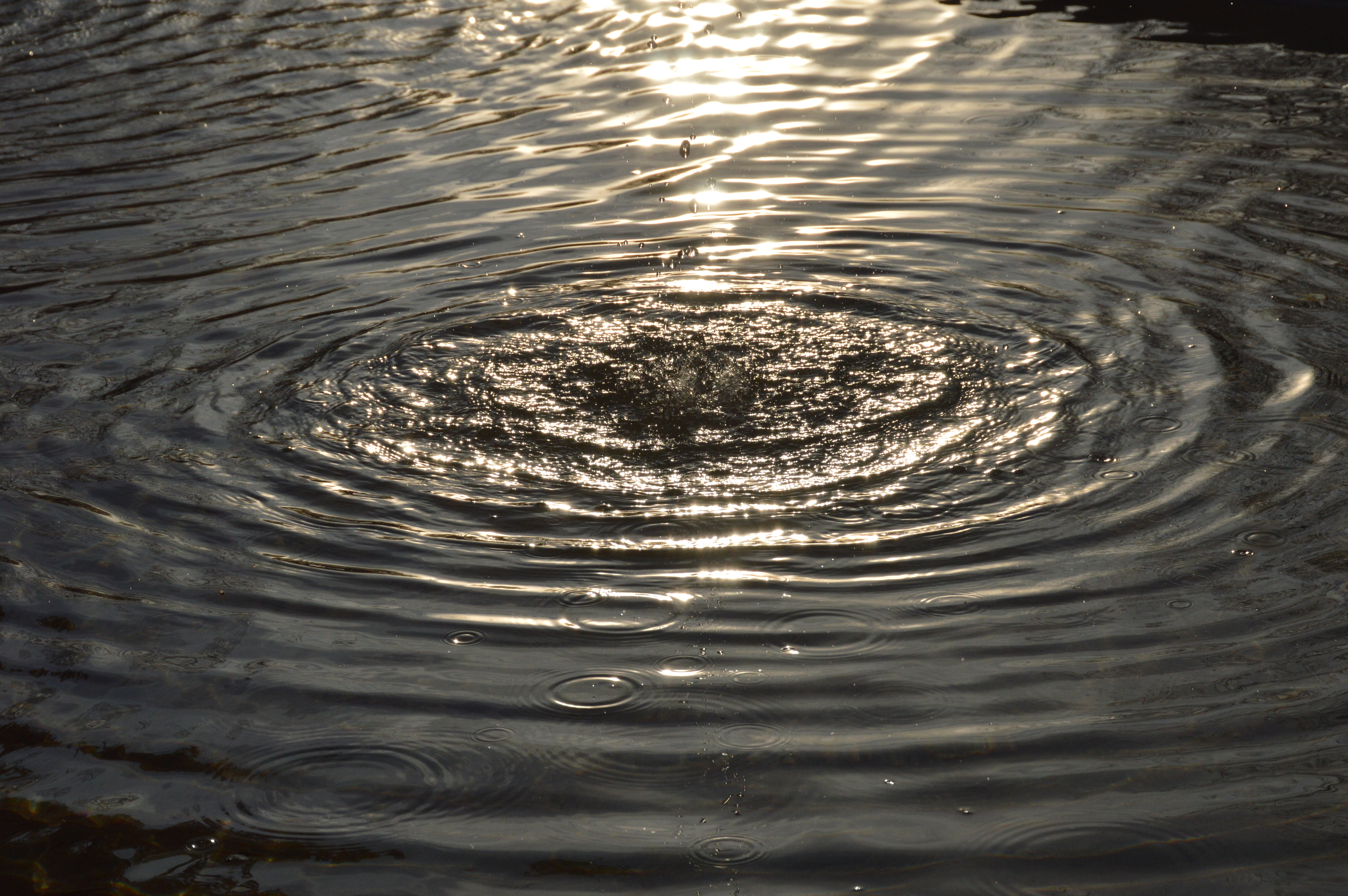
Aix en Provence is a city of fountains. There are dozens of them throughout the town. This one, in the Cours Mirabeau, is a simple bubbling up of water in the middle of a round basin. It’s not a dramatic spray or jet of water, but I love it. I can sit and watch the patterns on the surface of this water for ages. They are mesmerising.

At first, you could have the impression that there is one main point of activity, where the water emerges from the bottom of the basin, sending out concentric rings of ripples towards the outer edges of the fountain. They look like the rings inside a tree, and they remind me of how a small action spreads its effects over the whole body of water.

But, you don’t have to look terribly closely to notice that there is more than one centre of action in this fountain. I’ve zoomed in on just one of the several points where the water bubbles up onto the surface. Up in the top left of the image you can see some of the ripples which are clearly coming from another source. Those ripples interlace themselves with the ones from the centre focus, reminding me of a lesson I learned in school when we were studying waves – it’s called “interference” – two concentric circles of waves meeting each other, with two peaks creating a big peak, two troughs creating a deeper trough, and peaks and troughs cancelling each other out when they meet in the same time and space. It’s a beautiful pattern and you’ll be familiar with it.

This image of “interference” from two sets of ripples already demonstrates the beauty of interaction and complexity. It reminds me of the “attractors” we see in all complex systems, and also reminds me that “attractors” do not necessarily pull everything towards them the way the pole of a magnet does. Rather, they are organisational centres, influencing the structures and patterns of the environments in which they exist.

But, wait a moment, we aren’t done. Look a bit closer and you see a number of smaller circles dotted across the larger pattern of the concentric circles. Each of these is caused by a drop of water falling from higher up in the fountain, or from a splash which releases a few water molecules from the mass, a few molecules which fly through the air, then fall onto the surface a short distance from their origin. Look how each of those circles enhances the beauty and complexity of the overall pattern.

In the real world, in the natural world, there is no such thing as simple cause and effect. Everything which happens, occurs within an interconnected web of events, influences and forces. There is always this interplay. There is always this complex beauty which renders the future unpredictable.

What we experience, our health, our illnesses, our joys, delights, our sorrows and pains, are always multi-factorial, always complex in origin, always multiply connected. We pull out some of the threads, focus on some of the events and factors, and create a story which helps us to make sense of what we experiencing. that story is necessarily always complex, always changing, always developing.

I read a passage written by Umberto Eco the other day –

Per ogni problema complesso esiste una soluzione semplice. Ed è sbagliata. (For every complex problem there’s a simple solution. And it’s always wrong.)

Read Full Post »

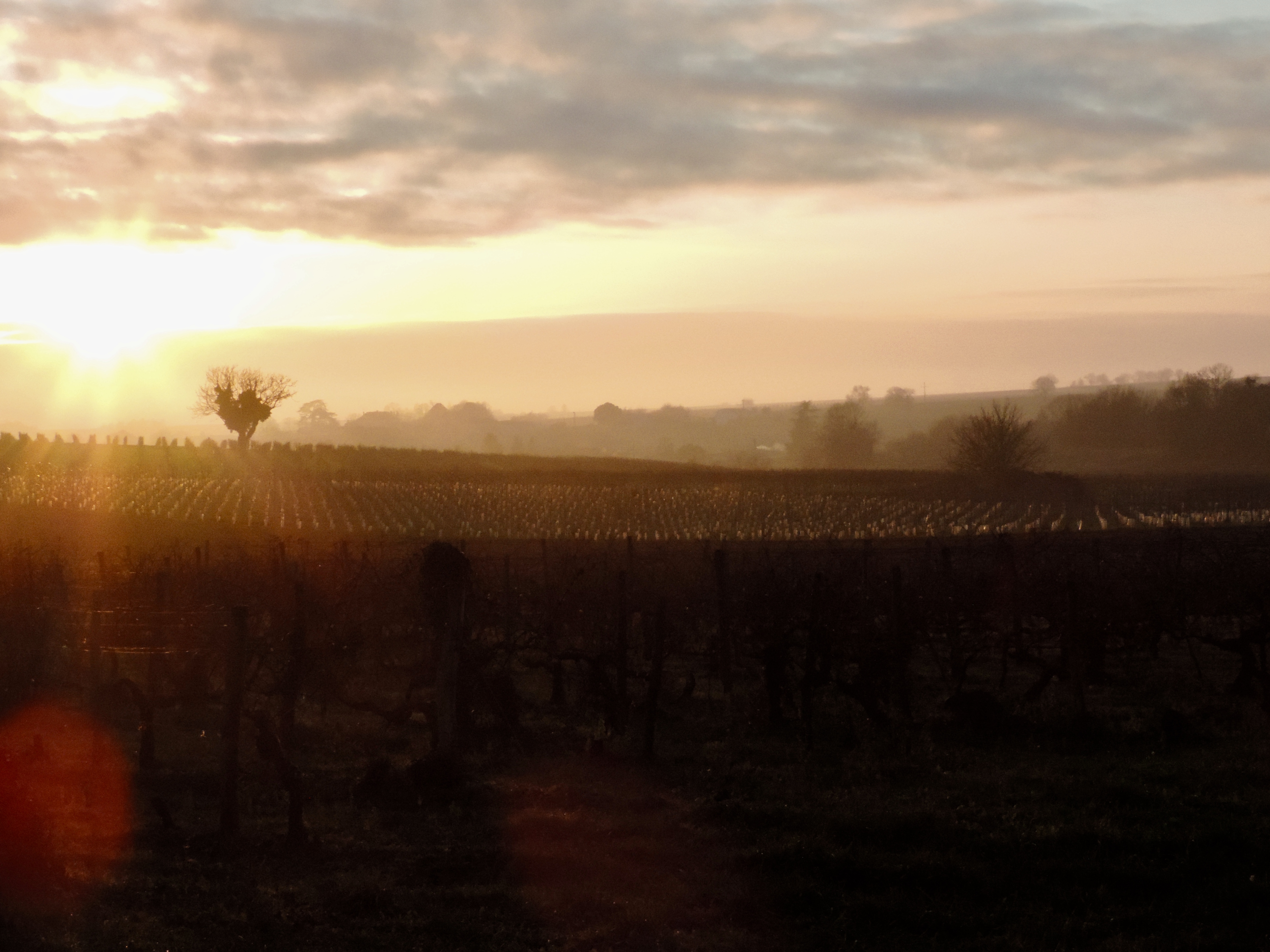
I was never aware of the “Belt of Venus” before I moved to South West France. The first time I saw it, I thought, how come there’s that’s pink colour just above the Western horizon as the Sun rises in the East? When I looked it up, I discovered it was the “Belt of Venus”. Since then, I’ve noticed it many times.

I suspect I am more likely to look towards the East in the morning as Dawn breaks, and to the West in the evening as the gorgeous sunsets transform the sky into works of gold, tobacco brown and all shades of red.

But now I know to look the other way. I look towards the West when I am up at dawn, and what beautiful rewards await me for making that decision.

We are creatures of habit. We tend to observe in habitual ways. We tend to think in habitual ways. So, we repeat the same experiences again and again. Sometimes that can be a good thing, when our habits bring us joy, comfort and contentment. But, it seems to me that often those habits extort a high price, keeping us stuck, blinding us to opportunities, engulfing us in rumination and regret.

So, I find it’s good to look the other way sometimes. Not as in denial, neglect or in choosing ignore someone or something which needs our attention, but in consciously setting up the opportunities to change the tune, to open a few more doors, to release our abilities to imagine and to dream….in other words to increase our joy, our wonder and our delight, and to embrace our natural capacities to create, to invent, and to change.

You might think that this is a call to do the opposite of whatever it is you are doing, but I don’t think it’s limited to that. Looking to the West in the morning is not a simple opposite to looking to the East (after all, I do look to the East to see the sun rising as well). It’s more about expanding the attention, stepping out of narrow, well-trodden paths, and seeing what else is here…..right here, right now.

This exercise of looking the other way is, for me, one of releasing myself from the familiar, sticky, narrow focus of the left brain, to develop the broader, novel-seeking, particular-seeking, connection-making focus of the right brain.

Read Full Post »

I’ve long since been drawn to Romanticism. I feel they bring some extra, something deeper, something substantial to the dominant perspectives of the rationalist Enlightenment thinkers. It’s a funny thing, because in many ways I think I’ve lived with a foot in both camps. I trained in Medicine, practised as a General Practitioner for the first half of my career, then as a Specialist in what we came to call “Integrative Care” for the second half. That second half move was enabled by my training in Homeopathy which gave me a different framework to understand individual health and illness, as well as a set of therapeutic tools. We specialised in the care of people with long term conditions at the “NHS Centre for Integrative Care” in Glasgow, with the majority of our patients coming to us for help when they felt orthodox care wasn’t helping them enough. But we had a foot in both camps there, because our hospital was embedded within the Scottish NHS and we had access to all the tools, specialist help and advice of all that orthodox care could offer.

What does that have to do with Romanticism? I’m not sure, but I’ve recently been inspired to explore the Romantics in more depth, because I heard an interview with Eugene McCarraher about his new book, “The Enchantments of Mammon“. He talked a lot about the Romantics and I remembered that Iain McGilchrist had written about them too, so I picked “The Master and His Emissary” off my “most significant books bookshelf” (yes, I do really have such a shelf in my bookcase!), and yesterday sat down to re-read his chapter on Romanticism. One of the first lines in that chapter is

As always it was the clashes of theory with experience that showed up the cracks in the edifice of rationalism.

Well, that’s it in a nutshell……it was the “cracks in the edifice of rationalism” which opened the door to my enlarging my Practice to include a focus on the qualitative, and the “unmeasurable”. And, boy, was that a set of “clashes of theory with experience”!

Then this

Differences are as important as generalities

Now, this must be what became THE foundation stone of my Practice as a doctor. It still makes me a mixture of sad and annoyed when Medicine is conducted as if generalities trump differences every time. There continues to be a real struggle for individuals to have their stories heard and believed, especially when they don’t fit with either “generalities” or “theory”.

The idea of individual difference is central to romanticism

Well, if that is true, then I need to know more about romanticism, because the importance and the inescapable reality of individual difference lies at the heart of my life values.

What’s all this got to do with the photo I’m sharing today? Well, I just read this line

The Romantics perceived that one might learn more from half-light than light

OK, I’ve taken it out of the context of the rest of the chapter but Iain is arguing that a difference between the left and right hemispheres is that the left wants certainty, clarity and exactness, where the right is more interested in the whole, in the synthesis of opposites, in the distance between where we are and where we can almost see.

There’s real beauty here. There’s mystery and enchantment. There’s wonder and amazement. Well, I just love all of that.

Read Full Post »

Three elements in this photo induce me to think about dreaming – sunset, a plane trail, and the moon (yes, look closely, she is there!)

We associate dreaming with sleep, even if we often wake up, knowing that we have been dreaming but have not a single memory of what it was we were dreaming about. Don’t you think that is strange? That the brain can be so active while we are not awake, creating images and whole stories for us to experience, yet somehow so little of that reaches the level of memory. There’s this annoying phenomenon of the first thought on waking – if your first thought is about the dream you were having, then you have a good chance of remembering at least a part of it. But if you are woken by an alarm, or your radio, or somebody wakes you and says something, then the dream is gone. It’s like you have one shot only to recall what you’ve just been experiencing inside your own mind just minutes ago. Turn your attention outwards, and the opportunity is lost.

We don’t only dream during sleep of course. “Day dreaming” has a bit of a bad press. It’s often condemned as distraction, as not paying attention. Or it’s dismissed as fanciful, not useful, not real. But I’m really not sure that dream processes only occur during sleep. After all they aren’t under our conscious control, are they? (lucid dreaming practices aside) So why should we think they aren’t happening below the level of consciousness all the time? Do we need to be asleep for dreaming to occur? I’m not sure that we do. Let’s imagine for a moment that dreaming goes on all the time. Is that where sudden insights come from? Is that where apparently random thoughts come from? Is that where we find inspiration, find our “muse”, tap into our creativity? I think, perhaps, it is.

Our dreams are sometimes thought of as goals or aspirations. They are focused on the future, and suggest new destinations for us to reach for. I’m not a big fan of goals. I think they’re rather over-done. After all, the future is never predictable in detail so what seems a relevant goal now, can become quite irrelevant by the time we get there. And life flows on a continuum. It isn’t broken into discrete, separated parts. Maybe a goal can be thought of as the end of a chapter in an ongoing story, but there’s a danger that goals are seen as conclusions. I’m sure lots of people like to have goals, and find them very useful. They can certainly give us something to progress towards, something to aim for. And if they do that, then fine. They can be motivating and they can help us to focus. And that’s good too.

So, I’m not against goals. I just don’t think they are ever enough. We need more than goals. We need dreams, we need free-floating thought, and we need to keep our eyes open for the whole picture, for the contexts and consequences of our ideas and aspirations.

I suppose I’m saying we need both – to be focused, and to be free-floating. Strangely, dreams can be both of those things at the same time.

Read Full Post »

I can’t stress too highly the importance of art in life. We seem to be the only creatures on the planet who have the immense creative powers to produce drawings, paintings, sculpture, poetry, stories and music (OK, I know, there are other arts you can think of, but I’m just choosing these ones today)

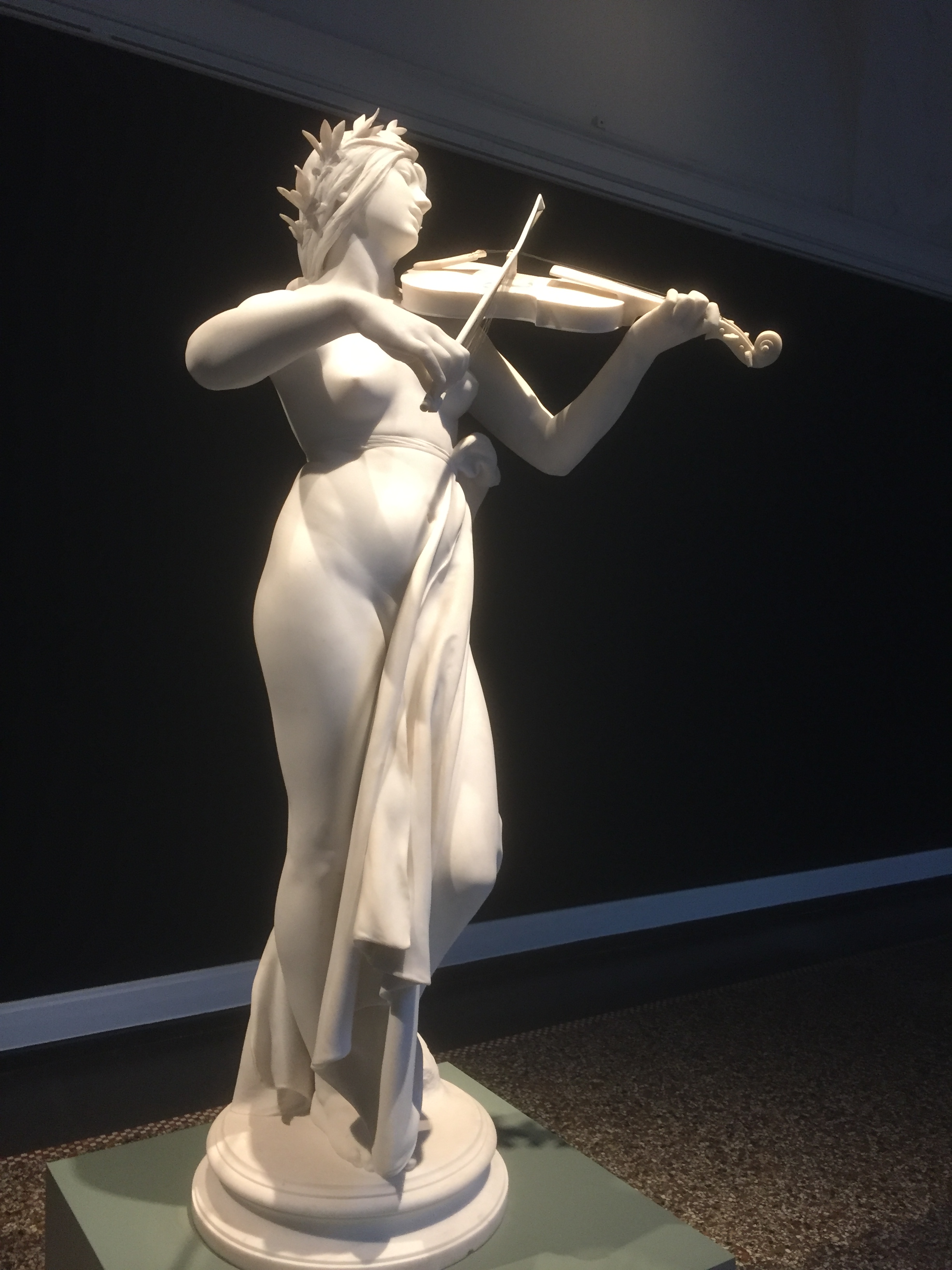
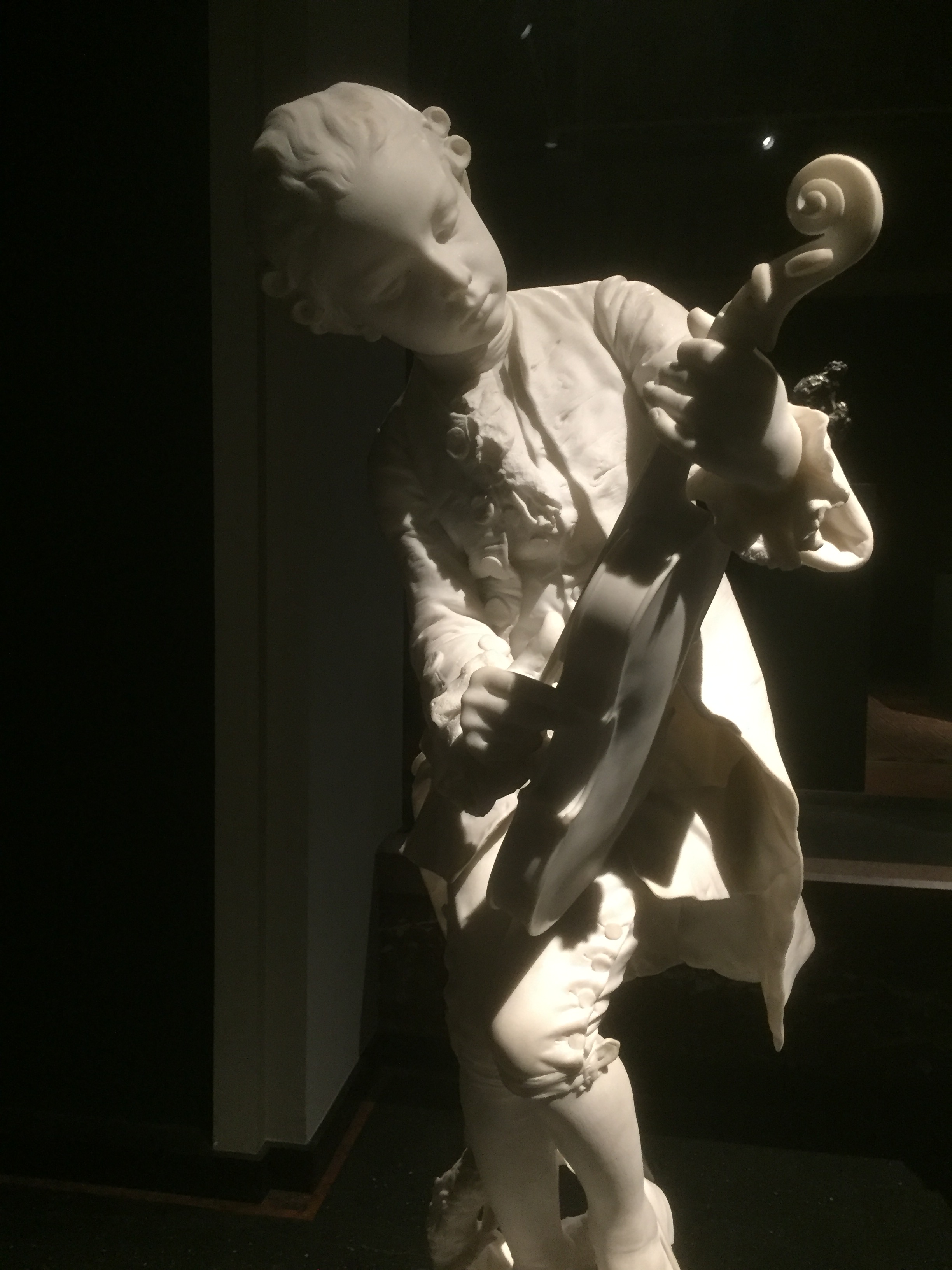
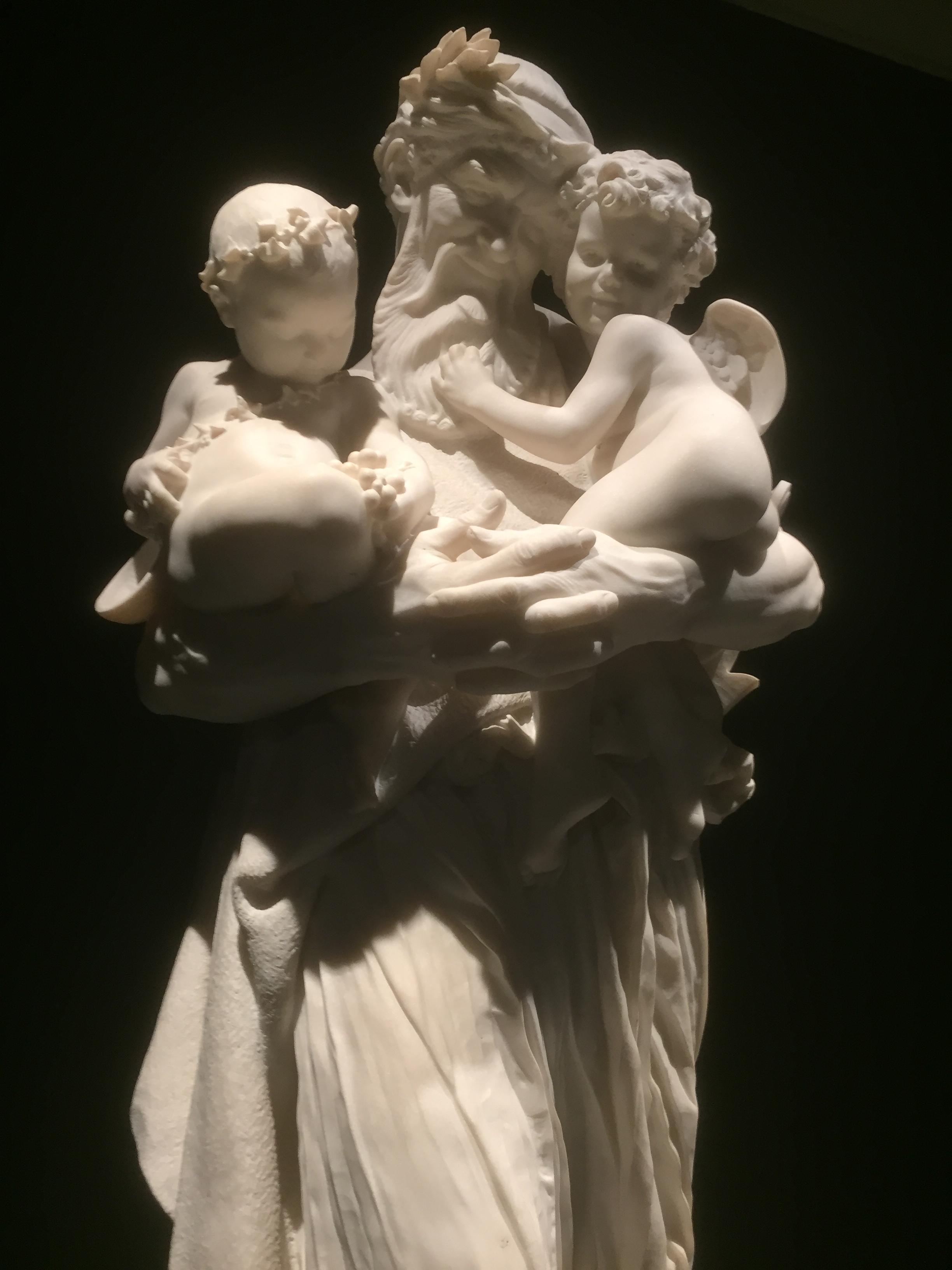
In the Glyptotek museum in Copenhagen you can find these three sculptures in a room filled with many similar gorgeous works of art. Part of the beauty we experience when we look at these images is created by the way the works are lit (and there’s another layer of creativity between my experience and yours because I’m the one who took these photographs).

At the top, are two sculptures about music. Look at the violins, the bows, and the musicians fingers….all carved out of blocks of marble. Aren’t they incredible? The one on the right is titled “Young Mozart”, and I’m afraid I can’t remember the title of the one on the left (if you know, maybe you could let me know in the comments?)

I read in Iain McGilchrist’s “The Master and His Emissary”, that one theory of language is that human beings sang before they spoke. It seems there is some evidence to support the idea that the first humans created a variety of sounds, and only later, turned some of those sounds into spoken language. Written language followed a long, long time later. Also, in his book, he explores how music works, not as a collection of notes, or moments or sound, but as a combination of notes and silences between the notes. When you stop to think about music it’s incredibly difficult to pin down what seems so simple – where is the music, actually? It’s not in the notes by themselves. It’s not in the spaces. It’s in the whole – in the phrases, the bars, the themes, the entire melody and the rhythm. I love how it seems to resist reduction – you can only appreciate it, and enjoy it, when it’s whole.

Another thing about music is how personal it is. I bet you had the experience when you were younger of your parents just “not getting” the music you enjoyed. Perhaps always telling you to turn it down? Or saying “That’s not music!” Then as you got older, if you’ve had children of your own, you might find they like a lot of the music that you like, but I bet you’ll also find that they enjoy some music that has you saying “That’s not music! Turn it down!”

Music is intensely personal. It’s one of the best, most powerful ways, to evoked memories. A certain song can take you right back to a particular moment years ago, or can evoke all the feelings you have for a loved one. It stirs us, moves us, changes our entire physiology, affecting our breathing, our heart rate, the mobilisation of chemicals and hormones in our bodies. It affects our muscles, our movement, our stomachs.

I saw a short piece on French TV recently about Melody Gardot, who at age 19 had a serious bike accident. She was in hospital for over a year and had many difficult neurological problems. At one point a doctor suggested music therapy and her mother bought her a guitar. She taught herself to play it, started writing songs, and made a full recovery. She is now an internationally famous, beautiful jazz singer. Check her out. Quite a story! And such beautiful music!

The lower photo above is of Anacreon the poet. Poetry, like music, is handled mainly by the right hemisphere of the brain (whereas language, words stories are largely handled by the left). Poetry is closely related to music. It’s not about conveying instructions or information. It evokes emotions, changes our bodies the way music does, and also has the power to evoke intense memories. In this sculpture, Anacreon has two infants in his arms….and doesn’t he so obviously love them? They are Bacchus and Cupid. Bacchus is the God of Wine, and Cupid the God of Love. Well, not hard to see why he loves them so, huh? Bacchus is also known as Dionysus. You can read a bit more about him here. He’s the God of a lot more than wine. Cupid, the God of passionate desire, of affection and attraction.

Finally, here’s an interesting fact connected to this issue of how our two cerebral hemispheres engage with the world in different ways. Iain McGilchrist’s thesis is that we’ve become a bit stuck in our left hemispheres and we need to develop a better integration of the two halves. One way to do that might be to consciously use the right hemisphere more – so, what better way than to start with spending more time each day listening to music and reading poetry?

Read Full Post »

« Newer Posts - Older Posts »