One of the biggest differences for me since I retired and moved to the Charente in France is that I feel much more engaged with “the natural world”. I notice the sunrises and sunsets more. I notice the phases of the moon. I look forward to the constellation Orion appearing in the East and making his way across the night sky to the West every winter, and it amuses me somehow to see that he disappears for the summer, as if he migrates in the opposite direction from the birds. I’m much, much more aware of the birds here. I’ve encountered Hoopoes for the first time and they still astonish me. I recognise the call of the Redstart when he arrives from his winter holidays and his replacement with the Robin. I’m in that cycle of seasons which a garden demands, with its rhythm of tasks, from planting, to nurturing, to harvesting, and feeding the soil before it goes to sleep for the winter.
I’ve never spent such a large proportion of my life outside before.
So I’ve become every more interested in whatever it is that connects us to “nature”. I’ve been replacing the rhythms, schedules and timetables of Scotrail, the NHS, and the rest of a working life which includes a daily commute, with what feel like more natural rhythms. The cycles of the seasons, the celestial patterns of moon, sun and stars. The meals prepared from what’s available in the local market this week.
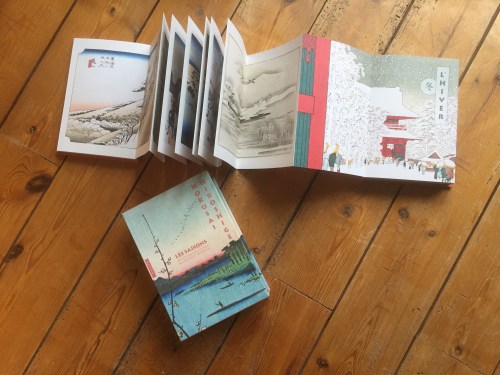
Hilary gave me a Christmas gift of an accordion-fold book by Amélie Balcou. It’s called “Les Saisons” (The Seasons) and is a collection of sixty Japanese woodblock prints. In the introduction she describes how the rhythms of nature are embedded in the Japanese calendar. Let me share her opening page with you. I’m not going to do a direct translation of her words into English, but to share the substance of what she describes.
The New Year commences with “hatsushinode” which is the practice of admiring the first sunrise of the year. As the first sun rises you make your wishes for the year ahead.
On the 3rd of February, “setsubun”, the arrival of Spring is celebrated. It’s seen as the turning point of the year and one traditional practice is to throw roasted soy beans out of the door to cleanse the home of last year’s evil spirits and drive away ones for the year to come. One variation of this practice is to eat one bean for each year of your life, plus one extra for the year to come.
March sees the arrival of the cherry blossom which begins in the south of the country then spreads north over the next few days with newspapers and TV showing maps, similar to weather maps, of its appearance. People take picnics in the parks under the cherry blossom trees and wander amongst them admiring them and photographing them. They are a strong reminder of the transitory nature of everything, something which enhances, rather than detracts from, their beauty.
“Hana Matsuri” on April 8th, is a Flower Festival connected to celebrating the birth of the Buddha.
The season of rains begins in May, the month when “Golden Week” is held. It’s called “Golden Week” because there are a number of holidays and festivals one after the other. On the 4th of May there is “Midori no Hi”. Midori translates as Green and this “Nature Day” or “Greenery Day”, when people try to spend the whole day outside in Nature, and might plant trees or clean up the local environment.
Summer begins in July with the Fire Festivals, celebrated with fireworks, “hanabi”, which means “fire flowers” (Isn’t that a lovely name for fireworks?). Also in July is “Tanabata”, the Star Festival. Tanabata translates as “The Evening of the Seventh” and was traditionally celebrated on the seventh day of the seventh month (of the Japanese lunisolar calendar). This is a time for people to write wishes, sometimes in poetic form, and hang them on bamboo. These are then burned or set afloat on the river at the close of the festival.
School holidays begin with “Umi no Hi”, “The day of the Sea”, which celebrates both the marine history of Japan and the gifts of the ocean. It’s a day to go to the seaside!
“Yama no Hi”, “Mountain Day”, was introduced as the first public holiday in August in 2016 because the government thought people were working too hard and would benefit from a day off in the mountains.
I’m going to enjoy contemplating the images in this book over the course of this year, starting with some of the winter scenes, seeing as it’s winter time here in France as I write this. I’ll share them with you week by week.
But there’s something else I want to share with you now. It’s the story of a project designed to “prescribe nature” to patients which some GPs in Shetland are taking part in. I read about it in a recent issue of Resurgence magazine where they describe this collaboration between the RSPB (Royal Society for the Protection of Birds) and the NHS in Shetland.
They’ve picked up on the benefits of spending time in Nature – from lowering BP, to improving the immune system, to lifting depression and increasing well-being and they’ve created a leaflet called a “Nature Prescription calendar“. It has a photo for each month of the year with an associated check-list list of suggested activities to do that month so you can tick off whichever ones you’ve done that month. The genius of it is that the activities are 100% local – they refer to local pathways, beaches and so on, and use local words and sayings too. AND they are chosen to be relevant to that particular month so people begin to be in touch with the seasons and cycles of Nature again.
Honestly I think its fab and SUCH an inspiration. I really fancy trying to develop one for here.
How about you? How do you get yourself in tune with the planet?
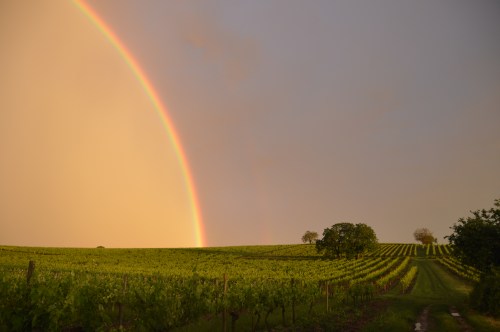
One day last year I walked outside and saw this rainbow at the top of the vineyards.
Yeah, sure, I’ve seen a ton of rainbows in my life but I’d never, ever, seen one like this.
I took several photographs but I’m not sure any really captured the view.
The rainbow lasted for about 30 minutes. Much, much longer than any other rainbow I’ve seen.
It’s brightness was incredible. If you look carefully you can see a second, parallel one just to the right of the main one. But the most astonishing thing was how different the world looked under the actual rainbow. You can see that quite clearly. The colour of the sky to the left of the rainbow ie under it, is completely different to the colour of the sky elsewhere. I’ve never seen that before.
You know the old story about finding gold at the end of the rainbow? Well, it seemed that this rainbow was arching over an entirely golden world.
There is another thought I had during that rainbow, and which come back to me now. That rainbows are a symbol of hope. Where does that come from? Is it the story of Noah and The Flood in the Old Testament? I suppose that’s where I get that memory. I was taught that the rainbow represented God’s promise not to flood the Earth again. It’s not entirely clear to me how that story of a promise morphed into a symbol of hope. So I went looking to see – are there other origins to this association of hope with rainbows? Actually, there seems to be a huge diversity amongst various cultures (why wouldn’t there be?) Here’s where I explored some of them.
One of the things which struck me, reading through that entry in wikipedia, was how often the rainbow was seen as a bridge.
Well that’s convenient! Because I wrote about how January is named after Janus, the god with two faces, one looking back and one forward. Look at this, from the wikipedia entry about Janus –
While the fundamental nature of Janus is debated, in most modern scholars’ view the god’s functions may be seen as being organized around a single principle: presiding over all beginnings and transitions, whether abstract or concrete, sacred or profane. Interpretations concerning the god’s fundamental nature either limit it to this general function or emphasize a concrete or particular aspect of it (identifying him with light, the sun, the moon, time, movement, the year, doorways, bridges etc.)
It feels like we are living in a time of transition (aren’t we always??) so maybe a beautiful rainbow is a good place to start the year – with hope, with a sense of new beginnings, and with the idea of a path, or a bridge, there, inviting us to follow it.
What about you? What do you associate with the appearance of a rainbow? Were you handed down any stories?
PS Didn’t I say yesterday I was starting a new blog over at bobleckridge.com/read ? Well, after yesterday’s post here, despite it being the first in a year, I was surprised and delighted by all the messages I received, and the new followers who signed up to heroesnotzombies. So, I’ve reminded myself of one of my favourite teachings – “AND not OR”. I’ll continue to post here, as well as creating new content for my new site. The new site will have a fresh photo of mine every week on the home page, an ever expanding gallery of my photos at bobleckridge.com/look and videos and the spoken word too, as well as articles and blog posts.
It’s been a year since I wrote my last post here and I’m ready to start sharing my photos and writings again. I’m going to do that from now at a different address – bobleckridge.com If you have a look you’ll see there are different sections – things to see (my photos), things to read (my posts), things to listen to (readings a new podcast I’ll be starting) and things to watch (videos).
My idea is to have a self-hosted site (in case any of the particular internet companies go belly up!), using the world standard of WordPress, and make that be the place I express myself. I just want to capture some of my experiences, my thoughts, ideas and creations and I hope you might enjoy and/or be inspired by them.
I think every single one of us is unique and we all have a one time opportunity to share with others what our unique experience of living is, and has been, like.
Curiosity is probably my core instinct in life. I’m driven to explore, to notice, to learn about and to understand. I think curiosity makes me realise I never know enough, and that every single person is utterly fascinating. Really! I believe that! That’s what I discovered over four decades of work as a doctor. I never met a single person who I didn’t find fascinating, and I never met one who wasn’t unique.
I think uniqueness emerges out of the infinite web of connections and contexts from which we all emerge. In other words, what makes us unique, is the totality of the personal experiences, memories, thoughts, feelings and imaginings which occur moment by moment, in the environments in which we live.
Uniqueness will be the theme of my new website. I’d be delighted if you’d come and explore and I’d be even more delighted if you got in touch and shared your own, unique explorations with me.
Before I stop adding to “Heroes not Zombies” though, I’m sharing an updated version of last January’s post. Living in France now I experience the issues of delivering health care in two separate cultures and places – France and Scotland. There are striking similarities between the two countries but each is, surprise, surprise, unique.
Here it is.
Dealing with the crises in health care – a 7 point plan.
Wherever you live I bet there are at least three health stories you’ve been coming across pretty regularly. One is that “demand for health care is going up”, another is that “the country’s health services are struggling to cope with the demand”, and a third is, “it’s getting harder for patients to get help when and where they need it”.
What’s the problem?
Much of the media coverage focuses on the “demand”, by which they mean the sheer numbers of people going to hospitals for health care. In the UK there is a version of this unmet demand story in the number of people seeking GP consultations. In France, there’s concern about “désertification médicale”, which is the phrase used to describe areas of the country where there are too few (or no) local doctors.
The issue of waiting times seems to be a key story every winter in the UK. How long it takes to be seen when you present to the Emergency Department of the hospital (A&E, or “Accident and Emergency” as it’s called in the UK), or even how long you need to wait in the ambulance outside of the hospital. I don’t read those kinds of stories so much in France, but there are certainly more and more stories about how long people have to wait to get an appointment to see an ophthalmologist, an ENT specialist, a dermatologist or a gynaecologist.
Why are there problems with waiting times? Why can’t people get access to the health care they need in a timely manner?
1. There aren’t enough doctors and nurses.
There wouldn’t be long waiting times if there were enough doctors and nurses to attend to the patients’ needs. There aren’t enough, and if there were, they would be able to devote all the time necessary to each patient but there wouldn’t be a huge queue of people waiting to be treated. There’s another part of this story, because A&E departments (Emergency Departments) are not places where anyone is expected to stay. Everyone (at least everyone who survives) goes home, or is transferred to another part of the hospital for further care. Staff can’t move patients through A&E to inpatient care quickly enough because there aren’t enough inpatient beds. 2. There aren’t enough inpatient beds.
There are more patients needing inpatient care than there are beds to put them in. And beds aren’t enough. Once a patient is in a bed, they need to be cared for….by staff to keep the ward clean, staff to make food for them and feed them, staff to care for their daily needs and staff to manage their diseases and get them well enough again to go home.
So can we fix that first?
1. Increase the numbers of healthcare staff to the level where there are enough of them to meet the needs of sick people.
2. Increase the numbers of beds available in hospitals to cater for the needs of sick people.
Isn’t that the whole point of health services in the first place? To meet the needs of the sick in society.
All those patients waiting on trolleys for a hospital bed have been assessed as needing the complex care of a hospital because they have complex needs. However, not all those patients already in the hospital need the complex care of a hospital. Some of them are elderly, and/or disabled and unable to look after themselves at home. They need to be looked after somewhere else. Here’s the next item on the list. 3. There are not enough places available in care facilities which are not hospitals.
Places in care facilities, (nursing homes, residential homes etc), need sufficient numbers of trained and support staff to provide the care for their residents. There aren’t enough care facilities, and there aren’t enough care workers.
Another factor which adds to the pressure on hospitals is that time and again we hear that many people pitch up at A&E simply because they can’t get to see their local GP. They are told they have to wait several days, or even weeks, for an appointment so they go to the local hospital instead – with problems which could be, and should be, managed by GPs in the community. Why can’t people get to see a GP in a more timely manner? 4. There aren’t enough GPs.
There never have been.
The scourge of General Practice is not having enough time to treat each patient as well as the doctors would like to. Were five minute appointments ever adequate? Are ten minute appointments adequate? Do they give the patient enough time to say what they want to say? Do they give the doctor enough time to listen, to examine, to diagnose, to offer treatment, to give the patient enough information to give informed consent to the treatment, to allow enough time to discuss options and alternatives?
You’ll have a hard time finding someone who can answer yes to that.
There aren’t enough GPs. And there aren’t enough support staff in the GPs’ teams either.
Let’s turn to demand……..it’s going up!
And there’s absolutely not a shred of evidence to suggest it’s going to do anything other than continue to go up.
The proportions of the population over 60, over 70, over 80, and, yes, over 90 are all rising. All the evidence shows that older people have greater health needs. Demographics show us that, simply due to the fact of ageing populations, demand will increase. Although life expectancy is going up, disease isn’t going down. There are more people suffering from more chronic illnesses every year. There are more people suffering from two or more chronic illnesses every year. This is what doctors are referring to when they talk about increases in “complex problems and needs”.
The biggest delusion suffered by those who created the health service in the UK was that the NHS would make the population so much more healthy that eventually demand for it would shrink.
That’s never happened. And it’s not likely to happen.
The thing is, health care isn’t the biggest contributor to the health of the population. Health Services treat the sick, they don’t make the population healthier. What does? Arguably, it’s education. 5. Better educated societies are healthier societies.
Look at this, for example –
“ UNESCO reports that each extra year of a mother’s schooling reduces the probability of infant mortality by as much as 10% and that a child whose mother can read is 50% more likely to live past age five.”
Read that carefully. I read it several times. A child whose mother can read is 50% more likely to live past the age of five. 50%! There isn’t a drug, or an operation, or any other medical therapy which can make such a difference. I wanted to understand that a bit better. One of the best things I found was this explanation of how education can make such a difference. It describes how education can influence every one of the United Nations 17 sustainable development goals (“SDGs”),
However, the answers to these problems are not solely in the domain of education. If we want to reduce the demand by creating healthier societies, we need to address the causes of illness. 6. The causes of illness are primarily social, economic and environmental.
We need to tackle the isolation of people in society.
We need to tackle poverty.
We need to tackle the constant stress of the “precariat” – all those without secure incomes, those on zero hour contracts, short term contracts, those employed for insufficient hours at insufficient levels of pay to meet their daily needs.
We need to tackle the food industry, from farming methods, to factory production of foodstuffs, to marketing and sales of food.
We need to tackle the chemical industry, to reduce the amount of CO2 in the atmosphere, the amount of plastic in the sea, the number of chemicals found in the blood of every newborn child, the number of chemicals found in drinking water, the number of chemicals in every household.
We also need to tackle the Pharmaceutical industry. That industry which doesn’t exist to produce cures, but profits. There isn’t a drug on the market which increases health. At the very best a drug will support the body’s natural systems of repair and recovery. At worst drugs diminish symptoms without making any impact on the underlying disease.
We need to tackle inequality which is rising fast and has been shown time and time again to inflict pain and suffering on millions.
We need to tackle conflict, to be able to direct resources towards healthy lives instead of war.
We need to tackle our political systems which leave so many feeling disempowered and forgotten. Democracy might be a great idea. Maybe we should try it. Not the pretend democracy of a vote every few years for someone to work in government, but real, relevant, responsive democracy which increases the engagement and autonomy of citizens.
We need to find different ways to live together. Does the extreme individualism and competitive consumerism of the dominant capitalist, neo-liberal model serve us well?
We need to look after our planet better – dealing with everything from Climate Change, to pollution, to de-forestation, dessertification and loss of biodiversity.
7. Finally, we need a different philosophy of health care, one focused on health not taking drugs.
That’s an awful lot. Daunting perhaps. But are there better answers? This is a toe in the water. There is no way to cover the complexity and extent of the issues in one short article. But can we make a start?
Oh, hold, on. I know. You’re going to say “where’s the money going to come from?”
Well, that, dear reader, is another subject. However, we’ll probably have to find a way to redirect the world’s resources away from the pockets and bank accounts of a handful of rich people, and apply them to solving the problems we think are worth solving. That’s going to involve some big changes in our current economic and political systems. There are some very exciting, innovative ways to do that, emerging as a result of the failures and crises of the current models. There are a number of economists and politicians suggesting wealth taxes, that is tax on land, property, stocks and shares. Financial Transaction taxes and the funding of National Capital Trusts with statutory percentages of shares in all Initial Public Offers (IPOs) could also contribute to the creation of healthier societies. Thirdly, there are also calls for more “progressive taxation”, taxing the highest incomes more heavily than at present. There are actually lots of good arguments and ideas showing how we could run our economies differently.
I’m particularly interested in the work of economist, Maria Mazzucato, whose work, The Value of Everything, addresses the core of this issue and suggests the UN’s 17 Sustainable Development Goals as a good place to start https://www.un.org/sustainabledevelopment/
The other economist who has really caught my attention is Kate Raworth, whose “Doughnut Economics” model is particularly exciting.
The Seven Point Summary
We need more doctors and nurses We need more hospital beds We need more care facilities and the workers to staff them. We need more GPs We need better education We need to deal with the causes of illness. We need a philosophy of health care focused on health not on taking drugs
I named this blog “heroes not zombies” because we humans have a tendency to go about the world on autopilot. As we walk through the day the thoughts which fill our heads are often ones from the past or the future. We go over what people said or did, recall events and circumstances which made a big impact on us….even the ones which seemed quite inconsequential to others. And we go over and over what might lie ahead and worry about it. All these thoughts squeeze out our attention to the present. I’m sure you’ve had that experience of traveling from one place to another, maybe even driving a car, only to arrive and realise you were so preoccupied with something you are surprised you’re at your destination already.
There’s something else which prevents us from experiencing the here and now. We become habituated. We are creatures of habit and when we stay within the bounds of the familiar we have a tendency to become oblivious to the detailed differences of the every day.
And there’s another thing. People who want power over others, whether that be politically, socially or commercially, pressurise us to conform and be compliant. Difference is singled out as a negative and suppressed. Governments, institutions, authorities, corporations want to control us a mass. The Romans did that through the provision of “bread and circuses”, but maybe now its “sugar and screens”.
Living in a zombie-like autopilot submissive way means we lose touch with reality. Reality is the here and now. Reality is uniqueness. Reality is diversity. Reality is freedom, opportunity and change.
The alternative is to become the authors and main characters, or heroes, of our own life stories. We can co-create our daily reality and claim this one wild and special life as our own.
OK, so how did I get all that from that photo today?
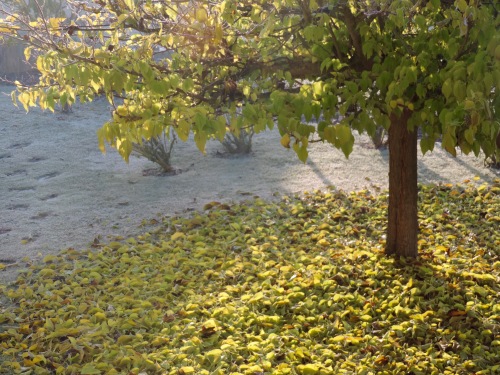
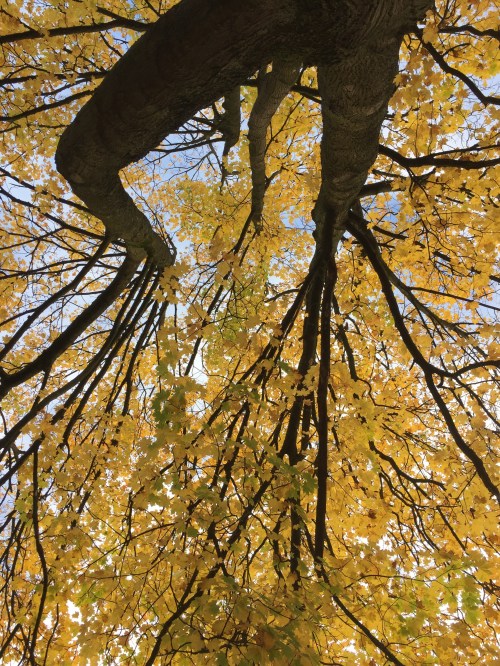
The other day I was walking a route I’ve walked thousands and thousands of times over a lifetime. It’s autumn here in the northern hemisphere and the colours of the leaves on the trees this year is particularly eye catching. In fact I think to walk amongst trees is one of the best ways to draw yourself and your attention into the here and now. So I was stopping every now and again and taking a photo. Then, I don’t know quite why, but I looked up from the base of a tree towards the sky and took this photo.
It wasn’t just the colours which caught my eye, it was the shape and form of the branches. As I look at it now my imagination kicks in and I’m more and more convinced I just managed to glimpse the legs of one of the spirits of the forest as they leapt over my head in the canopy of the trees.
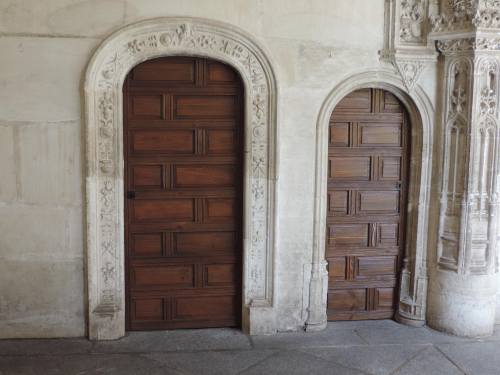
In the cathedral in Segovia I recently spotted these two doors right next to each other. They immediately struck me as curious.
Firstly, one is so much bigger than the other, and secondly, the little one seems to have been squeezed in as some kind of after-thought. Look how it almost disappears behind the pillar, and how the stone work overlaps the arch around it.
Why have two doors so close to each other but such different sizes? Are there two rooms behind them? Is the room on the left a bigger room than the one of the right? Or do they both lead into the same room – that would be even more strange.
But maybe there is another reason. Maybe each door is for different people. Maybe the bigger door is for more “important” people, and the smaller one for servants, or those of lower standing. That would be odd, wouldn’t it? I know lots of old mansions had a main door at the front and a servants, or “merchants” door at the back, but this is different. Here they are right next to each other.
Then this morning as I looked at this photo again I thought well just as each of us engage with the world from our own perspective, our own unique subjective viewpoint, I wonder if we enter into each day through an individually shaped door?
And if we do, then are you starting today by going in through the big door, or the smaller one? What will that be like?
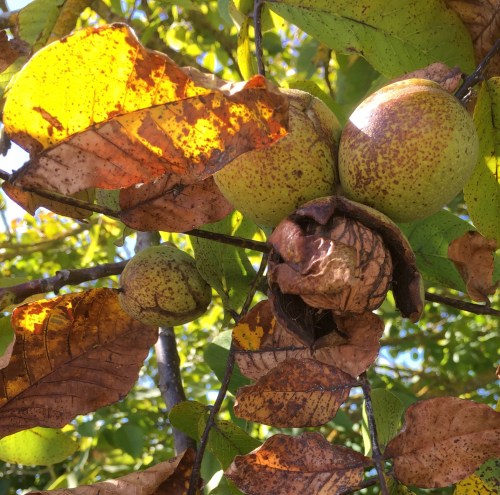
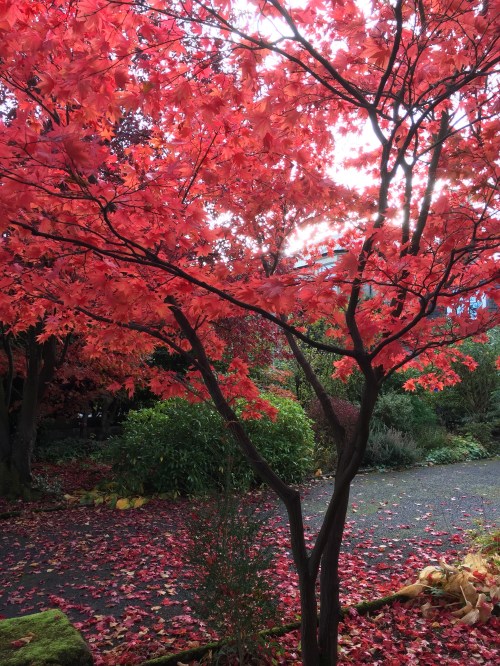
Is it possible to go anywhere in the northern hemisphere just now and not be astonished by the colours of autumn?
Here are just two scenes which caught my eye recently. Above is one of the several walnut trees which I pass on my walk through the vines near where I live in the Charente.
Below is just one striking Acer which leapt out and said “Look at me! Look at me!” when I walked into Stirling the other day.
Two very different scenes, two different countries, one season.
Everywhere you look you can see the effects of the interplay between the universe’s two forces.
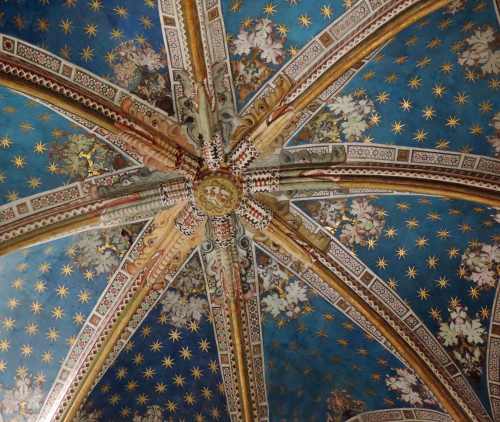
When I looked up at the ceiling of the Chapel of Saint Blaise in Toledo I was entranced by the colour, the gold and the eight pointed stars. It was only later when I was back home that I realised that the centre piece contained eight dragons, out of whose mouths poured not fire but crystals…..at least that’s how it looks to me.
Dragons for wildness, crystals for discipline, to bring together David Ward and Thomas Berry, for this is how they each describe the two forces.
Without the integration of these two polar opposites our planet would not exist, and nor would we. Astonishing. Awe inspiring. Wondrous.
Look around and I’m sure it won’t take long for you to spot these forces at work.
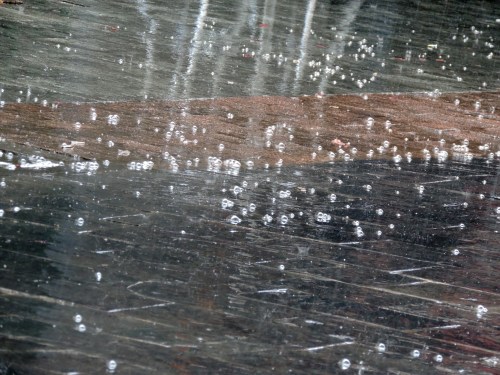
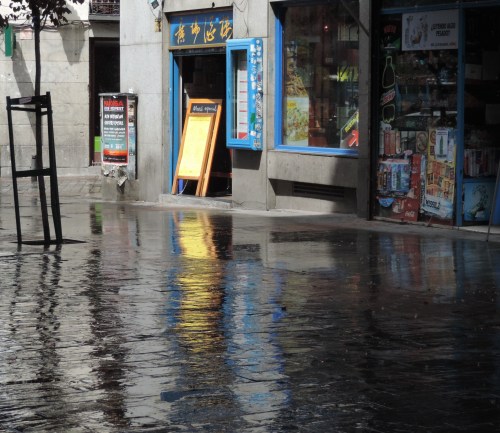
I expect many of us put away our cameras when the rain comes on, but the rain can bring out the beauty in a city street.
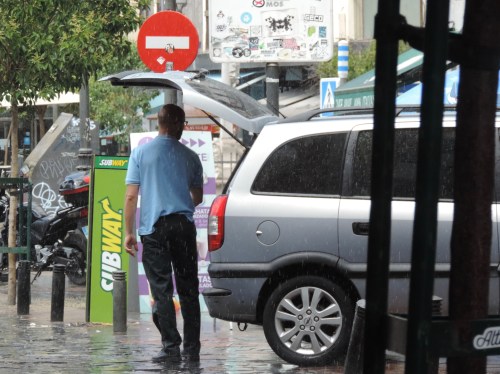
These two photos were taken in Madrid in the summer time when the temperatures were high, but a ten minute rainfall which forced everyone to take cover in doorways really made the streets sparkle.
And I liked how this guy improvised by using the back door of his car for shelter…
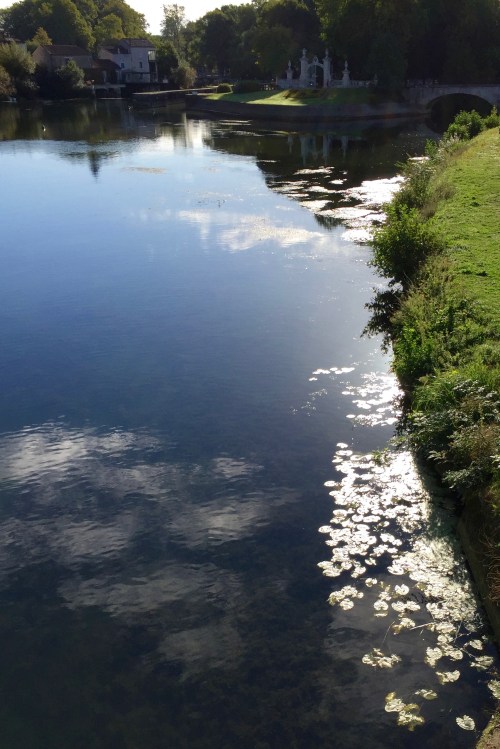
The sunlight reflecting on the leaves of the lilies caught my eye, but once I’d uploaded the photo and looked at it more closely I realised there were three completely separate areas of reflection in this one image.
There is the one which initially caught my eye. It’s so bright that the leaves are hardly green at all. They are like silver plates floating on the river. Right next to them is a reflection of the clouds passing up above. The ripples in the river give these clouds the appearance of a water colour painting. Quite beautiful.
Between them, these two reflections put me in mind of Monet’s paintings of lilies in the Musée de l’Orangerie in Paris….which is definitely one of those places to put on your bucket list.
To stand in one of those galleries with Monet’s astonishing paintings filling the entirety of your visual field is one of the most amazing experiences you could have in an art gallery.
Finally, right at the top of the photo, there are the reflections of the old watermill, the entrance to the park, and a bridge, all seemingly a much more literal kind of reflection somehow.
I hadn’t really thought much about different types of reflection before, but this one image has inspired me. I hope it does the same for you.
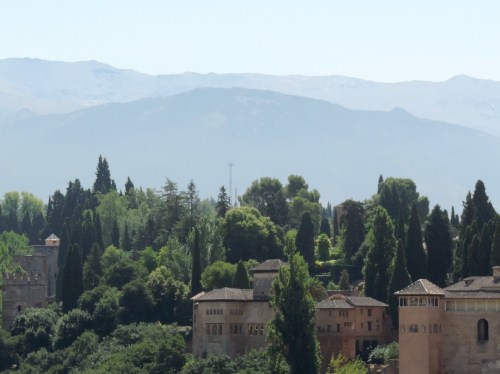
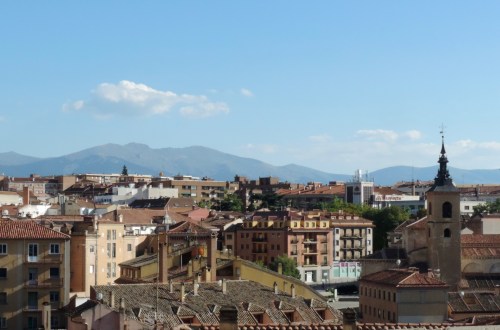
The world is blue at its edges and in its depths. This blue is the light that got lost. Light at the blue end of the spectrum does not travel the whole distance from the sun to us. It disperses among the molecules of the air, it scatters in water. Water is colorless, shallow water appears to be the color of whatever lies underneath it, but deep water is full of this scattered light, the purer the water the deeper the blue. The sky is blue for the same reason, but the blue at the horizon, the blue of land that seems to be dissolving into the sky, is a deeper, dreamier, melancholy blue, the blue at the farthest reaches of the places where you see for miles, the blue of distance. This light that does not touch us, does not travel the whole distance, the light that gets lost, gives us the beauty of the world, so much of which is in the color blue. For many years, I have been moved by the blue at the far edge of what can be seen, that color of horizons, of remote mountain ranges, of anything far away. The color of that distance is the color of an emotion, the color of solitude and of desire, the color of there seen from here, the color of where you are not. And the color of where you can never go. For the blue is not in the place those miles away at the horizon, but in the atmospheric distance between you and the mountains.
and
If you can look across the distance without wanting to close it up, if you can own your longing in the same way that you own the beauty of that blue that can never be possessed? For something of this longing will, like the blue of distance, only be relocated, not assuaged, by acquisition and arrival, just as the mountains cease to be blue when you arrive among them and the blue instead tints the next beyond. Somewhere in this is the mystery of why tragedies are more beautiful than comedies and why we take a huge pleasure in the sadness of certain songs and stories. Something is always far away.
I got to thinking about a couple of photos I took recently in Spain, one in Grenada and one in Segovia.
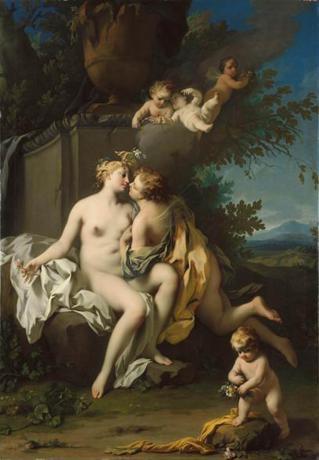
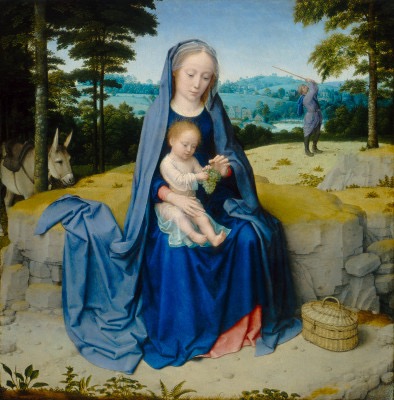
She talks about how artists used the colour blue, and cites the following classical paintings amongst her examples –
Isn’t the blue of distance in these paintings really beautiful?
Here are another few examples from an old French book which we have at home –
I welcome constructive criticism and suggestions. I will not, however, tolerate abuse, rudeness or negativity, whether it is directed at me or other people. It has no place here. ANYONE making nasty comments will be banned.