Feeds:
Posts
Comments

Archive for the ‘Uncategorized’ Category

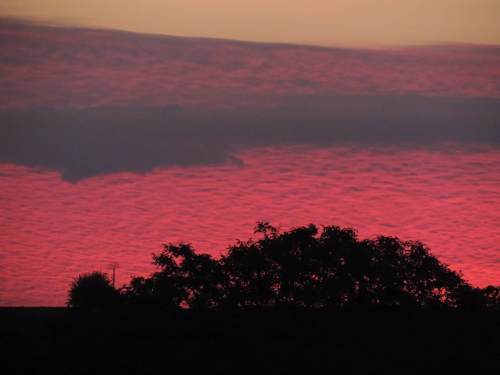
pink

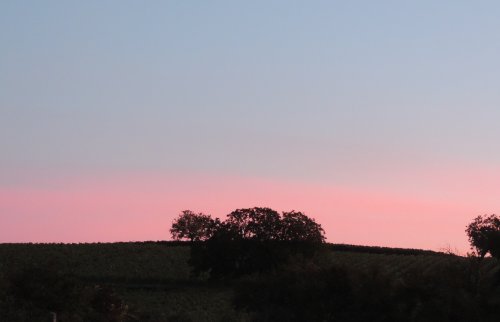
I looked out of my window yesterday evening and saw the most beautiful and subtle shades of pink lying between the top of the vineyard and the blue sky high above.

When I went outside to look to the West I saw this –

deep-red

How a small change in perspective, a shift in the direction of the gaze, can reveal such astonishingly different views…..

I think if I was asked to give one single piece of advice about photography I’d say move. Don’t just stand and point your camera straight ahead at eye level, but move around. Climb up on something, or crouch down, lie on the ground even, look in different directions, move in different directions and turn and shoot your photos from different places, even if those places are just a few steps apart.

Small changes in your position can reveal to you astonishingly different potential photos.

Read Full Post »

really

Karol Sikora, a well-known “cancer doctor”, just said this –

It doesn’t make much difference whether you are one of the people who get cured or not

He was talking about cancer care in “the NHS” (as a Scot, it bugs me every time when people refer to “the NHS”, as if there only was one). I suspect he was saying things in a controversial way to promote his new book, but this particular sentence really caught my attention.

He’s referring to how organisations and systems can be managed to work “efficiently”, and I think this probably applies to most health care systems around the world. We’ve developed a way of delivering health care as if individual patients don’t matter. Protocols are created based on the statistics from research into the experiences of groups of patients. I’ve even heard a young doctor say they were told that if a patient takes an evidence based drug and it doesn’t work, then either they haven’t taken the drug or they are lying. These are the kinds of things which happen when doctors take their eye off the ball.

When we base health care on management systems designed for industries which produce physical objects to sell, then, it seems, statistics become king.

It doesn’t make much difference whether you are one of the people who get cured or not

Really?

In what way does it not make much difference? To the individual it makes all the difference in the world. To the doctor? Shouldn’t it matter if this individual gets cured or not? Isn’t that an irreducible fundamental of all medical codes of behaviour? It’s always this patient, this very patient I am dealing with right now who has the right to the best possible care I can provide.

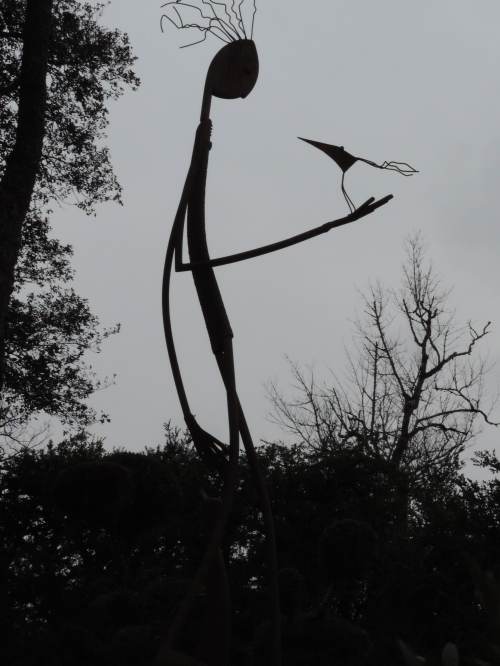
I struggled a bit to find a photo to go with this post then stumbled across this one of a sculpture I saw recently in a garden. It seems to capture that sense of caring for the individual. And it seems the character’s hair is standing on end. Maybe the little bird just told him what Karol Sikora had said!

We can’t accept this way of delivering health care, can we?

This story also made me think of those pretty pointless statistics you can see every day on billboards at railway stations, telling you what percentage of trains arrived on time this week. Should we deliver health care by aiming at percentages of patients properly cared for? Or should we deliver health care by always, I mean always, giving the very best care and attention to every single patient in every single interaction?

Read Full Post »

niche

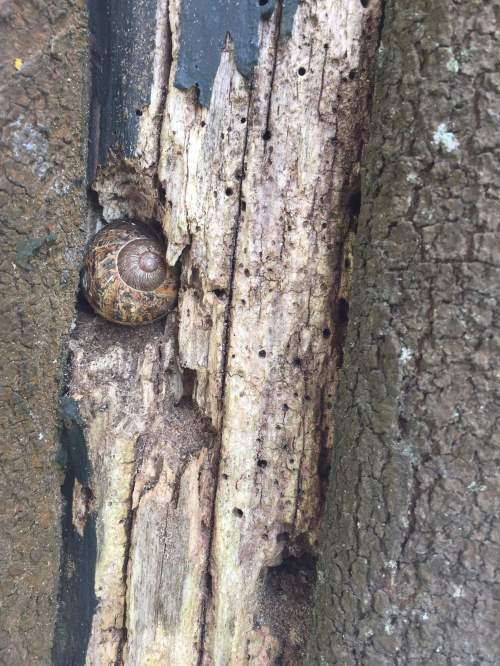
I happened across this little snail in a tree the other day. It immediately caught my attention and got me thinking.

Look at it…..

Doesn’t it look a perfect fit for that space? Doesn’t it look like it fills the space it’s living in quite completely? Doesn’t it look like it’s adapted well to where it’s found to live?

So what about you?

Hans Georg Gadamer, in his “Enigma of Health”, discusses ideas of health and refers to the concept of “fitness” – but not just the fitness of an athlete – the overall concept of “fitness” – when something is just right, when it just fits well. There is something in that idea which speaks to us of health. When we are in the groove, in the flow, in harmony….when everything falls into place……

What would you say about the fitness of your life? How well do you fit your life? How well does your life fit you?

Then I thought about how this snail seems somehow to be living fully or completely within its niche. And I wonder what you’d say about that?

We all live with certain boundaries, limits, “the hand we have been dealt”, influences from Nature and nurture, from the past and from the future, which set the parameters of our potential lives. Aren’t those parameters immense? Aren’t they almost infinite? But do we stretch ourselves out to fill our available life-space as well as we can? There’s something there about flourishing I think. Not just growing and developing, or being “the best you can be”, but of constantly expanding, flexibly adapting, to manifest ourselves, to express our uniqueness in our own vast life-space.

Adaptation. That’s such a good word. I find some people use it in a negative way as if adapting is about compromise and being less than you could be, but I don’t see it that way. Adaptation is how we grow, how we develop, how we live. Adaptation is how all of Life emerges and flourishes. I think we can get caught up in military and/or capitalist metaphors too much, thinking about the world in terms of competition, territory, power, and aggression. But actually, although all those things do exist, seeing the world that way often goes hand in hand with ignoring the co-operation, collaboration, compassion and kindness which also exists.

And when it comes to adaptation, there’s a lot to be said for negotiating your life-space, rather than killing for it!

If integration can be defined as the creation of mutually beneficial bonds between well differentiated parts, then adaptation becomes a process of a living in a way which maximises the abilities of you and I to explore and inhabit our personal, unique, life-spaces.


Read Full Post »
rose

Of course, an ordinary passerby would think my rose looked just like you. But my rose, all on her own, is more important than all of you together, since she’s the one I’ve watered. Since she’s the one I put under glass, since she’s the one I sheltered behind the screen. Since she’s the one for whom I killed the caterpillars (except the two or three butterflies). Since she’s the one I listened to when she complained, or when she boasted, or even sometimes when she said nothing at all. Since she’s my rose.
― Antoine de Saint-Exupéry, The Little Prince

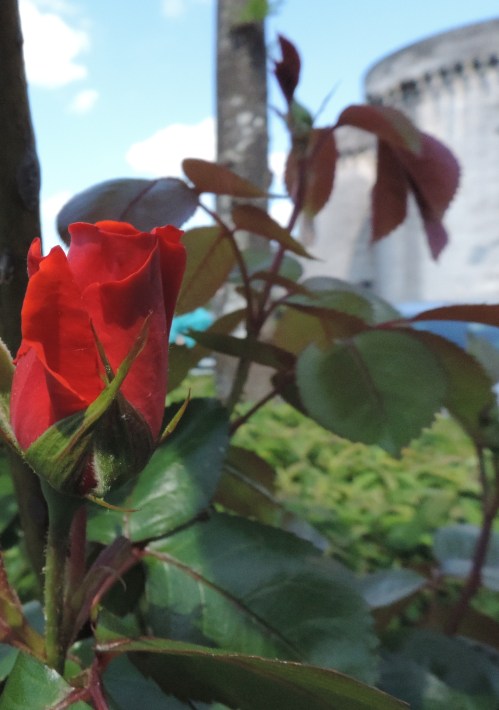
A rose….but not just any rose.

Saint-Exupéry writes about a rose which the Little Prince cares for, and also writes about a fox with whom he forms a personal relationship. When talking about the fox, he uses the word “taming”, but in both cases he is describing the creation of personal relationships.

For each and every one of us, we experience life personally. We experience everything from our own, unique, subjective viewpoint. As we do that, we form particular, personal connections. You and others will feel differently about particular places, particular creatures, even particular trees and flowers.

It’s the same for us with people. The more we connect to someone, the more special we feel they are to us.

It seems to me that this is one of the best ways to improve the quality of our lives – make connections, form caring bonds…..make life personal.


Read Full Post »

water angel

OK, I know I’m just using my imagination here, but don’t you think you can see a water angel in this iris?

She’s wearing a long robe, reaching up with both her arms and facing left as if she’s climbing up the yellow part of the flower…..

So you see her?


Read Full Post »

tulip opening

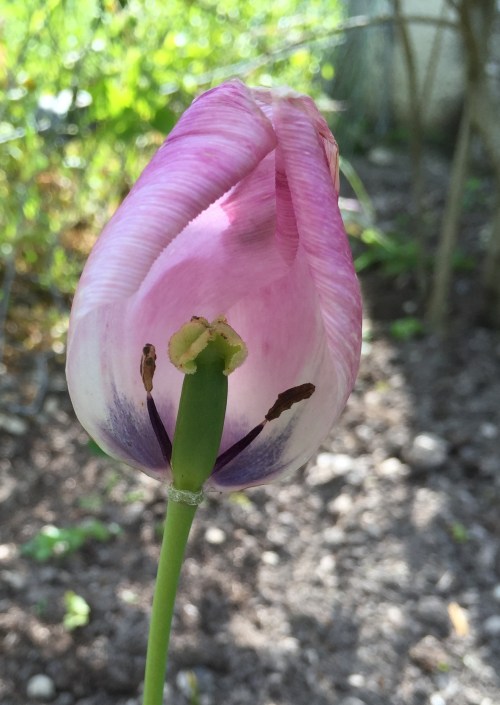
I noticed this tulip the other day. Like most flowers, as the petals begin to fall off at some point. In this case, with the sun shining through the remaining petals, the tulip opened up to reveal its “inside” and I’m not saying that this made it even more beautiful then when it had all its glorious petals in place, but wow, there’s an enticing beauty here all the same.

Doesn’t it draw you in even more deeply?

It certainly caused me to pause, take a photo, and wonder for a few moments about the incredible complexity and delicacy of the inside of a flower…..

Truly, a revelation.

Read Full Post »

present.jpg

In “The Book of Tea” the present is described as “the moving infinite”. When I heard that phrase this morning an image appeared in my mind. It was an image of an “eye-beam”, like the beam of light from a lighthouse, but a symbolic beam running from my eye to the point of focus of my vision. This eye-beam was ranging over the surface the sea, skimming over the waves.

We often hear about “living in the present”, or “in the now”, but of course there is no such “thing” as the present. What I mean by that is there is no such object. The present isn’t a series of frames in a video or a movie running past us so fast it gives the appearance of movement. It isn’t made up of discrete fixed states. It flows. It contains the past from which it emerges and the future it becomes.

I often think of that when I take a photograph.

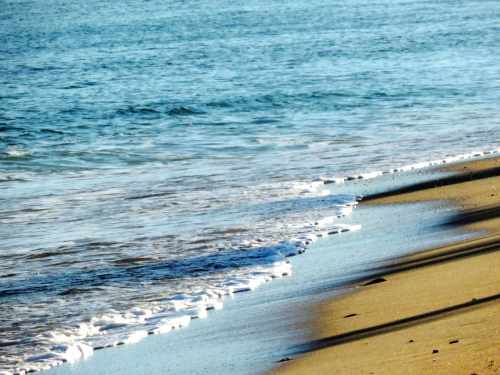
Look at these beautiful waves breaking on the sand in the photo above. It feels like capturing the present…..at least for a moment. But, of course, it doesn’t capture anything. When my finger presses on the shutter release button, I and my camera create something new. This image.

“Live in the present” is actually another way of say “live with awareness”.

What I really like to do is be aware of where I am casting my eye-beams, and asking myself, what am I going to create with what my vision reveals?

It’s this interplay of awareness and creation which allows me to share a moment with you.

Thank you for sharing your presents.

Read Full Post »

weather phenomenon

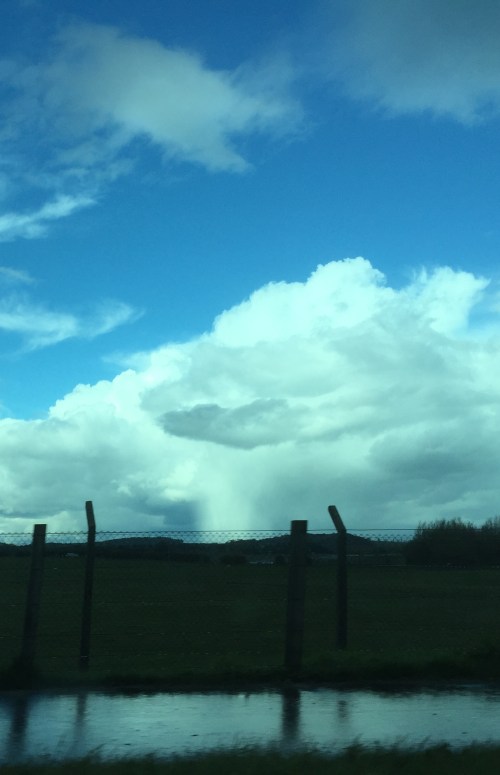
Looking out of the back window of the car as I traveled to Edinburgh airport the other day I noticed a strange phenomenon in the clouds.

It looked almost like a tornado funnelling down to touch the earth. Or maybe it was just an area of heavy, pretty well circumscribed rain.

Whatever it was, I’d never seen anything exactly like it before.

We have two cerebral hemispheres, a left and a right. One of the things the right is really good for is looking out for what is new or different. It turns out that seeking novelty in this way is a great way to stimulate mindfulness and healthy, youthful brain.

It’s worthwhile keeping your eyes open for the unusual, the striking, the different. You’ll be surprised just how often you discover something…..

Read Full Post »

shells

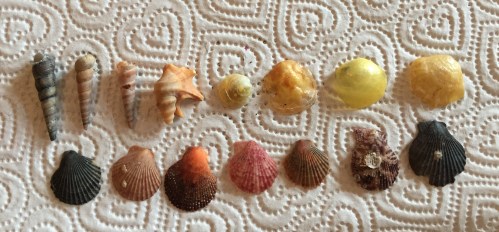
Here are a few shells we found on a beach recently.

One of the ways we see the world is by looking for similarities. See how these different shells have certain similarities – if you wanted to, you could classify them according to one or two of their characteristics.

We do that with people too.

In fact, I think there’s way too much of that approach in the world today. We look for some similarity, label it, classify it, and then stop seeing the individual. You could look at that photo and say, oh yes, shells. And move on. Or you could cluster together the ones which have similar shapes, and move on.

Iain McGilchrist, in his “Divided Brain”, shows us how we use our left cerebral hemisphere to do that. It’s a fantastic tool for spotting similarities, and for classifying things according to what is already familiar. Fortunately we have another cerebral hemisphere, the right, which seems to have a completely different set of priorities. It notices uniqueness, sees the connections and contexts of whatever we are looking at, and prioritises a more holistic appreciation of what makes something different.

I reckon this is particularly important when it comes to people.

You are unique.

You have certain similarities with others but there is not another person alive who is exactly the same as you. Nobody has the same story that you do. Nobody has the same particular connections to others, to places and to events, that you do.

And you know what’s even more amazing? There has never been another person in the whole history of this planet who is exactly the same as you. There never will be.

I was very lucky to do the work I did. Every patient I met was unique. Every person had a different story to tell. Nobody was the same as anyone else. I think that reinforced the importance of the right hemisphere approach for me.

What are you going to do with your uniqueness? What are you going to notice, how are you going to respond, what choices are going to make, what story are you going to tell?


Read Full Post »

charente

I was born in the town of Stirling, in the middle of Scotland’s Central Belt. So, for most of the first couple of decades of my life I lived near the River Forth. When you look down on the River Forth from Stirling Castle you see it winding and snaking its way east. I twists and turns the way a vine grows. Some of the loops almost join up as if they are trying to create small islands. Old maps show that the exact route of the river has changed many times over the centuries.

Rivers are like that. They never stay the same.

For most of my next two decades I lived in Edinburgh….next to the River Forth. But by the time it reaches Edinburgh the River Forth has grown and changed out of all recognition. It no longer curls and winds its way. By now it’s become the “Firth of Forth” and has two (soon to be three) huge bridges spanning it, connecting Lothian to Fife. It’s hard to fully understand that the river which passes by Stirling and Edinburgh is actually the same river.

Rivers are like that. They change as they cross the land from the hills to the sea.

After my Edinburgh days, I spent the best part of the next couple of decades near the River Clyde. I traveled to work by train every day and looked out at the Clyde as the train passed Partick. Before my time those banks of the Clyde were covered with shipyards and docks. By the time I was passing by all that had gone. The Clyde wasn’t the great shipbuilding river any more.

Rivers are like that. They serve different purposes as societies and economies change.

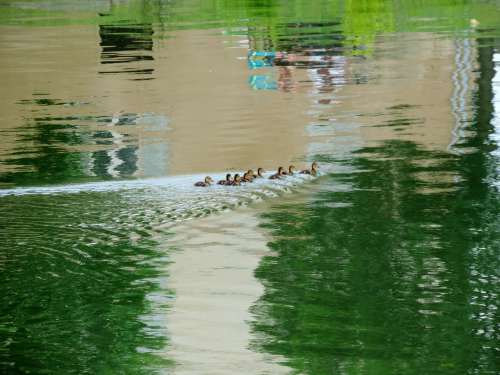
Now I’m near where I took that photo at the top of this post. That’s the River Charente as it flows through Cognac in France. The Charente is said around here to be a relaxed river. It flows pretty calmly and steadily, influencing the whole way of life here.

Rivers are like that. They influence our lives.

I often think of rivers. How do you pin down the identity of a river? As Heraclitus said you can’t step in the same river twice, because the water which flows by is literally different water minute by minute. So if we can’t define a river by its water, can we define it by its boundaries, its banks? But they change too. Some not so much, some quite a lot.

I think we are all a bit like rivers. Life flows through us, changing our cells, our fluids and our structures day by day. We are bounded in some way by where our bodies meet the rest of the world. But these surfaces are constantly changing.

How do we retain our identity? Much as the River Forth has changed so much in the time it takes to meander from Stirling to Edinburgh, so do I change as I grow from my first two decades to the next two. Yet I still feel I have the same identity. It’s just that everything about me has changed.

Well, I wonder how much of the next two decades I’ll spend near the Charente?

Or will some other river beckon?

How about you? Which rivers mean the most to you?


Read Full Post »

« Newer Posts - Older Posts »