Feeds:
Posts
Comments

Posts Tagged ‘environment’

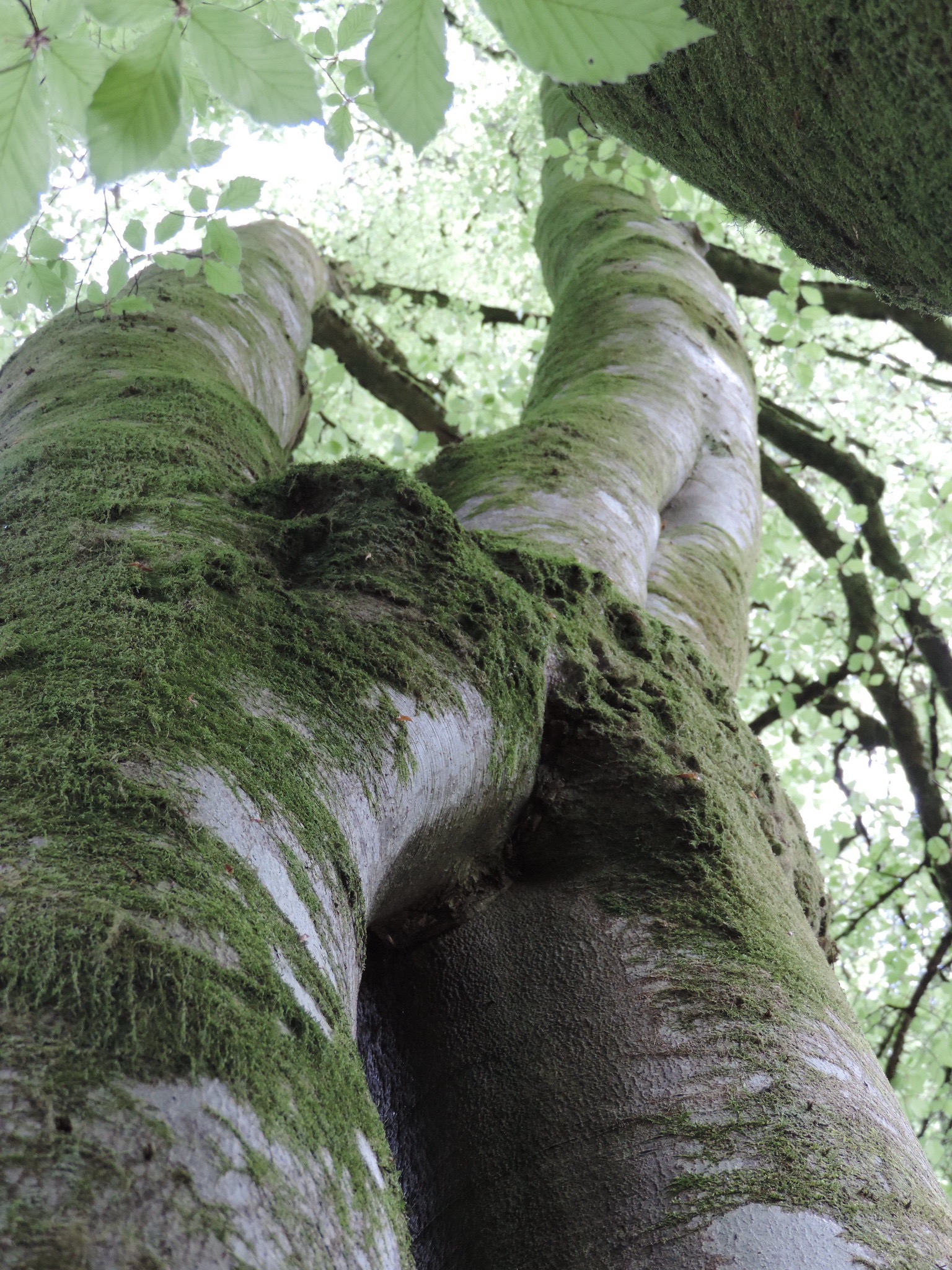
This is one of the most extraordinary trees I’ve encountered. The one on the left seems to have reached out to the one on the right, then the two trees have merged to continue upwards together as one trunk. I don’t know how they did this. It’s like grafting but as best I can tell this wasn’t a forest where there was active grafting happening. I’m pretty sure they’ve managed this all by themselves.

This image is one of my favourites and it always makes me think about the importance of connections. There really isn’t any species of life where each organism exists all by itself, disconnected, as it were, from its fellows, from other creatures, and from its environment. We can only imagine that an organism could exist completely separately if we think of it as a fixed, bounded object. But, in reality, there are no fixed, bounded objects.

As we zoom in and in to look deeper and deeper into any organism, or so-called “object”, we get down to the atoms we all learned about at school. But twentieth century physics has enabled us to look inside those, previously imagined, “fixed” objects, and we’ve discovered that there is no final, fixed material in there. Rather, even atoms are interactions between flows of energy and information, sparkling briefly in and out of existence. They aren’t fixed. They aren’t separate.

Human beings have evolved to have the longest period of dependency for their young. It takes years and years for babies to learn enough to be able to survive….I was going to say, “by themselves”, but, actually we never live “by ourselves”……..independently. So we have evolved superbly social capabilities. It has been argued that we are, in fact, THE most social of all animals.

Yet we swallow the myth of the “Self made man”, of the “hero”, or “genius”, who has somehow come to be all by themselves, without the help and support over their years, of others. It’s a nonsense. The narcissistic, massively egotistical politicians we see today are totally deluded. They only have what they have because of others, because of their connections. Same goes for the tech billionaires. They didn’t create money from nowhere, they grabbed it from others. They didn’t invent and build the technologies they own all by themselves, they profited from the skills and work of many others.

Maybe we need to follow connections a bit more carefully in order to realise just how co-dependent everyone really is.

Finally, let me zoom out a bit and consider nation states. These are inventions. They didn’t drop down onto Earth from the sky, fully formed. Some human beings, some time in the past, staked out the borders and said everything inside these lines is “mine” or “ours”, then fought off any attempts by their neighbours to live on any of that land. Those borders around the nation states are way more permeable than the politicians would like you to believe. The entire planet has one water cycle. You can’t keep separate what flows into one ocean from another. You can’t keep what flows into an ocean separate from the sky, the rivers and the lakes. Same with air. We have one atmosphere around the entire planet. You can’t stop radiation from a disaster like Chernobyl or Three Mile Island spreading freely across “borders”. Same goes for most species in the world – for bacteria, viruses (remember Covid??), insects, birds, plants and many mammals. As each species is lost through loss of habitats, connections are broken, and we are all diminished. We humans are one species. It doesn’t matter which part of the map someone has drawn is where we were born, or where we live now. Our fellow humans aren’t only those in our village, our city, or even our nation state. We are inextricably connected to them all. We are inextricably connected to the entire planet.
Read Full Post »

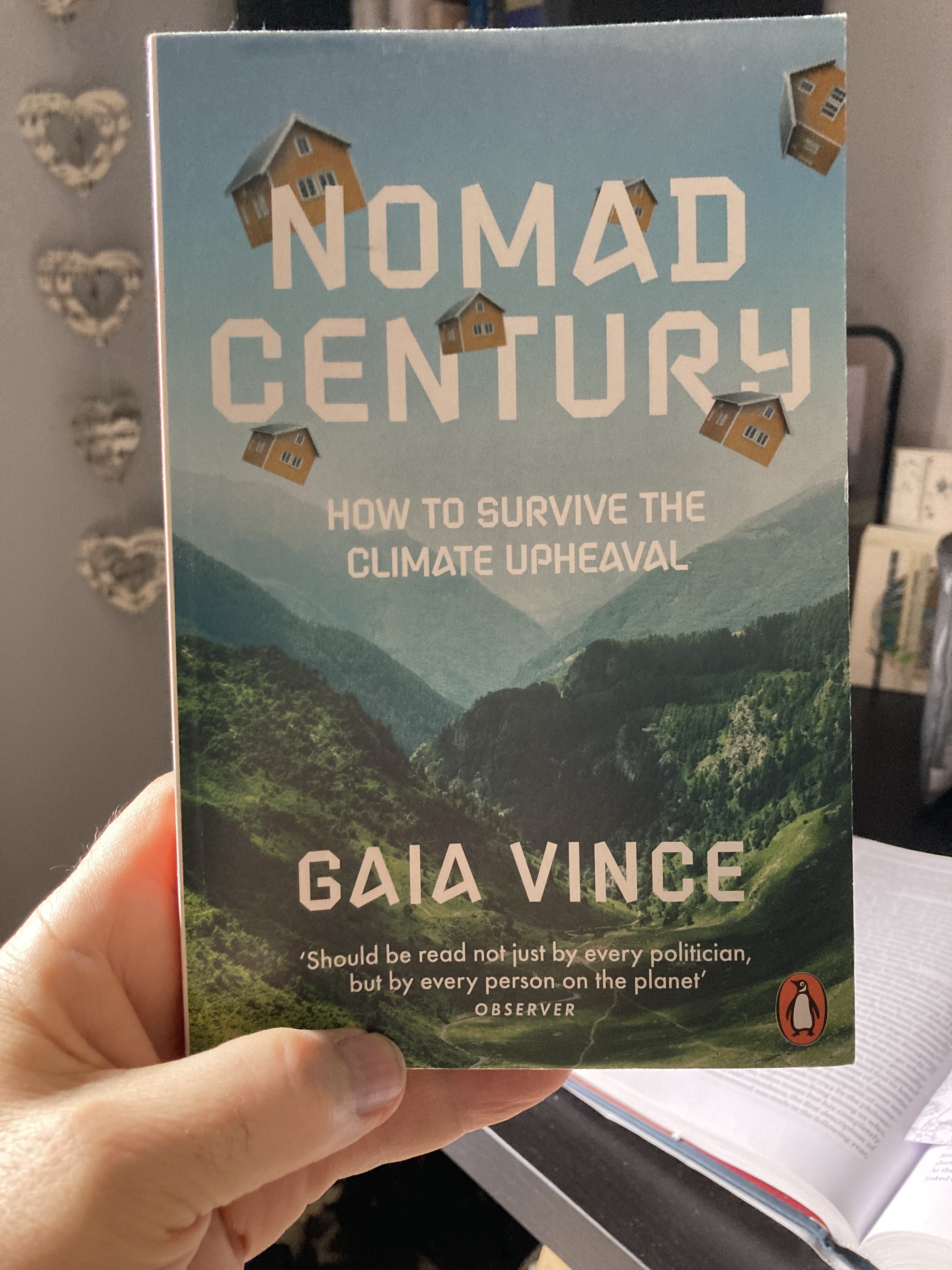
Here’s a book I’d recommend to anyone.

There are loads of books about climate change but science writer, Gaia Vince’s, book is probably the one I’ve enjoyed most. It is beautifully written, and easy read, and isn’t brimming over with despair about our changing climate. She doesn’t play down the significance, or magnitude, of the changes, but, in this book, she takes a focus on an aspect which I haven’t seen others do (or, at least, not so well) – migration.

“Migration is a survival strategy used widely in nature”

There’s a statement which resonates strongly with me. Whenever I try to explain reality, to demonstrate what “integration” actually means, and to highlight how important “cooperation” is, I focus on the human body. In the body are various organs…..heart, liver, kidneys, brain etc…..and in order for us to be healthy all of these organs have to relate to each other. They have to work with each other. They are not part of a competitive market fighting each other for nutrition and resources. Rather, they form “mutually beneficial bonds” – in other words, they create relationships which work both ways in the best interests of each part. This is integration – “the creation of mutually beneficial bonds between well differentiated parts”. Having explained that in relation to body organs, I go on to show how the same rule applies to all the cells and tissues of the human body, all of the billions and billions of cells which each of us has. And from there, it’s easy to see how the same principle applies throughout nature, across the globe, with complex webs of relationships forming between people, animals, plants, and the rest of the environment. Gaia Vance doesn’t use the word “integration” but what she focuses on is migration and cooperation.

For humans, migration is deeply interwoven with cooperation – it is only through our extensive collaboration that we are able to migrate, and it’s our migrations that forged today’s collaborative global society.

and

Studies across nature show that global dispersal is the most effective strategy for any species to prevent extinction.

and

…human brains are highly adaptive and we are hypersocial, able to cooperate with large numbers of unrelated people, supporting each other and sharing resources, ideas and knowledge

What she does so well in this book is to show just how natural it is to migrate. She describes the history of migration, in humans as well as in other species, and the history of borders and nation states (a surprisingly recent development in human civilisation). This reminds me of the writing of Rutger Bregman who challenges the whole issue of nation states and borders in his excellent “Utopia for Realists”.

This is a hopeful book which highlights how we need to think about migration differently – to move away from the toxic, xenophobic and racist narrative which seems to dominate in the world today.

We live in an inextricably interconnected interdependent world. None of us can live by ourselves. Our human super power is collaboration, and combing that with migration, learning how to plan for it, and manage it well, to ensure good integration, is our best hope in the face of a rapidly changing world.

Buy this book. Read it. Talk about it. Share it with your friends.

Read Full Post »

I like this kind of fountain where the water pools in a bowl, or on a table, and flows gently, but constantly over the edge. It’s common to see this type of structure in Japan, but I’ve seen them in many other countries too.

One of the things I like about this particular photo is how the water in the bowl is blue, green, purple and black, but as it flows over the edge it appears golden, silver and clear. I know that has a lot to do with the colour and structure of the container but that’s the thing with water….it adapts, morphs, according to where it finds itself.

Water is such a strong metaphor for change. It loves to flow. It hates to be stagnant. It loves to change from liquid to gas, sending up into the air both millions of invisible water molecules, and visible mists. It loves to firm up in the deep cold of winter, to become hard and to create spectacular structures from icicles, to snow crystals, to icebergs. Those hard, solid looking structures don’t appear to be flowing, but they don’t remain in any one particular form for long. They too give off molecules into the air, at the same time as they turn to liquid on their surfaces.

Without water there would be no life on Earth. We only have the one water cycle on this planet. We might artificially divide up areas of the world’s oceans and seas and give them names. We might try to claim ownership or rights over patches of water, or the seabed below them. But water knows no boundaries, and water continuously cycles into the air, onto the soil, and runs back down into the oceans again. You can’t keep any of the water separate from all the rest.

We try to keep the water out of our houses, but water goes where it wants to go, and no amount of concrete or sandbags can contain it for long. Are there more floods these last few years? It seems so. At least, here in France, it does. Do we understand that? Do we understand how the water cycle works and why rainfall is increasing? Do we understand how rivers are formed and how they flow? Because if we don’t understand these phenomena well enough, how are we going to live with them?

Coastlines don’t stay the same forever. River banks don’t stay the same for ever. We need to adapt to the changes. King Canute didn’t have the right idea.

Read Full Post »

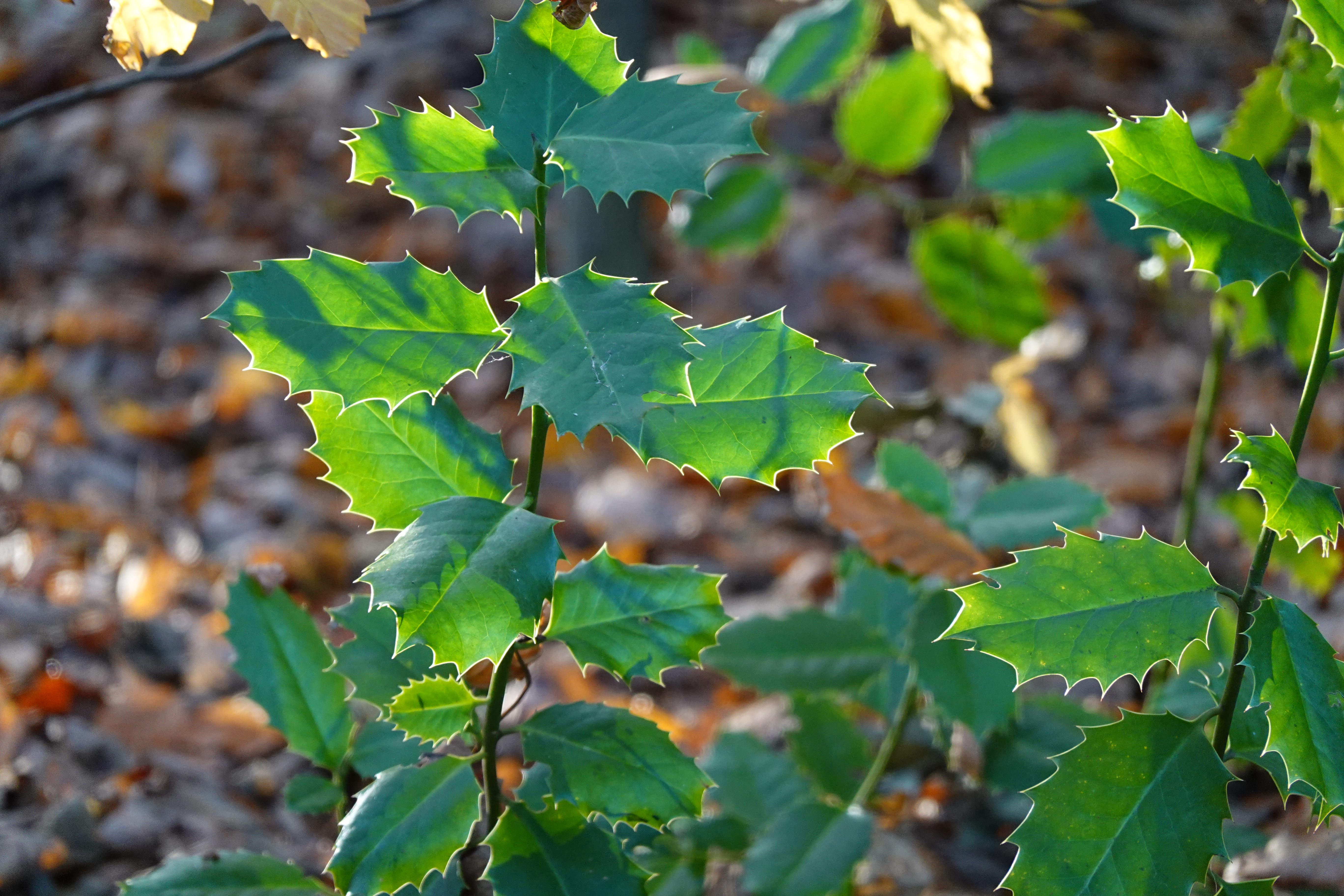
I’m not a botanist but I’m pretty sure that holly leaves have these jaggy edges for protection. I don’t think they are simply a decorative design feature. They are to dissuade animals from eating them. We living organisms have an incredible diversity of defence systems…..from spikes to poisons to….well, the list is huge. We humans also use a huge number of different defence strategies, both behaviourally and with our complex systems of immunity.

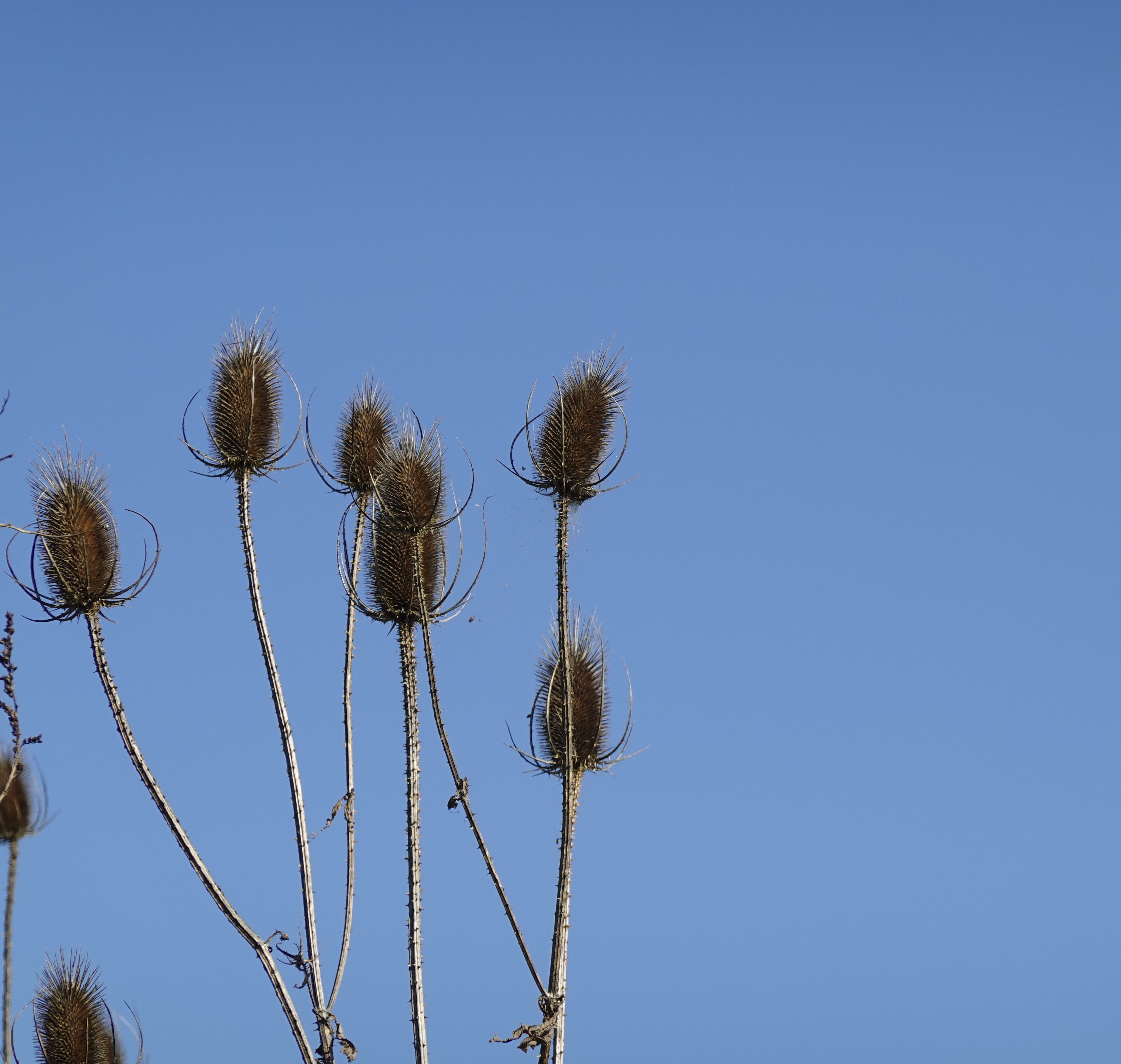
But not all spikes are for defence. Look at these seed heads with their elaborate spikes and hooks. These aren’t, as best I know, for defence, but to hook on to passing creatures, so that the seeds inside are carried by the others, allowing the plant to increase its chances of survival and propagation around the countryside. These systems of seed dispersal remind us that interactions between plants, animals and humans are normal. It’s not just we humans who need each other in order to thrive. All kinds of living creatures need others (sometimes other members of their own species, but often members of quite different ones) in order to survive and thrive.

Nature creates elaborate and complex webs and networks of relationships between living organisms. We call them ecosystems. The more diverse the ecosystem, the more it is resilient and able to adapt to changing conditions. Loss of species diversity is a huge risk to human beings. I’m not sure how aware we are of that fact.

We should be encouraging diversity, encouraging connections and relationships. We should be building physical, social and psychological ecosystems if we want to thrive.

Looking at these images today, on the last day of 2024, reminds me that for each of us to flourish in 2025, we need to pay attention to our relationships, and need to encourage difference between ourselves and others.

Read Full Post »

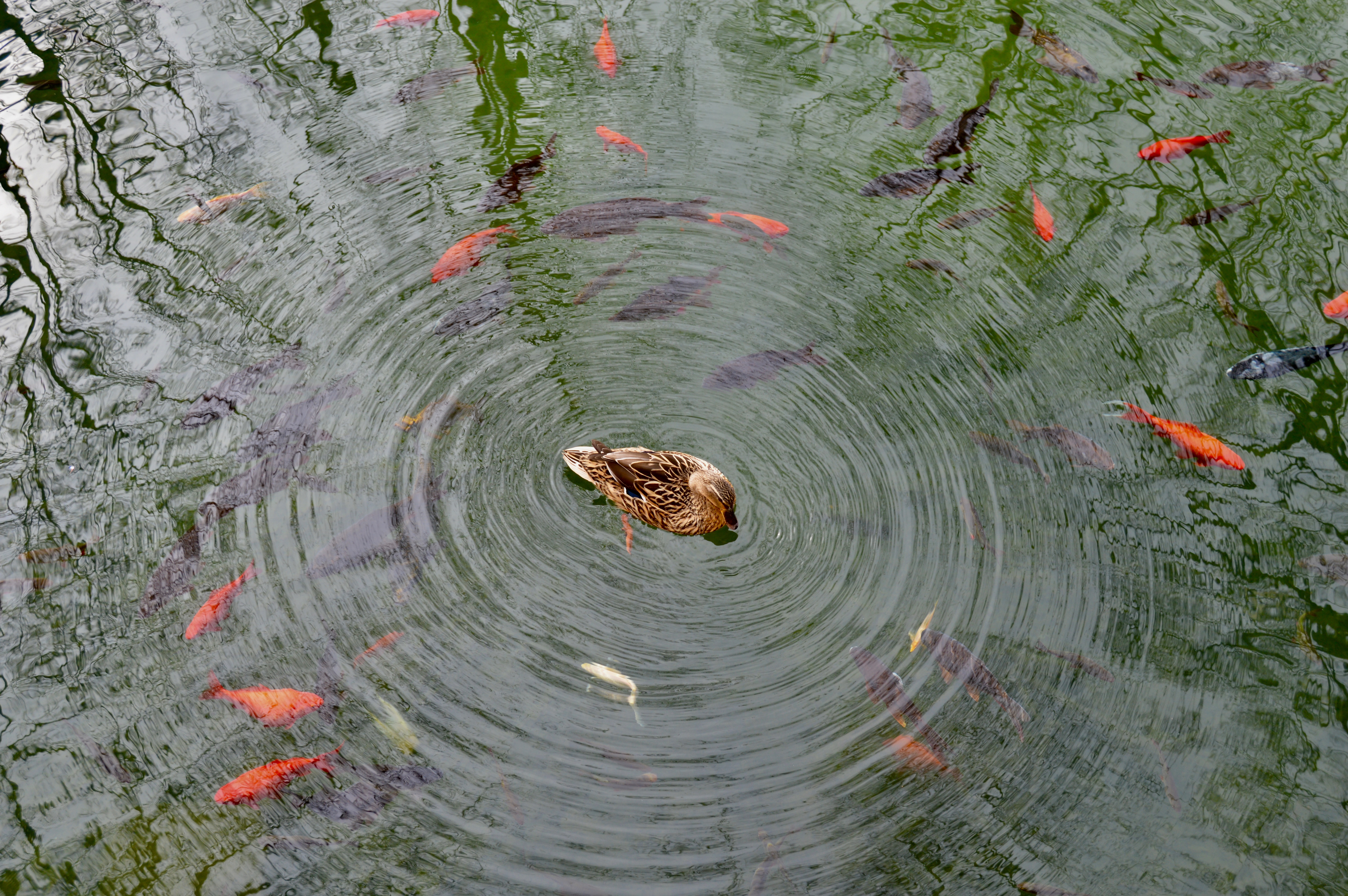
This is one of my favourite photos. It shows two things which always fascinate me. Firstly, the duck, which is apparently just sitting on the water is sending out ripples across the surface in the most beautiful pattern of concentric circles. Secondly, the fish appear to swimming around the duck, some even following the actual ripples.

This is a great example of how just by living we change the world around us and influence the lives of others.

D H Lawrence said –

As we live, we are transmitters of life.

When I’ve looked at this photo in the past, I’ve been struck by how we “influencers”, but, after reading this sentence by Lawrence, I think “transmitters” is a better word to use. Besides, “influencers” has become synonymous with marketers, and, in so doing, has lost some of its beauty for me.

We transmit life just by living. As I breathe, as I consume food and drink, as I digest, as move around this little planet, I change the air, the water, the soil, as I go. As I think, and feel, and imagine, and communicate, I change the lives of others. This blog, which really started just as a personal space to gather things that interest me, has, over the years, become a transmitter. I know that from the feedback I receive from people all over the world. That’s become an explicit part of my writing here. I want to share my life experiences. I want to share my photos, my words, in the hope that you, and maybe others you know, will be touched by them, inspired by them. I hope what I create here brings you some joy, evokes some wonder and reflection, and brightens your everyday. Because, creating these posts, does that for me!

We are transmitters of life, and each of us leads a unique, special, life. We are transmitters of life through our personal stories, none of us telling an identical story to another person. We are transmitters of life through our actions and our thoughts. Collectively, we humans shape and sculpt the Earth. We should stay conscious of that. It’ll help us make better choices.

Read Full Post »

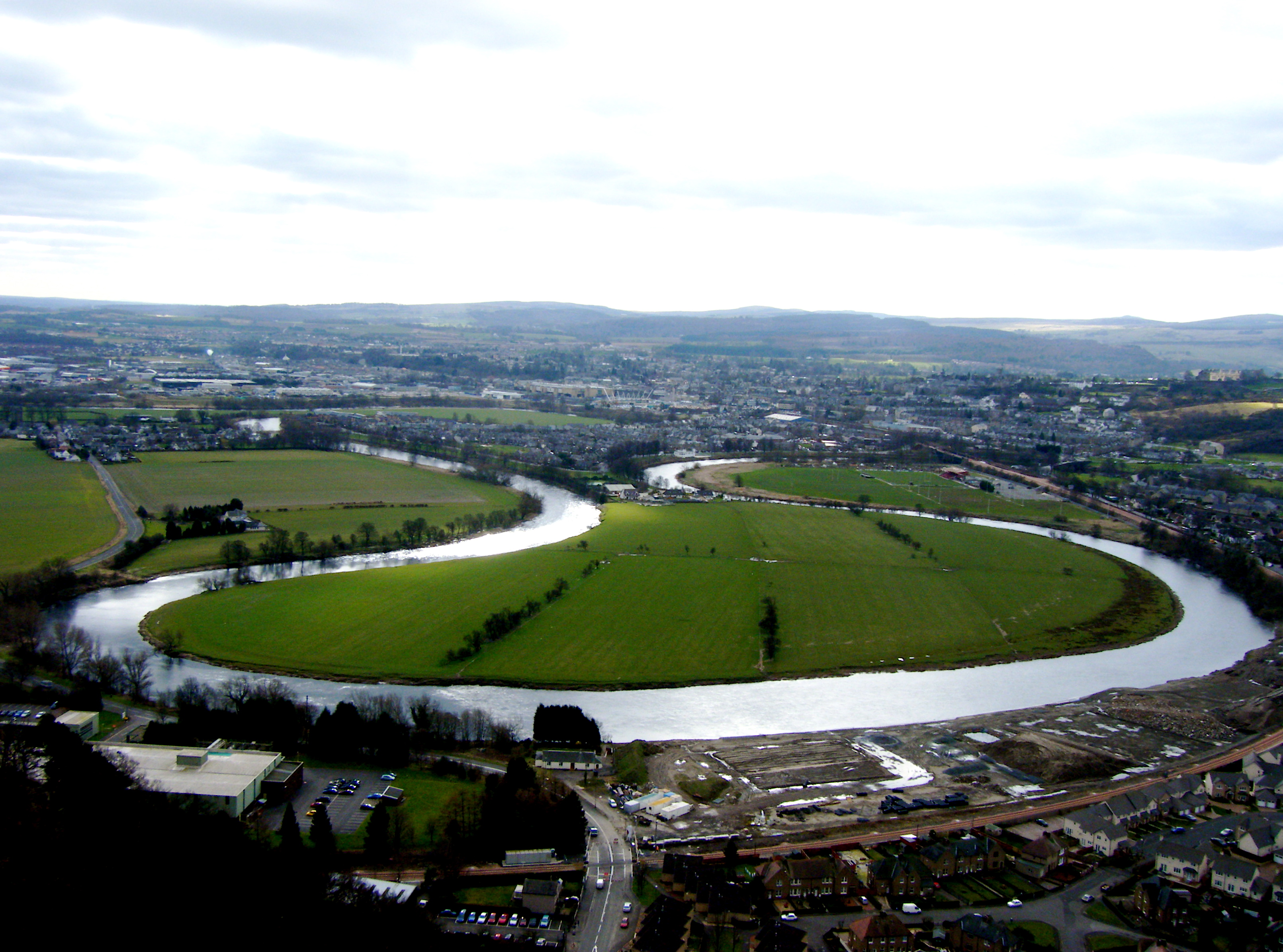
I was looking for exactly this photo the other day, and was delighted when I found it in my library – but I didn’t take it. My daughter, Amy, did. I’m pretty sure I’ve taken photos exactly like this in the past but it must be back to the days of 35mm film because I can’t find any in my digital library. This is a view of part of the River Forth, at Stirling, and it shows beautifully how the river twists, turns and curves around so much at this point in its journey.

I picked up a couple of little books by a French author, Olivier Clerc, when I was in Biarritz fairly recently. One is called “La Grenouille qui ne savait pas qu’elle etait cuite….” (which is about the frog who didn’t know she was being boiled) and the other is “Rien ne peut empecher la riviere de couler…..” (nothing can prevent the river from flowing. In both books, this Swiss author, writes about life lessons he’s learned by taking an analogical perspective on natural phenomena. He argues that as well as thinking analytically, which we are encouraged to do all the time, we should also develop the skills of thinking analogically. That in doing so we will find life itself becomes richer, deeper and more meaningful. I think he’s absolutely right.

The first essay in the second of those books is about how a river can be viewed two ways – first of all, you can see that it twists this way and that (just like the River Forth in this photo), and that if you trace the course of a river from where it starts in the mountains, you find that there seems no logic to its path – it heads west, perhaps, then south, then east perhaps and so on. It disappears at times, flowing into a lake, only to reappear out the opposite side, or into a marsh, or even below ground, before re-emerging perhaps many miles further on. And yet, we call the river by the same name along this twisting, turning, ever changing path. But there’s a second way to look at the river, and that’s to take a lateral slice through the landscape and see that, at every single point, the water is flowing downhill. At no point does it ever, ever turn around and start to flow uphill. It just doesn’t. It continues from Spring to Ocean, in a constantly downhill direction. He points out that these two views of the river show both continuity (as it flows through the landscape) and coherence, as it heads constantly downhill to achieve its goal of reaching the ocean).

He draws several lessons from this, not least being that behaviour is often hard to understand because we see it superficially, and that, we need to look beneath to see the underlying motivations, values and goals, in order to understand why someone is acting the way they do. He says this teaches us to be humble, to accept uncertainty, and to inspire us to look below the surface, to better understand others. What are the coherent threads that run through an individual story, be that of a person, a group within society, a culture, or even a nation? What lies beneath the apparent randomness, the veering this way and that, over years, and decades, that actually reveals the core beliefs, values and purposes?

I like anything which inspires me to pause and reflect. And I think learning to look at the natural world analogically can really deepen the joy of everyday life.

Oh, and just before I leave……I’m suddenly remembering a line from John O’Donohue –

“I would love to live like a river flows,
carried by the surprise of its own unfolding.”

Read Full Post »

I have long been a critic of reductionism. I mean, I get how it brings something to the table. Our ability to isolate a certain element from within the flux of phenomena and experience, to focus on that element closely, allows us to further our understanding of the world. I suspect it also does, what Iain McGilchrist describes as a left hemisphere trait….it allows us to grasp, to manipulate and control. Therein lies its power.

But it all goes wrong when we fail to integrate our new understanding of a part back into the reality of the whole.

In her novel, Elixir, Kapka Kassabova, writes –

Medicine emerged from alchemy’s noble attempt to marry the subjective and the objective, matter and mind, inner and outer, and in this way, to lift humanity out of superstition and senseless pain. 

But like magic, the bias of modern medicine went too far in the opposite direction. Like magic, it assumes too much and has many blind spots. 

These blind spots come from its many uncouplings, one of which is the uncoupling of psyche from soma, the soul-spirit from the body. Another is the uncoupling of one organ system from another, and another is the uncoupling of the human being from her environment. 

Both Folk Medicine and Western Medicine discourage you from taking ownership of your well-being through knowledge. Both of them keep you dumb and dependent. 

In this passage she critiques both Modern and Folk Medicine for taking power away from individuals. Too often Medicine, in all its forms, comes across as a body of secret knowledge, with an expectation that patients will have faith, and hand themselves over to the practitioner with the superior knowledge.

Personally, I think this is a terrible way to practice Medicine. Diagnosis, prognosis and potential treatment should be a joint process emerging out of a caring, open relationship between a practitioner and a patient. Ultimately, the goal should be to increase an understanding of the self, and to empower individuals towards greater knowledge and autonomy.

I love how Kapka describes Medicine as emerging “from alchemy’s noble attempt to marry the subjective and the objective, matter and mind, inner and outer, and in this way, to lift humanity out of superstition and senseless pain.” That’s exactly how it felt to me. Medicine, at its best improves the lives of others by “marrying the subjective and the objective, matter and mind, inner and outer.”

But in fact what really strikes me most in this passage is “These blind spots come from its many uncouplings, one of which is the uncoupling of psyche from soma, the soul-spirit from the body. Another is the uncoupling of one organ system from another, and another is the uncoupling of the human being from her environment. ” It’s that use of the word “uncoupling”.

I’ve never used “uncoupling” in this context before. But it resonates with me much more deeply than “reductionist”. This, surely, is the heart of the problem – when we “uncouple” one organ system from another, “uncouple” the mind from the body, “uncouple” ourselves from each other, and from the rest of the lived world with whom we share this one, finite, interconnected, little planet.

Here’s to undoing as much “uncoupling” as we can.

Isn’t that something to aspire to?

Read Full Post »

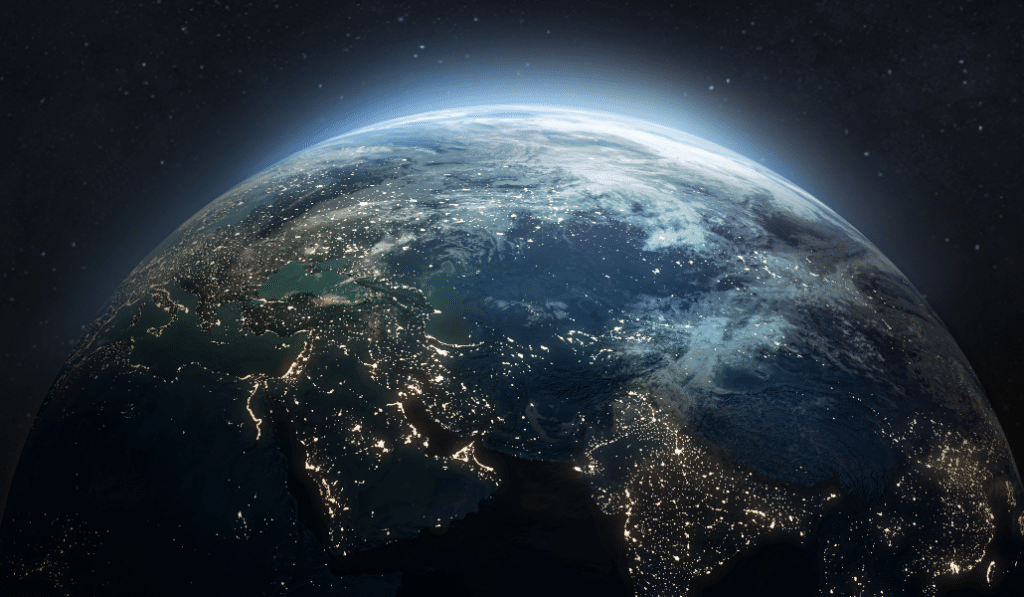
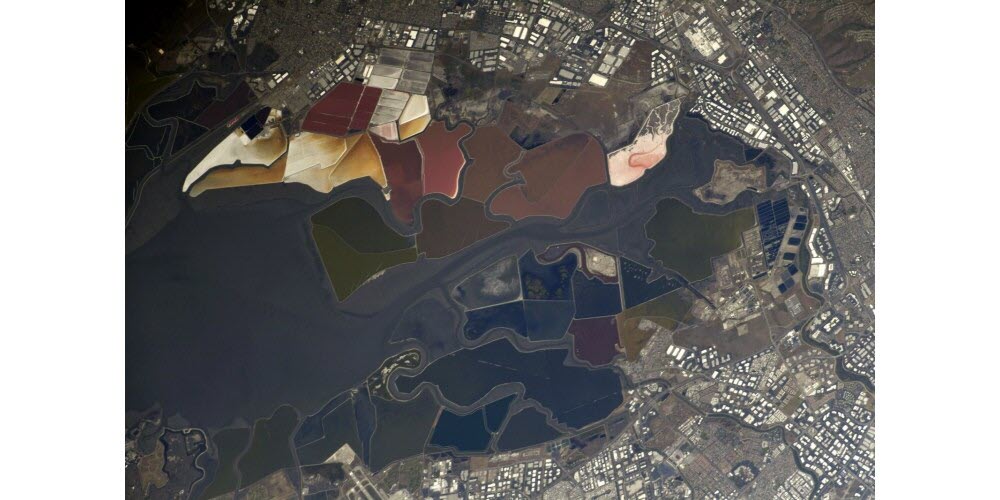
In “Orbital”, by Samantha Harvey, she describes how the astronauts aboard the International Space Station are first entranced by the Earth at night. It’s when night falls over the surface of the planet that the presence of human beings becomes most obvious….the networks of streets, buildings, roads sparkling and shining so brightly you can easily see them from Space. Then as daylight comes they see the Earth as a planet where humans beings are invisible, see it as a living, whole organism with its oceans, clouds, weather systems, forests and deserts. But then they come to realise just how much of the Earth is the way it is exactly because of human choices and actions.

We change the planet just by living here. How it changes comes down to our collective choices and those of the corporations and individuals with the greatest power and wealth.

Normally I use my own photos to illustrate my posts but, having never been to the International Space Station, this time, I’m borrowing a couple of photos from the French astronaut and photographer, Thomas Pesquet. Look him up. Check out his photos. They are simply astonishing.

“They come to see the politics of want. The politics of growing and getting, a billion extrapolations of the urge for more……The planet is shaped by the sheer amazing force of human want, which has changed everything, the forests, the poles, the reservoirs, the glaciers, the rivers, the seas, the mountains, the coastlines, the skies, a planet contoured and landscaped by want.” – from “Orbital” by Samantha Harvey.

This is the modern version of a very old philosophical exercise – taking the view from on high – to stand apart, above, and look out over the greater whole.

Read Full Post »