Feeds:
Posts
Comments

Posts Tagged ‘meditation’

My area of work was health. I worked as a doctor over four decades and I learned a lot about what made for a healthy environment and what was a more toxic or harmful one. I reckon the characteristics of healthy environments are pretty universal. We all need to breathe clean air, drink clear water, eat nutritious food, have nourishing and caring relationships. There’s a lot of evidence about the positive healing effects of natural environments. I say “natural” but what I mean is, as opposed to built environments. Trees and forests stimulate healthy changes in body and mind, but busy six lane motorways, not so much. But even within these universalities we are all different, so, for some, it’s healing to walk by the shore, or to gaze out at the ocean, breathing in the salt air. For others, the most healing environments are in the mountains and lakes, breathing the clear, fresh air of a little altitude, surrounded by birdsong and wildflowers (“and not or” remember…..both these environments can be good for the same person) 

I read a section of Rick Rubin’s “The Creative Act” this morning (I’m working my way through, reading and meditating on, one section a day just now. It’s such a rich resource)….this morning’s section was “Setting” where he discusses what environments are creative, illustrating how very different ones allow us access to different flows from the universe, each of which can stimulate our intuition. He points out how tranquil natural environments allow us to appreciate the direct information from the universe, whereas, busy peopled places, like cafes, town centres etc, can allow us to tune in to the universe as filtered through human beings. In all situations it’s a question of detached awareness, so that we can notice patterns, but not allow ourselves to be overwhelmed by them. That made me think of the phenomenon we call doomscrolling, where we get caught up in social media feeds. They too can be sources of creative stimulation if we allow ourselves to notice the patterns and themes, and not get caught up in them. In fact, Rick also suggests cultural environments where we focus on reading, music, visual art, etc to pick up the information from the universe filtered through culture. 

The most important point he makes is that we are all different. His conclusion is that we need to “hear the chimes of the cosmic clock ring, reminding [us] it’s time. Your time to participate.”

It is.

It’s your time to participate, to become aware, to trust your intuition and to engage. 

Read Full Post »

In the obsessively micro-managed world we live in now it’s more important than ever for us to take a pause. We are being bombarded with talk of crises, of doom, of having to everything faster, consume ever more, do everything so-called more efficiently.

But we humans are not machines. And we shouldn’t lead our lives, or construct our workplaces according to industrial machine-like principles.

Time and time again you can find creatives….artists, writers, composers, musicians, sculptors and so on tell you they need to have some breaks, some times where they just sit, or they sit and daydream. We need times to just step off the treadmill. We need to pause to gather our thoughts, to become more aware of the present moment, and to restore our depleted reserves of energy.

What length should a pause be?

There is no fixed amount. It can be a short as taking three deep breaths. It can be a few minutes, or a few hours. We need bigger breaks than that too, which is why it’s important to take all your annual leave from work. For some people it’s a sabbatical that they need. But the kind of pause I’m thinking about here, is the kind we all need, every single day.

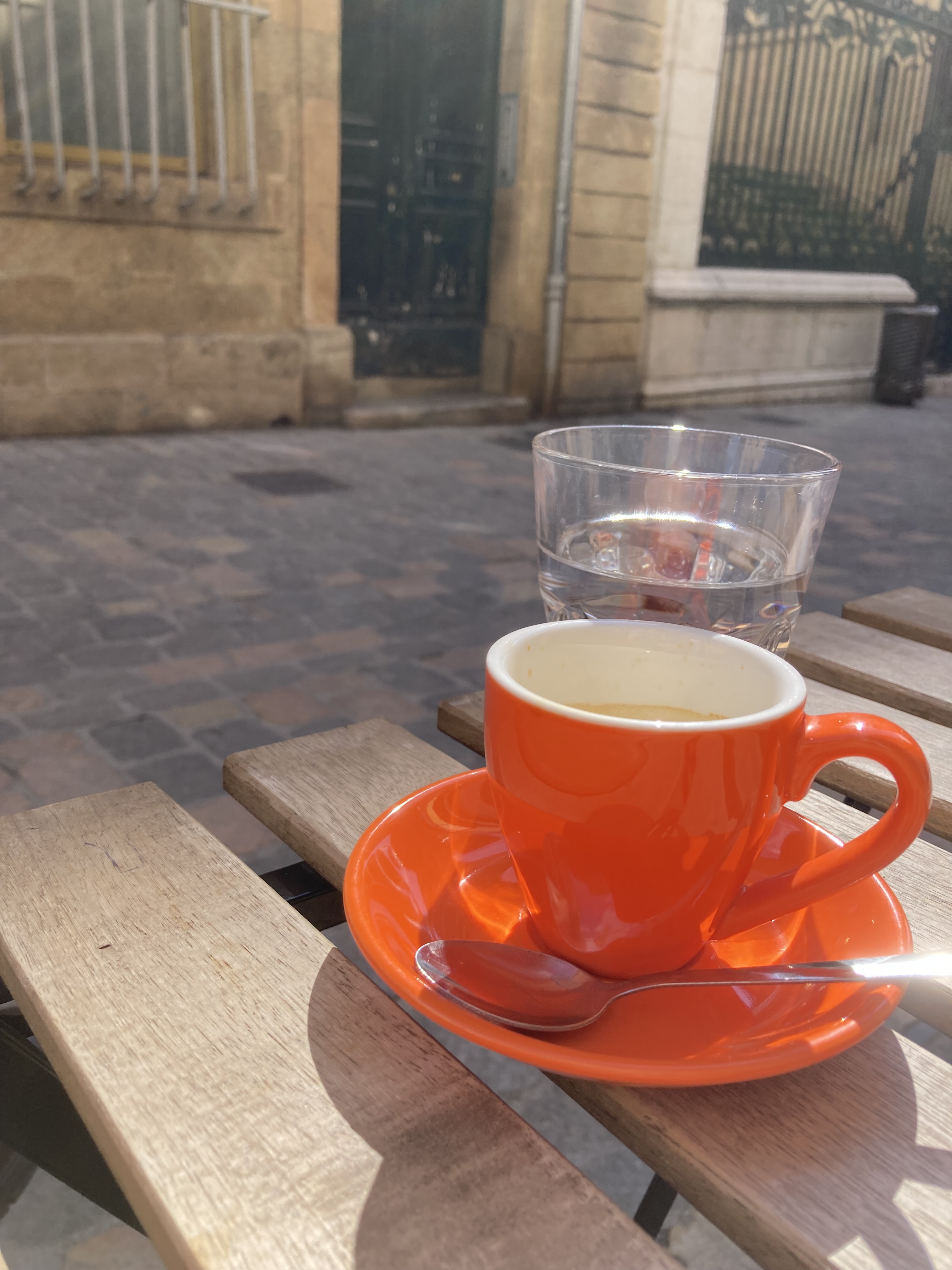
I’m impressed by how in France there is a habit of stopping for a proper lunch…not grabbing a factory produced sandwich and a can of coke on the way to work and wolfing them down at the desk. They take time to go to a restaurant or cafe, to sit down, have a meal and share some time with workmates or friends. Then back to get on with the rest of the day. There’s still a widespread tradition of working five days a week, not seven here, so that everyone can have some family time, some home time, to do with as they want.

How about you? What pauses do you build into your everyday? What pauses would you like to build in, and why not start today?

Read Full Post »

Spring and autumn are the two seasons where I notice change happening right before my eyes. Right now, in October, here in France, we are beginning to see leaves change colour. I love to gaze for a few moments at a plant like this, where some of the leaves are still bright green, some have patches of red or brown appearing, and some have gone fully deep red or even purple.

This reminds me of two things – the first is that change never stops. Everything in the world is constantly undergoing change. We are not the same today as we were a few weeks ago, and we are very different from what we were a few years ago (just browse through your photo albums to see how you’ve changed since you were a baby). The reality is that we change moment by moment. That’s why the advice to “be present”, or to “be here now”, is so relevant. Every single moment is unique, and if we breeze past it without noticing, it will be gone forever (except, of course, in the background of our subconscious the changes never cease to play their part).

The second is that change is so variable. It is heterogenous, not homogenous. You and I are unique. Our daily lives are unique. Our moment to moment experiences are unique and become even more unique over time, as nobody shares with us an exact personal history, an identical string of experiences. Just looking at this one plant and seeing the huge variation in colour as the leaves begin to change makes me even more aware of this uniqueness, of diversity.

So awareness of change slows me down, inspiring me to savour this moment, to live today as fully as I can. It inspires me to pay attention to the flow of Nature, to be aware of the fact that there are no fixed objects in this world, only different rates of change.

And awareness of change does something else for me – heightens my appreciation of uniqueness, of difference, and of diversity. Reducing life to abstractions, selecting single characteristics and bundling everyone who shares them into a single category is such a deluded way of living. We need to stop putting people into little boxes, labelling them and judging them, because when we do that, we just stop seeing them as they really are.

Read Full Post »

Meditation in a huge variety of forms has become incredibly popular in recent years. “Mindfulness” seems to be marketed as the solution to almost everything, perhaps because it has contextualised the original Eastern teachings for a Western, twenty-first century audience, and removed the references to spirituality and belief.

However, I think there’s an equally ancient “classical” practice stretching right back to Greek philosophers. It’s the combination of slowing down and observing.

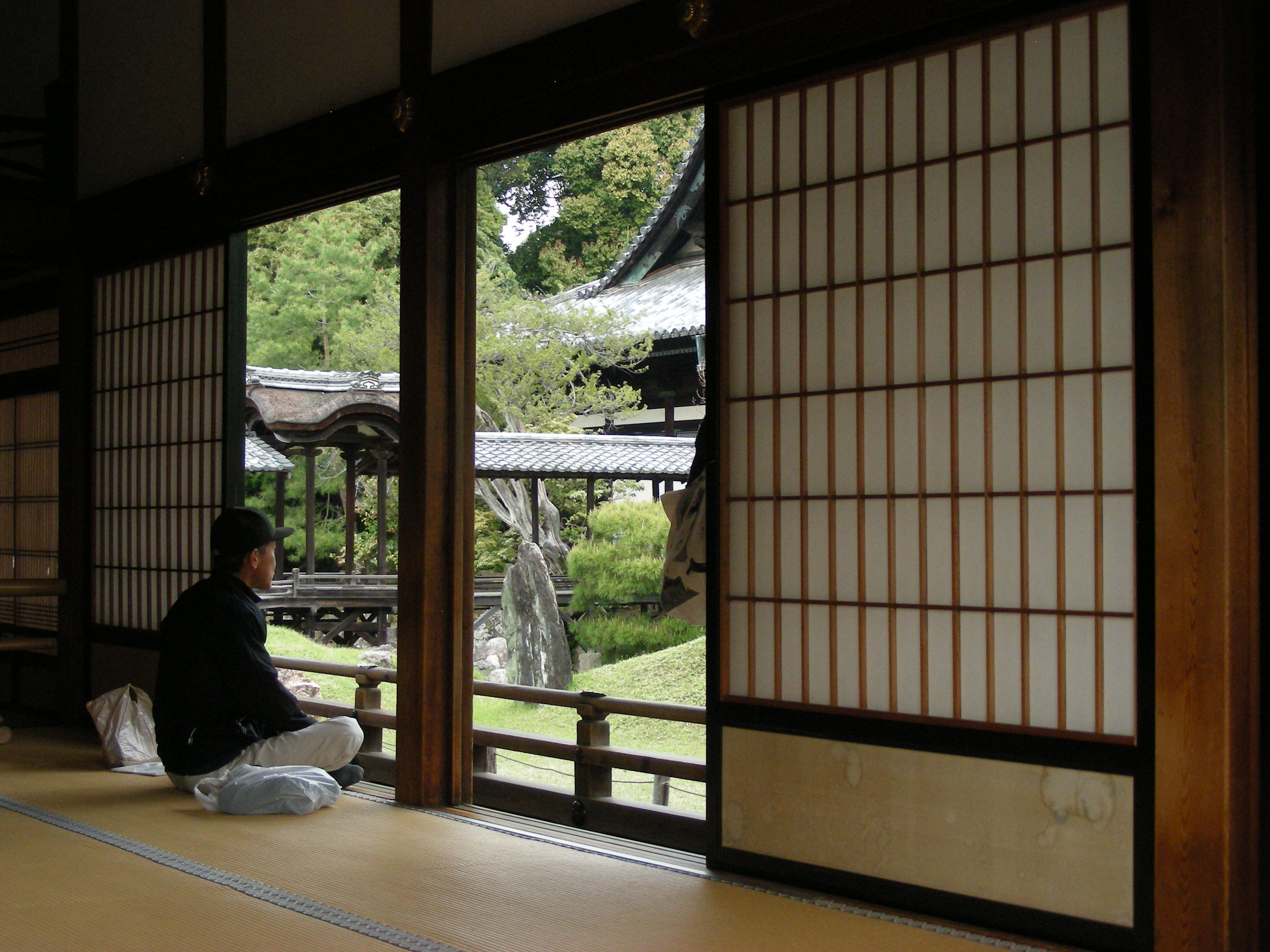
“Sitting and looking” is one of my favourite “activities”. Since I retired and moved from Scotland to South West France, I have spent many, many more hours outside than at any previous time in my life. Sometimes I’m outside to tend to the garden. I’ve discovered the delights of growing, harvesting and enjoying a wide range of fruits and vegetables, and I get a huge amount of joy from seeing the beauty of different trees, shrubs and flowers. But oftentimes I like to just sit on a chair in the garden and look.

I look up at the blue sky and watch a few buzzards soaring effortlessly on warm air currents swirling so high above me that the birds are just little specks, and their high pitched cries sound far away and near at one and the same time. I look up and see kestrels hovering on a single point in the air, their wings beating so fast I can’t see them, then watching them drop like a stone to the earth when they spot some prey far below them.

On cloudy days I get lost in the ever-changing tableau of characters which I can see in the clouds.

Throughout the year I see the seasonal changes in the long parallel lines of vines stretching from here to the horizon.

Sitting down makes me slow down. It allows me to pause, to take a few deep breaths (without even thinking about my breathing), and to become more present. It allows my awareness to open up and come alive, so that I notice what would otherwise pass me by.

It’s a great, life-enhancing, combination.

Sitting and looking.

I recommend it. (Health warning: too much sitting is bad for you health. Use it in moderation. Movement, walking and other forms of exercise are also necessary!)

Read Full Post »

Here’s another study showing how pain can be reduced without using drugs.

In this particular study, the researchers had the subjects do one 20 minute focused attention meditation session daily for 4 days. The subjects rated the painful stimulus applied as “57 percent less unpleasant and 40 percent less intense”.

This is interesting for two reasons. Firstly, it’s another study showing the potential benefit of simple meditation techniques which anyone can learn and integrate into their daily lives. Secondly, as the article points out, it shows how quickly a benefit might be obtained.

If you do suffer from some painful condition, do you practice daily meditation? If not, why not? What’s to lose?


Read Full Post »

My answer to this question would be you’d only think all forms of meditation were the same if you think differences are irrelevant. My entire working life is based on understanding difference. I think it’s true of all holistic and integrative practices that understanding the uniqueness of a personal story, told by an individual within their distinct context, is the core focus. But I’ve wondered, just what is different between TM and Mindfulness practice? They seem very different to me. They involve different methods. So it wouldn’t surprise me if it turned out they had different effects on the brain, and hence on the body too. Well, here’s some fascinating research which is beginning to clarify just what the differences are. It starts with a description of three “types” of meditation practice – Controlled focus; Open monitoring; Automatic self-transcending, then goes on to explore different brain wave patterns associated with each, different mind-body changes and the published research on the effects of different practices. The summary is as follows –

  • Controlled focus: Classic examples of concentration or controlled focus are found in the revered traditions of Zen, Tibetan Buddhism, Qiqong, Yoga and Vedanta, though many methods involve attempts to control or direct the mind. Attention is focused on an object of meditation–such as one’s breath, an idea or image, or an emotion. Brain waves recorded during these practices are typically in the gamma frequency (20-50 Hz), seen whenever you concentrate or during “active” cognitive processing.2
  • Open monitoring: These mindfulness type practices, common in Vipassana and Zazen, involve watching or actively paying attention to experiences–without judging, reacting or holding on. Open monitoring gives rise to frontal theta (4-8 Hz), an EEG pattern commonly seen during memory tasks or reflection on mental concepts.3
  • Automatic self-transcending: This category describes practices designed to go beyond their own mental activity–enabling the mind to spontaneously transcend the process of meditation itself. Whereas concentration and open monitoring require degrees of effort or directed focus to sustain the activity of meditation, this approach is effortless because there is no attempt to direct attention–no controlled cognitive processing. An example is the Transcendental Meditation technique. The EEG pattern of this category is frontal alpha coherence, associated with a distinct state of relaxed inner wakefulness.4


My personal experience is greatest with the third category. I practice TM for 20 minutes twice every day. I’ve explored some Mindfulness meditation with colleagues at work over recent months (Mindfulness Based Cognitive Therapy is one of the services we offer at the Centre for Integrative Care in Glasgow Homeopathic Hospital) But I’ve no experience of the first type – controlled focus. My first take on this research is that I’m encouraged to know that it’s good to engage in more than one kind of meditation practice. If loving kindness and compassion meditation increases the amount of love, kindness and compassion in the world I’m all for it. If Mindfulness also reduces negative rumination as it suggests in this research, then that strikes me as also a very good thing. And if TM can lower blood pressure, reduce chronic anxiety and lower stress hormones like cortisol, then that’s good too.

I do enjoy a scientific exploration of how something might work, but I also think that we are all different and it’s likely that we will all experience different meditation practices differently. It is a subjective human experience as well after all! I know Dan Siegel, of Interpersonal Neurobiology fame, claims that there is plenty of evidence to show that Mindfulness meditation increases the size and function of the integrative fibres of the mid prefrontal cortex. He also says that just 10 minutes a day of breath awareness will produce measurable change in integrative neurons.

Are you convinced yet? If you haven’t done it yet, maybe a month from now as you think ahead to 2011, making meditation part of your daily life should be part of the changes you might want to make. (you know what I’m talking about – resolutions!)


Read Full Post »

Ah, yes, meditation might be thought of as a way of “stilling the mind”, or “calming the crazy mind”, but there’s something totally absorbing, focused and calming in the activity of photographing butterflies. You need patience. Lots of it. And you need to be able to let go of the need to control and predict. You have absolutely no way to know how long a particular butterfly will rest on a particular flower, if or when it will open its wings, and which direction it’s going to fly off in next.

Here’s some I spent a LONG time capturing!

butterfly

butterfly

butterfly

Try it for yourself sometime. It’s very therapeutic. Slows you right down…..

Read Full Post »

sun's rays

Attention is like the sun’s rays. Whatever we shine it on looks clearer and brighter. Whatever it lands on increases.

Attention is a kind of focus. It’s a way of allocating energy and resources. Whatever we pay attention to receives more of our energy, and as a result, it grows.

Have you ever stopped to wonder what it is you pay most attention to? A lot of people pay attention to the future. Their minds are full of what ifs and if onlys. They experience anxiety and fear of the unknown. If you’ve got a good imagination it’s easy to spend a lot of time thinking about what hasn’t happened yet (and what might never happen!). Other people pay a lot of attention to the past. Their minds are full of memories of the past…..the bad times, the hurts, the wounds…..or the good times (which are now gone). The interesting thing is that you only live in the present. The past is in memory, and the future is in imagination, the present is reality.

If you focus your attention on past bad times, they loom larger in your life. If you focus on future fears, they also loom larger in your life. If you focus on the present, you experience more of the here and now. And whatever you choose to pay attention to in the present is what you’ll experience most strongly.

Meditation practices are ways of training your attention, so that it doesn’t get pulled this way and that by habits or the demands of others.

Morning pages are another interesting way to explore where your attention is hanging out! (that’s a habit I need to re-establish!)

Becoming aware of what we’re focusing on gives us choices – the choices to decide whether or not to focus on that as much as we are doing, or to focus on something else instead.

Whatever it is we pay attention to increases, colours our whole life, becomes our whole world.

Read Full Post »

The ocean of the mind

ripples

waves

The wheel of awareness

big wheel

rose window

I’ve recorded a guided mindfulness meditation practice here.

Read Full Post »

Is meditation about stopping the mind?

Is it about emptying the mind?

I used to think it was one of those, and I couldn’t for the life of me manage to ever stop my mind. In fact, I couldn’t even figure out how I’d know if my mind had stopped! The same applied to emptying. My mind might often be full of trivia or nonsense, but that’s not the same as it being empty. Seemed too difficult to me.

Then I learned that it wasn’t about emptying the mind at all. It was about noticing what was going on, and letting it pass right on. I learned it wasn’t about stopping the mind at all. It was about enabling it to flow.

As Dan Siegel says, a healthy mind is an integrated mind. Like a river, it flows. He uses the metaphor of a river with two banks, one of which is rigidity, and the other is chaos. We veer towards one or other bank as we travel through life. When we’re well, we are neither stuck in a narrow, trapped place, nor are we falling to pieces, into disintegration. Rather, we’re flowing.

How do we do that? Well, one useful technique is to meditate regularly. I meditate twice a day, for 20 minutes each time, but there’s no strict rule about that. If you can, take a few minutes, at least once every single day, and quietly try a meditation exercise. There are many ways to practice mindfulness meditation. Essentially, it’s a method which allows you to become aware of the content of your mind. Dan Siegel in his “The Mindful Brain” (ISBN 978-0393704709) includes a script he uses with his patients to introduce them to a couple of ways to begin meditation. I’ve recorded his script here.

Just click on the link to hear it.

The basic technique is to become aware of breathing in, and breathing out, and to return the focus of your attention to your breathing every time you become aware that your mind has drifted off to consider something else.

Dan includes two great metaphors. The metaphor of the sea of the mind, where below the surface your awareness lies, calm and peaceful, and from where you can observe all the activities of the mind up there on the surface, coming and going and like the waves. The other is a “wheel of awareness”, with your awareness as the hub of a wheel, the spokes of the wheel being the direction of attention you send towards the rim, and the rim being made up of the five senses which bring the outside world into your mind, the sixth sense, which is the inner state of your body and its component parts, the seventh sense, which is the content of your mind, and even the eighth sense, which is your attunement to others.

I hope you find some of this helpful.

If you’d like to know more about Dan Siegel, and his understanding of the mind, I’d recommend you read “Mindsight”, or download it as an audiobook. (ISBN 978-0553804706)

You’ll never see things the same old way again.

Read Full Post »

Older Posts »