Feeds:
Posts
Comments

Archive for April, 2024

War is mass murder

I guess war has always been mass murder. After all, every war involves at least one group of human beings killing another group of human beings. In fact, if the killing was one way, just one group being slaughtered by another, then we’d call it “genocide”, but in war, both groups kill others who belong to the other group. Who wins? The group who kills the most? I don’t know. Maybe a historian could tell me, but, my hunch is, it’s either the group who murders most members of the other group, or the group which carries out such a horrifying mass murder that the other group says, “Stop” and “gives up”.

I was thinking about this in relation to two current conflicts – Russia/Ukraine and Israel/Gaza. In the former case, as best I know (and it’s hard to know the truth about any war), most of the killing has been of “combatants”. Is that true? Do the number of “combatant” deaths exceed the number of “civilian” ones? Even if it is true, “combatants” are human beings too.

In relation to Israel/Gaza, this latest round of “war”, or shall we just call it “killing”, was sparked by the mass murder of “civilians”…….young people enjoying a music festival, families in their own homes, and so on. Since then, we are told, somewhere around 30,000 Palestinians have been killed by Israelis. A huge number of those killed in Gaza, are reportedly, children and adult “civilians”. How many “combatants” have the Israelis killed?

This is what set off my recent thought that war is mass murder, because, we now get reports that Israel identifies certain individuals as “combatants”, or, more likely, they call them “terrorists”, and then they either bomb their houses, or use a drone, to kill them, and, often several members of their family at the same time. There is no judicial process involved, as there isn’t usually in a war. I read that there are over 30,000 people on the Israeli database who have been selected to be killed in this way. They are named, found, and killed.

Will the Palestinians or Israelis ever “give up” and stop killing each other? In other words, will this war ever end? We don’t know. But, sadly, at this point, it seems unlikely.

In World War II both sides targeted civilian populations, carpet bombing and/or fire bombing whole cities. Did the “big bombs”, dropped on Hiroshima and Nagasaki, bring the whole conflict to an end? In other words, did the “Allies” win by killing more people who lived in countries controlled by the “Axis” than the other way around? I don’t think all historians agree that the nuclear bombs ended the war, but they certainly horrified the whole world.

However you look at his, it’s pretty clear that war is mass murder. Will we humans ever evolve to the point where we stop doing that to each other? What are the chances?

Read Full Post »

Dead or alive?

Last year I found a walnut under the earth when I was weeding. It had a small pale green root (or stalk? Who knows?) sticking out of one end so I took it and planted it in a pot. A few weeks later I had a tiny tree with a few delicate leaves on the top, so I transplanted it into the forest area of the garden and put a little fence around it.

Along came autumn and the leaves dropped off and all winter it’s looked like just a stick. I thought it was dead, but I’ve learned to wait (gardening teaches you patience), and over the last few days, look! It’s producing leaves again!

It still astonishes me that we humans have no way of telling if a particular seed is dead or alive. We just have to plant it, care for it, and nourish it. We can’t force it and can’t predict it.

Similarly, it amazes me how dead so many little trees appear in the winter. You have no idea which of them are still alive. Again it’s best to wait, to care for them, and watch out for signs of life in the Spring.

I think there’s a lesson here for when we think about how to recover from an illness, or even how to stay as healthy as possible – it’s about creating the right environment.

For we humans, we need to create the best conditions for people to recover and thrive, and that includes a healthy physical environment (as free from pollutants as possible), clean water, nourishing natural food, and social conditions such as dealing with poverty, poor housing and insecure employment.

Read Full Post »

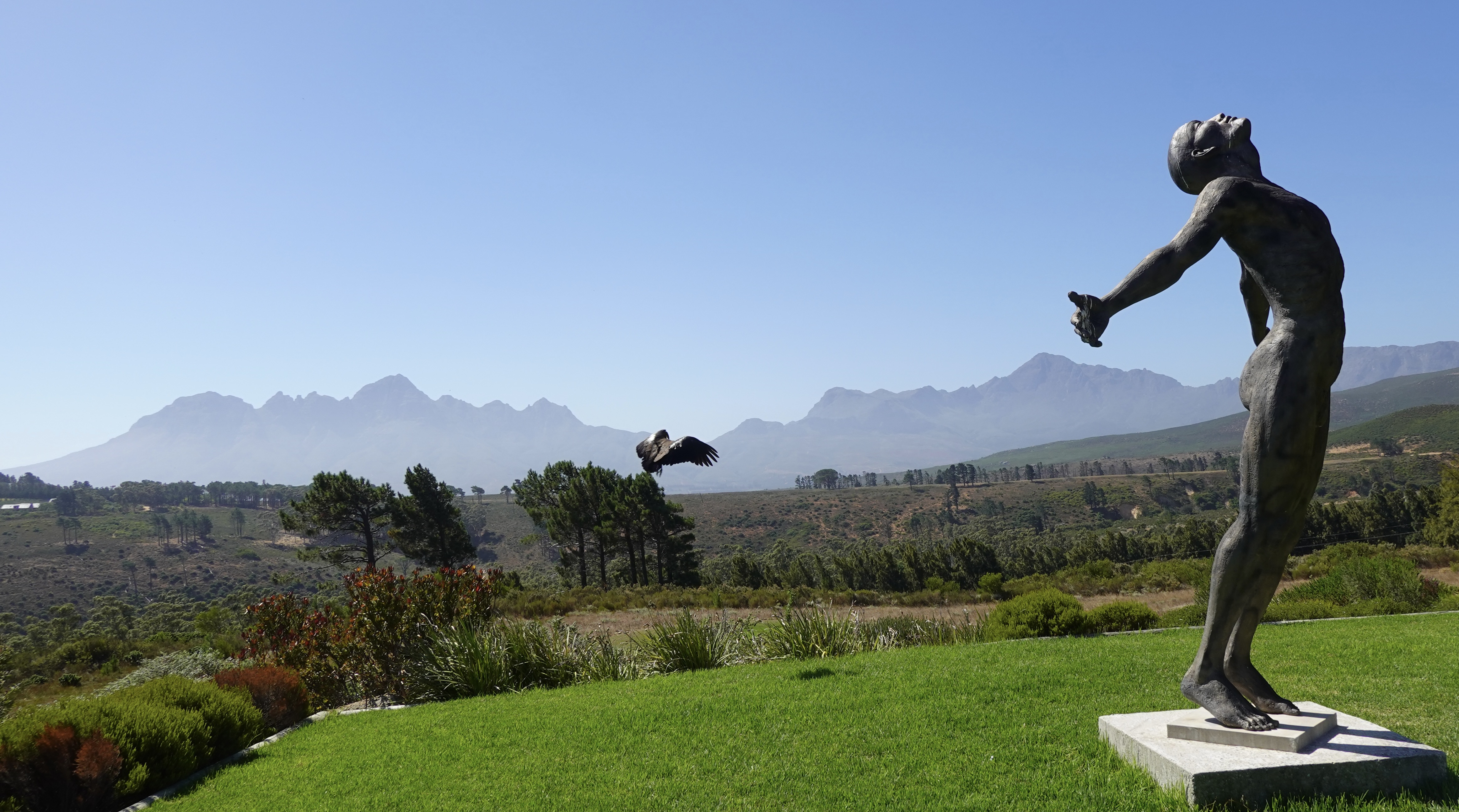
It’s not uncommon for human beings to want to fly. I know we’ve partially met that desire through technology by inventing machines which can fly, but we can’t fly the way a bird can fly. We can’t just leap up and head off into the blue mountains. We can’t soar above the forests and the oceans. But we imagine it would be pretty great if we could.

I think flying like a bird represents freedom for us. It’s a freedom of movement which lies only in our imagination.

Of course, we say “flights of imagination”, or “flights of fancy” too, don’t we? Because our imagination has less boundaries than our bodies do. There’s that additional element to flight – not just a freedom of movement, but an ability to go beyond limits, beyond invisible borders created by people to keep other people away, or to attempt to control human beings, preventing them from doing what humans have always done – move freely across the face of the Earth, or at least, dream of moving freely. Don’t we also talk about “spreading his wings” when we want to say someone is developing, growing, expanding their horizons?

The posture of this sculpture is one we all recognise. When we want to feel a sense of freedom, we stretch out our arms, opening ourselves wide to the world. But we can’t take off, the way the bird is taking off.

Have you ever wondered why angels have wings? As far as I know, nobody imagines angels as having scales, fins or a tail. Even though fish have a freedom of the oceans just as great as the freedom of the skies enjoyed by birds, we don’t really say “I’d like to be as free as a fish”. We say “I’d like to be as free as a bird”.

I really enjoy the sights and sounds of the birds when I’m in my garden. I saw the little redstart yesterday. He’s just arrived back from his winter travels, and I also heard a hoopoe calling all day long. And the Celandine has flowered in the garden, it bright yellow petals telling me it’s time for the swallows to arrive. (I’ve only seen one so far)

Birds connect us with greater dimensions of nature. They connect us to the rhythm of the seasons. They remind us, with their migratory patterns, that Life inhabits this whole planet. But I think they also connect us to what is more than merely material in this world. They connect us to a sense of spirit, to something “higher” or “greater” than us. They inspire us, and awaken a sense of wonder and amazement, don’t you think?

Read Full Post »

I read a report in the Guardian recently. It was about the use of AI by the Israeli army. One of the officers was quoted saying this –

You don’t want to waste expensive bombs on unimportant people – it’s very expensive for the country and there’s a shortage [of those bombs]

I know war is horrendous and inhuman, but these words really shocked me. What a way to talk about anyone. “Unimportant people”. I know, he probably meant people who weren’t terrorists or fighters, but included in those “unimportant people” are children, women, ordinary folk just trying to live a life.

There are no “unimportant people” in my opinion. I spent a whole working life as a doctor, spending time with, getting to know and understand one person at a time. I never met one yet who was “unimportant”.

But this quote shocked me for two reasons. First was the use of the adjective “unimportant”, but second was the economic reason given for wanting to avoid “waste”. He didn’t want to explode expensive bombs killing people who weren’t on the target list. “Expensive”. An “economic” argument. Isn’t there a “moral” argument which should trump any “economic” one?

I despair.

There hasn’t been a time in human history when there hasn’t been war, and in every epoch, war brings its own evil, its own cruelty. Will we ever reach a stage of civilisation where we recognise all human beings as “important” and “valuable”?

It’s so sad.

I think of the Dalai Lama who says his religion is “kindness”. I wish all religions, one day, would insist on kindness at the heart and forefront of all the actions of their believers.

Just “imagine”, as John Lennon sang, so beautifully.

Read Full Post »

While travelling by train across the Alps last week I noticed this striking phenomenon. There was quite a bit of snow on the ground but the area immediately below each tree was clear.

I don’t know if this is due to the soil there getting warmed up by the activity of the tree roots, or there’s another explanation. (If you know, maybe you could let me know).

Then I was chatting with a gardener yesterday about how the blossom on the fruit trees varies so much from year to year, and he mentioned he had some fruit trees which had produced virtually no blossom, and no fruit, over the last two years but this Spring, after France’s wettest winter on record they’ve all started to blossom. He said, “You see, plants know what they need and when they get it they flourish. In this case it was water!”

I think that’s so true, and this gardening wisdom is something we could pay more attention to in life, especially in health care and in politics.

In health care we direct most of our efforts towards fighting disease but we need to create the conditions for healing during the repair and recovery phase. We’re not so good at that, maybe because we know nature does it best. When we supply a clean environment, pollution free, decent nutrition, adequate, clean water, rest, mobilisation exercise, and emotional support, healing has its best chance.

Similarly, if we want more people to suffer less disease, we need to create the societal conditions for healthy lives. Decent housing, nutritious diets, clean water, avoidance of pollution, the creation of good, stable, secure employment, reducing poverty and inequality and supplying high quality education for all, are all things which create the conditions for what human beings need to live healthy lives.

Maybe, one day, a political party will put forward just such a vision – the creation of a healthy society by making available what human beings need to live healthy lives.

Maybe, one day, we’ll have a genuine “health” service which puts as much effort into healing as it does tackling disease.

Read Full Post »