Feeds:
Posts
Comments

Archive for February, 2025

Not simple

Living organisms are not simple (no, not even the simplest of them!). Look at this tree. How could you begin to trace its beginning and its end? Where do its roots begin and end? Where does the trunk begin and end? What makes the branches emerge exactly where they do, and what determines the direction they will grow and distance they will stretch?

And, to think, this tree began as a single seed. How absolutely impossible to predict the exact shape and size of this tree from an examination of that seed.

We like to chop reality into pieces, calling this a part, and that, another part, as if there are clear divisions between what we are calling “parts”. But that’s just what our brains do. Specifically, that’s how we engage with the world from the perspective of our left cerebral hemisphere. That hemisphere was never intended to function alone, and all its hyper-focus, all its re-presentation, all its re-cognising, labelling and categorising, was always meant to be passed back to the right hemisphere for re-contextualisation, for re-absorption into the whole, so we could see the connections, the relationships, the ever changing, developing flow of the world.

I’m convinced that the world is a more satisfying place, that life is better, when I open my mind to awe, to wonder. I’m convinced that the world becomes meaner and more shallow when I reduce it to “things”, “objects” and utility.

How amazing it is to really stand and see a tree, a single tree, to gaze, and to wonder at its origins, its history, its connections and its here and now reality. How amazing.

Read Full Post »

There’s an ancient spring opposite my house. It was there in the times of the Celts and the Gauls, then the Romans came and built a small viaduct and channel to harness it. The pool at the spring’s origin flows over a small wall into a narrow channel, and out into a stream which runs for kilometres through the countryside. Several of the villages near me have the word “moulin” in their name. It means a “mill”. The water flowing along this stream powered the millstones which ground the wheat. There’s little left of actual mills, but there are some with remnants of great stone wheels in their gardens, or at the sides of a house. The road follows the route of the stream. It follows it so closely you’d think they had both been created at the same time, but I think the water probably found its own way, and the people followed.

From time to time, I’ll spend a while across at the spring, gazing at the water flowing past the ancient Roman walls, and listening to it gurgling its way to the stream. It’s such a delightful experience. A few moments under the trees, standing on the grassy slope, paying attention to the flowing water.

There are many aspects of Nature which enhance our lives. The Japanese practice “forest bathing”, benefiting from time spent amongst trees, an experience I highly recommend. Researchers have discovered benefits to hospital patients in terms of speed of healing and reduction in pain and complications if they have a view of nature through the window from their beds.

Experiences of flowing water, for me, is one of these many circumstances which enhance an ordinary day. Fountains can have a similar effect. We don’t have any near us, but many French towns have a number of fountains in their central squares, and they always draw me to them.

Do you have anywhere nearby where you can spend a few moments next to flowing water? A stream, a fountain, a waterfall? If so, all you need to do is to pay a little attention to it. Focusing on some flowing water for a few minutes often seems to make a day a better day.

Read Full Post »

We humans are social creatures. We’ve evolved in such a way that we need the assistance and care of others to survive our first months on this planet….longer than most other infant creatures. And our brains have evolved in a way which enables us to be especially able to tune in to others, to empathise, and to create social relationships.

None of us could exist today without a vast web of relationships and connections with others. We share a common planet, a common atmosphere, a common water cycle of oceans, clouds, rains, rivers and lakes. We share environments, whether they be physical, geographical, social, or cultural. That doesn’t mean we are all the same. We are all, every one of us, absolutely unique. But none of us can exist in that uniqueness if we are disconnected.

Our political and economic structures of the last couple of hundred years or so have driven a kind of hyper-individualism, grounded on competition and struggle, but all that comes at the expense of denying our most fundamental reality – we are not alone – we share the one planet, we survive and we thrive because we have evolved the capacity to care for each other, to collaborate and to form “integrative relationships” – mutually beneficial bonds between well differentiated parts.

There is another story to tell. It’s the story of connections, of inter-dependency, and of a shared commons. It’s a story which emphasises compassion, care and love. Is that such a hard story to tell?

Read Full Post »

Making life good

There are lots of ways to make life good, but, here’s two practices which work best for me.

The first is, “stop”. Take a pause. We have a tendency to go through life semi-consciously, following habits, zoning out, and just not noticing the here and now. We can drive a regular route and when we arrive at our destination we can’t remember what we saw on the way. We can get to the end of January and think “Where did that go?” Everything is getting faster…..the news cycle, where the latest drama shocks you and upsets you, then, before you know it, it’s gone, as if it never existed, having already been replaced with the next shocker. Technology develops faster and faster, and the latest smartphone is virtually redundant from the moment you buy it, because already they are hyping the next “better” model. “Fast fashion” is just that….try and keep up….what you bought today is out of date tomorrow. “Doom scrolling” hooks us into an endless flow of mini posts, headlines, adverts, each one forgotten within days, of not within minutes.

The counter to all this is to slow down and pay attention. Yes, it might even involve actually stopping. You can set off today with an intention to notice…to see what catches your attention, to notice beauty, to allow yourself to be curious. But you have to slow down to reap the benefit. You have to pause, to really become aware of the present – what do you see, hear, smell, or taste, or what can you feel, right now?

The second is “reflect”. You can reflect right within the moment…as you notice something, take a moment to reflect on it, to contemplate it. And the other thing I like to do is take out my phone and take a photo. If you photograph what caught your attention, you give yourself multiple opportunities to reflect on it later.

There’s my two practices for today – “Stop” and “Reflect”. Try them both.

Read Full Post »

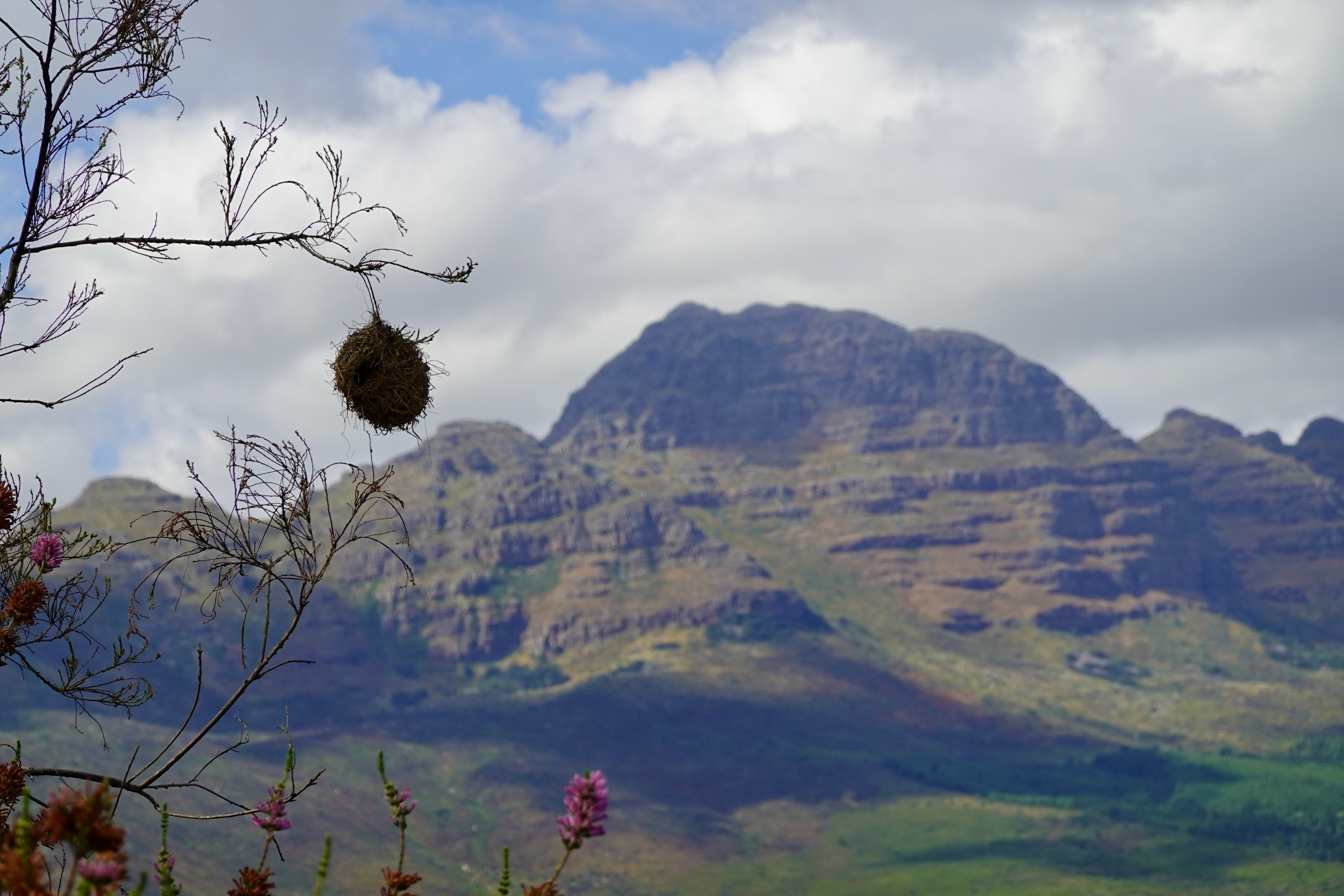
Look at this nest hanging from a tree in a garden at the foot of the mountain. Some nests are pretty amazing. This one is a sphere with a small entrance on one side. Why has the bird has chosen this exact spot to create it? We don’t know, but I’d imagine it’s got something to do with safety. After all, isn’t that one of the most basic needs of all forms of life? Shelter. But why hang it way out on the branch like this, where, surely, it’ll be buffeted by wind and rain more than it would be if it were closer to the tree trunk, or in a more dense area of branches and twigs. Again, I expect it’s about security. I expect it’s harder for predators of all kinds to reach it way out there.

But the other thing I thought about when looking at this photo, is the location of the nest in the surrounding landscape. A phrase from one of TS Eliot’s plays came to mind, where a character asks if people huddle together in cities in such large numbers because they like to be close to each other. I saw a graphic the other day showing the growth of cities over the last fifty years. Tokyo is the most densely populated city in the world by far, with something like a quarter of the whole population of Japan living there. I live in a hamlet of about 20 houses, just at the edge of a small village, surrounded by fields and trees. There are so many little villages and towns in rural France where you can pass through without seeing a single soul. All you see is shops and businesses which have long gone, and many abandoned old houses in various stages of disrepair. There’s a common issue in small to medium towns in France where they have developed shopping malls and zones around the edges of the town, and now, the middle of the town is almost dead. When we used to live near Cognac, we could walk down the main streets hardly seeing another soul, but as we passed the shopping outlets on the edge of the town we could see the parking lots were full to overflowing.

Why do we choose to live where we live? Of course, that’s a very complex question, related to where you were born, where your relatives live, where you can find gainful employment, where there are the necessary services providing education, health and social care. And a host of other factors too. But there’s also the issue of personal preference between city dwelling and country dwelling. There’s no doubt some people really prefer city life to that of a small town, or a village, and there are others who have the exact opposite preferences.

What would be your ideal place to live? If you could choose freely, what size and type of community and environment would you like to live in? And, do you know why?

Read Full Post »

Our brains have evolved a brilliant talent for spotting patterns, and one of the patterns it is best at noticing is a face. Not only do we have an ability to recognise a face quickly in a crowd (even if we have trouble putting names to faces as we get older!), but we see faces where there aren’t any.

Look at the surface of this rock. Doesn’t it, for all the world, look like a painting by Munch? A distorted face, perhaps, but a face all the same. These faces which are not really faces, but simply face-like patterns, always amaze me. I tend to see them most commonly in trees and rocks, but sometimes they are apparent in flowers or even buildings.

What’s the point of that? I wonder. What’s the value in being able to see faces which are not actually faces? Is it just a sort of side effect of the face-pattern-spotting skill? Maybe it is. However, even though I don’t know why we’ve developed this ability, I love it. It speaks to our capacity for imagination and creation which is so fundamental to human life. And it adds a layer, or, better, perhaps, reveals a depth, to perception which takes it beyond the mere utility of seeing. It can inspire. It can bring us moments of wonder and delight. It can spark our creativity and slow us down, stopping us from just breezing past, not really noticing. It brings beauty and reflection to life itself.

What face-patterns have you spotted recently?

Read Full Post »

We don’t live in a world of entirely separate, fixed objects.

We live in a massively interconnected world of flow.

Every living organism is an open system. There is a continuous flow of materials, energy and information into, through, and from every animal, every plant, every ecosystem.

Yet, we continue to swallow the idea of reductionism, which tells us everything is made up of separate, smaller parts, and the way to understand anything is to isolate parts and observe them as if they aren’t connected to anything else. It’s useful to focus closely on something. It’s useful to analyse something and consider it at various different levels, but it’s dangerous and delusional to fail to see that everything is always in a state of flow…..affected by, and affecting, other organisms, by the environment and by the multiple contexts of its existence.

And we continue to be taken in by dualism….the belief that there are objects and subjects….objects which are measurable and “real”, and subjects which are individual and “imaginary”. I’m not going to get into the complexities of the “hard question” here….of how consciousness can emerge from “stuff”….but this dualism leads us to deny or dismiss human experience, when, actually, experience is THE fundamental characteristic of reality.

We are not machines. We are not machine like. We are living creatures, every one of us with a continuous, ever flowing, experience of consciousness. A consciousness which enables us to appreciate beauty, truth and goodness. A consciousness which enables us to be aware and to direct our attention to whatever interests us, whatever moves us, whatever makes us wonder.

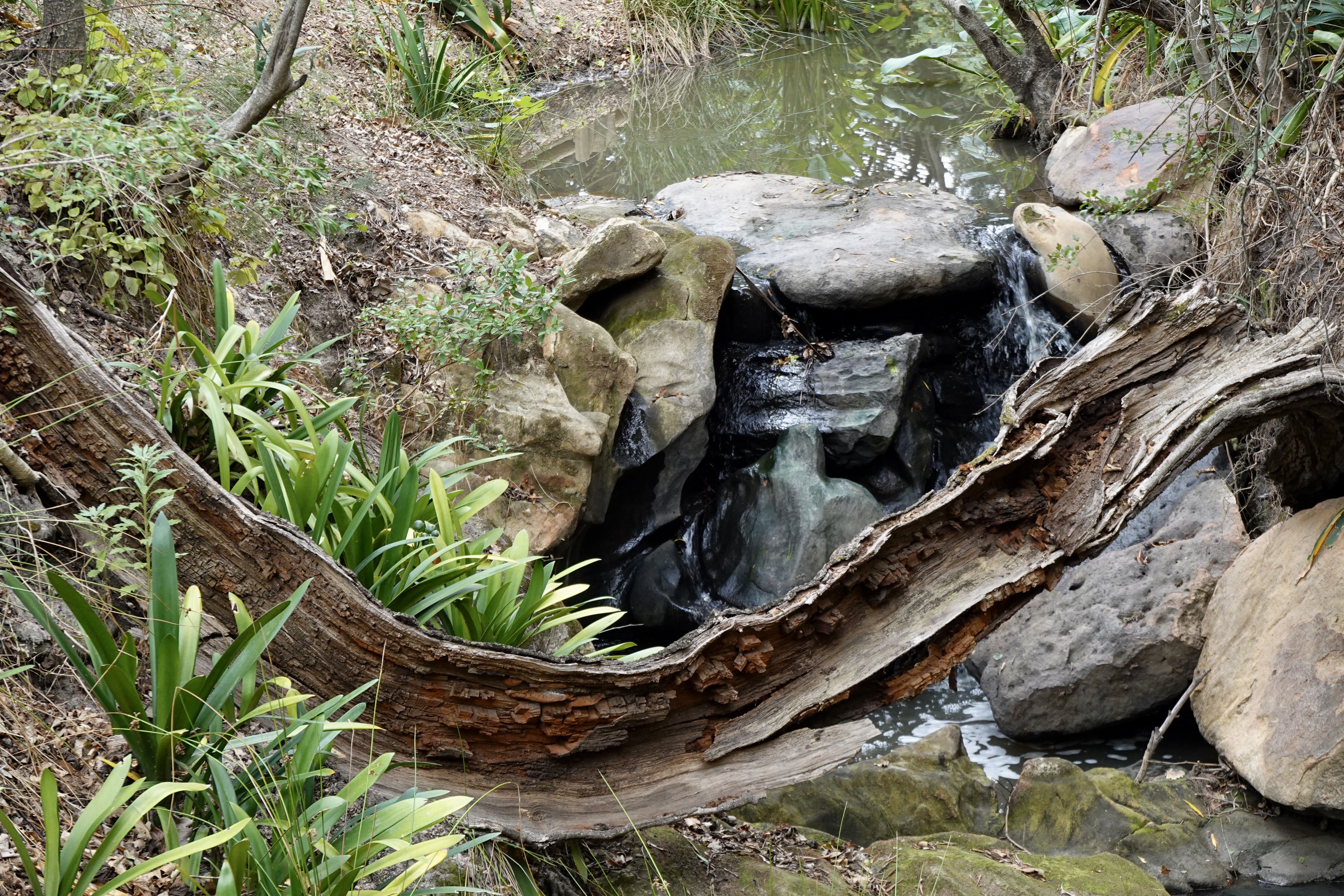
When I look at this photo, I see “flow”. I see it represented in the water. I see it represented in the wood. I see it represented in the green plants. I see it everywhere.

Read Full Post »

Now feels a good time to share this old clip from Charlie Chaplin’s “The Great Dictator” movie.

We want to live by each other’s happiness – not by each other’s misery. We don’t want to hate and despise one another. In this world there is room for everyone. And the good earth is rich and can provide for everyone. The way of life can be free and beautiful, but we have lost the way.

This is such a positive view of humanity. Quite different from the one we are fed daily in the media. We have lost our way (maybe we were never on it?), but we can find our way now. The reality is that this is one small shared planet. Everything we do is dependent on contributions from others, past, present and future. Everything we do affects others. We are not separate, self-standing, “units”, surviving only by being stronger and more violent than anyone else.

You are not machines! You are not cattle! You are men! You have the love of humanity in your hearts! You don’t hate! Only the unloved hate – the unloved and the unnatural!

We are not machines. We are not machine-like. The organisations we create to educate and care for each other are not factories. They shouldn’t be run on the principles of industrial capitalism. But rather on the basis of humanity, compassion, and even, yes, even that old idea of professionalism and a “calling”.

Dictators free themselves but they enslave the people! Now let us fight to fulfil that promise! Let us fight to free the world – to do away with national barriers – to do away with greed, with hate and intolerance. Let us fight for a world of reason, a world where science and progress will lead to all men’s happiness. Soldiers! in the name of democracy, let us all unite!

Dictators, and, I’ll add, “Strong men leaders”, “free themselves but they enslave the people”.

Ultimately this is a positive, hopeful rallying call to live our lives differently, and to create the political and social structures which will counter greed, hate and intolerance, structures which will promote happiness, compassion and beauty.

Read Full Post »

« Newer Posts