“Cities are built around plazas where friends, family and co-workers sit, eat, drink and talk. That turns out to be good for you even if you sip vermouth and eat crisps at noon. Reams of research show that social contact is critical for physical and psychological well-being.”
economist.com
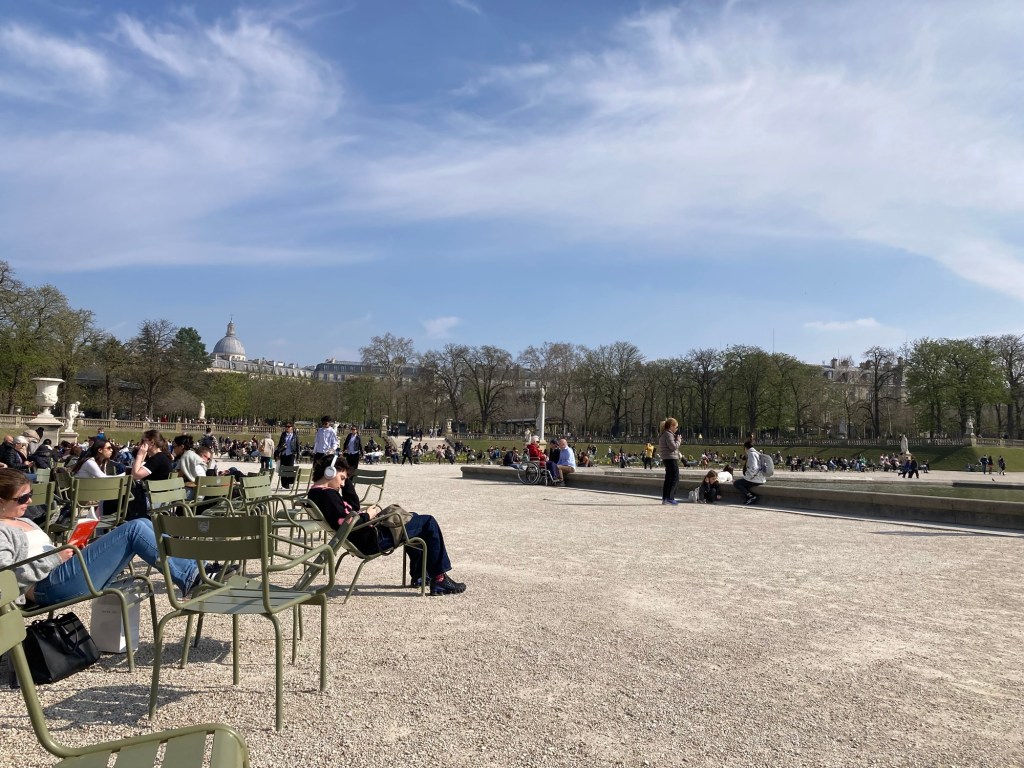
I took this photo in the Luxembourg Gardens in Paris last Tuesday afternoon. There are lots of spaces in Paris which encourage people to walk, sit, stroll, relax, chat, take a pause.
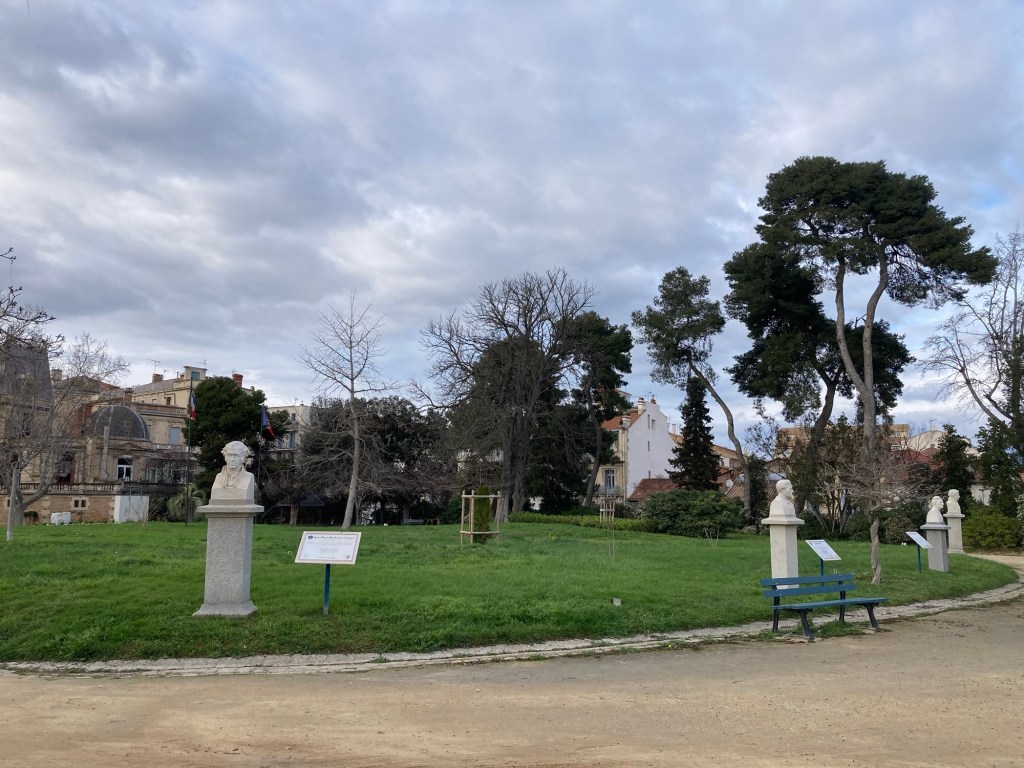
This second photo was taken in the centre of Beziers. At one end of a long, wide, tree lined promenade sprinkled with benches, is the “Plateau des Poètes”, a beautiful garden, with several busts of French poets. Not only does this encourage people to spend time together, but it celebrates poetry. What a delight!
We need social spaces, places to connect, to exchange, to chill, or to pause. We need poetry, and stories, and art. We need beauty and plants and trees. Because we are human.
In the obsessively micro-managed world we live in now it’s more important than ever for us to take a pause. We are being bombarded with talk of crises, of doom, of having to everything faster, consume ever more, do everything so-called more efficiently.
But we humans are not machines. And we shouldn’t lead our lives, or construct our workplaces according to industrial machine-like principles.
Time and time again you can find creatives….artists, writers, composers, musicians, sculptors and so on tell you they need to have some breaks, some times where they just sit, or they sit and daydream. We need times to just step off the treadmill. We need to pause to gather our thoughts, to become more aware of the present moment, and to restore our depleted reserves of energy.
What length should a pause be?
There is no fixed amount. It can be a short as taking three deep breaths. It can be a few minutes, or a few hours. We need bigger breaks than that too, which is why it’s important to take all your annual leave from work. For some people it’s a sabbatical that they need. But the kind of pause I’m thinking about here, is the kind we all need, every single day.
I’m impressed by how in France there is a habit of stopping for a proper lunch…not grabbing a factory produced sandwich and a can of coke on the way to work and wolfing them down at the desk. They take time to go to a restaurant or cafe, to sit down, have a meal and share some time with workmates or friends. Then back to get on with the rest of the day. There’s still a widespread tradition of working five days a week, not seven here, so that everyone can have some family time, some home time, to do with as they want.
How about you? What pauses do you build into your everyday? What pauses would you like to build in, and why not start today?
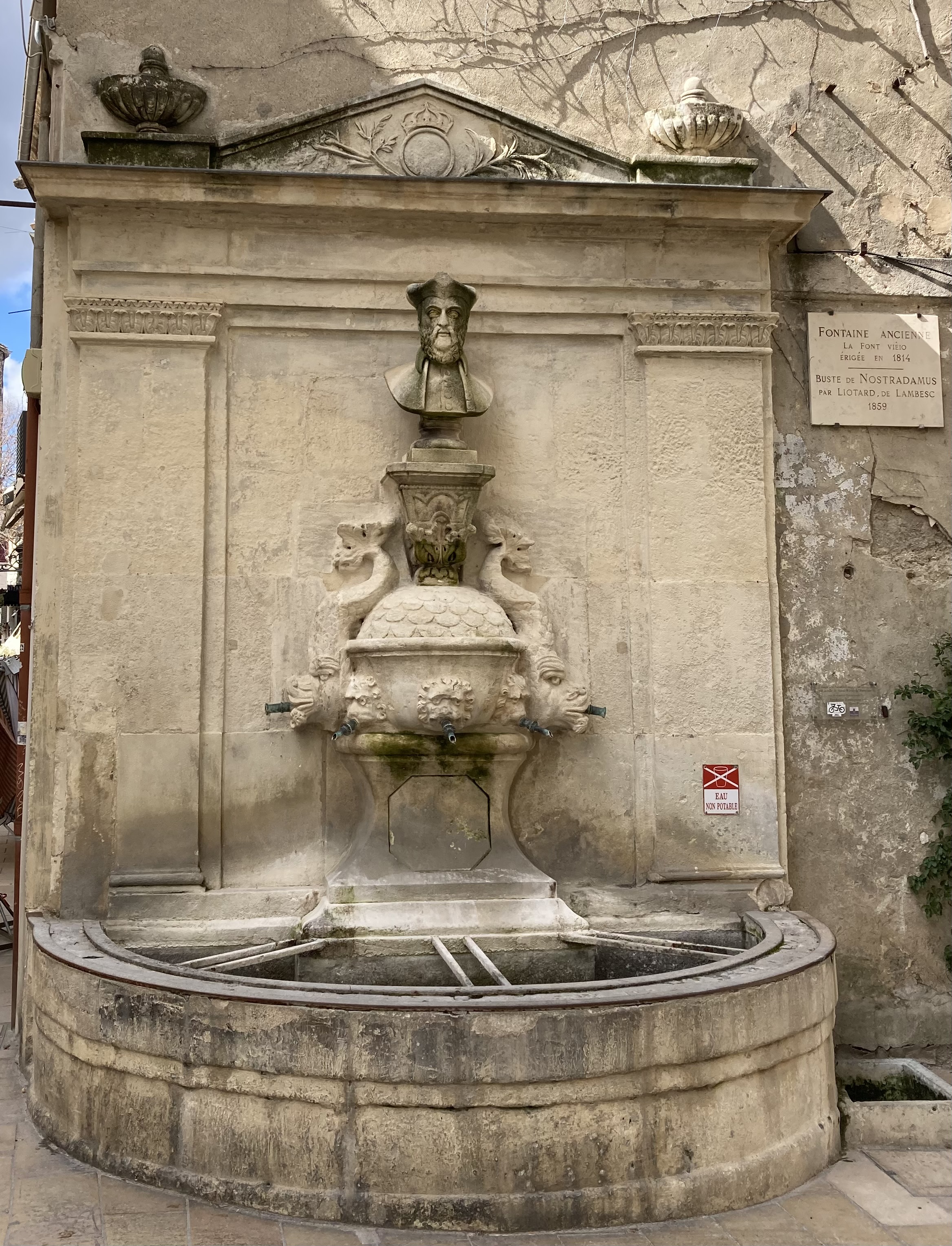
Before he became famous for his predictions, Nostradamus was an acclaimed doctor, who during a plague treated patients successfully. What kinds of treatments did he use which were successful back in the early 16th century?
Well, primarily, he gave good advice about how to live healthily….recommending that people went outdoors to get fresh air as much as possible, teaching them about hygiene in the home, getting them to rid themselves of rats and excreta in the house, changing and washing the bedsheets, and eating a healthier diet (low fat, I read, but I’m not sure of the details).
On top of that he prescribed a herbal remedy based on rose hips which contained high levels of vitamin C.
So about 500 years ago the most successful ways of dealing with infections and epidemics was already known – it came down to good hygiene and healthy living conditions, combined with a decent diet rich in vitamins. When it came to our most recent pandemic, Covid, the same proved to be the case. The highest rates of infection, serious illness and death were in those who were already suffering from chronic diseases and/or who were living in poverty, in overcrowded housing, and with inadequate diets. Great claims have been made for vaccines, but, at the end of the day, the best way to maintain the health of populations is the same as it’s always been – a good healthy living environment.
That’s why I think we should take good care of our commons – the air, the water, the soil – reducing pollution, and investing in healthy environments. It’s also why I think we should radically change our industrialised farming and food production to produce healthy, vitamin rich food, which should be the basis of everybody’s good diet. It’s also why I think we should invest in good housing, well insulated, easily maintained, and accessible to everyone.
In addition, I think Universal Basic Income and taxing the rich to reduce inequality and poverty are worthwhile policies to pursue (even if our current governments don’t seem to be doing that)
Finally, comes better health care. We do need to improve our health services, and our health care methodologies, but the way to healthy, resilient populations, has a lot less to do with health care than it has to the provision of healthy living conditions.
I was in Saint Remy de Provence recently and spotted these two windows. Nostradamus was born there in 1503, and that window on the right depicts him with his scientific instruments gazing out at the world. He remains famous for his predictions, and, science is in the business of making predictions. The scientific method has evolved over the years and is now focused on making measurements, carrying out experiments and seeing what can be predicted from “reliable” measurements.
The window on the left is a real window, with glass in it. In this photo you can see what the world was like in the moment when I took the picture. Blue sky, early trees without leaves or blossom yet. A beautiful, early Spring day.
When I look at this image again I’m struck by how the window on the right is a work of art, the produce of a creative imagination. Back in the day when Nostradamus was alive, art and science were not as divided as they are today. Both disciplines require a good imagination and skilful observation. The focus of the window on the right is the future….what’s coming next?
The window on the left, you could say, is more utilitarian. It’s part of the architecture of the building. It’s designed to let light in and to allow the inhabitants to see out into the street below. Its focus is on the present, but from my perspective as the photographer, it’s showing me a reflection, not what can be seen directly by looking through the glass.
Both windows are a re-presentation – one through reflection, the other through painting.
It’s easy to think that creativity is what professional artists, musicians, poets and inventors have. But actually creativity is a fundamental human characteristic. We all have the gift of imagination. We are all born with the ability to play and experiment.
We are adaptable problem solvers, and we are great storytellers, telling ourselves and others the stories which make sense of our lives and allow us to connect with others.
We have the ability to express our feelings and share our experiences through art. This is how we connect subject to subject.
Creativity doesn’t need to be serious. It begins in childhood with curiosity and play.
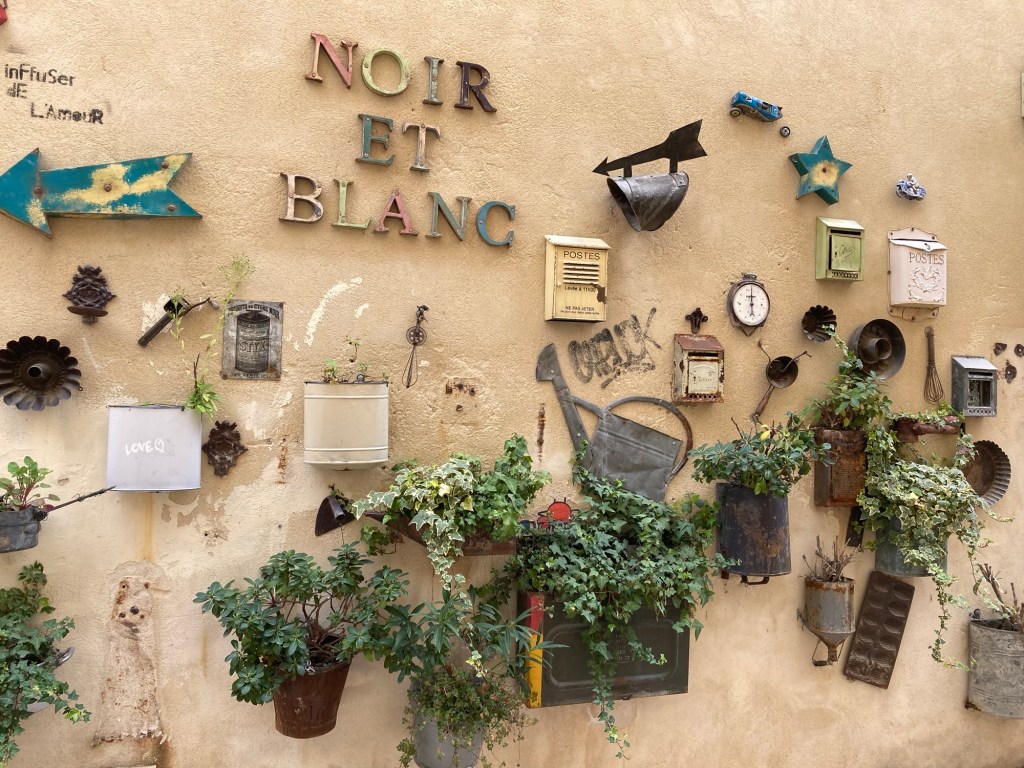
Have you had any fun creating something recently? This photo, by the way, is of an external wall of a shop in Saint Remy de Provence.
Here’s how our brain works…..all the signals from our environment, and from within our own body, flow up from our sensory organs, through a vast network of nerve fibres to the right cerebral hemisphere which then hands off the information to the left hemisphere. The job of the left is to abstract, to focus on parts, to label and categorise. In short, to re-cognise, in order to help us grasp, both physically and mentally, the world, so we can manipulate it. The left hemisphere, having done its job hands back its work to the right which contextualises it all….puts it all back into the vast web of connections which the left extracted it from….so we can see the whole, so we can see the connections and relationships.
The left hemisphere fundamentally creates a re-presentation of reality. It’s a map, a model, an abstracted layer. It’s not actual reality. The right deals with reality as a whole.
OK, that’s all a vast over-simplification of the process, but it gives you a basic understanding of why we need both halves of the brain – it’s not a matter of one side good, the other bad. They do different jobs and we need them to work together.
But there’s just one more nuance to lay out here – they are not equal. The right hemisphere should be in charge. Iain McGilchrist’s thesis in the Master and His Emissary, is that we have developed cultures and ways of thinking where we give greatest credence to the left hemisphere….even to the extent of dismissing what the right can tell us. This separates us. It’s separates us from each other and from the rest of the world. It’s not real.
Whether I consider the physical changes I make by living on this planet…the oxygen I breathe in, the water and nutrients I ingest and digest, the molecules I excrete, the radiation of heat from my body…..or whether I consider the impact of my words, my creations and expressions….the intense interconnectedness of being a live human being means that every day I change the world a little, just as the world changes me.
So, I’m reminded of a much taught piece of advice – if I have a choice I should choose kindness. Whatever I pay attention to, I should pay a loving attention to. Whenever I can, I should care.
We make this world a better world by building and nurturing integrative relationships – mutually beneficial bonds between well differentiated parts.
“The reciprocal truth of the observer changing what is observed is that what is observed changes the observer” Iain McGilchrist
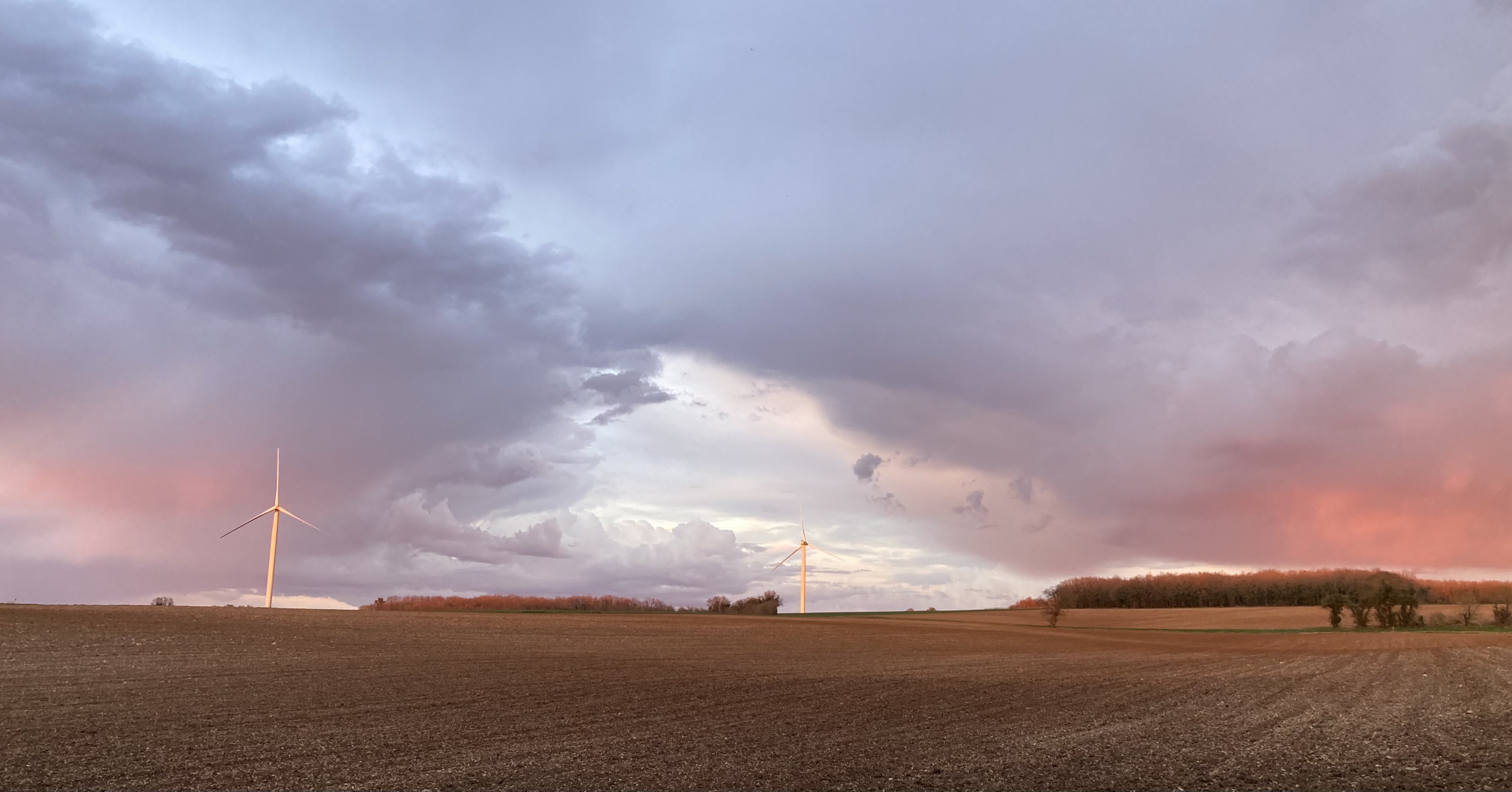
Yesterday afternoon I was sitting in my garden with my wife and we were chatting about how much we enjoy living where we are now. Our garden is surrounded on all sides by tall trees, but it’s a big garden so there’s a sense of space along with this sense of being enclosed. It provides privacy and protection and it also means we are surrounded by birdsong. One thing we don’t have, however, is a long view. In our previous house, for several years, we looked out onto vineyards and my recollection is that there were frequent incredibly impressive sunsets. We still get to see some lovely sunsets here, but I no longer see a sunset where the whole sky turns red, something I saw pretty frequently before.
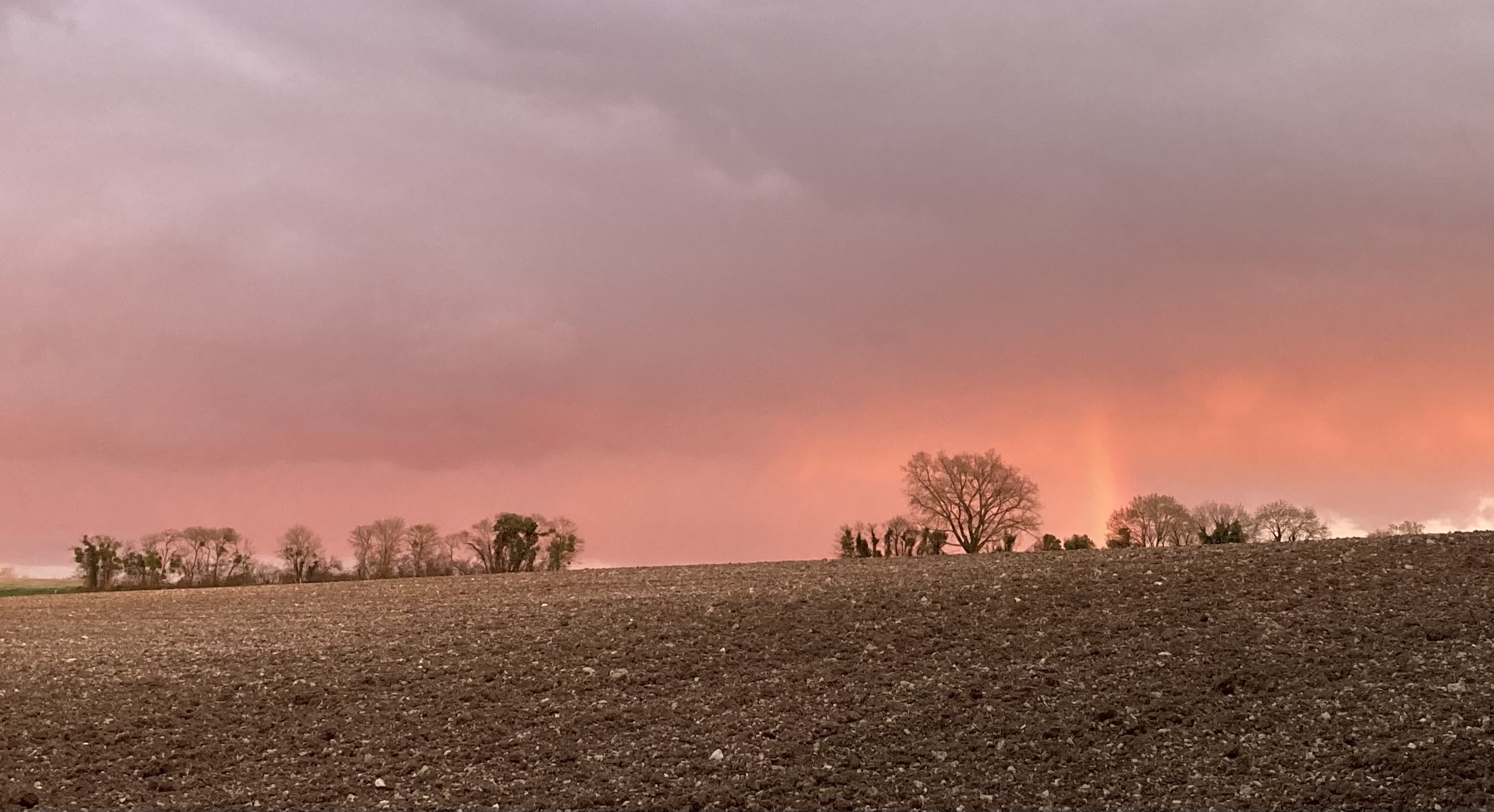
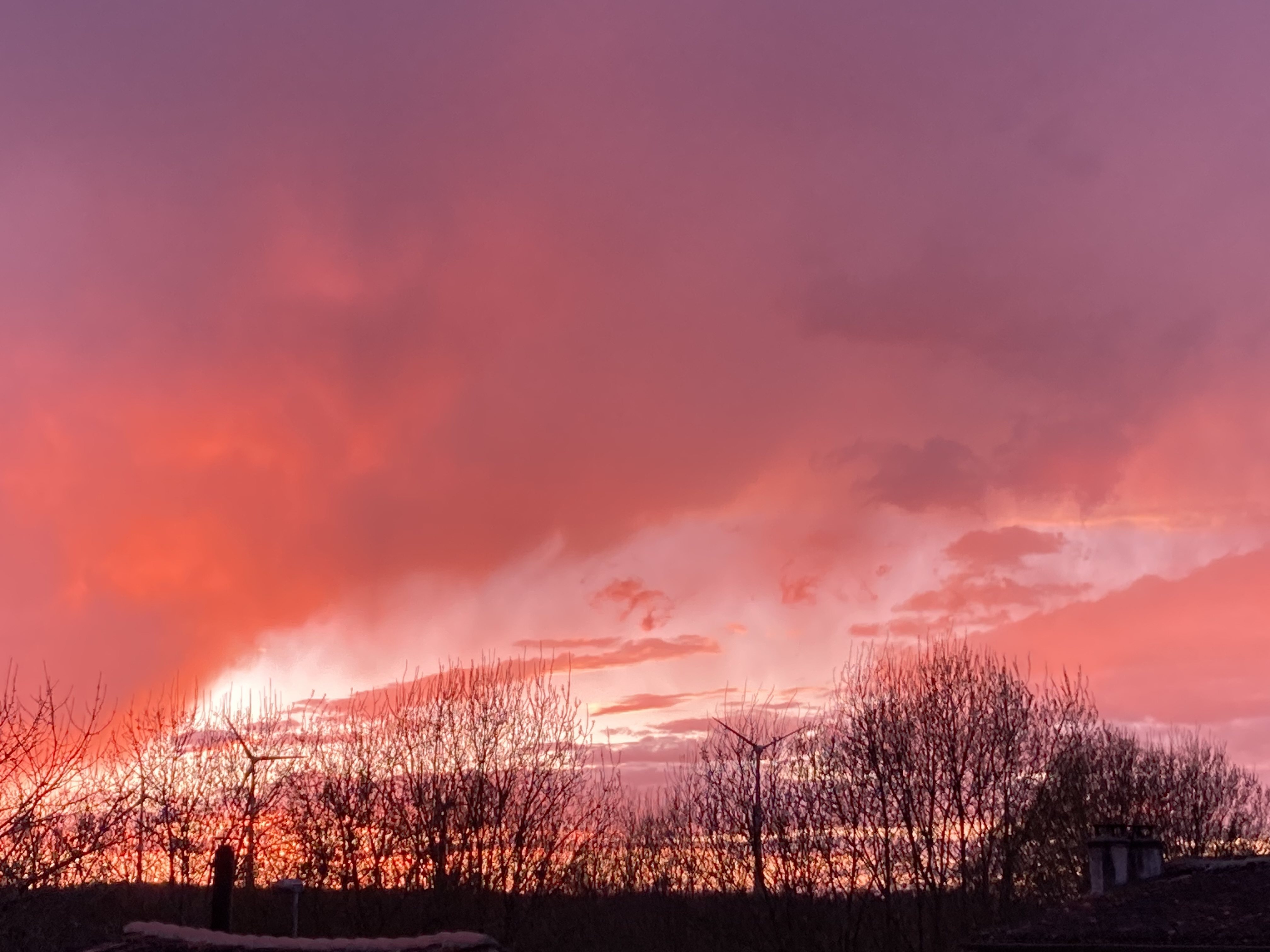
Well, some storm clouds suddenly emerged and we had to go indoors. There were a couple of rumbles of thunder, a single flash of lightning and then a short downpour. It was all over in minutes. By then it was almost time for the sun to set and we noticed that the light in the sky was unusual. So, off out into the garden again, and up to the back fence which borders a field to the east of us. I took the first two of these three photos. Then I turned and looked west and took the third photo.
Aren’t these beautiful?
Sometimes synchronicity surprises me in ways which makes me think my phone is listening to me (it probably is, and, it’s certainly tracking what I do with it!), but, this was one of those occasions where I felt that the universe was listening……listening and delivering.
What we observe changes us, and we change what we observe. We are the co-creators of our reality.
The nature of any system cannot be discovered by dividing it into its component parts and studying each part by itself, since such a method often implies the loss of important properties of the system. We must keep our attention fixed on the whole and on the interconnection between the parts
Planck 1936
The Physicist Max Planck wrote this almost a hundred years ago, and he wasn’t the first to make such an observation. Despite that breaking things down into parts and studying them separately is still the predominant approach in the world.
When I studied Medicine at the University of Edinburgh in the 1970s we were taught “Medical Sciences” for the first three years of the six year course. We dissected bodies in the Anatomy class, studied pathological change in tissues and organs in Pathology, learned chemical pathways in Biochemistry and so on. In fact, the first time I saw “cirrhosis” was a diseased liver stored in formalin in a plastic box marked “cirrhosis”. It wasn’t until year 4 that I met an actual patient who had “cirrhosis of the liver”. Maybe all that has changed. But we still practice Medicine by focusing on parts. I often hear from relatives that on a visit to their GP, they are told they can only discuss one problem per visit….so, their asthma today, but come back to talk about their joint pain.
It seems the modern management techniques applied to health care chop the system and the patient’s experience into pieces, sending them to one person for a diagnosis, another for a blood test, another for a prescription, another for advice…..it’s horrendously disjointed. When my dad was in his last month of life in hospital, every single doctor I asked about his progress started their reply with “I’m not your father’s doctor, but I’ll look up his records….” I never found the person who seemed to actually know him.
Yet, we know from research that continuity of care increases both outcomes and satisfaction ratings of patients and practitioners.
In this age where so many people experience multiple “co-morbidities” we need to keep our focus on the whole even more than ever. If we only focus on the parts we begin to believe we know exactly what each drug will do when we prescribe it, yet, not only are the effects different for different people, but in reality, many people are taking multiple medications at the same time (for a multiplicity of disorders)
We need to focus on the whole, and that means giving priority to human beings, their uniqueness and their relationships. It involves trusting doctors and nurses to practice professionally focused on their patients, not on their protocols and clinical guidelines. And we need a lot more whole of life research, which will help us to understand the complexity of the effects of any drug, and the course of any disease in a real person over their lifetime.
It was never a good idea to ignore, or to relegate holistic knowledge. Learning about the parts should include learning about the limitations of learning about the parts.
One knows nothing save what one loves, and the deeper and more complete that knowledge, the stronger and livelier must be one’s love – indeed passion
Goethe
Love is fabled to be blind, but to me it seems that kindness is necessary to perception
Emerson
Both Goethe and Emerson agree…..we can’t know, maybe even can’t even perceive, unless we direct our attention in a loving, or kind manner. I found that was a foundational principle to medical practice. Unless you genuinely cared for the patient you never got to know them, never really understood them. I’m sure that’s why many patients would say after a good consultation that they had felt, not just heard, but seen, or even “felt” for the first time.
I do believe you can teach that to doctors, but I think it should be taught explicitly. We should be taught not just the importance of the “necessary distance” to see the whole picture and to be objective, but the importance of genuinely caring and engaging with the patient in a kind, even loving manner.
It’s the same in an ordinary day. When we pay loving attention to whatever we encounter, be that a flower, a bird, a person, a work of art, then we really perceive. When we drift carelessly through a day, we don’t perceive reality at all.
Love and kindness are important principles if we want to live a full, expansive, and satisfying life. It matters not just what we pay attention to but the manner in which we attend to it.
I welcome constructive criticism and suggestions. I will not, however, tolerate abuse, rudeness or negativity, whether it is directed at me or other people. It has no place here. ANYONE making nasty comments will be banned.


 Heroes Not Zombies